
The best content creator camera depends on how you film: my best overall pick is the Canon EOS R50 Content Creator Kit for its interchangeable-lens flexibility and room to grow. The DJI Osmo Pocket 3 stands out for a compact, stabilized setup, while the Sony ZV-1F offers a simpler route into dedicated-camera vlogging. The tradeoff is between portability and stabilization, a larger system’s creative control, and the lower-cost convenience of lesser-known compact models. Bundles can add useful audio and grip accessories, but they do not necessarily improve the camera itself. Read on for the full breakdown of all 15 options and how I’d match each one to a creator’s needs.

Get the latest gadgets delivered free with Prime
- Fast, free delivery on millions of items
- Prime Video, Amazon Music and more included
- Member-only deals all year
Complete the kit



Key Takeaways
- The Canon EOS R50 kit leads for long-term flexibility: its interchangeable-lens system gives creators more ways to adapt as their content changes, at the cost of a larger setup and more decisions.
- The DJI Osmo Pocket 3 models prioritize movement: their pocketable gimbal design is a better fit for walk-and-talk footage than a camera that relies on electronic stabilization alone.
- Bundle contents matter more than bundle names: the Sony ZV-1F kit and DJI Creator Combo may simplify setup, but buyers should check whether the included audio and support gear suit their actual workflow.
- Rotating-lens and high-megapixel claims do not settle video quality: the less familiar compact and camcorder options may suit casual filming, but shoppers should verify recording formats, autofocus behavior, and sound inputs before relying on them for paid work.
- Repeated models are not distinct camera choices: the two Lmzour listings appear to describe the same camera, so compare listing contents rather than treating them as separate capabilities.
| 5K Vlogging Pocket Camera with AI Face Tracking and 270° Rotating Lens |  | Best for Flexible Self-Framing | Video resolution: 5K at 20 fps; 4K at 60 fps | Lens rotation: 270° | Sensor: 1/2.8-inch CMOS | VIEW ON AMAZON | See Our Full Breakdown |
| Sony ZV-1F Compact Vlogging Camera |  | Best for Image and Built-In Audio | Sensor: 1-inch CMOS | Effective still resolution: 21 MP | Lens: 20 mm wide-angle | VIEW ON AMAZON | See Our Full Breakdown |
| DJI Osmo Pocket 3 Vlogging Camera with 1-Inch CMOS Sensor and 4K Video | 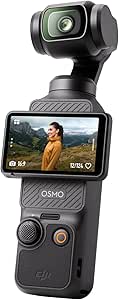 | Best for Smooth Moving Footage | Sensor: 1-inch CMOS | Video resolution: 4K; up to 120 fps in Slow Motion mode | Stabilization: 3-axis mechanical | VIEW ON AMAZON | See Our Full Breakdown |
| FlyFrost 8K Video Camera with 88MP Photos, Wi-Fi, Night Vision, Microphone and Accessories |  | Best for Included Recording Extras | Video resolution: Up to 8K at 15 fps | Photo resolution: 88 MP | Screen: 3-inch touchscreen with 270° rotation | VIEW ON AMAZON | See Our Full Breakdown |
| 4K Compact Digital Camera with 56MP Autofocus, 180° Flip Screen, 16× Digital Zoom, and 32GB Card |  | Best for First-Time Creators | Video resolution: 4K | Photo resolution: 56 MP | Sensor: 1/4-inch CMOS | VIEW ON AMAZON | See Our Full Breakdown |
| Canon EOS R50 Content Creator Kit |  | Best Overall for Creators Ready to Grow | Sensor: 24.2 MP APS-C CMOS | Processor: DIGIC X | Video: 4K up to 30 fps, oversampled from 6K | VIEW ON AMAZON | See Our Full Breakdown |
| DJI Osmo Pocket 3 Vlogging Camera Bundle with DJI Mic Mini |  | Best for Stabilized Travel Vlogging | Sensor: 1-inch CMOS | Video: 4K, up to 120 fps in slow-motion mode | Display: 2-inch rotatable touchscreen | VIEW ON AMAZON | See Our Full Breakdown |
| 4K Pocket Vlogging Camera with 330° Gimbal Lens, 75MP Photos, and Wi-Fi |  | Best for Budget-Friendly Casual Vlogging | Video: 2160p (4K) | Photo resolution: 75 MP | Sensor: CMOS, 1/2.5 inch | VIEW ON AMAZON | See Our Full Breakdown |
| Sony ZV-1F Vlogging Camera Content Creator Kit with 128GB Memory Card, Microphone, Video Light, Grip, and Tripods |  | Best Accessory Bundle for New Vloggers | Model: Sony ZV-1F | Sensor: 1-inch CMOS | Photo resolution: 20 MP | VIEW ON AMAZON | See Our Full Breakdown |
| CGXUED Mini Vlogging Camcorder with 180° Rotating Lens |  | Best for Simple, Long-Running Casual Recording | Dimensions: 5.35 × 1.56 inches | Battery: 2000 mAh rechargeable | Battery life: Up to 7 hours | VIEW ON AMAZON | See Our Full Breakdown |
| QOSUTIG 75MP 4K Vlogging Camera with Rotating Lens and Touchscreen |  | Best for Flexible Framing | Sensor: 75 MP CCD, 1/4-inch | Video: 4K at 30 fps; 1080p at 60 fps | Display: 1.72-inch LCD touchscreen | VIEW ON AMAZON | See Our Full Breakdown |
| DJI Osmo Pocket 3 Creator Combo 4K Vlogging Camera |  | Best Premium Creator Kit | Sensor: 1-inch CMOS | Video: 4K; up to 120 fps in Slow Motion mode | Stabilization: 3-axis mechanical | VIEW ON AMAZON | See Our Full Breakdown |
| Lmzour 4K Vlogging Camera with 330° Rotating Lens |  | Best Starter Bundle | Sensor: CMOS | Photo resolution: 75 MP | Video resolution: 1080p and 2160p | VIEW ON AMAZON | See Our Full Breakdown |
| Lmzour 4K Vlogging Camera with 330° Rotating Lens |  | Best for Lightweight Travel Vlogging | Photo resolution: 75 MP | Video resolution: Up to 3840 × 1440 | Frame rate: 30 fps | VIEW ON AMAZON | See Our Full Breakdown |
| 4K Vlogging Camera with 330° Rotating Lens and Face Tracking |  | Best for Longer Untethered Sessions | Video: 4K (2160p) at 30 fps | Photo resolution: 75 MP | Lens movement: 330° horizontal rotation; 180° manual vertical adjustment | VIEW ON AMAZON | See Our Full Breakdown |
| content creator camera | Display | Sensor | Connectivity |
|---|---|---|---|
| 5K Vlogging Pocket Camera with | 1.69-inch touchscreen | 1/2.8-inch CMOS | — |
| Sony ZV-1F Compact Vlogging Ca | — | 1-inch CMOS | — |
| DJI Osmo Pocket 3 Vlogging Cam | 2-inch rotating touchscreen | 1-inch CMOS | — |
| FlyFrost 8K Video Camera with | — | — | — |
| 4K Compact Digital Camera with | — | 1/4-inch CMOS | USB-C |
| Canon EOS R50 Content Creator | 3-inch articulating touchscreen | 24.2 MP APS-C CMOS | Bluetooth, Wi-Fi, USB, and HDMI |
| DJI Osmo Pocket 3 Vlogging Cam | 2-inch rotatable touchscreen | 1-inch CMOS | Bluetooth and Wi-Fi |
| 4K Pocket Vlogging Camera with | 1.72 inches | CMOS, 1/2.5 inch | Wi-Fi and USB |
| Sony ZV-1F Vlogging Camera Con | 3-inch tiltable LCD | 1-inch CMOS | — |
| CGXUED Mini Vlogging Camcorder | 1.3 inches | — | USB |
| QOSUTIG 75MP 4K Vlogging Camer | 1.72-inch LCD touchscreen | 75 MP CCD, 1/4-inch | Wi-Fi |
| DJI Osmo Pocket 3 Creator Comb | 2-inch rotating touchscreen | 1-inch CMOS | — |
| Lmzour 4K Vlogging Camera with | 1.72 inches | CMOS | Wi-Fi and USB |
| Lmzour 4K Vlogging Camera with | 1.72 inches | — | — |
| 4K Vlogging Camera with 330° R | 1.72-inch IPS touchscreen | — | Wi-Fi and USB |
More Details on Our Top Picks
5K Vlogging Pocket Camera with AI Face Tracking and 270° Rotating Lens
The 270° rotating lens makes it easy to switch between filming yourself and recording what is in front of you, without relying on a separate monitor. For creators who want smooth motion, it records 4K at 60 fps, while the included 128GB card means you can start filming without buying storage first. Compared with the Sony ZV-1F, this camera emphasizes flexible framing and bundled storage rather than a larger 1-inch sensor and a dedicated directional microphone. Its compact design, touchscreen, app control, and remote also suit solo recording. The key compromise is operational: face tracking and digital stabilization cannot run together, so you must choose between keeping yourself framed and reducing shake. It is not water resistant, and its 110-minute battery life may call for charging during longer sessions.
Pros:- Records 4K video at 60 fps
- 270° rotating lens supports self-framing and forward-facing shots
- Includes a 128GB memory card
- Offers app control and remote shooting
Cons:- Face tracking and digital stabilization cannot be used simultaneously
- Not water resistant or designed for extreme sports
- Battery life is rated at 110 minutes
Best for: Solo vloggers who want to frame themselves from changing angles and value included storage and remote control.
Not ideal for: Action creators, outdoor shooters in wet conditions, and vloggers who need face tracking and stabilization at the same time.
- Video resolution:5K at 20 fps; 4K at 60 fps
- Lens rotation:270°
- Sensor:1/2.8-inch CMOS
- Stabilization:6-axis digital
- Display:1.69-inch touchscreen
- Included memory card:128GB
- Battery life:110 minutes
- Weight:9.12 ounces
Our verdict“Choose this for flexible solo framing and ready-to-use storage, but pick the Sony ZV-1F if sensor size and built-in directional audio matter more.”
Sony ZV-1F Compact Vlogging Camera
For creators who want a compact camera built around the essentials of talking-head video, the Sony ZV-1F stands apart with its 1-inch sensor, bright F2 lens, and directional three-capsule microphone. That combination gives it a stronger basis for dim indoor scenes and clearer on-camera speech than the smaller-sensor 5K Vlogging Pocket Camera, whose appeal is instead its rotating lens and included memory card. The ZV-1F’s 20 mm wide-angle view helps fit both the presenter and more of the surroundings into a selfie shot, while Eye-AF and the articulating screen simplify solo recording. It is not a do-everything camera: there is no viewfinder or built-in flash, and the single card slot supports cards up to 128GB. Compared with the DJI Osmo Pocket 3, it favors a conventional wide-angle camera setup over gimbal-based stabilization.
Pros:- 1-inch sensor and F2 lens support low-light recording and background separation
- 20 mm wide-angle lens suits selfie videos and room-wide framing
- Eye-AF tracking helps keep the presenter in focus
- Directional three-capsule microphone includes a windscreen accessory
Cons:- No viewfinder or built-in flash
- Single memory-card slot supports cards up to 128GB
- Does not offer the DJI Osmo Pocket 3’s 3-axis mechanical stabilization
Best for: Vloggers and educators who prioritize a wide selfie view, dependable autofocus, and a built-in directional microphone.
Not ideal for: Creators who need a viewfinder, flash, mechanical gimbal stabilization, or more flexible onboard storage capacity.
- Sensor:1-inch CMOS
- Effective still resolution:21 MP
- Lens:20 mm wide-angle
- Maximum aperture:F2
- Video resolution:Up to 2160p (4K)
- Screen:3-inch articulating touchscreen LCD
- Microphone:Directional three-capsule microphone
- Weight:254 g
Our verdict“Choose the ZV-1F for a strong built-in audio and image-quality foundation in a small vlogging camera, not for gimbal-smooth movement.”
DJI Osmo Pocket 3 Vlogging Camera with 1-Inch CMOS Sensor and 4K Video
The 3-axis mechanical gimbal is the defining advantage here: it steadies walking shots in a way digital stabilization on the 5K Vlogging Pocket Camera and FlyFrost camcorder cannot match. The 1-inch sensor also gives this pocket-sized option a stronger low-light foundation than the 4K Compact Digital Camera’s 1/4-inch sensor. A rotating 2-inch touchscreen supports both vertical and horizontal framing, and ActiveTrack 6.0 helps keep a moving subject centered. Creators who grade footage can use 10-bit D-Log M, while stereo recording and support for two DJI Mic 2 or Mic Mini transmitters offer room to build out audio. The tradeoff is a less complete out-of-box setup: a microSD card is required, and the charger is sold separately. Its 120 fps mode is limited to slow motion rather than standard-speed 4K recording.
Pros:- 3-axis mechanical stabilization smooths moving shots
- 1-inch CMOS sensor supports stronger image capture in dimmer settings
- Rotating touchscreen accommodates vertical and horizontal shooting
- 10-bit D-Log M and wireless transmitter support suit more advanced production
Cons:- MicroSD card is required and not included
- Battery charger is sold separately
- 4K at 120 fps is limited to Slow Motion mode
Best for: Travel vloggers and mobile creators who film while walking and want gimbal-stabilized footage with room to develop their color workflow.
Not ideal for: Buyers seeking a fully equipped starter package, included memory card and charger, or 4K at 120 fps for normal-speed footage.
- Sensor:1-inch CMOS
- Video resolution:4K; up to 120 fps in Slow Motion mode
- Stabilization:3-axis mechanical
- Display:2-inch rotating touchscreen
- Color:10-bit; D-Log M
- Audio:Stereo recording; supports two DJI Mic 2 or Mic Mini transmitters
- Battery capacity:1300 mAh
- Storage:MicroSD card required
Our verdict“Pick the Osmo Pocket 3 for stabilized moving footage and advanced color options, provided you are prepared to supply a card and charger.”
FlyFrost 8K Video Camera with 88MP Photos, Wi-Fi, Night Vision, Microphone and Accessories
The FlyFrost’s strongest case is its bundle: an external microphone, remote, stabilizer, and two batteries cover several basic creator needs without requiring each accessory to be sourced separately. It also offers infrared night vision, webcam mode, Wi-Fi, and a 270° rotating screen, giving beginners more ways to use it than a simple point-and-shoot. The headline 8K setting comes with a major limitation, though: it records at just 15 fps, so it is a poor fit for natural-looking motion. Its fixed-focus lens and 18× digital zoom also limit control and can compromise detail, unlike the autofocus and tracking features of the Sony ZV-1F or DJI Osmo Pocket 3. An SD card is not included, and the 800 × 400 screen resolution offers less detail for checking a shot.
Pros:- Includes an external microphone, remote, stabilizer, and two batteries
- Infrared night vision supports recording in dark settings
- 270° rotating touchscreen and webcam mode add filming flexibility
- Wi-Fi supports wireless connectivity
Cons:- 8K recording is limited to 15 fps
- Fixed focus and digital-only zoom restrict framing and subject control
- SD card is not included
Best for: Budget-conscious beginners who want a camcorder-style package for webcam use, stationary videos, and occasional night recording.
Not ideal for: Creators who need reliable autofocus, smooth high-frame-rate footage, optical zoom, or a ready-to-record setup with included storage.
- Video resolution:Up to 8K at 15 fps
- Photo resolution:88 MP
- Screen:3-inch touchscreen with 270° rotation
- Display resolution:800 × 400 pixels
- Focus:Fixed focus
- Zoom:18× digital
- Night vision:Infrared
- Included batteries:2
Our verdict“Choose the FlyFrost for its accessory bundle and night-vision mode, but skip it for fast motion or precise autofocus.”
4K Compact Digital Camera with 56MP Autofocus, 180° Flip Screen, 16× Digital Zoom, and 32GB Card
This compact camera keeps the basics approachable: autofocus, simple creative modes, a 180° flip screen, and an included 32GB card make it easy for a first-time creator to start filming and check their framing. Its fill light can help with close-range, face-facing shots, while USB-C provides a straightforward connection for charging or transferring files. The main limitation is the 1/4-inch sensor, which gives it less room for low-light image quality than the Sony ZV-1F’s 1-inch sensor or the DJI Osmo Pocket 3’s 1-inch sensor. Electronic anti-shake is also a different proposition from the Osmo’s mechanical gimbal, especially when moving. The 16× zoom is digital, so enlarging the image can cost detail; treat it as a framing convenience, not a substitute for optical zoom.
Pros:- 180° flip screen makes selfie and vlog framing straightforward
- Autofocus and creative modes suit first-time users
- Compact form factor works for travel and everyday recording
- Includes a 32GB card and fill light
Cons:- 1/4-inch sensor may limit image quality in low light
- 16× digital zoom can reduce image detail
- Electronic anti-shake does not provide the Osmo Pocket 3’s mechanical gimbal stabilization
Best for: New vloggers, students, and casual travelers who want a simple camera with a self-framing screen and storage included.
Not ideal for: Creators recording in dim locations, walking while filming, or relying on zoomed-in footage with fine detail.
- Video resolution:4K
- Photo resolution:56 MP
- Sensor:1/4-inch CMOS
- Screen:3-inch IPS with 180° flip
- Zoom:16× digital
- Stabilization:Electronic anti-shake
- Connectivity:USB-C
- Included storage:32GB card
Our verdict“Choose this as a simple starter camera for casual, well-lit vlogging, but favor the Sony ZV-1F for stronger low-light capability.”
Canon EOS R50 Content Creator Kit
The Canon EOS R50 Content Creator Kit is the strongest fit here for creators who want room to move beyond a pocket camera. Its 24.2 MP APS-C sensor and 6K-oversampled 4K give it a more flexible image-making foundation than the compact Sony ZV-1F, while the included lens, microphone, and tripod grip make it ready for straightforward vlogging. Dual Pixel CMOS AF II tracks people, animals, and vehicles, which helps when filming yourself or subjects in motion. The tradeoff is that the kit lens opens only to f/4.5–6.3, so dim rooms and background blur can call for a brighter lens. Its listed recording capacity is also 60 minutes. I’d choose it over the DJI Osmo Pocket 3 when lens flexibility matters more than pocketable size and built-in mechanical stabilization.
Pros:- APS-C sensor and oversampled 4K provide a capable base for video and still photography
- Autofocus detects and tracks people, animals, and vehicles
- Articulating touchscreen supports self-recording and flexible framing
- Kit includes a lens, tripod grip with Bluetooth remote, and stereo microphone
Cons:- Included lens has a relatively slow f/4.5–6.3 maximum aperture range
- Listed recording capacity is limited to 60 minutes
- Larger and less pocketable than the DJI Osmo Pocket 3
Best for: Aspiring YouTubers and hybrid creators who want interchangeable-lens flexibility, reliable subject tracking, and starter audio and grip accessories in one kit.
Not ideal for: Travel vloggers who prioritize a pocket-sized setup and smooth walk-and-talk footage; the DJI Osmo Pocket 3 is more compact and has 3-axis mechanical stabilization.
- Sensor:24.2 MP APS-C CMOS
- Processor:DIGIC X
- Video:4K up to 30 fps, oversampled from 6K
- Autofocus:Dual Pixel CMOS AF II with 651 AF zones
- Lens:RF-S18-45mm F4.5-6.3 IS STM
- Display:3-inch articulating touchscreen
- Connectivity:Bluetooth, Wi-Fi, USB, and HDMI
- Weight:1.6 pounds
- Included accessories:HG-100BTR tripod grip and remote, DM-E100 stereo microphone, and windscreen
Our verdict“Choose the R50 kit if you want a more expandable creator camera with useful starter accessories and can accept a larger setup and a slow kit lens.”
DJI Osmo Pocket 3 Vlogging Camera Bundle with DJI Mic Mini
For handheld movement, the DJI Osmo Pocket 3 offers a more specialized creator setup than the Canon EOS R50: its 3-axis mechanical stabilization smooths walking footage without relying on a separate gimbal. The 1-inch sensor, rotatable screen, and included DJI Mic Mini transmitter make it a compact option for solo videos in both horizontal and vertical framing. Creators who want to refine footage later also get 10-bit D-Log M, while 4K slow motion can reach 120 fps. That frame rate is limited to slow-motion mode, and this is not an interchangeable-lens camera like the Canon. I’d pick it for portability and stabilized movement, but not if flexible lens choice or a charger in the box is a priority; the charger is sold separately.
Pros:- 3-axis mechanical stabilization helps smooth handheld walking footage
- 1-inch sensor paired with 10-bit D-Log M offers room for color grading
- Rotatable touchscreen supports horizontal and vertical shooting
- Includes a DJI Mic Mini transmitter and supports up to two compatible transmitters
Cons:- Charger is sold separately
- 4K at 120 fps is available only in slow-motion mode
- Requires a microSD card for recording
Best for: Travel vloggers and solo creators who film handheld, want smooth moving footage, and value a compact camera with a wireless mic transmitter.
Not ideal for: Creators who need interchangeable lenses or a charger included; the Canon EOS R50 is a better fit for lens flexibility, while this bundle requires a separate charger.
- Sensor:1-inch CMOS
- Video:4K, up to 120 fps in slow-motion mode
- Display:2-inch rotatable touchscreen
- Stabilization:3-axis mechanical
- Color recording:10-bit D-Log M
- Tracking:ActiveTrack 6.0
- Battery:1300 mAh
- Connectivity:Bluetooth and Wi-Fi
- Included microphone:DJI Mic Mini transmitter
Our verdict“Pick the Osmo Pocket 3 bundle for compact, stabilized travel videos and wireless audio, rather than interchangeable-lens versatility.”
4K Pocket Vlogging Camera with 330° Gimbal Lens, 75MP Photos, and Wi-Fi
This pocket camera is aimed at casual creators who want 4K recording and face tracking in a simple, compact package. Its 330° rotating lens can help keep a self-recording angle in view, and the included tripod and 16GB card make it easier to start filming than with the DJI Osmo Pocket 3, which requires a microSD card. That convenience comes with a different level of capability: the listed 1/2.5-inch CMOS sensor and electronic stabilization are a less ambitious foundation than the DJI’s 1-inch sensor and 3-axis mechanical stabilization. The 75MP photo figure is listed, but should not be the main reason to choose it over the Canon EOS R50 for image-making flexibility. I’d treat this as a casual-video option, not a substitute for a more established creator camera.
Pros:- Pocket-sized body is convenient for everyday carry
- 330° rotating lens and face tracking support self-recording
- Records 4K video and lists 75MP photo resolution
- Includes a tripod and 16GB card
Cons:- Small 1/2.5-inch sensor offers less flexibility than the larger-sensor options in this lineup
- Electronic stabilization is not equivalent to the DJI Osmo Pocket 3’s 3-axis mechanical system
- Not water resistant
Best for: Casual creators who want a compact self-recording camera with face tracking, phone connectivity, and a memory card included.
Not ideal for: Creators filming in challenging light or seeking smooth walking footage and a stronger upgrade path; the DJI Osmo Pocket 3 has a larger sensor and mechanical stabilization.
- Video:2160p (4K)
- Photo resolution:75 MP
- Sensor:CMOS, 1/2.5 inch
- Lens rotation:330°
- Stabilization:Electronic image stabilization; horizontal gimbal stabilizer listed
- Display:1.72 inches
- Connectivity:Wi-Fi and USB
- Storage:16GB card included; SD card storage
- Included accessories:Tripod and 16GB card
Our verdict“Choose this camera for casual, compact self-recording with basic included accessories, not for demanding footage or a long-term system upgrade.”
Sony ZV-1F Vlogging Camera Content Creator Kit with 128GB Memory Card, Microphone, Video Light, Grip, and Tripods
The Sony ZV-1F kit is a straightforward starting point for creators who want 4K video, Eye Autofocus, and a ready-made accessory set without building a setup piece by piece. Its 1-inch sensor and f/2 maximum aperture give it a stronger low-light starting point than the 4K Pocket Vlogging Camera’s listed 1/2.5-inch sensor. The included microphone, video light, 128GB card, grip, and tripods also cover common needs for basic home or desk videos. Compared with the Canon EOS R50 kit, though, the ZV-1F has a fixed lens and digital stabilization, so it offers less flexibility for reframing and handheld movement. The bundle’s accessories vary in usefulness, too. I’d choose it for a simple all-in-one vlogging kit, rather than as the most expandable camera in this group.
Pros:- 1-inch sensor, 4K video, and 20 MP photos in a compact camera
- Real-time Eye Autofocus helps keep a person in focus
- f/2 maximum aperture is useful when available light is limited
- Bundle includes a 128GB card, microphone, video light, grip, and tripods
Cons:- Digital stabilization can be less effective for moving footage than the DJI Osmo Pocket 3’s mechanical system
- Fixed-lens design offers less flexibility than the Canon EOS R50
- Some accessories in the extensive bundle may be less useful for a given creator
Best for: New vloggers who want a compact fixed-lens camera and a bundle of basic recording, lighting, storage, and support accessories.
Not ideal for: Creators who want interchangeable lenses or stronger stabilization for walking shots; the Canon EOS R50 offers a lens system, while the DJI Osmo Pocket 3 uses mechanical stabilization.
- Model:Sony ZV-1F
- Sensor:1-inch CMOS
- Photo resolution:20 MP
- Video:4K, 16:9
- Maximum aperture:f/2
- Autofocus:Real-time Eye Autofocus
- Stabilization:Digital
- Display:3-inch tiltable LCD
- Included accessories:128GB memory card, microphone, video light, grip, tripods, camera case, and SD card reader
Our verdict“Choose this ZV-1F kit if you want a compact fixed-lens vlogging camera with a broad set of starter accessories, rather than a system you can build out with different lenses.”
CGXUED Mini Vlogging Camcorder with 180° Rotating Lens
The CGXUED mini camcorder has a narrow purpose: simple recording with minimal setup. One-button operation and a 32GB card included make it less involved to start using than the more feature-rich Sony ZV-1F kit, and its stated battery life of up to seven hours may suit long, mostly stationary recording sessions. A manually rotating 180° lens can help with basic framing, but it lacks the automatic tracking and more detailed video capabilities offered by the Canon EOS R50 and DJI Osmo Pocket 3. The product is described for casual videos rather than DSLR-level image quality, which sets a clear ceiling for creators who want polished work. I’d select it for uncomplicated everyday clips, but skip it for demanding image quality, moving vlogs, or weather-exposed shooting.
Pros:- One-button operation keeps basic recording simple
- 32GB memory card is included
- Battery is rated for up to seven hours of continuous recording
- Compact dimensions support portable everyday use
Cons:- Not designed to deliver DSLR-level image quality
- Lens rotation is manual rather than powered or automatically tracked
- Not water resistant
Best for: Casual users who want a basic handheld camcorder for long, stationary recording and prefer one-button operation over advanced controls.
Not ideal for: Creators who need polished image quality, automatic subject tracking, or stabilized walking footage; the Canon EOS R50 and DJI Osmo Pocket 3 are more capable creator-focused options.
- Dimensions:5.35 × 1.56 inches
- Battery:2000 mAh rechargeable
- Battery life:Up to 7 hours
- Memory card:32GB included
- Lens:180° manually rotating, wide angle
- Display:1.3 inches
- Connectivity:USB
- Water resistance:Not water resistant
- Warranty:18 months
Our verdict“Pick the CGXUED for straightforward, extended casual recording, but choose the Sony ZV-1F or Canon EOS R50 if image quality and creator controls matter more.”
QOSUTIG 75MP 4K Vlogging Camera with Rotating Lens and Touchscreen
The QOSUTIG is a straightforward pick for solo creators who want to adjust their angle without relying on a flip-out screen. Its 330° horizontal rotation and 180° tilt make it easier to frame face-to-camera clips, while face-detection autofocus helps keep a moving subject in focus. It records 4K at 30 fps and 1080p at 60 fps, giving creators a slower-motion option that the listed Lmzour models do not specify.
Compared with the DJI Osmo Pocket 3 Creator Combo, this camera offers a rotating lens but lacks the DJI’s larger 1-inch sensor and 3-axis mechanical stabilization. The QOSUTIG’s 1/4-inch sensor is a meaningful limitation in dim settings, and there is no built-in flash. I’d choose it for flexible framing and simple wireless transfers, not for demanding low-light work.
Pros:- Rotating and tilting lens accommodates varied solo-vlogging angles
- Records 4K at 30 fps and 1080p at 60 fps
- Face-detection autofocus supports keeping a person in focus
- Built-in Wi-Fi supports remote shooting and file transfers
Cons:- Small 1/4-inch sensor is a drawback for dim scenes
- No built-in flash
- Does not list mechanical image stabilization
Best for: Solo vloggers who want adjustable camera angles, face detection, and Wi-Fi transfers in a compact camera.
Not ideal for: Creators who regularly film in dim rooms or need smooth stabilized walking footage; its small sensor and lack of listed mechanical stabilization are limiting.
- Sensor:75 MP CCD, 1/4-inch
- Video:4K at 30 fps; 1080p at 60 fps
- Display:1.72-inch LCD touchscreen
- Lens movement:330° horizontal rotation; 180° vertical tilt
- Optical zoom:4x
- Autofocus:Face detection; continuous-servo AF
- Connectivity:Wi-Fi
- Photo format:JPEG
Our verdict“Choose the QOSUTIG if adjustable framing and face detection matter more than low-light performance or mechanical stabilization.”
DJI Osmo Pocket 3 Creator Combo 4K Vlogging Camera
The DJI Osmo Pocket 3 Creator Combo is the strongest fit here for creators who want dependable motion footage and a more developed recording setup in one compact kit. Its 1-inch CMOS sensor and 3-axis mechanical stabilization distinguish it from the small-sensor QOSUTIG and Lmzour cameras: stabilization helps smooth walking shots, while the larger sensor is better suited to varied lighting. The rotating 2-inch screen also makes switching between vertical and horizontal framing practical.
The included DJI Mic 2 transmitter, mini tripod, and battery handle make this more ready for run-and-gun production than the simpler cameras in the lineup. It also supports 10-bit D-Log M for creators who want more color-grading latitude. The tradeoffs are that 4K at 120 fps is slow-motion-only, a microSD card is needed, and the charger is sold separately. I’d favor it over the rotating-lens alternatives for stabilized video, but not if a simple point-and-shoot setup is the priority.
Pros:- 1-inch CMOS sensor paired with 3-axis mechanical stabilization
- Rotating touchscreen supports vertical and horizontal composition
- 10-bit D-Log M gives color-focused creators more grading flexibility
- Creator Combo includes a DJI Mic 2 transmitter, battery handle, mini tripod, and bag
Cons:- 4K at 120 fps is available only in Slow Motion mode
- MicroSD card is required and not listed among the included items
- Battery charger is sold separately
Best for: Travel and lifestyle creators who film while moving and want a compact camera, wireless mic transmitter, and useful accessories together.
Not ideal for: Buyers seeking the simplest low-cost setup or a camera that records ordinary 4K footage at 120 fps; that frame rate is limited to slow-motion mode.
- Sensor:1-inch CMOS
- Video:4K; up to 120 fps in Slow Motion mode
- Stabilization:3-axis mechanical
- Display:2-inch rotating touchscreen
- Color recording:10-bit; D-Log M
- Audio connectivity:Supports up to two DJI Mic 2 or Mic Mini transmitters
- Battery capacity:1300 mAh
- Included Creator Combo items:DJI Mic 2 transmitter, battery handle, mini tripod, carrying bag, and starting set
Our verdict“Pick the Creator Combo for stabilized travel video and an included wireless mic, provided you can supply a microSD card and separate charger.”
Lmzour 4K Vlogging Camera with 330° Rotating Lens
The pink Lmzour is geared toward a new creator who would rather start filming than assemble a list of small accessories. Its box includes a 16GB TF card, mini tripod, wrist strap, and carrying bag, while the 330° rotating lens gives solo vloggers a direct way to adjust their framing. Wi-Fi and USB provide basic ways to move files, and the compact body is easier to carry than a larger interchangeable-lens setup.
Against the nearly identical Lmzour listed as B0GQZBFLDK, this version specifies 1080p and 2160p video and a 1.5-hour battery life; the other listing gives a 30 fps rate and an up-to-3840 × 1440 resolution. Neither has the DJI Osmo Pocket 3 Creator Combo’s mechanical stabilization, and the Lmzour’s short stated battery life limits longer sessions. I’d pick this version for a basic starter kit, but skip it for outdoor work in wet conditions or extended recording.
Pros:- Includes a 16GB TF card and mini tripod to get a basic setup started
- 330° rotating lens supports solo-vlogging composition
- Compact, lightweight design suits travel
- Wi-Fi and USB offer file-transfer options
Cons:- Listed battery life is only 1.5 hours
- Not water resistant
- No built-in flash
Best for: First-time vloggers who want a compact camera with a memory card, mini tripod, and carrying accessories included.
Not ideal for: Creators filming long sessions or in rain and spray; the listed battery life is 1.5 hours and the camera is not water resistant.
- Sensor:CMOS
- Photo resolution:75 MP
- Video resolution:1080p and 2160p
- Display:1.72 inches
- Lens rotation:330°
- Battery life:1.5 hours
- Connectivity:Wi-Fi and USB
- Included accessories:16GB TF card, mini tripod, charging cable, wrist strap, and carrying bag
- Water resistance:Not water resistant
Our verdict“Choose this Lmzour as an accessory-ready starter camera for short, casual vlogs, not long or weather-exposed shoots.”
Lmzour 4K Vlogging Camera with 330° Rotating Lens
This Lmzour listing suits creators who want a small, simple camera and a starter set of accessories without stepping up to a stabilized pocket camera. It weighs 0.36 kg, includes a 16GB TF card and mini tripod, and its 330° rotating lens helps a solo shooter check framing. Built-in Wi-Fi also makes phone transfers possible, which can be handy when sharing short clips on the go.
Compared with the other Lmzour listing, B0H339PKY1, this model specifies 30 fps and video up to 3840 × 1440, while the other describes 1080p and 2160p recording. That distinction makes the video details worth checking before choosing between these similar listings. Both state a 1.5-hour battery life and lack water resistance; unlike the DJI Osmo Pocket 3 Creator Combo, this camera does not list 3-axis stabilization. I’d choose it for light, short trips, not moving footage that needs to look especially smooth.
Pros:- Listed weight of 0.36 kg keeps the kit relatively easy to carry
- 330° lens rotation supports self-framing
- Includes a 16GB TF card, mini tripod, and carrying bag
- Wi-Fi and USB provide transfer and connection options
Cons:- Battery life is listed as 1.5 hours
- Not water resistant
- No built-in flash or listed mechanical stabilization
Best for: Travel vloggers who want a 0.36 kg camera with a rotating lens, Wi-Fi, and basic accessories for short clips.
Not ideal for: Creators who need long recording sessions, weather protection, or mechanical stabilization for walking footage.
- Photo resolution:75 MP
- Video resolution:Up to 3840 × 1440
- Frame rate:30 fps
- Lens rotation:330°
- Display:1.72 inches
- Weight:0.36 kg
- Battery life:1.5 hours
- Connectivity and storage:Wi-Fi, USB, and MicroSD
- Included accessories:16GB TF card, mini tripod, charging cable, wrist strap, and carrying bag
Our verdict“Pick this Lmzour for lightweight, short-form travel filming, but choose the DJI Osmo Pocket 3 Creator Combo for stabilized motion footage.”
4K Vlogging Camera with 330° Rotating Lens and Face Tracking
This camera’s clearest advantage over the two Lmzour listings is its stated up-to-3-hour battery life, twice the 1.5 hours listed for either of those models. That extra runtime can make a difference for creators recording several short segments away from an outlet. It also combines 4K at 30 fps, autofocus, face tracking in video mode, and a lens that rotates horizontally and adjusts vertically, giving a solo creator flexible framing without a separate monitor.
The 1.72-inch IPS touchscreen and Wi-Fi add convenient controls, while the 30 filters offer quick looks without editing. Compared with the DJI Osmo Pocket 3 Creator Combo, this camera lacks the DJI’s 1-inch sensor, 3-axis mechanical stabilization, and included DJI mic transmitter. Its face tracking works only for video, and the stated memory is inconsistent—both 16GB and 32GB are listed. I’d prioritize its runtime and tracking features, but verify what storage is included before relying on it for a shoot.
Pros:- Battery is rated for up to 3 hours of continuous shooting
- Face tracking and autofocus support video recording with a moving subject
- 330° horizontal rotation and 180° manual vertical adjustment aid framing
- Wi-Fi and USB support connectivity and file transfer
Cons:- Face tracking is available only in video mode
- Memory is listed inconsistently as both 16GB and 32GB
- Not water resistant and no mechanical stabilization is listed
Best for: Solo creators recording short clips across a longer outing who value face tracking and a stated three-hour battery over mechanical stabilization.
Not ideal for: Creators who need stabilized walking footage, face tracking for still photos, water resistance, or certainty about the included memory capacity.
- Video:4K (2160p) at 30 fps
- Photo resolution:75 MP
- Lens movement:330° horizontal rotation; 180° manual vertical adjustment
- Focus and tracking:Autofocus; face tracking in video mode
- Display:1.72-inch IPS touchscreen
- Battery:2400 mAh lithium-ion; up to 3 hours
- Connectivity:Wi-Fi and USB
- Storage:MicroSD; included memory inconsistently listed as 16GB and 32GB
- Video format:MP4
Our verdict“Choose this model for a longer stated runtime and video face tracking, but favor the DJI Osmo Pocket 3 Creator Combo if stabilization is the priority.”

How We Picked
I ranked these cameras around the jobs creators actually need them to do: capture dependable video, keep a subject in frame, record usable sound, and fit the way the owner shoots. I gave more weight to recognizable systems with clear video-oriented designs and practical growth paths than to headline resolution figures alone. For a creator camera, usability, stabilization, screen placement, and the ability to build a workable audio setup can matter more than a large megapixel number.
The order reflects both capability and the confidence a buyer can have in the setup. The Canon EOS R50 kit ranks first for its broader creative range, while the DJI Pocket 3 options rank highly for stabilized, portable filming. Sony’s ZV-1F is a more direct compact-vlogging choice. The remaining compact and camcorder-style listings offer potentially approachable features, but their titles provide less evidence about video controls, audio connections, or system support, so I place them below the better-defined options. Bundles rank according to whether their extras address a real creator need, not simply how many accessories they include.
| content creator camera | Connectivity |
|---|---|
| 5K Vlogging Pocket Camera with | — |
| Sony ZV-1F Compact Vlogging Ca | — |
| DJI Osmo Pocket 3 Vlogging Cam | — |
| FlyFrost 8K Video Camera with | — |
| 4K Compact Digital Camera with | USB-C |
| Canon EOS R50 Content Creator | Bluetooth, Wi-Fi, USB, and HDMI |
| DJI Osmo Pocket 3 Vlogging Cam | Bluetooth and Wi-Fi |
| 4K Pocket Vlogging Camera with | Wi-Fi and USB |
| Sony ZV-1F Vlogging Camera Con | — |
| CGXUED Mini Vlogging Camcorder | USB |
| QOSUTIG 75MP 4K Vlogging Camer | Wi-Fi |
| DJI Osmo Pocket 3 Creator Comb | — |
| Lmzour 4K Vlogging Camera with | Wi-Fi and USB |
| Lmzour 4K Vlogging Camera with | — |
| 4K Vlogging Camera with 330° R | Wi-Fi and USB |
Factors to Consider When Choosing Content Creator Camera
I’d start with the filming situation, not the biggest number on the box. These questions help separate a camera that genuinely fits your workflow from one that looks capable on a listing but creates extra setup work.
Match Stabilization to How You Move
Stationary desk videos and walking footage put different demands on stabilization. For a locked-off tutorial, a tripod and a steady frame can matter more than a built-in gimbal; for handheld movement, stabilization can reduce distracting shake without a separate rig. A gimbal-style camera is convenient, but its small body may be less comfortable to hold for long sessions and may offer fewer handling options than a larger camera. Digital stabilization can also crop the frame, which matters when you need a wide shot in a small room. Before choosing, ask whether you mainly film yourself moving, a subject moving, or a fixed scene. Match the camera’s stabilization method to that pattern rather than assuming every “stabilized” label means the same result.
Treat Audio as Part of the Camera Setup
Viewers may tolerate an imperfect image more readily than hard-to-understand speech, so plan for sound before buying accessories. A built-in microphone is convenient for quick clips, but distance, wind, and room echo can undermine dialogue. Check whether the camera supports an external microphone directly, needs an adapter, or depends on a wireless receiver. A bundle is useful only if its microphone works with the camera and fits how you record; a spare light or extra grip may matter less than clear voice capture. For interviews or outdoor videos, also think about monitoring and backup recording, not just the microphone’s presence. This can make a basic camera with a good audio plan more practical than a feature-heavy kit with no suitable sound path.
Choose the Right Level of Creative Control
A fixed-lens camera keeps setup simple, while an interchangeable-lens camera gives you more options for framing, background separation, and future projects. That flexibility brings added decisions: lens choice, storage, batteries, and the time needed to learn controls. A beginner who mostly films direct-to-camera clips may benefit more from quick startup and a screen that helps with self-framing than from a system they will rarely adjust. By contrast, creators who expect to move into product shots, interviews, or varied locations may value a camera they can build around. Think about the next kind of content you want to make, not just the first video. Paying for flexibility makes sense when you have a likely use for it.
Read Resolution Claims Alongside Video Details
Large photo-megapixel figures do not tell you whether a camera records detailed, dependable video. Look for the actual recording resolution and frame rates, along with autofocus behavior, stabilization, and whether the camera can record for the length of your sessions. High-resolution labels can describe still photos or a mode that has limits, so check the specification details before planning a production around them. Consider where your footage will be published: a reliably focused, well-lit 4K clip may be more useful than a nominally higher-resolution file that is difficult to edit or store. Memory cards, computer capacity, and upload time also grow with larger files. Base the decision on the finished content you need, not a single headline number.
Check the Full Workflow Before Buying a Bundle
A camera is only one part of a creator setup, and bundled accessories can either save time or add clutter. Check exactly what is included, how it connects, whether it needs separate charging, and whether the package provides a useful way to mount or hold the camera. A memory card is not automatically suitable for every video format, so confirm its capacity and recording-speed requirements. Also check battery life, charging options, screen visibility, and how footage transfers to your phone or computer. For a creator who records away from home, a compact setup with a dependable transfer process may beat a larger kit full of accessories. If you already own a microphone, tripod, or light, do not pay for duplicates you are unlikely to use.
Frequently Asked Questions
Should I choose the Canon EOS R50 kit or a pocket gimbal camera for solo videos?
Choose based on where you film most often. The Canon EOS R50 kit makes more sense if you want to change lenses, refine your look, and use the camera for varied projects, but it asks you to manage a larger setup. A pocket gimbal camera is easier to carry and can simplify smooth walking footage, which helps when filming alone on the move. Neither choice removes the need to plan audio and lighting. If most clips are handheld and mobile, portability may matter more than lens options; for planned shoots and changing subjects, a more expandable camera can be the better foundation.
Is a creator bundle worth choosing over the camera-only version?
A bundle is worthwhile when its included gear solves a problem you already have. Check the microphone connection, grip compatibility, light controls, and memory-card specifications rather than judging the package by the number of pieces. A bundle can reduce the effort of assembling a first setup, but extras may be redundant if you already own suitable accessories. Also compare whether the included audio gear supports your recording environment, especially outdoors or in interviews. If the accessories do not match your workflow, the camera’s own features should drive the choice.
Are 8K or 75MP claims a good reason to choose a lesser-known camera?
Not on their own. A photo megapixel figure does not describe video quality, and a maximum video resolution may come with tradeoffs in frame rate, stabilization, autofocus, or recording time. Check the actual video modes and whether the camera can keep a moving face in focus during the kind of shots you make. Look for clear details on audio inputs, file formats, and how footage transfers to your editing setup. If those details are missing, treat the headline numbers as a reason to investigate further, not proof that the camera will outperform a better-documented option.
Do I need an external microphone for talking-head videos?
Not for every recording, but an external microphone can make speech clearer when the camera is far from you or the room is noisy. A built-in mic may be adequate for short clips in a quiet space with the camera close by. Before buying a separate mic, confirm how it connects to the camera and whether you need an adapter or wireless receiver. Placement matters too: a well-positioned microphone can help more than a more complicated camera setup. If you record outdoors, plan for wind protection as well as the microphone itself.
Can I use one content creator camera for livestreams, shorts, and longer videos?
Often, but the camera must fit the demands of each format rather than just record a good-looking clip. Shorts may favor quick startup, reliable face tracking, and easy phone transfer, while longer videos make battery life, heat, storage, and audio workflow more important. Livestreaming adds another check: confirm the camera’s connection method and whether it supports the software or capture setup you plan to use. A model that is convenient for handheld clips may need a tripod, power plan, or extra sound gear for a long desk session. List your most frequent format first, then check the less common uses as secondary requirements.
Conclusion
For the broadest path into different kinds of creator work, I’d choose the Canon EOS R50 Content Creator Kit as best overall, especially if I expect my projects to grow beyond casual vlogging. The DJI Osmo Pocket 3 is my pick for creators who prize compact handling and stabilized movement, while the Sony ZV-1F makes a straightforward choice for beginners who want a dedicated vlogging camera without starting with interchangeable lenses. For a premium, more complete portable setup, look at the DJI Osmo Pocket 3 Creator Combo if its added gear fits your recording routine. The best value depends on which included accessories you will actually use; compare the ZV-1F and Pocket 3 bundles against their core camera features rather than bundle size. For occasional filming or an unusual rotating-lens form factor, the compact alternatives may suit casual needs, but I’d verify their video modes, autofocus, and audio support before relying on them for demanding creator work.