When selecting an environmental monitoring system for rack, the APC NetBotz Rack Monitor 750 stands out as the best overall choice due to its robust sensor array and seamless integration with enterprise-grade infrastructure. For those prioritizing cost efficiency without sacrificing core temperature and humidity accuracy, the Tripp Lite E2MT Environmental Sensor Module offers a compelling value proposition, while the MONIGEAR Network Temperature and Humidity Monitor serves as a strong alternative for users requiring PoE support in smaller setups. The primary tradeoff in this category lies between integrated power management features and standalone sensor flexibility; many top-tier units bundle monitoring with UPS control, which may be overkill for simple rack setups. Additionally, buyers must weigh the complexity of proprietary software ecosystems against the simplicity of standard SNMP protocols. This guide breaks down these nuances to help you match the right hardware to your specific infrastructure needs.

Get the latest gadgets delivered free with Prime
- Fast, free delivery on millions of items
- Prime Video, Amazon Music and more included
- Member-only deals all year
Complete the kit



Key Takeaways
- Integrated UPS management cards (like APC AP9641) reduce hardware clutter but limit flexibility if you do not use compatible power units.
- Standalone PoE monitors (such as MONIGEAR) offer easier deployment in existing network racks but lack the deep power analytics of dedicated appliances.
- Enterprise-grade monitors (NetBotz 750) justify their cost through advanced security features like door contacts and camera integration, which basic sensors omit.
- Modbus support is a critical differentiator for industrial environments, separating older management cards from newer, protocol-agnostic solutions.
- Sensor accuracy consistency varies widely between budget modules and professional probes, impacting reliability in high-density server environments.
| APC Netbotz Rack Monitor 750 |  | Best Overall for Comprehensive Rack Monitoring | Model: Netbotz Rack Monitor 750 | Package Weight: 4.23 kg | Package Dimensions: 53.5 x 12.5 x 32.5 cm | VIEW ON AMAZON | See Our Full Breakdown |
| Eaton EMPDT1H1C2 Environmental Monitoring Probe |  | Best Compact Sensor for Tight Spaces | Model: EMPDT1H1C2 | Dimensions: 1.2 x 1.5 x 2.3 inches | Weight: 1.1 ounces | VIEW ON AMAZON | See Our Full Breakdown |
| APC NetBotz NBRK0250A Basic Rack Security and Environmental Monitor 250 |  | Best Value for Basic Edge Monitoring | Model: NBRK0250A | Dimensions: 8.66 x 17.72 x 2.36 inches | Item Weight: 4.4 pounds | VIEW ON AMAZON | See Our Full Breakdown |
| APC UPS Network Management Card 3 with Environmental Monitoring and Modbus |  | Best for UPS-Integrated Management | Model: AP9643 | Data Transfer Rate: 1000 megabits per second | Hardware Interface: USB | VIEW ON AMAZON | See Our Full Breakdown |
| APC AP9631 UPS Network Management Card 2 with Environmental Monitoring | 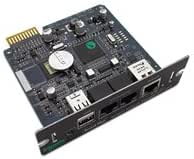 | Best Budget Upgrade for Legacy Systems | Model: AP9631 | Data Transfer Rate: 100 megabits per second | Hardware Interface: Ethernet | VIEW ON AMAZON | See Our Full Breakdown |
| AP9641 Device Management Card with Environmental Monitoring |  | Best for Bulk Replacement Stock | Model: AP9641 | Manufacturer: XPQKDC | Condition: New, Never Used | VIEW ON AMAZON | See Our Full Breakdown |
| APC AP9631 UPS Network Management Card 2 with Environmental Monitoring |  | Best for Legacy Smart-UPS Integration | Brand: APC | Model: AP9631 | Operating Temperature: 32–113 °F (0–45 °C) | VIEW ON AMAZON | See Our Full Breakdown |
| APC UPS Network Management Card 3 (AP9641) |  | Best for Modern APC Ecosystems | Brand: APC | Model: AP9641 | USB Ports: 2 | VIEW ON AMAZON | See Our Full Breakdown |
| Tripp Lite E2MT Environmental Sensor Module with Temperature Monitoring |  | Best for Simple Rack Temperature Tracking | Compatible Devices: WEBCARDLX, PDU3XE/E Series | Accuracy: ±1°C | Mounting: Magnetic / Flange | VIEW ON AMAZON | See Our Full Breakdown |
| MONIGEAR Network Temperature and Humidity Monitor with PoE Support |  | Best for IoT and Mixed-Vendor Integration | Brand: MONIGEAR | Model: MN-NTHM | Connectivity: Ethernet (PoE) | VIEW ON AMAZON | See Our Full Breakdown |
| environmental monitoring system for rack | Model | Weight |
|---|---|---|
| APC Netbotz Rack Monitor 750 | Netbotz Rack Monitor 750 | — |
| Eaton EMPDT1H1C2 Environmental | EMPDT1H1C2 | 1.1 ounces |
| APC NetBotz NBRK0250A Basic Ra | NBRK0250A | — |
| APC UPS Network Management Car | AP9643 | 140 g |
| APC AP9631 UPS Network Managem | AP9631 | — |
| AP9641 Device Management Card | AP9641 | — |
| APC AP9631 UPS Network Managem | AP9631 | 90 g |
| APC UPS Network Management Car | AP9641 | 410 g |
| Tripp Lite E2MT Environmental | — | 1.6 ounces |
| MONIGEAR Network Temperature a | MN-NTHM | 155 g |
More Details on Our Top Picks
APC Netbotz Rack Monitor 750
This unit stands out as the most complete dedicated rack monitor in the lineup. Unlike the APC NetBotz NBRK0250A, which focuses on basic security and environment, the Rack Monitor 750 integrates advanced security features alongside environmental sensing, making it ideal for high-value assets. The inclusion of mounting brackets and sensors right out of the box reduces setup friction compared to modular competitors. However, its larger footprint and higher complexity mean it is overkill for simple edge deployments. If you need video surveillance and access control tied directly to environmental alerts, this is the superior choice. It offers a balance of rugged build quality and feature depth that smaller sensors cannot match.
Pros:- Integrates security and environmental monitoring in a single unit
- Includes necessary mounting hardware and sensors for immediate deployment
- Rugged design suitable for harsh data center environments
- Scalable architecture for growing IT infrastructure
Cons:- Higher initial cost compared to basic sensor modules
- Larger physical footprint consumes more rack units
- Requires more complex configuration for full feature utilization
Best for: Enterprise IT managers securing high-value server racks who need integrated video, access control, and environmental monitoring in one device.
Not ideal for: Small offices or home labs that only need temperature alerts and find the cost and complexity unnecessary.
- Model:Netbotz Rack Monitor 750
- Package Weight:4.23 kg
- Package Dimensions:53.5 x 12.5 x 32.5 cm
- Country of Origin:Philippines
- Included Accessories:Mounting brackets, temp/humidity sensor, USB cable
- Primary Function:Security and Environmental Monitoring
- Form Factor:Rack-mounted
Our verdict“This is the go-to solution for enterprises needing robust, all-in-one rack protection.”
Eaton EMPDT1H1C2 Environmental Monitoring Probe
When space is at a premium, the Eaton EMPDT1H1C2 excels with its incredibly small 2.3-inch length. Compared to the bulkier APC Netbotz Rack Monitor 750, this probe fits easily into crowded racks without obstructing cable management. It monitors temperature, humidity, and two dry-contact points, offering versatile input options for door switches or water leaks. The integrated LED provides immediate visual status, a feature absent in many network-only cards. However, it relies on external network connectivity for remote alerts, requiring a separate Gigabit Network Card or Eaton power infrastructure. This dependency adds hidden costs for standalone deployments. It is best viewed as a peripheral sensor rather than a standalone monitoring hub.
Pros:- Extremely compact size allows installation in tight rack spaces
- Supports two dry-contact inputs for additional sensor integration
- Integrated LED provides quick local status visibility
- Lightweight and easy to mount with minimal hardware
Cons:- Requires a separate network interface for remote monitoring
- Short listed battery life limits standalone utility
- Does not function as a standalone monitoring system
Best for: Users with limited rack space who need precise, localized environmental data and already have Eaton power monitoring infrastructure.
Not ideal for: Standalone users without existing Eaton network cards, as the probe cannot function independently for remote monitoring.
- Model:EMPDT1H1C2
- Dimensions:1.2 x 1.5 x 2.3 inches
- Weight:1.1 ounces
- Power Source:1 AAA battery
- Measurements:Temperature, humidity, 2 dry-contacts
- Material:Translucent plastic
- Warranty:2 years
Our verdict“Choose this probe for precise, localized sensing in space-constrained Eaton environments.”
APC NetBotz NBRK0250A Basic Rack Security and Environmental Monitor 250
The APC NetBotz NBRK0250A offers a streamlined approach to rack monitoring, focusing on essential security and environmental metrics without the complexity of higher-end models. Compared to the Eaton EMPDT1H1C2, it operates as a more self-contained unit, reducing the need for additional network cards. Its 4.4-pound weight and standard rack form factor make it easy to install in edge locations. While it lacks the advanced video integration of the Rack Monitor 750, it provides reliable temperature and humidity tracking for smaller networks. The requirement for a lithium-ion battery adds a maintenance consideration, but the tradeoff is a simpler deployment for basic needs. This unit is best for those who want reliability without feature bloat.
Pros:- Cost-effective entry point for APC rack monitoring ecosystem
- Self-contained design simplifies installation in edge locations
- Reliable tracking of temperature and humidity basics
- Compact enough for smaller rack environments
Cons:- Requires periodic replacement of lithium-ion battery
- Lacks advanced video and access control features
- Limited scalability compared to enterprise-grade monitors
Best for: Small to medium businesses needing straightforward security and environmental monitoring for edge racks without advanced video features.
Not ideal for: Large data centers requiring detailed video surveillance or complex access control integration.
- Model:NBRK0250A
- Dimensions:8.66 x 17.72 x 2.36 inches
- Item Weight:4.4 pounds
- Package Weight:6.5 pounds
- Country of Origin:Philippines
- Power Requirement:1 lithium-ion battery
- Product Type:Computer component
Our verdict“This model provides a balanced mix of security and environmental monitoring for budget-conscious edge deployments.”
APC UPS Network Management Card 3 with Environmental Monitoring and Modbus
This card is designed specifically to add environmental monitoring and Modbus support to compatible APC UPS systems. Unlike standalone monitors like the APC NetBotz NBRK0250A, this device leverages the existing UPS infrastructure, reducing the number of separate devices on the network. The 1000 Mbps data transfer rate ensures fast communication, a significant upgrade over older 100 Mbps cards. It is an excellent choice for users who want to consolidate management of power and environment into a single interface. However, its compatibility is strictly limited to specific UPS models, making it unusable as a general-purpose rack monitor. If your primary concern is power management with basic environmental oversight, this integration saves rack space and cabling complexity.
Pros:- High-speed 1000 Mbps data transfer for responsive monitoring
- Consolidates UPS control and environmental sensing in one unit
- Supports Modbus for industrial integration capabilities
- Reduces rack clutter by integrating with existing UPS hardware
Cons:- Strictly limited compatibility with specific APC UPS models
- Cannot function as a standalone rack monitor
- Limited environmental sensor inputs compared to dedicated units
Best for: IT administrators managing compatible APC UPS systems who want to consolidate power and environmental monitoring into one interface.
Not ideal for: Users without compatible APC UPS hardware or those needing independent rack monitoring capabilities.
- Model:AP9643
- Data Transfer Rate:1000 megabits per second
- Hardware Interface:USB
- Weight:140 g
- Warranty:1 year
- Protocol Support:Modbus, USB
- Primary Function:UPS Network Management
Our verdict“Ideal for consolidating power and environmental management within compatible APC UPS infrastructures.”
APC AP9631 UPS Network Management Card 2 with Environmental Monitoring
The APC AP9631 serves as a reliable, cost-effective upgrade for older APC UPS units, adding secure network access and environmental monitoring. Compared to the newer AP9643, it operates at 100 Mbps, which is sufficient for basic alerting but slower for heavy data loads. It supports IPv6 and SNMPv3, ensuring compatibility with modern security standards. The inclusion of PowerChute Network Shutdown software adds value by protecting data during outages. However, its compatibility is restricted to older Smart-UPS models, limiting its future-proofing. For users with legacy infrastructure, this card provides a straightforward path to networked monitoring without replacing the entire UPS system. It is a pragmatic choice for maintenance-focused IT teams.
Pros:- Supports modern security protocols including SSH and SNMPv3
- Includes PowerChute software for safe system shutdowns
- Cost-effective upgrade path for legacy UPS units
- Reliable Ethernet connectivity for remote management
Cons:- Slower 100 Mbps data transfer rate compared to newer cards
- Limited compatibility to older APC Smart-UPS models
- Lacks advanced industrial protocols like Modbus
Best for: Owners of legacy APC Smart-UPS systems seeking a secure, networked upgrade for environmental and power monitoring.
Not ideal for: New deployments requiring high-speed data transfer or compatibility with current-generation UPS hardware.
- Model:AP9631
- Data Transfer Rate:100 megabits per second
- Hardware Interface:Ethernet
- Item Weight:0.27 g
- Security Protocols:HTTPS/SSL, SSH, SNMPv3
- Network Protocol:IPv6
- Compatible Systems:APC Smart-UPS 1000, 1500, 2200, 300
Our verdict“A solid, budget-friendly network card for adding monitoring to compatible older APC UPS units.”
AP9641 Device Management Card with Environmental Monitoring
This unit is marketed as a new, original packaging replacement for the standard APC AP9641 card. Its primary strength lies in availability for IT managers needing to swap out failed cards in existing UPS infrastructure. Unlike the APC AP9631, which offers broader legacy compatibility, this generic-branded item assumes you already possess the compatible Smart-UPS hardware. The critical tradeoff is the lack of brand transparency; the manufacturer is listed as XPQKDC rather than Schneider Electric/APC. This raises legitimate concerns about firmware stability and warranty support compared to official channels. While it promises environmental monitoring for temperature and humidity, the vague specs make it a risky choice for critical infrastructure unless you are sourcing spare parts in bulk where cost outweighs brand assurance.
Pros:- Sold as new in original packaging, reducing the risk of used-component failures.
- Immediate stock availability for urgent replacement needs.
- Includes integrated environmental monitoring for basic temperature and humidity tracking.
Cons:- Manufacturer listed as generic code (XPQKDC) rather than recognized APC/Schneider Electric branding.
- Limited technical specifications provided, making compatibility verification difficult.
- Potential lack of official firmware updates or long-term support channels.
Best for: Procurement specialists sourcing spare management cards for existing APC Smart-UPS fleets who prioritize immediate availability over brand certification.
Not ideal for: New installations or mission-critical data centers where firmware integrity, official warranty support, and verified sensor accuracy are mandatory.
- Model:AP9641
- Manufacturer:XPQKDC
- Condition:New, Never Used
- Packaging:Original
- Function:Device Management & Environmental Monitoring
- Release Date:May 30, 2026
Our verdict“A pragmatic spare part for existing APC setups if you can verify compatibility independently, but risky for new deployments due to unclear branding.”
APC AP9631 UPS Network Management Card 2 with Environmental Monitoring
The APC AP9631 stands out for its robust control over older Smart-UPS models, offering a level of command-line access that newer cloud-centric cards sometimes restrict. It includes a physical temperature sensor in the box, a tangible advantage over digital-only solutions like the Tripp Lite E2MT which relies on host device accuracy. This card supports SNMP trap forwarding, allowing it to integrate into existing enterprise monitoring systems without requiring a proprietary cloud portal. However, its utility is strictly bounded by hardware compatibility; it only works with specific SMX, SMT, and SRT UPS units. If you are managing a mixed fleet of non-APC equipment or newer Smart-UPS models requiring NMC3 features, this card will leave you stranded, offering no upgrade path beyond its current firmware limitations.
Pros:- Includes a dedicated temperature sensor in the package.
- Supports SNMP trap forwarding for integration with third-party monitoring tools.
- Offers both web and command-line (Telnet/SSH) access for flexible management.
Cons:- Firmware and feature support are limited to specific legacy UPS model lines.
- Does not support the newer NMC3 protocols found in current APC devices.
- Physical form factor may not fit all rack depths without additional brackets.
Best for: IT administrators maintaining older APC Smart-UPS SMX, SMT, or SRT models who need reliable local SNMP integration and physical sensor support.
Not ideal for: Users with modern Smart-UPS models requiring NMC3 features, or those managing non-APC power infrastructure, as compatibility is strictly limited.
- Brand:APC
- Model:AP9631
- Operating Temperature:32–113 °F (0–45 °C)
- Access Users:8 Web / 3 CLI
- Included Accessories:Temp sensor, serial cable, CD, manual
- Form Factor:Rack
- Weight:90 g
Our verdict“The go-to choice for extending the life of legacy APC Smart-UPS units with reliable, local network control.”
APC UPS Network Management Card 3 (AP9641)
As the successor to the NMC2 line, the APC AP9641 is engineered for security-conscious environments, featuring automatic protocol disablement and strict password policies by default. This contrasts sharply with the MONIGEAR monitor, which prioritizes open protocol flexibility (MQTT, BACnet) over default security hardening. The AP9641 integrates seamlessly with current APC Smart-UPS models, providing a unified dashboard for power and environmental data. However, its closed ecosystem is a significant barrier; it functions only with individual APC UPS units, offering no value to multi-vendor racks. While it includes two USB ports for peripheral expansion, the lack of broad third-party protocol support means it cannot easily feed data into generic IoT platforms like Home Assistant without middleware, limiting its appeal outside pure APC environments.
Pros:- Security-first design with automatic protocol disablement and password protection.
- Seamless integration with current generation APC Smart-UPS models.
- Includes two USB ports for connecting additional environmental sensors or peripherals.
Cons:- Strictly compatible with APC UPS units only, offering no multi-vendor support.
- Lacks native support for open IoT protocols like MQTT or Modbus TCP.
- Higher complexity for users unfamiliar with APC’s proprietary management interface.
Best for: Enterprise IT teams standardizing on modern APC Smart-UPS infrastructure who prioritize security defaults and centralized power management.
Not ideal for: Home labs or mixed-vendor server racks that require open protocols like MQTT or Modbus for custom dashboard integration.
- Brand:APC
- Model:AP9641
- USB Ports:2
- Warranty:2 years
- Dimensions:4.76 x 4.49 x 1.5 inches
- Weight:410 g
- Battery Type:Lithium
Our verdict“The definitive choice for securing and monitoring modern APC power infrastructure within a closed, enterprise-grade ecosystem.”
Tripp Lite E2MT Environmental Sensor Module with Temperature Monitoring
The Tripp Lite E2MT is a specialized probe rather than a full management card, designed to add temperature visibility to existing Tripp Lite LX platform devices. Its magnetic mounting system allows for rapid deployment on metal rack surfaces, offering a distinct advantage over the rigid, slot-in design of the APC AP9631. You can daisy-chain up to three modules, making it ideal for monitoring hot spots across a single rack without complex cabling. However, this device is useless on its own; it requires a compatible Tripp Lite PDU or Web Card to function. If you do not already own the host hardware, the total cost of ownership skyrockets compared to standalone monitors like the MONIGEAR. It is a niche add-on for specific Tripp Lite users seeking granular thermal data.
Pros:- Magnetic mounting allows for flexible, tool-free placement on rack surfaces.
- Supports daisy-chaining up to three modules for extended coverage.
- High measurement accuracy of ±1°C for precise thermal tracking.
Cons:- Requires a compatible Tripp Lite LX Platform host device to function.
- Limited to temperature monitoring; does not track humidity or airflow.
- Cable management can become cluttered with multiple daisy-chained units.
Best for: Users with existing Tripp Lite LX Platform PDUs or Web Cards who need to expand temperature monitoring zones within a rack.
Not ideal for: Standalone deployments or users without Tripp Lite host hardware, as this module cannot operate independently.
- Compatible Devices:WEBCARDLX, PDU3XE/E Series
- Accuracy:±1°C
- Mounting:Magnetic / Flange
- Dimensions:1.42 × 2.52 × 0.83 inches
- Weight:1.6 ounces
- Cable Type:3 ft. USB-A to Micro-B
- Warranty:2-year limited
Our verdict“An effective expansion module for Tripp Lite ecosystems, but a dead end for standalone or multi-brand rack monitoring.”
MONIGEAR Network Temperature and Humidity Monitor with PoE Support
The MONIGEAR monitor breaks away from proprietary UPS ecosystems by supporting a wide array of open protocols including MQTT, BACnet, and Modbus TCP. This makes it far more versatile than the APC AP9641, which locks you into APC’s closed management software. Power over Ethernet (PoE) simplifies installation significantly, eliminating the need for separate power supplies and reducing cable clutter in dense racks. It integrates directly with major platforms like AWS, Azure, and Home Assistant, appealing to developers and home lab enthusiasts alike. The tradeoff is the dependency on network infrastructure; you must have a PoE switch or injector available. Additionally, while it supports humidity monitoring, specific accuracy metrics for humidity are less transparent than its temperature specs, requiring careful validation for critical environmental compliance.
Pros:- Broad protocol support (MQTT, SNMP, Modbus) for easy IoT platform integration.
- PoE power supply reduces cabling complexity and installation time.
- Flame-retardant polycarbonate housing suitable for various mounting standards.
Cons:- Requires a PoE switch or injector, adding to infrastructure costs.
- Humidity accuracy specifications are not explicitly detailed in technical docs.
- Lacks direct control capabilities for power distribution units or UPS systems.
Best for: Home lab enthusiasts, IoT developers, and mixed-vendor IT environments needing open protocol support and PoE power delivery.
Not ideal for: Facilities without PoE infrastructure or those requiring vendor-specific UPS control features like load shedding or graceful shutdown.
- Brand:MONIGEAR
- Model:MN-NTHM
- Connectivity:Ethernet (PoE)
- Protocols:Modbus TCP, SNMP, BACnet, MQTT
- Max Temperature:85 °C
- Certifications:FCC, CE, RoHS, ISO 9001
- Weight:155 g
Our verdict“The most flexible standalone sensor for modern, protocol-driven environments that value open integration over proprietary control.”

How We Picked
To determine the best environmental monitoring system for rack applications, I evaluated each option based on sensor accuracy, integration capabilities, and deployment complexity. Priority was given to devices that offer clear visibility into temperature, humidity, and physical security without requiring excessive configuration overhead. I also assessed the longevity of the software support and the availability of third-party integrations, as vendor lock-in can become a significant bottleneck for growing IT infrastructure.
Ranking logic favored versatility for mid-range options and specialized features for premium picks. For instance, while basic temperature probes are sufficient for simple storage racks, they were ranked lower for server environments where airflow disruption and power correlation matter. Products that combined power management with environmental sensing were rewarded for reducing rack unit consumption, provided the user already utilizes compatible power equipment. This approach ensures that recommendations are not just about feature lists, but about matching the tool to the operational context.
Factors to Consider When Choosing Environmental Monitoring System For Rack
Choosing the right monitoring hardware requires looking past the price tag to understand how each system fits into your existing workflow and physical space.Integration vs. Standalone Deployment
Many buyers mistakenly assume all monitoring devices operate independently, but a significant portion of the market consists of management cards that plug directly into UPS units. These cards, such as the APC AP9631 or AP9641, leverage the existing power infrastructure to provide environmental data, which saves rack space and cabling complexity. However, this convenience comes with a dependency; if your UPS fails or is replaced, your monitoring capability disappears unless you replace the card as well. Standalone devices like the Eaton EMPDT1H1C2 probe or MONIGEAR monitor offer independence, allowing you to place sensors in hot spots regardless of power location. If your rack already contains a managed UPS from a major brand, integrating a matching management card is often the most efficient path. Conversely, if you have mixed-brand power equipment or need to monitor specific non-powered zones, standalone units provide the necessary flexibility.
Sensor Accuracy and Placement Constraints
The physical form factor of the sensor dictates where you can place it, which directly impacts data reliability. Rack-mounted sensors often occupy a full U or half-U of space, reducing the room available for servers or switches. Some devices, like the Tripp Lite E2MT, use external probes that allow you to place the sensor directly in the intake or exhaust airflow, providing more accurate thermal readings than a device sitting in the middle of the rack. Buyers frequently overlook the need for calibration consistency; cheaper sensors may drift over time, leading to false alarms or missed overheating events. In high-density computing environments, even a two-degree variance can trigger unnecessary cooling responses or mask actual thermal issues. Prioritize devices that offer external probe options if your rack layout has complex airflow patterns or hot aisles.
Protocol Compatibility and IT Workflow
Your existing network monitoring stack should dictate your hardware choice. If your team relies on SNMP traps for alerting, ensure the chosen device supports standard MIBs without requiring proprietary agents. Newer devices often support Modbus or REST APIs, which facilitate integration with modern building management systems or custom dashboards. A common pitfall is purchasing a device that requires a specific vendor’s software suite to view basic data, creating a siloed monitoring experience. The APC NetBotz series, for example, offers deep integration with their own software, which is powerful but may be redundant if you already use PRTG, Nagios, or SolarWinds. Verify that the device exports data in formats compatible with your current tools to avoid paying for redundant software licenses or managing separate alerting channels.
Security Features Beyond Temperature
Environmental monitoring often overlaps with physical security, but not all systems treat them equally. Basic sensors focus solely on climate, whereas premium units like the NetBotz Rack Monitor 750 include door contacts, motion detection, and camera interfaces. For data centers handling sensitive information, correlating environmental changes with physical access events provides a richer audit trail. For example, a spike in temperature combined with a door-open event might indicate an unauthorized access attempt or a maintenance error. If you operate in a secure facility, skipping these features means missing out on a unified security posture. However, if you only need to prevent server overheating in a controlled office environment, paying for advanced security sensors represents an unnecessary expense. Assess your compliance requirements before selecting a unit with integrated security capabilities.
Frequently Asked Questions
Do I need a dedicated environmental monitor if I already have a UPS?
Not necessarily, but it depends on the capabilities of your existing UPS network card. Many modern UPS units, particularly from APC and Eaton, allow you to add environmental monitoring cards that plug directly into the chassis. This is often the most cost-effective method because it utilizes the existing power supply and network connection. However, if your UPS is older or lacks these expansion slots, you will need a standalone monitor. Additionally, if you need to monitor temperature in areas of the rack far from the UPS, such as the top or bottom units, standalone sensors with long probe cables offer better placement flexibility than integrated cards.
What is the difference between PoE and local power for these monitors?
PoE (Power over Ethernet) monitors, like the MONIGEAR model, simplify installation by drawing power and data through a single network cable. This reduces the need for additional power strips and outlets inside the rack, which is beneficial in space-constrained environments. Local power options are typically used by integrated management cards that draw power from the UPS or a dedicated internal source. The main tradeoff is reliability; if your network switch loses power, a PoE device goes offline, potentially missing critical environmental alerts during a power event. Devices with local power or battery backup can continue logging data even if the network connection is interrupted, providing a more complete incident record.
How critical is humidity monitoring for standard server racks?
Humidity monitoring is less critical than temperature for immediate server survival, but it is important for long-term hardware health. Low humidity can increase the risk of electrostatic discharge, which can damage sensitive components during maintenance or handling. High humidity leads to condensation, which causes corrosion and short circuits. Most enterprise-grade monitors include humidity sensors because they are inexpensive to add and provide a complete environmental picture. If you operate in a climate-controlled data center with strict HVAC management, you might prioritize temperature accuracy over humidity precision. However, for edge deployments or office closets where HVAC is less consistent, monitoring both metrics is a best practice to prevent gradual hardware degradation.
Can I mix different brands of environmental sensors in one rack?
Yes, you can physically install multiple sensors from different brands in a single rack, but managing them requires compatible software. You can use a network monitoring platform like PRTG or Zabbix to poll both an APC sensor and a Tripp Lite sensor via SNMP, consolidating the data into one dashboard. The challenge lies in standardizing alert thresholds and data granularity across different vendors. Mixing brands can lead to fragmented configuration processes, where each device requires a separate setup wizard or firmware update cycle. If you are building a new rack from scratch, sticking to one ecosystem often reduces administrative overhead. If you are retrofitting an existing setup, mixing brands is a practical way to add coverage without replacing functional existing hardware.
Is Modbus support worth paying extra for in 2027?
Modbus support is worth the investment if your facility uses a Building Management System (BMS) or industrial control systems that rely on this protocol. It allows your IT infrastructure to communicate directly with HVAC controllers, enabling automated responses such as increasing fan speed when rack temperatures rise. For pure IT environments using standard IP-based monitoring tools like SNMP or HTTP APIs, Modbus is unnecessary and adds complexity without benefit. The APC UPS Network Management Card 3 includes Modbus, catering to these hybrid industrial-IT needs. If your operations are strictly within the IT domain, you can safely skip devices marketed primarily for their industrial protocol compatibility and focus on standard network management features.
Conclusion
Selecting the right environmental monitoring system for rack depends heavily on your existing infrastructure and specific operational needs. For most enterprise users seeking a balance of security and climate control, the APC NetBotz Rack Monitor 750 remains the best overall choice due to its comprehensive sensor suite and robust software ecosystem. If you are looking for the best value and already use compatible power equipment, the APC AP9631 UPS Network Management Card 2 offers reliable monitoring without adding extra rack units. Beginners or those with limited budgets should consider the Tripp Lite E2MT Environmental Sensor Module for its straightforward setup and accurate temperature readings. For users requiring flexible placement in mixed-brand environments, the MONIGEAR Network Temperature and Humidity Monitor with PoE support is the best specific need pick, offering ease of deployment and modern connectivity. Ultimately, match the device’s integration capabilities to your current network stack to avoid unnecessary complexity and ensure consistent data visibility.