A cinematic drone needs more than a high-resolution camera: steady footage, useful camera controls, and flight time for repeat takes all shape the final result. I name the DJI Mini 5 Pro Fly More Combo my best overall pick for balancing portability and creative control, while the DJI Mavic 4 Pro is the premium choice for demanding productions and the DJI Mini 3 makes a more budget-conscious case for scenic footage. The main tradeoff is between camera capability and a compact, approachable setup; motion-flight bundles also prioritize an immersive flying style over conventional film work. Read on for how the 15 options differ and which one best fits your footage, experience, and gear needs.

Get the latest gadgets delivered free with Prime
- Fast, free delivery on millions of items
- Prime Video, Amazon Music and more included
- Member-only deals all year
Complete the kit



Key Takeaways
- The Mini 5 Pro is the strongest all-round fit: it occupies the useful middle ground between compact Mini drones and the larger, more production-oriented Mavic 4 Pro.
- The Mavic 4 Pro options target higher-end work: they make the most sense when camera capability matters more than keeping the whole setup small and simple.
- Mini 3 bundles offer a practical step up from entry-level: the lineup includes versions with different controllers and accessories, so compare what is actually included before choosing.
- Mini 4K packages focus on accessible 4K aerial footage: bundle contents vary, but added accessories do not change the underlying drone’s camera capabilities.
- Neo and motion bundles serve a different style: they suit approachable, immersive flying better than buyers who want a conventional camera-drone workflow above all else.
| DJI Mini 5 Pro Fly More Combo with DJI RC 2 |  | Best Overall for Cinematic Image Quality | Sensor: 1-inch CMOS | Video: 4K/60fps HDR | Gimbal rotation: 225° roll | VIEW ON AMAZON | See Our Full Breakdown |
| DJI Mini 3 Drone Bundle with 4K Camera, 38-Min Flight Time, and Accessories |  | Best Value for Beginner Travel Filmmakers | Weight: 248 g | Video resolution: 4K UHD | Still resolution: 48 MP | VIEW ON AMAZON | See Our Full Breakdown |
| DJI Neo 2 Fly More Combo with RC-N3 Remote Controller |  | Best for Beginner-Friendly Tracking | Weight: 151 g | Video resolution: 4K | Still resolution: 12 MP | VIEW ON AMAZON | See Our Full Breakdown |
| SKYROVER X1 Drone with Camera and Screen Controller |  | Best Screen-Controller Alternative | Image sensor: 1/1.32-inch CMOS | Video: 4K/60fps HDR; 4K/100fps slow motion | Photo resolution: 48 MP | VIEW ON AMAZON | See Our Full Breakdown |
| DJI Neo Motion Fly More Combo Mini Drone with 4K UHD Camera | 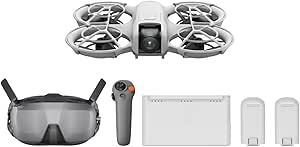 | Best for Immersive Motion-Control Filming | Weight: 135 g | Video resolution: 4K UHD | Still resolution: 12 MP | VIEW ON AMAZON | See Our Full Breakdown |
| DJI Neo 2 Fly More Combo with RC-N3 Remote Controller, Stable Transmission with Digital Transceiver, Drone Strobe Light, Landing Pad, Carrying Case |  | Best for Effortless Self-Filming | Weight: 151 g | Dimensions: 6.74 × 5.8 × 1.59 in | Video resolution: 4K | VIEW ON AMAZON | See Our Full Breakdown |
| DJI Mini 4K Drone with 4K UHD Camera (Under 249 g) |  | Best Value for Gimbal-Stabilized 4K | Weight: Under 249 g | Camera resolution: 4K Ultra HD | Gimbal: 3-axis | VIEW ON AMAZON | See Our Full Breakdown |
| DJI Neo 2 Motion Fly More Combo with RC Motion 3 and Goggles N3 |  | Best for Immersive FPV Flights | Weight: 151 g | Video resolution: 4K | Still resolution: 12 MP | VIEW ON AMAZON | See Our Full Breakdown |
| DJI Mini 5 Pro Fly More Combo with DJI RC 2 |  | Best Premium Cinematic Camera | Sensor: 1-inch CMOS | Video: 4K/60fps HDR | Gimbal rotation: 225° | VIEW ON AMAZON | See Our Full Breakdown |
| DJI Mini 3 Fly More Combo with DJI RC |  | Best for Long Beginner Shoot Days | Weight: Under 249 g | Video resolution: 4K UHD HDR | Photo resolution: 48 MP | VIEW ON AMAZON | See Our Full Breakdown |
| DJI Mini 3 Drone with DJI RC Remote Controller |  | Best Compact Pick | Weight: Under 249 g with standard battery | Camera: 4K HDR video | Gimbal: 3-axis mechanical | VIEW ON AMAZON | See Our Full Breakdown |
| DJI Mavic 4 Pro Drone with DJI RC 2 |  | Best Premium Cinematic Camera | Camera: 100MP 4/3 CMOS Hasselblad | Video: 6K / 60fps HDR | Tele cameras: Large CMOS dual tele cameras (1/1.3-inch and 1/1.5-inch) | VIEW ON AMAZON | See Our Full Breakdown |
| DJI Mavic 4 Pro Drone Fly More Combo with 64GB Card, Backpack, and Accessories |  | Best Complete Production Kit | Model: DJI Mavic 4 Pro | Bundle type: Fly More Combo | Included accessories: 64GB memory card, backpack, landing pad, cleaning kit, card wallet, and card reader | VIEW ON AMAZON | See Our Full Breakdown |
| DJI Mini 4K Fly More Combo Drone |  | Best Beginner Fly More Kit | Weight: Under 249 g | Camera resolution: 4K UHD | Stabilization: 3-axis gimbal | VIEW ON AMAZON | See Our Full Breakdown |
| DJI Mini 4K Camera Drone Combo |  | Best Two-Battery Starter Kit | Weight: Under 249 g | Camera resolution: 4K Ultra HD | Gimbal: 3-axis stabilization | VIEW ON AMAZON | See Our Full Breakdown |
| cinematic drone | Weight | Maximum flight time |
|---|---|---|
| DJI Mini 5 Pro Fly More Combo | Approximately 249.9 g | — |
| DJI Mini 3 Drone Bundle with 4 | 248 g | 38 minutes; up to 51 minutes with Plus Battery |
| DJI Neo 2 Fly More Combo with | 151 g | — |
| SKYROVER X1 Drone with Camera | 249 g | Up to 96 minutes with 3 batteries |
| DJI Neo Motion Fly More Combo | 135 g | — |
| DJI Neo 2 Fly More Combo with | 151 g | — |
| DJI Mini 4K Drone with 4K UHD | Under 249 g | Up to 31 minutes per battery |
| DJI Neo 2 Motion Fly More Comb | 151 g | — |
| DJI Mini 5 Pro Fly More Combo | Approximately 249.9 g ± 4 g | Up to 36 minutes |
| DJI Mini 3 Fly More Combo with | Under 249 g | Up to 38 minutes per battery |
| DJI Mini 3 Drone with DJI RC R | Under 249 g with standard battery | — |
| DJI Mavic 4 Pro Drone with DJI | 2,372 g | 51 minutes |
| DJI Mavic 4 Pro Drone Fly More | — | — |
| DJI Mini 4K Fly More Combo Dro | Under 249 g | Up to 93 minutes total with three batteries |
| DJI Mini 4K Camera Drone Combo | Under 249 g | Up to 62 minutes with two batteries |
More Details on Our Top Picks
DJI Mini 5 Pro Fly More Combo with DJI RC 2
The DJI Mini 5 Pro is my strongest pick when cinematic image quality matters more than keeping the controls simple. Its 1-inch sensor and 4K/60fps HDR capture give footage more room for detailed highlights and shadows than the smaller-sensor DJI Neo 2, while the 225° roll gimbal supports true vertical framing for social clips. Omnidirectional sensing and ActiveTrack 360° also help when tracking a moving subject near obstacles, though they do not replace careful piloting. The Fly More kit’s three batteries make longer shoots more practical than relying on a single charge. The tradeoff is that this is more capable—and potentially more complex—than a casual first drone. Its near-249 g weight also does not remove local flight rules, and Android users may need to install DJI Fly outside Google Play.
Pros:- 1-inch CMOS sensor records 4K/60fps HDR for more detailed cinematic footage.
- 225° roll gimbal enables true vertical filming without relying on a crop.
- Three batteries and a charging hub support longer shooting sessions.
- Omnidirectional sensing and ActiveTrack 360° assist with tracking and obstacle awareness.
Cons:- The advanced camera and tracking features may be more than casual beginners need.
- DJI Fly must be downloaded manually on Android because it is unavailable through Google Play.
- Night-flight rules vary by location and may limit when it can be flown.
Best for: Creators who want a highly portable drone for polished HDR travel footage, vertical video, and subject tracking, with multiple batteries for longer filming days.
Not ideal for: First-time flyers seeking the simplest, lowest-commitment option, or Android users who do not want to install the flight app manually.
- Sensor:1-inch CMOS
- Video:4K/60fps HDR
- Gimbal rotation:225° roll
- Flight time:Up to 52 minutes per battery
- Batteries included:3, plus charging hub
- Weight:Approximately 249.9 g
- Internal storage:42 GB
- Obstacle sensing:Omnidirectional LiDAR and vision sensors
Our verdict“Choose the Mini 5 Pro if you want the strongest imaging and tracking combination here in a compact drone and are comfortable managing its app and flight rules.”
DJI Mini 3 Drone Bundle with 4K Camera, 38-Min Flight Time, and Accessories
The DJI Mini 3 bundle suits new filmmakers who want stabilized 4K HDR footage without paying for the Mini 5 Pro’s more advanced tracking and sensing. Its 248 g listed weight keeps the drone in a portable class, while the included guards, landing gear, case, and spare parts make learning and packing less of a scavenger hunt. The 4K camera and 48 MP still capture are a meaningful step up from the DJI Neo 2’s more basic 12 MP still specification, although that comparison does not make the Mini 3 a pro-level cinema camera. Its 38-minute standard-battery limit means less time to repeat takes than the Mini 5 Pro’s stated per-battery flight time. The Plus Battery can extend flight time, but it is not included and raises the weight beyond 249 g.
Pros:- 4K HDR video and 48 MP still capture provide a capable starter imaging setup.
- The bundle includes a carrying case, propeller guards, landing gear, and spare parts.
- Listed 248 g weight makes it convenient to pack for travel.
- GPS Return to Home and automatic takeoff and landing support newer pilots.
Cons:- Standard battery flight time is listed at 38 minutes, shorter than the Mini 5 Pro’s stated time per battery.
- The extended-flight Plus Battery is separate and takes the drone above 249 g.
- It lacks the Mini 5 Pro’s omnidirectional sensing and more advanced tracking features.
Best for: New travel creators who want a portable 4K drone with protective accessories included and prefer straightforward filming over advanced obstacle sensing.
Not ideal for: Filmmakers who need omnidirectional obstacle sensing, a screen-equipped controller, or the longest listed flight time from the included batteries.
- Weight:248 g
- Video resolution:4K UHD
- Still resolution:48 MP
- Maximum flight time:38 minutes; up to 51 minutes with Plus Battery
- Transmission range:Up to 10 km
- Controller:DJI RC-N1
- Included accessories:Carrying case, landing gear, propeller guards, spare propellers, and spare parts
- Battery type:Lithium-ion
Our verdict“Pick the Mini 3 bundle if you want an approachable 4K travel drone with useful starter accessories and can work within its standard-battery flight time.”
DJI Neo 2 Fly More Combo with RC-N3 Remote Controller
The DJI Neo 2 puts easy subject capture ahead of the more deliberate camera control offered by the DJI Mini 5 Pro. At 151 g, it is especially easy to carry, and palm takeoff, gesture controls, ActiveTrack, and SelfieShot lower the barrier to filming yourself without immediately mastering a controller. Its 4K video is useful for casual cinematic clips, while the included three batteries and charging hub give a beginner more chances to get a shot than a single-battery setup. Still, the product information does not specify flight time per battery, so I cannot rank its shooting endurance against the Mini 3’s stated 38 minutes. Its 12 MP stills and beginner-focused feature set also make it a less compelling choice than the Mini 5 Pro for creators who prioritize image flexibility over effortless operation.
Pros:- 151 g weight makes it easy to carry on walks and trips.
- Palm takeoff and gesture controls simplify launch and basic operation.
- ActiveTrack and SelfieShot help solo users capture themselves in motion.
- Three batteries, a charging hub, and propeller guards are included.
Cons:- The supplied product information does not state flight time per battery.
- Its 12 MP still resolution is more limited than the Mini 3’s 48 MP specification.
- DJI Fly requires manual installation on Android rather than a Google Play download.
Best for: Solo creators and first-time pilots who want lightweight 4K clips, automatic subject tracking, and simple palm or gesture controls.
Not ideal for: Experienced filmmakers who want a larger sensor, detailed flight-time specifications, or more camera-focused control for planned cinematic shots.
- Weight:151 g
- Video resolution:4K
- Still resolution:12 MP
- Dimensions:6.74 × 5.8 × 1.59 in
- Batteries included:3
- Control:DJI RC-N3 remote controller
- Obstacle sensing:Omnidirectional
- Additional features:Gesture control, ActiveTrack, and SelfieShot
Our verdict“Choose the Neo 2 if ease of use and hands-free tracking matter more than camera flexibility or a clearly stated per-battery flight time.”
SKYROVER X1 Drone with Camera and Screen Controller
The SKYROVER X1 makes a strong case for creators who want a capable camera drone without tying the flight view to a phone. Its 5.5-inch touchscreen controller provides a dedicated 1080p/60fps live view, a practical contrast with the DJI Mini 3 bundle’s phone-connected RC-N1. The X1 also lists 4K/60fps HDR, 4K/100fps slow motion, a 3-axis gimbal, and 360° obstacle sensing, giving it a feature set aimed at more varied footage than the beginner-first DJI Neo 2. Its 96-minute maximum flight time is the combined figure for three batteries, not one uninterrupted flight, and the 9.32-mile transmission claim depends on open conditions. At 249 g, it is still portable, but its cinematic appeal depends on accepting those specification limits and the lack of the Mini 5 Pro’s stated 1-inch sensor.
Pros:- The 5.5-inch touchscreen controller works without a phone and offers 1080p/60fps live view.
- 4K/60fps HDR and 4K/100fps slow motion support varied cinematic shots.
- Three-axis gimbal and 360° sensing add stabilization and obstacle awareness.
- Three batteries provide up to 96 minutes of combined listed flight time.
Cons:- The 96-minute figure is shared across three batteries rather than a single flight.
- Maximum transmission range depends on open flying conditions and may not reflect typical use.
- Its 1/1.32-inch sensor is smaller than the Mini 5 Pro’s listed 1-inch sensor.
Best for: Travel videographers who want a dedicated screen controller, slow-motion capture, and multiple batteries without using a phone as the display.
Not ideal for: Buyers who need a compact beginner drone with clearly comparable per-battery endurance, or who prioritize a 1-inch sensor over controller convenience.
- Image sensor:1/1.32-inch CMOS
- Video:4K/60fps HDR; 4K/100fps slow motion
- Photo resolution:48 MP
- Gimbal:3-axis
- Remote display:5.5-inch HD touchscreen, 700 nits, 60 Hz
- Obstacle sensing:360° sensing
- Maximum transmission range:9.32 miles
- Maximum flight time:Up to 96 minutes with 3 batteries
- Weight:249 g
Our verdict“Choose the SKYROVER X1 if a built-in screen and flexible slow-motion modes matter more than the Mini 5 Pro’s larger listed sensor.”
DJI Neo Motion Fly More Combo Mini Drone with 4K UHD Camera
The DJI Neo Motion Fly More Combo is the most distinctive choice here for buyers who want to mix simple automated shots with immersive FPV-style control. At 135 g, it is lighter than the DJI Neo 2, and its palm takeoff, voice control, subject tracking, and QuickShots make spontaneous clips less dependent on piloting skill. The motion controller and goggles add a different way to frame movement than the DJI Mini 3’s conventional controller setup, although that experience is not a substitute for the Mini 5 Pro’s larger 1-inch camera sensor when image quality is the main goal. The listed 4K UHD capture and 12 MP stills suit lightweight social and travel footage, but the battery capacity is specified without a flight-time figure. That makes shoot planning less predictable than with the Mini 3’s stated 38-minute standard-battery limit.
Pros:- 135 g weight makes it the lightest option in this five-product selection.
- Palm takeoff and controller-free options support quick, casual filming.
- Subject tracking and eight QuickShots modes simplify repeatable moving shots.
- Motion controller, voice control, app, and goggles support several flying styles.
Cons:- The supplied data gives battery capacity but no flight-time figure.
- Its 12 MP still resolution and listed 4K UHD video are less camera-focused than the Mini 5 Pro’s 1-inch 4K/60fps HDR setup.
- The lightweight, compact design is a less suitable fit for buyers focused on longer planned filming sessions.
Best for: New creators who want a very light drone for quick subject-following clips and want the option of motion-controller and goggles-based flying.
Not ideal for: Filmmakers who need a stated per-battery flight time, a larger sensor, or a conventional camera-drone setup for carefully controlled landscape footage.
- Weight:135 g
- Video resolution:4K UHD
- Still resolution:12 MP
- Battery capacity:1435 mAh
- Maximum range:10 km
- Dimensions:6.18 × 5.12 × 1.91 in
- Control options:RC Motion 3, RC-N3, voice, and app control
- Additional features:Palm takeoff, subject tracking, and QuickShots
- Propeller guard:Included
Our verdict“Pick the Neo Motion if lightweight, automated clips and immersive motion control appeal more than a larger-sensor camera and predictable flight-time planning.”
DJI Neo 2 Fly More Combo with RC-N3 Remote Controller, Stable Transmission with Digital Transceiver, Drone Strobe Light, Landing Pad, Carrying Case
I’d choose this 151 g Neo 2 when getting a quick, usable follow shot matters more than maximizing image control. Palm takeoff, gesture commands, and ActiveTrack lower the effort of filming yourself, while the RC-N3 gives you a conventional remote when you want more direct control. Compared with the DJI Mini 4K, this combo is easier to carry and more hands-off, but the Mini 4K’s 3-axis gimbal and longer stated flight time per battery make it the stronger fit for deliberate, sustained cinematic passes. The Neo 2 records 4K video and captures 12 MP stills, but its small battery limits time in the air. Three batteries help stretch a shoot, though they do not change the compact drone’s basic run-time tradeoff.
Pros:- 151 g body is easy to pack for spontaneous filming.
- Palm takeoff and gesture controls reduce setup and piloting effort.
- ActiveTrack helps solo operators capture moving-subject footage.
- Combo includes three batteries, an RC-N3 remote, strobe light, landing pad, and carrying case.
Cons:- Small battery capacity limits time available for each flight.
- 12 MP still resolution is modest beside the Mini 3’s 48 MP photos.
- Its convenience-first feature set is less suited to carefully controlled cinematic framing than a gimbal-focused Mini.
Best for: Solo creators who want lightweight, gesture-driven tracking for quick outdoor clips and appreciate having a remote as well as palm controls.
Not ideal for: Filmmakers planning long, carefully framed cinematic takes; its limited flight time and the Mini 4K’s gimbal-focused setup better suit sustained camera work.
- Weight:151 g
- Dimensions:6.74 × 5.8 × 1.59 in
- Video resolution:4K
- Still resolution:12 MP
- Controls:RC-N3 remote, palm takeoff, and gesture control
- Tracking:ActiveTrack
- Connectivity:Bluetooth and Wi-Fi
- Included accessories:Three batteries, strobe light, landing pad, and carrying case
Our verdict“Choose this Neo 2 combo for portable, mostly hands-free self-filming, but pick the Mini 4K if steady, longer-form camera moves matter more.”
DJI Mini 4K Drone with 4K UHD Camera (Under 249 g)
For a straightforward cinematic starting point, I rank the DJI Mini 4K ahead of the Neo 2 because its 3-axis gimbal is built to steady camera movement, not just make flying simple. That matters when a slow pan or tracking pass needs to look smooth in the finished clip. QuickShots, one-tap takeoff and landing, and GPS Return-to-Home make it accessible to beginners; up to 31 minutes per battery also gives a shoot more room than the Neo 2’s small-battery setup. The Mini 3 offers HDR video, higher-resolution stills, a screen-equipped controller in its combo, and longer stated flight time per battery, so it suits buyers wanting more camera and workflow flexibility. The Mini 4K keeps things simpler, but its phone-based app setup and single-battery flight limit are real compromises.
Pros:- 3-axis gimbal helps smooth footage during turns and camera movement.
- QuickShots provide repeatable creative moves for newer pilots.
- GPS Return-to-Home and stable hovering add practical flight support.
- Up to 31 minutes of stated flight time per battery.
Cons:- Flight time is limited to about 31 minutes per battery.
- DJI Fly must be downloaded outside Google Play, adding setup friction for some Android users.
- Regional rules vary; buyers need to check local requirements rather than assume the weight removes all obligations.
Best for: First-time drone filmmakers who want gimbal-stabilized 4K footage, guided shot modes, and a lightweight aircraft without stepping up to the Mini 3.
Not ideal for: Creators who need HDR recording, a built-in controller display, or extended shoots without landing to change batteries.
- Weight:Under 249 g
- Camera resolution:4K Ultra HD
- Gimbal:3-axis
- Maximum flight time:Up to 31 minutes per battery
- Transmission range:Up to 10 km
- Wind resistance:Level 5, up to 38 kph
- Creative flight modes:QuickShots
- Battery options:One, two, or three batteries; up to 31, 62, or 93 minutes stated total flight time
Our verdict“Pick the Mini 4K for approachable gimbal-stabilized 4K filming, and move to the Mini 3 if HDR, a built-in screen, or longer battery sessions are priorities.”
DJI Neo 2 Motion Fly More Combo with RC Motion 3 and Goggles N3
This Neo 2 combo takes the lineup’s smallest, most casual filming idea in a different direction: RC Motion 3 and Goggles N3 put the pilot inside the flight rather than at a standard remote’s controls. That makes it the pick for immersive FPV-style movement, while palm takeoff, gesture control, and ActiveTrack keep quick subject clips accessible. It shares the 151 g weight, 4K video, and 12 MP stills of the RC-N3 Neo 2, but swaps that combo’s conventional remote, strobe, landing pad, and case for goggles, motion control, propeller guards, and a charging hub. Against the DJI Mini 4K, it favors an engaging piloting experience over gimbal-led, deliberate cinematic camera work. The app-download step and limited battery capacity remain practical drawbacks even with three batteries included.
Pros:- RC Motion 3 and Goggles N3 provide an immersive FPV-style control experience.
- At 151 g, the aircraft is notably portable.
- Palm controls, gesture commands, and ActiveTrack support quick solo filming.
- Three batteries, a charging hub, and full-coverage propeller guards are included.
Cons:- Limited battery capacity constrains each flight.
- DJI Fly must be downloaded from DJI’s website rather than Google Play.
- The FPV-focused setup is less direct for conventional, carefully composed cinematic shots than the Mini 4K.
Best for: FPV-curious creators who want an immersive motion-controlled way to capture energetic short clips and value the included goggles and guards.
Not ideal for: Filmmakers seeking conventional, carefully paced aerial compositions or a straightforward remote-and-gimbal workflow; the Mini 4K is better aligned with that approach.
- Weight:151 g
- Video resolution:4K
- Still resolution:12 MP
- Maximum range:10 km
- Battery capacity:1606 mAh
- Included FPV equipment:RC Motion 3 and Goggles N3
- Included batteries:Three
- Connectivity and format:Bluetooth, Wi-Fi, and MP4 video
Our verdict“Choose this combo for immersive motion-controlled flying and energetic footage, not as the lineup’s most straightforward tool for composed cinematic passes.”
DJI Mini 5 Pro Fly More Combo with DJI RC 2
I place the Mini 5 Pro first for buyers who want the strongest stated camera toolkit in this group: its 1-inch CMOS sensor, 4K/60fps HDR recording, and 225° gimbal rotation offer more flexibility for varied light, motion, and vertical framing than the Mini 3 or Mini 4K. ActiveTrack 360° and omnidirectional sensing also give solo operators more help following a subject through changing directions. The included RC 2, three batteries, ND filters, and 42GB of internal storage make this the most shoot-ready package here. That capability comes with a higher weight—approximately 249.9 g ± 4 g—so it does not share the under-249 g claim attached to several lighter options. I’d choose it over the Mini 3 for camera flexibility, but its near-250 g weight and app setup deserve attention before buying.
Pros:- 1-inch CMOS sensor and 4K/60fps HDR provide the most advanced stated video setup in this batch.
- 225° gimbal rotation supports true vertical filming.
- Omnidirectional obstacle sensing and ActiveTrack 360° assist with tracking complex paths.
- Includes three batteries, DJI RC 2, ND filters, charging hub, and 42GB internal storage.
Cons:- Approximately 249.9 g ± 4 g means its weight may exceed 249 g.
- DJI Fly must be downloaded from DJI’s website rather than Google Play.
- Night flights may require permits depending on local regulations.
Best for: Travel and freelance creators who need HDR footage, vertical framing, subject tracking, and a ready-to-shoot accessory bundle in a foldable drone.
Not ideal for: Buyers whose priority is a clearly under-249 g model or a simpler, less camera-feature-heavy option; the Mini 4K is lighter by its stated weight category.
- Sensor:1-inch CMOS
- Video:4K/60fps HDR
- Gimbal rotation:225°
- Obstacle sensing:Omnidirectional, with forward-facing LiDAR and vision sensors
- Maximum flight time:Up to 36 minutes
- Internal storage:42GB
- Weight:Approximately 249.9 g ± 4 g
- Included accessories:DJI RC 2, three batteries, charging hub, spare propellers, and ND filters
Our verdict“Choose the Mini 5 Pro for the most flexible camera and tracking package here, provided its near-250 g weight and app requirements fit your plans.”
DJI Mini 3 Fly More Combo with DJI RC
The Mini 3 Fly More Combo is the practical choice when a beginner wants several ready-to-fly batteries and a controller that does not depend on a phone. Its DJI RC with 5.5-inch display simplifies the filming setup, while three batteries provide up to 114 minutes of stated total flight time across a session. The Mini 3 also records 4K HDR, offers true vertical shots, and captures 48 MP photos—more still resolution than either Neo 2 option. Compared with the Mini 5 Pro, it gives up the 1-inch sensor, 4K/60fps HDR, and omnidirectional sensing; compared with the Mini 4K, it adds the built-in screen, HDR, and a three-battery bundle. HDR video is limited to 30 fps or lower, and transmission range depends on region.
Pros:- DJI RC’s built-in 5.5-inch HD display avoids relying on a smartphone screen.
- Three batteries provide up to 114 minutes of stated total flight time.
- 4K HDR video and true vertical shooting serve both landscape and portrait framing.
- 48 MP photos exceed the Neo 2 models’ stated 12 MP still resolution.
Cons:- HDR video recording is limited to 30 fps or lower.
- DJI Fly must be downloaded from DJI’s website rather than Google Play.
- Maximum transmission distance varies by region; the stated 10 km FCC range is not universal.
Best for: New drone filmmakers who want a screen-equipped controller, vertical social video, high-resolution stills, and multiple batteries for a longer day outdoors.
Not ideal for: Creators who need 4K/60fps HDR, advanced obstacle sensing, or the Mini 5 Pro’s larger sensor and tracking features.
- Weight:Under 249 g
- Video resolution:4K UHD HDR
- Photo resolution:48 MP
- Maximum flight time:Up to 38 minutes per battery
- Combo flight time:Up to 114 minutes across three batteries
- Controller:DJI RC with 5.5-inch HD display
- Maximum transmission distance:Up to 10 km FCC; varies by region
- Stabilization and wind resistance:3-axis gimbal; Level 5 wind resistance, up to 38 kph
Our verdict“Pick the Mini 3 for an approachable, screen-equipped filming kit with multiple batteries, but choose the Mini 5 Pro for more advanced video and sensing.”
DJI Mini 3 Drone with DJI RC Remote Controller
The DJI Mini 3 is the compact choice for cinematic footage when portability and a ready-to-use controller matter more than advanced camera options. Its 3-axis gimbal steadies 4K HDR video, while true vertical shooting makes it easier to frame social clips without cropping a landscape shot. The included DJI RC screen also avoids relying on a phone for viewing and control. Compared with the DJI Mini 4K Fly More Combo, this model offers HDR and vertical capture, but it comes with only one battery rather than a multi-battery setup. It is a tradeoff between a more versatile camera and longer shooting sessions. The standard battery keeps it under 249 g; the optional Battery Plus extends flight time but pushes it above that weight.
Pros:- 3-axis gimbal stabilizes 4K HDR footage
- True vertical shooting suits portrait-oriented clips
- Included DJI RC has a built-in 5.5-inch display
- GPS Return to Home and automatic takeoff and landing support easier operation
Cons:- Only up to 38 minutes of flight time with the included standard battery
- Battery Plus is sold separately and raises the drone’s weight above 249 g
- Battery charger is sold separately
Best for: Travel creators who want a sub-249 g drone, vertical video, and a remote with its own display.
Not ideal for: Creators planning long shoots between charging opportunities, or buyers who need the weight of the drone to stay under 249 g while using the longer-lasting Battery Plus.
- Weight:Under 249 g with standard battery
- Camera:4K HDR video
- Gimbal:3-axis mechanical
- Flight time:Up to 38 minutes with standard battery; up to 51 minutes with optional Battery Plus
- Video transmission:Up to 10 km (FCC); 6 km (CE, SRRC, and MIC)
- Wind resistance:Level 5, up to 38 kph
- Maximum takeoff altitude:4,000 m
- Remote controller:DJI RC with built-in 5.5-inch HD display
Our verdict“Choose the Mini 3 if compact size, vertical video, and a built-in remote display matter more than a multi-battery kit.”
DJI Mavic 4 Pro Drone with DJI RC 2
The DJI Mavic 4 Pro is the lineup’s image-quality choice for creators who want framing options beyond a single wide camera. Its 100MP 4/3 CMOS Hasselblad camera, 6K/60fps HDR video, and dual tele cameras give a production more ways to vary perspective without moving the aircraft closer to a subject. The 360° Infinity Gimbal adds unusual camera movement, while 51-minute flight time allows more room for repeated takes than the DJI Mini 3. That capability comes with a substantial portability cost: at 2,372 g, it is not a lightweight travel alternative. Night-vision obstacle sensing is a useful extra for low-light work, but it does not remove the need for careful flight planning. I’d choose this over the Mini models for camera flexibility, not for casual portability.
Pros:- 100MP Hasselblad 4/3 CMOS camera with 6K/60fps HDR video
- Dual tele cameras provide more framing choices than the Mini models
- 360° Infinity Gimbal supports distinctive camera movement
- Up to 51 minutes of flight time and low-light omnidirectional obstacle sensing
Cons:- At 2,372 g, it is substantially heavier and larger than the sub-249 g Mini options
- DJI Fly app is not available on Google Play
- Its advanced camera system is more capability than casual or occasional flyers may need
Best for: Professional and advanced creators who need multiple focal lengths, high-resolution capture, and extended flight time for planned aerial shoots.
Not ideal for: Travelers prioritizing a lightweight kit, or Android users who depend on downloading DJI Fly through Google Play.
- Camera:100MP 4/3 CMOS Hasselblad
- Video:6K / 60fps HDR
- Tele cameras:Large CMOS dual tele cameras (1/1.3-inch and 1/1.5-inch)
- Gimbal:Infinity Gimbal with 360° rotation
- Obstacle sensing:0.1-Lux Nightscape omnidirectional
- Transmission range:Up to 30 km (18.6 mi) O4+
- Maximum flight time:51 minutes
- Weight:2,372 g
- Remote controller:DJI RC 2
Our verdict“Pick the Mavic 4 Pro for a high-end, multi-camera cinematic setup, and skip it if portability is your main priority.”
DJI Mavic 4 Pro Drone Fly More Combo with 64GB Card, Backpack, and Accessories
This Mavic 4 Pro Fly More Combo is the bundle pick for creators who want to spend less time assembling a field kit and more time planning shots. Extra batteries and a charging hub are listed as part of the Fly More package, while the supplied backpack, 64GB card, landing pad, and cleaning accessories cover several practical needs on location. Its cinematic case rests on the Mavic 4 Pro camera platform, with low-light handling, dynamic range, omnidirectional sensing, and automated moves such as orbits and waypoint navigation. Compared with the DJI Mavic 4 Pro with DJI RC 2, this bundle’s appeal is its included support gear, not a distinct camera upgrade. The tradeoff is a larger, more involved kit than the Mini 4K combos, and the product details do not specify exact battery count or individual accessory capacities.
Pros:- Fly More bundle includes extra batteries and a charging hub
- Backpack, 64GB card, landing pad, and cleaning kit support field work
- Mavic 4 Pro camera system is described as offering strong low-light handling and dynamic range
- Omnidirectional sensing and automated flight modes support repeatable shot planning
Cons:- The larger Mavic platform is less convenient to carry than the Mini 4K options
- The supplied product details do not state exact battery count or bundle flight time
- Bundle accessories add kit complexity for buyers who only need a drone and controller
Best for: Creators planning full-day shoots who want a Mavic 4 Pro-based kit with extra batteries, charging support, and field accessories in one bundle.
Not ideal for: Light-travel filmmakers or buyers who only need an entry-level 4K drone; this Mavic-based bundle is a more involved kit, and its exact battery count is not specified in the supplied details.
- Model:DJI Mavic 4 Pro
- Bundle type:Fly More Combo
- Included accessories:64GB memory card, backpack, landing pad, cleaning kit, card wallet, and card reader
- Camera features:Ultra-sharp video, rich color depth, and low-light handling
- Safety features:Omnidirectional obstacle sensing
- Flight modes:Subject tracking, automated orbits, and precision waypoint navigation
- Battery bundle:Extra batteries and charging hub included; exact quantities not specified
Our verdict“Choose this bundle over the standalone Mavic 4 Pro when the extra batteries and field accessories are part of your planned shooting kit.”
DJI Mini 4K Fly More Combo Drone
For newcomers who want more chances to practice and reshoot, the DJI Mini 4K Fly More Combo is the most straightforward multi-battery option in this group. Its three included batteries provide up to 93 minutes of claimed total flight time, reducing the need to end a session after a single battery. The 4K UHD camera and 3-axis gimbal give footage a stable baseline, while QuickShots and GPS Return-to-Home make basic cinematic moves more accessible. Compared with the DJI Mini 3, it gives up HDR and true vertical shooting, but includes a fuller flight kit. It also offers less camera flexibility than the Mavic 4 Pro. The sub-249 g weight suits buyers seeking a light recreational drone, though flight-time figures are based on controlled conditions and the app availability may be inconvenient for some Android users.
Pros:- Three included batteries provide up to 93 minutes of stated total flight time
- 3-axis gimbal stabilizes 4K UHD footage
- QuickShots, one-tap takeoff, and GPS Return-to-Home are accessible for beginners
- Under-249 g design and included shoulder bag suit portable recreational use
Cons:- The 93-minute figure is a combined claim for three batteries, with actual flight time varying from controlled conditions
- Camera features are less versatile than the Mini 3’s HDR and vertical shooting
- DJI Fly is not available on Google Play
Best for: New drone owners and hobby filmmakers who want stabilized 4K, simple automated shots, and multiple batteries for practice or travel.
Not ideal for: Creators who need HDR, vertical capture, or telephoto framing, or Android users who require DJI Fly to be available through Google Play.
- Weight:Under 249 g
- Camera resolution:4K UHD
- Stabilization:3-axis gimbal
- Maximum flight time:Up to 93 minutes total with three batteries
- Transmission range:Up to 10 km
- Wind resistance:Level 5, up to 38 kph
- Maximum altitude:4,000 m
- Included accessories:Three batteries, two-way charging hub, and shoulder bag
Our verdict“Choose this combo if you want a beginner-friendly 4K drone and multiple batteries rather than the Mini 3’s extra camera modes.”
DJI Mini 4K Camera Drone Combo
The DJI Mini 4K Camera Drone Combo suits buyers who want a lighter, simpler entry into cinematic aerial footage without the three-battery bundle of the DJI Mini 4K Fly More Combo. It records 4K Ultra HD video with 3-axis stabilization, and QuickShots and GPS Return-to-Home help new pilots capture basic moves with less manual setup. Two batteries provide up to 62 minutes of stated combined flight time, a useful step up from a single-battery setup like the DJI Mini 3 configuration described here. The package also includes a shoulder bag and spare propellers. Its camera is more basic than the Mini 3’s HDR and vertical options, and the remote is a phone-dependent DJI RC-N1C rather than a controller with a built-in display. I’d favor it for uncomplicated 4K practice, not more demanding shot variety.
Pros:- 4K video with 3-axis gimbal stabilization
- Two batteries provide up to 62 minutes of stated combined flight time
- One-tap takeoff, GPS Return-to-Home, and QuickShots support beginner pilots
- Under-249 g design with shoulder bag and spare propellers
Cons:- DJI RC-N1C relies on a connected phone rather than providing a built-in display
- No HDR or true vertical shooting is specified, unlike the DJI Mini 3
- DJI Fly must be downloaded from DJI’s website rather than Google Play
Best for: First-time recreational filmmakers who want a sub-249 g 4K drone with two batteries and basic cinematic flight modes.
Not ideal for: Creators who need a built-in remote screen, HDR or vertical video, or wind performance beyond Level 5 conditions.
- Weight:Under 249 g
- Camera resolution:4K Ultra HD
- Gimbal:3-axis stabilization
- Maximum flight time:Up to 62 minutes with two batteries
- Transmission range:Up to 10 km (32,800 ft)
- Wind resistance:Level 5, up to 38 kph
- Remote controller:DJI RC-N1C
- Additional accessories:Two batteries, shoulder bag, propeller holder, and spare propellers
Our verdict“Pick this combo for a basic, portable 4K starter kit with two batteries, but choose the Mini 3 if camera flexibility or a built-in screen matters.”

How We Picked
I judged these options by how well they support cinematic footage, not by camera resolution alone. The main factors were camera and stabilization capability, controllability for repeatable moves, flight time for setting up and repeating shots, portability, and how readily a bundle supports a complete shooting session. I also weighed how approachable each model is for a new pilot and whether its design suits conventional camera operation or a more immersive, motion-led style.
The ranking favors the Mini 5 Pro as the best balance for many creators, then separates premium production choices from simpler entry points and specialized motion options. The Mavic 4 Pro ranks highly for buyers who put camera capability first, while Mini 3 and Mini 4K packages earn their place through a simpler, more accessible route to aerial footage. Duplicate model listings are treated as separate bundle configurations, not as different drone platforms; a controller, extra batteries, or accessories can change convenience, but they do not upgrade the drone’s camera. Exact specifications and included items can vary by listing, so I recommend checking the package contents before purchase.
Factors to Consider When Choosing Cinematic Drone
For cinematic work, I would choose around the shots I need to capture and the flying conditions I expect, rather than starting with the longest feature list. These decisions help separate a camera drone for planned, controlled moves from a compact starter or an immersive motion-flight setup.
Match the Camera to the Final Deliverable
Start with where the footage will appear: a phone screen, a large monitor, a client edit, or a mix of formats. Higher resolution can give more room to crop or reframe, but it does not automatically make footage look cinematic; stabilization, exposure control, lens behavior, and careful movement matter just as much. If you plan to mix drone shots with camera footage, check whether the drone provides recording and color options that fit your editing workflow. A compact model can be the better tool when portability means you will bring it to more locations. Paying for a higher-end camera makes more sense when image flexibility is a recurring production need, not just an occasional preference.
Prioritize Repeatable Camera Movement
A slow, controlled move is often more useful than an exciting flight mode when the goal is polished footage. Look at how the drone is controlled and whether the controller suits the way you plan to frame a shot; a built-in screen may simplify setup, while a phone-based controller can mean more devices and battery checks. Beginners should favor controls they can practice consistently rather than assuming automated modes will produce a finished shot. Motion controllers and goggles offer an immersive style, but they are a different workflow from framing every shot on a conventional screen. Before paying for advanced control gear, ask whether it supports the footage you actually want to make.
Plan Around Flight Time, Not the Headline Number
Real shooting time includes takeoff, finding a safe position, composing the frame, and repeating a move—not only keeping the drone in the air. Wind, temperature, distance, and conservative battery use can all shorten a session, so a bundle with additional batteries may help more than a modest difference in advertised flight time. Check whether spare batteries are included in the exact package, since listings for the same drone can bundle gear differently. Leave time to return and land safely rather than planning to use every minute of a battery for recording. For travel shoots, also weigh battery charging and transport against the convenience of carrying more spares.
Balance Portability Against Production Needs
A small drone is easier to pack, quicker to bring out, and often more practical for hikes or spontaneous filming. A larger or more capable platform may be a better fit when a production calls for greater camera flexibility, but it adds bulk and demands more planning. Do not choose solely by weight: the controller, batteries, case, and accessories determine how portable the full kit feels. Check local rules for the places where you expect to fly, since weight, location, and operating conditions can affect what is allowed. If most footage will be captured on trips, carrying convenience can matter more than a specification advantage you rarely use.
Compare Bundles by What You Will Use
Fly More packages and accessory bundles can save setup effort when they include useful items such as spare batteries, charging gear, or a suitable case. They can also add items that do not improve the image, so separate camera capability from bundle convenience. A screen controller can make framing simpler, while a phone-dependent setup may be perfectly adequate if your phone is compatible and charged. Check the exact controller, battery count, storage accessories, and any included lighting or landing gear before comparing packages. When two listings name the same drone, the better fit is usually the one whose included equipment solves a real workflow need.
Choose a Flight Style You Can Operate Safely
Conventional camera drones suit deliberate framing and repeatable scenic moves; motion-focused packages put more emphasis on an immersive piloting experience. Neither style is automatically better for cinematic footage, since the operator still needs to control speed, direction, and framing. New pilots may find a straightforward camera-and-controller setup easier to learn than a specialized headset workflow. Think through where you will fly, how much room you have, and whether you can maintain awareness of the aircraft and surroundings. A drone that matches your preferred flying style is more useful than a feature-rich model that feels awkward to operate.
Frequently Asked Questions
Is the Mini 5 Pro a better cinematic choice than the Mavic 4 Pro?
I would choose the Mini 5 Pro when portability and a balanced camera-drone setup are priorities. The Mavic 4 Pro is better suited to buyers whose work justifies a more production-focused platform and who are comfortable carrying a larger kit. Neither choice is automatically better for every shot: the location, filming style, and editing needs matter. Compare the camera capabilities of the exact listings, then weigh them against how often you will travel with the drone. If you are unsure whether you need the larger platform’s advantages, the Mini is the more practical starting point.
Should I buy a Fly More bundle or the drone by itself?
I would choose a Fly More bundle when its added batteries and charging gear support longer shoots or travel days. Extra power can make it easier to repeat a move, wait for better light, and complete a sequence without rushing. A bundle is less useful if it mainly adds accessories you will not carry or use. Check the listing for the exact number of batteries, controller, charger, and case rather than assuming all bundles match. The drone itself determines the camera capability; bundle contents mainly affect convenience and session length.
Is a 4K Mini 4K model enough for cinematic travel videos?
It can be enough when the goal is scenic travel footage for typical online viewing and you value a compact, accessible setup. Resolution is only one part of the result: smooth control, stable framing, light, and a considered edit have a large effect on the finished video. Buyers who expect extensive reframing or more demanding production work should compare the camera options higher in this roundup. Also check which Mini 4K bundle you are buying, since the accessories can differ while the drone’s underlying camera remains the same. If your footage will be viewed mainly on small screens, a simpler model may meet your needs.
Are DJI Neo motion bundles a good choice for conventional cinematic shots?
They can capture aerial footage, but the motion-focused bundles are most distinctive for immersive flying rather than a traditional camera-drone workflow. If you mainly want carefully framed landscape moves, a Mini or Mavic model is a more direct fit. The Neo options may appeal if an engaging, motion-led flying style is part of the experience you want. Compare the controller and viewing setup closely, since these bundles are not interchangeable with conventional screen-controller packages. Choose based on how you intend to pilot, not only the camera label.
Do I need a screen controller for better cinematic footage?
A screen controller can make it quicker to check framing and begin a flight without depending on a separate phone. It does not, by itself, improve the drone’s camera or guarantee smoother footage. A phone-based controller can work well if your device is compatible, charged, and easy to view in the conditions where you fly. For planned shoots, the most important gains usually come from practicing controlled movement and understanding exposure and framing. Choose the controller that makes your sessions simpler, then judge the camera separately.
Conclusion
I recommend the DJI Mini 5 Pro Fly More Combo as the best overall choice for creators who want a portable drone with a balanced cinematic workflow. For a premium production-focused option, I would look at the DJI Mavic 4 Pro; for an accessible route into scenic 4K footage, the DJI Mini 4K packages are the value-oriented place to start. New pilots who want a straightforward conventional setup can compare the DJI Mini 3 options and choose the controller and accessories that suit them. For immersive, motion-led flying, the DJI Neo Motion bundles serve a more specific need. Check bundle contents and local flying rules before choosing, then match the drone to the shots you plan to make.
Fall Picks
fall essentials
As an affiliate, we earn on qualifying purchases.