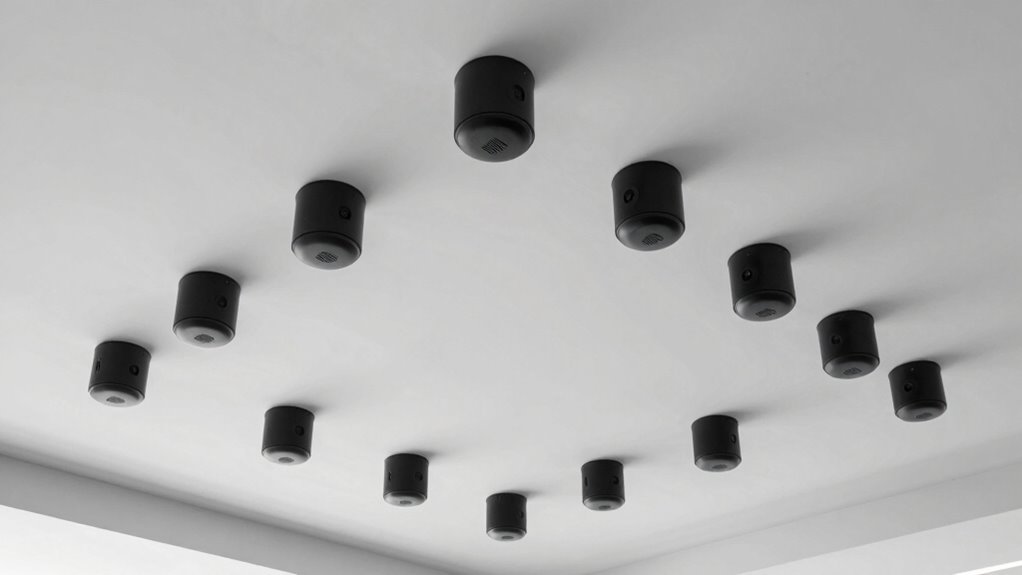

For a ceiling microphone array that can cover a meeting room without placing microphones on the table, I’d start with the Sennheiser TeamConnect Ceiling 2 for its beamforming approach and conference-focused features. The Yealink SkySound CM20 is another strong candidate for rooms built around compatible Yealink systems, while the ClearOne Ceiling Microphone Array Kit suits buyers looking for an integrated kit. The main tradeoff is between intelligent pickup and system integration on one side, and simpler hanging or boundary microphones on the other. Room acoustics, coverage needs, and compatibility can matter as much as the microphone itself. Read on for the full breakdown and help matching an option to your space.

Get the latest gadgets delivered free with Prime
- Fast, free delivery on millions of items
- Prime Video, Amazon Music and more included
- Member-only deals all year
Complete the kit

Key Takeaways
- The Sennheiser TeamConnect Ceiling 2 is the most feature-focused pick here, but its renewed condition makes it a different purchase proposition from a new, simpler microphone.
- The ClearOne and Converge Pro/Interact Pro kits put integration first; they make the most sense when the rest of the room already uses the matching ecosystem.
- Hanging microphones are not interchangeable with beamforming arrays. The Audix M3W, Audio-Technica PRO 45W, and ATW ES945 call for deliberate placement and room planning.
- The Yealink SkySound CM20 is the clearest fit for Yealink-centered rooms, while buyers using other conferencing platforms should check system compatibility before choosing it.
- The Adastra CBM20 offers a low-profile boundary-microphone approach, a distinct alternative to suspended microphones when ceiling appearance and mounting style guide the decision.
| Sennheiser TeamConnect Ceiling 2 Beamforming Microphone with TruVoicelift, White (Renewed) |  | Best for Large, Flexible Meeting Rooms | Microphone type: Boundary | Special features: Dynamic Beamforming, TruVoicelift | Connectivity: Dante | VIEW ON AMAZON | See Our Full Breakdown |
| Audix M3W Tri-Element Hanging Ceiling Microphone, White |  | Best Lightweight Hanging Option | Microphone type: Tri-element hanging ceiling microphone | Size: 4 ft | Weight: 0.2 lbs | VIEW ON AMAZON | See Our Full Breakdown |
| White Array Kit for Converge Pro and Interact Pro (Includes White Microphone Array) |  | Best for Existing ClearOne Systems | Compatible systems: Converge Pro and Interact Pro | Connectivity and connector: XLR | Polar pattern: Unidirectional | VIEW ON AMAZON | See Our Full Breakdown |
| ClearOne Ceiling Microphone Array Kit, White (910-001-014-W) |  | Best 360-Degree Coverage | Microphone elements: 3 | Coverage: 360 degrees | Polar pattern: Unidirectional | VIEW ON AMAZON | See Our Full Breakdown |
| Audio-Technica PRO 45W Cardioid Condenser Hanging Microphone, White |  | Best for Choirs and Suspended Speech | Microphone type: Cardioid condenser | Polar pattern: Unidirectional | Connectivity and connector: Wired; XLR | VIEW ON AMAZON | See Our Full Breakdown |
| Yealink SkySound CM20 Conference Room Microphone |  | Best for Voice-Focused Room Coverage | Product type: Conference room microphone | Frequency response: 120 Hz–16 kHz | Polar pattern: Omnidirectional | VIEW ON AMAZON | See Our Full Breakdown |
| Adastra CBM20 Low-Profile Ceiling Boundary Microphone, White |  | Best for Low-Profile XLR Installation | Microphone type: Ceiling boundary microphone | Pickup pattern: Omnidirectional | Power: 9–52 V DC phantom power | VIEW ON AMAZON | See Our Full Breakdown |
| ATW ES945 Omnidirectional Ceiling-Hanging Microphone |  | Best for Hanging Installation | Microphone type: Omnidirectional | Mounting: Ceiling-hanging | Connector: 3-pin XLR | VIEW ON AMAZON | See Our Full Breakdown |
| ceiling microphone array | Microphone type | Polar pattern |
|---|---|---|
| Sennheiser TeamConnect Ceiling | Boundary | — |
| Audix M3W Tri-Element Hanging | Tri-element hanging ceiling microphone | — |
| White Array Kit for Converge P | — | Unidirectional |
| ClearOne Ceiling Microphone Ar | — | Unidirectional |
| Audio-Technica PRO 45W Cardioi | Cardioid condenser | Unidirectional |
| Yealink SkySound CM20 Conferen | — | Omnidirectional |
| Adastra CBM20 Low-Profile Ceil | Ceiling boundary microphone | — |
| ATW ES945 Omnidirectional Ceil | Omnidirectional | — |
More Details on Our Top Picks
Sennheiser TeamConnect Ceiling 2 Beamforming Microphone with TruVoicelift, White (Renewed)
The TeamConnect Ceiling 2 is the most adaptable conference-focused pick here: dynamic beamforming follows speakers around the room, while TruVoicelift can amplify speech without asking people to pass a handheld mic. Configurable restricted zones also give installers a way to limit pickup from noisy areas. Compared with the fixed three-element ClearOne Ceiling Microphone Array Kit, Sennheiser offers more flexibility as participants move, but it is a much larger, more involved installation and depends on Dante connectivity. Its renewed condition and 90-day limited warranty are meaningful compromises for an installed system, particularly against the new Audio-Technica PRO 45W’s stated two-year parts-and-labor warranty. I’d choose it for a room that needs hands-free discussion and voice lift, not a simple suspended mic setup.
Pros:- Dynamic beamforming can follow speakers without handheld microphones.
- TruVoicelift adds speech amplification for room participants.
- Configurable restricted zones can reduce pickup from selected noisy areas.
- Control through Sennheiser Control Cockpit supports managed room installations.
Cons:- Renewed condition comes with a 90-day limited warranty.
- Large 28.1-inch-square body calls for careful ceiling planning.
- Dante connectivity and corded power make this less suited to simple plug-and-play setups.
Best for: Organizations outfitting medium or large meeting rooms where speakers move around and need hands-free voice amplification.
Not ideal for: Buyers seeking a straightforward hanging microphone, a small-room solution, or a longer stated warranty; this renewed unit has a 90-day limited warranty.
- Microphone type:Boundary
- Special features:Dynamic Beamforming, TruVoicelift
- Connectivity:Dante
- Connector:XLR
- Dimensions:28.1 x 28.1 x 9.5 inches
- Power source:Corded electric
- Condition and warranty:Renewed; 90 days limited warranty
Our verdict“Choose this renewed Sennheiser for a medium or large meeting room that needs moving-speaker pickup and voice lift, provided its warranty and installation demands fit your plans.”
Audix M3W Tri-Element Hanging Ceiling Microphone, White
The Audix M3W suits installations where a light, suspended mic is the goal rather than a feature-rich conferencing array. Its tri-element design is the main distinction in the supplied details, while its 0.2-pound weight makes the hanging format less demanding than the heavier ClearOne array kit. Unlike the Sennheiser TeamConnect Ceiling 2, it has no listed beamforming, speaker tracking, or voice-lift functions, so I would not treat it as a direct substitute for a managed meeting-room system. The tradeoff is sparse technical information: the product data gives a four-foot size and weight, but no connector, coverage pattern, or system compatibility. That makes it a plausible fit for buyers who already know their installation requirements, but a harder choice for anyone specifying a complete conferencing solution.
Pros:- Tri-element design distinguishes it from single-microphone hanging options.
- At 0.2 pounds, it is notably lightweight.
- White finish can suit light-colored ceiling installations.
Cons:- Designed for hanging installation, limiting placement flexibility.
- The supplied product data does not specify connector, polar pattern, or coverage.
- No conferencing automation or voice-amplification features are listed.
Best for: Installers and venue teams seeking a lightweight, white tri-element hanging microphone for a planned ceiling-suspension setup.
Not ideal for: Meeting-room buyers who need documented coverage, connection details, or automatic speaker tracking before choosing an array.
- Microphone type:Tri-element hanging ceiling microphone
- Size:4 ft
- Weight:0.2 lbs
- Color:White
Our verdict“Pick the Audix M3W when a lightweight tri-element hanging mic matches a known installation, but choose a better-documented array for a full conference-room specification.”
White Array Kit for Converge Pro and Interact Pro (Includes White Microphone Array)
This ClearOne White Array Kit is most compelling as a compact add-on for rooms already built around Converge Pro or Interact Pro. Its unidirectional pattern and listed 114 dB signal-to-noise ratio point toward focused pickup, while the mini form factor is easier to place than the larger TeamConnect Ceiling 2. The tradeoff is that the kit is a single-channel, wired XLR option, not a self-contained 360-degree room array like ClearOne’s separate Ceiling Microphone Array Kit. Compatibility details should guide the choice: the product data names ClearOne systems, while some of its other listed device fields are less clearly aligned with conferencing use. I’d favor it for a compatible existing installation, not as a universal ceiling-array purchase or a wireless room upgrade.
Pros:- Designed for Converge Pro and Interact Pro systems.
- Unidirectional pickup can help focus on a target sound area.
- Mini form factor can simplify placement in a constrained installation.
- XLR connection fits wired audio setups.
Cons:- Single-channel design limits multi-microphone expansion.
- Requires a wired XLR connection and has no listed wireless option.
- Does not offer the stated 360-degree coverage of the ClearOne Ceiling Microphone Array Kit.
Best for: AV teams adding a compact, wired microphone to an existing ClearOne Converge Pro or Interact Pro installation.
Not ideal for: Buyers needing 360-degree coverage, multiple microphone channels, wireless operation, or a broadly specified standalone conference array.
- Compatible systems:Converge Pro and Interact Pro
- Connectivity and connector:XLR
- Polar pattern:Unidirectional
- Signal-to-noise ratio:114 dB
- Channels:1
- Form factor:Mini
- Dimensions:10 x 5 x 3 inches
- Power source:Corded electric
Our verdict“Choose this compact kit for a compatible ClearOne system that needs a single wired microphone, not for whole-room coverage or a new wireless setup.”
ClearOne Ceiling Microphone Array Kit, White (910-001-014-W)
For a fixed conference table or central room zone, the ClearOne Ceiling Microphone Array Kit offers a more direct route to 360-degree pickup than the Audix M3W, whose supplied details do not state a coverage pattern. Three unidirectional elements share the work around the room, and multiple arrays can be linked when one unit is not enough. It is also much smaller than the Sennheiser TeamConnect Ceiling 2, but it does not list dynamic beamforming or TruVoicelift, so it is less suited to tracking movement or amplifying speech. The array connects by XLR and is optimized for ClearOne mixers; the included adapter cable supports the specified connection, but buyers using other audio systems should confirm compatibility before installation. No warranty is listed in the supplied product data.
Pros:- Three unidirectional microphones provide stated 360-degree coverage.
- Multiple arrays can be connected for larger rooms.
- Includes an RJ-45 to XLRx3 adapter cable.
- Compact dimensions suit installations where a large ceiling unit is impractical.
Cons:- Optimized to work with ClearOne mixers, which narrows system flexibility.
- No beamforming or TruVoicelift features are listed.
- No warranty is listed in the supplied product data.
Best for: Conference-room installers who need fixed 360-degree coverage and can connect the array to a compatible ClearOne mixer.
Not ideal for: Buyers needing movable-speaker tracking, built-in voice lift, or a documented warranty; compatibility may also be limiting outside ClearOne mixer setups.
- Microphone elements:3
- Coverage:360 degrees
- Polar pattern:Unidirectional
- Connectivity:Wired
- Connector:XLR
- Compatible devices:Audio mixer
- Dimensions:9.8 x 4.9 x 3 inches
- Included components:Microphone, mounting base, cable grommet, RJ-45 to XLRx3 adapter cable
Our verdict“Choose this ClearOne kit for fixed, full-room pickup on a compatible mixer, but look to the Sennheiser if speaker tracking and voice lift matter more.”
Audio-Technica PRO 45W Cardioid Condenser Hanging Microphone, White
The Audio-Technica PRO 45W is the clearest choice here for suspended pickup in choirs, orchestras, and theater settings rather than a general-purpose conference array. Its cardioid condenser capsule and ability to handle high sound pressure levels suit performances where voices and instruments can be loud; the permanently attached 25-foot cable gives installers reach without adding an external power module. Compared with the Audix M3W, Audio-Technica supplies more connection and frequency details, along with a stated two-year parts-and-labor warranty. But it is a single hanging microphone, not a multi-element 360-degree array like the ClearOne kit, and its fixed cable makes replacement or rerouting less flexible. I’d choose it for a defined overhead pickup position, not a room that needs speakers tracked as they move.
Pros:- Cardioid condenser design suits focused suspended pickup.
- Handles high sound pressure levels for loud performances.
- Permanently attached 25-foot cable provides useful installation reach.
- Self-contained electronics do not require external power modules.
Cons:- Permanently attached cable limits replacement and routing flexibility.
- Hanging placement is less versatile than a ceiling array for general room coverage.
- Single-microphone format does not provide the ClearOne kit’s stated 360-degree coverage.
Best for: Choir directors, theater sound teams, and orchestra installers needing a wired overhead microphone with long cable reach and high-SPL handling.
Not ideal for: Conference-room buyers who need 360-degree coverage, multiple pickup zones, speaker tracking, or a detachable cable.
- Microphone type:Cardioid condenser
- Polar pattern:Unidirectional
- Connectivity and connector:Wired; XLR
- Cable length:25 ft (7.6 m), permanently attached
- Frequency range:200 Hz–18 kHz
- Impedance:100 ohm
- Signal-to-noise ratio:72 dB
- Warranty:2 years on parts and labor
Our verdict“Choose the PRO 45W for a fixed overhead position in a choir, orchestra, or theater, rather than for a conference room needing broad, adaptive coverage.”
Yealink SkySound CM20 Conference Room Microphone
The SkySound CM20 is the most straightforward choice here for buyers prioritizing conference-room speech pickup over installation details. Its 120 Hz–16 kHz frequency response is specified for voice communication, while the omnidirectional pattern can capture participants around the microphone rather than favoring one direction. Compared with the Adastra CBM20, the CM20 listing gives a useful frequency range but does not specify mounting hardware, connection, or power needs, so system planning may take more verification. The Adastra, by contrast, clearly supports threaded ceiling mounting and XLR connection. The CM20 makes sense when its voice-oriented specification matches an existing Yealink setup, but sparse published details make it a less certain fit for buyers choosing a complete ceiling installation from product data alone.
Pros:- Omnidirectional pickup suits voices distributed around the microphone
- 120 Hz–16 kHz response is specified for conference-room communication
- Focused description makes its intended voice-capture role clear
Cons:- Mounting method is not specified in the provided product data
- Connector and power requirements are not listed
- Limited published detail makes compatibility harder to establish than with the Adastra CBM20
Best for: Conference-room planners who need an omnidirectional microphone with a stated speech-oriented frequency range and can confirm system compatibility before installation
Not ideal for: Buyers who need confirmed ceiling-mounting, connector, and power specifications before selecting hardware
- Product type:Conference room microphone
- Frequency response:120 Hz–16 kHz
- Polar pattern:Omnidirectional
- Intended use:Conference-room communication
- Product line:Yealink SkySound
- Model:CM20
Our verdict“Choose the CM20 for voice-focused omnidirectional coverage when you can verify its mounting and system requirements separately.”
Adastra CBM20 Low-Profile Ceiling Boundary Microphone, White
The Adastra CBM20 is the clearest fit in this group for buyers who want a discreet, fixed ceiling boundary microphone with conventional XLR connectivity. Its low-profile threaded mounting accommodates a through-hole up to 50 mm, giving installers a defined fit requirement rather than an unspecified mounting approach. The omnidirectional pattern captures sound from around the unit, while the 9–52 V DC phantom-power range offers more flexibility than the ATW ES945, which requires 48 V. That flexibility does not make it a beamforming array: compared with the Sennheiser TeamConnect Ceiling 2, it lacks the described array and voice-lift features. Choose it for simpler room coverage and a tidy installation, not for directional tracking or advanced conferencing control.
Pros:- Low-profile, threaded mounting supports a ceiling through-hole up to 50 mm
- Omnidirectional pickup covers sound around the microphone
- 9–52 V DC phantom-power range accommodates a broad range of compatible supplies
- XLR male connection suits installations built around XLR cabling
Cons:- Omnidirectional pickup does not provide the directional control of a beamforming array
- Requires a compatible phantom-power supply
- Threaded through-hole mounting requires a suitable ceiling opening
Best for: Installers fitting a white, low-profile ceiling boundary microphone into a room with an XLR audio path and compatible phantom power
Not ideal for: Teams seeking beamforming, speaker tracking, or a complete ceiling-array feature set like the Sennheiser TeamConnect Ceiling 2
- Microphone type:Ceiling boundary microphone
- Pickup pattern:Omnidirectional
- Power:9–52 V DC phantom power
- Mounting:Threaded; through-hole mounting up to 50 mm
- Connection:XLR male
- Color:White
Our verdict“Pick the CBM20 when discreet threaded mounting and flexible phantom-power compatibility matter more than beamforming features.”
ATW ES945 Omnidirectional Ceiling-Hanging Microphone
The ATW ES945 is the most clearly specified option here for rooms where a microphone needs to hang from the ceiling rather than sit at a boundary or use an unspecified mount. Its ceiling-hanging design suits stage and meeting-room layouts, and the 3-pin XLR connection provides a familiar cable interface for compatible audio systems. Unlike the Adastra CBM20, it is designed to hang, not mount through a ceiling opening; the Adastra also accepts a wider stated phantom-power range. The ES945 instead specifies a 48 V phantom-power requirement, so buyers must confirm their equipment supplies that voltage. Its omnidirectional pickup favors coverage around the microphone, but it does not offer the directional behavior of the Sennheiser TeamConnect Ceiling 2.
Pros:- Designed specifically for ceiling-hanging installation
- Omnidirectional pickup captures sound from multiple directions
- 3-pin XLR connection offers a standard interface for compatible systems
Cons:- Requires 48 V phantom power
- Hanging installation may not suit rooms seeking a discreet, flush ceiling appearance
- Omnidirectional pickup does not provide beamforming or directional speaker selection
Best for: Stage and meeting-room installers who need an omnidirectional microphone suspended from the ceiling and have 48 V phantom power available
Not ideal for: Buyers who need a low-profile flush installation, flexible power requirements, or beamforming coverage
- Microphone type:Omnidirectional
- Mounting:Ceiling-hanging
- Connector:3-pin XLR
- Power requirement:48 V phantom power
- Intended settings:Stage or meeting room
- Model:ATW ES945
Our verdict“Choose the ES945 for suspended omnidirectional coverage when your system has 48 V phantom power and hanging placement suits the room.”

How We Picked
I ranked these options by how well they serve the specific job of capturing speech from above in a conference or meeting room. The main criteria were pickup approach, likely room coverage needs, installation style, conferencing-system fit, and how much planning the product asks of the buyer. I also distinguished complete or ecosystem-specific kits from individual microphones, since a microphone alone may not provide the processing or compatibility a finished room requires.
The order favors conference-oriented array designs and kits when they offer a clearer path to room coverage and system integration. The Sennheiser leads for its beamforming focus, while Yealink and ClearOne stand out for buyers already building around those systems. The hanging and boundary models rank lower as general-purpose array recommendations, not because they cannot suit a room, but because their success depends more heavily on placement, room design, and supporting equipment. I treat the renewed Sennheiser listing as a tradeoff rather than an automatic advantage, and recommend checking each model’s current specifications and compatibility before purchase.
| ceiling microphone array | Microphone type | Polar pattern |
|---|---|---|
| Sennheiser TeamConnect Ceiling | Boundary | — |
| Audix M3W Tri-Element Hanging | Tri-element hanging ceiling microphone | — |
| White Array Kit for Converge P | — | Unidirectional |
| ClearOne Ceiling Microphone Ar | — | Unidirectional |
| Audio-Technica PRO 45W Cardioi | Cardioid condenser | Unidirectional |
| Yealink SkySound CM20 Conferen | — | Omnidirectional |
| Adastra CBM20 Low-Profile Ceil | Ceiling boundary microphone | — |
| ATW ES945 Omnidirectional Ceil | Omnidirectional | — |
Factors to Consider When Choosing Ceiling Microphone Array
Choosing a ceiling microphone is a room-design decision as much as a hardware decision. These options range from beamforming and conference-focused products to suspended and boundary microphones, so a shared mounting location does not mean shared performance. I’d make the choice by mapping the room, system, and installation constraints before comparing individual features.
Match the Pickup Method to the Room
Start with the room’s shape, seating plan, and typical speaker positions rather than the microphone’s advertised category. A beamforming array can adapt its pickup direction, while a hanging microphone relies more on where it is suspended and how the room is arranged. Boundary designs have a different mounting and pickup geometry again. A long boardroom, a flexible training room, and a small huddle space may need different coverage even if all use ceiling microphones. Avoid assuming one unit will cover every seat equally; ask the supplier for a coverage plan based on your room dimensions and ceiling height. If the seating layout changes often, prioritize a design that can accommodate that flexibility.
Check the Whole Signal Chain Before Buying
A ceiling microphone is only one part of a working conferencing system. Confirm how it connects to the audio processor, amplifier, codec, or conferencing platform, and whether required components are included in the listing. Ecosystem-specific kits may simplify a room built on their matching equipment, but can add friction in a mixed-brand installation. Ask who will configure routing, gain, echo cancellation, and any required control software. A connector that physically fits does not by itself confirm that the system will operate as intended. For an existing room, write down the make and model of the current audio equipment before comparing microphones.
Budget for Installation, Not Just the Microphone
Ceiling work can bring costs and scheduling needs that are easy to miss when comparing products. Suspended microphones may need suitable attachment points, tidy cable routes, and careful height placement, while low-profile options may call for a different ceiling interface. Check whether the ceiling is accessible, whether it can support the mounting hardware, and who is responsible for the installation. Also account for cable length, access to power or network connections, and any local building requirements. A simple-looking microphone can still require a complex installation if the room lacks infrastructure. Get the installer’s input before ordering equipment for a finished or difficult-to-access ceiling.
Treat Acoustics as Part of Microphone Selection
Ceiling microphones do not remove the effects of reverberation, HVAC noise, or hard reflective surfaces. Rooms with high ceilings, glass walls, or loud ventilation can make speech pickup harder, regardless of the microphone’s feature set. If people often speak softly or from the far end of a long table, check how the proposed design handles those positions in the actual room. Acoustic treatment or adjustments to speaker placement may improve intelligibility more than moving to a more feature-rich microphone. Ask for a demonstration or coverage assessment in a room with similar dimensions and finishes. A specification sheet cannot fully predict the sound of your space.
Decide How Much Adaptability You Need
Fixed seating and predictable meetings can work well with a carefully placed hanging microphone, while rooms that shift between layouts may benefit from more adaptable pickup and control. Consider whether people speak from assigned seats, walk around, or join from multiple areas of the room. A specialized array can reduce dependence on fixed microphone placement, but may also bring more setup and configuration requirements. A simpler microphone can be a sensible choice when the coverage area is small and consistent. Think about future room changes, not just the current furniture plan. Paying for flexibility makes sense when the room will use it; otherwise, a simpler approach may be easier to maintain.
Compare Maintenance and Ownership Conditions
Before buying, confirm how the microphone and its system components are serviced, updated, and replaced. A renewed product deserves extra attention to its condition, included accessories, return terms, and any remaining support coverage. For ecosystem-based equipment, check that your organization can maintain the required software and configuration tools over time. Ask who will handle faults when a meeting room is unavailable, and whether a replacement can be installed without redesigning the system. Keep model numbers and configuration records with the room documentation. These steps help prevent a low-friction purchase from turning into a long support problem.
Frequently Asked Questions
Is a beamforming ceiling array worth choosing over a hanging microphone?
It can be, when speakers move around or the seating plan changes and the room needs more adaptable pickup. A hanging microphone may suit a fixed layout if it can be positioned appropriately and the system supports it. Beamforming products can bring additional setup and compatibility needs, so they are not automatically the better fit for every room. Compare the actual coverage requirements and supporting equipment rather than relying on the product label alone. For a fixed small room, simpler hardware may be easier to install and manage.
Can I use one of these microphones with my existing video-conferencing system?
Possibly, but compatibility depends on the entire audio chain, not just the conferencing app. Check the microphone’s output and connection requirements against your processor, codec, and room-control setup. The ClearOne and Converge Pro/Interact Pro options are especially tied to their intended ecosystems, while other microphones may still require separate processing or interfaces. Ask your integrator to confirm the exact model combination and configuration before purchase. A physical connection alone does not confirm full system support.
Will a ceiling microphone work well in a high-ceiling or reverberant room?
Not necessarily. Greater distance from speakers and strong reflections can reduce speech clarity, even with a conference-focused microphone. Room height, surface materials, ventilation noise, and seating layout all affect the result. Request a coverage review using the actual room dimensions, and ask whether acoustic treatment or additional microphones are needed. If possible, arrange a demonstration in a space with similar acoustics before committing.
What should I verify before buying a renewed ceiling microphone?
Check the seller’s description of condition, included mounting parts and accessories, return terms, and available warranty or support. Confirm that the specific unit can be configured and supported with your current system, especially if it depends on software or companion equipment. A renewed product can be a reasonable route when its condition and compatibility are clear, but missing parts may complicate installation. Ask the installer to review the listing and required components before ordering. Keep the unit’s documentation and configuration details for future service.
Should I choose a microphone kit or buy a microphone by itself?
A kit can simplify purchasing when its included components match the room’s existing system and installation plan. A standalone microphone may be the better route if you already have compatible processing or need a specific pickup style. Verify exactly what the kit contains; the word “kit” does not always mean it includes every cable, processor, or mounting item your room needs. Compare the full equipment list with the installer’s design before deciding. The right choice depends on system fit, not on packaging alone.
Conclusion
For the best overall, I’d choose the Sennheiser TeamConnect Ceiling 2 when beamforming and conference-room features suit the room, with renewed condition checked carefully. The best value for an existing compatible system is the White Array Kit for Converge Pro and Interact Pro, while the best premium ecosystem fit is the ClearOne kit for rooms designed around ClearOne equipment. For beginners, I’d begin with the Audio-Technica PRO 45W or Audix M3W only after confirming placement and system requirements with an installer; neither should be mistaken for a self-configuring array. The best fit for Yealink-centered rooms is the SkySound CM20, and the Adastra CBM20 is a distinctive choice when a low-profile boundary microphone is preferred. Choose the ATW ES945 when an omnidirectional hanging pickup matches the room plan. If the seating layout shifts or room coverage is uncertain, settle those questions before choosing between the models.