For board games for strategy lovers, I’d put Azul first: its clear rules hide meaningful choices about drafting, timing, and risk. Wingspan is a standout for players who want layered engine-building, while Carcassonne offers a more approachable contest over shared territory. The main tradeoff is between strategic depth and ease of teaching, with player count, playtime, and direct conflict also shaping the fit. Some picks reward quiet planning; others depend on negotiation, deduction, or head-to-head pressure. Read on for my full breakdown of all 14 games and how to choose among them.

Get the latest gadgets delivered free with Prime
- Fast, free delivery on millions of items
- Prime Video, Amazon Music and more included
- Member-only deals all year
Complete the kit



Key Takeaways
- Azul and Wingspan lead for different reasons: Azul packs tactical choices into a relatively direct tile-drafting format, while Wingspan rewards longer-term engine planning.
- Accessible rules can still support real decisions: Carcassonne and Shifting Stones offer approachable entry points without relying only on luck.
- Strategy means different things across this lineup: Risk emphasizes conflict, Codenames centers on clue-giving, and Rubik’s Race Ace Edition is a fast two-player spatial contest.
- Player count changes the experience: Head-to-head games such as Rubik’s Race suit two players, while Codenames and No Escape can serve larger groups.
- Theme and table preference matter as much as complexity: Wingspan, Trekking the National Parks, and A Place for All My Books offer distinct thematic appeal, while CATAN and Risk ask players to enjoy more direct competition.
| Plunder: A Pirate’s Life Family Board Game |  | Best for Tactical Multiplayer Battles | Players: 2–6, with team play option | Playing time: About 20 minutes per player | Recommended age: 10 years and up | VIEW ON AMAZON | See Our Full Breakdown |
| Carcassonne Tile Placement Strategy Board Game |  | Best for Spatial Planning | Players: 2–5 | Playing time: About 35 minutes | Recommended age: 7 years and up | VIEW ON AMAZON | See Our Full Breakdown |
| Shifting Stones Family Strategy Game |  | Best Compact Strategy Game | Players: 2–5, plus solo mode | Playing time: About 20 minutes | Recommended age: 8 years and up | VIEW ON AMAZON | See Our Full Breakdown |
| Rubik’s Race Ace Edition Two-Player Strategy Game |  | Best for Head-to-Head Speed Strategy | Players: 1–2 | Recommended age: 7 years and up | Edition: Ace Edition | VIEW ON AMAZON | See Our Full Breakdown |
| Wingspan Board Game by Stonemaier Games |  | Best Premium Engine-Building Pick | Players: 1–5 | Playing time: 60–90 minutes | Setup time: About 6 minutes | VIEW ON AMAZON | See Our Full Breakdown |
| Azul Tile-Placement Strategy Board Game |  | Best for Tactical Planning | Players: 2–4 | Recommended age: 8 years and up | Playing time: 30–45 minutes | VIEW ON AMAZON | See Our Full Breakdown |
| CATAN Board Game, 6th Edition |  | Best for Negotiation and Resource Strategy | Edition: 6th Edition | Players: 3–4 | Recommended age: 10 years and up | VIEW ON AMAZON | See Our Full Breakdown |
| Risk Strategy Board Game for 2–5 Players, Ages 10+ |  | Best for Long-Form Conquest | Players: 2–5 | Age range: 10 years and up | Playing time: About 120 minutes | VIEW ON AMAZON | See Our Full Breakdown |
| No Escape Strategy Board Game for 2–8 Players |  | Best for Large Groups and Hidden Agendas | Players: 2–8 | Age recommendation: 13 years and up | Genre: Strategy | VIEW ON AMAZON | See Our Full Breakdown |
| Codenames Board Game, Second Edition |  | Best for Team-Based Deduction | Edition: Second Edition | Players: 4–8+ | Recommended age: 14 years and up | VIEW ON AMAZON | See Our Full Breakdown |
| Trekking the National Parks Board Game, 3rd Edition |  | Best for Strategic Exploration | Edition: 3rd Edition | Players: 1–5 | Recommended age: 12 years and up | VIEW ON AMAZON | See Our Full Breakdown |
| MasterPieces NFL Gameday Board Game |  | Best for Football-Themed Group Play | Players: 2–4 | Recommended age: 12 years and up in product details; title also says 9+ | Board dimensions: 9.5 × 9.5 inches | VIEW ON AMAZON | See Our Full Breakdown |
| A Place for All My Books Board Game |  | Best for Spatial Planning | Players: 1–4 | Recommended age: 10 years and up | Estimated playing time: 60 minutes; description also states 15–20 minutes per player | VIEW ON AMAZON | See Our Full Breakdown |
| Unstable Games Twisted Cryptids Base Card Game |  | Best for Casual Bluffing and Take-That Play | Players: 2–4 | Playing time: About 60 minutes | Recommended age: 8–10 years | VIEW ON AMAZON | See Our Full Breakdown |
| board games for strategy lover | Players | Recommended age | Playing time | Included components |
|---|---|---|---|---|
| Plunder: A Pirate’s Life Famil | 2–6, with team play option | 10 years and up | About 20 minutes per player | — |
| Carcassonne Tile Placement Str | 2–5 | 7 years and up | About 35 minutes | — |
| Shifting Stones Family Strateg | 2–5, plus solo mode | 8 years and up | About 20 minutes | — |
| Rubik’s Race Ace Edition Two-P | 1–2 | 7 years and up | — | 1 Rubik’s Race game and instructions |
| Wingspan Board Game by Stonema | 1–5 | — | 60–90 minutes | — |
| Azul Tile-Placement Strategy B | 2–4 | 8 years and up | 30–45 minutes | 100 resin tiles, 4 player boards, 9 factory displays, 4 scoring markers, 1 starting player marker, 1 linen bag |
| CATAN Board Game | 3–4 | 10 years and up | 60–90 minutes | 19 terrain hexes, 6 sea frame pieces, 18 number discs, 4 player aids, 2 bonus victory point tiles, 96 wooden player pieces, 2 card trays, 2 dice, 120 cards, and rules |
| Risk Strategy Board Game for 2 | 2–5 | — | About 120 minutes | Gameboard, 5 armies, 56 Risk cards, card box, 5 dice, 5 cardboard war crates, and game guide |
| No Escape Strategy Board Game | 2–8 | — | — | Cards, dice, meeples, and tiles |
| Codenames Board Game | 4–8+ | 14 years and up | — | 16 agent tiles, 1 double agent tile, 7 innocent bystander tiles, 1 assassin tile, 40 key cards, 1 rulebook, 1 card stand, and 200 cards with 400 codenames |
| Trekking the National Parks Bo | 1–5 | 12 years and up | 30–60 minutes | — |
| MasterPieces NFL Gameday Board | 2–4 | 12 years and up in product details; title also says 9+ | — | Board game |
| A Place for All My Books Board | 1–4 | 10 years and up | — | — |
| Unstable Games Twisted Cryptid | 2–4 | 8–10 years | About 60 minutes | One board game |
More Details on Our Top Picks
Plunder: A Pirate’s Life Family Board Game
Plunder suits strategy lovers who want a shared map, shifting priorities, and direct competition. Players capture islands for resources, improve their ships, and battle rival captains; double-sided ocean tiles change the layout between games, so routes and targets can’t be treated as fixed. Its accessible rules and overview guide make those choices approachable for family groups, while team play gives larger tables another way to compete. Compared with Carcassonne, which focuses on shaping and claiming a landscape, Plunder puts more emphasis on fleet upgrades and conflict between players. The tradeoff is time: at about 20 minutes per player, a full game can stretch as the group grows. It also includes small parts, making it a less suitable pick around young children.
Pros:- Double-sided ocean tiles create a different map each game.
- Combines island control, resource gathering, ship upgrades, and combat.
- Supports 2–6 players and offers a team-play option.
- No player elimination, so everyone stays involved until the end.
Cons:- At about 20 minutes per player, games can run long with a full group.
- Small parts pose a choking hazard for young children.
Best for: Families and groups of 3–6 who want accessible strategy with map changes, resource gathering, and player-versus-player conflict.
Not ideal for: Players seeking a short session at a large table, or households with children likely to mouth small game pieces.
- Players:2–6, with team play option
- Playing time:About 20 minutes per player
- Recommended age:10 years and up
- Theme:Pirate
- Edition:Standard Edition
- Language:English
- Dimensions:12.8 × 12.8 × 4.2 inches
- Weight:6.3 pounds
Our verdict“Choose Plunder for an approachable, interactive strategy game where a changing map and pirate battles matter more than a compact playtime.”
Carcassonne Tile Placement Strategy Board Game
Carcassonne earns its place through the tension between building a landscape and deciding when to claim it. Each tile can extend cities, roads, fields, or monasteries, while your limited meeples force choices about where your effort can score. Randomized tile draws keep the map evolving, so a plan needs to adapt rather than follow a fixed board. The rules are simpler to teach than the layered engine-building in Wingspan, but the choices still reward attention to timing and shared space. That makes Carcassonne a strong fit for players who want strategy without a long session. Its limits are a smaller player count than Plunder’s and some dependence on the tiles drawn; it offers less direct confrontation than games built around combat.
Pros:- Straightforward rules lead to meaningful decisions about where and when to place meeples.
- Tile draws create a different landscape and changing opportunities each game.
- Includes The Abbot and The River mini-expansions.
- About 35 minutes of play offers a shorter alternative to Wingspan.
Cons:- The player count is limited to 2–5.
- Tile availability can constrain plans, so not every strategy is equally accessible in a given game.
- Interaction is mainly through shared features and area competition rather than direct battles.
Best for: Newer strategy players and families who enjoy spatial puzzles, shared-board decisions, and games that fit into about 35 minutes.
Not ideal for: Groups larger than five or players who want extensive player conflict, long-term engine building, or a large menu of actions.
- Players:2–5
- Playing time:About 35 minutes
- Recommended age:7 years and up
- Genre:Strategy
- Edition:Classic Edition
- Included expansions:The Abbot and The River
- Language:English
- Brand:Z-Man Games
Our verdict“Pick Carcassonne if you want approachable spatial strategy built around adapting to a shared landscape rather than managing a complex engine.”
Shifting Stones Family Strategy Game
Shifting Stones compresses its strategy into nine tiles and a hand of pattern cards. Players flip and rearrange the grid to match patterns, weighing whether a move is better spent improving the board or claiming points. That action-versus-scoring tradeoff gives a brief game a genuine planning puzzle, while a solo mode makes it useful beyond group nights. At about 20 minutes, it asks for far less table time than Wingspan and takes up less space than Plunder. The compact format also makes it easy to carry. Its small scope is part of the appeal, but strategy lovers seeking a sprawling map, a developing engine, or sustained player interaction may find it too contained; card choices can also make each turn feel tightly constrained.
Pros:- Compact 7.9-inch format is easy to transport and store.
- Around 20 minutes of play suits short game sessions.
- Solo mode adds a way to play without a group.
- Pattern matching and tile manipulation reward planning and flexible thinking.
Cons:- Choosing between manipulating tiles and scoring cards limits what can be done on a turn.
- The nine-tile grid offers less strategic scope than larger games such as Carcassonne or Wingspan.
Best for: Travelers, families, and solo players who want a portable pattern-planning game with quick turns and a modest table footprint.
Not ideal for: Players looking for a long strategic arc, direct conflict, or many interconnected systems to manage.
- Players:2–5, plus solo mode
- Playing time:About 20 minutes
- Recommended age:8 years and up
- Components:77 cards, 9 tiles, and rules of play
- Material:Stone
- Dimensions:7.9 × 7.9 inches
- Weight:0.5 kg
- Language:English
Our verdict“Choose Shifting Stones for portable, short-form strategy, not for the expansive planning and interaction offered by larger games.”
Rubik’s Race Ace Edition Two-Player Strategy Game
Rubik’s Race Ace Edition turns strategy into a fast spatial contest: each player slides tiles to reproduce a 3×3 color pattern before the other player. The Ace Edition’s blockers and wild tiles add obstacles and flexibility, making it more demanding than a simple race to copy colors. Unlike Carcassonne, where plans develop across a shared landscape, this game rewards quick pattern recognition and decisions made under immediate pressure. Its 1–2 player listing and head-to-head design make it a focused choice for pairs, with solo play also listed. The tradeoff is narrow appeal: groups looking for a multiplayer strategy night should favor Plunder or Wingspan instead. The supplied components are limited to the game and instructions, and the product data lists no manufacturer warranty.
Pros:- Fast head-to-head play centers on clear spatial objectives.
- Blockers and wild tiles add extra tactical choices.
- Compact pattern-matching format suits short sessions.
- Encourages strategic thinking and problem-solving.
Cons:- Designed primarily for two-player competition, limiting its fit for group game nights.
- Speed and pattern recognition matter more than long-range planning.
- No manufacturer warranty is listed in the supplied product data.
Best for: Two-player households and fans of quick, real-time spatial puzzles who prefer immediate competition over a long strategy session.
Not ideal for: Groups seeking a game for three or more players, or planners who prefer turn-based decisions and gradual strategy development.
- Players:1–2
- Recommended age:7 years and up
- Edition:Ace Edition
- Genre:Strategy
- Included components:1 Rubik’s Race game and instructions
- Added features:Six tiles, blockers, and wild tiles
- Brand:Rubik’s
- Model number:6067876
Our verdict“Choose Rubik’s Race Ace Edition for brisk, competitive strategy between two players, but skip it if your group needs a multiplayer game.”
Wingspan Board Game by Stonemaier Games
Wingspan is the most developed strategy option in this group for players who enjoy building an engine over several rounds. Collecting birds and placing them in different habitats creates combinations that make later actions more productive; 170 unique bird cards provide variety in the abilities and choices available. Its solo mode and 1–5 player range also make it more flexible than the two-player focus of Rubik’s Race Ace Edition. The detailed components, including custom dice and egg miniatures, support the theme, while a swift-start teaching guide helps introduce the rules. The tradeoff is a 60–90-minute session and medium-weight play, so it asks for more time and attention than Carcassonne or Shifting Stones. It’s a better match for players who enjoy gradual efficiency-building than direct conflict.
Pros:- More than 170 unique bird cards provide varied abilities and engine-building routes.
- Supports 1–5 players and includes solo mode.
- Includes custom dice, egg miniatures, player mats, and a birdfeeder dice tower.
- The swift-start teaching guide supports learning the game.
Cons:- A 60–90-minute playtime is a larger commitment than Carcassonne or Shifting Stones.
- Medium-weight play may feel demanding to players seeking a very simple strategy game.
- Its focus on building card combinations is less suited to players who want direct conflict.
Best for: Strategy fans who enjoy card combinations, gradual engine building, bird themes, and sessions long enough to develop a plan.
Not ideal for: Players wanting quick, direct competition or a lightweight game that can be explained and finished in a short break.
- Players:1–5
- Playing time:60–90 minutes
- Setup time:About 6 minutes
- Game type:Set collection and hand management strategy game
- Bird cards:170 unique cards
- Bonus goal cards:26
- Goal tiles:8
- Designer and publisher:Elizabeth Hargrave; Stonemaier Games
- Solo mode:Included
Our verdict“Choose Wingspan if you want a substantial, card-driven strategy game with solo support and time to develop an engine.”
Azul Tile-Placement Strategy Board Game
Azul is my pick for players who want meaningful tactical choices without a long rules teach. Drafting from shared displays means every tile choice shapes your own mosaic while changing what remains for opponents. That gives the game a sharp balance of personal planning and reading the table: take a color you need, or deny someone else the tiles they want. Compared with CATAN, Azul is quicker and less dependent on negotiation or resource luck; compared with Carcassonne, its fixed player boards make placement goals more direct. The 30–45-minute playtime also makes it easier to bring out between longer strategy games. The tradeoff is that unwanted tiles can cost points, so a plan can unravel when the shared supply shifts. I’d skip it if you want expansive maps, engine building, or negotiation.
Pros:- Shared tile drafting creates interactive choices rather than purely individual puzzles.
- Rules are approachable while placement and denial choices reward planning.
- Works with two players or groups of up to four.
- Resin tiles and mosaic boards give the game a distinctive tactile presentation.
Cons:- Leftover tiles can reduce a player’s score, making a disrupted plan costly.
- Its focused drafting puzzle offers less strategic breadth than larger map or engine-building games.
Best for: Players who enjoy short, focused tactical games where drafting choices affect both their own plans and opponents’ options.
Not ideal for: Groups seeking long-term engine building, negotiation, or a sprawling board; Azul’s compact puzzle and penalty for leftover tiles may feel restrictive.
- Players:2–4
- Recommended age:8 years and up
- Playing time:30–45 minutes
- Included components:100 resin tiles, 4 player boards, 9 factory displays, 4 scoring markers, 1 starting player marker, 1 linen bag
- Award:2018 Spiel des Jahres
- Core mechanic:Shared-display tile drafting and mosaic placement
Our verdict“Choose Azul if you want an accessible, tactical drafting game with more direct player interaction than a quiet tile puzzle.”
CATAN Board Game, 6th Edition
CATAN earns its place for players who want strategy to include table talk, resource management, and contested expansion. The modular island changes the map between plays, while dice-driven production makes settlement locations and trading priorities matter from the start. Players race to build roads, settlements, and cities, so choices have a clear objective: reach 10 victory points before rivals do. Compared with Azul, CATAN offers a broader arc of development and more negotiation, but it also takes longer and relies more on dice results and other players’ willingness to trade. Its 3–4-player base-game limit is a real constraint for larger groups; adding a fifth or sixth player requires a separate extension. I’d choose it over Risk for constructive competition, but skip it if your group dislikes bargaining or variable resource access.
Pros:- Modular terrain creates different settlement and route decisions from game to game.
- Trading and resource management give players several ways to respond to changing needs.
- Clear 10-point goal keeps the race to develop the island focused.
- Combines direct competition with constructive building rather than relying on combat.
Cons:- The base game supports only 3–4 players; an extension is needed for 5–6.
- Dice-based production can leave players short of resources, and trading depends on group dynamics.
- A 60–90-minute session is a larger commitment than Azul or No Escape.
Best for: Three- or four-player groups who enjoy trading, map-dependent planning, and building toward a shared victory-point target.
Not ideal for: Groups larger than four without the separate extension, or players who want strategy with little dice influence or negotiation.
- Edition:6th Edition
- Players:3–4
- Recommended age:10 years and up
- Playing time:60–90 minutes
- Language:English
- Included components:19 terrain hexes, 6 sea frame pieces, 18 number discs, 4 player aids, 2 bonus victory point tiles, 96 wooden player pieces, 2 card trays, 2 dice, 120 cards, and rules
- Manufacturer:Asmodee
- Model number:CN3081
Our verdict“Pick CATAN if your group enjoys negotiation and evolving resource plans, and can play within its four-player base-game limit.”
Risk Strategy Board Game for 2–5 Players, Ages 10+
Risk is the choice here for players who want strategy to unfold through territorial control, army placement, and attacks that can redraw the map. Its four ways to play, including Secret Mission Risk, offer different goals within the same broad conquest framework. That makes it a more overtly combative alternative to CATAN: rather than bargaining over resources and building toward 10 points, players commit armies and take territory. The scope comes with a substantial time demand—the listed playing time is about 120 minutes—and battles can swing on dice, so careful positioning does not guarantee control. The storage crates help keep the armies and dice organized, but optional Alexa play requires a separate compatible device. I’d choose Risk for a group that likes direct conflict and a long campaign, not for a quick strategic session.
Pros:- Territory control and army placement create a clear spatial strategy challenge.
- Four play modes, including Secret Mission Risk, vary the objectives.
- Supports 2–5 players.
- Storage crates provide a dedicated place for armies and dice.
Cons:- A listed playing time of about 120 minutes makes it a substantial commitment.
- Dice-driven battles can make outcomes unpredictable even when players plan carefully.
- Optional Alexa play depends on a compatible Echo device sold separately.
Best for: Players who want a long, competitive session built around area control, attacks, shifting alliances, and multiple victory approaches.
Not ideal for: Groups with limited playtime or players who dislike extended conflict and dice-based battle outcomes.
- Players:2–5
- Age range:10 years and up
- Playing time:About 120 minutes
- Edition:Standard Edition
- Included components:Gameboard, 5 armies, 56 Risk cards, card box, 5 dice, 5 cardboard war crates, and game guide
- Play modes:Four ways to play, including Secret Mission Risk
- Alexa compatibility:Optional Alexa skill play; compatible Echo device sold separately
- Genre:Strategy
Our verdict“Choose Risk if your group wants prolonged, direct territorial conflict and is comfortable with dice-influenced battles.”
No Escape Strategy Board Game for 2–8 Players
No Escape brings strategy to a changing maze, where players lay tiles, seek routes, and can use sabotage or traitor mechanics to upset others’ plans. Its support for up to eight players gives it a group-friendly role that Azul and CATAN cannot fill at their listed player counts. The shifting paths mean players must adapt rather than follow a fixed route, while the hidden-agenda elements add suspicion alongside spatial planning. Setup and rules are described as quick and accessible, so it can suit groups that want less rules overhead than Risk. The tradeoff is a more competitive, potentially unpredictable table dynamic; those mechanics work best when players enjoy interference as part of the strategy. It is recommended for ages 13 and up, and the supplied data does not specify a playing time.
Pros:- Supports 2–8 players, giving it the broadest stated group range among these picks.
- Changing maze tiles require players to adjust routes as the board develops.
- Sabotage and traitor mechanics create interaction beyond simple movement.
- Quick setup and accessible rules lower the barrier to starting a group session.
Cons:- The competitive sabotage and traitor mechanics may not suit players who prefer cooperative or low-conflict strategy.
- Recommended for ages 13 and up, limiting its fit for younger family groups.
- No playing-time estimate is provided in the supplied product information.
Best for: Groups of five to eight who want a changing maze, tactical route choices, and sabotage or traitor elements.
Not ideal for: Younger groups or players who prefer predictable planning, low-conflict play, or a listed session length before choosing a game.
- Players:2–8
- Age recommendation:13 years and up
- Genre:Strategy
- Game mechanics:Maze runner, sabotage, and traitor mechanics
- Included components:Cards, dice, meeples, and tiles
- Language:English
- Weight:2.8 pounds
- Model number:OMG00300
Our verdict“Pick No Escape for a larger group that likes adapting to a shifting maze and disrupting opponents’ plans.”
Codenames Board Game, Second Edition
Codenames takes a different route to strategy: teams interpret one-word clues to find agents in a 5×5 grid while avoiding the opposing side, bystanders, and the game-ending assassin. Its challenge is less about managing resources or territory than judging associations and communicating with precision. That makes it a strong change of pace from CATAN’s trading and Risk’s direct conflict, while still rewarding careful planning and reading how teammates think. The 200 cards provide 400 codenames, and the revised words, refreshed artwork, improved insert, and streamlined rulebook update the presentation. The main limitation is its dependence on team roles: a spymaster must provide clues, and one wrong selection of the assassin ends the game immediately. I’d choose it for a group that wants verbal teamwork, not a solo-planning strategy contest.
Pros:- Team clue-giving makes communication and interpretation central strategic tools.
- Supports groups of 4–8 or more players.
- The 200 cards provide 400 codenames for varied word combinations.
- Second Edition updates include revised words, refreshed artwork, an improved insert, and a streamlined rulebook.
Cons:- Selecting the assassin ends the game immediately, making a single clue interpretation decisive.
- The format requires a spymaster to supply clues and guide each team.
- Its word-association focus offers a different kind of strategy from spatial or resource-planning games.
Best for: Groups of four or more who enjoy word association, team communication, and tactical clue-giving more than board-space management.
Not ideal for: Players seeking individual strategic control, or groups uncomfortable with a spymaster role and an immediate loss from selecting the assassin.
- Edition:Second Edition
- Players:4–8+
- Recommended age:14 years and up
- Included components:16 agent tiles, 1 double agent tile, 7 innocent bystander tiles, 1 assassin tile, 40 key cards, 1 rulebook, 1 card stand, and 200 cards with 400 codenames
- Language:English
- Material:Cardboard
- Item weight:0.54 kg
- Item dimensions:6.5 × 2.09 × 9.21 inches
- Model year:2025
Our verdict“Choose Codenames if your group wants team deduction and clue strategy rather than individual control of a map or economy.”
Trekking the National Parks Board Game, 3rd Edition
Trekking the National Parks makes strategy feel like a journey: players draft cards, move pieces, and compete for control across a map while learning about U.S. parks. That blend gives it a different appeal from Carcassonne, where spatial tile placement is the central puzzle, and from Wingspan, which focuses on building an engine around wildlife cards. The illustrated cards and wooden pieces add tactile appeal, while the solo mode gives geography-minded players a way to play alone. Sessions of roughly 30–60 minutes offer a substantial decision-making window without demanding a long campaign. The tradeoff is its age guidance: at 12 and up, it is less suitable for younger family groups than lighter options such as Shifting Stones. Small components also call for care around young children.
Pros:- Card drafting, area control, and movement combine into varied map-based decisions.
- National park and geography themes add an educational layer to play.
- Solo mode and support for up to five players provide flexible player counts.
- Illustrated cards and wooden pieces give the game tactile appeal.
Cons:- The recommended age of 12 and up limits its fit for younger family players.
- Small parts pose a choking risk around young children.
- Its geography and travel theme may be less appealing to players seeking a purely abstract strategy game.
Best for: Players who enjoy map-based decisions, national park themes, and the option to play solo or with a group of up to five.
Not ideal for: Families seeking a game for children under 12, or strategy fans who prefer abstract puzzles without an educational travel theme.
- Edition:3rd Edition
- Players:1–5
- Recommended age:12 years and up
- Playing time:30–60 minutes
- Game mechanics:Area control, card drafting, and piece movement
- Components:Cards, wooden pieces, and board map
- Educational topics:Geography, national parks, travel, and STEM
- Dimensions:11.6 × 11.5 inches
Our verdict“Choose Trekking the National Parks if you want a moderately paced map strategy game with a strong educational theme and solo play.”
MasterPieces NFL Gameday Board Game
MasterPieces NFL Gameday mixes strategy with football trivia and memory challenges, making team knowledge part of the competition rather than relying on positional strategy alone. Its focus is much narrower than Trekking the National Parks: that game builds decisions around movement and area control, while this one centers on NFL teams and shared sports familiarity. The compact 9.5-inch board is easy to put away or bring to a gathering, and the game supports groups of two to four without assembly. It suits a family or friend group that enjoys talking football as much as planning moves. The tradeoff is that trivia and memory may matter more to the fun than strategic depth for some players. The age information also conflicts: the title says 9+, but the product details say 12+.
Pros:- Combines strategy with football trivia and memory challenges.
- Includes all 32 NFL teams, giving fans a familiar theme to engage with.
- Supports two to four players for small-group and family play.
- Compact 9.5-by-9.5-inch board stores and travels easily, with no assembly required.
Cons:- Trivia and memory challenges may be a less appealing focus for players who want strategic decisions to dominate.
- Conflicting age guidance makes it harder to judge suitability for younger players.
- Its NFL theme may limit appeal for groups without football fans.
Best for: NFL fans looking for a compact group game that mixes strategic choices with team trivia and memory challenges.
Not ideal for: Strategy players seeking a theme-neutral tactical puzzle, or families who need clear age guidance for choosing a game for children.
- Players:2–4
- Recommended age:12 years and up in product details; title also says 9+
- Board dimensions:9.5 × 9.5 inches
- NFL teams:All 32
- Game challenges:Strategy, trivia, and memory
- Material:Plastic
- Included components:Board game
- Assembly:No assembly required
Our verdict“Pick NFL Gameday for a portable, football-centered group game, but choose a broader strategy title if team trivia is not part of the appeal.”
A Place for All My Books Board Game
A Place for All My Books turns arranging illustrated book tiles into a compact planning puzzle: players organize apartment spaces, complete projects, manage social energy, and collect more books. That makes it a stronger fit for people who enjoy layered personal planning than MasterPieces NFL Gameday, which brings trivia and memory into a football-themed group contest. Its tile placement and collection also give it a distinct angle from map-driven Trekking the National Parks. A solo mode, four apartment mats, and engraved wooden meeples support both solitary and multiplayer sessions, while the large assortment of cards and book tiles offers plenty to sort through. The main drawback is uncertainty about session length: the listing gives both 60 minutes and 15–20 minutes per player. Players who want brisk, clearly timed turns may prefer a simpler tile game such as Azul.
Pros:- Tile placement and spatial planning give players a clear puzzle to solve.
- Projects, social energy, and book collection add several linked goals.
- Solo play and support for one to four players suit different play settings.
- Illustrated, engraved book tiles and wooden meeples add tactile detail.
Cons:- The listed playtime is inconsistent: 60 minutes overall versus 15–20 minutes per player.
- Several linked goals may feel like too much to manage for players seeking a very simple game.
- Its apartment-building and book-collection theme may not suit players who want a more direct head-to-head contest.
Best for: Readers and puzzle fans who enjoy spatial tile placement, collection goals, and solo or small-group strategy.
Not ideal for: Players who need a reliably short session estimate or prefer direct competition over managing a personal apartment layout.
- Players:1–4
- Recommended age:10 years and up
- Estimated playing time:60 minutes; description also states 15–20 minutes per player
- Game type:Strategy board game
- Book tiles:130
- Cards:111
- Player mats:4 apartment mats
- Solo components:15-card solo game addition
- Model number:1025SND
Our verdict“Choose A Place for All My Books if you want a solo-friendly spatial strategy puzzle, and check the session-time expectations before planning a game night.”
Unstable Games Twisted Cryptids Base Card Game
Twisted Cryptids brings strategy to a lighter, more confrontational format: players use hoaxes, decoys, and hidden traits to outwit rival cryptids and build a legend. That makes it less of a spatial planning game than A Place for All My Books and less of a map-control exercise than Trekking the National Parks. Its easy-to-learn rules may help casual groups get into play quickly, while hidden information gives decisions a bluffing and prediction angle. The cryptid meeples and tarot-sized cards also give the paper-based game distinctive table presence. The tradeoff is its take-that interaction, which may frustrate players who prefer to build their own plans without direct disruption. At about 60 minutes, it also asks for a longer sitting than its approachable rules might suggest.
Pros:- Easy-to-learn strategy makes it approachable for casual gatherings.
- Hoaxes, decoys, and hidden traits create opportunities for bluffing and prediction.
- Cryptid meeples and tarot-sized cards add distinctive components.
- Works for two to four players and is described as suitable for family game nights.
Cons:- Take-that mechanics may feel overly competitive to players who dislike direct interference.
- A roughly 60-minute session is longer than some players may expect from an easy-to-learn card game.
- The listed age range of 8–10 years may not clearly communicate suitability for older players.
Best for: Casual groups of two to four who enjoy bluffing, hidden information, and directly disrupting opponents’ plans.
Not ideal for: Players who dislike take-that mechanics, want a mostly cooperative experience, or need a short filler game.
- Players:2–4
- Playing time:About 60 minutes
- Recommended age:8–10 years
- Brand:Unstable Games
- Game format:Base card game
- Game elements:Hoaxes, decoys, and hidden traits
- Included components:One board game
- Material:Paper
Our verdict“Choose Twisted Cryptids if your group enjoys accessible bluffing and playful attacks, but skip it if direct interference spoils the fun.”
How We Picked
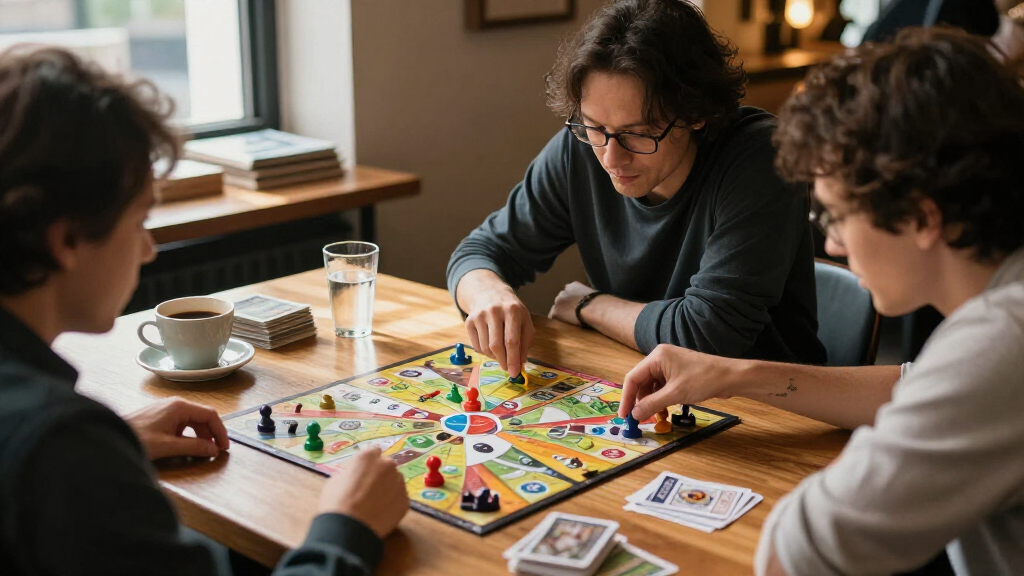
I compared these 14 games by the kind of strategic decision-making they ask players to use: planning ahead, adapting to changing options, managing risk, reading opponents, or coordinating with teammates. I also weighed how clearly each game communicates its choices, how much rules overhead sits between players and those choices, and whether its format suits the stated player range and likely table mood. A game can be strategic without being long or complex, so accessibility counted as a strength when it preserved meaningful decisions.
The ranking gives the most weight to decision quality, replayable choices, and broad usefulness across different groups. That puts flexible, engaging strategy games such as Azul, Wingspan, and Carcassonne ahead of titles with narrower formats or more specialized appeal. The lower-ranked picks are not automatically weaker; several serve specific needs, such as a two-player face-off, a party setting, or a sports-themed table. I also considered tradeoffs: direct conflict, dependence on communication, limited player-count flexibility, or a narrower strategic focus can make a game a better match for some buyers than others.
Factors to Consider When Choosing Board Games For Strategy Lovers
Before choosing a strategy game, I’d match the decisions it asks players to make to the people around your table. A long game is not automatically deeper, and a compact game is not automatically lightweight. These broader factors can help you avoid buying a title whose style, pace, or interaction level does not suit your group.
Choose the Kind of Strategy You Enjoy
Strategy can mean building an efficient engine, planning routes, drafting limited pieces, reading opponents, or coordinating clues with teammates. Decide which of those decisions your group enjoys before comparing complexity labels. Players who like optimizing their own plans may prefer less confrontational designs, while groups that enjoy negotiation or tactical disruption may want stronger player interaction. A common mismatch is buying a highly interactive game for people who would rather focus on their own boards. Consider whether changing plans in response to others feels exciting or frustrating at your table.
Match Game Length to Your Group’s Attention
Think about the full commitment, including teaching, setup, and turns that may slow down as players learn. Longer sessions can support layered planning, but they also make a poor fit for weeknight play or groups with uneven attention spans. Short games can still offer consequential choices when players must act with limited information or resources. Check whether the game has downtime between turns, especially if your group tends to disengage while waiting. When uncertain, choose a format your group will actually bring back to the table rather than one that sounds impressive on paper.
Treat Player Count as a Gameplay Feature
A stated player range does not mean a game feels equally strong at every count. More players can add negotiation, competition, or social energy, but they may also lengthen turns and reduce control over the board. Two-player games often need direct interaction or a tight race to keep both people engaged. If your group size varies, favor games whose central decisions remain satisfying across the counts you commonly host. Before buying, ask whether you need one versatile title or a more focused game for a regular pairing.
Set the Right Level of Direct Conflict
Some strategy fans want opponents to block plans, contest territory, or force tactical responses; others want competition without attacks that feel personal. This difference can matter more than the game’s rules weight. Look for whether interaction is indirect, such as taking a shared opportunity first, or direct, such as removing control or disrupting another player. Groups with mixed preferences often do better with games where competition is clear but setbacks do not erase a long plan. Avoid assuming that everyone who enjoys strategy also enjoys confrontation.
Balance Learning Curve Against Replay Variety
A simple teach makes it easier to bring a game to new players, but replayability depends on how much the available choices change from session to session. Variable setups, competing goals, and shared markets can keep familiar rules interesting without adding a large rulebook. On the other hand, a dense ruleset may offer plenty of options but see little play if only one person is willing to teach it. Consider who will explain the game and whether new players can make informed decisions early on. For a mixed-experience group, a clear core loop with room to improve often beats complexity for its own sake.
Pay for Fit, Not Just Components or Theme
Production and theme can make a game inviting, but they do not guarantee the kind of strategy you want. A premium-feeling presentation is worthwhile when it supports repeated play, readability, or a theme your group genuinely enjoys. For a game that will mostly serve casual gatherings, ease of setup and broad appeal may matter more than elaborate components. Check the table space, storage needs, and any upkeep between plays; a game that is cumbersome to get out may see less use. Choose the experience your group will return to, not the box that looks most ambitious.
Frequently Asked Questions
Which game in this roundup is the strongest starting point for strategy newcomers?
I’d start with Carcassonne or Azul, depending on the group. Carcassonne introduces spatial planning and shared-board competition through a simple placement idea, while Azul makes turn-by-turn drafting choices easy to see. Choose Carcassonne if your group likes building a map together; choose Azul if it prefers a more focused puzzle with clear scoring incentives. Neither choice requires a long rules explanation before players can begin making meaningful decisions. For a mixed group, a short teach and an open first round can help everyone understand the consequences of their choices.
Which pick works best when the group wants strategy without direct conflict?
Wingspan is a strong candidate for players who want to develop a plan through their own engine rather than battle for territory. Azul also offers competitive tension through shared drafting, but its conflict is indirect: another player may take a tile you wanted. If your group dislikes having plans disrupted, favor games where interaction is limited or comes from shared opportunities rather than attacks. If it enjoys watching opponents’ choices and adapting, that shared competition can add welcome tension. The key is to distinguish competition from confrontation before choosing.
Which games are best for a regular two-player strategy night?
Rubik’s Race Ace Edition is the clearest fit for a quick, head-to-head spatial challenge. For a slower session with more room to develop decisions, Azul and Wingspan are worth comparing, though they offer different styles of play. Check each game’s player-count guidance and how the rules handle two players, rather than assuming a larger-group game will feel equally engaging as a pair. Consider whether you want a short race, a shared tactical puzzle, or longer-term planning. That preference will narrow the choice faster than a general label such as “strategy.”
Should I choose a game with a familiar theme or one with more strategic depth?
I would not treat theme and strategy as opposites. A familiar subject can help new players engage with the rules, while the quality of the decisions depends on what the game asks them to do. Trekking the National Parks, Wingspan, and CATAN each connect their play to a distinct theme, but the strategic appeal comes from different choices and interactions. If the group is hesitant about rules-heavy games, a theme it already likes can make the first session easier to bring to the table. If repeat play matters most, prioritize varied decisions and an interaction style the group enjoys.
Is a party-friendly game still a good choice for strategy lovers?
Yes, if the group enjoys social deduction, communication, or quick tactical reads as forms of strategy. Codenames emphasizes clue selection and interpretation, which is a different skill from resource planning or tile placement. No Escape and Twisted Cryptids may also suit buyers seeking a more social or group-focused experience, rather than a quiet optimization puzzle. These games are less suitable if everyone expects long individual plans or precise control over a personal engine. Decide whether you want strategy to come from conversation and reading people or from managing a board state.
Conclusion
For the broadest mix of clear rules and meaningful choices, I recommend Azul as best overall; choose Carcassonne as best value-style pick if you want approachable tile placement and shared-map decisions. Wingspan is my best premium-style choice for players who want a more involved engine-building experience, while Shifting Stones is a sensible starting point for beginners seeking a compact strategic puzzle. For specific needs, pick Rubik’s Race Ace Edition for a fast two-player contest, Codenames for team-based word deduction, or Risk if your group actively wants direct conflict. The right choice is the one whose style of thinking your group will enjoy repeating.
Columbus Day / Indigenous Peoples' Day Picks
long weekend sales
As an affiliate, we earn on qualifying purchases.