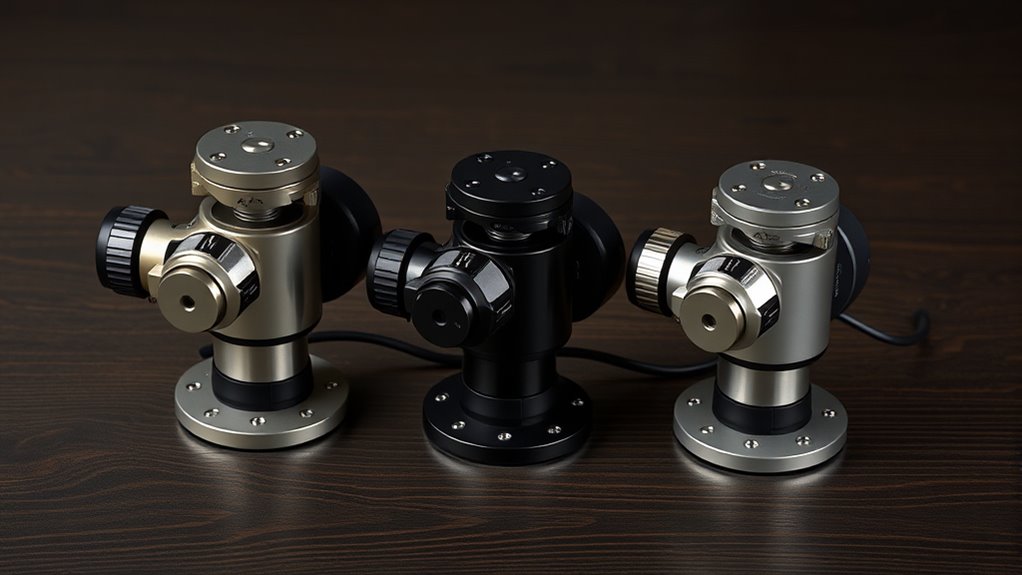

If you’re just starting out in astronomy and want a motorized alt-azimuth mount that balances ease of use with affordability, there are several great options to consider. Among the top picks are the Explore Scientific FirstLight Twilight Nano for its ultra-lightweight portability, the Sky-Watcher AZ-GTI for its modern WiFi control and compact design, and the Sky-Watcher AZ-EQ5 for its impressive versatility and payload capacity. Each of these mounts offers different tradeoffs: some prioritize portability, others expand into astrophotography or multiple mounting modes. Here’s what you need to know to make the best choice for your beginner setup.

Get the latest gadgets delivered free — and shop member deals
- Fast, free delivery on millions of items
- Access to Prime Big Deal Days deals on October 6–7
- Prime Video, Amazon Music and more included
Complete the kit



Key Takeaways
- The Explore Scientific FirstLight Twilight Nano is best for total portability and quick setup for small telescopes.
- The Sky-Watcher AZ-GTI offers WiFi control and is ideal for on-the-go astrophotography, but has a limited payload.
- The AZ-EQ5 provides more versatility with multiple operation modes and higher payload capacity, suited for those ready to expand.
- All options balance ease of use with different levels of automation and control complexity.
- Tradeoffs include portability versus stability, payload versus simplicity, and basic tracking versus advanced features.
| Explore Scientific FirstLight Twilight Nano Alt-Azimuth Mount & Stainless-Steel Tripod |  | Best for ultra-portable, lightweight travel use | Supports Up To: 14 lb | Dovetail Saddle: Vixen-style | Tripod Material: Stainless steel | VIEW ON AMAZON | See Our Full Breakdown |
| Sky-Watcher AZ-EQ5 Fully Computerized GoTo German Equatorial and Alt-Az Telescope Mount |  | Best for versatile operation and expanding capabilities | Modes: AZ, EQ, Dual-OTA | Payload Capacity: 30 lbs | Motor Type: Belt-driven stepper motors | VIEW ON AMAZON | See Our Full Breakdown |
| Sky-Watcher AZ-GTI Portable Computerized Alt-Az Mount with WiFi Control |  | Best for mobile astrophotography and remote control | Weight: 8.6 lbs | Payload Capacity: 11 lbs | Height Range: 28 to 53 inches | VIEW ON AMAZON | See Our Full Breakdown |
| Sky-Watcher AZ-GTi with SkyMax 127 – Modular Go-To Alt-Az Tracking Mount for Time-lapse and Panoramas – WiFi Enabled App Controlled |  | Best for planetary observation and portable imaging | Weight: 8.6 pounds | Telescope: SkyMax 127mm Maksutov-Cassegrain | Payload Capacity: 11 pounds | VIEW ON AMAZON | See Our Full Breakdown |
| motorized alt az mounts for beginner | Payload Capacity | Weight |
|---|---|---|
| Explore Scientific FirstLight | — | — |
| Sky-Watcher AZ-EQ5 Fully Compu | 30 lbs | — |
| Sky-Watcher AZ-GTI Portable Co | 11 lbs | 8.6 lbs |
| Sky-Watcher AZ-GTi with SkyMax | 11 pounds | 8.6 pounds |
More Details on Our Top Picks
Explore Scientific FirstLight Twilight Nano Alt-Azimuth Mount & Stainless-Steel Tripod
The Explore Scientific FirstLight Twilight Nano stands out for its extreme portability and straightforward operation. It supports telescopes up to 14 pounds, making it perfect for small, beginner-friendly scopes. Its collapsible stainless-steel tripod offers quick setup and breakdown, ideal for field use or travel. The smooth single-handle control lets users track objects with minimal fuss. However, its lightweight design means it’s not suited for larger or more precise instruments, and it lacks automation or advanced tracking features. Compared to more complex mounts, this one makes the most sense for hobbyists prioritizing portability and simplicity over advanced functionality.
Pros:- Lightweight and highly portable
- Simple to assemble and operate
- Supports small telescopes up to 14 lb
Cons:- Limited to lightweight, light-duty use
- No tracking automation or goto features
- Potential vibration with heavier equipment
Best for: Beginners who want a portable, easy-to-setup mount for casual observing or travel
Not ideal for: Users planning to mount larger telescopes or interested in astrophotography with precise tracking
- Supports Up To:14 lb
- Dovetail Saddle:Vixen-style
- Tripod Material:Stainless steel
- Tripod Height Range:25.5″-45″
- Tripod Legs Diameter:1.25″
Our verdict“Ideal for beginners seeking a portable, straightforward mount for casual observing, but not suited for heavier or advanced setups.”
Sky-Watcher AZ-EQ5 Fully Computerized GoTo German Equatorial and Alt-Az Telescope Mount
The Sky-Watcher AZ-EQ5 offers a compelling mix of versatility and power, combining azimuth, equatorial, and dual-OTA modes. Its belt-driven stepper motors deliver quiet, precise slewing—an advantage for users who want smoother tracking. Its all-metal construction supports payloads up to 30 pounds, making it suitable for heavier telescopes and cameras. The included SynScan hand controller boasts a database of over 42,000 objects, giving beginners access to a wealth of celestial targets. The downside is that its setup process is more involved, and the weight may be a concern for portability. This mount suits beginners who are ready to take their astronomy to the next level without sacrificing automation or control.
Pros:- Multiple operation modes for flexibility
- Quiet, smooth slewing with belt-driven motors
- High payload capacity for larger telescopes
Cons:- Heavier and more complex to set up
- Overkill for very casual or travel use
- Requires learning to operate multiple modes
Best for: Beginners prepared for a more involved setup seeking future expandability
Not ideal for: Those who prioritize lightweight portability or quick, simple setups
- Modes:AZ, EQ, Dual-OTA
- Payload Capacity:30 lbs
- Motor Type:Belt-driven stepper motors
- Hand Controller:SynScan with 42,000+ object database
- Construction:All-metal
Our verdict“A versatile, durable mount for beginners ready to expand their observing toolkit and handle larger equipment.”
Sky-Watcher AZ-GTI Portable Computerized Alt-Az Mount with WiFi Control
The Sky-Watcher AZ-GTI combines portability with modern app control, making it an excellent choice for astrophotography on the move. It supports payloads up to 11 pounds, suitable for small telescopes or cameras, and includes WiFi-enabled app control that allows remote operation from smartphones or tablets. The dual encoders help improve tracking accuracy, especially useful for time-lapse or panoramic shots. Its lightweight design makes it easy to carry, but the limited payload means larger telescopes or heavier accessories are out of reach. Setup can be a bit tricky for absolute beginners unfamiliar with app-based control, but it offers a modern, flexible experience for those comfortable with smartphones.
Pros:- Lightweight and portable
- WiFi-enabled for remote control
- Supports astrophotography and time-lapse modes
Cons:- Limited payload for larger telescopes
- Requires external power for extended use
- Setup may be complex for some beginners
Best for: Beginners interested in astrophotography and remote, mobile control
Not ideal for: Those needing to mount larger telescopes or seeking a purely mechanical mount
- Weight:8.6 lbs
- Payload Capacity:11 lbs
- Height Range:28 to 53 inches
- Power Options:AA batteries, 12V external input
- Material:Brass and aluminum gears
Our verdict“A compact, modern mount ideal for astrophotographers and astronomy enthusiasts who want remote operation and portability.”
Sky-Watcher AZ-GTi with SkyMax 127 – Modular Go-To Alt-Az Tracking Mount for Time-lapse and Panoramas – WiFi Enabled App Controlled
This bundle pairs the AZ-GTi mount with the SkyMax 127mm Maksutov-Cassegrain telescope, making it perfect for planetary and lunar observation. Its lightweight design and WiFi app control facilitate quick setup for mobile observing or astrophotography. The dual-encoder technology improves tracking accuracy, and the mount supports up to 11 pounds, suitable for lightweight cameras or accessories. It excels in time-lapse and panorama modes, but the limited payload restricts larger equipment. The learning curve for beginners is moderate, especially when managing app controls and photography features. This mount makes sense for those who want a ready-to-go planetary setup with remote operation.
Pros:- Portable with a high-quality planetary telescope
- WiFi and app control for ease of use
- Supports time-lapse and panorama photography
Cons:- Limited payload capacity for larger accessories
- Dependent on smartphone or tablet for operation
- Moderate learning curve for app features
Best for: Beginners aiming for planetary detail and portable imaging capabilities
Not ideal for: Those needing larger telescopes or more complex astrophotography setups
- Weight:8.6 pounds
- Telescope:SkyMax 127mm Maksutov-Cassegrain
- Payload Capacity:11 pounds
- Control:WiFi-enabled, app controlled
- Features:Time-lapse and panorama modes, dual-encoder technology
Our verdict“A specialized, portable planetary observing setup with modern control features, ideal for beginners focusing on lunar and planetary detail.”

How We Picked
Our selection process focused on mounts that are specifically designed for beginners interested in motorized alt-azimuth operation. We prioritized ease of setup, portability, and control features, while also considering durability and potential for future expansion. We compared specs like payload capacity, control systems, and compatibility with common beginner telescopes. Each model was evaluated for how well it balances simplicity with functionality, avoiding overly complex systems that could overwhelm new users. The goal was to identify mounts that deliver reliable tracking without requiring extensive astrophysics knowledge or technical expertise.
Factors to Consider When Choosing Motorized Alt Az Mounts For Beginners
Choosing the right motorized alt-az mount as a beginner involves balancing portability, control features, and future expandability. The key is to match the mount’s capabilities with your observing goals—whether casual stargazing, astrophotography, or planetary studies. Understanding the differences in control systems, payload limits, and modes will help you avoid overpaying for features you won’t use. This guide breaks down what to look for based on your priorities, from ultra-light travel mounts to more versatile, feature-rich options that grow with your skills.Portability and Ease of Setup
If you plan to take your mount on trips or to different locations, lightweight, quick-setup models like the Explore Scientific FirstLight Twilight Nano or Sky-Watcher AZ-GTI are ideal. These mounts prioritize simple assembly, minimal weight, and quick operation, making them perfect for casual beginners or those new to astronomy who want instant gratification without complex calibration or extensive equipment.
Control and Automation Features
For those interested in remote operation or astrophotography, mounts with WiFi control or goto capabilities, such as the AZ-GTI or the AZ-EQ5, provide more automation. These features allow you to locate objects easily and track them smoothly, reducing manual effort. However, they usually involve a steeper learning curve and sometimes higher costs, so consider whether automation aligns with your current skill level and observing goals.
Payload and Expansion Potential
If you envision upgrading your telescope or adding cameras later, a mount with higher payload capacity like the AZ-EQ5 offers greater flexibility. For basic visual observing with smaller telescopes, a lightweight mount suffices, but if astrophotography or larger scopes are in your plans, investing in a more robust mount makes sense. Keep in mind that heavier mounts tend to be less portable, so weigh your priorities carefully.
Budget and Future Growth
Beginners should look for mounts that balance affordability with features that allow growth. The FirstLight Twilight Nano offers a budget-friendly, simple solution, while the AZ-EQ5 provides more advanced functions at a higher price point. Think about your long-term plans—if you’re unlikely to upgrade, a basic mount might suffice; but if you see yourself expanding into astrophotography, a more capable system could be a worthwhile investment.
Frequently Asked Questions
Can a beginner easily operate a motorized alt-az mount?
Yes, most modern motorized alt-az mounts designed for beginners feature intuitive controls, simple setup procedures, and often include goto or tracking modes that automate object locating. While some models may require a brief learning curve, especially those with app control or multiple modes, they are generally accessible for users with minimal technical experience.
What should I consider when choosing a mount for astrophotography?
If astrophotography is a goal, look for mounts with tracking accuracy, goto capabilities, and stability. Mounts like the AZ-EQ5 or those with dual-encoder technology can help produce sharper images by maintaining precise tracking. Keep in mind that payload capacity also matters, as heavier cameras or accessories will require a sturdier mount.
Are WiFi-controlled mounts better for beginners?
WiFi-controlled mounts, such as the AZ-GTI, offer convenience by allowing remote operation via smartphone apps. They are excellent for users who want to control their setup from a distance or in dark environments. However, they may involve more initial setup and learning to operate the app, so consider your comfort with technology before choosing this feature.
How portable are these mounts for travel?
Most beginner-friendly mounts prioritize portability, with models like the FirstLight Twilight Nano and AZ-GTI weighing under 10 pounds. These are designed to be lightweight and compact, making them ideal for field use or travel. Heavier mounts, like the AZ-EQ5, tend to be less portable but offer greater stability and capacity for larger telescopes.
What is the typical learning curve for a motorized alt-az mount?
For most beginner models, the learning curve is moderate, especially if the mount features automated goto or app control. Basic operation usually involves simple alignment procedures and familiarization with remote controls or smartphone apps. More advanced features, like multiple operation modes or astrophotography integration, may take additional practice but are manageable with basic instructions and patience.
Conclusion
For total beginners seeking straightforward, portable setups, the Explore Scientific FirstLight Twilight Nano provides an excellent entry point. Those interested in remote control, astrophotography, or future expansion may prefer the Sky-Watcher AZ-GTI or the AZ-EQ5. Ultimately, your choice should hinge on whether portability, automation, or versatility is most important to your observing ambitions. Consider your long-term goals and current skill level to select the mount that will best support your journey into astronomy.
Halloween Picks
halloween
As an affiliate, we earn on qualifying purchases.