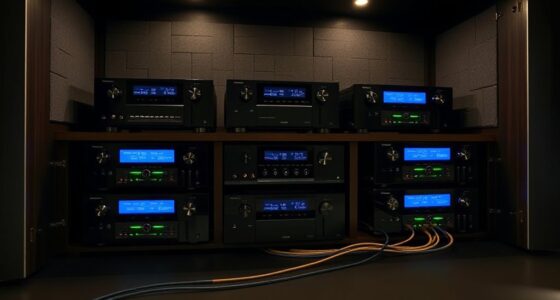
Choosing the right 25Gbe managed switch requires balancing raw throughput against power consumption and management complexity. My top recommendation for most advanced users is the QNAP QSW-M5216-1T-US, which offers dedicated 25GbE uplink capability and robust Layer 2 features in a manageable form factor. For those prioritizing power delivery alongside high speeds, the SODOLA 24 Port 2.5Gb PoE Switch provides a compelling hybrid solution, though it operates primarily at 2.5GbE on copper ports. The main tradeoff in this market lies between true native 25Gbe performance and multi-gigabit alternatives that offer broader compatibility at lower speeds. Continue reading to understand which model aligns with your specific infrastructure requirements.

Get the latest gadgets delivered free with Prime
- Fast, free delivery on millions of items
- Prime Video, Amazon Music and more included
- Member-only deals all year
Complete the kit



Key Takeaways
- True 25Gbe native switches are rare in consumer-grade hardware; most ’25Gbe’ marketed options rely on SFP28 uplinks while copper ports remain at 2.5G or 10G.
- Management interfaces vary wildly: QNAP offers full-featured L2/L3-lite capabilities, while SODOLA units often use simplified web interfaces with limited VLAN granularity.
- Power over Ethernet (PoE) budget is a critical differentiator; only a few models in this list support high-wattage PoE+ or PoE++ alongside multi-gigabit speeds.
- Thermal management is a hidden cost: aluminum chassis designs in SODOLA models reduce fan noise but may require more clearance in rack setups compared to standard metal enclosures.
- Future-proofing with SFP28/SFP+ slots is more cost-effective than buying full 25Gbe copper switches for most home lab and small business applications.
| SODOLA 24 Port 2.5Gb PoE Switch, Managed, 500W, 2x10G SFP+ |  | Best for Multi-Gig PoE Deployments | Total ports: 26 | PoE ports: 24 | Uplink ports: 2 x 10G SFP+ | VIEW ON AMAZON | See Our Full Breakdown |
| QNAP QSW-M5216-1T-US 16-Port 25GbE Managed Network Switch |  | Best for Native 25GbE Core Links | Total ports: 17 | 25GbE ports: 16 x SFP28 | Copper port: 1 x 10GBASE-T | VIEW ON AMAZON | See Our Full Breakdown |
| SODOLA 8-Port 2.5Gb Web Managed Switch, 8 x 2.5G Base-T & 1 x 10G SFP+ |  | Best Compact Multi-Gig Desktop Switch | Total ports: 9 | RJ45 ports: 8 x 2.5GbE | Uplink port: 1 x 10G SFP+ | VIEW ON AMAZON | See Our Full Breakdown |
| SODOLA 6 Port 2.5Gb Managed Switch with 10G SFP+ Ports |  | Best Fanless Pick for a Small Network | Total ports: 6 | RJ45 ports: 4 x 2.5GbE | SFP+ ports: 2 x 10G | VIEW ON AMAZON | See Our Full Breakdown |
| TP-Link TL-SG1428PE 24-Port Gigabit Easy Smart Managed PoE+ Switch |  | Best for Gigabit PoE Port Density | Total ports: 24 | Data rate: 1Gbps | PoE standard: PoE+ | VIEW ON AMAZON | See Our Full Breakdown |
| QNAP QSW-M7308R-4X 12-Port 100GbE Layer 2 Managed Switch |  | Best High-Capacity Enterprise Core | Port Configuration: 4 x 100GbE QSFP28, 8 x 25GbE SFP28 | Switching Capacity: 1200 Gbps | Throughput: 600 Gbps Non-Blocking | VIEW ON AMAZON | See Our Full Breakdown |
| QNAP QSW-L2110-10T-US 10-Port Multi-Gigabit Network Switch |  | Best All-Copper SMB Upgrade | Port Types: 8 x 2.5GbE RJ45, 2 x 10GbE RJ45 | Management: Lite-Managed Layer 2 | Cooling: Fanless Passive | VIEW ON AMAZON | See Our Full Breakdown |
| SODOLA 5 Port 2.5Gb Managed Network Switch with 10G SFP+ and Aluminum Cooling |  | Best Compact Home Office Switch | Port Configuration: 5x 2.5G RJ45, 1x 10G SFP+ | Housing Material: Aluminum Alloy | Cooling Method: Fanless Passive | VIEW ON AMAZON | See Our Full Breakdown |
| QNAP QSW-L2110-2S8T-US 10-Port Multi-Gigabit Network Switch |  | Best Hybrid Copper-Fiber Setup | Port Configuration: 8 x 2.5GbE RJ45, 2 x 10GbE SFP+ | Design: Fanless, Compact Desktop | Management: Layer 2 Managed | VIEW ON AMAZON | See Our Full Breakdown |
| Omada ES206X-M2 5 Port 2.5G Easy Managed Switch |  | Best Cloud-Managed Entry Level | Port Configuration: 5x 2.5G RJ45, 1x 10G SFP+ | Management Type: Cloud Managed (Omada) | Switch Type: Fixed, Managed | VIEW ON AMAZON | See Our Full Breakdown |
| 9-Port 2.5Gb Managed Switch with 8 x 2.5G RJ45 and 1 x 10G SFP+ |  | Best Compact Entry-Level Managed Switch | Port Configuration: 8 x 2.5G RJ45, 1 x 10G SFP+ | Power Consumption: 12W (Active), 2.2W (Idle) | Cooling System: Passive (Fanless) | VIEW ON AMAZON | See Our Full Breakdown |
| 25gbe managed switch | Management |
|---|---|
| SODOLA 24 Port 2.5Gb PoE Switc | Web managed |
| QNAP QSW-M5216-1T-US 16-Port 2 | Managed; QNAP Switch System web interface |
| SODOLA 8-Port 2.5Gb Web Manage | Web managed |
| SODOLA 6 Port 2.5Gb Managed Sw | Web-based configuration |
| TP-Link TL-SG1428PE 24-Port Gi | Easy Smart managed |
| QNAP QSW-M7308R-4X 12-Port 100 | — |
| QNAP QSW-L2110-10T-US 10-Port | Lite-Managed Layer 2 |
| SODOLA 5 Port 2.5Gb Managed Ne | — |
| QNAP QSW-L2110-2S8T-US 10-Port | Layer 2 Managed |
| Omada ES206X-M2 5 Port 2.5G Ea | — |
| 9-Port 2.5Gb Managed Switch wi | — |
More Details on Our Top Picks
SODOLA 24 Port 2.5Gb PoE Switch, Managed, 500W, 2x10G SFP+
For a managed switch roundup centered on 25GbE, this SODOLA is a down-speed alternative built for a different job: powering many endpoints over 2.5GbE rather than linking servers at 25GbE. Its 24 PoE ports and 500W power budget suit access points, cameras, and other powered devices, while two 10G SFP+ slots provide faster uplinks than the gigabit SFP slots on the TP-Link TL-SG1428PE. Web management, VLAN, QoS, LACP, and IGMP give it useful network controls. The tradeoff is significant for buyers prioritizing this roundup’s 25GbE focus: it has no 25GbE ports, and its uplinks top out at 10GbE. Its rack-mount design and built-in fans also make it less suited to a quiet desk or living space.
Pros:- Twenty-four 2.5GbE PoE ports serve many powered devices without separate injectors.
- 500W total PoE budget supports a substantial endpoint load.
- Two 10G SFP+ uplinks offer more headroom than the TP-Link TL-SG1428PE’s SFP slots.
- Web management includes VLAN, QoS, LACP, and IGMP features.
Cons:- No 25GbE ports, so it cannot directly serve the roundup’s 25GbE links.
- The 10G SFP+ uplinks remain slower than the QNAP QSW-M5216-1T-US’s 25GbE SFP28 ports.
- Built-in fans may be intrusive in quiet rooms.
Best for: Small-business and surveillance-network operators who need managed 2.5GbE access, PoE for many devices, and 10GbE uplinks.
Not ideal for: Buyers connecting 25GbE servers or NAS systems, or anyone needing a silent, fanless switch for a nearby workspace.
- Total ports:26
- PoE ports:24
- Uplink ports:2 x 10G SFP+
- PoE power budget:500W
- Port speed:Up to 2.5Gbps
- Switching bandwidth:160Gbps
- Management:Web managed
- Features:LACP, QoS, VLAN, IGMP
- Form factor and cooling:1U rack-mount, metal case, built-in fans
Our verdict“Choose this SODOLA when 24 managed 2.5GbE PoE connections matter more than native 25GbE throughput.”
QNAP QSW-M5216-1T-US 16-Port 25GbE Managed Network Switch
This is the clearest match for a buyer who specifically needs a 25GbE managed switch: sixteen SFP28 ports provide native 25GbE connections for servers, storage, and compatible edge equipment. Its 820Gbps switching capacity makes it better suited to a fast network core than the SODOLA 24-port PoE model, which offers more powered access ports but only 2.5GbE access and 10GbE uplinks. QNAP’s web interface and Layer 2 tools—including VLAN, LACP, ACL, and LLDP—support practical network segmentation and link management. The compromise is that the high-speed ports require compatible SFP28 equipment, and the single 10GBASE-T port does not match their 25GbE rate. I’d pick it for a fiber-oriented server room, not a copper-first office that needs PoE on every endpoint.
Pros:- Sixteen SFP28 ports deliver native 25GbE connectivity.
- 820Gbps switching capacity suits server and storage aggregation.
- Layer 2 management includes VLAN, LACP, ACL, and LLDP.
- The multi-speed 10GBASE-T port supports copper devices down to 100Mbps.
Cons:- SFP28 ports require compatible modules, cabling, and endpoint interfaces.
- The lone 10GBASE-T port is slower than the sixteen 25GbE ports.
- No PoE or broad copper access-port bank is specified.
Best for: IT teams building a 25GbE server, NAS, or aggregation layer with SFP28-capable equipment and Layer 2 management needs.
Not ideal for: Small offices that need many copper access ports or PoE for cameras and access points; this switch has only one 10GBASE-T port and no listed PoE.
- Total ports:17
- 25GbE ports:16 x SFP28
- Copper port:1 x 10GBASE-T
- Switching capacity:820Gbps
- Copper port speeds:10G, 5G, 2.5G, 1G, 100M
- Management:Managed; QNAP Switch System web interface
- Layer 2 features:LACP, VLAN, ACL, LLDP
- Warranty:2 years
Our verdict“Choose the QSW-M5216-1T-US when native 25GbE SFP28 connectivity and managed Layer 2 controls take priority over PoE or numerous copper ports.”
SODOLA 8-Port 2.5Gb Web Managed Switch, 8 x 2.5G Base-T & 1 x 10G SFP+
The eight-port SODOLA is a compact choice for a home lab or small office that needs faster-than-gigabit copper without moving up to a rack switch. It pairs eight 2.5GbE RJ45 ports with a 10G SFP+ slot, making it more flexible for a small NAS or uplink than the four-copper-port SODOLA 6 Port model. Its web management, VLAN, and QoS features add useful control, while the fanless aluminum enclosure and magnetic mounting suit desks and compact network shelves. This is still not a 25GbE switch: the fastest listed interface is 10G SFP+, well below the QNAP QSW-M5216-1T-US’s SFP28 ports. Port count is also limited for expanding networks, and the supplied product data does not specify a power supply.
Pros:- Eight 2.5GbE RJ45 ports provide ample multi-gigabit access for a compact setup.
- A 10G SFP+ slot supports a faster NAS or network uplink.
- Fanless aluminum cooling avoids fan noise in a desk-side installation.
- Web management includes VLAN and QoS controls.
Cons:- The 10G SFP+ interface is not a substitute for native 25GbE ports.
- Nine total ports may constrain network growth.
- Power-supply details are not specified in the supplied product data.
Best for: Home-lab owners and small-office users who need several 2.5GbE copper connections, quiet operation, and one faster SFP+ uplink.
Not ideal for: Server-room buyers requiring native 25GbE, or growing offices likely to exceed eight copper endpoints.
- Total ports:9
- RJ45 ports:8 x 2.5GbE
- Uplink port:1 x 10G SFP+
- Management:Web managed
- Listed features:VLAN, QoS
- Case material:Aluminum alloy
- Dimensions:6.3 x 3.58 x 0.98 inches
- Weight:0.4 kg
Our verdict“Pick this model for a quiet, compact 2.5GbE network with an SFP+ uplink, not for a 25GbE backbone.”
SODOLA 6 Port 2.5Gb Managed Switch with 10G SFP+ Ports
With four 2.5GbE copper ports and two 10G SFP+ ports, this SODOLA favors faster uplinks over a large number of local connections. That makes it a sensible fit for a quiet home office linking a few multi-gig devices to a NAS or upstream switch. Compared with the eight-port SODOLA 8-Port model, it gives up half the copper ports but adds a second SFP+ connection, which can better suit a small fiber-linked layout. Fanless cooling, magnetic feet, and web-based VLAN, QoS, and IGMP snooping keep installation simple and unobtrusive. Its limits are just as clear: neither its RJ45 nor SFP+ ports reach 25GbE, and the supplied details do not list advanced security controls. I’d favor the QNAP QSW-M5216-1T-US for a 25GbE core, but this is easier to place in a quiet small network.
Pros:- Two 10G SFP+ ports provide more uplink flexibility than the eight-port SODOLA model’s single SFP+ slot.
- Fanless aluminum housing suits noise-sensitive rooms.
- Web management offers VLAN, QoS, and IGMP snooping.
- Magnetic feet and compact construction allow flexible placement.
Cons:- Only four 2.5GbE RJ45 ports are available for local devices.
- The 10G SFP+ ports fall short of the roundup’s native 25GbE option.
- Advanced security features are not listed in the supplied product data.
Best for: Home-office users or small labs with up to four 2.5GbE copper devices and a need for two 10G SFP+ links in a silent enclosure.
Not ideal for: Buyers needing native 25GbE, numerous copper ports, or explicitly listed advanced security features.
- Total ports:6
- RJ45 ports:4 x 2.5GbE
- SFP+ ports:2 x 10G
- Management:Web-based configuration
- Listed features:VLAN, QoS, IGMP snooping
- Cooling:Fanless aluminum alloy housing
- Mounting:Magnetic feet
- Compatibility:Supports 1GbE and 100Mbps devices
Our verdict“Choose this switch for a quiet, small installation where two 10G SFP+ links matter more than a larger 2.5GbE port count.”
TP-Link TL-SG1428PE 24-Port Gigabit Easy Smart Managed PoE+ Switch
The TP-Link TL-SG1428PE is the practical choice when the job is powering many standard Ethernet devices, not building a 25GbE network. Its 24 gigabit PoE+ ports and 250W budget cover access points, phones, and cameras, while easy web management, VLANs, and auto PoE recovery simplify routine operation. Compared with the SODOLA 24 Port 2.5Gb PoE Switch, it offers a lower port speed and smaller PoE budget, but targets conventional gigabit devices rather than multi-gig endpoints. Two SFP slots provide uplink options, though the supplied data does not specify their speed; they should not be treated as 25GbE ports. I’d choose this for a straightforward gigabit access layer, and skip it if faster-than-gigabit client links or a high-speed server backbone are the goal.
Pros:- Twenty-four PoE+ ports suit dense gigabit device deployments.
- A 250W total power budget supports multiple powered endpoints.
- Web-based management and VLAN segmentation provide basic network control.
- Auto PoE recovery can help restore connected devices.
Cons:- Gigabit port speed is below the 2.5GbE access offered by the SODOLA PoE alternative.
- The 250W budget is lower than the SODOLA 24 Port 2.5Gb PoE Switch’s 500W.
- The listed SFP slots are not specified as 25GbE interfaces.
Best for: Small businesses deploying many gigabit PoE cameras, phones, or access points with simple web-based management.
Not ideal for: Buyers needing 2.5GbE or native 25GbE ports, or those whose powered devices require a PoE budget above 250W.
- Total ports:24
- Data rate:1Gbps
- PoE standard:PoE+
- Maximum PoE per port:30W
- PoE power budget:250W
- Uplink slots:2 x SFP
- Management:Easy Smart managed
- Listed features:VLAN, auto PoE recovery
- Case and dimensions:Metal; 17.3 x 8.7 x 1.73 inches
Our verdict“Choose the TL-SG1428PE for a managed gigabit PoE access layer, but not for a multi-gig or 25GbE buildout.”
QNAP QSW-M7308R-4X 12-Port 100GbE Layer 2 Managed Switch
This switch stands out for its extreme bandwidth ceiling, offering four 100GbE QSFP28 ports alongside eight 25GbE SFP28 ports. Unlike the more consumer-focused QNAP QSW-L2110-10T-US, this model is engineered for data centers or high-performance storage clusters where 600 Gbps non-blocking throughput is mandatory. The QSS web interface simplifies Layer 2 configuration, though it lacks the granular control of full Layer 3 devices. It is significantly overpowered for a home lab but serves as a critical backbone for environments demanding massive aggregate switching capacity. The metal chassis and rackmount kit ensure it fits into professional setups, but the port density forces a specific use case: connecting high-speed servers or NAS units rather than general workstation access.
Pros:- Four 100GbE QSFP28 ports provide massive uplink capacity
- 1200 Gbps switching capacity handles heavy concurrent loads
- Layer 2 management supports VLAN and ACL security controls
- Rackmount design integrates seamlessly into server cabinets
Cons:- Requires expensive 25G or 100G transceivers and cables
- Overkill for networks lacking high-speed server infrastructure
- Limited port count compared to larger enterprise chassis
Best for: Enterprise IT managers building 100G backbones or connecting high-density storage arrays.
Not ideal for: Home users or small businesses who do not have 25G or 100G capable endpoints.
- Port Configuration:4 x 100GbE QSFP28, 8 x 25GbE SFP28
- Switching Capacity:1200 Gbps
- Throughput:600 Gbps Non-Blocking
- Management Layer:Layer 2 Managed
- Form Factor:1U Rackmount
- Dimensions:9.8 x 8.15 x 1.7 inches
- Warranty:2 Years
Our verdict“This is the definitive choice for building a 100GbE core network, offering unmatched throughput for storage-heavy environments.”
QNAP QSW-L2110-10T-US 10-Port Multi-Gigabit Network Switch
Compared to the fiber-heavy QNAP QSW-L2110-2S8T-US, this model prioritizes all-copper connectivity with eight 2.5GbE RJ45 ports and two 10GbE RJ45 uplinks. This design choice means you can upgrade existing Cat5e/Cat6 wiring without buying fiber transceivers. The fanless operation makes it suitable for office desks, avoiding the noise of traditional metal switches. While it lacks the centralized cloud management found in the Omada ES206X-M2, its standalone web GUI is straightforward for basic VLAN and QoS tasks. It is a pragmatic upgrade for businesses wanting 10G backbone speeds without the complexity of SFP+ modules, though the lack of PoE means powered devices need separate injectors.
Pros:- Native 10GbE RJ45 uplinks eliminate need for SFP+ transceivers
- Fanless design ensures silent operation in office environments
- Supports VLAN and QoS for traffic prioritization
- Easy integration with existing Cat5e/Cat6 network infrastructure
Cons:- No PoE support requires external injectors for powered devices
- Lite-managed features are less robust than full enterprise switches
- 10GbE RJ45 ports can generate more heat than SFP+ variants
Best for: Small businesses upgrading from Gigabit to Multi-Gigabit using existing copper cabling.
Not ideal for: Users needing Power over Ethernet for cameras or access points.
- Port Types:8 x 2.5GbE RJ45, 2 x 10GbE RJ45
- Management:Lite-Managed Layer 2
- Cooling:Fanless Passive
- Features:VLAN, QoS, IGMP Snooping, Link Aggregation
- Design:Compact Desktop
- Power:External Adapter
Our verdict“The ideal bridge for SMBs wanting 10G speeds without abandoning their copper wiring investments.”
SODOLA 5 Port 2.5Gb Managed Network Switch with 10G SFP+ and Aluminum Cooling
This switch offers a compact 5-port footprint, making it significantly smaller than the 10-port QNAP QSW-L2110-10T-US. It combines four 2.5GbE RJ45 ports with a single 10G SFP+ uplink, providing a cost-effective path to 10G backbone connectivity for home labs. The aluminum alloy housing acts as a passive heat sink, ensuring silent operation without fans. While it supports LACP and VLANs, its management interface is simpler than the enterprise-grade QSS interface on the QNAP QSW-M7308R-4X. It is best suited for users who need a quiet, unobtrusive switch for a desk or shelf, though the limited port count restricts its scalability for growing networks.
Pros:- Aluminum chassis provides effective passive cooling and durability
- 10G SFP+ uplink allows connection to high-speed NAS or router
- Magnetic mounting options offer flexible placement
- Backward compatible with 1G and 100M devices
Cons:- Only five total ports limits network expansion
- Requires SFP+ module for 10G connectivity, adding cost
- Web management lacks advanced enterprise security features
Best for: Home office users or creatives needing a silent, small-footswitch for a NAS and PC.
Not ideal for: Growing teams that will quickly outgrow five total ports.
- Port Configuration:5x 2.5G RJ45, 1x 10G SFP+
- Housing Material:Aluminum Alloy
- Cooling Method:Fanless Passive
- Mounting:Magnetic pads, Rubber feet
- Energy Efficiency:IEEE 802.3az EEE
- Management Features:LACP, VLAN, QoS, IGMP
Our verdict“A sleek, silent solution for home offices wanting 10G capability without taking up desk space.”
QNAP QSW-L2110-2S8T-US 10-Port Multi-Gigabit Network Switch
Unlike the all-copper QNAP QSW-L2110-10T-US, this model integrates two 10GbE SFP+ ports alongside eight 2.5GbE RJ45 ports. This hybrid approach allows users to connect fiber uplinks for longer distances or higher speeds while keeping desktops on copper. The fanless design matches the quiet operation of the SODOLA 5-Port switch, but the 10-port density makes it far more versatile for small businesses. It supports IEEE 802.3az energy efficiency, automatically adjusting power to idle ports. While it lacks the cloud management of the Omada ES206X-M2, its local web GUI is intuitive for configuring VLANs and QoS, making it a strong middle-ground option for mixed-media networks.
Pros:- Two 10GbE SFP+ ports support fiber or DAC uplinks
- Eight 2.5GbE RJ45 ports serve modern high-speed workstations
- Fanless design ensures silent operation in noise-sensitive areas
- Energy-efficient operation reduces power consumption
Cons:- Requires separate SFP+ transceivers for 10G ports
- No PoE support for cameras or wireless access points
- Management features are limited to Layer 2 basics
Best for: Small businesses mixing fiber backbone uplinks with standard copper workstation connections.
Not ideal for: Users who exclusively use RJ45 10G devices and want to avoid SFP+ modules.
- Port Configuration:8 x 2.5GbE RJ45, 2 x 10GbE SFP+
- Design:Fanless, Compact Desktop
- Management:Layer 2 Managed
- Energy Standard:IEEE 802.3az (EEE)
- Features:VLAN, QoS, Traffic Management
- Interface Type:Hybrid RJ45/SFP+
Our verdict“The best choice for networks that need both copper flexibility and fiber backbone scalability.”
Omada ES206X-M2 5 Port 2.5G Easy Managed Switch
The Omada ES206X-M2 distinguishes itself with centralized cloud management, a feature absent in the standalone QNAP QSW-L2110-10T-US. This allows administrators to monitor and configure the switch remotely via the Omada app or controller, simplifying maintenance for distributed small offices. It features five 2.5GbE RJ45 ports and one 10G SFP+ uplink, matching the port layout of the SODOLA 5-Port switch but adding Loop Prevention and IGMP Snooping for better stability. The fanless metal casing ensures durability and silence. While it is limited to five ports, the Omada ecosystem integration makes it the superior choice for users already invested in or planning to use Omada routers and access points.
Pros:- Cloud management via Omada app simplifies remote administration
- 10G SFP+ uplink provides high-speed backbone connectivity
- Loop Prevention enhances network stability and security
- Compact fanless design fits easily on shelves or desks
Cons:- Full cloud features may require Omada Controller software or hardware
- Only five ports limit scalability for growing networks
- PoE status is ambiguous in some configurations, verify before buying
Best for: Users already in the TP-Link Omada ecosystem who need remote management capabilities.
Not ideal for: Buyers who prefer standalone switches without cloud dependency or controller hardware.
- Port Configuration:5x 2.5G RJ45, 1x 10G SFP+
- Management Type:Cloud Managed (Omada)
- Switch Type:Fixed, Managed
- Cooling:Fanless
- Key Features:VLAN, IGMP Snooping, Loop Prevention
- Weight:2 Pounds
Our verdict“The top pick for Omada ecosystem users seeking remote visibility and management for a small network.”
9-Port 2.5Gb Managed Switch with 8 x 2.5G RJ45 and 1 x 10G SFP+
This 9-port switch occupies a specific niche for users who need basic managed features without the bulk of larger enterprise units. While it does not offer native 25GbE ports, its 10G SFP+ uplink serves as a critical bridge for 25GbE network segments, allowing high-speed aggregation where native 25G copper is impractical. Compared to the QNAP QSW-M5216-1T-US, this unit lacks the dedicated 25GbE copper ports and advanced Layer 3 capabilities, making it unsuitable for core data center switching. However, it outperforms simpler unmanaged hubs by offering VLAN and QoS controls, enabling traffic isolation for home labs or small offices. The fanless metal housing ensures silent operation, a distinct advantage over noisier PoE models. It is a pragmatic choice for edge connectivity, provided the user accepts the limitation of no native 25G RJ45 support and limited management depth.
Pros:- Fanless design ensures completely silent operation in noise-sensitive environments.
- Includes essential management features like VLAN, QoS, and Link Aggregation.
- Compact form factor allows for flexible wall or desktop mounting.
Cons:- Lacks native 25GbE ports, relying on 10G SFP+ for high-speed uplinks.
- Management interface is limited compared to full Layer 3 enterprise switches.
- Does not support GPON/XGSPON modules for fiber-to-the-home applications.
Best for: Home lab enthusiasts or small offices needing a silent, managed edge switch with a 10G uplink for server connections.
Not ideal for: Users requiring native 25GbE copper ports or advanced Layer 3 routing capabilities found in enterprise-grade switches.
- Port Configuration:8 x 2.5G RJ45, 1 x 10G SFP+
- Power Consumption:12W (Active), 2.2W (Idle)
- Cooling System:Passive (Fanless)
- Housing Material:Metal
- Operating Temperature:0~40°C
- Mounting Options:Wall or Desk (with non-slip mats)
- Management Features:VLAN, QoS, Link Aggregation
Our verdict“This switch is the ideal silent, managed edge solution for small networks that need 10G uplink capability without the complexity of full enterprise hardware.”
How We Picked
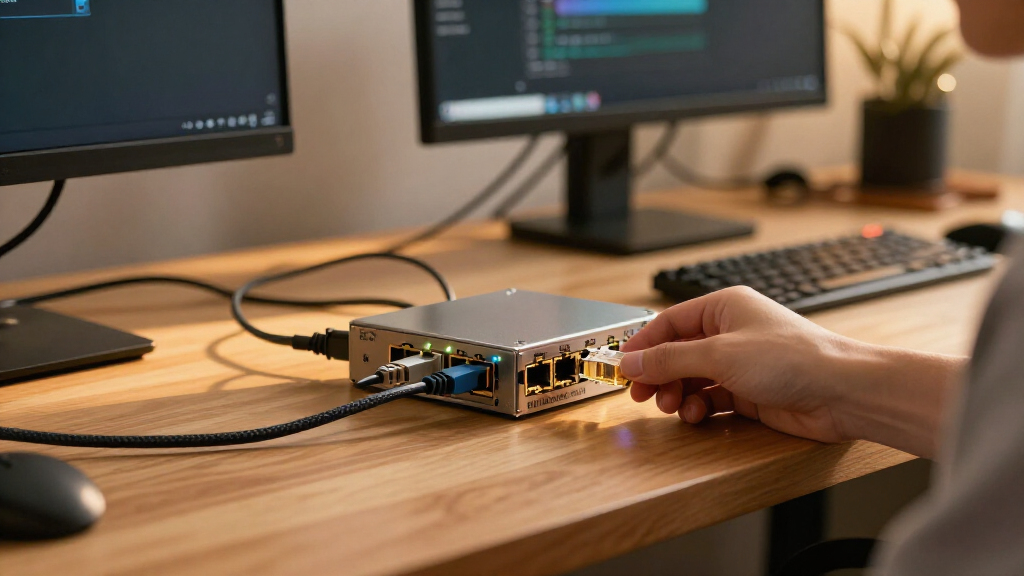
I evaluated these switches based on three primary pillars: throughput consistency, management utility, and ecosystem compatibility. Throughput wasn’t just about port speed ratings; I looked for non-blocking architecture claims and real-world latency handling for mixed traffic types. Management utility focused on whether the interface allows for practical tasks like VLAN segmentation, QoS prioritization, and link aggregation without requiring complex command-line inputs that deter casual admins. Ecosystem compatibility assessed how well the switch integrates with existing NAS units, server hardware, and cabling standards (Cat6a vs. Cat8).
Ranking logic prioritized native 25Gbe capability where available, followed by multi-gigabit versatility. Products were penalized if they lacked essential managed features like STP (Spanning Tree Protocol) or robust ACLs, which are necessary for stable managed networks. I also weighed build quality and cooling efficiency, as high-speed switching generates significant heat. The final order reflects a balance between professional-grade features and accessible deployment for prosumers and small businesses.
| 25gbe managed switch | Management |
|---|---|
| SODOLA 24 Port 2.5Gb PoE Switc | Web managed |
| QNAP QSW-M5216-1T-US 16-Port 2 | Managed; QNAP Switch System web interface |
| SODOLA 8-Port 2.5Gb Web Manage | Web managed |
| SODOLA 6 Port 2.5Gb Managed Sw | Web-based configuration |
| TP-Link TL-SG1428PE 24-Port Gi | Easy Smart managed |
| QNAP QSW-M7308R-4X 12-Port 100 | — |
| QNAP QSW-L2110-10T-US 10-Port | Lite-Managed Layer 2 |
| SODOLA 5 Port 2.5Gb Managed Ne | — |
| QNAP QSW-L2110-2S8T-US 10-Port | Layer 2 Managed |
| Omada ES206X-M2 5 Port 2.5G Ea | — |
| 9-Port 2.5Gb Managed Switch wi | — |
Factors to Consider When Choosing 25gbe Managed Switch
Selecting a managed switch involves more than matching port speeds to your NIC. You must consider how the switch handles traffic, how you will configure it, and whether it fits your physical and electrical environment. This guide breaks down the critical factors that separate a good purchase from a regrettable one.
Native 25Gbe vs. Multi-Gigabit Copper
One of the most common mistakes buyers make is assuming a switch labeled with ’25Gbe’ capabilities provides 25Gbe on all ports. In reality, most units in this category offer 2.5G or 10G copper ports with 25Gbe SFP28 uplinks. If your end devices (like high-end NAS or servers) have 25Gbe NICs, you need SFP28 modules and DAC cables, not just standard Ethernet cables. True native 25Gbe copper switches exist but are enterprise-priced and power-hungry. For most home labs and SMBs, a multi-gigabit switch with 25Gbe uplinks is the smarter financial choice, allowing you to upgrade core links without replacing every endpoint device immediately.
Layer 2 vs. Layer 3 Lite Capabilities
Not all ‘managed’ switches are created equal. Some, like the Omada ES206X-M2, offer ‘Easy Managed’ features that are essentially advanced smart switches with basic VLANs and QoS. Others, like the QNAP QSW-M7308R-4X, provide deeper Layer 2 control with advanced STP configurations, ACLs, and potentially limited Layer 3 routing. If you plan to segment your network heavily (e.g., separating IoT, guest, and management traffic), you need robust VLAN support and ACLs to prevent unauthorized access. Check if the management interface supports static routing if you want to offload traffic from your router; many ‘managed’ switches in this price range do not, requiring you to rely on your gateway for inter-VLAN routing.
PoE Budget and Device Compatibility
If you are connecting cameras, access points, or phones, PoE budget is a decisive factor. A switch might have 24 ports but only a 150W total power budget, meaning you can only power a handful of high-draw devices simultaneously. The SODOLA 24 Port model stands out with a 500W budget, suitable for dense wireless deployments. Conversely, data-heavy switches like the QNAP QSW-M5216 often lack PoE entirely to prioritize cooling and port density for data transfer. Always calculate the total wattage of your powered devices and add a 20% buffer before selecting a switch to avoid underpowered networks.
Thermal Management and Noise Levels
High-speed switching generates heat, particularly in compact chassis. Aluminum body designs, seen in several SODOLA units, help dissipate heat passively or with quieter fans, making them suitable for office or home office environments. Rack-mounted enterprise units often rely on aggressive fan curves to maintain thermal limits, which can create significant noise. If the switch will sit on a desk or in a living space, prioritize models with fanless or low-RPM fan designs. Check the manufacturer’s thermal specifications; if a switch runs hot under load, it may throttle performance or shorten component lifespan, negating the benefits of high-speed ports.
Management Interface and Vendor Lock-in
The ease of configuration varies drastically between vendors. TP-Link Omada and QNAP offer distinct ecosystems. Omada requires a controller software or hardware unit for full centralized management, which adds complexity but simplifies scaling. QNAP’s QSW series integrates well with QNAP NAS units but may feel limited if used in a mixed-vendor environment. Standalone web interfaces (common in SODOLA) are simple but lack the granular monitoring and alerting of enterprise-grade controllers. Consider whether you need SNMP monitoring, syslog export, or integration with existing network management systems before committing to a brand ecosystem.
Frequently Asked Questions
Do I need Cat8 cables for a 25Gbe managed switch?
No, Cat8 is generally overkill and unnecessary for most 25Gbe applications. Cat6a is the standard recommendation for running 25Gbe up to 30 meters, while Cat7 and Cat8 offer shorter reach or better shielding for noisy environments. For longer runs within a rack or between adjacent racks, OM3 or OM4 fiber optic cables with SFP28 transceivers are often more reliable and cost-effective than copper. Using Cat6a provides a good balance of performance, flexibility, and price for typical home lab and SMB setups.
Can a 25Gbe switch replace my router?
Generally, no. While some managed switches offer ‘Layer 3 Lite’ features like static routing, they lack the advanced firewall rules, NAT, DHCP server robustness, and WAN connectivity options of a dedicated router. A 25Gbe switch is designed for internal network segmentation and high-speed data transfer between servers and storage. You should keep your router as the gateway to the internet and use the managed switch to handle traffic between your high-performance devices, ensuring your router isn’t bottlenecked by internal data transfers.
Is Jumbo Frame support important for 25Gbe networks?
Yes, enabling Jumbo Frames (MTU of 9000 bytes) is highly recommended for 25Gbe environments, especially when using iSCSI, NFS, or SMB protocols for storage access. Jumbo Frames reduce CPU overhead and increase throughput by allowing larger chunks of data to be sent in a single packet. However, every device in the chain (NIC, switch, storage) must support and be configured for the same MTU size, or packet fragmentation will occur, degrading performance. Check if the switch supports global or per-port MTU configuration to ensure compatibility with your endpoints.
What is the difference between Managed and Smart Managed switches?
A Smart Managed switch (often called Easy Managed) offers basic administrative features like VLANs, QoS, and port mirroring through a simplified web interface, but lacks deep customization and advanced protocols. A fully Managed switch provides full control over Spanning Tree Protocol, ACLs, 802.1X authentication, and detailed logging, often accessible via CLI and SNMP. For home labs, Smart Managed is often sufficient, but if you require strict security policies, complex network segmentation, or integration with monitoring tools, you need a fully Managed switch to avoid security gaps and management headaches.
How do I handle SFP28 and SFP+ compatibility?
Most 25Gbe SFP28 slots are backward compatible with SFP+ (10G) and sometimes SFP (1G) modules, allowing you to use existing 10G DAC cables or fiber transceivers. However, you cannot use a 10G SFP+ module in a 25G port and expect 25G performance; it will negotiate down to 10G. Always verify the vendor’s compatibility list for third-party optics, as some managed switches lock features or refuse to link with unapproved modules. Using DACs (Direct Attach Copper) is often the most reliable method for short-distance 25Gbe connections within a single rack.
Conclusion
Selecting the right 25Gbe managed switch depends heavily on your specific infrastructure goals. For the best overall balance of native 25Gbe uplinks and manageable Layer 2 features, the QNAP QSW-M5216-1T-US is the standout choice for serious home lab enthusiasts and SMBs needing reliable core connectivity. If your priority is powering numerous devices while maintaining multi-gigabit speeds, the SODOLA 24 Port 2.5Gb PoE Switch offers the best value and power budget. For beginners looking to dip their toes into managed networking without a steep learning curve, the Omada ES206X-M2 provides a user-friendly entry point. Premium users seeking extreme throughput and enterprise-grade resilience should look toward the QNAP QSW-M7308R-4X. Evaluate your cabling, device compatibility, and management needs against these profiles to make a confident purchase.