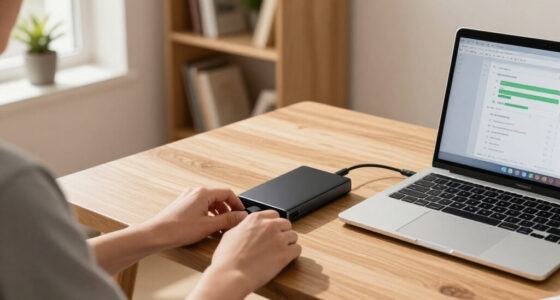
The best power bank overall in this lineup is the Anker Zolo 20,000mAh 30W Power Bank with Built-In USB-C Cable: its midrange capacity, useful output, and attached cable make it a practical everyday balance. For more demanding devices, the Anker Prime 26,250mAh 300W offers far more output, while the INIU 10,000mAh 45W is a smaller pick for lighter carry. The main tradeoff is straightforward: larger capacity and faster charging add weight and bulk, while compact models provide fewer top-ups. Built-in cables reduce what you need to pack but limit cable choice if one wears out. Read on for the full breakdown of which model best fits your devices and routine.

Get the latest gadgets delivered free with Prime
- Fast, free delivery on millions of items
- Prime Video, Amazon Music and more included
- Member-only deals all year
Complete the kit



Key Takeaways
- The Anker Zolo 20,000mAh 30W is the lineup’s strongest everyday balance: it pairs useful capacity with a built-in USB-C cable without chasing extreme size or output.
- High output and high capacity are different advantages: the Anker Prime 26,250mAh 300W stands apart for demanding devices, while several 50,000mAh-plus models prioritize stored energy over charging speed.
- Built-in cables are a recurring convenience feature, not a guarantee of better performance: check their connector type and output alongside the power bank’s port specifications.
- The compact choices make a clear portability trade: the INIU 10,000mAh 45W is easier to carry than the larger options, but offers less reserve for multiple devices or long trips.
- Several large-capacity models compete on similar charging speeds: the 50,000mAh-class options are better compared by cable layout, display, flashlight, and carrying needs than by capacity claims alone.
| INIU 10,000mAh 45W Fast-Charging Portable Charger |  | Best Compact Fast-Charging Pick | Battery capacity: 10,000mAh | Maximum output: 45W | Ports: 2 USB-C, 1 USB-A | VIEW LATEST PRICE | See Our Full Breakdown |
| JKELAR P8 50,000mAh Portable Charger with Built-In Cables, 22.5W Fast Charging and Flashlight |  | Best High-Capacity Bank with Built-In Cables | Battery capacity: 50,000mAh | Battery type: Lithium polymer | Charging output: 22.5W | VIEW LATEST PRICE | See Our Full Breakdown |
| 20,000mAh 45W USB-C Power Bank with Detachable Cable |  | Best Balance of Capacity and Fast Charging | Battery capacity: 20,000mAh | Maximum charging output: 45W | Dimensions: 2.75 × 4.20 × 1.18 inches | VIEW LATEST PRICE | See Our Full Breakdown |
| OHOVIV 50,000mAh Portable Charger with 22.5W Fast Charging |  | Best for Multi-Device Charging at Home or on the Ground | Battery capacity: 50,000mAh | Battery type: Lithium polymer | USB-C output: Up to 22W | VIEW LATEST PRICE | See Our Full Breakdown |
| The Ridge 20W Magnetic Power Bank, 10,000mAh, with Built-in Cables and Kickstand (Basecamp Orange) |  | Best Magnetic Pick for Phone-and-Watch Charging | Battery capacity: 10,000mAh | Maximum output: 20W | Wireless charging: Up to 15W | VIEW LATEST PRICE | See Our Full Breakdown |
| INIU 20,000mAh 22.5W Portable Charger with Built-In USB-C Cable |  | Best for Everyday Cable-Free Carry | Battery capacity: 20,000mAh | Maximum output: 22.5W | Ports: 3 | VIEW LATEST PRICE | See Our Full Breakdown |
| Anker Zolo 20,000mAh 30W Power Bank with Built-In USB-C Cable |  | Best for Faster USB-C Charging | Battery capacity: 20,000mAh | Output power: 30W | Input power: 20W | VIEW LATEST PRICE | See Our Full Breakdown |
| ZZI 60000mAh Portable Power Bank with 22.5W Fast Charging |  | Best for Maximum Off-Grid Capacity | Battery capacity: 60,000mAh | Maximum output: 22.5W | Ports: 3 | VIEW LATEST PRICE | See Our Full Breakdown |
| MaiVoz 56,800mAh Portable Charger with 22.5W Fast Charging and LED Display |  | Best for Multi-Device Ground Travel | Battery capacity: 56,800mAh | Fast-charging output: 22.5W | Ports: 2 USB-A outputs and 1 two-way USB-C port | VIEW LATEST PRICE | See Our Full Breakdown |
| 50,000mAh Portable Charger with 4 Built-In Cables |  | Best for Mixed-Connector Groups | Battery capacity: 50,000mAh | Maximum output: 22.5W | Built-in cables: Micro-B output, USB-A input, USB-C output, Lightning output | VIEW LATEST PRICE | See Our Full Breakdown |
| 50,000mAh Portable Charger with Built-In Cables, 22.5W Fast Charging and LED Display |  | Best for Cable-Free Group Charging | Battery capacity: 50,000mAh | Maximum output: 22.5W | Built-in cables: 4: Type-C, iOS, Micro-USB, and USB-A | VIEW LATEST PRICE | See Our Full Breakdown |
| Anker Prime 26,250mAh 300W Portable Power Bank |  | Best for High-Power Laptop Charging | Battery capacity: 26,250mAh (99.75Wh) | Maximum total output: 300W | Maximum single-port output: 140W with a 5A cable | VIEW LATEST PRICE | See Our Full Breakdown |
| 60,000mAh 22.5W Portable Power Bank with 3-in-1 Cable |  | Best for Maximum Capacity on a Budget of Space | Battery capacity: 60,000mAh | Maximum charging power: 22.5W | Ports: 2 USB-A and 1 USB-C | VIEW LATEST PRICE | See Our Full Breakdown |
| Anker 25,000mAh Power Bank with 165W Output and Built-In Cables |  | Best Built-In Cable Pick for USB-C Devices | Battery capacity: 25,000mAh | Total output: 165W | USB-C ports: 3, up to 100W each | VIEW LATEST PRICE | See Our Full Breakdown |
| Anker 20,000mAh Power Bank with Built-In USB-C Cable, 87W, Black |  | Best for Everyday USB-C Carry | Battery capacity: 20,000mAh | Maximum output: 87W total | Single-device output: Up to 65W | VIEW LATEST PRICE | See Our Full Breakdown |
| power bank | Battery capacity | Dimensions | Ports | Weight |
|---|---|---|---|---|
| INIU 10,000mAh 45W Fast-Chargi | 10,000mAh | — | 2 USB-C, 1 USB-A | — |
| JKELAR P8 50,000mAh Portable C | 50,000mAh | — | — | — |
| 20,000mAh 45W USB-C Power Bank | 20,000mAh | 2.75 × 4.20 × 1.18 inches | — | 10.93 oz |
| OHOVIV 50,000mAh Portable Char | 50,000mAh | — | 4 | — |
| The Ridge 20W Magnetic Power B | 10,000mAh | 4.19 × 2.74 × 0.67 inches | — | 180g |
| INIU 20,000mAh 22.5W Portable | 20,000mAh | 4.1 × 2.8 × 1.1 in | 3 | 320g |
| Anker Zolo 20,000mAh 30W Power | 20,000mAh | 4.72 × 2.89 × 1.24 in | 2 | 365g |
| ZZI 60000mAh Portable Power Ba | 60,000mAh | 5.8 × 2.9 × 1.1 in | 3 | — |
| MaiVoz 56,800mAh Portable Char | 56,800mAh | — | 2 USB-A outputs and 1 two-way USB-C port | — |
| 50,000mAh Portable Charger wit | 50,000mAh | 4.2 × 2.6 × 1.1 in | — | 0.7lb |
| 50,000mAh Portable Charger wit | 50,000mAh | 5.61 × 2.88 × 1.12 in | — | 1.1 lb (503g) |
| Anker Prime 26,250mAh 300W Por | 26,250mAh (99.75Wh) | 6.3 × 2.5 × 1.5 in | 2 USB-C and 1 USB-A | 600g |
| 60,000mAh 22.5W Portable Power | 60,000mAh | 15 × 7.5 × 2.8 cm | 2 USB-A and 1 USB-C | 15.5 oz |
| Anker 25,000mAh Power Bank wit | 25,000mAh | — | — | — |
| Anker 20,000mAh Power Bank wit | 20,000mAh | 6.2 × 2.9 × 1.0 in | 3: built-in USB-C cable, 1 USB-C, and 1 USB-A | 15.2 oz |
More Details on Our Top Picks
INIU 10,000mAh 45W Fast-Charging Portable Charger
The INIU 10,000mAh stands out for pairing a small capacity with 45W output, making it a better fit for quick top-ups than for powering several days away from an outlet. Its two USB-C ports and USB-A port let me connect a mix of devices, while the detachable braided cable saves packing space. Compared with the larger 20,000mAh 45W USB-C Power Bank, this model is easier to carry but gives up substantial backup capacity. The flashlight and stated flight-safe design add practical travel touches, though the included cable is just 0.4 ft long. I’d choose it for a light everyday carry, not as my sole power source on an extended trip.
Pros:- 45W maximum output supports fast charging for compatible devices
- Three outputs accommodate USB-C and USB-A devices
- Compact, lightweight design suits daily carry
- Detachable braided USB-C cable and flashlight add convenience
Cons:- 10,000mAh capacity offers less backup than the 20,000mAh 45W model
- Included USB-C cable is only 0.4 ft long
Best for: Commuters and light packers who want fast USB-C charging for a phone and a second device without carrying a larger bank
Not ideal for: Travelers needing multiple full device recharges or a long cable included in the box
- Battery capacity:10,000mAh
- Maximum output:45W
- Ports:2 USB-C, 1 USB-A
- Included cable:0.4 ft detachable braided USB-C cable
- Voltage:12V
- Output current:3A
- Features:Flashlight, overcharge protection, lightweight design
- Airline travel:Described as TSA-compliant and flight-safe
Our verdict“Choose this INIU for a compact, fast-charging daily carry, but step up to a 20,000mAh model for longer trips.”
JKELAR P8 50,000mAh Portable Charger with Built-In Cables, 22.5W Fast Charging and Flashlight
The JKELAR P8 is the capacity-first choice here: its stated 50,000mAh reserve and built-in USB-C and iOS cables make it suited to extended outings or sharing power across compatible devices. Unlike the OHOVIV 50,000mAh Portable Charger, which lists four ports and a weight, the P8’s product details describe three ports and don’t specify its weight, so I can’t judge its carry burden as precisely. Its 22.5W charging is more modest than the 45W INIU options, favoring endurance and cable convenience over faster top-ups. The battery display and flashlight are useful extras, and protection features are listed, but the stated 5V voltage leaves less clarity about support for some charging setups.
Pros:- Stated 50,000mAh capacity suits extended charging needs
- Built-in USB-C and iOS cables reduce the need to pack separate leads
- 22.5W output supports fast charging on compatible devices
- Battery percentage display, flashlight, and listed protection features add utility
Cons:- 22.5W output is lower than the 45W INIU models in this lineup
- Product information does not specify weight, making portability harder to judge
- Listed 5V voltage leaves compatibility details unclear for some setups
Best for: Travelers and households who prioritize a large stated reserve and need built-in USB-C and iOS cables for compatible devices
Not ideal for: Air travelers seeking a clearly documented, lightweight bank or buyers who prioritize higher charging output
- Battery capacity:50,000mAh
- Battery type:Lithium polymer
- Charging output:22.5W
- Built-in cables:USB-C and iOS
- Number of ports:3
- Voltage:5V
- Special features:Flashlight, LED battery display, overcharge and short-circuit protection
- Warranty:Three-year replacement plan
Our verdict“Pick the JKELAR P8 when capacity and built-in cable convenience matter more than a lighter carry or faster output.”
20,000mAh 45W USB-C Power Bank with Detachable Cable
This 20,000mAh, 45W power bank is the lineup’s practical middle ground: it holds twice the stated capacity of the compact INIU 10,000mAh while retaining the same maximum output. That combination suits travelers who want more backup without moving to a bulky 50,000mAh model. At 10.93 oz and 2.75 × 4.20 × 1.18 inches, its listed dimensions and weight give a useful sense of the carry tradeoff. Two USB-C outputs and one USB-A output allow multiple connections, and the digital display makes remaining charge easier to track. The detachable braided cable helps reduce cable clutter, but it is USB-C only; devices using other connectors need their own lead. Fast charging also depends on device compatibility.
Pros:- 20,000mAh capacity offers more backup than the 10,000mAh INIU
- 45W maximum output supports fast charging for compatible devices
- Digital display shows remaining battery level
- Detachable braided cable and listed 10.93 oz weight support practical portability
Cons:- Included cable is USB-C, so other connector types require a separate cable
- Fast charging depends on device compatibility
- Larger than the 10,000mAh option for minimal everyday carry
Best for: Commuters and travelers who want more than a day’s worth of phone backup, 45W USB-C output, and a clearly stated carry size
Not ideal for: Buyers seeking built-in Lightning connections, the smallest possible bank, or the very large reserve of a 50,000mAh model
- Battery capacity:20,000mAh
- Maximum charging output:45W
- Dimensions:2.75 × 4.20 × 1.18 inches
- Weight:10.93 oz
- Input ports:2 × USB-C
- Output ports:2 × USB-C, 1 × USB-A
- Included cable:Detachable 48-strand braided USB-C cable
- Protection:12-layer protection, including overcharge, over-discharge, overcurrent, and short-circuit protection
Our verdict“Choose this model for a useful capacity-and-speed balance when a compact 10,000mAh bank won’t provide enough backup.”
OHOVIV 50,000mAh Portable Charger with 22.5W Fast Charging
The OHOVIV P5 is aimed at buyers who need a large reserve and want to charge several devices from one bank: it can charge up to three devices at once and shows remaining charge on a digital display. Its listed 613g weight makes the portability tradeoff plain. Compared with the similarly sized-capacity JKELAR P8, OHOVIV specifies its weight and dimensions, while the JKELAR includes built-in USB-C and iOS cables. The P5 instead lists four ports, though the supplied information does not spell out each port’s connector mix. Its USB-A output reaches 22.5W, while USB-C output is listed at up to 22W. Most significantly, the product information says it is not allowed on airplanes, so this is a ground-based or stationary-use pick rather than an airline travel bank.
Pros:- Stated 50,000mAh capacity provides a large reserve
- Can charge up to three devices simultaneously
- Digital display shows remaining charge
- Lists safeguards against overcharging, overvoltage, overcurrent, and short circuits
Cons:- At 613g, it is heavy compared with the 20,000mAh 45W option
- Product information says it is not allowed on airplanes
- Port connector details are less specific than the JKELAR P8’s built-in cable description
Best for: Road-trip groups, households, or stationary users who need to charge up to three devices and can carry a heavy power bank
Not ideal for: Air travelers, ultralight packers, or buyers who need clearly specified connector types for every port
- Battery capacity:50,000mAh
- Battery type:Lithium polymer
- USB-C output:Up to 22W
- USB-C input:18W
- USB-A output:Up to 22.5W
- Ports:4
- Simultaneous device charging:Up to 3 devices
- Dimensions and weight:5.38 × 2.75 × 1.6 inches; 613g (21.6 oz)
Our verdict“Choose the OHOVIV for multi-device charging away from air travel, but skip it if carry weight or flying matters.”
The Ridge 20W Magnetic Power Bank, 10,000mAh, with Built-in Cables and Kickstand (Basecamp Orange)
The Ridge 10,000mAh takes a convenience-first approach: magnetic wireless charging, built-in USB-C and Lightning cables, a kickstand, and a smartwatch charging pad all share one compact 180g unit. That makes it more versatile for a mixed-device kit than the INIU 10,000mAh 45W, which has more wired output at 45W but lacks the Ridge’s wireless and watch features. The tradeoff is speed and capacity: the Ridge tops out at 20W, with wireless charging up to 15W, and its 10,000mAh reserve is better suited to routine top-ups than prolonged time away from an outlet. Wireless charging also depends on centering the device, and the manufacturer notes the bank may warm during charging. I’d favor it for convenience, not maximum charging performance.
Pros:- Combines magnetic wireless charging with built-in USB-C and Lightning cables
- Integrated kickstand and LED display add convenience while charging
- Dedicated 2.5W smartwatch charging pad supports compatible watches
- 180g weight and slim listed dimensions suit everyday carry
Cons:- 20W maximum output is lower than the 45W INIU options
- 10,000mAh capacity is limited for extended trips
- May become warm during charging, and wireless charging works best when centered
Best for: Phone users with compatible magnetic wireless charging who also carry a smartwatch and want built-in USB-C and Lightning connections
Not ideal for: Buyers prioritizing 45W wired charging, extended backup capacity, or a power bank that stays cool during use
- Battery capacity:10,000mAh
- Maximum output:20W
- Wireless charging:Up to 15W
- Smartwatch charging:2.5W
- Connectors:Built-in USB-C and Lightning
- Weight:180g
- Dimensions:4.19 × 2.74 × 0.67 inches
- Special features:Integrated kickstand, digital display, watch charging pad, magnetic wireless charging
Our verdict“Pick the Ridge for convenient magnetic phone and smartwatch charging, not for the fastest wired output or longest reserve.”
INIU 20,000mAh 22.5W Portable Charger with Built-In USB-C Cable
The INIU P512 makes a strong everyday pick for someone who wants substantial phone backup without packing a separate USB-C cable. Its 20,000mAh capacity and 22.5W output suit day trips and shared charging, while the built-in cable doubles as a lanyard for easier handling. A digital display gives a clearer read on remaining charge than a basic indicator, and the flashlight adds a little utility when outlets are hard to find. Compared with the Anker Zolo 20,000mAh, it offers three ports rather than two, but the Anker has higher 30W output and temperature monitoring. The tradeoff here is 320g of weight and a stated 5.4-hour recharge, so it is less appealing for light-pocket carry or quick turnaround.
Pros:- 20,000mAh capacity balances useful backup with a compact 4.1 × 2.8 × 1.1-inch body.
- Built-in USB-C cable reduces the need to pack a separate lead and doubles as a lanyard.
- Three ports allow more device connections than the Anker Zolo’s two.
- Digital display, flashlight, and overcharging protection add practical everyday features.
Cons:- At approximately 320g, it is a noticeable load for a small pocket or lightweight bag.
- The listed 5.4-hour recharge time makes replenishing it a longer task.
Best for: USB-C phone owners who want a mid-capacity daily or weekend backup with a cable already attached and room to charge multiple devices.
Not ideal for: Travelers prioritizing the lightest pocket load or people who need faster charging and temperature monitoring than this 22.5W model provides.
- Battery capacity:20,000mAh
- Maximum output:22.5W
- Ports:3
- Connector type:USB Type-C
- Weight:320g
- Dimensions:4.1 × 2.8 × 1.1 in
- Battery recharge time:5.4 hours
- Features:Digital display, flashlight, fast charging, overcharging protection
Our verdict“Choose the INIU P512 for cable-free, multi-device everyday backup, but pick the Anker Zolo if higher output matters more than an extra port.”
Anker Zolo 20,000mAh 30W Power Bank with Built-In USB-C Cable
The Anker Zolo A1689 earns its place for buyers who want more output from a still-manageable 20,000mAh bank. Its 30W output gives compatible phones more charging headroom than the 22.5W INIU P512, and the 20W input supports a relatively brisk recharge for the power bank itself. An attached USB-C cable rated for over 10,000 bends makes routine use simpler, while ActiveShield 2.0 temperature monitoring adds a layer of control during charging. The compromise is a two-port layout, one fewer than the INIU, and its built-in lead only serves USB-C devices. At 365g, it is also heavier than the INIU despite offering fewer ports. The listed five-hour recharge time is useful context, though actual charging conditions can vary.
Pros:- 30W output exceeds the INIU P512’s 22.5W rating for compatible devices.
- 20W input supports faster power-bank recharging than a low-input design.
- Built-in USB-C cable is rated for over 10,000 bends.
- ActiveShield 2.0 monitors temperature and adjusts power output.
Cons:- Two ports provide fewer connection options than the three-port INIU P512.
- The built-in cable is USB-C only, limiting convenience for devices with other connectors.
- At 365g, it is heavier than the INIU P512.
Best for: USB-C smartphone owners who value higher charging output, built-in cable convenience, and temperature monitoring in a 20,000mAh bank.
Not ideal for: People who need to charge several devices through separate ports, use non-USB-C devices, or want a lighter 20,000mAh option.
- Battery capacity:20,000mAh
- Output power:30W
- Input power:20W
- Ports:2
- Built-in cable:USB-C, 5.98 in (15.2 cm)
- Weight:365g
- Dimensions:4.72 × 2.89 × 1.24 in
- Temperature feature:ActiveShield 2.0 temperature monitoring
Our verdict“Pick the Anker Zolo if faster USB-C charging and temperature monitoring outweigh the need for an extra port or lower carry weight.”
ZZI 60000mAh Portable Power Bank with 22.5W Fast Charging
For extended stays away from outlets, the ZZI 60,000mAh puts capacity ahead of travel flexibility. Its large reserve and support for up to five simultaneous devices make it a better fit for a group, campsite, or multi-day backup plan than the 20,000mAh INIU P512. The included 3-in-1 cable covers Type-C, iOS, and Micro USB connections, and the digital display helps track a much larger charge reserve. But this is not an airline-friendly choice, and its 1.1-inch thickness gives it a bulkier feel than a typical pocket bank. Output tops out at 22.5W, so it favors keeping several devices powered over delivering the higher output available from the Anker Zolo. Its listed recharge time is seven hours.
Pros:- 60,000mAh capacity is substantially larger than the 20,000mAh INIU and Anker options.
- Can charge up to five devices simultaneously.
- Included 3-in-1 cable supports Type-C, iOS, and Micro USB devices.
- Digital display and multiple electrical protections support easier monitoring and safer use.
Cons:- Not permitted on airplanes, limiting its usefulness for air travel.
- The 1.1-inch thickness and large capacity make it less suited to pocket carry.
- 22.5W maximum output is below the Anker Zolo’s 30W rating, and recharge time is listed as seven hours.
Best for: Campers, road-trip groups, and emergency-kit owners who need a large shared reserve and do not need to take it on a plane.
Not ideal for: Air travelers, commuters seeking a pocketable charger, or users who prioritize higher output over extended capacity.
- Battery capacity:60,000mAh
- Maximum output:22.5W
- Ports:3
- Simultaneous devices:Up to 5
- Included cable:3-in-1 Type-C, iOS, and Micro USB
- Dimensions:5.8 × 2.9 × 1.1 in
- Battery recharge time:7 hours
- Air travel:Not permitted on airplanes
Our verdict“Choose the ZZI for shared, ground-based trips where a large reserve matters more than airline access or compact carry.”
MaiVoz 56,800mAh Portable Charger with 22.5W Fast Charging and LED Display
The MaiVoz 56,800mAh is a high-capacity backup built around a practical three-device layout: two USB-A outputs and a two-way USB-C port. That arrangement is easier to understand than the 50,000mAh charger with four built-in cables, whose supplied details conflict about its port count, though the MaiVoz does not list built-in or included cables. Its LED percentage display offers a straightforward way to judge how much reserve remains, and the listed protections cover overvoltage, overheating, short circuits, and overcurrent. The main limitation is substantial: its 210.16Wh listed output capacity means it is not allowed on airplanes. The 22.5W output also trails the 30W Anker Zolo, and the product data specifies a 5V, 3A rating without a charge-time figure.
Pros:- 56,800mAh capacity provides extended backup for trips away from outlets.
- Two USB-A outputs and a two-way USB-C port support up to three devices.
- LED display shows the remaining battery percentage.
- Lists protections for overvoltage, overheating, short circuits, and overcurrent.
Cons:- Not allowed on airplanes because of its stated 210.16Wh capacity.
- Charging cables are not specified as included.
- 22.5W output is lower than the Anker Zolo’s 30W, and no recharge time is provided.
Best for: Road travelers and outdoor users who need to keep several phones or accessories charged from one high-capacity bank and do not fly with it.
Not ideal for: Air travelers, buyers wanting an included cable, or users seeking output above 22.5W.
- Battery capacity:56,800mAh
- Fast-charging output:22.5W
- Ports:2 USB-A outputs and 1 two-way USB-C port
- Simultaneous devices:Up to 3
- Display:LED battery percentage
- Voltage and amperage:5V, 3A
- Listed output wattage:210.16Wh
- Air travel:Not allowed on airplanes
Our verdict“Choose the MaiVoz for high-capacity charging on road or outdoor trips, but skip it if you need a power bank for air travel.”
50,000mAh Portable Charger with 4 Built-In Cables
The 50,000mAh Portable Charger with 4 Built-In Cables is aimed at groups carrying a mix of devices: its attached leads cover Micro-B, USB-A input, USB-C output, and Lightning, and the description says it can charge up to five devices. That makes it more connector-flexible than the USB-C-only Anker Zolo and more convenient than the MaiVoz, which does not specify an included cable. At 0.7lb and 4.2 × 2.6 × 1.1 inches, the listed dimensions are compact for its capacity, though the stated weight still makes it a substantial pocket carry. I would treat the connection layout cautiously: the data conflicts, listing two ports in one place but three additional ports elsewhere. Its 22.5W maximum is also less compelling than the Anker’s 30W.
Pros:- Four built-in cables reduce the need to pack separate leads for several connector types.
- Description supports charging up to five devices simultaneously.
- LED display shows the remaining battery percentage.
- Listed 0.7lb weight and compact dimensions are portable for a 50,000mAh bank.
Cons:- Port details conflict: the specs say two ports while the description lists three additional ports.
- 22.5W maximum output is lower than the Anker Zolo’s 30W.
- The listed weight of 0.7lb is still substantial for frequent pocket carry.
Best for: Families or small groups with a mix of USB-C, Lightning, and Micro-B devices who want attached cables and a large shared reserve.
Not ideal for: Air travelers, buyers who need a clearly documented port layout, or users prioritizing higher output and a lighter everyday carry.
- Battery capacity:50,000mAh
- Maximum output:22.5W
- Built-in cables:Micro-B output, USB-A input, USB-C output, Lightning output
- Additional ports:Listed as Micro-B input, USB-C input/output, and USB-A output
- Simultaneous device charging:Up to 5
- Weight:0.7lb
- Dimensions:4.2 × 2.6 × 1.1 in
- Display:LED digital battery percentage
- Safety features:Overcurrent, overvoltage, short-circuit, and temperature protection
Our verdict“Pick this charger for a mixed-connector group that values attached cables, but choose a better-documented model if port layout certainty matters.”
50,000mAh Portable Charger with Built-In Cables, 22.5W Fast Charging and LED Display
Four built-in cable types make this a practical shared charger for groups carrying a mix of phones and older devices. Its three extra ports bring the total to seven connection options, and it can charge up to six devices at once. That flexibility is broader than the Anker 25,000mAh Power Bank with 165W Output and Built-In Cables, which focuses on USB-C devices and higher output rather than connector variety. The LED percentage display also gives a clearer read on remaining charge than a basic indicator. The tradeoff is substantial: at 1.1 lb, it is heavier and thicker than a pocket-friendly daily carry, while 22.5W output is modest for charging laptops or powering several devices quickly. I’d choose it for shared, cable-light charging, not speed or minimal bulk.
Pros:- Four built-in cable types reduce the need to pack separate leads.
- Can charge up to six devices simultaneously.
- LED display shows remaining battery as a percentage.
- Multiple protections cover overcharging, excess heat, and electrical faults.
Cons:- At about 1.1 lb, it adds noticeable weight to a day bag.
- 22.5W maximum output is less suited to fast laptop charging.
- Its thickness makes it less convenient than slim everyday power banks.
Best for: Travel groups or families with a mix of USB-C, iOS, Micro-USB, and USB-A devices who want one high-capacity charger with cables attached.
Not ideal for: Commuters seeking a lightweight pocket power bank or laptop owners who need high-wattage USB-C output.
- Battery capacity:50,000mAh
- Maximum output:22.5W
- Built-in cables:4: Type-C, iOS, Micro-USB, and USB-A
- Additional ports:1 USB-C and 2 USB-A
- Simultaneous charging:Up to 6 devices
- Weight:1.1 lb (503g)
- Dimensions:5.61 × 2.88 × 1.12 in
- Display:LED battery percentage
- Warranty:3 years
Our verdict“Choose this for high-capacity group charging across mixed connector types, but skip it if portability or laptop-speed output matters more.”
Anker Prime 26,250mAh 300W Portable Power Bank
The 300W combined output and up to 140W from one USB-C port set this Anker apart from the 22.5W high-capacity options in this roundup. It is the better fit for people charging demanding laptops alongside phones or accessories, while its 26,250mAh capacity stays below the stated 99.75Wh airline limit. The digital display and app add useful visibility and output controls; the Anker 25,000mAh Power Bank with 165W Output and Built-In Cables is a simpler alternative with attached leads, but offers less total output. This model’s strengths come with conditions: the 140W figure requires a 5A cable, and its 600g weight is not especially light. I’d also check device compatibility before buying, since the listing says it is not compatible with Starlink Mini.
Pros:- Up to 300W total output supports several high-demand devices.
- Single USB-C port can deliver up to 140W with a 5A cable.
- Dual USB-C inputs support up to 250W recharging.
- Digital display and app provide charging information and output controls.
Cons:- The stated 140W single-port output requires a compatible 5A cable.
- At 600g, it is heavier than many phone-focused power banks.
- Not compatible with Starlink Mini, according to the product information.
Best for: Laptop users, creators, and mobile professionals who need substantial USB-C power for several devices and value charging controls.
Not ideal for: People who want an ultralight phone-only charger, need built-in charging cables, or rely on a Starlink Mini.
- Battery capacity:26,250mAh (99.75Wh)
- Maximum total output:300W
- Maximum single-port output:140W with a 5A cable
- Maximum dual-port input:250W
- Ports:2 USB-C and 1 USB-A
- Weight:600g
- Dimensions:6.3 × 2.5 × 1.5 in
- Display and controls:Digital display and app
- Included accessories:240W USB-C to USB-C cable (3.3 ft) and travel pouch
Our verdict“Pick the Anker Prime when laptop-grade output and monitoring matter more than low weight or built-in cables.”
60,000mAh 22.5W Portable Power Bank with 3-in-1 Cable
With 60,000mAh of stated capacity, this model puts extended time away from an outlet ahead of compactness or high-speed charging. Its integrated 3-in-1 cable and three ports support up to five devices at once, making it more useful for shared charging than a typical single-device pack. Compared with the Anker Prime 26,250mAh 300W Portable Power Bank, it offers far more stated capacity but a much lower 22.5W ceiling, so it is better for keeping phones and small devices topped up over a long stretch than powering a demanding laptop. The digital percentage display and scratch-resistant shell add practical details, but the 15.5 oz weight is noticeable for everyday carry. The integrated connectors may also be a mismatch for devices outside its supported cable types.
Pros:- 60,000mAh capacity is suited to extended periods away from an outlet.
- Can charge up to five devices through its ports and integrated cable.
- Digital display shows remaining battery percentage.
- Scratch-resistant shell and protections address everyday handling and charging risks.
Cons:- 15.5 oz weight is a burden for a small everyday bag.
- 22.5W maximum charging power is limited for laptops and fast multi-device charging.
- Integrated cable connectors may not suit every device.
Best for: Campers, festival-goers, and travelers who prioritize multiple phone recharges and shared device charging over a light pack.
Not ideal for: Laptop users who need high-wattage charging, or daily commuters who want a compact power bank with a cable matched to one device.
- Battery capacity:60,000mAh
- Maximum charging power:22.5W
- Ports:2 USB-A and 1 USB-C
- Integrated cable:3-in-1 with USB-C, iOS, and Micro-USB connectors
- Simultaneous charging:Up to 5 devices
- Weight:15.5 oz
- Dimensions:15 × 7.5 × 2.8 cm
- Supported protocols:PD, QC, SCP, FCP, AFC
- Display:Digital battery percentage
Our verdict“Choose this when long-lasting shared phone charging matters more than low weight or laptop-level speed.”
Anker 25,000mAh Power Bank with 165W Output and Built-In Cables
This Anker pairs 165W total output with two built-in USB-C cables, a combination that makes it a more capable travel companion than the 22.5W models with multi-connector leads. Three USB-C ports can each deliver up to 100W, while the fourth port and built-in leads make it possible to charge up to four devices without packing a separate USB-C cable. Compared with the Anker 20,000mAh Power Bank with Built-In USB-C Cable, 87W, it offers more total output and two attached cables, but is a larger-capacity, multi-device choice rather than a simpler everyday option. It meets the stated 100Wh carry-on limit and can recharge in about two hours with a 100W-or-higher charger. That charger is not included, so fast turnaround requires compatible gear you may need to supply separately.
Pros:- 165W total output supports several demanding devices.
- Three USB-C ports can each deliver up to 100W.
- Two built-in USB-C cables reduce loose cable clutter.
- Complies with the stated 100Wh airline carry-on restriction.
Cons:- A 100W-or-higher wall charger is needed for the roughly two-hour recharge and is not included.
- USB-C-focused built-in cables are less flexible for older connector types.
- Its high-output design is more than many phone-only users need.
Best for: USB-C laptop owners and frequent flyers who want strong multi-device output with charging cables built into the power bank.
Not ideal for: Buyers who need included wall charging equipment, mostly charge older USB-A or Micro-USB devices, or want the lightest option.
- Battery capacity:25,000mAh
- Total output:165W
- USB-C ports:3, up to 100W each
- Total ports:4
- Built-in cables:2 USB-C cables: one retractable up to 2.3 ft and one 0.98 ft
- Recharge time:About 2 hours with a 100W-or-higher charger
- Airline carry-on:Complies with 100Wh restrictions
- Included accessories:Protective pouch and user manual
- Warranty:18 months
Our verdict“Choose this for flying with USB-C laptops and multiple devices; skip it if you want a low-output phone charger or an included wall adapter.”
Anker 20,000mAh Power Bank with Built-In USB-C Cable, 87W, Black
The built-in USB-C cable and 20,000mAh capacity make this a straightforward choice for people who want a capable phone-and-tablet charger without packing a separate lead. It delivers up to 65W to one device and 87W total across three ports, giving it more headroom than the 22.5W high-capacity models for compatible laptops and fast-charging phones. Against the Anker 25,000mAh Power Bank with 165W Output and Built-In Cables, this is the less powerful, less cable-heavy option; that can be a better match for routine carry, though neither is especially light at about 15 ounces. The attached cable is designed to withstand over 10,000 bends, and the unit is approved for airline travel. Its fastest stated recharge takes a 65W charger, which is not listed as included.
Pros:- Built-in USB-C cable keeps a commonly needed charging lead attached.
- Up to 65W to one device supports compatible laptops as well as phones.
- Three ports allow charging multiple devices at once.
- Approved for airline travel.
Cons:- At 15.2 oz, it is heavier than many compact phone-focused chargers.
- A 65W charger is required for the stated 1.5-hour recharge.
- Its 87W total output is below the Anker 25,000mAh model’s 165W.
Best for: Phone, tablet, and occasional laptop users who want a dependable USB-C cable attached for daily commuting or air travel.
Not ideal for: People who need to charge several high-power laptops at once, want multiple built-in cables, or prioritize a very lightweight pocket pack.
- Battery capacity:20,000mAh
- Maximum output:87W total
- Single-device output:Up to 65W
- Ports:3: built-in USB-C cable, 1 USB-C, and 1 USB-A
- Weight:15.2 oz
- Dimensions:6.2 × 2.9 × 1.0 in
- Recharge time:1.5 hours with a 65W charger
- Charging performance:Up to 52% in 30 minutes
- Warranty:18 months
Our verdict“Pick this for everyday charging with one built-in USB-C cable, but choose the 165W Anker if you need more power for multiple demanding devices.”
How We Picked
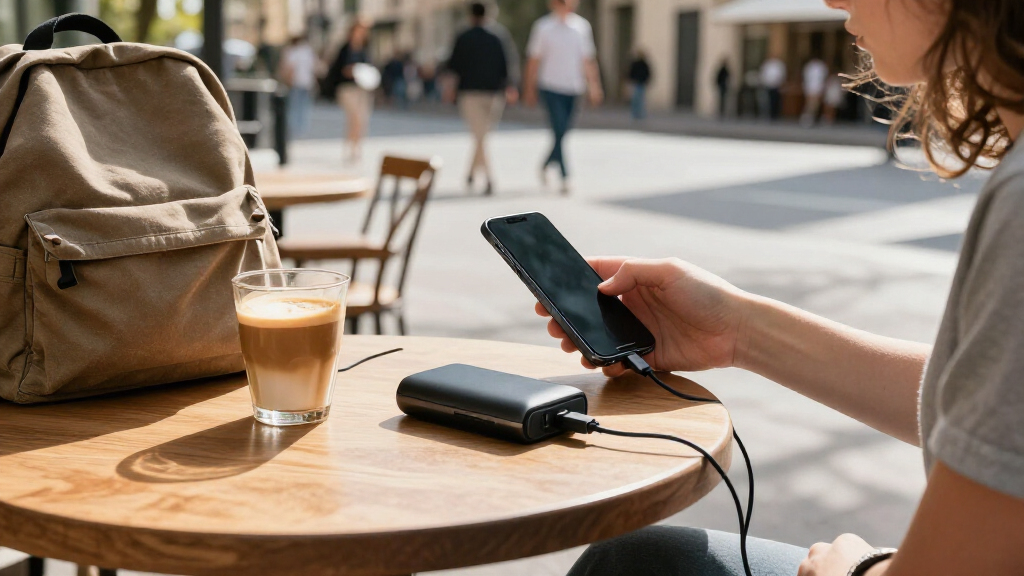
I ranked these best power banks by how well their capacity, output, portability, and connection options fit real buying needs. I gave more weight to a balanced combination of useful charging speed, manageable size, and clear device compatibility than to a large capacity figure on its own. For laptop users, peak output and the ability to support more demanding devices matter more; for phone users, a built-in cable or compact body can be more useful than maximum wattage.
The ordering reflects those differences rather than treating every high-capacity model as interchangeable. I favored versatile options near the top, then placed products with a clearer specialist role—such as compact carry, high-output charging, or extended reserve—where that role makes sense. I also weighed practical tradeoffs: built-in cables can simplify packing but are less flexible, while large batteries can extend time away from an outlet but add bulk. Since listed specifications do not establish real-world charging results across every device, check the power bank’s output and your device’s charging requirements before choosing.
Factors to Consider When Choosing Best Power Banks
Before choosing among these models, match the power bank to the devices and situations you actually need to support. A larger capacity number can look persuasive, but portability, output, cable compatibility, and charging routines shape whether a bank is useful day to day.
Match output to the device, not just the capacity
Capacity describes stored energy, while output affects how quickly that energy can reach a connected device. A phone and a laptop can have very different charging demands, so a bank suitable for one may not be a good choice for the other. Check the wattage supported by your device and compare it with the power bank’s output before paying extra for a high-output model. Also review whether the stated output applies to one port or changes when multiple devices are connected. A common mistake is to buy the largest capacity available and assume it will charge every device quickly. For phone-first use, a balanced model can be more practical than a heavy bank built for demanding hardware.
Treat capacity as a portability decision
More stored energy can mean more charging opportunities between outlets, but it usually comes with a larger, heavier item to carry. Think about whether the bank will live in a backpack for a long trip or move between pockets and a small daily bag. Capacity figures are not the same as the amount of energy that reaches a device, since charging involves conversion losses and depends on the device. That makes precise top-up promises unreliable without matching the bank to the device and conditions. If you rarely go a full day without access to power, a smaller model may be the one you actually bring. Choose a high-capacity bank when the extra reserve solves a real travel or multi-device need.
Choose built-in cables with repairability in mind
An attached cable saves space and prevents the familiar problem of leaving a charging lead behind. It is most useful when the built-in connector matches the devices you carry and its charging capability suits them. The tradeoff is that a fixed cable may offer less flexibility than a separate cable, and damage to it can make the convenience feature less useful. Check whether the bank still has ports for your other devices and whether you can charge more than one at a time. Buyers with mixed connector types may be better served by a model with ports and their own cables. If you pick an integrated-cable design, treat the cable as a feature to inspect rather than an automatic benefit.
Read multi-device output carefully
A power bank with several cables or ports can connect to multiple devices, but that does not mean each device receives the full advertised output at once. Shared power may be divided among connected devices, and port combinations can affect the available speed. Look for the manufacturer’s output details for simultaneous charging instead of relying on the largest single-output figure. This matters most when charging a phone alongside a tablet, laptop, or another high-demand device. If you usually charge only one device at a time, a simpler model may be easier to pack and operate. If you often share power, prioritize clear multi-port specifications over a high headline number.
Decide whether displays and extras earn their space
An LED display can make remaining charge easier to read than a small set of indicator lights, while a flashlight may help during travel or a power outage. Those features can be useful, but they do not replace strong output, a suitable connector, or a comfortable carry size. Ask whether you will use the extra feature often enough to justify choosing that model over a simpler alternative. A display can also show a more precise estimate without guaranteeing how much charge a particular device will receive. For emergency storage, extra reserve and straightforward operation may matter more than a stand or screen. For daily carry, a well-placed cable and manageable weight may be the better use of the design.
Check travel rules and charging routines before buying
Large-capacity power banks can be less convenient for air travel, so check the current rules of your airline and departure region before packing one. Do not assume a capacity listed in milliamp-hours is enough to determine whether a bank is allowed; transport limits may use watt-hours and can depend on the specific product label. Think about how often you can recharge the bank itself, since a large model is only helpful if you have time and a compatible charger to refill it. If you travel with several devices, plan which ones need power first rather than expecting every connected item to charge at full speed. For routine commuting, an easier-to-carry bank that you recharge regularly can be a better fit than a very large backup. Store the product’s specifications where you can check them before a trip.
Frequently Asked Questions
Is a 50,000mAh power bank a better choice than a 20,000mAh model?
Not automatically. A 50,000mAh-class bank can provide more reserve for extended trips or several devices, but it is typically less convenient to carry and may take longer to recharge. A 20,000mAh model is often a more manageable everyday option, especially if you can reach an outlet regularly. Compare the output and connection options too: a bigger capacity does not by itself mean faster charging. Check airline rules before traveling with a large bank, since capacity and permitted carry-on limits matter.
Can these power banks charge a laptop?
Some may suit compatible laptops, but capacity alone cannot answer that question. Check the laptop’s charging requirements and the power bank’s USB-C output, including whether its advertised wattage is available from the port you plan to use. The Anker Prime 26,250mAh 300W is the clearest high-output option in this roundup, while lower-output models are more naturally suited to phones and smaller devices. A laptop may charge slowly or not charge at all if the bank cannot meet its requirements. Confirm device compatibility and cable support before buying.
Are built-in charging cables worth choosing?
They can be worth it if the attached connector matches your devices and you value carrying fewer accessories. They also reduce the chance of forgetting a separate cable. The tradeoff is less flexibility if you switch devices, need a different connector, or the built-in cable becomes damaged. Check whether the bank has additional ports and whether simultaneous charging affects output. Buyers with several device types may prefer a power bank with standard ports and a small set of replaceable cables.
How much output do I need for fast phone charging?
There is no single wattage that guarantees fast charging for every phone. The phone, cable, and power bank all need to support compatible charging standards, and the phone’s own maximum input can limit the speed. Compare the bank’s output with your phone’s specifications instead of choosing by wattage alone. A higher-output bank can be useful if you also charge a tablet or other device, but it may add bulk without helping a phone that cannot use the extra power. Check port-level output details, especially if you plan to charge more than one device at once.
Can I take a high-capacity power bank on a plane?
Rules vary by airline and route, so check the current requirements before departure. Power banks are generally subject to restrictions based on their energy rating, and the label may list milliamp-hours rather than watt-hours. Do not assume that every 50,000mAh or 60,000mAh model will be accepted just because it is portable. Confirm that the product’s marked capacity meets your carrier’s limits and follow its instructions on where to pack the bank. If the label is unclear, contact the airline before traveling.
Conclusion
For most buyers, I would start with the Anker Zolo 20,000mAh 30W as the best overall balance of capacity, output, and built-in-cable convenience. The best value direction is a practical mid-capacity model such as the INIU 20,000mAh 22.5W if you want a useful everyday reserve without paying for laptop-class output. For a premium, high-demand setup, choose the Anker Prime 26,250mAh 300W; for beginners who want a smaller, simpler carry, the INIU 10,000mAh 45W is the easier starting point. If extended time away from outlets matters most, compare the 50,000mAh-and-larger options by size, cable setup, and travel rules rather than capacity alone. The right pick is the one whose output matches your devices and whose weight you will actually carry.
Black Friday Picks

Bose QuietComfort True Wireless Noise-Cancelling Earbuds, Black
As an affiliate, we earn on qualifying purchases.