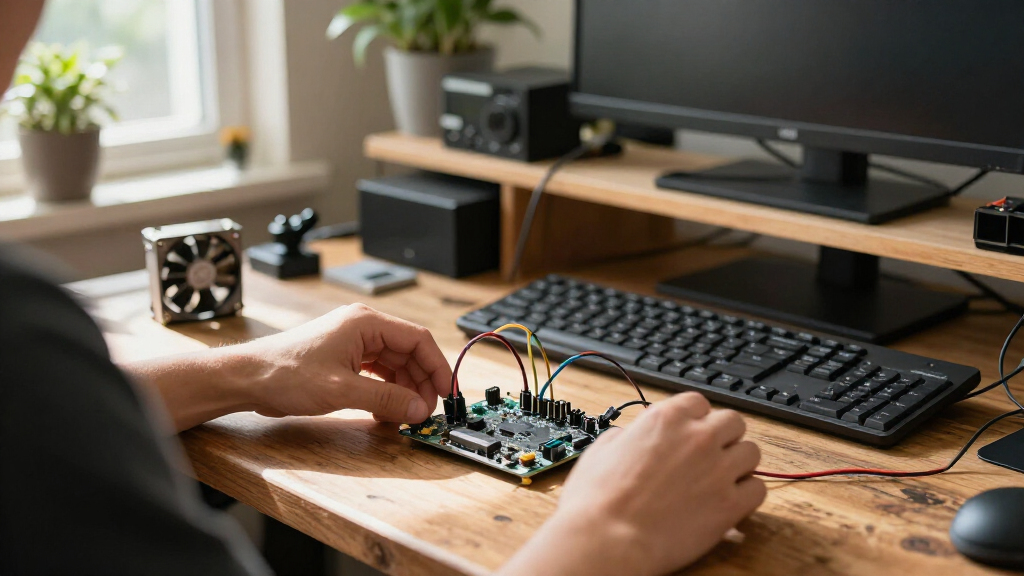

Finding the best Raspberry Pi alternatives requires balancing raw processing power against software ecosystem maturity. The Orange Pi 5 Plus stands out as the premier performance choice, offering an 8-core Rockchip RK3588 and 8K video decoding that far exceeds the standard Pi 5. For those prioritizing connectivity and modern wireless standards, the Orange Pi 4 Pro with its Wi-Fi 6 and NPU provides a compelling mid-range option. However, many makers still prefer the Libre Computer Le Potato for its stability and closer alignment with traditional Linux distributions. The main tradeoff here is clear: higher performance often comes with less polished documentation and fewer community-supported drivers. Continue reading to see which of these fourteen boards matches your specific project requirements.

Get the latest gadgets delivered free with Prime
- Fast, free delivery on millions of items
- Prime Video, Amazon Music and more included
- Member-only deals all year
Complete the kit


Key Takeaways
- The Orange Pi 5 Plus dominates raw performance metrics, particularly for AI and video tasks, making it the strongest direct competitor to high-end Raspberry Pi models.
- Wi-Fi 6 and Bluetooth 5.4 integration, found in newer Orange Pi Zero and 4 Pro models, offers a tangible connectivity advantage over many older Pi alternatives.
- Libre Computer boards generally offer better out-of-the-box Linux stability but lag behind Orange Pi in raw CPU and GPU benchmarks.
- The emergence of RISC-V architectures, seen in the Orange Pi RV, provides future-proofing and open-source instruction sets but currently suffers from limited software compatibility.
- Memory type matters more than capacity in this segment; LPDDR5 RAM in newer boards provides faster data throughput for multitasking compared to older LPDDR4 options.
| Orange Pi 4 Pro Single-Board Computer, 4GB LPDDR5, Allwinner A733 Octa-Core, 3 TOPS NPU, Wi-Fi 6 and Bluetooth 5.4 |  | Best Overall for AI and Connectivity | Processor: Allwinner A733, 2× Cortex-A76 + 6× Cortex-A55, up to 2.0 GHz | Memory: 4 GB LPDDR5 | NPU: 3 TOPS; supports INT8, INT16, FP16, and BF16 | VIEW LATEST PRICE | See Our Full Breakdown |
| Orange Pi Zero LTS 512MB Quad-Core Single Board Computer (Allwinner H3) |  | Best for Tiny Network Projects | Processor: Allwinner H3 quad-core Cortex-A7 | GPU: Mali400MP2 at 600 MHz, OpenGL ES 2.0 | Memory: 512 MB DDR3 SDRAM | VIEW LATEST PRICE | See Our Full Breakdown |
| Libre Computer Le Potato AML-S905X-CC 64-Bit Single-Board Computer, 2GB, 2-Pack |  | Best Two-Board Value for Media and GPIO | Package: 2-pack | Processor: Quad-core 64-bit ARM Cortex-A53, 1.5 GHz | GPU: ARM Mali-450 MP3, 750 MHz | VIEW LATEST PRICE | See Our Full Breakdown |
| Orange Pi Zero 4 Single-Board Computer, 6GB LPDDR5, Allwinner A733, Wi-Fi 6 and Bluetooth 5.4 |  | Best Compact High-Memory Pick | Processor: Allwinner A733, 2× Cortex-A76 + 6× Cortex-A55, up to 2.0 GHz | GPU: Imagination PowerVR BXM-4-64 | Memory: 6 GB LPDDR5 | VIEW LATEST PRICE | See Our Full Breakdown |
| Libre Computer Le Potato AML-S905X-CC Single-Board Computer with 2GB RAM, Wi-Fi Dongle, and Heatsink |  | Best Starter Bundle for Raspberry Pi 3 Projects | Model: Libre Computer AML-S905X-CC | Processor: Amlogic, 1.4 GHz | RAM: 2 GB DDR3 | VIEW LATEST PRICE | See Our Full Breakdown |
| Libre Computer Sweet Potato AML-S905X-CC-V2 2GB |  | Best for Low-Power Media Hubs | RAM: 2 GB DDR4 | Processor Count: 4 Cores | Video Decoding: 4K @ 60 FPS (H.264, H.265, VP9) | VIEW LATEST PRICE | See Our Full Breakdown |
| Orange Pi RV RISC-V Single-Board Computer |  | Best for RISC-V Development | Processor: StarFive JH-7110, 4-core 64-bit RISC-V | RAM: 2 GB LPDDR4 | Wireless: Wi-Fi 5, Bluetooth 5.0 | VIEW LATEST PRICE | See Our Full Breakdown |
| Orange Pi 4 Pro Single-Board Computer | | Best Premium Performance | Processor: Allwinner A733 Octa-Core (2x A76, 6x A55) | RAM: 4 GB LPDDR5 | NPU: 3 TOPS | VIEW LATEST PRICE | See Our Full Breakdown |
| Orange Pi Zero 3 Single-Board Computer |  | Best Compact Starter Board | Processor: Allwinner H618 Quad-Core | RAM: 1 GB LPDDR4 | Wireless: Wi-Fi 5, Bluetooth 5.0 | VIEW LATEST PRICE | See Our Full Breakdown |
| Orange Pi 3B RK3566 Single-Board Computer |  | Best Balanced All-Rounder | Processor: Rockchip RK3566 Quad-Core | RAM: 2GB, 4GB, or 8GB LPDDR4 | Wireless: Wi-Fi 5, Bluetooth 5.0 | VIEW LATEST PRICE | See Our Full Breakdown |
| Orange Pi 5 Plus 6GB Single Board Computer |  | Best Overall Performance | Processor: Rockchip RK3588 8-core (4x A76 + 4x A55) | Memory: 6 GB LPDDR5 | GPU: ARM Mali-G610 MP4 | VIEW LATEST PRICE | See Our Full Breakdown |
| Orange Pi Zero 4 Single-Board Computer, 4GB LPDDR5 | | Best Balanced Compact | Processor: Allwinner A733 Octa-core | Memory: 4 GB LPDDR5 | NPU: 3 TOPS | VIEW LATEST PRICE | See Our Full Breakdown |
| Orange Pi Zero 3W Single-Board Computer, 6GB LPDDR5 |  | Best for Memory-Intensive Micro Projects | Processor: Allwinner A733 Octa-core | Memory: 6 GB LPDDR5 | NPU: 3 TOPS | VIEW LATEST PRICE | See Our Full Breakdown |
| Orange Pi Zero 2W 1GB Single-Board Computer |  | Best Budget Entry Point | Processor: Allwinner H618 Quad-core Cortex-A53 | Memory: 1 GB LPDDR4 | Graphics: Mali-G31 MP2 | VIEW LATEST PRICE | See Our Full Breakdown |
| Raspberry Pi alternatife | Processor | Wireless | Memory |
|---|---|---|---|
| Orange Pi 4 Pro Single-Board C | Allwinner A733, 2× Cortex-A76 + 6× Cortex-A55, up to 2.0 GHz | Wi-Fi 6, Bluetooth 5.4, BLE | 4 GB LPDDR5 |
| Orange Pi Zero LTS 512MB Quad- | Allwinner H3 quad-core Cortex-A7 | — | 512 MB DDR3 SDRAM |
| Libre Computer Le Potato AML-S | Quad-core 64-bit ARM Cortex-A53, 1.5 GHz | — | 2 GB DDR3-2133 per board |
| Orange Pi Zero 4 Single-Board | Allwinner A733, 2× Cortex-A76 + 6× Cortex-A55, up to 2.0 GHz | — | 6 GB LPDDR5 |
| Libre Computer Le Potato AML-S | Amlogic, 1.4 GHz | Included USB Wi-Fi dongle, 802.11n | — |
| Libre Computer Sweet Potato AM | — | — | — |
| Orange Pi RV RISC-V Single-Boa | StarFive JH-7110, 4-core 64-bit RISC-V | Wi-Fi 5, Bluetooth 5.0 | — |
| Orange Pi 4 Pro Single-Board C | Allwinner A733 Octa-Core (2x A76, 6x A55) | Wi-Fi 6, Bluetooth 5.4 | — |
| Orange Pi Zero 3 Single-Board | Allwinner H618 Quad-Core | Wi-Fi 5, Bluetooth 5.0 | — |
| Orange Pi 3B RK3566 Single-Boa | Rockchip RK3566 Quad-Core | Wi-Fi 5, Bluetooth 5.0 | — |
| Orange Pi 5 Plus 6GB Single Bo | Rockchip RK3588 8-core (4x A76 + 4x A55) | — | 6 GB LPDDR5 |
| Orange Pi Zero 4 Single-Board | Allwinner A733 Octa-core | Wi-Fi 6, Bluetooth 5.4 | 4 GB LPDDR5 |
| Orange Pi Zero 3W Single-Board | Allwinner A733 Octa-core | Wi-Fi 6, Bluetooth 5.4 | 6 GB LPDDR5 |
| Orange Pi Zero 2W 1GB Single-B | Allwinner H618 Quad-core Cortex-A53 | Wi-Fi 5, Bluetooth 5.0 | 1 GB LPDDR4 |
More Details on Our Top Picks
Orange Pi 4 Pro Single-Board Computer, 4GB LPDDR5, Allwinner A733 Octa-Core, 3 TOPS NPU, Wi-Fi 6 and Bluetooth 5.4
The Orange Pi 4 Pro is my strongest all-around pick for buyers who want a Raspberry Pi alternative with newer processing and networking features. Its two Cortex-A76 and six Cortex-A55 cores, 4GB of LPDDR5, and 3 TOPS NPU give it a broader role than the older, simpler Libre Computer Le Potato, especially for projects that can use local AI inference. Wi-Fi 6, Bluetooth 5.4, Gigabit Ethernet, and PoE support also make it a flexible fit for connected installations. The tradeoff is that the board’s storage options require planning: NVMe, eMMC, and SPI flash are not all included by default, and peripherals may need to be sourced separately. I’d choose it over the Orange Pi Zero LTS for demanding workloads, but not for a minimal, low-memory network task.
Pros:- Octa-core A733 processor and 4GB LPDDR5 suit more demanding multitasking than the Orange Pi Zero LTS.
- 3 TOPS NPU supports compatible on-device AI inference.
- Wi-Fi 6, Bluetooth 5.4, Gigabit Ethernet, and PoE support offer flexible networking.
- NVMe, microSD, optional eMMC, and SPI flash provide several storage paths.
Cons:- eMMC and SPI flash are optional, so storage must be selected and prepared separately.
- A compact board may require separate peripherals and compatible accessories for a complete build.
- Its newer hardware features may be unnecessary for basic GPIO or lightweight server projects.
Best for: Makers building connected home-lab, edge-AI, or multimedia projects who want modern wireless, wired networking, and NVMe expansion.
Not ideal for: First-time builders seeking a ready-to-run kit, or buyers who need a simple, low-cost board with storage and peripherals already supplied.
- Processor:Allwinner A733, 2× Cortex-A76 + 6× Cortex-A55, up to 2.0 GHz
- Memory:4 GB LPDDR5
- NPU:3 TOPS; supports INT8, INT16, FP16, and BF16
- Storage expansion:M.2 M-Key PCIe/NVMe, microSD up to 128 GB, optional eMMC and SPI flash
- Wireless:Wi-Fi 6, Bluetooth 5.4, BLE
- Ethernet:Gigabit Ethernet; PoE supported
- Display output:HDMI 2.0 up to 4K at 60 Hz; 4-lane MIPI DSI
- Operating systems:Android, Debian, Ubuntu, OpenHarmony, Orange Pi OS
Our verdict“Choose the Orange Pi 4 Pro if you want a capable, well-connected Raspberry Pi alternative with AI and NVMe potential, and are comfortable sourcing storage and peripherals.”
Orange Pi Zero LTS 512MB Quad-Core Single Board Computer (Allwinner H3)
The Orange Pi Zero LTS earns its place as a small, wired-network board for jobs that do not need a full desktop experience. Its 48 × 46 mm footprint and built-in 10/100 Ethernet make it a reasonable fit for a lightweight sensor gateway or basic network appliance. Compared with the 4GB Orange Pi 4 Pro, its 512MB of RAM and older Cortex-A7 processor sharply limit multitasking, but that simpler hardware may be enough when the project mainly passes data or runs a small Linux service. The connection options are sparse: there is one USB host port, and the board has no built-in HDMI or video output, so it is not a good general-purpose desktop substitute. I’d pick it over the larger boards only when size and wired networking matter more than performance and display use.
Pros:- Very compact 48 × 46 mm board suits space-constrained installations.
- Integrated 10/100 Ethernet provides a wired connection without an added network adapter.
- Supports Android, Ubuntu, Debian, and Armbian.
- USB host and OTG ports provide basic peripheral and device connectivity.
Cons:- 512MB RAM and the quad-core Cortex-A7 are limiting for demanding applications.
- Only one USB host port restricts peripheral connections.
- No built-in HDMI or other video output makes desktop use impractical.
Best for: Makers building compact, headless Ethernet devices such as basic sensor gateways or lightweight network services.
Not ideal for: Beginners who need an HDMI desktop, builders attaching several USB devices, or users running memory-intensive software.
- Processor:Allwinner H3 quad-core Cortex-A7
- GPU:Mali400MP2 at 600 MHz, OpenGL ES 2.0
- Memory:512 MB DDR3 SDRAM
- Storage:MicroSD up to 64 GB; 2 MB SPI flash
- Ethernet:10/100 Mbps RJ45
- USB:1 USB 2.0 Host, 1 USB 2.0 OTG
- Supported operating systems:Android, Ubuntu, Debian, Armbian
- Dimensions and weight:48 × 46 mm; 26 g
Our verdict“Pick the Orange Pi Zero LTS for a small headless Ethernet project, but choose a board such as the Orange Pi 4 Pro for desktop use or heavier workloads.”
Libre Computer Le Potato AML-S905X-CC 64-Bit Single-Board Computer, 2GB, 2-Pack
This two-pack of Le Potato boards makes a practical choice for buyers who want a pair of Raspberry Pi 3-style systems for media playback, Linux experiments, or GPIO projects. Each board combines a 64-bit Cortex-A53 processor, 2GB of DDR3, HDMI 2.0, and hardware decoding for 4K VP9, H.265, and H.264 video. Its 40-pin header and Raspberry Pi 3-compatible form factor make it a more familiar accessory match than the Orange Pi Zero LTS, which lacks video output. Still, the wireless information is limited to a listed 802.11b compatibility, and the product data does not specify included onboard storage; I would check the exact networking and boot-storage setup before planning a media hub. Compared with the Orange Pi 4 Pro, Le Potato is a less ambitious choice, but its two-board package suits repeatable, modest projects.
Pros:- Two boards in the package support parallel projects or classroom use.
- 40-pin GPIO and Raspberry Pi 3-compatible form factor broaden accessory options.
- Hardware decoding supports 4K VP9, H.265, and H.264 video.
- Listed support for Linux, media-center, and retro-gaming operating systems.
Cons:- Wireless compatibility is listed only as 802.11b, leaving modern Wi-Fi capability unclear.
- Included storage or onboard boot capacity is not clearly specified.
- Two USB ports per board limit direct peripheral connections.
Best for: Makers, classrooms, or hobby groups that want two Raspberry Pi 3-style boards for Linux practice, GPIO work, or 4K media decoding.
Not ideal for: Buyers who need modern wireless performance, high-end processing, or a clearly specified ready-to-boot storage setup.
- Package:2-pack
- Processor:Quad-core 64-bit ARM Cortex-A53, 1.5 GHz
- GPU:ARM Mali-450 MP3, 750 MHz
- Memory:2 GB DDR3-2133 per board
- Video decoding:4K hardware decoding for VP9, H.265, and H.264
- Display output:HDMI 2.0
- GPIO:40-pin, Raspberry Pi 3 compatible
- Operating systems:Linux, Ubuntu, Debian, Raspbian, CoreELEC, LibreELEC, Android, Armbian, Lakka, Batocera
Our verdict“Choose this Le Potato two-pack for paired Raspberry Pi 3-style media or GPIO projects, but look elsewhere if modern wireless or clearly included storage is a priority.”
Orange Pi Zero 4 Single-Board Computer, 6GB LPDDR5, Allwinner A733, Wi-Fi 6 and Bluetooth 5.4
The Orange Pi Zero 4 is the compact choice for buyers who want modern processing and a generous memory allowance in a small board. Its 6GB LPDDR5 and A733 octa-core processor give it more room for simultaneous services or applications than the 512MB Orange Pi Zero LTS, while the 3 TOPS NPU adds potential for supported edge-AI workloads. Wi-Fi 6, Bluetooth 5.4, Gigabit Ethernet, and 4K output make it unusually versatile for a small form factor. Its tradeoff is the build itself: the listed storage options include optional eMMC or UFS and a TF card slot, so buyers should verify what is actually included. It also calls for a 5V/3A USB-C supply. Compared with the Orange Pi 4 Pro, this model prioritizes compactness and memory over a larger, more conventional board layout.
Pros:- 6GB LPDDR5 provides more memory headroom than the Orange Pi Zero LTS.
- A733 octa-core processor and up to 3 TOPS NPU support demanding and compatible AI workloads.
- Wi-Fi 6, Bluetooth 5.4, Gigabit Ethernet, and 4K output cover varied project needs.
- Camera, GPIO, and expansion interfaces support embedded builds.
Cons:- Storage options require attention; optional eMMC or UFS may need separate selection.
- Requires a 5V/3A USB-C power supply.
- Its compact interface layout may take more planning when integrating peripherals and expansion hardware.
Best for: Makers fitting a capable Linux, multimedia, networking, or edge-AI project into a tight enclosure and willing to plan power and storage.
Not ideal for: Builders who want a straightforward, fully provisioned desktop board or prefer plentiful onboard connections without checking expansion requirements.
- Processor:Allwinner A733, 2× Cortex-A76 + 6× Cortex-A55, up to 2.0 GHz
- GPU:Imagination PowerVR BXM-4-64
- Memory:6 GB LPDDR5
- NPU:Up to 3 TOPS
- Storage:32 GB listed; optional eMMC or UFS, plus TF card slot up to 128 GB
- Wireless and wired networking:Wi-Fi 6, Bluetooth 5.4, Gigabit Ethernet
- Display output:Mini HDMI 2.0 up to 4K at 60 fps; USB-C with eDP/DP output
- Power:USB-C, 5 V/3 A
- Dimensions and weight:50 × 55 × 1.2 mm; 21 g
Our verdict“Choose the Orange Pi Zero 4 when you need substantial memory and modern connectivity in a compact Raspberry Pi alternative, provided you can arrange compatible storage and power.”
Libre Computer Le Potato AML-S905X-CC Single-Board Computer with 2GB RAM, Wi-Fi Dongle, and Heatsink
This Le Potato bundle is the more approachable pick for buyers who want a few useful accessories included rather than the bare-board approach of the Orange Pi 4 Pro. The 2GB RAM board comes with a USB Wi-Fi dongle and push-pin heatsink, giving a starter build wireless networking and a cooling accessory without sourcing those pieces separately. Its four USB ports also make it easier to connect common peripherals than the Orange Pi Zero LTS, which has only one USB host port. The main catch is that the bundle still needs a compatible flashed microSD card or eMMC and a 5V, 2A-or-higher MicroUSB supply. Software and GPIO numbering may also differ from Raspberry Pi instructions, so familiar projects can require adjustments. I’d favor it for modest Linux or GPIO builds, not as a turnkey kit.
Pros:- Included USB Wi-Fi dongle adds 802.11n wireless without a separate adapter purchase.
- Push-pin heatsink is supplied for thermal support.
- Four USB ports accommodate more common peripherals than the Orange Pi Zero LTS.
- Low stated power consumption suits modest always-on projects.
Cons:- MicroSD card or compatible eMMC must be supplied and prepared separately.
- Power supply is not included and must provide 5V at 2A or higher over MicroUSB.
- Raspberry Pi software and GPIO numbering may require project-specific adjustments.
Best for: Raspberry Pi owners adapting familiar small Linux or GPIO projects who want a Wi-Fi dongle and heatsink included.
Not ideal for: Buyers expecting a complete ready-to-boot kit, or those who need modern built-in wireless, included storage, or a power supply.
- Model:Libre Computer AML-S905X-CC
- Processor:Amlogic, 1.4 GHz
- RAM:2 GB DDR3
- Wireless:Included USB Wi-Fi dongle, 802.11n
- USB ports:4
- Included accessories:Push-pin heatsink and USB Wi-Fi dongle
- Storage requirement:Compatible, properly flashed microSD card or eMMC required
- Power requirement:5V, 2A or higher MicroUSB power supply
Our verdict“Choose this Le Potato bundle for a modest Raspberry Pi-style project when the included Wi-Fi dongle and heatsink help, but not if you need a complete kit with storage and power.”
Libre Computer Sweet Potato AML-S905X-CC-V2 2GB
This board stands out for its exceptional energy efficiency, idling at just 1W, making it ideal for always-on servers. Unlike the Orange Pi Zero 3, which struggles with multitasking due to limited RAM, the Sweet Potato handles 4K media playback smoothly thanks to dedicated hardware decoding for H.265 and VP9. However, the lack of built-in wireless connectivity is a significant drawback; you must purchase separate Wi-Fi and Bluetooth modules, increasing the total cost and complexity. While the Orange Pi 4 Pro offers more raw power and integrated radios, the Sweet Potato wins for users prioritizing silent, passive-cooled operation in a compact form factor.Pros:- Extremely low power consumption (1W idle)
- Hardware-accelerated 4K video decoding
- Supports booting from eMMC, microSD, and USB
- Compatible with standard Raspberry Pi HATs via 40-pin header
Cons:- Wi-Fi and Bluetooth are not included
- PoE support requires an additional mezzanine board
- Limited processing power for heavy multitasking
Best for: Users building silent, low-power media centers or home automation hubs that run 24/7.
Not ideal for: Beginners who want a plug-and-play solution, as wireless modules must be bought separately.
- RAM:2 GB DDR4
- Processor Count:4 Cores
- Video Decoding:4K @ 60 FPS (H.264, H.265, VP9)
- Power Input:USB Type-C (up to 3A)
- Dimensions:4.75 × 3 × 1 in
- Expansion:40-pin GPIO header
- Supported OS:Ubuntu, Debian, CoreELEC
Our verdict“Choose this if you need a reliable, silent media player or lightweight server and don’t mind adding wireless dongles.”
Orange Pi RV RISC-V Single-Board Computer
For developers eager to experiment with the emerging RISC-V architecture, this board offers a rare opportunity to work with the StarFive JH-7110 processor. It provides a more modern interface set than the Libre Computer Sweet Potato, including built-in Wi-Fi 5 and Bluetooth 5.0, which simplifies initial setup. However, the software ecosystem for RISC-V is still maturing, meaning you will encounter more compatibility issues with standard Linux packages compared to the ARM-based Orange Pi 4 Pro. The 2GB of RAM is also a constraint for heavier development tasks, limiting its utility to specific educational or architectural exploration projects rather than general-purpose computing.Pros:- Features a 64-bit RISC-V processor
- Includes built-in Wi-Fi 5 and Bluetooth 5.0
- Offers PCIe 2.0 and MIPI interfaces for expansion
- Supports 4K video decoding
Cons:- Limited software ecosystem compared to ARM boards
- Only 2GB of RAM restricts heavy workloads
- Driver support for peripherals may be incomplete
Best for: Developers and students specifically interested in learning or testing RISC-V architecture.
Not ideal for: General users who need broad software compatibility and mature driver support.
- Processor:StarFive JH-7110, 4-core 64-bit RISC-V
- RAM:2 GB LPDDR4
- Wireless:Wi-Fi 5, Bluetooth 5.0
- Video Decoding:4K @ 30 FPS
- Expansion:PCIe 2.0, MIPI-CSI, MIPI-DSI
- USB Ports:4 (USB 3.0 and USB 2.0)
- Networking:Gigabit Ethernet
Our verdict“This is a niche tool for RISC-V enthusiasts, not a general replacement for Raspberry Pi.”
Orange Pi 4 Pro Single-Board Computer
The Orange Pi 4 Pro delivers substantial performance gains over the Orange Pi 3B thanks to its octa-core Allwinner A733 processor and dedicated 3 TOPS NPU. This makes it suitable for AI inference tasks and heavier multitasking that would stutter on simpler boards. The inclusion of Wi-Fi 6 and NVMe storage support future-proofs the system, offering significantly faster data access than SD-card-only solutions. The tradeoff is price and complexity; it requires separate storage media, and the 4GB RAM configuration, while sufficient for most users, is lower than the maximum supported capacity. It is a powerhouse, but it demands more setup effort than plug-and-play alternatives.Pros:- Octa-core processor with dedicated 3 TOPS NPU
- Supports NVMe SSDs for fast storage
- Includes Wi-Fi 6 and Bluetooth 5.4
- HDMI 2.0 supports 4K at 60Hz
Cons:- Storage media not included
- 4GB RAM version is not the max capacity
- Higher price point than entry-level boards
Best for: Power users needing AI capabilities, fast storage, and modern wireless standards.
Not ideal for: Budget-conscious users or those needing a simple, out-of-the-box experience.
- Processor:Allwinner A733 Octa-Core (2x A76, 6x A55)
- RAM:4 GB LPDDR5
- NPU:3 TOPS
- Wireless:Wi-Fi 6, Bluetooth 5.4
- Storage Expansion:M.2 NVMe, eMMC, microSD
- Video Output:HDMI 2.0 (4K @ 60Hz)
- Dimensions:89 × 56 mm
Our verdict“The top choice for demanding projects requiring AI acceleration and high-speed data throughput.”
Orange Pi Zero 3 Single-Board Computer
This tiny board is an excellent entry point for those intimidated by the size and cost of the Orange Pi 4 Pro. At just 50 × 55 mm, it fits into tight spaces while still offering Gigabit Ethernet and Wi-Fi 5. However, the 1GB of RAM is a severe bottleneck; running a desktop environment or multiple browser tabs will cause significant lag. Compared to the Libre Computer Sweet Potato, it has more built-in connectivity but less video decoding capability. It is best suited for lightweight tasks like Pi-hole blocking or simple GPIO projects, not for media consumption or complex applications.Pros:- Extremely compact form factor
- Built-in Wi-Fi 5 and Bluetooth 5.0
- Supports 4K video output via micro HDMI
- Low power consumption
Cons:- Only 1GB of RAM limits multitasking
- 16MB on-board flash is negligible
- Micro HDMI requires specific cables
Best for: Hobbyists building small, lightweight IoT sensors or network ad-blockers.
Not ideal for: Users planning to run desktop environments or media servers.
- Processor:Allwinner H618 Quad-Core
- RAM:1 GB LPDDR4
- Wireless:Wi-Fi 5, Bluetooth 5.0
- Video Output:Micro HDMI (4K @ 60fps)
- Dimensions:50 × 55 mm
- Power Input:USB Type-C (5V, 3A)
- Storage:16 MB SPI flash (microSD required)
Our verdict“Perfect for simple, space-constrained IoT projects, but too limited for general computing.”
Orange Pi 3B RK3566 Single-Board Computer
The Orange Pi 3B strikes a compelling balance between the power of the Orange Pi 4 Pro and the affordability of the Zero 3. Its Rockchip RK3566 processor handles desktop tasks and light gaming surprisingly well, while the option for eMMC modules allows for faster boot times than SD cards. Unlike the Libre Computer Sweet Potato, it includes built-in wireless connectivity, though it lacks the newer Wi-Fi 6 standard found in higher-end models. The variety of RAM options (2GB, 4GB, 8GB) lets buyers tailor the cost to their needs, making it a versatile choice for general-purpose computing without the premium price tag.Pros:- Flexible RAM options (2GB, 4GB, 8GB)
- Supports eMMC and NVMe storage
- Broad connectivity including USB 3.0 and Gigabit Ethernet
- Good performance for desktop use
Cons:- eMMC modules sold separately
- Wi-Fi 5 is older standard
- Plastic case may feel less premium
Best for: General users needing a reliable desktop replacement or retro gaming console.
Not ideal for: AI developers or those needing the absolute fastest storage speeds.
- Processor:Rockchip RK3566 Quad-Core
- RAM:2GB, 4GB, or 8GB LPDDR4
- Wireless:Wi-Fi 5, Bluetooth 5.0
- Storage Expansion:M.2 NVMe, eMMC, microSD
- USB Ports:5 (USB 2.0 and 3.0)
- Video Output:HDMI, MIPI DSI, eDP
- Supported OS:Android, Ubuntu, Debian
Our verdict“A versatile middle-ground option that offers great performance for typical desktop and gaming tasks.”
Orange Pi 5 Plus 6GB Single Board Computer
This board stands out as the heavyweight champion in this lineup, offering performance levels that rival many entry-level laptops. Powered by the Rockchip RK3588, it delivers significantly higher CPU and GPU throughput than the Orange Pi Zero 4, making it ideal for demanding tasks like home theater PCs or light desktop use. The inclusion of dual 2.5GbE ports and an NVMe SSD slot addresses two major bottlenecks found in smaller SBCs: network bandwidth and storage speed. While the Orange Pi Zero 3W is more power-efficient, the 5 Plus provides the raw horsepower needed for multitasking. However, this power comes at the cost of complexity; the dense array of interfaces and lack of included storage can overwhelm newcomers.
Pros:- Top-tier RK3588 processor handles heavy multitasking and emulation
- Dual 2.5GbE Ethernet ports enable high-speed network routing
- M.2 NVMe slot offers massive storage speed improvements over microSD
- 8K video output supports advanced multimedia projects
Cons:- Storage is not included, requiring additional purchase for eMMC or NVMe
- Complex port layout and power requirements confuse beginners
- Larger form factor limits use in space-constrained projects
Best for: Developers building home media servers, desktop replacements, or projects requiring high-speed NVMe storage and dual networking.
Not ideal for: Beginners or those needing a plug-and-play experience, as the setup is complex and storage must be sourced separately.
- Processor:Rockchip RK3588 8-core (4x A76 + 4x A55)
- Memory:6 GB LPDDR5
- GPU:ARM Mali-G610 MP4
- NPU:Up to 6 TOPS
- Storage:NVMe M.2, eMMC socket, microSD
- Networking:2x 2.5 GbE, Wi-Fi 6
- Video Out:2x HDMI 2.1 (8K@60Hz)
Our verdict“This is the go-to choice for power users who need desktop-class performance and fast storage.”
Orange Pi Zero 4 Single-Board Computer, 4GB LPDDR5
The Orange Pi Zero 4 strikes a compelling balance between size and capability, fitting a modern Allwinner A733 octa-core processor into a tiny 50x55mm footprint. Compared to the Orange Pi Zero 2W, this board is vastly more capable, offering Wi-Fi 6 and Gigabit Ethernet, which are critical for responsive networked projects. It shares the same chipset as the Orange Pi Zero 3W but offers a slightly different port layout and memory configuration. While it lacks the raw grunt of the Orange Pi 5 Plus, its efficiency makes it perfect for IoT hubs or retro gaming. The primary tradeoff is the inconsistent storage listing, which may leave users without an OS until they purchase a card.
Pros:- Tiny form factor fits inside small enclosures easily
- Wi-Fi 6 and Gigabit Ethernet provide modern connectivity
- 4GB LPDDR5 RAM is sufficient for most single-purpose tasks
- 3 TOPS NPU enables basic AI inference capabilities
Cons:- Storage configuration is ambiguous and likely requires separate purchase
- Requires a specific 5V/3A power supply for stability
- Smaller GPIO header limits some legacy hardware compatibility
Best for: Hobbyists building compact IoT devices, smart home hubs, or portable projects where space is at a premium.
Not ideal for: Users who need massive RAM for heavy multitasking or those who want guaranteed onboard storage without extra steps.
- Processor:Allwinner A733 Octa-core
- Memory:4 GB LPDDR5
- NPU:3 TOPS
- Wireless:Wi-Fi 6, Bluetooth 5.4
- Ethernet:Gigabit RJ45
- Dimensions:50 × 55 × 1.2 mm
- OS Support:Android, Debian, Ubuntu
Our verdict“A highly versatile, modern SBC that fits almost anywhere while delivering solid performance.”
Orange Pi Zero 3W Single-Board Computer, 6GB LPDDR5
If the Orange Pi Zero 4 feels slightly underpowered for your specific workload, the Orange Pi Zero 3W offers the same architecture with an additional 2GB of LPDDR5 RAM. This extra memory headroom is significant for running lightweight desktop environments or multiple Docker containers on a board this small. It shares the Allwinner A733 processor and Wi-Fi 6 connectivity with its sibling, ensuring future-proof wireless performance. However, unlike the Orange Pi 5 Plus, it lacks high-speed NVMe storage options, so performance gains are limited by microSD speeds. This board is best suited for those who need more multitasking capability than the Zero 4 but cannot accommodate the larger footprint of the Plus model.
Pros:- 6GB LPDDR5 RAM allows for heavier multitasking than 4GB models
- Extremely compact 65x32mm shape fits tight spaces
- Modern Wi-Fi 6 and Bluetooth 5.4 connectivity
- PCIe 3.0 expansion option for specialized peripherals
Cons:- Optional eMMC/UFS storage means you might need to buy a card anyway
- Smaller PCB size can make hand-soldering or probing difficult
- No built-in storage guaranteed out of the box
Best for: Users who need to run memory-hungry applications or multiple services on a board smaller than a credit card.
Not ideal for: Those who require fast local storage via NVMe or need the highest possible CPU clock speeds.
- Processor:Allwinner A733 Octa-core
- Memory:6 GB LPDDR5
- NPU:3 TOPS
- Wireless:Wi-Fi 6, Bluetooth 5.4
- Dimensions:65 × 32 × 1.2 mm
- Expansion:PCIe 3.0, 40-pin GPIO
- Display:Mini HDMI 2.0, MIPI-DSI
Our verdict“The ideal choice for compact builds that demand more RAM than the standard Zero series.”
Orange Pi Zero 2W 1GB Single-Board Computer
The Orange Pi Zero 2W serves as the affordable gateway into single-board computing, targeting users who find the Orange Pi Zero 4 too expensive or complex. With its Allwinner H618 quad-core processor and 1GB of RAM, it is strictly limited to lightweight tasks like simple GPIO control, basic web servers, or learning Linux. It lacks the modern Wi-Fi 6 and NPU found in the Zero 3W and Zero 4, making it less suitable for AI or high-bandwidth networking. However, its low power consumption and small size make it perfect for disposable prototypes or educational kits. Users should expect slower performance and the need for adapter boards for many standard interfaces.
Pros:- Lowest cost entry into the Orange Pi Zero ecosystem
- Very low power consumption extends battery life in portable builds
- Supports a wide range of Linux and Android operating systems
- Compact size allows for integration into tiny devices
Cons:- Only 1GB of RAM severely limits multitasking and software compatibility
- Many interfaces require separate adapter boards to use
- Older Wi-Fi 5 and Bluetooth 5.0 connectivity
Best for: Students, educators, and hobbyists on a tight budget who need a basic Linux environment for learning or simple GPIO projects.
Not ideal for: Anyone planning to use the board for media streaming, AI tasks, or running a desktop interface due to severe RAM limits.
- Processor:Allwinner H618 Quad-core Cortex-A53
- Memory:1 GB LPDDR4
- Graphics:Mali-G31 MP2
- Wireless:Wi-Fi 5, Bluetooth 5.0
- Dimensions:30 × 65 × 1.2 mm
- Storage:MicroSD (SPI Flash 16MB)
- OS Support:Android 12, Debian, Ubuntu
Our verdict“A functional, low-cost starter board for basic computing tasks and learning the basics.”
How We Picked
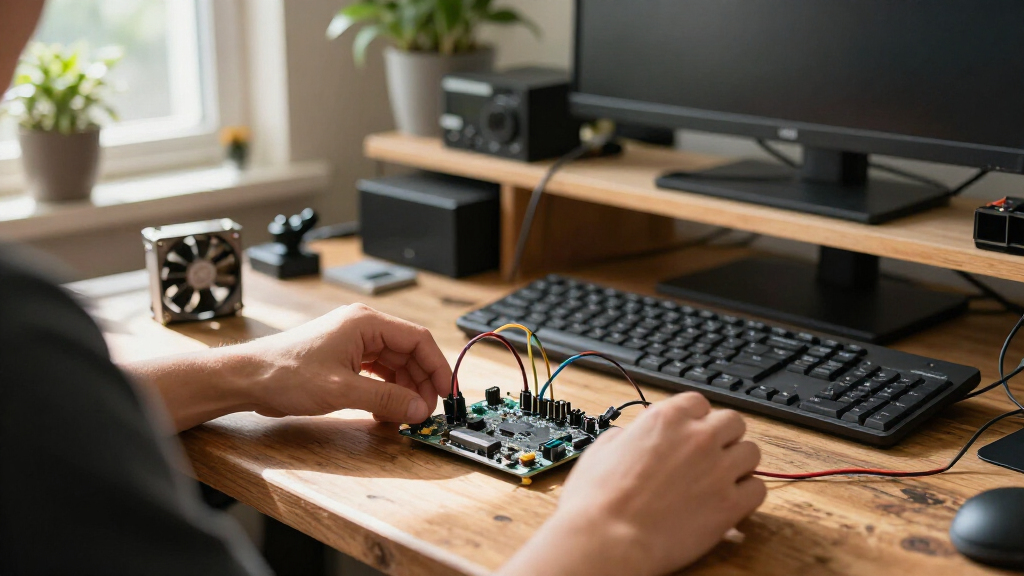
I evaluated these single-board computers based on a strict set of criteria designed to reflect real-world maker needs. First, I assessed computational performance, looking at CPU core architecture, clock speeds, and memory bandwidth to determine how well each board handles multitasking and heavy workloads. Second, I analyzed connectivity and peripherals, giving preference to boards with modern Wi-Fi 6, Bluetooth 5.4, and sufficient GPIO pin compatibility with existing Raspberry Pi shields where possible. Finally, I weighed software support and community resources. A powerful board is useless if drivers are missing or if the OS image is unstable. I prioritized boards with active development communities and reliable documentation, noting that while some premium hardware offers superior specs, they may require more technical troubleshooting during setup. This ranking balances hardware capability with the practical ease of getting started.
| Raspberry Pi alternatife | Wireless |
|---|---|
| Orange Pi 4 Pro Single-Board C | Wi-Fi 6, Bluetooth 5.4, BLE |
| Orange Pi Zero LTS 512MB Quad- | — |
| Libre Computer Le Potato AML-S | — |
| Orange Pi Zero 4 Single-Board | — |
| Libre Computer Le Potato AML-S | Included USB Wi-Fi dongle, 802.11n |
| Libre Computer Sweet Potato AM | — |
| Orange Pi RV RISC-V Single-Boa | Wi-Fi 5, Bluetooth 5.0 |
| Orange Pi 4 Pro Single-Board C | Wi-Fi 6, Bluetooth 5.4 |
| Orange Pi Zero 3 Single-Board | Wi-Fi 5, Bluetooth 5.0 |
| Orange Pi 3B RK3566 Single-Boa | Wi-Fi 5, Bluetooth 5.0 |
| Orange Pi 5 Plus 6GB Single Bo | — |
| Orange Pi Zero 4 Single-Board | Wi-Fi 6, Bluetooth 5.4 |
| Orange Pi Zero 3W Single-Board | Wi-Fi 6, Bluetooth 5.4 |
| Orange Pi Zero 2W 1GB Single-B | Wi-Fi 5, Bluetooth 5.0 |
Factors to Consider When Choosing Best Raspberry Pi Alternatives
Choosing between these alternatives isn’t just about picking the fastest chip. You need to consider how the hardware interacts with your software stack and physical constraints.
Architecture Matters: ARM vs. RISC-V
Most single-board computers use ARM architecture, which benefits from decades of software optimization and broad application support. The Orange Pi RV introduces RISC-V, an open-source instruction set that promises greater transparency and potential long-term flexibility. However, choosing RISC-V in 2027 means accepting a smaller library of pre-compiled applications and potentially slower development cycles for drivers. If you are building a standard Linux desktop or media center, stick with ARM-based boards like the Orange Pi 5 Plus or Libre Computer Sweet Potato. Only opt for RISC-V if you are specifically experimenting with open-source hardware architecture or need custom compiler support.
The Hidden Cost of Connectivity Standards
Wireless capabilities have become a major differentiator in this category. Boards equipped with Wi-Fi 6 and Bluetooth 5.4, such as the Orange Pi 4 Pro, offer lower latency and better handling of multiple connected devices, which is critical for IoT hubs or smart home controllers. Older alternatives relying on Wi-Fi 5 may struggle in congested network environments. I recommend paying extra for newer wireless standards if your project involves real-time data transmission or multiple peripheral connections, as retrofitting a USB Wi-Fi adapter adds bulk and consumes valuable USB ports.
Memory Bandwidth vs. Capacity
It is a common mistake to focus solely on gigabytes of RAM when selecting a board. The type of memory—LPDDR5 versus LPDDR4—impacts how quickly the CPU can access data, which directly affects multitasking smoothness and AI inference speed. A board with 4GB of LPDDR5 often outperforms a board with 6GB of LPDDR4 in burst-heavy tasks. For general use, 2GB is sufficient, but if you plan to run Docker containers or local LLMs, prioritize boards with LPDDR5 memory like the Orange Pi Zero 4 to avoid bottlenecking the processor.
GPIO Compatibility and Shield Support
Many makers migrate from Raspberry Pi because they want more power, but they expect their existing sensors and HATs to work. Not all alternatives maintain strict GPIO pinout compatibility. While Libre Computer boards often mimic the Pi form factor closely, newer Orange Pi models may change pin layouts to accommodate different SoC requirements. Before purchasing, verify that your specific sensor libraries support the board’s GPIO driver. If you have a large inventory of Pi HATs, check the manufacturer’s documentation for adapter availability, as this can add to the total project cost and complexity.
Thermal Management and Passive Cooling
High-performance SoCs like the Rockchip RK3588 generate significant heat under load. Some boards, like the Libre Computer Le Potato bundle, include heatsinks, while others require you to source your own cooling solution. Passive cooling is quieter and more reliable for long-term deployments, but it requires adequate case ventilation. If you plan to run your board in an enclosed space or under sustained 100% CPU load, factor in the cost of a high-quality heatsink or a small fan. Ignoring thermal throttling can negate the performance benefits of choosing a powerful alternative over a standard Pi.
Frequently Asked Questions
Can I use my existing Raspberry Pi operating system images on these alternatives?
Generally, no. You cannot simply flash a Raspberry Pi OS image onto an Orange Pi or Libre Computer board and expect it to work. These boards use different System-on-Chip (SoC) architectures and require specific board support packages (BSPs) and device tree binaries. You must download the OS image specifically provided by the manufacturer, such as Armbian builds tailored for Orange Pi or Libre Computer. While the underlying Linux kernel is the same, the drivers for Wi-Fi, GPU, and GPIO are distinct for each hardware variant, making cross-compatibility impossible without significant manual recompilation.
Is the Orange Pi 5 Plus worth the extra cost over a Raspberry Pi 5?
For most general-purpose computing, the Raspberry Pi 5’s superior software support and community documentation make it the safer choice. However, the Orange Pi 5 Plus justifies its price if you need specific hardware features like 8K video decoding or higher GPU throughput for gaming emulation and AI tasks. It also offers more USB 3.0 ports and dual Ethernet options, which are beneficial for network-heavy server applications. If your project relies heavily on niche software that only supports Raspberry Pi, stick with the Pi. If you are building a media center or a high-performance compute node, the Orange Pi 5 Plus provides better raw value.
How do I choose between the Orange Pi Zero series and the larger Orange Pi 4/5 series?
The decision hinges on your project’s physical size constraints and power requirements. The Orange Pi Zero series is ideal for compact, battery-powered, or distributed IoT nodes where footprint matters more than raw power. These boards are easier to integrate into small enclosures and consume less energy. Conversely, the Orange Pi 4 and 5 series are designed for desktop replacement, server, or heavy multimedia tasks. They require more power, generate more heat, and are physically larger. If you need to mount the board on a drone or a small robot, choose the Zero series. If you are building a home server or desktop, choose the larger form factor.
Are Libre Computer boards good for beginners compared to Orange Pi?
Libre Computer boards often offer a smoother initial experience for beginners because their operating systems tend to be more stable out of the box, with fewer driver glitches than some Orange Pi releases. The Libre Computer Le Potato and Sweet Potato are well-regarded for their reliability in running standard Linux distributions like Debian and Ubuntu. However, they typically offer lower peak performance than the latest Orange Pi models. If you prioritize stability and ease of setup for learning Linux or Python, Libre Computer is a strong starting point. If you are comfortable troubleshooting driver issues to get maximum performance, Orange Pi offers better hardware value.
What is the main disadvantage of switching from Raspberry Pi to an alternative?
The primary disadvantage is the fragmentation of the software ecosystem. Raspberry Pi benefits from a massive, unified community where most tutorials, Python libraries, and third-party hardware shields work seamlessly. With alternatives like Orange Pi or Libre Computer, you may encounter boards where a specific sensor library isn’t supported, or where a tutorial requires minor code adjustments to work with different GPIO pin mappings. This can increase development time and frustration. I recommend checking if the specific hardware peripherals you plan to use have verified support for your chosen alternative board before committing to the switch.
Conclusion
Selecting the right best Raspberry Pi alternatives depends entirely on your project’s priorities. For best overall performance and future-proofing, the Orange Pi 5 Plus is the clear winner, delivering desktop-class power with advanced media capabilities. If you need best value with modern connectivity, the Orange Pi 4 Pro strikes an excellent balance between price and features like Wi-Fi 6 and an NPU. For beginners seeking stability and a gentler learning curve, the Libre Computer Le Potato remains a reliable and well-supported choice. Finally, for compact IoT projects, the Orange Pi Zero 4 offers impressive power in a tiny form factor. Match your hardware choice to your software needs, and you will find the perfect platform for your next build.