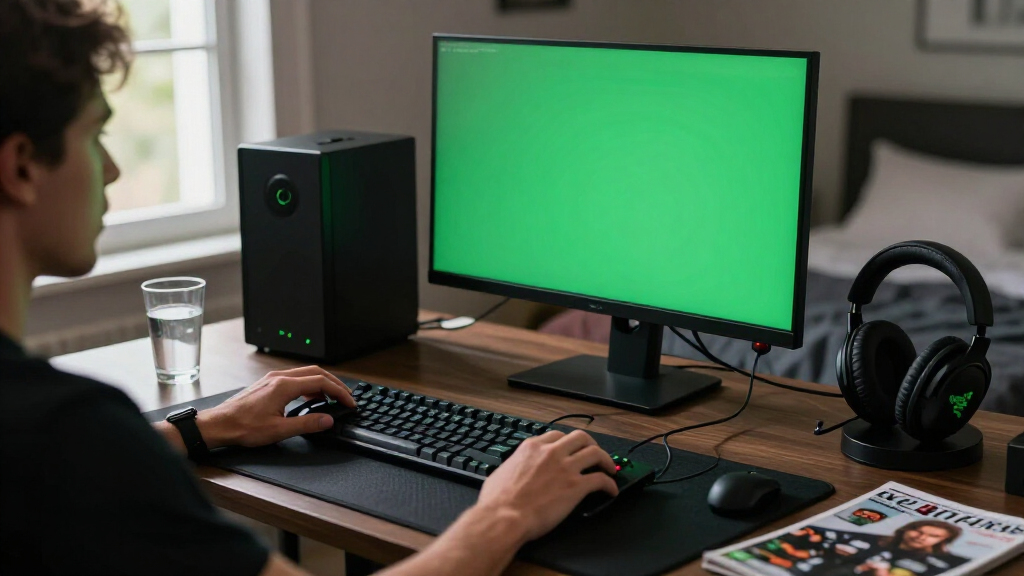

Building one of the best Razer gaming setups comes down to balancing wireless freedom, comfort over long sessions, and how much RGB and software integration you actually want. The Razer BlackShark V3 Pro stands out as the best overall pick thanks to its active noise cancellation and premium wireless performance, while the Razer Basilisk V3 is the strongest value play for anyone who prefers a wired, feature-rich mouse. Competitive players should zero in on the Viper V3 Pro, a 55g featherweight built purely for esports speed. The main tradeoff you’ll face is paying more for wireless and ANC versus saving money with wired gear that performs nearly as well. Read on for the full breakdown of all 14 picks and who each one suits best.

Get the latest gadgets delivered free with Prime
- Fast, free delivery on millions of items
- Prime Video, Amazon Music and more included
- Member-only deals all year
Complete the kit


Key Takeaways
- The BlackShark V3 Pro justifies its premium spot through ANC and battery life, but the BlackShark V3 non-Pro covers most of the same ground for less if noise cancellation isn’t a priority.
- Razer‘s lineup splits cleanly into esports-first gear (Viper V3 Pro, Tartarus V2) and comfort-first gear (Soma Chroma chair, Kraken), and mixing those two philosophies poorly is the most common setup mistake.
- Wired picks like the Basilisk V3 and BlackWidow V4 X outperform similarly priced wireless rivals on raw features, making them the smarter buy for desk-bound players.
- The Leviathan V2 X soundbar and Seiren V3 Pro fill streaming-oriented niches that no headset in this lineup replaces — audio output and broadcast voice are separate buying decisions.
- Across all 14 products, Synapse software integration is the connective tissue; buyers who dislike software management should lean toward plug-and-play options like the Kraken or Barracuda X.
| Razer Barracuda X Wireless Gaming and Mobile Headset, Quartz Pink |  | Best Budget Wireless Pick | Connectivity: 2.4 GHz wireless and Bluetooth | Driver Size: 40 mm | Microphone: Detachable HyperClear cardioid mic | VIEW LATEST PRICE | See Our Full Breakdown |
| Razer Soma Chroma Ergonomic Gaming Chair with Reactive RGB Lighting |  | Best Full-Desk Aesthetic Anchor | Lighting: Razer Chroma RGB; syncs with 300+ games | Power: USB-C | Seat Cushion: Dual-density foam | VIEW LATEST PRICE | See Our Full Breakdown |
| Razer Leviathan V2 X Compact PC Gaming Soundbar |  | Best Space-Saving Audio | Audio Output: Stereo | Drivers: Two full-range drivers and two passive radiators | Connectivity: USB-C and Bluetooth 5.0 | VIEW LATEST PRICE | See Our Full Breakdown |
| Razer Viper V3 Pro Wireless Esports Gaming Mouse, 55g Lightweight, White |  | Best Esports Performance | Weight: 55 g | Sensor: Focus Pro 35K Optical Sensor Gen-2 | Polling Rate: Up to 8000 Hz | VIEW LATEST PRICE | See Our Full Breakdown |
| Razer BlackShark V3 X HyperSpeed Wireless Gaming Headset, Black | 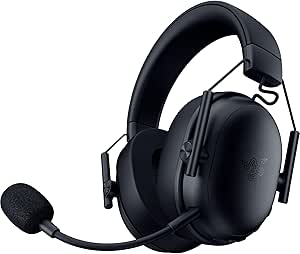 | Best Versatile All-Rounder Headset | Driver Type: TriForce 50 mm Gen-2 | Microphone: Detachable HyperClear cardioid, 9.9 mm | Connectivity: 2.4 GHz wireless, Bluetooth, USB | VIEW LATEST PRICE | See Our Full Breakdown |
| Razer Kraken Gaming Headset with Retractable Microphone, Black/Blue |  | Best Budget Starter Headset | Driver size: 50 mm | Connectivity: 3.5 mm headphone jack | Microphone: Retractable, cardioid noise-isolating | VIEW LATEST PRICE | See Our Full Breakdown |
| Razer Basilisk V3 Wired Ergonomic Gaming Mouse |  | Best Ergonomic All-Rounder Mouse | Connectivity: USB wired | Buttons: 11 programmable | Scroll wheel: Dual-mode free-spin and tactile tilt | VIEW LATEST PRICE | See Our Full Breakdown |
| Razer BlackShark V3 Wireless PC Gaming Headset, Black |  | Best Wireless Esports Headset | Drivers: TriForce Titanium 50 mm Gen-2 | Battery life: 70 hours | Weight: 270 g | VIEW LATEST PRICE | See Our Full Breakdown |
| Razer BlackShark V3 Pro Wireless Gaming Headset with ANC, Black |  | Best Premium Noise-Cancelling Headset | Drivers: 50 mm TriForce Bio-Cellulose Gen-2 | ANC: Hybrid active noise cancellation | Wireless latency: As low as 10 ms | VIEW LATEST PRICE | See Our Full Breakdown |
| Razer BlackWidow V4 X Mechanical Gaming Keyboard with Yellow Switches |  | Best Full-Size Keyboard for Quiet Setups | Switch type: Linear Yellow | Actuation point: 1.2 mm | Actuation force: 45 g | VIEW LATEST PRICE | See Our Full Breakdown |
| Razer Seiren V3 Pro Microphone – Dynamic USB Type C & XLR, Black |  | Best for Streamers Leveling Up | Capsule: 30 mm dynamic | Polar Pattern: Cardioid | Recording Depth: 32-bit float (via Synapse) | VIEW LATEST PRICE | See Our Full Breakdown |
| Razer Tartarus V2 Gaming Keypad, 32 Programmable Keys, Black |  | Best for MMO and Macro Players | Key count: 32 | Switch type: Mecha-membrane | Thumbpad: 8-way directional | VIEW LATEST PRICE | See Our Full Breakdown |
| Razer Basilisk V3 X HyperSpeed Wireless Gaming Mouse, Black |  | Best Wireless Workhorse Mouse | Connection: Razer HyperSpeed Wireless / Bluetooth | Battery Life: Up to 285 hours (HyperSpeed), up to 535 hours (Bluetooth) | Sensor: Razer 5G Advanced 18K DPI Optical | VIEW LATEST PRICE | See Our Full Breakdown |
| Razer gaming setup | Connectivity |
|---|---|
| Razer Barracuda X Wireless Gam | 2.4 GHz wireless and Bluetooth |
| Razer Soma Chroma Ergonomic Ga | — |
| Razer Leviathan V2 X Compact P | USB-C and Bluetooth 5.0 |
| Razer Viper V3 Pro Wireless Es | Razer HyperSpeed Wireless |
| Razer BlackShark V3 X HyperSpe | 2.4 GHz wireless, Bluetooth, USB |
| Razer Kraken Gaming Headset wi | 3.5 mm headphone jack |
| Razer Basilisk V3 Wired Ergono | USB wired |
| Razer BlackShark V3 Wireless P | 2.4 GHz wireless, Bluetooth 5.3, USB |
| Razer BlackShark V3 Pro Wirele | 2.4 GHz wireless, Bluetooth 5.3, USB, 3.5 mm |
| Razer BlackWidow V4 X Mechanic | Wired (corded electric) |
| Razer Seiren V3 Pro Microphone | USB Type-C, XLR |
| Razer Tartarus V2 Gaming Keypa | — |
| Razer Basilisk V3 X HyperSpeed | — |
More Details on Our Top Picks
Razer Barracuda X Wireless Gaming and Mobile Headset, Quartz Pink
This option stands out for buyers who want wireless freedom without a premium price. The Barracuda X pairs a 2.4 GHz dongle for gaming with Bluetooth for phones and handhelds, and the 50-hour battery means charging is an afterthought rather than a nightly ritual. Compared with the BlackShark V3 X HyperSpeed, it trades away 7.1 surround sound and USB connectivity in exchange for a lighter, simpler package that doubles as an everyday mobile headset. The detachable cardioid mic is a smart touch — it converts the headset into a clean pair of over-ears for music or calls. The tradeoff is real, though: no active noise cancellation, so the BlackShark V3 Pro remains the pick if you game in a noisy room.
Pros:- Dual 2.4 GHz and Bluetooth connectivity covers gaming and mobile use
- 50-hour battery life means charging weekly, not nightly
- Detachable mic converts it into everyday over-ear headphones
- Featherlight build with breathable memory foam cushions for long sessions
Cons:- No active noise cancellation for loud environments
- No surround sound support, limiting positional audio in competitive games
Best for: Students and casual gamers who split time between a console or handheld and a phone and want one affordable wireless headset for both
Not ideal for: Competitive FPS players who need surround sound and noise cancellation — this model keeps things basic on both fronts
- Connectivity:2.4 GHz wireless and Bluetooth
- Driver Size:40 mm
- Microphone:Detachable HyperClear cardioid mic
- Battery Life:Up to 50 hours
- Charging:USB-C
- Weight:9.6 oz
- Ear Placement:Over-ear
Our verdict“This pick makes the most sense for budget-conscious gamers who want wireless convenience across devices and can live without ANC or surround sound.”
Razer Soma Chroma Ergonomic Gaming Chair with Reactive RGB Lighting
For buyers building a fully synced Chroma battlestation, the Soma Chroma is the piece that ties everything together — its reactive RGB lighting syncs with over 300 games, matching the lighting on a BlackWidow V4 X keyboard or Leviathan V2 X soundbar. Comfort fundamentals hold up too: dual-density foam, a built-in lumbar arch, and a 155° recline for post-match slouching. Compared with spending the same money on a second peripheral, this chair changes the entire look of a room rather than one desk accessory. The compromises: lighting requires a USB-C power source, so placement depends on cable reach, and Razer publishes no weight capacity or dimensions, which makes fit risky for larger or taller buyers. It is also priced far above plain ergonomic chairs with better-adjusted lumbar systems.
Pros:- Chroma RGB syncs with 300+ games for a fully reactive setup
- Dual-density foam cushion and built-in lumbar arch support long sessions
- 155° recline suits both gaming and relaxation
- USB-C power allows flexible lighting placement
Cons:- RGB lighting requires a nearby USB-C power source, constraining chair placement
- No published weight capacity or dimensions, making fit and durability hard to judge
Best for: Streamers and RGB-obsessed builders who want their chair to participate in the same lighting ecosystem as their keyboard, mouse, and soundbar
Not ideal for: Buyers who prioritize ergonomics over aesthetics — unlisted dimensions and no adjustable lumbar make this a gamble for tall or heavy users
- Lighting:Razer Chroma RGB; syncs with 300+ games
- Power:USB-C
- Seat Cushion:Dual-density foam
- Lumbar Support:Built-in lumbar arch
- Frame:Reinforced steel
- Maximum Recline:155°
Our verdict“This model is better suited to aesthetic-driven streamers than to buyers chasing pure ergonomic performance.”
Razer Leviathan V2 X Compact PC Gaming Soundbar
When desk space is the constraint, this soundbar solves the speaker problem that headsets like the Kraken can’t — audio you can hear across the room without wearing anything. The Leviathan V2 X slides under a monitor and runs power and audio through a single USB-C cable, cutting cord clutter to almost nothing. Its 14 Chroma zones tie into the same ecosystem as the Soma chair and Razer keyboards, so the lighting story stays coherent. Compared with a headset-only setup, you gain speakers for music, parties, and console sessions at a desk. The tradeoffs: two full-range drivers and passive radiators deliver stereo only — no subwoofer, no true surround — so bass-heavy games and positional audio fall short of what the BlackShark V3 X delivers in 7.1. It also needs constant USB-C power, ruling out casual phone-only placements.
Pros:- Compact bar fits beneath most monitors without a stand
- Single USB-C cable handles both power and audio
- Bluetooth 5.0 connects phones and tablets from up to 10 meters
- 14-zone Chroma RGB integrates with a full Razer setup
Cons:- Stereo-only output with no subwoofer leaves bass thin
- Requires constant USB-C power, limiting flexible placement
Best for: Desk-bound players with limited space who want speaker audio and synced RGB without giving up headset real estate
Not ideal for: Bass lovers and competitive players — stereo-only output without a subwoofer can’t match a surround headset for depth or positional cues
- Audio Output:Stereo
- Drivers:Two full-range drivers and two passive radiators
- Connectivity:USB-C and Bluetooth 5.0
- Lighting:Razer Chroma RGB with 14 lighting zones
- Mounting Type:Bar mount
- Bluetooth Range:10 meters
- Frequency Response:Up to 20 kHz
Our verdict“This pick makes the most sense for space-constrained desks where tidy cabling and synced lighting matter more than bass depth.”
Razer Viper V3 Pro Wireless Esports Gaming Mouse, 55g Lightweight, White
This is the serious-competitor pick in the roundup, and it earns that slot with numbers that matter. At 55 g, it undercuts the Basilisk V3 X HyperSpeed by a wide margin, and the 8000 Hz polling via the included HyperPolling dongle brings wireless latency close to wired — a difference fast-aim players actually feel. The Focus Pro 35K Gen-2 sensor tracks even on glass, and Gen-3 optical switches eliminate the double-click failures that plague mechanical switches over time. Compared with the ergonomically richer Basilisk V3, the Viper strips away extras like a free-spinning wheel and extra buttons in pursuit of pure speed. Setup demands care: the dongle performs best within about 30 cm of the mouse, so expect a short extension cable on a crowded desk, and Windows settings may need tweaking for peak accuracy.
Pros:- 55 g ultralight shell enables fast, flick-heavy aim
- 8000 Hz wireless polling approaches wired responsiveness
- 35K Gen-2 sensor tracks reliably even on glass surfaces
- Gen-3 optical switches rated for 90 million clicks without double-click issues
Cons:- Peak performance requires dongle placement within roughly 30 cm of the mouse
- May need manual Windows sensitivity adjustments for best accuracy
Best for: Competitive FPS and esports players who prioritize minimum weight and maximum polling speed over comfort features
Not ideal for: MMO and productivity players — the minimalist button layout gives up the programmable extras the Basilisk V3 offers
- Weight:55 g
- Sensor:Focus Pro 35K Optical Sensor Gen-2
- Polling Rate:Up to 8000 Hz
- Connectivity:Razer HyperSpeed Wireless
- Switches:Optical Mouse Switches Gen-3 (90 million click lifecycle)
- Actuation:0.2 ms
- Battery Life:Up to 95 hours
- DPI Adjustment:1-DPI step
Our verdict“This model is better suited to ranked-grinding esports players than to anyone who wants a do-everything daily mouse.”
Razer BlackShark V3 X HyperSpeed Wireless Gaming Headset, Black
Compared with the Barracuda X, this headset wins on flexibility and audio detail: three connection modes (2.4 GHz, Bluetooth, and USB) cover PC, console, and mobile in one device, and the TriForce 50 mm Gen-2 drivers with 7.1 surround deliver the positional awareness the Barracuda lacks. At 270 g it stays comfortable for long sessions, and the detachable cardioid mic keeps voice pickup focused while converting to clean headphones when removed. It also undercuts the BlackShark V3 Pro by skipping active noise cancellation — a reasonable sacrifice if your room is quiet. The tradeoffs are subtler here: USB mode tethers you to a cable when battery runs low, and the 7.1 processing is software-dependent and per-platform, so console players may not get the full surround experience PC users do.
Pros:- Three connectivity options (2.4 GHz, Bluetooth, USB) span PC, console, and mobile
- TriForce 50 mm Gen-2 drivers with 7.1 surround for positional audio
- 270 g lightweight build with plush earcups for long sessions
- Detachable cardioid mic with focused voice pickup
Cons:- No active noise cancellation, leaving loud environments unfiltered
- Surround sound depends on platform software support, limiting console use
Best for: Multi-platform gamers who bounce between PC, console, and mobile and want one headset for all three
Not ideal for: Buyers in noisy households — without ANC, the BlackShark V3 Pro justifies its higher price for distraction-free play
- Driver Type:TriForce 50 mm Gen-2
- Microphone:Detachable HyperClear cardioid, 9.9 mm
- Connectivity:2.4 GHz wireless, Bluetooth, USB
- Surround Sound:7.1
- Weight:270 g
- Color:Black
Our verdict“This pick makes the most sense for platform-hopping gamers who want surround audio and maximum connectivity without paying for ANC.”
Razer Kraken Gaming Headset with Retractable Microphone, Black/Blue
For anyone assembling a first Razer setup without overspending, the Kraken is the sensible entry point. Its 3.5 mm connection means it works across PC, PlayStation, Xbox, Switch, and mobile with no dongles to lose — a plug-and-play simplicity that pricier options like the BlackShark V3 Wireless can’t match when you’re juggling platforms. The cooling gel-infused cushions and lightweight bauxite aluminum frame keep long sessions comfortable, and the retractable cardioid mic tucks away neatly for solo play. The tradeoff is clear: software 7.1 surround works only on 64-bit Windows 10, so console players get stereo only. Compared with the BlackShark V2 X, the Kraken trades a slightly fuller feature set for stronger multi-console compatibility, which makes it the safer first buy.
Pros:- Works across virtually every platform via 3.5 mm with no dongle
- Cooling gel-infused cushions for long sessions
- Lightweight, flexible bauxite aluminum frame
- Retractable noise-isolating mic with inline controls
Cons:- 7.1 surround sound is limited to 64-bit Windows 10
- Wired-only design with no wireless upgrade path
Best for: New gamers building a multi-platform setup who want one headset for PC, console, and mobile
Not ideal for: Audiophiles on Xbox or PlayStation who want surround sound, since 7.1 is Windows-only
- Driver size:50 mm
- Connectivity:3.5 mm headphone jack
- Microphone:Retractable, cardioid noise-isolating
- Surround sound:Software-enabled 7.1 on Windows 10 64-bit
- Frame material:Bauxite aluminum
- Compatibility:PC, PS4, PS5, Switch, Xbox One, Xbox Series X|S, mobile
- Color:Black/Blue
Our verdict“The Kraken is the pick if you want one affordable, plug-in-anywhere headset rather than committing to a single ecosystem.”
Razer Basilisk V3 Wired Ergonomic Gaming Mouse
The Basilisk V3 earns its spot as the do-everything mouse of this roundup. Compared with the Viper V3 Pro, which sheds every gram for esports speed, the Basilisk leans into control: an ergonomic shell with a thumb rest, 11 programmable buttons, and a dual-mode scroll wheel that free-spins through long documents or clicks tactilely in games. The 26K DPI sensor and 70-million-click optical switches mean it will outlast several upgrades. The catch is the cable — if a wire crossing your desk bothers you, the Basilisk V3 X HyperSpeed covers the same shape in wireless form, though with fewer buttons. Synapse dependency is the other real annoyance: remapping and tuning live inside Razer’s software, so expect to install it.
Pros:- Ergonomic right-handed shape with a supportive thumb rest
- 11 programmable buttons for macros and shortcuts
- Dual-mode free-spin/tactile scroll wheel
- Durable optical switches rated for 70 million clicks
Cons:- Wired USB only, which adds cable drag
- Button remapping and tuning depend on Razer Synapse
Best for: MMO, MOBA, and productivity players who want a palm-friendly shape with heavy button customization
Not ideal for: Competitive FPS players who prioritize minimum weight and wireless freedom — the Viper V3 Pro fits that brief better
- Connectivity:USB wired
- Buttons:11 programmable
- Scroll wheel:Dual-mode free-spin and tactile tilt
- RGB lighting:11 Razer Chroma zones
- Sensor:Focus+ 26K DPI optical
- Switch durability:Up to 70 million clicks
- Design:Ergonomic with thumb rest
Our verdict“The Basilisk V3 makes the most sense for comfort-first players who want maximum customization and don’t mind the wire.”
Razer BlackShark V3 Wireless PC Gaming Headset, Black
This is the headset for players who treat audio as a competitive tool. HyperSpeed Gen-2 wireless at 10 ms latency keeps footsteps synced to visuals, while TriForce Titanium 50 mm drivers and pro-tuned FPS EQ profiles sharpen positional cues. Compared with the Kraken, the step up is dramatic: triple-mode connectivity (2.4 GHz, Bluetooth 5.3, USB), 70-hour battery, and THX spatial audio. It even outclasses the BlackShark V3 Pro on comfort for marathon sessions — at 270 g, it’s roughly 100 g lighter. The tradeoffs? No Xbox support at all, and the custom EQ profiles are locked behind Synapse, so the pro-tuned sound isn’t fully usable out of the box. Against the cheaper BlackShark V3 X HyperSpeed, you’re paying up for better drivers and lower latency — worth it for ranked play, less so for casual sessions.
Pros:- Latency as low as 10 ms over 2.4 GHz wireless
- 70-hour battery life between charges
- Featherlight 270 g build with memory-foam cushions
- Triple-mode connectivity covers PC, PlayStation, Switch, and mobile
Cons:- No Xbox compatibility
- Custom EQ and FPS profiles require Razer Synapse software
Best for: Competitive PC and PlayStation players who need low-latency wireless audio for long ranked sessions
Not ideal for: Xbox owners — the headset simply isn’t compatible with Microsoft’s consoles
- Drivers:TriForce Titanium 50 mm Gen-2
- Battery life:70 hours
- Weight:270 g
- Wireless latency:As low as 10 ms
- Connectivity:2.4 GHz wireless, Bluetooth 5.3, USB
- Surround sound:THX Spatial Audio (7.1.4)
- Microphone:Detachable HyperClear Super Wideband 9.9 mm
- Compatibility:PC, Mac, PlayStation, Switch, mobile (no Xbox)
Our verdict“The best wireless pick for esports-grade performance and all-day comfort, as long as Xbox isn’t in your household.”
Razer BlackShark V3 Pro Wireless Gaming Headset with ANC, Black
The BlackShark V3 Pro is the most flexible audio device in this lineup, and the only one with hybrid active noise cancellation. That ANC changes how you use it: this is a headset that doubles as an everyday listening headphone for a loud commute or shared apartment, something neither the BlackShark V3 Wireless nor the Barracuda X attempts. Add a fourth connection option — 3.5 mm alongside 2.4 GHz, Bluetooth 5.3, and USB — plus a wide 12 Hz–28 kHz frequency response from bio-cellulose drivers, and it covers every scenario. The tradeoffs are weight and price: at roughly 367 g, it’s about 100 g heavier than the BlackShark V3 Wireless, which some necks will notice in hour four. Spatial audio also demands a supported Windows system, so Mac users lose that feature entirely.
Pros:- Hybrid ANC blocks ambient noise for gaming and travel
- Four connection options including 3.5 mm and Bluetooth 5.3
- Up to 70 hours of battery life over 2.4 GHz
- Wide 12 Hz–28 kHz frequency response from bio-cellulose drivers
Cons:- Approximately 367 g weight may fatigue during long sessions
- THX spatial audio requires a supported Windows system
Best for: Buyers who want one premium headset that handles competitive gaming, ANC travel listening, and every device they own
Not ideal for: Players sensitive to headset weight during marathon sessions — the 270 g BlackShark V3 Wireless is the better fit
- Drivers:50 mm TriForce Bio-Cellulose Gen-2
- ANC:Hybrid active noise cancellation
- Wireless latency:As low as 10 ms
- Connectivity:2.4 GHz wireless, Bluetooth 5.3, USB, 3.5 mm
- Battery life:Up to 70 hours (2.4 GHz)
- Frequency response:12 Hz–28 kHz
- Microphone:Detachable 12 mm HyperClear Full Band
- Weight:Approximately 367 g
Our verdict“The premium choice for buyers who want ANC and maximum device flexibility over the lightest possible fit.”
Razer BlackWidow V4 X Mechanical Gaming Keyboard with Yellow Switches
A Razer battlestation needs a keyboard anchor, and the BlackWidow V4 X is the most practical one here. The Yellow linear switches with a 1.2 mm actuation point and built-in sound dampeners make it dramatically quieter than clicky-switch boards, which matters if you game near a sleeping partner or on calls. Compared with the Tartarus V2 keypad, this full 104-key layout replaces your everyday keyboard rather than complementing it — you get six dedicated macro keys and media controls for MMO rotations and shortcuts in one device. The tradeoffs are the usual full-size ones: no wireless option means another cable on the desk, and there’s no water resistance, so an errant drink is a genuine risk next to a LAN setup.
Pros:- Quiet linear Yellow switches with sound dampeners
- Six programmable macro keys plus dedicated media controls
- Per-key Chroma RGB that syncs with the rest of a Razer setup
- Doubleshot ABS keycaps resist wear on legends
Cons:- Wired connectivity only
- Not water resistant — spills are a real hazard
Best for: MMO and macro-heavy players who want a quiet, full-size daily-driver keyboard for both gaming and work
Not ideal for: Minimalist desk builders or wireless-first setups — the tethered design and full footprint add permanent cable clutter
- Switch type:Linear Yellow
- Actuation point:1.2 mm
- Actuation force:45 g
- Key count:104 (QWERTY)
- Macro keys:6 programmable
- Backlighting:Per-key Razer Chroma RGB
- Keycap material:Doubleshot ABS
- Connectivity:Wired (corded electric)
Our verdict“The strongest keyboard pick for a shared-space Razer setup that needs quiet switches and macro power without a second device.”
Razer Seiren V3 Pro Microphone – Dynamic USB Type C & XLR, Black
Every serious Razer gaming setup eventually needs broadcast-grade audio, and the Seiren V3 Pro is the microphone that grows with you. Its dual USB Type-C and XLR connectivity is the standout differentiator: you can start plug-and-play today and graduate to an audio interface later without replacing hardware. Compared with relying on a headset like the BlackShark V2 X for commentary, the 30mm dynamic capsule and cardioid pattern deliver noticeably fuller vocal presence. The onboard DSP — limiter, compressor, expander, and AI noise removal — means less time fiddling with software chains.
The tradeoff is positioning discipline: a dynamic capsule demands close mic technique that condenser users may find restrictive, and the 32-bit float mode only works through Synapse.
Pros:- Dual USB Type-C and XLR connectivity supports both beginners and professionals
- Onboard DSP processing reduces reliance on PC or external software
- Built-in pop filter and shock absorber deliver cleaner recordings
- Durable zinc unibody with adjustable vibration-dampened arm mount
Cons:- 32-bit float recording requires Synapse software
- Dynamic capsule demands close mic positioning compared to condensers
Best for: Streamers and podcasters who want one microphone that works today over USB and tomorrow over XLR
Not ideal for: Casual gamers who mostly use voice chat — a headset microphone is simpler and takes no desk space
- Capsule:30 mm dynamic
- Polar Pattern:Cardioid
- Recording Depth:32-bit float (via Synapse)
- Connectivity:USB Type-C, XLR
- Onboard DSP:Limiter, compressor, expander, AI noise remover
- Body Material:Zinc unibody
- Mount:Adjustable vibration-dampened desktop arm mount
Our verdict“Buy this if streaming or podcasting is central to your setup and you want hardware that won’t need replacing as your audio rig matures.”
Razer Tartarus V2 Gaming Keypad, 32 Programmable Keys, Black
Where the BlackWidow V4 X gives you a full mechanical keyboard, the Tartarus V2 takes the opposite approach: strip everything down to the 32 keys your left hand actually uses, then make every one programmable. The 8-way directional thumbpad is what sets it apart — movement shifts to your thumb, freeing fingers entirely for abilities. That layout makes the most sense for MMO, MOBA, and macro-heavy players drowning in keybinds, and Razer Hypershift effectively doubles your macro capacity when needed.
Compared with a traditional keyboard, the tradeoff is the mecha-membrane switches: softer and quieter than mechanical, which purists who love the BlackWidow’s Yellow Switch feel will notice immediately. It’s also a supplement, not a replacement — most users still keep a full keyboard alongside it.
Pros:- 32 programmable keys for shortcuts, macros, and abilities
- 8-way thumbpad moves movement controls to the thumb
- Razer Hypershift doubles programmable layers
- Individually backlit keys sync with compatible games and devices
Cons:- Mecha-membrane switches won’t satisfy users who want fully mechanical switches
- Supplements rather than replaces a full keyboard, adding desk clutter
Best for: MMO and MOBA players with heavy keybind loads who want thumb-driven movement control
Not ideal for: Mechanical switch enthusiasts or FPS players who need a full keyboard’s key count
- Key count:32
- Switch type:Mecha-membrane
- Thumbpad:8-way directional
- Programmable macros:Razer Hypershift
- Lighting:Individually backlit keys; 16.8 million colors
- Color:Black
Our verdict“A specialized tool that pays off handsomely for ability-spamming genres and does little for anyone else — skip it if your games fit on ten keys.”
Razer Basilisk V3 X HyperSpeed Wireless Gaming Mouse, Black
The Basilisk V3 X HyperSpeed occupies the pragmatic middle ground in this roundup’s mouse lineup. Where the Viper V3 Pro chases esports at 55 grams and a premium price, this Basilisk prioritizes endurance and ergonomics: up to 535 hours of battery in Bluetooth mode, the classic right-handed Basilisk shape that suits palm, claw, and fingertip grips, and nine programmable controls. The 18K DPI sensor and 60-million-click Gen-2 switches mean it won’t feel outdated in a few years. Switching to low-latency HyperSpeed mode drops battery life to roughly 285 hours, still generous by wireless standards.
The tradeoffs come from that endurance focus — there’s no charging dock or high polling-rate spec here, and running Chroma RGB lighting drains the battery faster. Full customization also depends on Synapse software.
Pros:- Long battery life of up to 285-535 hours depending on connection mode
- Ergonomic Basilisk shape supports multiple grip styles
- Low-latency HyperSpeed wireless plus multi-device Bluetooth
- Gen-2 mechanical switches rated for 60 million clicks
Cons:- RGB lighting reduces battery life in practice
- Full customization requires Razer Synapse software
Best for: Productivity-and-gaming hybrid users who want a comfortable wireless mouse they rarely need to charge
Not ideal for: Competitive esports players who need the lightest possible chassis and highest polling rates
- Connection:Razer HyperSpeed Wireless / Bluetooth
- Battery Life:Up to 285 hours (HyperSpeed), up to 535 hours (Bluetooth)
- Sensor:Razer 5G Advanced 18K DPI Optical
- Switches:Razer Mechanical Mouse Switches Gen-2, up to 60 million clicks
- Programmable Controls:9
- Lighting:Razer Chroma RGB (16.8 million colors)
- Color:Black
Our verdict“If you want one wireless mouse for work, casual gaming, and everything between — and hate charging cables — this is the sensible default over pricier esports mice.”

How We Picked
My ranking logic starts with how well each product serves a defined type of gamer rather than raw spec sheets. I weighed build quality, battery endurance or wired reliability, comfort during multi-hour sessions, and how cleanly each device integrates with Razer Synapse and Chroma ecosystem lighting. Price-to-feature value mattered heavily, which is why wired options like the Basilisk V3 rank high despite lacking wireless convenience — what you give up in freedom, you gain in features and consistency.
I also penalized redundancy within the lineup. With five headsets included, the ordering reflects real differentiation: ANC, mic quality, and wireless platform separate the BlackShark tiers, so each one earns its slot only if it beats its sibling for a specific buyer. Finally, versatility across use cases — mobile compatibility, streaming capability, tournament legality — acted as a tiebreaker for products with similar core performance.
Factors to Consider When Choosing Best Razer Gaming Setups
Choosing Razer gear piece by piece works better than buying a bundle, because each category has its own performance floor and diminishing-return point. These are the broader factors that shaped my rankings and should shape your decision too.Wired Versus Wireless: The Convenience Tax
Wireless Razer gear commands a real premium, and the question is whether that premium buys you anything in your actual setup. If your PC sits on your desk and you never move, a wired mouse like the Basilisk V3 delivers more programmable buttons and zero charging anxiety for less money. Wireless earns its cost when you game across devices — the Barracuda X and BlackShark HyperSpeed models shine for console-to-PC switching — or when you play competitively and need unobstructed mouse movement. A common mistake is assuming wireless always means lag; Razer’s HyperSpeed protocol is genuinely tournament-viable. The real tradeoff is battery management and weight, not latency.
Headset Overlap: Don’t Buy Twice
Five of the fourteen products here are headsets, which reflects how much of Razer’s catalog sits in this category — but you only need one. The deciding factors are noise cancellation, mic quality, and platform flexibility, in that order for most buyers. ANC matters if you game in a shared or noisy space; skip it if you have a quiet room and put the savings toward a better microphone like the Seiren V3 Pro. Surrounded-sound marketing is the weakest differentiator — 7.1 processing helps in shooters but no Razer headset in this range matches a dedicated soundstage. Match the headset to your environment, not the feature list.
Ecosystem Lock-In and Synapse Software
Razer’s strength is that everything talks to everything — Chroma lighting syncs across the Soma chair, keyboard, and mouse, and Synapse manages profiles centrally. The flip side is software dependency: if you dislike running background apps or you game on a locked-down work machine, deep ecosystem features become dead weight. Buyers who want minimal fuss should favor plug-and-play devices like the Kraken or Barracuda X, which work fully without Synapse. The mistake to avoid is buying three ecosystem-heavy devices when one would carry the lighting identity of your whole desk.
Weight and Hand Size for Mice
Where Peripherals Beat Upgrades
Not every slot in a setup deserves equal budget. A keypad like the Tartarus V2 or a broadcast mic like the Seiren V3 Pro is a specialist purchase that only pays off for MMO players and streamers respectively — spending there before fixing your audio or input basics is backwards. Similarly, the Soma Chroma chair is comfort infrastructure; it improves every session but does nothing for your aim. The smartest order of operations for most builders is headset, mouse, keyboard, then luxuries. That priority logic is baked into how I ordered the rankings.
Build Quality and Longevity Signals
Razer’s quality tiers are fairly consistent within families, which makes family selection a shortcut for durability judgment. The BlackShark line is built around a durable aluminum frame, while cheaper Kraken-series plastic flexes more but survives travel better because of it. Mechanical keyboards like the BlackWidow V4 X with Yellow switches will outlast several mouse generations, so they’re the safest long-term buy on this list. Replaceable parts — earpads, feet, cables — are the hidden longevity factor, and Razer’s ecosystem makes those easy to source for flagship products but harder for budget variants.
Frequently Asked Questions
Should I buy the BlackShark V3 Pro or save money with the standard BlackShark V3?
The Pro’s active noise cancellation is the single feature that justifies the gap, so the decision hinges entirely on your environment. If you game in a room with ambient noise — family traffic, fans, street sound — ANC transforms long sessions and makes the Pro the right call. In a quiet, dedicated space, the standard V3 delivers comparable audio quality and mic clarity, and you’d be paying for a feature you’ll rarely notice. The Pro also adds better battery endurance, which matters if you charge infrequently. For most buyers with a quiet setup, the standard V3 is the more rational purchase.
Is the Viper V3 Pro worth it if I’m not a competitive player?
Probably not, and that’s by design. The Viper V3 Pro strips weight and features down to serve low-sensitivity esports players who make large, fast mouse movements — that 55g frame is its entire reason for existing. For casual or single-player gaming, the Basilisk V3 offers more programmable buttons, a better scroll wheel, and a more comfortable ergonomic shape for less money. The Viper’s minimal button layout can even feel limiting in MMOs or productivity work. Choose it only if raw speed and weight are your top priorities.
Do I need the Seiren V3 Pro if my headset already has a microphone?
It depends on whether anyone besides your teammates hears your voice. Headset mics in this lineup are tuned for game chat — clear enough, but compressed and close-sounding. If you stream, record, or take calls professionally, the Seiren V3 Pro’s dynamic capsule and XLR option produce noticeably richer audio that listeners will hear immediately. For purely in-game communication, a dedicated mic is unnecessary spending. One catch: dynamic mics need you to speak close and consistently, so if you lean back while gaming, a headset mic may actually track you better.
Can I mix Razer gear with non-Razer components, or should I go all-in on the ecosystem?
You can absolutely mix, and you should where it makes sense. Razer’s ecosystem advantages — Chroma syncing, unified profiles in Synapse — only apply between Razer devices, so going all-in buys cohesion, not performance. Your GPU, monitor, and even most mice work fine alongside partial Razer setups. The one genuine downside is running multiple vendor software suites, which can conflict and eat background resources. A practical approach: pick one or two Razer centerpiece devices for lighting identity and choose other components purely on merit.
Is the Tartarus V2 keypad useful outside of MMOs?
Its value drops sharply outside MMO and MOBA play. The Tartarus V2’s 32 programmable keys shine when you have dozens of abilities, macros, or inventory bindings to organize — that’s where a one-handed keypad beats a full keyboard. In shooters, the thumbstick and key layout can’t replace a keyboard’s movement precision, and most FPS players abandon keypads quickly. That said, some players love it for productivity macros, photo editing shortcuts, and even flight sims. Treat it as a specialist tool, not a general upgrade.
Conclusion
For most players assembling a Razer setup, the BlackShark V3 Pro is the best overall anchor pick — it handles audio, communication, and noise control at a level nothing else in this lineup matches. If value is your priority, the Basilisk V3 wired mouse plus the BlackShark V2 X gets you a capable core for far less, with no charging cables to babysit and no real performance sacrifice. The Viper V3 Pro is the premium esports choice for competitive players who count grams, while the Kraken serves beginners who want simple plug-and-play gear without software setup. For specific needs: streamers should build around the Seiren V3 Pro, marathon gamers will feel the difference in the Soma Chroma chair, and the Tartarus V2 earns its slot only for MMO-focused players. Buy for your actual habits, not the feature list, and the setup assembles itself.