
TL;DR

Get the latest gadgets delivered free with Prime
- Fast, free delivery on millions of items
- Prime Video, Amazon Music and more included
- Member-only deals all year
Quantinuum and RIKEN announced an expanded partnership after the Reimei quantum computer at RIKEN was upgraded to Quantinuum’s System Model H2. Their plans include hybrid quantum, supercomputing and AI research, work toward a fault-tolerant system with Japanese partners, and a study with SoftBank on connecting quantum computers to AI data centers.
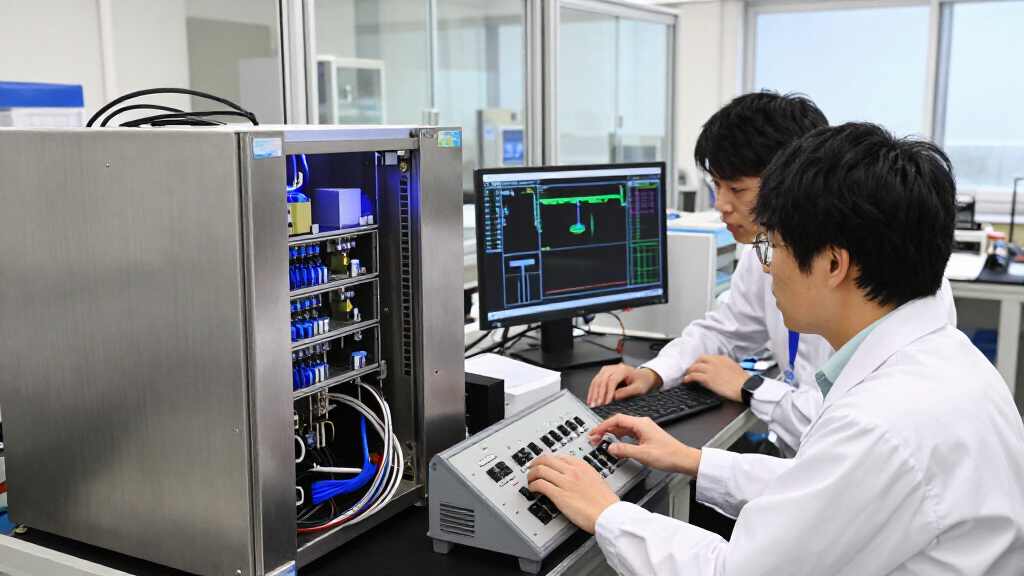
Quantinuum and RIKEN have expanded their partnership in Japan after upgrading the Reimei quantum computer at RIKEN to Quantinuum’s System Model H2. The partners say they will use the system for research combining quantum computing, supercomputing and AI, while pursuing a fault-tolerant quantum computer developed with Japanese universities and suppliers and exploring links to AI data centers with SoftBank.
Reimei operates within the JHPC-quantum project, which is funded by Japan’s New Energy and Industrial Technology Development Organization, or NEDO. Quantinuum and RIKEN say the upgrade increases the capabilities of the project’s quantum–high-performance computing platform and allows researchers to investigate more complex quantum systems that are difficult to simulate using classical computing alone. The announcement does not provide technical specifications for the upgrade or performance measurements.
The partners plan to apply the hybrid platform to research in electronics, energy and life sciences. They also describe two research projects that began operating on Reimei before the public launch of its services. In one, researchers use quantum-generated data to train an AI model for magnetism simulations on RIKEN’s ROQUO GPU supercomputer. The partners report preliminary results in which the model makes more accurate predictions than models trained only on classical simulations, and more precise predictions than the quantum computer itself; they have not provided the measurements or a publication establishing those results.
A second project combines Reimei, RIKEN’s Fugaku supercomputer and an NVIDIA evolutionary AI agent running on ROQUO to simulate a photoactive biomolecule. The stated research goal is to examine the molecule’s response to light at greater scale and detail. The partners say such work could inform biomolecular engineering, including possible applications in solar cells, but the announcement does not identify a commercial product or a completed industrial outcome.
From Reimei Research to Japanese Industry
The upgrade gives RIKEN and its collaborators access to a stronger quantum component within an existing quantum–HPC research project. In the near term, the partnership is aimed at testing whether quantum-generated data can improve AI-supported scientific modeling, and at exploring problems that classical simulation alone may find difficult. Those are research objectives, not evidence that the platform has already produced practical advantages for industry.
The longer-term plans connect scientific collaboration with Japan’s domestic technology and infrastructure goals. Quantinuum and RIKEN say they will draw on experience installing and operating Reimei as they work with Japanese universities and component suppliers toward a “Made with Japan” fault-tolerant quantum computer. Separately, Quantinuum, RIKEN and SoftBank will study possible connections between quantum computers and AI data centers, with the stated aim of assessing whether hybrid services could become available to businesses. No system-development schedule or service launch has been announced.
For readers outside the research community, the distinction matters: the announcement describes an upgraded research platform and new areas of collaboration, while the prospective fault-tolerant machine and commercial services remain plans to be developed and assessed. The stated applications in materials, energy and biomolecular research are potential areas of impact rather than demonstrated products.
Products Worth Considering

DJI Mini 3 Drone with DJI RC and 3-Axis Mechanical Gimbal

Amazon Kindle Paperwhite Signature Edition (12th Generation, 2024), 32 GB, Metallic Raspberry

Anker SOLIX C300 DC Portable Power Station with 60W Solar Panel, 288Wh, 300W
As an affiliate, we earn on qualifying purchases.
The JHPC-Quantum Research Platform
The expanded agreement builds on a years-long Quantinuum–RIKEN collaboration around Reimei and hybrid quantum computing. Reimei is part of JHPC-quantum, a NEDO-funded project that connects quantum computing with high-performance computing. The partners say experience integrating and operating the system will inform their next research and development work. The release does not give the date when the upgrade was completed or the public launch date for Reimei services.
RIKEN’s role includes research and access to national computing resources such as Fugaku and ROQUO. Quantinuum supplies the quantum technology, while SoftBank is involved in a separate agreement to explore possible links between quantum computers and AI data centers in Japan. The announcement also places the biomolecular work within RIKEN’s AI for Science initiative. It refers to wider U.S.–Japan efforts in AI-driven discovery, including a planned $1 billion partnership under the U.S. Genesis Mission, but does not explain how that initiative is formally connected to the Reimei projects.
“Japan’s quantum ambitions require advanced capabilities today and a sustained commitment to developing what comes next.”
— Rajeeb Hazra, Quantinuum chief executive
Performance and Delivery Timelines
The announcement does not disclose System Model H2 specifications, benchmark results, costs or a timetable for the next development stages. It also gives no quantified evidence for the preliminary magnetism-model results, such as error rates, comparison methods or independent validation. The reported research findings should be treated as partner statements until supporting methods and results are available.
It remains unclear when the fault-tolerant system might be built, which universities and suppliers will participate, and what technical milestones would define its development. The SoftBank work is described as an exploration, not a decision to build or launch a commercial service. The partners have not announced infrastructure requirements, customer access arrangements or a schedule for connecting quantum computers to AI data centers.
Research and Infrastructure Assessments
Quantinuum and RIKEN say they will use the upgraded Reimei platform to advance research in electronics, energy and life sciences, including the magnetism and biomolecular projects described in the announcement. They also plan to use operational experience from Reimei to guide joint development work with Japanese universities and suppliers toward a fault-tolerant system.
Under the separate agreement, Quantinuum, RIKEN and SoftBank will assess infrastructure readiness and examine how quantum computers might connect with AI data centers in Japan. No dates for those assessments, technical milestones or subsequent announcements were specified. The next publicly verifiable developments will be further details about research results, participation in the domestic development effort, and whether the infrastructure study leads to a defined commercial plan.
Key Questions
What changed at RIKEN’s Reimei quantum computer?
Quantinuum and RIKEN say Reimei has been upgraded to Quantinuum System Model H2. They describe the upgrade as expanding the capabilities of the quantum–HPC platform used in the NEDO-funded JHPC-quantum project.
What research will the partners pursue?
The partners plan hybrid quantum, supercomputing and AI research across electronics, energy and life sciences. They highlighted early work on AI-supported magnetism simulations and a biomolecular simulation involving Reimei, Fugaku and ROQUO.
Has Japan’s fault-tolerant quantum computer been built?
No. The partners say they will work with Japanese universities and domestic suppliers toward developing a “Made with Japan” fault-tolerant quantum computer. The announcement does not give a completion date or development schedule.
Will businesses be able to use quantum-AI services now?
Not based on this announcement. Quantinuum, RIKEN and SoftBank plan to explore connections to AI data centers and assess infrastructure readiness. They have not announced a commercial service, launch date or customer access plan.
Source: thequantuminsider.com