

The Sony WH-1000XM5 and the Bose QuietComfort Ultra are the two headphones most shoppers land on when they decide to spend flagship money on wireless noise cancelling. Both sit at the top of the price range, both promise excellent sound, and both claim best-in-class ANC. That overlap is exactly why the choice is hard: you are not deciding between a budget and a premium option, but between two mature, excellent products with genuinely different personalities.

Get the latest gadgets delivered free — and shop member deals
- Fast, free delivery on millions of items
- Access to Prime Big Deal Days deals on October 6–7
- Prime Video, Amazon Music and more included
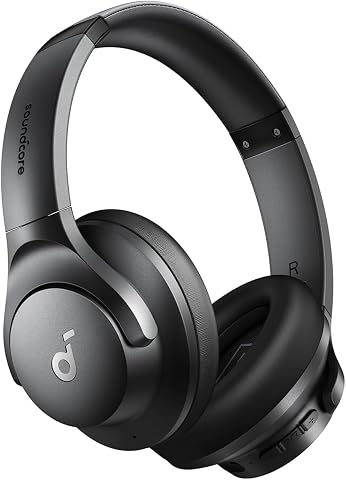
Soundcore by Anker Q20i Hybrid Active Noise Cancelling Headphones, Black
- ✔ Brand: Soundcore by Anker
- ✔ Model: Q20i (A3004)
- ✔ Color: Black

Hybrid Active Noise Cancelling Bluetooth Over-Ear Headphones
- ✔ Type: Wireless over-ear headphones
- ✔ Noise cancellation: Hybrid ANC, claims up to 95% noise reduction
- ✔ Battery life: Up to 120 hours (standard mode, claimed)

Soundcore by Anker Q20i Hybrid Active Noise Cancelling Headphones, White
- ✔ Brand: Soundcore by Anker
- ✔ Model: Q20i
- ✔ Color: White
The core tension comes down to this: Bose prioritizes noise cancellation and wearing comfort above everything else, and it delivers the most isolating listening experience you can buy. Sony spreads its effort wider — longer battery life, deeper software customization, better call quality, multipoint connectivity, and a warmer, bass-forward sound signature. Neither headphone is objectively better; they optimize for different kinds of listeners.
In practice, frequent flyers and open-office dwellers who want maximum silence tend to be happier with the Bose. Listeners who tinker with EQ, switch between laptop and phone all day, or want the headphones to last through long trips without charging lean Sony. This guide compares them across the criteria that actually drive the decision — noise cancelling, sound, comfort, battery, features, call quality, and value — so you can match the right pair to how you listen.
At a Glance
| Criteria | Sony WH-1000XM5 | Bose QuietComfort Ultra Headphones | Winner |
|---|---|---|---|
| Noise cancelling | Excellent ANC, slightly behind Bose in raw isolation | Best-in-class ANC, deepest silence available | B |
| Sound quality | Warm, bass-rich default; full EQ and customization | Balanced, spacious sound with Immersive Audio | A |
| Comfort and fit | Very comfortable, lighter touch on the head | Best-in-class comfort, secure and stable fit | B |
| Battery life | Up to 30 hours with ANC, 3-min quick charge | Up to 24 hours with ANC, Immersive mode cuts it further | A |
| Features and app | Extensive app: EQ, adaptive sound, speak-to-chat, multipoint | Simpler app; Immersive Audio, custom tune, multipoint | A |
| Call quality | Very good, among the best for voice pickup | Good but less consistent in wind | A |
| Build and portability | Slimmer design, no folding hinge; large case | Premium build, folding design; large case | Tie |
| Price and value | Often discounted; strong feature-per-dollar | Premium price, fewer discounts early on | A |
Soundcore by Anker Q20i Hybrid Active Noise Cancelling Headphones, Black
The Soundcore Q20i in Black is the pair we would point most buyers toward, because it gets the fundamentals right without asking you to gamble on unverified claims. Its hybrid ANC uses four microphones to cut up to 90% of external noise — a realistic, quantified figure that reflects how budget noise cancellation actually performs: it tames airplane engines and open-office chatter effectively, while sudden sharp sounds still leak through. Compared with the generic Hybrid ANC headphones in this lineup, the Q20i’s numbers are more conservative, but they are backed by an established brand with a real support ecosystem.Where this model pulls ahead is everyday flexibility. Bluetooth 5.0 with multipoint means it stays connected to your laptop and phone simultaneously, switching automatically when a call comes in — a feature the unbranded competitor matches on paper but implements less transparently. The Soundcore app adds EQ presets, custom EQ, and three listening modes (ANC, Normal, Transparency), so you can adapt the headphones to a commute, a desk session, or a conversation at a café.The tradeoffs are honest ones. ANC reduces noise rather than eliminating it, so buyers expecting flagship-grade silence will be disappointed. And Hi-Res audio support only works over the wired AUX connection, which feels like a half-measure for anyone chasing audiophile sound wirelessly. Battery life of 40 hours with ANC on (60 without) is solid but not class-leading — the generic model claims triple that figure.
Pros:
- Hybrid ANC with four microphones reduces up to 90% of external noise
- Up to 40 hours of playback with ANC on, 60 hours without
- Multipoint Bluetooth keeps two devices connected simultaneously
- Soundcore app offers custom EQ, listening modes, and firmware refinement
Cons:
- Noise reduction falls short of premium flagship ANC
- Hi-Res audio is only available over the wired AUX connection
Best for: Commuters, students, and remote workers who want dependable hybrid ANC, multipoint connectivity, and app customization at a budget price.
Not ideal for: Audiophiles who want hi-res sound wirelessly, or listeners who need near-total silence from their noise cancellation.
Bottom line: The most complete and trustworthy package in this lineup — proven ANC, flexible connectivity, and customization that punches above its price.
“The most complete and trustworthy package in this lineup — proven ANC, flexible connectivity, and customization that punches above its price.”
Hybrid Active Noise Cancelling Bluetooth Over-Ear Headphones
If your use case is long-haul flights, week-long work trips, or simply never wanting to think about a charger, this unbranded Hybrid ANC pair makes a case on stamina alone. A claimed 120 hours of playtime in standard mode is roughly triple what the Q20i delivers with ANC off, and even if real-world results land well below that figure, the margin is large enough that this model almost certainly outlasts the Soundcore options. The 5-minute quick charge for 4 hours of playback matches its rivals exactly.Comfort is its other genuine strength. The memory foam ear cups and adjustable headband are designed for extended sessions in a way the Q20i’s standard padding doesn’t explicitly promise, and the built-in microphone includes wind resistance and AI call clarity — a thoughtful touch for outdoor calls that neither Soundcore listing emphasizes. Bluetooth 6.0 is also the newest version in this comparison, which should mean better range and stability with current devices.Here is the caveat we cannot ignore: every headline spec is a manufacturer claim. The 95% noise reduction figure and the 120-hour battery life are stated without independent verification, and the listing includes no customer feedback to corroborate them. Compared with the Q20i — where Soundcore’s numbers are consistent and modest — this model asks you to trust optimistic marketing. Buyers who need guaranteed performance should weigh that risk carefully.
Pros:
- Claimed 120-hour battery life far exceeds both Soundcore models
- Memory foam ear cups and adjustable headband suit long sessions
- Bluetooth 6.0 offers the newest connectivity in this lineup
- Wind-resistant microphone with AI call clarity handles outdoor calls
Cons:
- Battery and noise-cancellation figures are unverified manufacturer claims
- No established brand history or app-based customization
- No wired AUX option mentioned for hi-res or fallback listening
Best for: Travelers and long-session listeners who prioritize maximum battery runtime and plush comfort over verified specs.
Not ideal for: Buyers who want independently corroborated performance figures or a known brand with an established app ecosystem.
Bottom line: The battery champion of this lineup if its claims hold — a calculated bet for stamina-first buyers who can tolerate the uncertainty.
“The battery champion of this lineup if its claims hold — a calculated bet for stamina-first buyers who can tolerate the uncertainty.”
Soundcore by Anker Q20i Hybrid Active Noise Cancelling Headphones, White
The Q20i in White is functionally the same hardware as our top pick, and we treat it as a deliberate choice rather than a redundant listing: some buyers simply prefer a lighter colorway, whether for aesthetics, visibility when traveling, or matching their existing gear. Everything we value in the Black version carries over — hybrid ANC with four microphones, Transparency mode, BassUp tuning, multipoint Bluetooth, and up to 40 hours with ANC enabled — so choosing between the two is purely a matter of color and listing availability.Where the White listing stands out on its own terms is documentation of the full app experience. It explicitly details EQ presets and custom EQ, HearID personalization, Spatial Audio, and even a white noise feature for sleep or focus — capabilities the Black listing describes more briefly. Compared with the generic Hybrid ANC headphones, which offer no app at all, this model gives you a genuinely customizable listening environment that can evolve with firmware updates.The quirks are worth knowing before you buy. ANC is unavailable in AUX mode, so wired listening means giving up noise cancellation entirely — an odd limitation if you planned to use these on a plane with an in-flight entertainment cable. BassUp also works only in wireless mode. And as with the Black version, the ANC reduces rather than erases noise. At 9.12 ounces, it is comfortable for most, though the memory foam on the generic rival may edge it out for all-day wear.
Pros:
- Hybrid ANC with four microphones plus Transparency mode for awareness
- Up to 40 hours of playback with ANC enabled
- Multipoint Bluetooth switches automatically between two devices
- Full Soundcore app suite: custom EQ, HearID, Spatial Audio, white noise
Cons:
- ANC is disabled when using the AUX connection
- BassUp only works in wireless mode
- Same 40-hour ceiling as the Black version, far short of the generic rival’s claims
Best for: Buyers who want the Q20i’s proven ANC and app ecosystem in a lighter colorway, with the fullest documentation of features like HearID and Spatial Audio.
Not ideal for: Anyone planning to use wired AUX mode with noise cancellation active, or those needing marathon battery life beyond 40 hours.
Bottom line: The best-documented version of our top pick — identical performance in White, ideal for buyers who value the complete app experience and a lighter look.
“The best-documented version of our top pick — identical performance in White, ideal for buyers who value the complete app experience and a lighter look.”
As an Amazon Associate we earn from qualifying purchases.
Key Differences
The single biggest practical difference is how each headphone approaches silence. The Bose QuietComfort Ultra is the more aggressive isolator: on planes, trains, and in busy offices it erases low-frequency drone more completely, and its fit creates a tighter acoustic seal around the ears. The Sony WH-1000XM5 is not far behind — most listeners in ordinary environments would struggle to hear the gap — but when the goal is maximum quiet, Bose holds the lead. If your primary use case is drowning out airplane engines or an open-plan office, that difference matters more than any other on this list.
The second major difference is everything Sony does around the audio experience. Battery life is roughly six hours longer with ANC on, the quick-charge function gives you hours of playback from a few minutes of charging, and the companion app offers granular EQ, adaptive sound controls that respond to your location and activity, speak-to-chat, and fast multipoint switching. Bose’s app is competent but simpler, and its Immersive Audio spatial mode — while impressive at times — comes at the cost of several hours of battery life and is a feature many buyers try once and disable.
The third difference is character. Sony’s default sound is warm and bass-forward, which suits modern pop, hip-hop, and electronic music but can be adjusted to any taste thanks to full EQ. Bose is more balanced out of the box with a wider sense of space. Neither is a wrong answer, but Sony gives you the tools to shape the sound while Bose asks you to accept its tuning, plus a modest amount of EQ adjustment.
Detailed Comparison
Noise cancelling (Bose QuietComfort Ultra Headphones wins — moderate)
This is Bose’s headline strength, and the QuietComfort Ultra earns it. Against steady low-frequency noise — airplane engines, train rumble, HVAC systems — the Bose produces a deeper, more complete silence. It also handles mid-range noise like office chatter slightly better. The Sony WH-1000XM5 is still excellent and closes much of the gap in everyday scenarios like commuting or working from a café; the difference is most noticeable in the very loudest environments. Wind handling is roughly even, with both using effective adaptive correction. If noise cancelling is the number-one reason you are buying, Bose wins — but the margin is smaller than marketing suggests, and Sony’s ANC is more than good enough for most people.
Sound quality (Sony WH-1000XM5 wins — moderate)
Both are strong, but they sound different. Sony ships with a warm, bass-emphasized tuning that flatters bass-heavy genres and movies; out of the box, Bose sounds more neutral and open, with a wider perceived soundstage. The deciding factor is control: Sony’s app includes a full parametric-style EQ and the excellent DSEE Extreme upscaling, so you can tune the XM5 to any preference — including making it sound more like the Bose. Bose offers only mild EQ adjustments, so what you hear is close to what you get, with Immersive Audio as an optional spatial effect that some love and some find gimmicky. Because Sony’s hardware is capable and its software lets you shape it, it takes this round for listeners who care about tuning, while Bose is the safer pick for those who never touch EQ and want a balanced default.
Comfort and fit (Bose QuietComfort Ultra Headphones wins — moderate)
Comfort has long been Bose’s calling card, and the QuietComfort Ultra continues it. The clamping force is balanced, the ear cushions are plush, and the headband distributes weight so evenly that long sessions — six-plus hours — feel effortless. The fit is also more stable, staying put when you move your head quickly or lean back. The Sony is lighter-feeling and very comfortable for most people, but its ear cups are slightly shallower, and some listeners with larger ears report warmth or mild pressure after extended wear. Neither headphone will cause pain, but if you wear headphones all workday, every day, Bose’s advantage becomes real rather than spec-sheet trivia.
Battery life (Sony WH-1000XM5 wins — major)
Sony wins clearly. The WH-1000XM5 delivers roughly 30 hours with ANC on versus about 24 for the Bose — and that Bose figure drops to around 18 hours if you leave Immersive Audio enabled. Sony’s quick-charge is also superior: three minutes of charging yields roughly three hours of playback, which rescues you when you forget to plug in before a flight. For a long-haul travel day or a full work week between charges, Sony is simply more forgiving. Bose’s battery is adequate for most users, but the gap of six or more hours is one of the largest measurable differences between these two.
Features and app (Sony WH-1000XM5 wins — moderate)
Sony’s feature set is the broadest in the category. The Headphones Connect app includes adaptive sound control that changes settings based on your location, speak-to-chat that pauses music when you talk, fast multipoint pairing, and detailed EQ. The XM5 also supports LDAC for higher-resolution wireless playback on compatible devices. Bose’s app is cleaner and easier to navigate, with Immersive Audio, a custom tune feature, and multipoint — but the toolkit is shallower. If you enjoy customizing your headphones, Sony offers materially more to work with. If you prefer to set-and-forget, Bose’s simplicity is a feature in itself, and the gap shrinks.
Call quality (Sony WH-1000XM5 wins — moderate)
The Sony WH-1000XM5 is one of the best calling headphones available, with strong voice pickup and effective noise rejection for the person on the other end. Bose performs well in quiet and moderate settings but is less consistent in windy or very noisy outdoor conditions, where its microphones can struggle to separate your voice from the environment. This criterion only matters if you take regular calls on your headphones — but if your headphones double as your work headset, Sony is the safer choice, and the difference is noticeable to the people you talk to.
Build and portability (minor difference)
Both are well built with plush materials and a premium in-hand feel, so this is close to a tie with one design difference: the Sony WH-1000XM5 does not fold — the ear cups rotate flat only — so its case is wide and flat, which some travelers find awkward to pack. The Bose folds into a more compact, conventional bundle that fits easier in bags, though its case is still on the large side. Neither is compact. If packing space is at a premium, Bose’s folding design has a small practical edge; otherwise call this even, with both headphones feeling durable enough for daily use and frequent travel.
Price and value (Sony WH-1000XM5 wins — moderate)
Both launched at flagship prices, but the Sony WH-1000XM5 has been on the market longer and is discounted more often, frequently selling for meaningfully less than the Bose. Given that the Sony wins on battery, features, calls, and sound customization, its lower typical street price makes it the better pure value. You pay the premium for Bose to get the best noise cancelling and best comfort — worthwhile if those are your priorities, but a real premium for two criteria. Watch pricing on both: at equal prices the value equation tightens, though Sony still offers more per dollar.
Sony WH-1000XM5: Pros and Cons
Pros:
- About 30 hours of battery with ANC on — roughly six more than Bose
- Best-in-class call quality for voice and meetings
- Full EQ and deep app customization, plus LDAC support
- Excellent ANC that covers nearly all real-world use
- Faster quick charging: minutes of charge for hours of playback
- Usually available at a lower street price
Cons:
- Does not fold, so the flat case is bulky to pack
- Default sound is bass-heavy unless you adjust EQ
- Slightly behind Bose in maximum noise isolation
- Touch controls frustrate some users in winter with gloves
Bose QuietComfort Ultra Headphones: Pros and Cons
Pros:
- Best noise cancelling you can buy — deepest silence on planes and in offices
- Best-in-class comfort for all-day and multi-hour sessions
- More balanced, spacious default sound
- Folding design packs down slightly smaller
- Secure, stable fit that stays put during movement
Cons:
- Shorter battery life, especially with Immersive Audio enabled
- Limited EQ compared to Sony
- Call quality less reliable in wind and loud outdoors
- Typically priced higher with fewer discounts
Who Should Choose What
Choose Sony WH-1000XM5 if:
- You want the most features and longest battery for your money — Sony wins on both
- You take frequent calls or video meetings on your headphones
- You like tuning your sound with EQ rather than accepting a fixed signature
- You travel long-haul and want 30 hours of ANC plus fast top-up charging
- You switch between laptop and phone constantly and rely on smooth multipoint
Choose Bose QuietComfort Ultra Headphones if:
- Maximum silence is your top priority — frequent flyers and open-office workers
- You wear headphones 6+ hours a day and comfort is non-negotiable
- You prefer a balanced, spacious sound out of the box and rarely touch settings
- You want a secure fit that stays stable when moving around
Skip both if: You mostly listen in quiet environments where ANC adds little — a good pair of headphones at half the price, or true wireless earbuds if you need portability and exercise use, will serve you better than paying flagship prices for noise cancelling you rarely need.
Value for Money
At full launch price, both headphones are expensive, and neither is a bargain. The realistic value picture: the Sony WH-1000XM5 is discounted more often and more deeply, and it brings more to the table — longer battery, better calls, richer features, sound customization — which makes it the stronger feature-per-dollar proposition for most buyers. Paying more for the Bose is only worth it if the two things Bose does better, absolute noise cancelling and all-day comfort, rank first and second on your list. For a frequent traveler who flies weekly, that premium is easy to justify: deeper silence on every flight compounds over years of use. For a hybrid worker who uses headphones a few hours a day, the Sony’s extra battery, call quality, and lower price deliver more real-world benefit. Paying Bose money only makes sense for silence and comfort; paying Sony’s price gets you everything else.
Final Verdict
For most buyers, the Sony WH-1000XM5 is the smarter choice. It wins on battery life, call quality, app features, sound customization, and usually price, and its noise cancelling is close enough to Bose’s that only the most demanding listeners will notice the difference. If you want one recommendation without caveats, choose the Sony.
Choose the Bose QuietComfort Ultra if your headphones exist primarily to create silence — you fly often, you work in a loud open office, or you wear headphones for most of the day and comfort failures have frustrated you before. Bose is the better tool for those specific jobs, and it is worth its premium for the people whose days are defined by them.
The deciding factor is simple: rank your top two priorities. If they include battery, calls, features, or value, buy Sony. If they are noise cancelling and comfort, buy Bose. Both are excellent; neither will disappoint — but each is clearly better for the listener it was built for.
Frequently Asked Questions
Is the Bose noise cancelling really better than the Sony’s?
Yes, but by a modest margin. The Bose QuietComfort Ultra produces deeper silence against low-frequency noise like airplane engines and train rumble, and it handles mid-range office chatter slightly better. The Sony WH-1000XM5 is close behind in everyday environments, so most listeners outside the loudest settings would not perceive a large gap. If maximum quiet is your single goal, Bose wins; otherwise the difference rarely changes the overall decision.
Which headphone is better for long flights?
It depends on what limits you first. Bose offers stronger engine-noise suppression and better long-wear comfort, which many travelers prize. Sony counters with roughly six extra hours of battery and faster quick charging, which matters on very long journeys or when you forget to charge. For a single long-haul flight, Bose’s silence is the bigger benefit; for multi-day travel without reliable charging access, Sony’s endurance wins.
Does Bose’s Immersive Audio justify the price difference?
Not on its own. Immersive Audio adds a spacious, spatial effect that impresses with some music and movies, but it costs several hours of battery life, and many users try it once and turn it off. Treat it as a bonus, not a reason to buy. Bose’s case rests on noise cancelling and comfort — if those do not justify the premium for you, the feature certainly will not.
Which is better for work calls and video meetings?
The Sony WH-1000XM5, clearly. It has among the best voice pickup in the category, and people on the other end of calls report cleaner, more consistent sound. The Bose performs acceptably in quiet rooms but becomes less reliable in wind or noisy outdoor settings. If your headphones double as your daily work headset, Sony is the safer pick.
Should I wait for a sale on either model?
Sony discounts more often — waiting for a WH-1000XM5 deal is usually rewarded, and at a discounted price its value case becomes overwhelming. Bose’s flagship also drops in price, especially around major sale events, but less predictably. If you can wait a few weeks for a seasonal sale, do so; both headphones are frequently available well below list price, and neither is worth rushing at full retail if you are price-sensitive.
Fall Picks
fall essentials
As an affiliate, we earn on qualifying purchases.