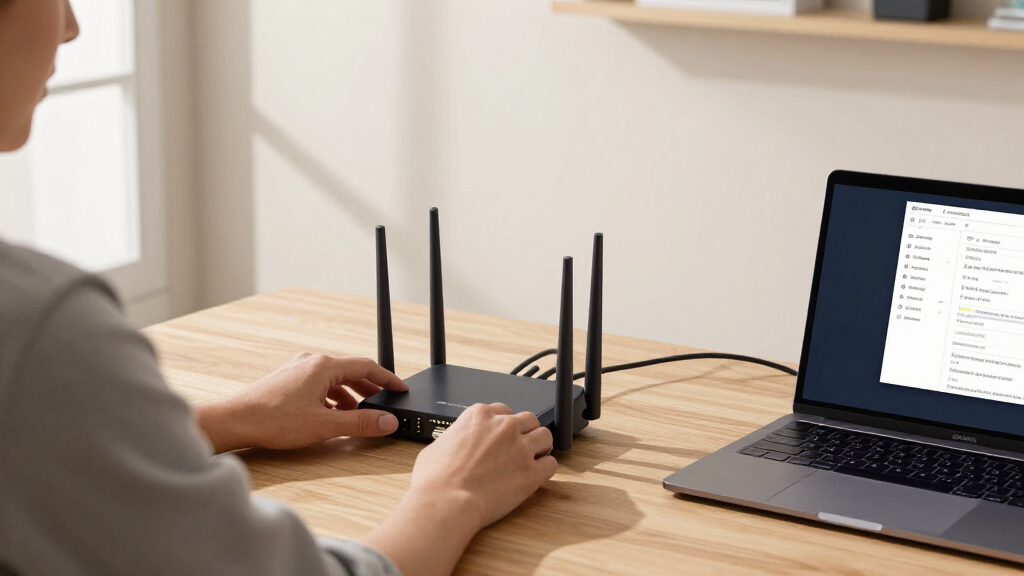

The youyeetoo Banana Pi OpenWrt One WiFi 6 Router presents itself as a flexible, Linux-based networking device aimed at tech-savvy users who want customization and modern wireless features. Its standout attribute is the pre-installed OpenWrt firmware, which offers extensive control over network settings, making it appealing for enthusiasts and professionals. The key strength is support for WiFi 6, promising faster wireless speeds and improved performance in crowded environments. However, its main drawback is the modest 1GB RAM, which might limit intensive or multiple simultaneous uses. Overall, this router balances advanced features with a need for some technical know-how, making it a compelling choice for a specific niche, but less suitable for casual users seeking plug-and-play simplicity.

youyeetoo Banana Pi OpenWrt One WiFi 6 Router with MediaTek
- ✔ Processor: MediaTek MT7981B
- ✔ RAM: 1GB DDR4
- ✔ WiFi: WiFi 6, dual-band, 3×3/2×2

Get the latest gadgets delivered free with Prime
- Fast, free delivery on millions of items
- Prime Video, Amazon Music and more included
- Member-only deals all year
Why This Product Stands Out
The youyeetoo Banana Pi OpenWrt One distinguishes itself by combining WiFi 6 support with a Linux-based, open-source firmware environment. This combination offers a level of flexibility rare in routers within its price range, especially for users who want to tailor their network configurations extensively. Unlike typical consumer routers that focus on simplicity, this device caters to those who value control, customization, and open-source software. Its hardware is geared toward a niche that appreciates the ability to install custom packages, run specialized services, or experiment with different network topologies.
Compared to other routers in its category, its support for 2.5G WAN and expansion options with M.2 SSD and USB ports make it a versatile platform for dedicated or semi-professional setups. While it may not deliver the raw performance of high-end enterprise routers, it punches above its weight for users willing to tackle some setup complexity and who prioritize flexibility over out-of-the-box ease.
Key Features and What They Mean
The pre-installed OpenWrt firmware transforms this router into a platform capable of complex network configurations, VPN setups, and custom firewall rules, which are critical for advanced users managing multiple networks or requiring tight security controls.
Supporting WiFi 6 ensures faster wireless speeds, lower latency, and better performance in environments crowded with devices—beneficial for small offices or tech enthusiasts seeking future-proof wireless connectivity.
The hardware’s MediaTek MT7981B chip and 1GB DDR4 RAM provide decent processing power for typical routing tasks, but the limited RAM might be a bottleneck for heavy multi-device environments or running multiple services simultaneously. The inclusion of a 2.5G WAN port supports higher internet speeds, a feature increasingly relevant as internet service providers upgrade their offerings.
Expansion options like a M.2 SSD slot and USB 2.0 port enable storage or peripheral connections, making the router adaptable for network-attached storage or specialized hardware integrations.
Performance and Real-World Use
The hardware specifications suggest that this router will perform well in typical home or small office setups, especially with WiFi 6 capabilities enhancing wireless reliability and speed. However, the limited 1GB RAM could become noticeable under demanding conditions, such as multiple high-bandwidth streams or complex routing rules. Setup is expected to require some familiarity with Linux or OpenWrt, which might be a hurdle for less experienced users.
Maintenance and updates should be straightforward for those comfortable with OpenWrt, but the absence of a dedicated app or simple interface means ongoing management will involve manual configuration. Durability and long-term stability will largely depend on the environment and proper configuration, but the hardware build seems robust enough for typical usage.
Overall, the device offers a good balance of advanced features and customization potential, provided the user is prepared for a slightly technical setup process and understands the performance limitations imposed by the modest RAM.
Who Should Buy This
This router makes sense for small network administrators, tech enthusiasts, or small business owners who want a highly customizable, WiFi 6-capable device and are comfortable with Linux-based firmware configuration. It’s especially suitable if you plan to use features like VPNs, network segmentation, or custom storage solutions.
Who Should Skip This
Casual home users seeking a simple, plug-and-play router should look elsewhere, as the setup complexity and technical requirements may prove frustrating. Also, those who require extensive RAM or high-end hardware for demanding multi-device environments might find this device underwhelming, preferring more powerful or user-friendly options.
Value for Money
Given its feature set—WiFi 6, open-source flexibility, and expansion options—this router offers fair value for its segment, especially for users who prioritize customization over simplicity. Its price makes it an appealing choice for enthusiasts, but the limited RAM and setup complexity mean it doesn’t deliver premium performance. Overall, this router provides good value for those seeking extensive customization and future-proof wireless capabilities at a mid-range price, particularly if you are willing to invest time in configuration and understand its limitations.
youyeetoo Banana Pi OpenWrt One WiFi 6 Router with MediaTek
The youyeetoo Banana Pi OpenWrt One distinguishes itself by combining WiFi 6 support with a Linux-based, open-source firmware environment. This combination offers a level of flexibility rare in routers within its price range, especially for users who want to tailor their network configurations extensively.
Pros:
- Pre-installed with OpenWrt, simplifying customization for advanced users
- Supports WiFi 6, offering faster wireless speeds and better handling of multiple devices
- Multiple connectivity options including 2.5G WAN and Gigabit LAN improve network flexibility
- Expansion capabilities via M.2 SSD and USB ports provide options for storage and additional peripherals
- Features like PoE support and RTC add to its versatility for specialized setups
Cons:
- Limited 1GB RAM could hinder performance during intensive multi-device or high-bandwidth tasks
- No clear inclusion of a power supply, adding potential extra cost or setup step
- Requires technical knowledge for setup and maintenance, making it less suitable for casual users
- Potential bottleneck with NAND storage and limited onboard resources for complex routing tasks
Best for: tech-savvy users, network enthusiasts, small offices needing customizable routing solutions
Not ideal for: average home users seeking simple setup or plug-and-play routers, or buyers needing extensive RAM for heavy simultaneous tasks
Bottom line: The youyeetoo Banana Pi OpenWrt One WiFi 6 Router is worth buying for advanced users who want a flexible, high-tech networking device with future-ready wireless support.
Frequently Asked Questions
Is this router suitable for a typical home network?
It can work for a home network if you’re comfortable with configuring OpenWrt and don’t mind the setup complexity. For straightforward plug-and-play needs, simpler routers might be better.
Does the limited 1GB RAM affect everyday performance?
Yes, for high-demand tasks or multiple simultaneous high-bandwidth connections, the 1GB RAM could become a bottleneck, potentially slowing down or limiting advanced configurations.
Is the device easy to set up for non-technical users?
No, setting up and maintaining this router requires familiarity with Linux-based firmware and network configuration, making it less suitable for those without technical experience.
Can I expand storage or connect peripherals easily?
Yes, via the M.2 SSD slot and USB 2.0 port, you can add storage or connect peripherals, which adds versatility for specialized applications.
Is this device future-proof with WiFi 6 support?
Its WiFi 6 support does provide some level of future-proofing, offering faster wireless speeds and better handling of multiple devices, especially as WiFi adoption grows.
Final Thoughts
The youyeetoo Banana Pi OpenWrt One WiFi 6 Router is worth buying for advanced users who want a flexible, high-tech networking device with future-ready wireless support. It is less suited for casual users or those who need a quick, easy setup. If you’re comfortable with Linux configurations and need a device that can be tailored extensively, this router can serve as a capable and adaptable network hub. Otherwise, consider more user-friendly options that prioritize ease of use over customization.