
📊 Full opportunity report: Automate Food Safety Inspections With Vision-Model Kitchen Walk-Throughs on IdeaNavigator AI — validation score, market gap, and execution plan.

Get the latest gadgets delivered free with Prime
- Fast, free delivery on millions of items
- Prime Video, Amazon Music and more included
- Member-only deals all year
TL;DR
A pilot program tests an AI-based kitchen walk-through tool that uses phone photos to identify food safety violations. This could transform restaurant inspections by providing verifiable, real-time data without new hardware. The initial test involves five locations over two weeks, comparing AI findings with traditional inspections.
Restaurants are trialing an AI-powered system that uses phone photos to automatically detect food safety violations during kitchen walk-throughs, aiming to improve inspection accuracy and accountability. This development could significantly enhance how multi-unit restaurant groups monitor compliance, reducing reliance on subjective checklists and manual inspections.
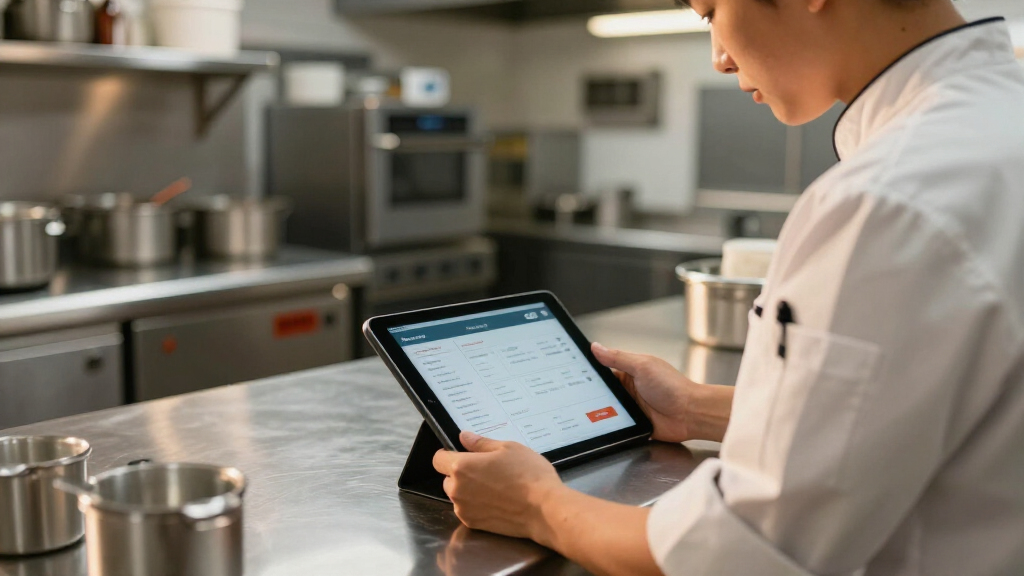
The new system employs vision models capable of analyzing photographs taken during routine morning walk-throughs. Managers photograph key areas such as prep stations, walk-in coolers, handwash sinks, and storage areas. The AI then flags violations, assigns severity ratings, and generates timestamped reports for each location. This data can be aggregated to identify trends across multiple sites.
According to an anonymous researcher involved in the pilot, the technology aims to turn the habitual process of kitchen checks into a verifiable, data-driven activity. The initial testing involves five restaurant locations over a two-week period, during which flagged violations are compared against findings from a hired health-inspection consultant to validate accuracy.
The system is offered as a per-location monthly subscription, with additional features like a group dashboard to monitor compliance across multiple units. The goal is to provide restaurant operators with a reliable, scalable solution for ongoing food safety management without requiring new hardware or extensive staff training.
Potential Impact on Food Safety Compliance Monitoring
This AI-driven approach could revolutionize food safety inspections by providing objective, verifiable data that reduces human error and oversight. It offers restaurant groups a scalable way to maintain consistent standards and proactively address violations before health inspections occur. If validated, this technology could lower compliance costs and improve overall food safety standards across the industry.
Products Worth Considering

Samsung 32-Inch Odyssey OLED G8 (G80SH) 4K Gaming Monitor

Bose QuietComfort True Wireless Earbuds with Active Noise Cancellation, Black

Amazon Kindle Scribe Colorsoft 64GB (1st Generation)
As an affiliate, we earn on qualifying purchases.
Background on Food Safety Inspection Challenges
Traditional food safety inspections rely heavily on manual checklists completed by staff and periodic visits by health officials. These inspections can be subjective, inconsistent, and sometimes fail to catch violations until after they have occurred. Many restaurant groups have expressed interest in digital solutions that can provide ongoing, verifiable monitoring. Recent advances in computer vision and mobile technology make it feasible to automate parts of this process, but practical validation remains limited.
The pilot program described here is among the first efforts to test AI models specifically designed for kitchen walk-through analysis, aiming to improve the accuracy and accountability of daily safety checks.
“The goal is to turn routine kitchen walk-throughs into verifiable, data-driven inspections that can be reviewed and tracked over time.”
— an anonymous researcher
Uncertainties About AI Accuracy and Implementation
While initial testing shows promise, it is not yet clear how well the vision model will perform across diverse kitchen environments or with different staff practices. The validation results from the two-week pilot are still being analyzed, and it remains uncertain whether the system can reliably replace or supplement traditional inspections at scale.
Additionally, questions about data privacy, integration with existing management systems, and long-term cost-effectiveness are still under discussion.
Next Steps for Validation and Industry Adoption
The pilot program will conclude with a comprehensive analysis comparing AI-flagged violations against expert inspections. If results are favorable, the developers plan to expand testing to more locations and refine the model’s accuracy. Industry stakeholders will watch closely to see if this approach can become a standard tool for food safety compliance, potentially leading to broader adoption across restaurant chains and regulatory bodies.
Key Questions
How does the AI system identify food safety violations?
The system analyzes photographs taken during kitchen walk-throughs, flagging issues such as uncovered containers, propped cooler doors, and missing date labels based on trained vision models.
Will this replace human inspectors entirely?
It is unlikely to replace human inspectors entirely in the near term, but it can serve as a reliable tool to supplement daily checks and provide verifiable records that support compliance efforts.
What are the benefits for restaurant groups?
Benefits include more consistent monitoring, reduced human error, real-time violation detection, and the ability to analyze trends across multiple locations for proactive management.
What challenges remain before widespread adoption?
Key challenges include validating the system’s accuracy across diverse environments, addressing data privacy concerns, and integrating with existing operational workflows.
When will this technology be available for broader use?
Following successful validation, the developers plan to expand testing and refine the system, with potential commercial availability within the next year or two, depending on industry feedback and regulatory considerations.
Source: IdeaNavigator AI