
AV1 greatly improves your streaming quality by delivering sharper videos with richer colors at lower bitrates. It guarantees smooth playback even on limited bandwidth, reducing buffering and long load times. This codec makes videos look clearer and more detailed, even on devices with slower internet speeds. As hardware support grows, you’ll experience more stable, high-quality streams across your favorite platforms. Keep exploring to discover how AV1 can make your streaming experience even better.

Get the latest gadgets delivered free with Prime
- Fast, free delivery on millions of items
- Prime Video, Amazon Music and more included
- Member-only deals all year
Key Takeaways
- AV1 provides higher compression efficiency, delivering better video quality at lower bitrates.
- It enables smoother, crisper streams even in low-bandwidth conditions.
- Hardware support enhances decoding speed, reducing lag and buffering.
- Widespread adoption ensures future-proof, compatible high-quality streaming.
- Overall, AV1 improves visual clarity and streaming stability across diverse networks.
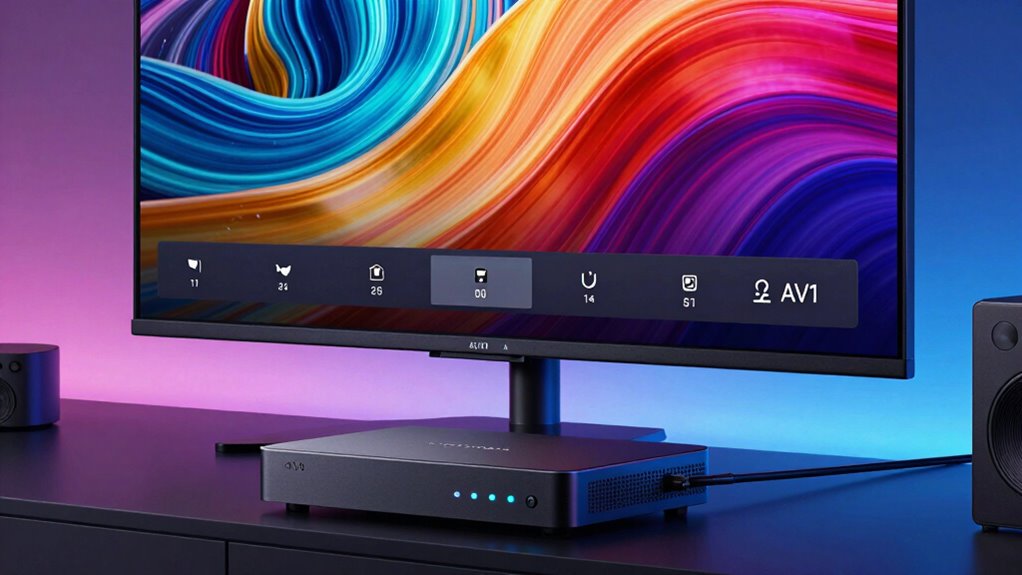
As streaming services seek to deliver higher quality content efficiently, AV1 has emerged as a game-changing video codec. This new standard significantly improves compression efficiency, meaning you get higher-quality videos at lower bitrates, which is crucial for streaming smooth, crisp content over various network conditions. This improved efficiency is especially beneficial in areas with limited bandwidth, helping to ensure a consistent viewing experience. When a codec offers better compression, it reduces the amount of data needed to transmit videos without sacrificing visual clarity. That translates into fewer buffering issues, faster load times, and a more seamless viewing experience, especially on devices with limited bandwidth. With AV1, you can enjoy sharper images, richer colors, and more detailed visuals, even when your internet connection isn’t the fastest. The adoption of AV1 also promotes industry-standardization, which supports wider compatibility across devices and platforms. Additionally, the increased adoption of open-source codecs like AV1 encourages broader innovation and collaboration in the streaming industry.
However, the true potential of AV1 depends heavily on hardware support. While software decoding is possible, hardware acceleration makes a massive difference in performance and power efficiency. Many modern devices, including smartphones, smart TVs, and graphics cards, are now starting to include dedicated hardware support for AV1. This means that your device can decode AV1 videos more quickly and with less energy consumption, leading to longer battery life and less heat generation. If your device lacks hardware support, you might experience higher CPU usage or increased power drain when streaming AV1 content, which can impact overall performance. As more devices adopt AV1 hardware support, streaming efficiency will continue to improve across platforms. The integration of hardware support not only enhances performance but also helps in reducing the environmental impact by lowering energy consumption.
The widespread adoption of hardware support is a key factor in making AV1 a practical choice for streaming platforms and consumers alike. When devices are equipped to handle AV1 efficiently, streaming providers can push higher-quality streams without overloading your hardware or draining your battery. As more hardware manufacturers incorporate AV1 support, you’ll notice a smoother experience, with less lag and better stability during high-resolution playback. This hardware compatibility also helps future-proof your devices, ensuring they stay relevant as streaming standards evolve. Additionally, hardware support plays a crucial role in the broader adoption of AV1, as it enables devices to handle the codec more effectively and sustainably, aligning with the goal of delivering high-quality streaming content.
As an affiliate, we earn on qualifying purchases.
Frequently Asked Questions
How Does AV1 Compare to Older Codecs in Terms of Licensing Costs?
AV1 substantially reduces licensing costs compared to older codecs like HEVC or VP9. You benefit from a more open codec with royalty-free codec licensing, meaning you’re less likely to face costly licensing fees. This makes AV1 more attractive for streaming services, device manufacturers, and content creators, allowing you to focus on delivering high-quality video without the financial burden of expensive codec licensing.
Will AV1 Be Supported on All Streaming Devices Automatically?
Think of AV1 support as a new, keenly anticipated guest arriving at a grand party. Not all devices will invite it automatically; compatibility depends on their hardware requirements and updates. Older streaming devices might need software upgrades or new hardware to support AV1. To enjoy seamless streaming, check your device’s specifications and guarantee it’s compatible, or consider upgrading to newer devices that natively support AV1 for the best experience.
What Is the Expected Timeline for Widespread AV1 Adoption?
You can expect widespread AV1 adoption within the next few years, as hardware compatibility improves and more devices support it. Streaming platforms are increasingly prioritizing bandwidth efficiency, which AV1 offers by reducing data usage without sacrificing quality. As major tech companies upgrade their hardware and software, you’ll experience better streaming quality and lower buffering times. Keep an eye on updates, as AV1’s integration into devices will accelerate, making it a standard feature soon.
Does AV1 Impact Streaming Latency or Buffering Times?
Think of AV1 as a quiet conductor, orchestrating your streaming experience with precision. It reduces streaming latency and buffering times by improving compression efficiency, which means smoother playback. With bandwidth savings, you get faster load times and less interruption, even on slower connections. As a result, your streaming becomes more seamless and responsive, making buffering a thing of the past, all thanks to AV1’s intelligent optimization.
Are There Any Compatibility Issues With Existing Streaming Infrastructure?
You might face compatibility challenges with existing streaming infrastructure when adopting AV1. Older hardware or software may not support this new codec, requiring infrastructure upgrades to fully utilize AV1’s benefits. Streaming platforms need to update players, servers, and devices to guarantee smooth playback. While these upgrades can be an investment, they’re essential for delivering higher quality streams efficiently and future-proofing your infrastructure against evolving video standards.
Conclusion
As AV1 takes center stage, it’s like opening a window to a clearer, crisper world of streaming. With sharper images and smoother flows, your viewing experience becomes a dance of pixels and perfection. The future’s bright, shimmering with promise, as AV1 paints a new horizon of quality that invites you to dive deeper into every frame. Embrace this evolution, and let your screens sing with the vibrant symphony of tomorrow’s streaming.
Columbus Day / Indigenous Peoples' Day Picks
long weekend sales
As an affiliate, we earn on qualifying purchases.