
Wi-Fi 7 routers cost more than expected because of the advanced technology they incorporate, such as wider channels and higher modulation schemes. These features require specialized, more complex hardware components, which raise manufacturing costs. Additionally, developing and ensuring compatibility with existing devices adds extra expenses. Market demand for faster, reliable internet also pushes prices higher. If you’re curious about what drives these costs even further, you’ll find more details below.

Get the latest gadgets delivered free with Prime
- Fast, free delivery on millions of items
- Prime Video, Amazon Music and more included
- Member-only deals all year
Key Takeaways
- Advanced hardware components for Wi-Fi 7 are more complex and expensive to produce.
- R&D investments and ensuring backward compatibility increase overall development costs.
- Supply chain limitations for specialized parts raise manufacturing expenses.
- Consumer demand for high-performance routers drives premium pricing.
- Continuous innovation and market dynamics sustain higher retail prices.
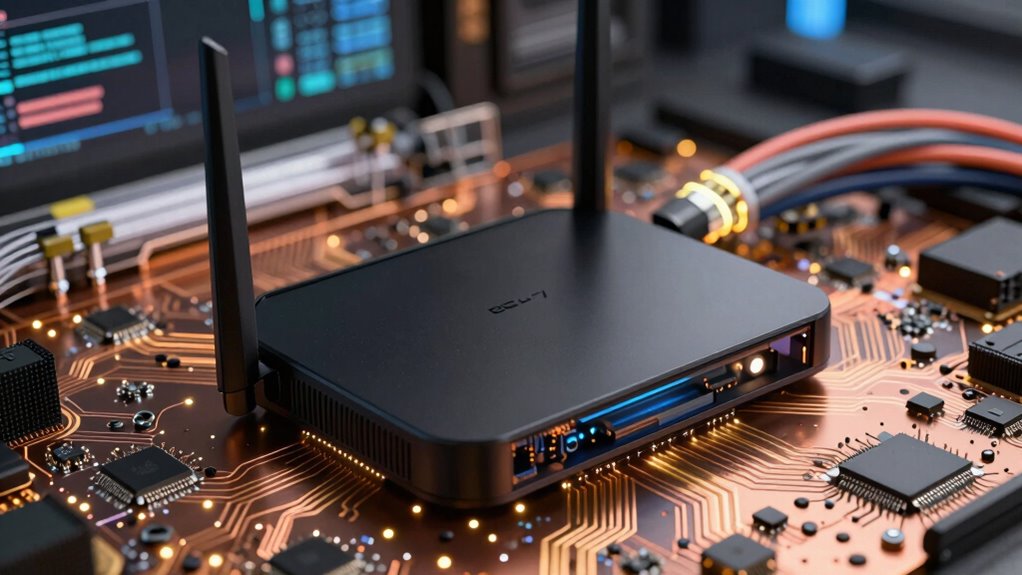
As newer Wi-Fi 7 routers hit the market, their prices are noticeably higher than previous generations. This jump in cost can seem surprising, especially since technology tends to become more affordable over time. The main reason behind this is the significant advancements in wireless standards that Wi-Fi 7 introduces. Unlike earlier versions, Wi-Fi 7 offers faster speeds, lower latency, and enhanced reliability, all thanks to new features like wider channels, higher modulation schemes, and improved multi-user capabilities. These improvements require cutting-edge hardware components, which naturally drive up manufacturing costs.
When you consider hardware compatibility, it becomes clear why prices are higher. Manufacturers are developing routers equipped with advanced chipsets and antennas that support these new wireless standards. These components are more complex and expensive than those used in previous routers. To ensure seamless performance, it needs to meet stricter specifications, which adds to the overall cost. Moreover, as Wi-Fi 7 is still relatively new, the supply chain for these specialized parts isn’t as mature, leading to limited availability and higher prices. You’re effectively paying for the latest technology, but also for the specialized hardware that makes it work efficiently. Additionally, the ongoing development of new standards and features increases the need for highly specialized hardware components, further elevating costs. The rapid evolution of wireless standards also means manufacturers must continually innovate, which adds to the overall expense.
Another factor is the research and development investment that companies make to bring Wi-Fi 7 to market. Developing new standards and ensuring backward compatibility with older devices involves extensive testing and innovation. This R&D process adds to the cost of the final product. Manufacturers are not only aiming to deliver top-tier performance but also to future-proof their routers, making them compatible with upcoming devices and standards. This forward-looking approach results in more sophisticated hardware, which inevitably comes at a premium. As the advancements in wireless technology continue to evolve rapidly, manufacturers must allocate significant resources to stay ahead of competitors. Furthermore, the cost of innovation in technology development is reflected in the higher retail prices, as companies seek to recover their investments while offering state-of-the-art features. You’ll also notice that the pricing reflects the market demand for top-tier networking equipment. As more people rely on high-speed internet for work, gaming, and streaming, there’s a willingness to spend more on routers that can handle these demands efficiently. This increased demand, combined with the higher costs of the hardware involved, pushes prices above what consumers might have expected for a new generation of routers. While the initial investment is higher, the value comes from the enhanced performance and longevity of these devices, especially as more devices and applications leverage the capabilities of Wi-Fi 7.
Wi-Fi 7 router with advanced chipsets
As an affiliate, we earn on qualifying purchases.
As an affiliate, we earn on qualifying purchases.
Frequently Asked Questions
When Will Wi-Fi 7 Routers Become More Affordable?
Wi-Fi 7 routers should become more affordable within the next 1-2 years as market adoption increases and price fluctuations stabilize. Once more manufacturers enter the space, competition will drive prices down. Keep an eye on tech releases and sales events, as early adopters tend to pay a premium. Over time, improvements in production and greater availability will make Wi-Fi 7 routers accessible to a broader audience at lower costs.
Are There Any Budget-Friendly Wi-Fi 7 Options Available?
Sure, you can find budget-friendly Wi-Fi 7 options, but don’t be fooled—these are the unicorns of the networking world. When you do a price comparison, you’ll notice most affordable models come from lesser-known brands with limited availability and fewer features. If you’re after reliability, be prepared to pay a premium. For now, the best approach is to weigh your needs against the inevitable sticker shock of brand reputation and features.
How Long Will Wi-Fi 7 Technology Take to Fully Replace Wi-Fi 6?
Wi-Fi 7 will likely take several years to fully replace Wi-Fi 6. You’ll see gradual adoption as new devices incorporate interference mitigation and spectrum allocation improvements. During this shift, older Wi-Fi 6 routers will still work, but newer devices will benefit from enhanced performance and reliability. Expect widespread adoption to happen over the next 3-5 years, depending on device upgrades and industry support for the latest standards.
What Are the Main Technical Challenges in Manufacturing Wi-Fi 7 Routers?
You might wonder about the main technical challenges in manufacturing Wi-Fi 7 routers. The answer lies in interference management and antenna design—two complex hurdles. As engineers aim to minimize signal disruptions, they push the limits of current technology, making the process more intricate and costly. This suspenseful quest for superior performance causes delays and expense, ultimately driving up the price of Wi-Fi 7 routers beyond initial expectations.
Will Existing Devices Support Wi-Fi 7 in the Future?
Existing devices won’t support Wi-Fi 7 directly without a device upgrade, due to compatibility concerns. You’ll need new hardware to take full advantage of Wi-Fi 7’s features, as older devices aren’t designed for its advanced technology. This means you might face some limitations with your current devices, and upgrading is necessary to guarantee compatibility and peak performance with the latest Wi-Fi 7 routers.
Conclusion
So, next time you see a Wi-Fi 7 router, just remember—you’re not just buying a gadget, you’re investing in a tiny spaceship capable of launching your internet speeds to the moon. The sky-high prices are no joke; they’re a small price to pay for the future of lightning-fast, seamless connectivity. Just think: for what you’re paying, you could probably buy a rocket and still have change left for a lifetime supply of Wi-Fi snacks!
Halloween Picks
halloween
As an affiliate, we earn on qualifying purchases.