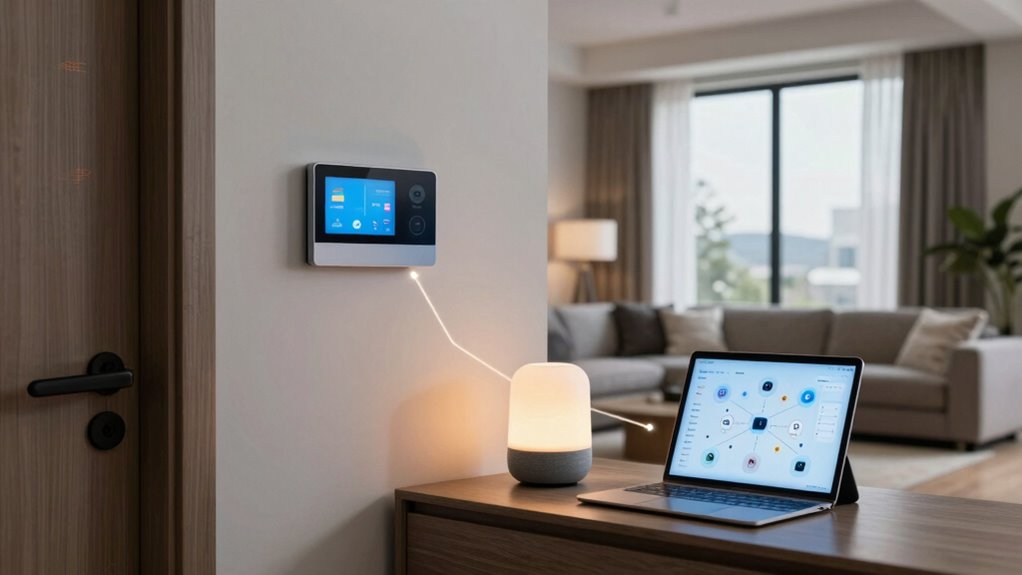

Smart home protocols work together by using standards and hubs that translate different device languages into a common format. This allows your smart devices—like lights, thermostats, and cameras—to communicate smoothly, even if they use different protocols like Zigbee or Z-Wave. Securing these connections with encryption and strong passwords is critical for safety. Understanding how protocols coordinate and support each other will help you create a more reliable and secure smart home setup. Keep exploring to learn more about making it all work seamlessly.

Get the latest gadgets delivered free with Prime
- Fast, free delivery on millions of items
- Prime Video, Amazon Music and more included
- Member-only deals all year
Key Takeaways
- Protocols enable different smart devices to communicate through compatible standards or translation via smart hubs.
- Multi-protocol hubs facilitate interoperability by translating signals between Zigbee, Z-Wave, Thread, and Wi-Fi devices.
- Standardized protocols like Zigbee 3.0 and Thread aim to unify device communication across brands.
- Smart home platforms (Apple HomeKit, Google Home, Alexa) integrate various protocols for seamless control.
- Security features and firmware updates across protocols ensure safe, reliable device interactions.
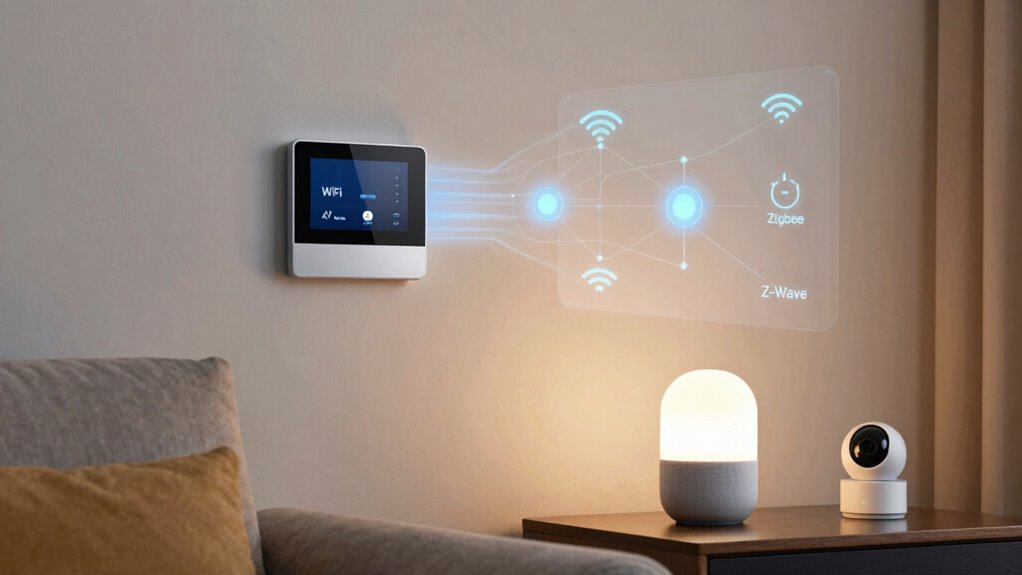
Have you ever wondered how your smart home devices communicate seamlessly with each other? It’s fascinating how your lights, thermostat, security cameras, and voice assistants work together to create a smooth, integrated experience. At the core of this harmony are smart home protocols—sets of rules that enable different devices to understand and interact with one another. But achieving this seamless integration isn’t always straightforward. You face interoperability challenges, where incompatible devices or protocols can hinder communication. For example, a Zigbee-enabled light bulb might not easily connect with a Z-Wave-based security system, forcing you to juggle multiple hubs or apps. Overcoming these hurdles requires careful planning and choosing compatible devices or smart hubs that support multiple protocols. Without proper interoperability, your smart home can become fragmented, reducing the convenience you seek. Understanding the practical limitations of protocols can help you make informed choices about device compatibility and setup. Additionally, being aware of the interoperability standards** can guide you in selecting devices that are more likely to work well together out of the box. Recognizing the compatibility issues early can save you time and frustration during setup and expansion. Furthermore, understanding the protocol capabilities** can help you optimize your smart home system for better performance and reliability. It’s also beneficial to consider how these protocols are evolving to address interoperability challenges and improve device communication in the future.
Security considerations are equally essential when multiple devices communicate across various protocols. Each protocol introduces potential vulnerabilities, especially if not properly secured. When devices transmit sensitive data—like camera feeds or personal schedules—it’s imperative that the communication remains encrypted and protected from hacking. Some protocols have advanced security features built in, while others may pose risks if left unsecured. As you expand your smart home, you need to be vigilant about updating firmware and using strong, unique passwords for each device. Additionally, employing secure Wi-Fi networks and isolating your smart devices on separate networks can prevent unauthorized access. Neglecting security considerations can lead to breaches that compromise your privacy and safety.
Despite these challenges, the good news is that many protocols are designed with interoperability and security in mind. Standards like Thread and Zigbee 3.0 aim to unify device communication, making it easier for various brands to work together efficiently. Smart hubs and platforms like Apple HomeKit, Google Home, and Amazon Alexa act as central points that translate and coordinate between different protocols, easing compatibility issues. They also often come with security features that help safeguard your data. Still, it’s essential to stay informed about the capabilities and limitations of each protocol and to choose devices that prioritize security. By understanding how these protocols work together and addressing interoperability challenges and security considerations, you can create a smarter, safer, and more integrated home environment that truly responds to your needs.
As an affiliate, we earn on qualifying purchases.
Frequently Asked Questions
How Do Protocols Ensure Device Security and Privacy?
Protocols guarantee your device security and privacy through device authentication, verifying each device’s identity before communication. They also use data encryption to protect your data from eavesdropping or tampering. When these measures are in place, it becomes harder for hackers to access your smart home system. By combining device authentication and encryption, protocols create a secure environment, keeping your personal information safe and your devices protected from unauthorized access.
Can Different Brands’ Devices Communicate Seamlessly?
Imagine you’re in a sci-fi movie, where gadgets from different brands seamlessly communicate. In reality, brand compatibility and cross-platform integration make this possible. Many protocols, like Zigbee and Z-Wave, enable devices from various brands to work together, but their success depends on compatible standards. While some integrations are smooth, others may need a hub or bridge, so check device compatibility to guarantee your smart home functions flawlessly across brands.
What Are the Common Challenges in Integrating Multiple Protocols?
Integrating multiple protocols often faces challenges with protocol compatibility and device interoperability. You might find that some devices don’t communicate smoothly because they use different standards or lack universal compatibility. To overcome this, you need hubs or bridges that translate signals between protocols. Ensuring that your devices support common standards and investing in compatible hubs can help you create a cohesive smart home system, minimizing connectivity issues.
How Do Protocols Handle Network Congestion or Interference?
Protocols handle network congestion and interference through frequency management and interference mitigation. They actively monitor channel usage, switching frequencies when interference spikes, and prioritize critical data to reduce delays. By coordinating devices to avoid crowded channels and employing error correction techniques, protocols create a smoother, more reliable network. This ongoing dance of adjusting frequencies and alleviating interference ensures your smart home stays responsive, even amid crowded wireless environments.
Are There Future Protocols Expected to Unify Smart Home Communication?
Future protocols are likely to focus on interoperability standards, making devices seamlessly communicate regardless of their original protocol. You can expect advancements that improve protocol compatibility, reducing the need for multiple hubs or bridges. These unified protocols will simplify your smart home setup, enabling more reliable, efficient integration of devices. As industry players collaborate, interoperability standards will evolve, ensuring your smart home ecosystem becomes more cohesive and user-friendly over time.
Conclusion
In embracing smart home protocols, you create a seamless, interconnected environment. You enable devices to communicate effortlessly, to share data smoothly, and to operate harmoniously. You simplify control, enhance security, and increase efficiency—all by understanding how protocols work together. You transform your space into a smart, responsive, and intuitive home. Ultimately, you harness the power of protocols to make everyday living easier, safer, and more connected—one protocol at a time.
Halloween Picks
halloween
As an affiliate, we earn on qualifying purchases.