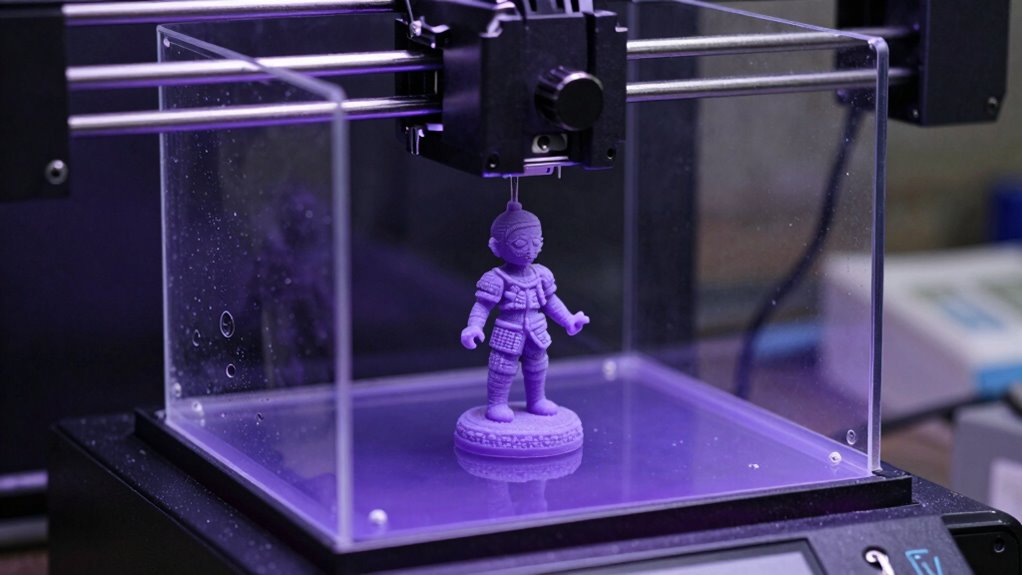

Resin printing can give you incredibly detailed and smooth models, perfect for intricate designs and high-quality crafts. However, it’s not ideal for everyone because of the high costs involved in equipment, resin, and safety gear. Plus, you need to work in well-ventilated areas and handle chemicals carefully. If you’re willing to manage these challenges, resin printing offers impressive results—more than you might think at first glance. Keep exploring to understand if it’s the right fit for you.

Get the latest gadgets delivered free with Prime
- Fast, free delivery on millions of items
- Prime Video, Amazon Music and more included
- Member-only deals all year
Key Takeaways
- Resin printing offers exceptional detail and surface quality, ideal for intricate designs and high-resolution models.
- The high costs of equipment, resins, and post-processing tools can be prohibitive for hobbyists.
- Safety risks from fumes, skin contact, and UV exposure require proper precautions and ventilation.
- Not suitable for large or simple projects due to limited build volume and higher expenses.
- Alternative methods like FDM may be more practical for beginners or budget-conscious users.
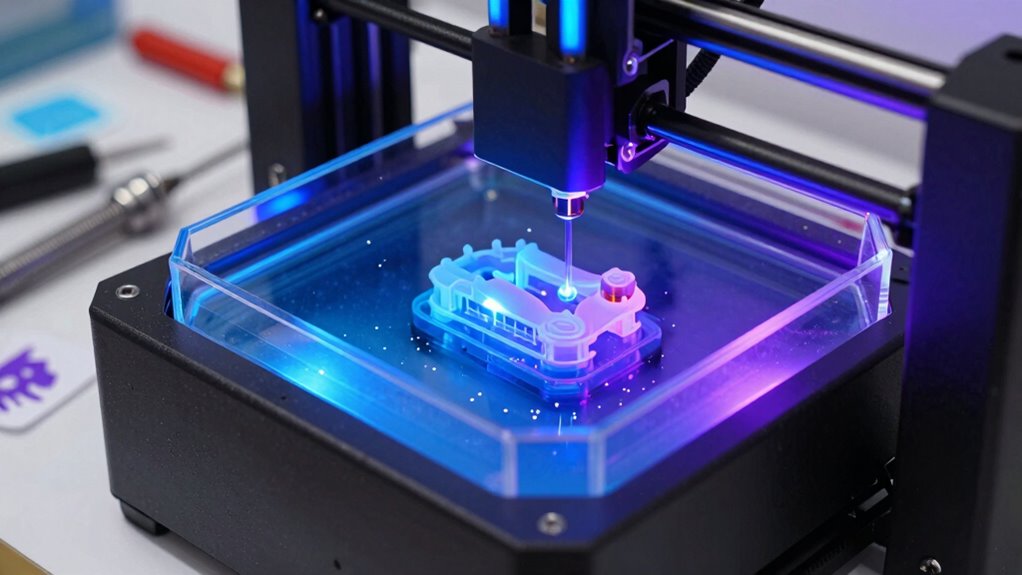
Resin printing has revolutionized the world of 3D modeling with its ability to produce highly detailed and smooth finished products. If you’re contemplating diving into resin printing, you’ll quickly notice how it outperforms other methods in precision and surface quality. However, it’s essential to weigh the cost considerations carefully. Resin printers and their supplies can be expensive upfront, with high-quality units costing hundreds or even thousands of dollars. Additionally, the resins themselves are often costly, especially if you’re aiming for specific properties like flexibility or transparency. You’ll also need to consider the ongoing expenses of replacement resin, cleaning supplies, and post-processing tools. These costs can add up quickly, making resin printing a significant investment, particularly for hobbyists or small-scale creators. Understanding the emerging trends in digital publishing can help you stay informed about innovations that might influence your approach to 3D printing and content creation.
Beyond the financial aspect, safety precautions should be your top priority. Resin materials contain chemicals that can be hazardous if mishandled. You need to work in a well-ventilated area or wear a respirator to avoid inhaling fumes that can cause respiratory irritation. Gloves are also a must, as uncured resin can cause skin irritation or allergic reactions. When handling the resin or cleaning your prints, avoid direct contact with your skin, and always wash your hands thoroughly afterward. Proper disposal of excess resin and used cleaning materials is equally important; never pour resin down the drain, as it can be harmful to the environment. You should also invest in a good UV curing station for post-processing, as this step involves exposure to UV light that can be harmful if not managed correctly.
While resin printing produces stunning, high-resolution models, it’s not ideal for everyone. The initial costs, combined with the need for strict safety measures, can be prohibitive for some. If you’re just starting out or working on larger, less detailed projects, other 3D printing methods like FDM might be more practical and budget-friendly. However, if you’re after intricate detail and smooth finishes and are willing to invest in safety and supplies, resin printing can be incredibly rewarding. Just remember, your safety and financial considerations should guide your decision. With the right precautions and a clear understanding of costs, resin printing can be a powerful tool in your creative arsenal, but it’s not a fit for all situations or all users.
As an affiliate, we earn on qualifying purchases.
Frequently Asked Questions
How Does Resin Printing Compare to Filament Printing in Cost?
Resin printing tends to be less cost-efficient than filament printing because the resin materials are more expensive per volume, and the process often involves additional supplies like gloves and cleaning solutions. A material comparison shows filament costs are lower, making filament printers more suitable for large or ongoing projects. If you’re prioritizing cost efficiency, filament printing usually offers a more economical choice, especially for beginners or those on a budget.
What Safety Precautions Are Necessary When Handling Resin?
Did you know that resin toxicity can cause skin and eye irritation? When handling resin, always wear gloves, goggles, and a mask to prevent exposure during UV curing. Work in a well-ventilated area, and avoid direct skin contact. Proper disposal of leftover resin is essential. Following these safety precautions helps protect you from harmful chemicals and guarantees a safe, enjoyable resin printing experience.
Can Resin Printers Print in Multiple Colors Simultaneously?
Resin printers typically can’t print in multiple colors simultaneously, but some advanced models support color blending and multi-material modeling. These features allow you to create multi-colored or multi-material objects by layering different resins or blending colors during a print. However, not all resin printers have this capability, so if you want multi-color results, look for printers specifically designed with multi-material or color blending functions.
What Maintenance Is Required for Resin Printers?
Think of your resin printer as a delicate garden; it needs regular tending. You’ll need to perform resin curing to guarantee your prints stay strong and vibrant. Vat cleaning is essential—remove leftover resin after each use to prevent clogs and uneven prints. Regularly inspect and clean the resin vat, check for cured resin buildup, and replace the FEP film if it gets scratched. Proper maintenance keeps your printer humming like a well-tended garden.
How Long Does It Take to Print a Typical Resin Model?
A typical resin model takes about 1 to 4 hours to print, depending on its size and complexity. During the process, you’ll need to regularly resin cure the model to guarantee proper hardening. Once finished, you should carefully handle resin disposal, as leftover resin can be hazardous. Proper curing and disposal are essential for safe, efficient printing and maintaining your resin printer’s performance.
Conclusion
While resin printing offers incredible detail and precision, it’s not suited for everyone. The process demands patience, careful handling, and a willingness to navigate the mess and potential hazards. For some, it’s a passion that fuels creativity; for others, a frustrating hurdle. Remember, the power of resin printing is undeniable, but only if you’re prepared to embrace its challenges. If you’re ready, it can transform your ideas into stunning reality—if not, simpler methods might suit you better.
Halloween Picks
halloween
As an affiliate, we earn on qualifying purchases.