
The best wireless mechanical keyboard overall is the ASUS ROG Strix Scope II 96, which combines a compact layout with gaming-focused features. For a more office-oriented setup, the Logitech MX Mechanical prioritizes quiet, tactile typing, while the AULA F75 Pro offers a smaller 75% layout with a useful knob. Choosing among wireless mechanical keyboards means weighing connection options, keyboard size, switch feel, and battery or lighting needs. Some models suit gaming and customization; others leave more room on the desk or favor straightforward everyday typing. Read on for the full comparison, including which options fit different budgets, layouts, and work styles.

Get the latest gadgets delivered free with Prime
- Fast, free delivery on millions of items
- Prime Video, Amazon Music and more included
- Member-only deals all year
Complete the kit



Key Takeaways
- The lineup spans very different keyboard types: the AULA S99 is described as a membrane gaming keyboard, so buyers seeking a mechanical board should verify its product details rather than assume every pick matches the category.
- The ASUS ROG Strix Scope II 96 is the gaming-focused standout, while the Logitech MX Mechanical is a better match for quiet, tactile office typing.
- 75% layouts trade dedicated keys for desk space: the AULA F75 Pro and Kisnt KN85 suit compact setups, while full-size and 99-key boards retain more direct access to navigation and number keys.
- Tri-mode and multi-connection support can matter more than lighting for people switching among a computer, tablet, and other devices; check each model’s connection details before buying.
- Gasket construction, hot-swappable switches, and knobs are niche benefits rather than automatic upgrades: they matter most when you want a particular feel, plan to change switches, or use the knob regularly.
| AULA S99 Wireless 99-Key Membrane Gaming Keyboard |  | Best for a Compact Number Pad | Keyboard type: Membrane | Layout and keys: 96% QWERTY, 99 keys | Connectivity: Bluetooth 5.0, 2.4 GHz wireless, USB-C wired | VIEW LATEST PRICE | See Our Full Breakdown |
| Redragon K556 PRO 104-Key Wireless RGB Mechanical Gaming Keyboard |  | Best Full-Size Value for Switch Tinkerers | Layout: 104-key QWERTY | Switches: Linear Redragon red | Hot-swap compatibility: Most 3-pin and 5-pin switches | VIEW LATEST PRICE | See Our Full Breakdown |
| Redragon K673 PRO 81-Key Wireless RGB Gasket Gaming Keyboard |  | Best Cushioned Compact Pick | Layout and keys: Compact 80%, 81 keys | Switches: Linear Redragon Red | Mounting: Gasket-mounted | VIEW LATEST PRICE | See Our Full Breakdown |
| Redragon K710 Wireless Typewriter-Style Mechanical Keyboard, Black | 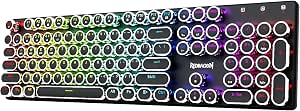 | Best for Clicky Retro Style | Layout and keys: QWERTY, 104 keys | Switches: Clicky blue mechanical | Connectivity: USB-C wired, Bluetooth 3.0/5.0, 2.4 GHz wireless | VIEW LATEST PRICE | See Our Full Breakdown |
| ASUS ROG Strix Scope II 96 Wireless Mechanical Gaming Keyboard |  | Best Premium Compact Numpad Pick | Layout and keys: 96%, 96 keys | Keyboard layout: QWERTZ | Switches: Pre-lubed ROG NX Snow linear | VIEW LATEST PRICE | See Our Full Breakdown |
| Redragon K671KS Wireless Mechanical Gaming Keyboard |  | Best for Multi-Device Switch Customization | Layout: 81-key QWERTY | Connectivity: USB-C, Bluetooth 3.0/5.0, 2.4 GHz wireless | Device capacity: Up to 5 devices | VIEW LATEST PRICE | See Our Full Breakdown |
| Logitech MX Mechanical Wireless Illuminated Keyboard, Tactile Quiet, Graphite |  | Best for Quiet Cross-Platform Productivity | Layout: 104-key QWERTY | Switches: Low-profile Tactile Quiet | Connectivity: Bluetooth Low Energy or Logi Bolt USB receiver | VIEW LATEST PRICE | See Our Full Breakdown |
| AULA F75 Pro 75% Wireless Mechanical Keyboard with Knob |  | Best Compact Wireless Keyboard with a Control Knob | Layout: 75%, 81 keys, QWERTZ | Connectivity: Bluetooth 5.0, 2.4 GHz wireless, USB-C | Device support: Up to 5 devices | VIEW LATEST PRICE | See Our Full Breakdown |
| Redragon K768 PRO Wireless 100-Key Gasket Gaming Keyboard |  | Best for Longer-Capacity Wireless Gaming | Layout: 100-key QWERTY | Connectivity: USB-C, Bluetooth, 2.4 GHz wireless | Battery capacity: 8000 mAh | VIEW LATEST PRICE | See Our Full Breakdown |
| Kisnt KN85 Wireless Mechanical Keyboard – 75% Layout, Bluetooth/2.4GHz/USB-C, Custom RGB Backlit, Hot-Swappable Linear Switch, Creamy Sound (Retro Beige) |  | Best for a Compact Gasket-Mounted Typing Feel | Layout: 75%, 85 keys | Dimensions: 13.68 × 5.51 × 1.77 in | Connectivity: USB-C, 2.4 GHz wireless, Bluetooth 5.0 | VIEW LATEST PRICE | See Our Full Breakdown |
| AULA F99 Tri-Mode Wireless Mechanical Keyboard | 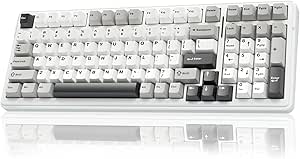 | Best for Multi-Device Customization | Layout: 96%, 99 keys | Connectivity: Bluetooth 5.0, 2.4 GHz wireless, USB-C wired | Device support: Up to 5 devices | VIEW LATEST PRICE | See Our Full Breakdown |
| ProtoArc K310 Pro Wireless Backlit Mechanical Keyboard |  | Best for Quiet Full-Size Typing | Layout: Full-size, 108 keys | Switches: Low-profile linear red | Connectivity: Bluetooth and 2.4 GHz USB receiver | VIEW LATEST PRICE | See Our Full Breakdown |
| wireless mechanical keyboard | Connectivity | Switches | Backlighting | Compatibility |
|---|---|---|---|---|
| AULA S99 Wireless 99-Key Membr | Bluetooth 5.0, 2.4 GHz wireless, USB-C wired | — | RGB | Windows, Mac, Android, iOS |
| Redragon K556 PRO 104-Key Wire | USB-C, Bluetooth, 2.4 GHz wireless | Linear Redragon red | RGB, 20 preset modes | — |
| Redragon K673 PRO 81-Key Wirel | USB-C, Bluetooth, 2.4 GHz wireless | Linear Redragon Red | — | PC, laptop, and tablet; Windows listed |
| Redragon K710 Wireless Typewri | USB-C wired, Bluetooth 3.0/5.0, 2.4 GHz wireless | Clicky blue mechanical | Customizable RGB | Gaming console, laptop, PC, smartphone, tablet; Windows listed |
| ASUS ROG Strix Scope II 96 Wir | Bluetooth, 2.4 GHz wireless, USB wired | Pre-lubed ROG NX Snow linear | Per-key RGB | PC and Mac |
| Redragon K671KS Wireless Mecha | USB-C, Bluetooth 3.0/5.0, 2.4 GHz wireless | Linear Cherry MX Red; hot-swappable | RGB with 16 preset effects and per-key adjustment | — |
| Logitech MX Mechanical Wireles | Bluetooth Low Energy or Logi Bolt USB receiver | Low-profile Tactile Quiet | — | Windows, macOS, Linux, Chrome OS, iOS, iPadOS, Android |
| AULA F75 Pro 75% Wireless Mech | Bluetooth 5.0, 2.4 GHz wireless, USB-C | Pre-lubricated linear LEOBOG Reaper | — | — |
| Redragon K768 PRO Wireless 100 | USB-C, Bluetooth, 2.4 GHz wireless | Custom linear | Adjustable RGB | — |
| Kisnt KN85 Wireless Mechanical | USB-C, 2.4 GHz wireless, Bluetooth 5.0 | Pre-lubed Bsun linear, 45–50 gf; hot-swappable, 3-pin and 5-pin compatible | Programmable RGB; shortcuts/software, with software for Windows | Windows 8+, macOS, Linux, Android, iOS |
| AULA F99 Tri-Mode Wireless Mec | Bluetooth 5.0, 2.4 GHz wireless, USB-C wired | Pre-lubed linear; hot-swappable 3-pin and 5-pin | RGB, 16 lighting effects | Gaming console, laptop, PC, smartphone, and tablet; Windows 7 or later |
| ProtoArc K310 Pro Wireless Bac | Bluetooth and 2.4 GHz USB receiver | Low-profile linear red | 10 effects with adjustable speed and brightness | Windows, Mac, iOS, and Android |
More Details on Our Top Picks
AULA S99 Wireless 99-Key Membrane Gaming Keyboard
The AULA S99 keeps a numeric keypad in a smaller 96% footprint, which suits buyers who need number entry but want to save desk space. Its Bluetooth, 2.4 GHz, and USB-C connections give it flexibility across devices, and the RGB lighting, programmable keys, and control knob add gaming-oriented customization. But the title and specifications identify this as a membrane keyboard, not a mechanical one, so I would not choose it for a mechanical switch feel. That distinction matters beside the mechanical Redragon K556 PRO and ASUS ROG Strix Scope II 96. The S99’s multi-device support and compact numpad layout are useful, but its unclear switch descriptions make it a less suitable pick for shoppers specifically seeking mechanical switches or switch customization.
Pros:- Bluetooth, 2.4 GHz wireless, and USB-C wired connectivity
- 96% layout keeps a numeric keypad in a compact footprint
- Full-key macro programming and M1/M2/M3 shortcuts
- RGB lighting and a two-stage adjustable stand
Cons:- Membrane design does not provide a mechanical switch experience
- Product information inconsistently describes the switch type
- No hot-swapping support
Best for: Buyers who want a compact keyboard with a number pad, multiple connection options, and programmable controls, and are comfortable with membrane keys.
Not ideal for: Shoppers committed to mechanical switches, hot-swapping, or a clearly specified switch feel; this model is listed as membrane and its switch information is inconsistent.
- Keyboard type:Membrane
- Layout and keys:96% QWERTY, 99 keys
- Connectivity:Bluetooth 5.0, 2.4 GHz wireless, USB-C wired
- Backlighting:RGB
- Programming:Full-key macro programming; M1/M2/M3 shortcuts
- Compatibility:Windows, Mac, Android, iOS
- Stand:Foldable, two-stage adjustable
- Color:Green and beige
Our verdict“Choose the S99 for a compact, wireless numpad keyboard, but skip it if mechanical switches are a must.”
Redragon K556 PRO 104-Key Wireless RGB Mechanical Gaming Keyboard
The Redragon K556 PRO is the straightforward choice here for buyers who want a full-size mechanical layout and the option to change switches later. Its hot-swappable sockets accept most 3-pin and 5-pin switches, so a linear red setup need not be permanent. That flexibility separates it from the clicky, fixed-feel Redragon K710, while the K556 PRO’s 104 keys suit spreadsheet work and gaming that depend on a full number pad. Tri-mode connectivity also covers wired desks and wireless setups. The tradeoff is that its linear switches may feel too smooth for typists who want a tactile bump or click, and custom lighting or macros depend on companion software. Compared with the more compact ASUS ROG Strix Scope II 96, this model takes more desk space but offers a conventional full-size arrangement.
Pros:- Tri-mode USB-C, Bluetooth, and 2.4 GHz connectivity
- Hot-swappable sockets support most 3-pin and 5-pin switches
- Brushed aluminum plate adds a sturdy feel
- RGB lighting with 20 preset modes and software customization
Cons:- Linear switches may not satisfy users who want tactile or clicky feedback
- Custom lighting effects and macros require companion software
- Full-size layout occupies more desk space than compact options
Best for: PC users who want a full-size wireless mechanical keyboard and expect to experiment with compatible switches or customize macros and lighting.
Not ideal for: Desk-space-conscious buyers or typists who prefer tactile or clicky feedback; its 104-key footprint is larger and its included switches are linear.
- Layout:104-key QWERTY
- Switches:Linear Redragon red
- Hot-swap compatibility:Most 3-pin and 5-pin switches
- Connectivity:USB-C, Bluetooth, 2.4 GHz wireless
- Backlighting:RGB, 20 preset modes
- Plate material:Aluminum
- Dimensions:17.1 × 4.9 × 1.1 in
- Weight:1074 g
Our verdict“Pick the K556 PRO if you want a full-size wireless mechanical keyboard that leaves room to change switches later.”
Redragon K673 PRO 81-Key Wireless RGB Gasket Gaming Keyboard
The Redragon K673 PRO is for buyers who want a compact mechanical keyboard with a softer, quieter typing character, rather than a full-size layout. Its gasket mount and five layers of noise dampening are intended to cushion keystrokes, giving it a different appeal from the firmer full-size Redragon K556 PRO. The K673 PRO also offers Bluetooth, 2.4 GHz, and USB-C, plus hot-swappable sockets, RGB, macros, and a multifunction knob. That combination gives customization room without requiring a numpad-sized chassis. The cost of the compact 81-key layout is missing keys some users expect, so check whether your daily shortcuts rely on a dedicated navigation cluster or number pad. Compatibility is another limitation: the supplied information lists Windows only, unlike the PC-and-Mac support stated for the ASUS ROG Strix Scope II 96.
Pros:- Gasket-mounted construction and five dampening layers soften typing and reduce noise
- Tri-mode USB-C, Bluetooth, and 2.4 GHz connectivity
- Hot-swappable sockets support 3-pin and 5-pin switches
- RGB lighting, programmable macros, and multifunction knob
Cons:- 81-key compact layout may omit keys some users rely on
- Windows is the only listed compatible operating system
- Linear switches may not suit buyers who prefer tactile or clicky feedback
Best for: Windows users seeking a compact wireless keyboard with a cushioned typing feel, quieter construction, and room to swap compatible switches.
Not ideal for: Mac users or anyone who regularly needs a dedicated number pad and a fuller set of keys.
- Layout and keys:Compact 80%, 81 keys
- Switches:Linear Redragon Red
- Mounting:Gasket-mounted
- Noise dampening:Five layers
- Connectivity:USB-C, Bluetooth, 2.4 GHz wireless
- Switch compatibility:3-pin and 5-pin switches
- Compatibility:PC, laptop, and tablet; Windows listed
- Color:Abyssal Blue
Our verdict“Choose the K673 PRO for a cushioned, customizable compact setup on Windows, not for numpad-dependent work or listed Mac compatibility.”
Redragon K710 Wireless Typewriter-Style Mechanical Keyboard, Black
The Redragon K710 puts its emphasis on clicky blue mechanical switches and round, retro-style keycaps, making it the most distinctive-feeling option here. Its 104-key layout retains the number pad, while the metal panel gives the full-size board a sturdy foundation. For connectivity, it offers USB-C, Bluetooth, and 2.4 GHz wireless; a rechargeable 4000 mAh battery and customizable RGB round out the feature set. Compared with the linear Redragon K556 PRO, the K710 is the better fit for someone who actively wants audible, clicky feedback—not a quieter shared workspace. It also lacks the K556 PRO’s stated hot-swap support, so switch changes are not a listed selling point. Windows is the only listed operating system, which narrows its appeal for mixed-platform households.
Pros:- Clicky blue mechanical switches and distinctive round keycaps
- USB-C, Bluetooth 3.0/5.0, and 2.4 GHz wireless connections
- Full 104-key layout with anti-ghosting support
- Metal panel, customizable RGB, and programmable keys
Cons:- Clicky switches may be disruptive in shared or quiet rooms
- Windows is the only listed compatible operating system
- Hot-swappable switch support is not specified
Best for: Windows users who want a full-size wireless mechanical keyboard with loud clicky feedback and retro round keycaps.
Not ideal for: People typing in shared or quiet spaces, and buyers who need stated Mac compatibility or hot-swappable switches.
- Layout and keys:QWERTY, 104 keys
- Switches:Clicky blue mechanical
- Connectivity:USB-C wired, Bluetooth 3.0/5.0, 2.4 GHz wireless
- Backlighting:Customizable RGB
- Battery:Rechargeable, 4000 mAh
- Panel material:Metal
- Compatibility:Gaming console, laptop, PC, smartphone, tablet; Windows listed
- Anti-ghosting:Supported
Our verdict“Pick the K710 if you want an expressive, clicky full-size board and can accommodate its noise and Windows-focused compatibility.”
ASUS ROG Strix Scope II 96 Wireless Mechanical Gaming Keyboard
The ASUS ROG Strix Scope II 96 makes the strongest case for a compact layout that still keeps a number pad. Its 96 keys use less space than the full-size Redragon K556 PRO while retaining number entry, and the pre-lubed linear switches, hot-swap support, sound-dampening materials, and detachable wrist rest create a more feature-rich package than the compact Redragon K673 PRO. Tri-mode connectivity includes Bluetooth for up to three devices, while the stated battery life reaches 1,500 hours in 2.4 GHz mode. That figure is specific to that connection and should not be assumed for other modes. The listed QWERTZ layout may not match buyers expecting QWERTY, and the keyboard is not water resistant. It suits users who want a compact gaming-and-work board, but is less appealing if spill protection is a priority.
Pros:- 96% layout retains a number pad while saving space versus a full-size board
- Pre-lubed linear switches are hot-swappable
- Bluetooth, 2.4 GHz wireless, and USB connectivity
- Sound dampening, adjustable tilt, detachable wrist rest, and multifunction wheel
Cons:- Listed keyboard layout is QWERTZ, which may not suit QWERTY users
- Not water resistant
- Up to 1,500 hours of battery life applies to 2.4 GHz mode
Best for: PC and Mac users who want a compact wireless mechanical keyboard with a number pad, hot-swappable linear switches, and included wrist support.
Not ideal for: Buyers who need a QWERTY layout, water resistance, or a battery-life figure that applies across every wireless mode.
- Layout and keys:96%, 96 keys
- Keyboard layout:QWERTZ
- Switches:Pre-lubed ROG NX Snow linear
- Connectivity:Bluetooth, 2.4 GHz wireless, USB wired
- Battery life:Up to 1,500 hours in 2.4 GHz mode
- Backlighting:Per-key RGB
- Compatibility:PC and Mac
- Dimensions:14.84 × 5.16 × 1.57 in
- Water resistance:Not water resistant
Our verdict“Choose the Scope II 96 for a premium compact numpad layout with extensive accessories, provided QWERTZ and the lack of water resistance fit your needs.”
Redragon K671KS Wireless Mechanical Gaming Keyboard
The K671KS suits buyers who want to move among several wireless sources and keep room to tailor the typing feel. It supports Bluetooth, 2.4 GHz, and USB-C, with switching for up to five devices, while its hot-swap sockets let owners replace the included linear red switches without soldering. Compared with the AULA F75 Pro, it offers the same broad connection flexibility and a similar compact footprint, but this Redragon’s listed layout is 81 keys and it includes spare switches and keycaps. RGB per-key adjustment and programmable macros add gaming control, though the product data gives no battery capacity or runtime, making cordless planning less predictable. The listed operating-system compatibility is Windows 11, a narrower fit than the Logitech MX Mechanical’s broad OS support.
Pros:- USB-C, Bluetooth, and 2.4 GHz connections support wired and wireless use.
- Device switching supports up to five devices.
- Hot-swappable linear switches and included spares make switch changes more accessible.
- Per-key RGB adjustment and programmable macros allow control customization.
Cons:- Battery capacity and battery life are not specified.
- Listed operating-system compatibility is limited to Windows 11.
- Its 81-key layout omits some keys found on full-size boards.
Best for: PC gamers and multi-device users who want hot-swappable linear switches, configurable lighting, and several connection modes.
Not ideal for: Buyers who need confirmed battery runtime or broad, clearly stated operating-system support beyond Windows 11.
- Layout:81-key QWERTY
- Connectivity:USB-C, Bluetooth 3.0/5.0, 2.4 GHz wireless
- Device capacity:Up to 5 devices
- Switches:Linear Cherry MX Red; hot-swappable
- Keycaps:Double-shot PBT
- Backlighting:RGB with 16 preset effects and per-key adjustment
- Build:Metal panel and plate
- Included accessories:8 spare switches, 2 extra keycaps, keycap puller, USB cable
Our verdict“Choose the K671KS if you want a compact, hot-swappable wireless board for several devices, but skip it if battery runtime or cross-platform support must be clear before buying.”
Logitech MX Mechanical Wireless Illuminated Keyboard, Tactile Quiet, Graphite
The Logitech MX Mechanical is the clearest choice here for office typing across different operating systems. Its low-profile Tactile Quiet switches provide a noticeable typing response without the louder character of gaming-focused linear boards such as the Redragon K768 PRO. Smart backlighting activates as hands approach and adjusts to the room, while Bluetooth or a Logi Bolt receiver supports up to three paired devices. Battery life is unusually well specified: up to 15 days with lighting on, or up to 10 months with it off. That predictability and broad compatibility come at the cost of fewer enthusiast-style options: unlike the AULA F75 Pro, this is not presented with hot-swappable switches or a compact layout. Some customization also depends on Logi Options+ software, and certain FileVault-enabled Macs may need the receiver for startup password entry.
Pros:- Quiet tactile switches provide feedback with less noise than many gaming-oriented options.
- Pairs with up to three devices and supports a wide range of operating systems.
- Smart backlighting responds to room light and nearby hands.
- USB-C charging and stated battery-life estimates make charging needs easier to plan.
Cons:- Full-size layout takes more desk space than the AULA F75 Pro or Kisnt KN85.
- Some customization requires Logi Options+ software.
- Bluetooth startup password entry can be an issue on some FileVault-enabled Macs.
Best for: Office professionals who type across Windows, macOS, or mobile devices and prefer quiet tactile feedback with dependable battery-life guidance.
Not ideal for: Mechanical keyboard hobbyists seeking hot-swappable switches, extensive hardware customization, or a space-saving compact layout.
- Layout:104-key QWERTY
- Switches:Low-profile Tactile Quiet
- Connectivity:Bluetooth Low Energy or Logi Bolt USB receiver
- Device pairing:Up to 3 devices
- Battery:Rechargeable 1500 mAh Li-Po
- Battery life:Up to 15 days with backlighting; up to 10 months with backlighting off
- Charging:USB-C
- Compatibility:Windows, macOS, Linux, Chrome OS, iOS, iPadOS, Android
- Weight:29.2 oz (828 g)
Our verdict“Pick the MX Mechanical for quiet, cross-platform work and clear battery expectations, not for switch swapping or a compact gaming setup.”
AULA F75 Pro 75% Wireless Mechanical Keyboard with Knob
The AULA F75 Pro gives desk-space-conscious buyers a useful middle ground: its 75% layout keeps arrow keys while trimming the footprint, and the multifunction knob adds a quick physical control that the more conventional Kisnt KN85 does not list. Bluetooth, 2.4 GHz, and USB-C connections support up to five devices, and hot-swap compatibility covers both 3-pin and 5-pin switches. That makes it a flexible starting point for users who may want to change the pre-lubricated linear switches later. Compared with the Redragon K768 PRO, it takes up less space but gives up that model’s 100-key layout and much larger stated battery capacity. The main purchase caveat is the specified QWERTZ layout, which may not suit buyers expecting QWERTY. Its 4000 mAh battery is listed, but no runtime estimate is provided.
Pros:- 75% layout retains arrow keys while saving space compared with the Redragon K768 PRO.
- Bluetooth, 2.4 GHz, and USB-C connectivity supports up to five devices.
- Hot-swap sockets accept 3-pin and 5-pin switches.
- Multifunction knob, programmable keys, and RGB offer convenient controls.
Cons:- QWERTZ layout may be unfamiliar or unsuitable for QWERTY users.
- Battery runtime is not specified despite the 4000 mAh capacity.
- Compact layout has fewer keys than a full-size keyboard.
Best for: Compact-desk users who want arrow keys, a physical multifunction knob, tri-mode connections, and the option to change switches.
Not ideal for: Buyers who require a QWERTY layout, a full-size number pad, or a stated wireless runtime.
- Layout:75%, 81 keys, QWERTZ
- Connectivity:Bluetooth 5.0, 2.4 GHz wireless, USB-C
- Device support:Up to 5 devices
- Switches:Pre-lubricated linear LEOBOG Reaper
- Hot-swap support:3-pin and 5-pin switches
- Battery:4000 mAh rechargeable
- Keycaps:Side-printed PBT
- Features:Multifunction knob, programmable keys, N-key rollover, Windows key lock
- Water resistance:Water repellent
Our verdict“Choose the F75 Pro for a compact, knob-equipped board with broad connectivity, provided its QWERTZ layout fits your typing habits.”
Redragon K768 PRO Wireless 100-Key Gasket Gaming Keyboard
The Redragon K768 PRO is the strongest fit in this group for buyers who want a more complete key layout without giving up wireless flexibility. Its 100-key format sits between compact boards such as the AULA F75 Pro and a traditional full-size keyboard, while the 8000 mAh battery capacity is the largest stated here. The gasket-mounted design and custom linear switches distinguish it from the Logitech MX Mechanical, whose low-profile tactile switches suit quieter office work better. USB-C, Bluetooth, and 2.4 GHz cover wired and wireless setups, and hot-swap support for 3-pin and 5-pin switches gives owners room to change the feel. The tradeoffs are real: the custom linear switches will not suit everyone, and the larger layout occupies more desk space than a 75% board. Battery runtime is not stated, so capacity alone cannot predict time between charges.
Pros:- 100-key layout offers more keys than the compact AULA F75 Pro.
- 8000 mAh battery capacity is the largest stated among these five keyboards.
- Tri-mode connectivity includes USB-C, Bluetooth, and 2.4 GHz wireless.
- Hot-swap sockets support most 3-pin and 5-pin switches.
Cons:- Custom linear switches may not provide the tactile feedback some typists prefer.
- Larger footprint takes more desk space than the 75% alternatives.
- No battery runtime estimate is provided.
Best for: Wireless gaming and general-use buyers who want a near-full key layout, a large stated battery capacity, and switch customization.
Not ideal for: Small-desk users or typists who prefer tactile or clicky switches over linear ones.
- Layout:100-key QWERTY
- Connectivity:USB-C, Bluetooth, 2.4 GHz wireless
- Battery capacity:8000 mAh
- Mount:Gasket-mounted
- Switches:Custom linear
- Switch compatibility:Hot-swappable 3-pin and 5-pin switches
- Keycaps:PBT
- Backlighting:Adjustable RGB
- Included accessories:Keycap/switch puller, spare switches, USB cable
Our verdict“Choose the K768 PRO if you want a roomier wireless gaming layout and switch flexibility, but favor a 75% model if desk space matters more.”
Kisnt KN85 Wireless Mechanical Keyboard – 75% Layout, Bluetooth/2.4GHz/USB-C, Custom RGB Backlit, Hot-Swappable Linear Switch, Creamy Sound (Retro Beige)
The Kisnt KN85 is aimed at compact-keyboard buyers who care about a softened typing feel as much as wireless convenience. Its gasket-mounted build and pre-lubed Bsun linear switches are designed to reduce vibration and create a smoother, fuller sound than the straightforward switch setup listed for the Redragon K671KS. The 85-key 75% layout saves space, while USB-C, 2.4 GHz, and Bluetooth 5.0 cover wired play and wireless device use. Hot-swap support gives owners a way to change switches, and the two-year warranty is longer than the one-year warranty listed for the Redragon K768 PRO. This board is less compelling for software customization on macOS or Linux: its remapping software is Windows-only. The 4000 mAh battery has no clear runtime figure, and full RGB lighting can shorten untethered use.
Pros:- 75% layout saves desk space while retaining a compact set of useful keys.
- Tri-mode connection supports USB-C, 2.4 GHz wireless, and Bluetooth 5.0.
- Pre-lubed hot-swappable switches allow changes without soldering.
- Gasket mount is designed to reduce vibration, and the warranty is two years.
Cons:- Key-remapping software is Windows-only.
- Full RGB lighting can reduce wireless runtime, which is not specified.
- The keyboard is not water resistant.
Best for: Compact-keyboard fans who want a gasket-mounted linear typing feel, tri-mode connectivity, and hot-swap support.
Not ideal for: Mac or Linux users who want software-based key remapping, or anyone needing water resistance or a clearly stated battery runtime.
- Layout:75%, 85 keys
- Dimensions:13.68 × 5.51 × 1.77 in
- Connectivity:USB-C, 2.4 GHz wireless, Bluetooth 5.0
- Battery:4000 mAh rechargeable
- Switches:Pre-lubed Bsun linear, 45–50 gf; hot-swappable, 3-pin and 5-pin compatible
- Keycaps:PBT
- Backlighting:Programmable RGB; shortcuts/software, with software for Windows
- Compatibility:Windows 8+, macOS, Linux, Android, iOS
- Warranty and water resistance:2 years; not water resistant
Our verdict“Pick the KN85 for a compact gasket-mounted feel and switch customization, but look elsewhere if you depend on non-Windows remapping or spill protection.”
AULA F99 Tri-Mode Wireless Mechanical Keyboard
The AULA F99 is a strong fit for someone who wants a compact layout without giving up a number pad. Its Bluetooth, 2.4 GHz, and USB-C connections support up to five devices, giving it more switching flexibility than the ProtoArc K310 Pro, which connects to three. The hot-swappable sockets and pre-lubed linear switches also make it easier to tailor the feel later, while the gasket structure and PBT keycaps add features often sought by keyboard hobbyists. Its 8000 mAh battery and RGB lighting suit a feature-rich desk setup, though the compact 96% arrangement may take adjustment if you rely on familiar full-size spacing. The listed AZERTY layout may be a dealbreaker for buyers who need another layout, and water-repellent wording should not be read as waterproof protection.
Pros:- Three connection modes and support for up to five devices suit multi-device workspaces.
- Hot-swap sockets accept 3-pin and 5-pin switches, allowing switch changes without soldering.
- 96% layout retains a number pad while using less desk space than a conventional full-size board.
- 8000 mAh battery, RGB lighting, programmable keys, and PBT keycaps provide a broad feature set.
Cons:- The AZERTY layout may not suit buyers accustomed to other key arrangements.
- Water-repellent is not the same as waterproof, so spills still call for caution.
- The 96% layout compresses spacing compared with a full-size board and may require an adjustment period.
Best for: People who switch among several computers or mobile devices and want a hot-swappable 96% keyboard with a number pad.
Not ideal for: Buyers who require a non-AZERTY layout, waterproof protection, or a standard full-size key arrangement.
- Layout:96%, 99 keys
- Connectivity:Bluetooth 5.0, 2.4 GHz wireless, USB-C wired
- Device support:Up to 5 devices
- Switches:Pre-lubed linear; hot-swappable 3-pin and 5-pin
- Backlighting:RGB, 16 lighting effects
- Keycaps:Double-shot PBT
- Battery:8000 mAh rechargeable
- Compatibility:Gaming console, laptop, PC, smartphone, and tablet; Windows 7 or later
Our verdict“Choose the AULA F99 if you want a customizable, number-pad-equipped wireless keyboard that can connect to several devices, provided its AZERTY layout suits you.”
ProtoArc K310 Pro Wireless Backlit Mechanical Keyboard
The ProtoArc K310 Pro prioritizes a familiar full-size layout and quieter keystrokes over the customization range of the AULA F99. Its low-profile linear red switches are suited to buyers who want a smooth mechanical feel without a louder, more conspicuous setup, while the aluminum top case gives the board a more substantial outer build. Bluetooth and a 2.4 GHz receiver connect up to three devices; that covers many desks, but falls short of the F99’s five-device support. Backlight controls, macro recording, and adjustable tilt legs add practical flexibility, though macros require a 2.4 GHz USB connection and are not compatible with Safari for customization. The full-size footprint also takes more desk space than the F99’s 96% layout, making this a better match for a permanent workstation than a compact desk.
Pros:- Full-size 108-key layout includes a number pad and familiar key spacing.
- Low-profile linear red switches offer a smooth, quieter typing style than many gaming-focused mechanical boards.
- Bluetooth and a 2.4 GHz receiver support connections to up to three devices.
- Aluminum top case, adjustable backlighting, tilt legs, and USB-C charging add useful workstation features.
Cons:- Macro recording and editing require a 2.4 GHz USB connection.
- Safari is not compatible with macro customization.
- The full-size layout occupies more desk space than the AULA F99’s compact 96% format.
Best for: Office and home-office users who want a quiet-feeling, full-size wireless mechanical keyboard with a number pad and occasional device switching.
Not ideal for: Small-desk users, people who need hot-swappable switches, or Mac users who rely on Safari for macro customization.
- Layout:Full-size, 108 keys
- Switches:Low-profile linear red
- Connectivity:Bluetooth and 2.4 GHz USB receiver
- Device support:Up to 3 devices
- Backlighting:10 effects with adjustable speed and brightness
- Customization:Macro recording and editing
- Materials and ergonomics:Aluminum top case; 2-level adjustable tilt legs
- Charging and standby:USB-C rechargeable; up to 150 days standby; 6–8 hours charging
- Compatibility:Windows, Mac, iOS, and Android
Our verdict“Pick the ProtoArc K310 Pro if you prefer quiet, low-profile typing and a complete full-size layout, and do not need Safari-based macro customization.”

How We Picked
I organized the ranking around the choices that shape everyday use of a wireless mechanical keyboard: layout, wireless connection options, typing and gaming features, construction, and how much customization the listing indicates. I also separated boards aimed at distinct needs, such as office typing, compact desks, and gaming, rather than treating RGB lighting or a large feature list as proof of a better fit. Product names and supplied specifications guided these comparisons; features not provided for a model are not assumed.
The order favors clear usefulness across common setups, then gives specialized picks their place when their design serves a narrower buyer. A board with an explicitly stated mechanical design, useful connection options, and a versatile layout has an advantage over a model whose category or specifications are less clear. The AULA S99 is a notable mismatch because its supplied name identifies it as a membrane keyboard, so I would verify its switch type before choosing it as a mechanical option. I also weigh tradeoffs: compact layouts save space but omit keys, quiet office designs may be less gaming-oriented, and wireless lighting can bring extra battery demands.
Factors to Consider When Choosing Wireless Mechanical Keyboards
Specs only tell part of the story. I’d start with how the keyboard will fit your desk and routine, then compare the connection, switch, and maintenance details that affect ownership after setup.
Choose a layout around the keys you actually use
Keyboard percentages describe how much of a traditional full-size layout remains, but they do not tell you whether a specific key is missing or moved. A 75% board saves desk space while usually retaining a function row, whereas full-size layouts keep a dedicated number pad for frequent data entry. Compact layouts can make room for a mouse, but shortcuts may require a function layer that slows down occasional tasks. Before buying, check the layout image and confirm arrow keys, navigation keys, and the number pad match your habits. A smaller footprint is a poor trade if you routinely reach for omitted keys. If you work across spreadsheets and games, a 96% or 99-key design may offer a middle ground, though key spacing and placement can differ from a standard full-size board.
Treat wireless connection claims as a device-compatibility check
Bluetooth, 2.4GHz wireless, and USB-C wired operation serve different routines; having more modes is useful only if they work with your devices. Bluetooth can help connect to tablets and laptops without a receiver, while a 2.4GHz dongle may suit a desktop setup where a dedicated wireless link is preferred. Wired USB-C can provide a fallback for charging or use when wireless is inconvenient, but confirm whether the cable supports data and charging as needed. Check how many devices can be paired and how switching works before relying on a keyboard for several machines. A common mistake is seeing “tri-mode” and assuming seamless multi-device switching; those are separate capabilities. Also confirm operating-system support and receiver inclusion in the product details.
Match switch feel to the room and the work
Mechanical switches differ in sound and key response, so “mechanical” alone does not predict whether a board will suit a shared office. Tactile switches provide a noticeable bump, linear switches move more evenly, and quieter switch options can reduce disturbance without making a keyboard silent. Product names such as “quiet” or “creamy” are not standardized measurements, so treat them as clues rather than guarantees. If you share a room, consider switch noise alongside the sound of the keycaps and case; changing one part may not quiet the whole board. Gamers may favor a consistent, unobstructed keystroke, while long-form typists may care more about fatigue and sound. When switch details are missing, look for clear manufacturer specifications rather than inferring the switch type from the product title.
Pay for customization only if you plan to use it
Hot-swappable switches let owners replace compatible switches without soldering, which can extend a keyboard’s useful life or make experimentation easier. That feature does not mean every switch fits: socket type, pin count, and physical clearance still matter. Gasket construction can change the way a board flexes and sounds, but it is not a substitute for the layout or switch feel you prefer. A knob is convenient for volume or other assigned controls, yet it adds little if you rarely adjust settings from the keyboard. Before paying for customization, ask whether you are likely to change switches or keycaps, and check whether replacement parts are easy to source. A simpler board can be the more practical choice when you want a ready-to-use setup rather than a project.
Plan around battery use, lighting, and maintenance
Wireless RGB lighting can make a desk setup easier to personalize, but illumination usually increases power use compared with typing without lights. Battery life depends on settings and usage, so do not rely on a single advertised figure unless it clearly matches your chosen connection and lighting mode. Look for a clear charging method and check whether the keyboard remains usable while connected by cable. Keyboards also collect dust and debris; removable keycaps can make cleaning easier, but confirm compatibility before buying replacement sets. Keeping a wireless receiver accessible can help avoid connection hassles on desktop computers, especially when ports sit behind a case. If you want fewer interruptions, prioritize sensible lighting controls and a convenient wired fallback over elaborate effects.
Check what the product category and listing actually promise
Roundups can include product names that sound similar while describing different switch technologies or layouts. The AULA S99 here is identified as a membrane gaming keyboard, which makes it a questionable match for someone specifically shopping for mechanical switches. Confirm the switch mechanism, included receiver, key layout, and battery information on the exact listing before placing an order. Product variants can share a family name while differing in switches, color, or connectivity. Do not assume a model has hot-swap support, a particular wireless mode, or a detachable cable unless its specifications say so. This extra check is especially useful when a listing title combines many features or uses broad terms such as “wireless gaming.”
Frequently Asked Questions
Can I use the AULA S99 if I specifically want a mechanical keyboard?
The supplied product name describes the AULA S99 as a membrane gaming keyboard, not a mechanical one. If mechanical switches are a requirement, I would not treat it as a match without checking the exact listing and switch specifications. Product titles can be inconsistent, so confirm the switch mechanism for the precise version you plan to buy. If the listing still identifies it as membrane, choose another model in this roundup that is explicitly described as mechanical.
Should I choose a compact 75% keyboard or a full-size wireless model?
Choose a 75% layout if desk space and mouse movement matter more than having every key in a dedicated position. A full-size keyboard is more convenient for frequent number-pad entry and users who rely on navigation keys without function-layer shortcuts. Some middle-size layouts preserve more keys in a smaller footprint, but the arrangement may take adjustment. Check a layout diagram before ordering, especially if you use the number pad for work or depend on particular shortcuts.
Is Bluetooth enough, or should I look for 2.4GHz wireless too?
Bluetooth may be sufficient for everyday typing with a laptop or tablet, particularly if you want to avoid plugging in a receiver. A 2.4GHz connection can be a useful alternative for a desktop or gaming setup, while a wired option provides another fallback. The best choice depends on your devices and how you switch between them, not simply the number of connection modes. Check whether the keyboard supports multi-device pairing and convenient switching, since multiple connection types alone do not guarantee that feature.
Does hot-swappable mean I can install any mechanical switch?
No. Hot-swappable describes replacing switches without soldering, but compatibility still depends on the socket, switch pins, and board design. Check the manufacturer’s compatibility details before buying replacement switches, and confirm whether removing switches requires a tool. If you have no plans to customize the keyboard, hot-swap support may not improve your day-to-day experience. It is most useful when you want to tune the feel later or replace a faulty switch without replacing the entire board.
Are wireless mechanical keyboards a good choice for both gaming and office work?
They can suit both, but the right balance depends on connection modes, layout, sound, and the keyboard’s intended design. Gaming-oriented models may emphasize RGB effects and compact layouts, while office-focused choices may prioritize quieter typing and a more restrained design. A 2.4GHz option or wired fallback may be useful for gaming, while quieter switches can matter in shared rooms. Compare those needs directly and confirm the keyboard supports the devices and operating systems you use; no single feature makes a model ideal for every setting.
Conclusion
For the best overall fit, I’d start with the ASUS ROG Strix Scope II 96, particularly for buyers who want a compact gaming-oriented layout. The Redragon K556 PRO is a value-minded full-size option for shoppers who want a more traditional key arrangement, while the Logitech MX Mechanical is my premium-leaning pick for quiet, tactile office typing. Beginners who want a smaller board and a straightforward feature set can look at the AULA F75 Pro, while buyers interested in switch changes should investigate the hot-swappable Kisnt KN85 and verify compatibility before purchase. For a highly compact desk, compare the 75% models; for number-pad work, choose a larger layout. I would skip the AULA S99 if mechanical switches are non-negotiable unless its exact listing confirms a mechanical version.