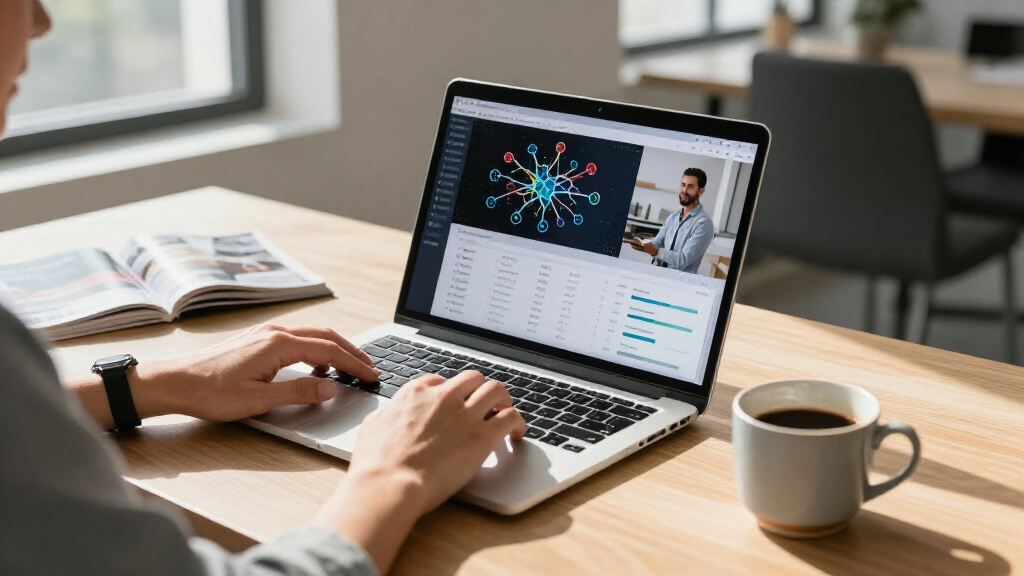

🔍 Read the full analysis: Deep Learning Made Simple: What Workplace AI Users Need To Know on ThorstenMeyerAI.com

Get the latest gadgets delivered free with Prime
- Fast, free delivery on millions of items
- Prime Video, Amazon Music and more included
- Member-only deals all year
TL;DR
Deep learning models learn patterns by adjusting numerical weights to reduce errors across training examples. That helps explain why workplace AI can be useful without being reliable in every situation: models can reflect gaps in their data and struggle with unfamiliar cases. The source is an explainer, not a report of a new workplace AI product or policy.
ThorstenMeyerAI.com published an explainer on November 17, 2026, describing how deep learning systems learn from examples and what that process means for people using AI at work. The article explains that models adjust numerical weights to reduce errors during training, while warning that this method does not make their outputs dependable in every situation.
The explainer presents a neural network as layers of calculations. Each artificial neuron multiplies inputs by weights, adds them together and passes the result through a function. During training, the model changes those weights so its predictions more closely match the examples it is given. The process is commonly described as making a guess, measuring the error and adjusting the model.
A loss function measures how far an answer is from the desired result. Gradient descent uses that measure to update the weights; back-propagation calculates how changes in earlier layers contribute to the error. The source describes these as parts of a repeated training loop, not steps that a workplace user needs to perform when asking a finished model a question.
The article distinguishes training, when a model’s weights are set, from inference, when a trained model applies those weights to new inputs. It says the weights do not change simply because someone uses the model. It also cites DeepMind’s Chinchilla comparison: a 70-billion-parameter model trained on 1.4 trillion tokens outperformed Gopher, which had 280 billion parameters and was trained on 300 billion tokens. That example supports the article’s point that model size alone is not a guarantee of better results.
What Users Should Expect From AI
For employees using AI to draft messages, summarize documents or classify information, the training process helps explain both the tools’ usefulness and their limits. A model can produce a fluent answer by applying patterns learned from examples; fluency alone does not establish that the answer is accurate or appropriate for a particular case.
The source says models can guess when uncertain, inherit gaps in their training data and perform poorly when the situation differs from what they learned. That matters in workplace tasks where a plausible mistake could be passed along as fact. Users should check consequential outputs against reliable information and relevant workplace procedures rather than treating a model’s confidence or polished wording as verification.
The distinction between training and inference also sets expectations: a model ordinarily does not learn a new rule or correct its underlying weights during each interaction. Whether a particular product saves prompts, uses them in later training or applies additional review controls is a separate product-specific question; the explainer does not establish those practices for any workplace tool.
Products Worth Considering

Jackery Solar Generator 1000 v2 with 200W Solar Panel, 1024Wh LiFePO4 Battery
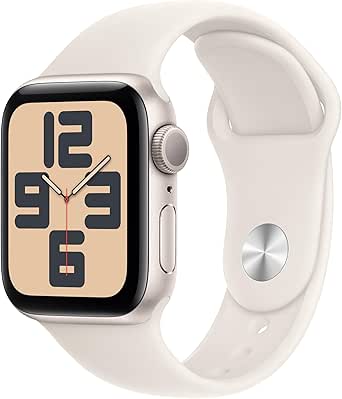
Apple Watch SE (2nd Generation) GPS 40mm Smartwatch with Starlight Aluminum Case and Starlight Sport Band (S/M)

Samsung Galaxy Tab A11+ Tablet (6GB RAM, 128GB Storage, Gray)
As an affiliate, we earn on qualifying purchases.
From Neural Networks to Workplace Tools
The explainer traces the central training idea to a 1986 paper by David Rumelhart, Geoffrey Hinton and Ronald Williams in the journal Nature. The paper described repeatedly adjusting network weights to reduce the difference between actual and desired outputs. The source argues that this basic pattern—predict, measure error, update—remains central to modern model training.
“Deep” refers to a network with many layers. The source says earlier layers may respond to simpler patterns, while later layers combine them into more complex representations. It points to progress in the ImageNet image challenge: the reported best error rate went from 28.2% in 2010 to 3.57% in 2015, while winning networks grew from eight layers in 2012 to 152 layers in 2015. These figures describe a specific image-recognition benchmark and period; they do not measure workplace AI performance generally.
The article draws on the 2016 textbook Deep Learning by Ian Goodfellow, Yoshua Bengio and Aaron Courville, and on Stanford’s CS231n course notes for its descriptions of neurons and training. Those sources provide technical background; the workplace implications are explanatory guidance, not findings from a new study of employees or business outcomes.
““depth enables the computer to learn a multistep computer program.””
— Ian Goodfellow, Yoshua Bengio and Aaron Courville, in the textbook Deep Learning
Limits the Explainer Does Not Resolve
The article offers a general account of deep learning, but it does not test any named workplace AI product or quantify how often such tools make errors. It does not establish whether a particular model is suitable for legal, medical, financial or other high-impact work. Those questions depend on the tool, its training and evaluation, the task, and the safeguards around its use.
The Chinchilla and Gopher comparison is an example involving specific models and training quantities, not proof that smaller models will always outperform larger ones. The article also does not provide a general benchmark for current workplace systems or identify how their performance changes across industries, languages or data types. Readers should treat its explanation of common limitations as broad guidance, not a product-specific audit.
How Teams Can Apply the Explanation
The source announces no product launch, workplace policy change or follow-up study. For readers, the practical next step is to apply the distinction between pattern generation and verified knowledge: check important outputs, keep a human responsible for consequential decisions, and consult the specific tool’s documentation for its data-handling and review practices.
Any firmer assessment of a workplace AI system would require evidence about that system’s performance on the tasks where it is used, its error rates and how its outputs are monitored. Those details are not supplied in this explainer, so the reliability of any particular workplace tool remains an open, product-specific question.
Key Questions
What does deep learning mean?
Deep learning uses neural networks with multiple layers. The layers transform inputs through calculations, and training adjusts the network’s weights to reduce errors on examples.
Does a workplace AI model learn from every prompt?
Not necessarily. The source distinguishes training from inference and says a trained model’s weights stay fixed while it is being used. Whether a particular service stores or later uses prompts depends on that product’s policies and design.
Why can an AI answer sound convincing and still be wrong?
A model generates answers by applying patterns learned from data. According to the explainer, models may guess when uncertain, reflect gaps in their data or struggle with situations unlike those in training. Fluent wording is not proof of accuracy.
Does a larger model always perform better?
No general guarantee follows from size alone. The source cites DeepMind’s comparison in which Chinchilla, with 70 billion parameters, outperformed the 280-billion-parameter Gopher under the reported training conditions. That example does not show that smaller models always win.
Source: ThorstenMeyerAI.com