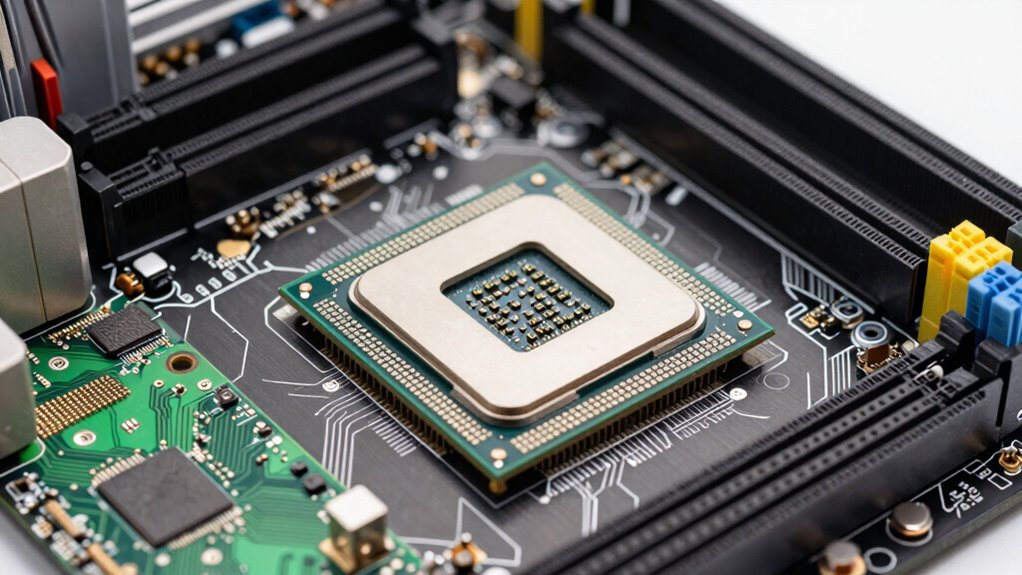

A CPU, or central processing unit, is like your computer’s brain, handling most tasks and managing software. A GPU specializes in rendering images and videos by processing many tasks simultaneously, making graphics look smooth and detailed. An NPU accelerates AI and machine learning tasks, boosting smart features. Together, they work seamlessly to power your devices, from gaming to AI. If you want to understand how each component contributes to modern tech, keep exploring these fascinating differences.

Get the latest gadgets delivered free with Prime
- Fast, free delivery on millions of items
- Prime Video, Amazon Music and more included
- Member-only deals all year
Key Takeaways
- CPUs are the main processors handling general tasks and running the operating system with multiple cores for efficiency.
- GPUs specialize in rendering graphics and support parallel processing for high-quality visuals and gaming experiences.
- NPUs are designed to accelerate AI and machine learning tasks, improving efficiency in AI-powered devices.
- Advances in semiconductor fabrication, like smaller transistors, enhance the performance and energy efficiency of all three processors.
- Future technologies like quantum computing may revolutionize CPU, GPU, and NPU capabilities beyond current limits.
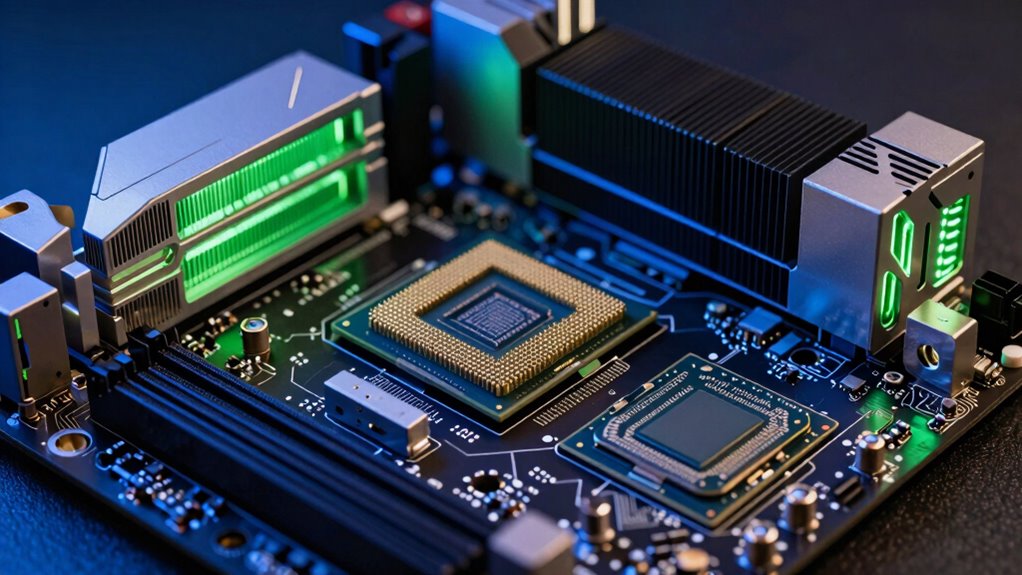
Ever wondered what makes your computer run smoothly and efficiently? It all comes down to the different types of processors working behind the scenes: the CPU, GPU, and NPU. Each of these components has a unique role, and understanding how they operate can help you appreciate how modern devices handle complex tasks. Let’s start with the CPU, often called the brain of your computer. It handles a wide range of tasks, from running your operating system to managing software applications. CPUs are designed with multiple cores, allowing them to perform several operations simultaneously. They execute instructions through an intricate process that has evolved considerably over time, especially with advancements in semiconductor fabrication. Semiconductor fabrication is key to making CPUs faster and more energy-efficient, as it involves manufacturing tiny transistors on silicon chips. As technology progresses, researchers explore quantum computing to push these boundaries even further. Quantum computing promises to revolutionize processing power by leveraging the strange laws of quantum mechanics, opening doors to solving problems that classical computers struggle with.
Moving on to the GPU, or Graphics Processing Unit, you’ll find it’s specialized for rendering images, videos, and 3D graphics. Unlike the CPU, which focuses on versatility, the GPU excels at parallel processing—handling thousands of operations simultaneously. This makes it indispensable for gaming, video editing, and other demanding visual tasks. Because GPUs have thousands of cores designed for specific tasks, they’re incredibly efficient at crunching large amounts of data quickly. As technology advances, manufacturers are pushing the limits of semiconductor fabrication to produce more powerful GPUs, incorporating smaller transistors and more cores within the same chip footprint. These improvements enable higher resolutions, better real-time rendering, and more immersive experiences. Additionally, the contrast ratio of a display significantly impacts the quality of visual output, especially in dark scenes. Moreover, ongoing innovations in semiconductor materials contribute to the increased performance and energy efficiency of GPUs, supporting the development of more sophisticated graphics.
GPUs excel at parallel processing, making them ideal for rendering high-resolution graphics and supporting demanding visual tasks.
Then, there’s the NPU, or Neural Processing Unit, which is relatively new but rapidly gaining importance. NPUs are engineered to accelerate artificial intelligence and machine learning tasks. They’re optimized for the complex calculations required in neural networks, making AI applications faster and more efficient. As AI becomes more integrated into everyday devices, NPUs will play a crucial role in making smart features more responsive. Advances in semiconductor fabrication are essential here, too, as they allow for the creation of specialized chips like NPUs with even greater power and efficiency. The ongoing development of quantum computing also holds promise for AI, potentially enabling breakthroughs in processing speeds and problem-solving capabilities that go beyond classical hardware.
In essence, your device’s performance depends on the synergy among CPUs, GPUs, and NPUs, each tailored for specific functions. As technology continues to evolve—through innovations in semiconductor fabrication and quantum computing—these processors will become even more powerful, shaping the future of computing in ways we’re just beginning to imagine.
As an affiliate, we earn on qualifying purchases.
Frequently Asked Questions
How Do I Choose the Right Processor for Gaming?
To choose the right processor for gaming, focus on processor architectures that optimize gaming performance, like those with higher core counts and faster clock speeds. Prioritize CPUs from reputable brands offering strong single-thread performance, essential for most games. Consider compatibility with your GPU and motherboard. Balancing your budget with these factors ensures smooth gameplay and future-proofing. Ultimately, a well-chosen processor enhances your gaming experience considerably.
Are NPUS Necessary for Everyday Smartphone Use?
NPUs aren’t strictly necessary for everyday smartphone use, but they do enhance battery efficiency and app optimization, making your device run smoother and last longer. If you’re mostly browsing, calling, or streaming, your phone’s CPU and GPU handle things well enough. However, if you use AI-driven apps or want better battery life, a phone with an NPU can provide noticeable benefits.
What Is the Future of CPU and GPU Integration?
You might think CPUs and GPUs will stay separate, but their integration is the future, especially with quantum computing and edge processing advancing rapidly. This combo boosts efficiency, reduces latency, and supports smarter devices. As technology evolves, expect seamless collaboration, enabling more powerful, energy-efficient systems that handle complex tasks locally. This integration will make your devices faster and more capable without relying heavily on cloud computing.
Can I Upgrade My NPU Separately From Other Components?
Yes, you can upgrade your NPU separately from other components if your device supports NPU compatibility and has a modular design. Upgrading NPU involves replacing or adding the dedicated processing unit without changing your CPU or GPU. However, check your device’s specifications first, as not all systems support easy Upgrading NPU. Ensuring compatibility is essential for seamless performance and future-proofing your device.
How Do CPUS and GPUS Collaborate in Complex Tasks?
You can see how CPUs and GPUs collaborate through parallel processing, where the CPU handles general tasks and coordinates, while the GPU manages intensive calculations simultaneously. This hardware synergy allows for faster data processing in complex tasks like gaming or video editing. By working together, they optimize performance, with the CPU directing and the GPU executing parallel operations to efficiently handle demanding workloads.
Conclusion
Understanding CPUs, GPUs, and NPUs helps you appreciate how your devices run so smoothly. Did you know that AI processors like NPUs can boost machine learning tasks by up to 10 times faster than traditional CPUs? This rapid advancement means smarter smartphones, faster data analysis, and more efficient technology shaping our future. Staying informed about these components empowers you to make better choices about the gadgets you use every day.
Halloween Picks
halloween
As an affiliate, we earn on qualifying purchases.