📊 Full opportunity report: What Makes A Sourcing Platform Useful For Independent Retailers? on IdeaNavigator AI — validation score, market gap, and execution plan.

Get the latest gadgets delivered free with Prime
- Fast, free delivery on millions of items
- Prime Video, Amazon Music and more included
- Member-only deals all year
TL;DR
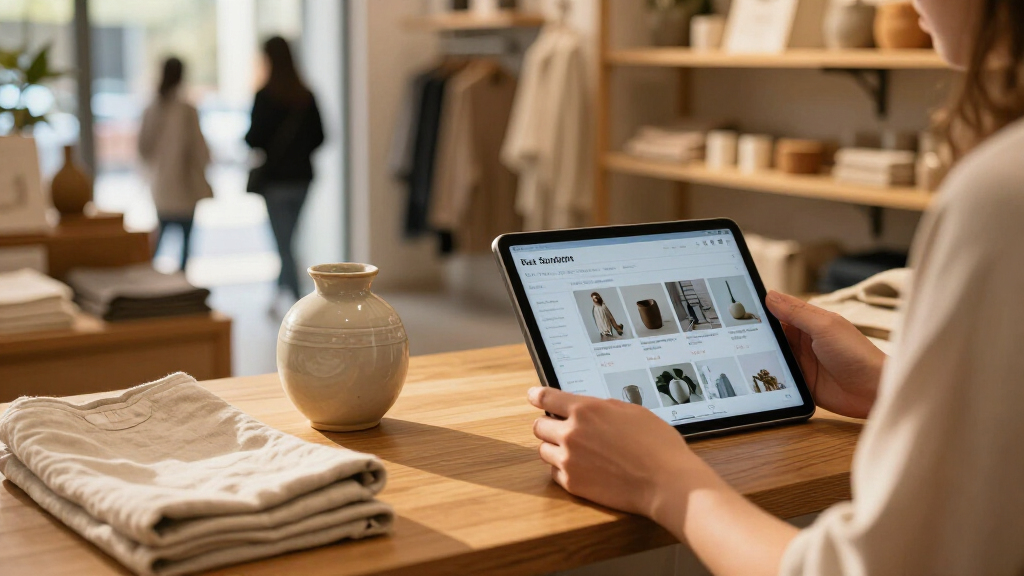
A proposal from IdeaNavigator AI outlines a small-order sourcing platform for independent retailers that struggle with distributor minimums. Its suggested first test is to broker orders manually between 20 brands and 50 shops, then measure whether trial purchases lead to standard reorders within a quarter.
IdeaNavigator AI has proposed a small-order wholesale marketplace for independent retailers that cannot meet some distributors’ minimums, with a suggested pilot to broker trial orders between 20 brands and 50 shops. The proposal is a business concept, not a report of a launched service or validated results; its central test is whether small product trials convert to standard reorders within a quarter.
In its proposal, IdeaNavigator AI describes a dedicated lane for trial-size wholesale orders. Brands could set lower minimums, while retailers could buy small assortments—such as five-unit tests—rather than commit to larger opening orders. The concept depends on consolidating fulfillment so that shipping costs do not make these smaller purchases uneconomical.
The proposal says retailers would track how trial products sell, and brands could use the resulting performance information to decide whether to support a larger order. If a test succeeds, the buyer and brand could move to a standard wholesale relationship. IdeaNavigator AI suggests a revenue model combining a take rate on orders with subscriptions for brand-side analytics; these are proposed business-model elements, not reported operating features.
To assess demand, IdeaNavigator AI recommends arranging trial orders manually between 20 brands and 50 independent shops. The proposal identifies the share of trial orders that become standard reorders within one quarter as the key measure. It reports no completed pilot, conversion rate, participating businesses, or customer feedback.
Testing Smaller Wholesale Commitments
IdeaNavigator AI’s proposal argues that, for a shop with limited cash and shelf space, a distributor’s case minimum can make a new product costly to test. Smaller orders could let retailers try more unfamiliar products without initially committing to a large quantity, while giving brands a way to reach stores that would otherwise pass on an opening order. That is the commercial premise of the proposal, not an outcome established by evidence so far.
The practical test is whether order consolidation can make low-volume fulfillment workable. Shipping and handling may absorb the value of a small sale, and a platform would need enough brands, retailers, and order volume to coordinate shipments efficiently. The proposal’s suggested trial-and-reorder measure would help show whether the idea creates repeat wholesale business, rather than only one-off purchases. Until a pilot reports results, its effect on retailers’ product selection, sales, and costs remains unknown.
Products Worth Considering

Logitech MX Master 4 for Mac, Ergonomic Bluetooth Mouse with Haptic Feedback, Ultra-Fast Scrolling, USB-C Charging, for MacOS, iPadOS, Windo

Amazon Kindle Paperwhite (12th Generation, 2024), 16 GB, 7-inch Display, Jade

Apple iPad Air (2025) 13‑inch Wi‑Fi 256 GB – Space Gray (M3 chip)
As an affiliate, we earn on qualifying purchases.
From Wholesale Minimums to Trial Orders
IdeaNavigator AI frames the proposal around independent retailers that want to experiment with new merchandise but face distributor minimums and opening-order sizes designed for larger buyers. It says that can leave shops with conservative assortments and make product discovery dependent on occasional trade-show visits. The proposal provides no market-wide data quantifying how many shops face these constraints or how much they affect sales.
IdeaNavigator AI presents the concept as a narrow first workflow for an independent shop owner unable to meet distributor minimums. It points to the wholesale-marketplace model associated with Faire as evidence that online wholesale marketplaces exist, then identifies genuinely small trial orders with consolidated shipping as the proposed unmet need. The material offers no comparative platform data or evidence that the logistics have already been solved.
Pilot Results and Shipping Costs
IdeaNavigator AI describes no live platform or pilot results. It remains unclear whether brands would agree to micro-minimums, how orders from multiple suppliers would be consolidated, who would bear additional fulfillment costs, or what fees would make the model attractive to both sides. The proposal also does not specify how sell-through data would be collected, how many units or weeks would define a successful trial, or how reorder conversion would be calculated.
The suggested pilot size—20 brands and 50 shops—is a test plan in the proposal, not a confirmed commitment from participants. No evidence is reported that five-unit orders would generate enough demand or margin to support a continuing marketplace.
A Manual Test Before Platform Build
IdeaNavigator AI’s proposed next step is to broker trial orders manually among 20 brands and 50 shops, avoiding the cost of building a full platform before demand is tested. The proposal says organizers would track whether each trial leads to a standard reorder within a quarter and examine whether consolidated fulfillment can support the small quantities.
The proposal announces no timetable, organizer, or participating businesses. A useful follow-up would report the number of orders completed, the reorder rate and its measurement period, and the costs and operational steps required to consolidate shipments. Without those results, the concept remains an unvalidated marketplace proposal.
Source: IdeaNavigator AI proposal
Key Questions
Has the small-order sourcing platform launched?
No launch is reported. IdeaNavigator AI presents it as a proposed marketplace concept, with a manual trial suggested as the first validation step.
Who is the proposed platform for?
According to the IdeaNavigator AI proposal, it is aimed at independent retailers that want to test new products but cannot meet some distributors’ minimum order requirements.
How would the trial-order model work?
The proposal says brands would offer lower minimums, and shops could test small assortments, such as five units. It calls for consolidated fulfillment and tracking whether trials lead to standard wholesale reorders.
What is the proposed pilot measuring?
IdeaNavigator AI suggests brokering orders between 20 brands and 50 shops and measuring conversion from a trial purchase to a standard reorder within one quarter. No results have been reported.
How might the platform make money?
The proposal suggests combining a commission on orders with subscriptions for brand analytics. These are proposed revenue streams, not confirmed platform features or actual prices.
Source: IdeaNavigator AI