
UWB digital car keys use encryption and dynamic ephemeral keys to guarantee secure device-to-vehicle communication, preventing spoofing and relay attacks. They verify proximity with precise time-of-flight measurements and directional signals, making unauthorized access difficult. However, the typical range is limited to about 10-30 meters, which can affect convenience, especially in complex environments. If you’re interested, you’ll discover how security measures adapt despite these range challenges.
Key Takeaways
- UWB digital car keys use cryptographic protocols with public/private keys for secure device authentication and communication.
- Precise time-of-flight measurements verify vehicle proximity within centimeters, preventing relay and spoofing attacks.
- Typical UWB range is 10 to 30 meters, affected by obstacles and environmental factors, requiring careful device placement.
- Dynamic ephemeral session keys protect data integrity and prevent replay or relay attacks during each communication session.
- Robust security frameworks and regular updates are essential to address evolving threats and ensure long-term system integrity.
Fundamentals of UWB Security Protocols in Automotive Applications
UWB security protocols in automotive applications focus on guaranteeing that vehicle access remains safe and tamper-resistant. You rely on encryption methods that use public and private keys stored securely within your device’s secure element. When you attempt to access your car, these protocols encrypt messages exchanged between your device and the vehicle, preventing eavesdropping or tampering. Data privacy concerns are a critical consideration, ensuring that your personal information remains protected during these exchanges. UWB also employs ephemeral keys generated for each session, making replay or relay attacks nearly impossible. The precise distance measurement ensures that only devices within a verified proximity can access the vehicle, creating a secure “bubble.” This combination of encryption, dynamic keys, and proximity verification forms a robust security framework that keeps unauthorized users out and protects your vehicle from common wireless threats. Additionally, the high-precision nature of UWB allows for accurate authentication even in complex environments, further enhancing security. The use of secure key storage further prevents unauthorized extraction or duplication of cryptographic keys, strengthening overall security. Incorporating tightly controlled power levels helps prevent signal interception or interference, strengthening overall security. Moreover, implementing strict interference mitigation techniques ensures reliable communication in environments with potential signal disruptions.
How UWB Ensures Precise Proximity Verification and Prevents Spoofing

By leveraging its ability to measure the exact time it takes for radio pulses to travel between devices, UWB verifies your device’s proximity with remarkable accuracy. This precise ranging ensures that only a device within a few centimeters can release your vehicle. UWB’s time-of-flight measurements make spoofing extremely difficult because attackers can’t easily mimic the exact pulse timing. It also uses session-specific keys and cryptographic protocols to authenticate devices during each interaction. Additionally, UWB’s directional signals help confirm the actual position of the device relative to the vehicle.
- Accurate distance measurement prevents relay and relay-like attacks.
- Cryptographic session keys ensure each interaction is unique.
- Directional signals verify the device’s real position.
- Continuous tracking confirms ongoing presence, not just initial contact.
The Role of Encryption and Ephemeral Keys in Digital Key Authentication
Encryption and ephemeral keys are essential for ensuring secure digital key authentication, preventing unauthorized access even if signals are intercepted. They create a dynamic security environment where each session uses unique keys, making replay attacks impossible. When you attempt to unlock your vehicle, the system generates a session-specific key that encrypts communication. This key is valid only for that particular session, ensuring that even if someone captures the data, it can’t be reused. The table below summarizes key aspects:
| Aspect | Purpose | Effect |
|---|---|---|
| Public/Private Keys | Secure initial authentication | Authenticating devices |
| Ephemeral Keys | Session-specific encryption | Prevents replay attacks |
| Encryption Algorithms | Protects data integrity and confidentiality | Safeguards communication |
This layered approach keeps your vehicle access safe from interception and spoofing. Robust cybersecurity measures further enhance the overall security of digital car keys by addressing potential vulnerabilities. Additionally, implementing layered security protocols ensures a comprehensive defense against emerging threats. Regular security updates are also crucial for maintaining the integrity of these systems over time. Furthermore, employing continuous monitoring can help detect and respond to ongoing security threats promptly. Introducing advanced encryption techniques can further strengthen the protection of your digital keys against sophisticated attacks.
Limitations of Range and Their Impact on User Experience
While UWB offers highly accurate localization and secure vehicle access, its limited range can sometimes hinder your convenience. The short distance, typically 10 to 30 meters, means you need to be relatively close for the system to work smoothly. This can be frustrating if you’re trying to release your car from a distance or in crowded areas where signals may struggle. You might also experience issues if your device is obstructed or if metal structures interfere with the signals. To improve your experience, consider these points:
UWB’s short range and obstructions can limit convenience but offer secure, precise vehicle access.
- The short range demands careful positioning of the device.
- Obstacles like metal or walls can weaken signals.
- Multiple antennas increase hardware complexity and cost.
- Urban interference may reduce localization accuracy.
- Automation in Business technologies could be integrated to enhance system robustness and user experience.
- Understanding signal interference can help optimize placement and performance of UWB systems.
- Additionally, factors like environmental conditions can further impact the reliability of the signals, making it important to consider the surroundings when deploying UWB technology.
- Incorporating adaptive algorithms can help mitigate some of these environmental challenges and improve overall system performance.
- To maximize effectiveness, users should be aware of signal range limitations and plan device placement accordingly.
Challenges in Hardware Integration and Maintaining Privacy Standards
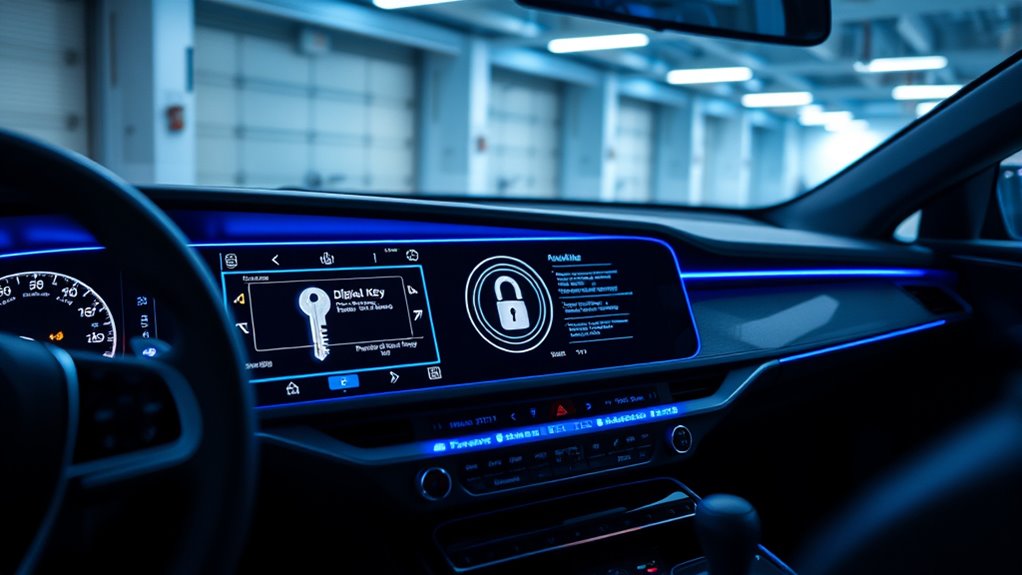
Integrating UWB hardware into vehicles presents significant challenges because it requires installing multiple antennas and transceivers to guarantee thorough 360-degree coverage, which can increase complexity, weight, and cost. Ensuring seamless communication among these components demands precise calibration and robust design, adding to manufacturing difficulties. Additionally, integrating UWB with existing vehicle systems involves standardization efforts and cross-compatibility issues across brands and models. Maintaining privacy standards becomes a concern because UWB’s precise location tracking can expose user whereabouts if data isn’t carefully protected. You must implement strict data handling protocols, encryption, and user consent mechanisms to prevent misuse or unauthorized access. Moreover, addressing AI security concerns related to data privacy and potential vulnerabilities is essential to safeguarding user information. Implementing privacy-preserving techniques can further mitigate risks associated with location data exposure. Balancing hardware complexity with privacy compliance is critical to delivering secure, reliable digital car key solutions without compromising user trust. Furthermore, designing a robust security framework that adapts to evolving threats is vital for long-term data protection. Incorporating standardized protocols can ease cross-brand compatibility and streamline integration efforts, ultimately enhancing the user experience and system reliability. Additionally, advancements in vehicle electronics are crucial for managing the increased system integration required by UWB technology.
Frequently Asked Questions
How Does UWB Handle Multi-User Environments With Overlapping Signals?
In multi-user environments with overlapping signals, you rely on UWB’s precise time-of-flight measurements to distinguish each device’s location. UWB assigns unique ranging sessions using session-specific keys, preventing signal confusion. It also uses multiple sensors to track individual devices accurately, filtering out interference. This way, you can securely and reliably identify the correct user’s device, ensuring seamless access without signal overlap issues.
Can UWB Digital Keys Be Hacked Remotely Despite Encryption Safeguards?
No, UWB digital keys can’t be hacked remotely easily because they use strong encryption, ephemeral session keys, and secure hardware elements. These features make it extremely difficult for attackers to intercept or replay signals. Plus, UWB verifies physical proximity with precise distance measurement, preventing remote spoofing. As long as security protocols are properly implemented and kept up-to-date, your vehicle remains protected against remote hacking attempts.
What Are the Maintenance Requirements for UWB Hardware in Vehicles?
You need to regularly inspect your vehicle’s UWB hardware to guarantee it functions properly. Keep the sensors and antennas clean, free from dirt or debris that could interfere with signals. Update firmware and software as recommended by the manufacturer to fix bugs and improve security. Also, check for any physical damage or corrosion, especially in extreme weather conditions, to maintain reliable localization and access features.
How Does UWB Perform in Extreme Weather Conditions Affecting Signal Quality?
In extreme weather conditions, UWB performance remains reliable because it uses short radio pulses less affected by rain, snow, or fog. You might notice minor signal degradation if heavy metal snow or ice buildup blocks antennas, but overall, UWB’s resilience guarantees accurate localization and secure communication. Its advanced algorithms help mitigate interference, so you can depend on consistent vehicle access and precise positioning even during harsh weather.
Are There Standards for Cross-Compatibility Among Different Vehicle Brands?
Back in the day, standards for cross-compatibility among different vehicle brands are emerging. You’ll find protocols like the Car Connectivity Consortium’s (CCC) standards that aim to unify UWB digital keys across manufacturers. These standards make certain your smartphone or device can work seamlessly with various cars, making lock/unlock and start functions more universal. While adoption is still growing, these efforts promise a future where your digital key is truly compatible, regardless of brand.
Conclusion
As you explore UWB digital car keys, remember they’re like a finely tuned orchestra—precise, secure, but with limits like range boundaries that shape your experience. While encryption and robust protocols keep your vehicle safe, hardware challenges and privacy concerns remind you that no system is perfect. Embrace the technology’s promise of seamless access, but stay aware of its boundaries, because even the brightest stars have their shadows.