
TL;DR

Get the latest gadgets delivered free with Prime
- Fast, free delivery on millions of items
- Prime Video, Amazon Music and more included
- Member-only deals all year
Hugging Face has announced Grabette, an open-source handheld device that records human manipulation demonstrations for robot training. Its browser-based pipeline converts recordings into datasets compatible with various robot platforms. The system aims to reduce costs and increase data sharing, but independent performance validation remains pending.
Hugging Face has announced Grabette, an open-source, handheld device designed to record human manipulation demonstrations and convert them into datasets suitable for robot training. This development addresses longstanding challenges in robot learning data collection by enabling users to record demonstrations without operating a robot during each session. The system’s release aims to facilitate broader data sharing and reduce costs for researchers and developers in robotics.
Grabette combines two cameras, an inertial measurement unit (IMU), and magnetic encoders in a handheld gripper, allowing users to perform manipulation tasks while recording detailed sensor data. This approach is part of efforts to lower the barriers to collecting large, diverse manipulation datasets, as detailed in the original analysis. The device features a fisheye camera capturing wrist-level views, and an OAK-D RGBD camera providing color, depth, and motion information for six-degree-of-freedom tracking. Data is recorded via a Raspberry Pi, which synchronizes sensor streams and gripper joint values using a shared clock. Users can save episodes locally with a button press and upload selected recordings through a browser-based dashboard to the Hugging Face Hub.
The system utilizes RTAB-MAP-based Grabette-SLAM for trajectory recovery before converting recordings into the LeRobot dataset format. The hardware cost is estimated at around €490, with a motorized end effector called Gripette costing approximately €120, which can be attached to real or simulated robot arms for deployment. All hardware files, software, and processing pipelines are available as open-source, promoting community participation and further development. The open-source nature of this system aligns with the goals of projects like Grabette’s open system to advance robot learning.
This approach aims to lower the barriers to collecting large, diverse manipulation datasets, which are critical for training robot policies. Unlike traditional methods requiring dedicated robot setups and repeated teleoperation, Grabette separates demonstration recording from robot execution, potentially enabling more tasks and environments to be captured efficiently. The use of standard LeRobot datasets could also facilitate cross-platform data sharing among institutions.
Potential Impact on Robotic Data Collection Costs
The introduction of Grabette could significantly reduce the cost and complexity of collecting manipulation data for robots, a key bottleneck in advancing robot learning. By enabling humans to record demonstrations without a robot present, the system broadens access to diverse task data, potentially accelerating research and development in autonomous manipulation. Its open hardware and software design promote community involvement, which may lead to larger, shared datasets and more generalized policies. However, the actual impact depends on the system’s performance, dataset quality, and adoption by the robotics community.
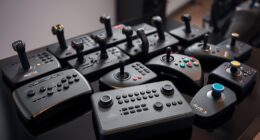
robot manipulation demonstration recording device
As an affiliate, we earn on qualifying purchases.
As an affiliate, we earn on qualifying purchases.
Background on Human Demonstration Recording for Robots
Traditional robot data collection relies heavily on fixed laboratory setups, requiring robotic arms, teleoperation systems, and repeated use of specialized equipment. These methods are costly, time-consuming, and limit dataset diversity. The Stanford UMI project pioneered handheld recording with fisheye cameras and SLAM techniques to capture demonstrations outside controlled environments, influencing the development of Grabette. Commercial devices from companies like Agibot and Genrobot have also emerged, but their proprietary nature limits accessibility. Hugging Face’s Grabette builds on this foundation by offering an open, customizable hardware and software ecosystem designed for broader community use and data sharing.
“The bottleneck isn’t the model. It’s the data.”
— Hugging Face Grabette Team
Unverified Performance and Adoption Challenges
There are no independent performance evaluations or peer-reviewed studies yet validating Grabette’s accuracy, reliability, or robustness in diverse scenarios. It remains unclear how well the system handles fast movements, occlusions, reflective surfaces, or scene complexities that challenge visual SLAM. Additionally, the size, diversity, and quality of datasets collected so far are unknown, as are the software licensing terms and community governance structures. The actual impact on robot policy transferability and dataset usability across platforms remains to be demonstrated.
Next Steps for Validation and Community Engagement
The upcoming phase involves community testing: researchers and developers will attempt to assemble the hardware, reproduce the workflows, and contribute datasets to the Hugging Face Hub. Validation efforts will focus on measuring dataset growth, recording reliability, and policy transfer performance across different robot arms and environments. Future updates should clarify licensing, validation benchmarks, and quality control processes, helping determine whether Grabette can fulfill its promise of democratized manipulation data collection.
Key Questions
What exactly is Grabette?
Grabette is an open-source handheld device equipped with cameras, IMU, and encoders that records human manipulation demonstrations for robot training datasets. It converts these recordings into formats compatible with various robot platforms.
Does Grabette require a robot during data collection?
No, the system is designed to record demonstrations without a robot present. The collected data can later be used to train robots for similar tasks.
How reliable is Grabette for capturing fast or complex movements?
Performance validation is still pending. It is not yet confirmed how well the system handles challenging conditions such as rapid motions, occlusions, or reflective surfaces.
Yes, the use of standard LeRobot datasets aims to facilitate sharing, but practical interoperability and quality depend on ongoing validation and community adoption.
What are the costs involved in building Grabette?
The hardware components are estimated at around €490, with an additional €120 for the Gripette end effector. Actual costs may vary based on location and availability.
Source: ThorstenMeyerAI.com
Halloween Picks
halloween
As an affiliate, we earn on qualifying purchases.