
📊 Full opportunity report: The Delegation Ladder: The Four Agentic Loops, And What Each One Lets You Stop Doing on ThorstenMeyerAI.com — validation score, market gap, and execution plan.

Get the latest gadgets delivered free with Prime
- Fast, free delivery on millions of items
- Prime Video, Amazon Music and more included
- Member-only deals all year
TL;DR
Anthropic’s recent framework defines four types of agentic loops, from simple turn-based checks to fully autonomous workflows. Each loop type indicates how much control can be delegated to AI, impacting efficiency and oversight.
Anthropic’s Claude Code team has outlined a four-tier model of agentic loops, describing how AI systems can be designed to delegate tasks with varying degrees of autonomy. This framework clarifies how organizations can progressively shift control from human operators to automated processes, impacting AI deployment strategies and oversight. The classification ranges from simple turn-based checks to fully autonomous, event-driven workflows.
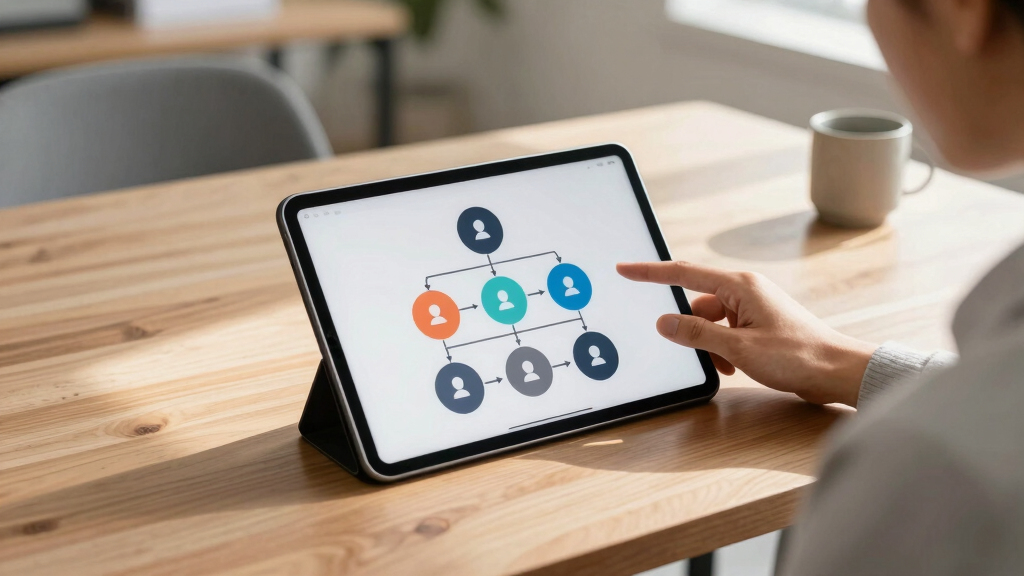
The four agentic loops are: Turn-based, where the AI checks its work and reports back; Goal-based, where the system stops based on predefined success criteria; Time-based, which triggers repeated actions on a schedule or external event; and Proactive, where the AI initiates and manages entire workflows without human intervention. Each rung reduces human involvement and increases system autonomy, with the highest level capable of orchestrating complex, multi-agent processes.
Anthropic emphasizes that not all tasks require the highest level of automation. Developers should start with the simplest loop that works and only escalate as needed. The framework aims to help organizations balance control, cost, and quality, especially when deploying AI in operational environments. The team also notes that the effectiveness of each loop depends heavily on the surrounding system, including verification mechanisms and documentation.
The delegation ladder: four agentic loops, and what each lets you stop doing
Strip the hype and a “loop” is simple — an agent repeating work until a stop condition is met. The useful lens isn’t the mechanics, it’s what you hand off. Four loop types = four rungs of delegation, from a tool you operate to a process that runs.
The whole framework reduces to one question about your own work: where am I the bottleneck, and which single piece can I hand off? Can you write the check? Is the goal concrete? Does the work arrive on a schedule? That answer picks your rung — and you climb one step at a time. The real skill isn’t operating a loop; it’s the judgment of what to delegate and how far — enough hands off to gain leverage, enough on the wheel that “runs without you” doesn’t become “runs away from you.”
Implications for AI Deployment and Control
This framework offers a clear roadmap for organizations seeking to automate workflows with AI while maintaining oversight. By understanding the four levels, businesses can tailor their AI systems to optimize efficiency, reduce manual labor, and mitigate risks associated with fully autonomous operations. The model also underscores the importance of system design, verification, and disciplined escalation of automation levels to prevent errors and ensure quality.
Products Worth Considering

Bose QuietComfort Wireless Noise-Cancelling Headphones, White Smoke

Apple Watch Series 11 GPS + Cellular, 46mm Jet Black Aluminum Case with Black Sport Band (M/L)

Jackery Solar Generator 1000 v2 with Two 100W Solar Panels, 1024Wh LiFePO4 Battery
As an affiliate, we earn on qualifying purchases.
Evolution of AI Automation Practices
The concept of looping in AI, especially as framed by Anthropic, builds on longstanding ideas of iterative and goal-driven processes. Previously, AI deployment often involved manual prompts and checks; this model formalizes a hierarchy of automation, reflecting broader industry trends toward autonomous systems. The four loops align with existing practices but provide a structured approach for scaling automation responsibly. The framework also responds to ongoing concerns about AI reliability, safety, and control in operational settings.
“This ladder of agentic loops offers a practical way to think about how much control we delegate to AI, from simple checks to full autonomous workflows.”
— Thorsten Meyer, AI researcher
Unanswered Questions About Implementation
It is not yet clear how widely adopted this framework will be across industries or how organizations will tailor the loops to specific use cases. Details about practical challenges, such as verification at scale or managing complex workflows, remain emerging. Additionally, the impact on safety protocols and oversight in high-stakes environments is still under discussion.
Future Steps for AI Automation Strategies
Organizations are expected to experiment with implementing these loops in real-world applications, refining their control mechanisms and verification processes. Further guidance from Anthropic and industry groups will likely clarify best practices. Monitoring how these frameworks influence AI safety and operational efficiency will be key in the coming months.
Key Questions
What are the four agentic loops in AI automation?
The four loops are: Turn-based (manual checks), Goal-based (stop when success criteria are met), Time-based (triggered by schedules or events), and Proactive (fully autonomous workflows).
How does this framework help organizations?
It provides a structured way to progressively delegate tasks to AI, balancing control, efficiency, and safety, while clarifying when and how to escalate automation.
Are there risks associated with higher levels of automation?
Yes, increased autonomy can lead to less human oversight and potential errors. Proper verification and system design are crucial to mitigate these risks.
Will this model be adopted industry-wide?
Adoption depends on organizational needs and safety considerations. It is likely to influence best practices but may be adapted for different sectors and use cases.
Source: ThorstenMeyerAI.com