
📊 Full opportunity report: Glasspane: One Dataset, Three Views on ThorstenMeyerAI.com — validation score, market gap, and execution plan.

Get the latest gadgets delivered free with Prime
- Fast, free delivery on millions of items
- Prime Video, Amazon Music and more included
- Member-only deals all year
TL;DR
Glasspane has launched a prototype demonstrating how a single dataset can provide tailored views for different roles, promoting transparency and trust in infrastructure monitoring. The tool is open-source and self-hostable, emphasizing verifiability.
Glasspane has unveiled a demonstration of its new approach: one dataset, three role-specific views, designed to improve transparency in system monitoring. This innovation aims to shift trust from mere uptime metrics to demonstrable, verifiable data accessible to outsiders, such as auditors or clients. The tool is open-source, self-hostable, and built around the principle that transparency itself can be a product.
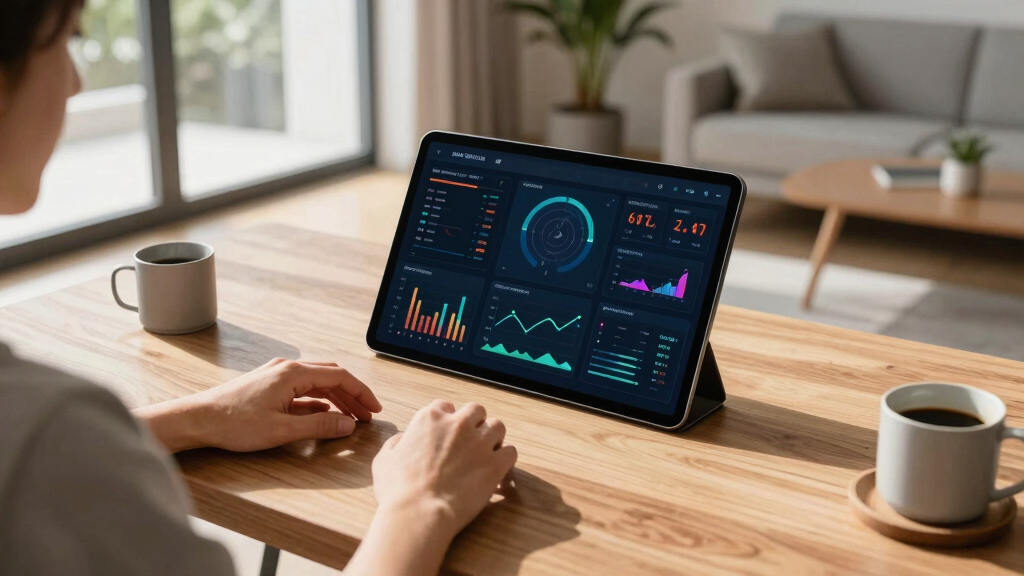
The core feature of Glasspane is that the same underlying data can be presented differently depending on the viewer’s role. For example, an executive sees high-level metrics like SLA compliance and costs, while an engineer views technical details such as latency and incident reports. This role-aware design ensures each stakeholder sees only what they need to trust the system, avoiding information overload or misinterpretation.
Currently, the tool is a demo / MVP built with mock data, illustrating the concept rather than supporting a live production environment. It is open-source under the AGPL-3.0 license, emphasizing transparency and local deployment, including options for local AI models to keep sensitive telemetry within the network. The approach underscores the importance of trust layers: data, model, and scoped views, each verified and transparent.
One of the key design principles is honesty about system gaps. If a monitor fails or produces incorrect data, Glasspane surfaces these failures openly, reinforcing trust through transparency rather than concealment.
Glasspane — one dataset, three views
Most tools answer “is it up?” Glasspane answers a harder one: how do you prove it’s fine to someone who isn’t you? Transparency itself, made the product.
Independent commentary, produced with AI assistance under human editorial oversight. The views are the author’s own and may change. Glasspane is open source under AGPL-3.0, provided “as is” without warranty; see the repository LICENSE. It is a demo / MVP — the views and figures shown run on illustrative, mock data and do not represent a live production deployment. AI interpretation of telemetry may contain errors and should be independently verified. Product and company names are trademarks of their respective owners; mention does not imply endorsement.
Impact of Role-Specific, Transparent Data Views
This development shifts the paradigm from traditional dashboards, which often serve internal teams, to a model where transparency becomes a product that can be handed directly to clients or auditors. By providing verifiable, role-specific views, companies can reduce the need for repetitive reassurance, improve credibility, and potentially lower operational overhead. It also emphasizes that trust is built through demonstrable data, not just assurances, which could influence how infrastructure and service quality are communicated externally.
open-source system monitoring dashboard
As an affiliate, we earn on qualifying purchases.
As an affiliate, we earn on qualifying purchases.
Innovative Approach to Trust in System Monitoring
Most existing monitoring tools focus on internal visibility—answering ‘is it up?’ for operators. Glasspane challenges this by aiming to answer ‘can I prove it’s fine to an outsider?’ It aligns with broader trends toward transparency and open-source tools in infrastructure management. The concept builds on the idea that trust is a valuable asset, especially as AI increasingly interprets monitoring data, making model transparency critical. Currently, the project is a prototype, with its full adoption dependent on further development and real-world testing.
“Transparency as the product means showing the same data in different ways for different roles, making trust verifiable rather than assumed.”
— Thorsten Meyer, creator of Glasspane
Limitations and Unanswered Questions About the Prototype
Since Glasspane is currently a demo with mock data, it remains untested in real-world, production environments. Its effectiveness in actual operational contexts, scalability, and how users will adopt the transparency-as-product approach are still unknown. Additionally, the reliance on AI model transparency raises questions about how to mitigate risks of incorrect AI interpretations, which is acknowledged but not yet fully addressed.
Next Steps Toward Production and Adoption
Further development is needed to transition from the MVP to a production-ready tool, including testing with real data and user feedback. The project team may explore integrating with existing monitoring systems and expanding features like multi-user roles and enhanced AI interpretability. Promisingly, the open-source license allows community contributions, potentially accelerating refinement and adoption.
Key Questions
How does Glasspane ensure trust in its data?
By providing role-specific views of the same verified dataset, surface transparency about system gaps, and allowing users to verify the source code and data locally, Glasspane aims to build demonstrable trust.
Is Glasspane ready for use in live production environments?
No, currently it is a prototype/demo built with mock data. Further testing and development are required before it can be deployed in real operational settings.
Can organizations run Glasspane on their own infrastructure?
Yes, it is open-source under the AGPL-3.0 license and designed to be self-hostable, including options for local AI models to keep sensitive data within the organization’s network.
What makes Glasspane different from traditional monitoring tools?
Its focus on transparency as a product, role-aware data views, and open-source, verifiable architecture differentiate it from conventional dashboards that primarily serve internal monitoring without external proof capabilities.
Source: ThorstenMeyerAI.com
Halloween Picks
halloween
As an affiliate, we earn on qualifying purchases.