
🔍 Read the full analysis: 10 Graphics Card Picks For AI, Games, And Everyday PC Tasks on ThorstenMeyerAI.com

Get the latest gadgets delivered free — and shop member deals
- Fast, free delivery on millions of items
- Access to Prime Big Deal Days deals on October 6–7
- Prime Video, Amazon Music and more included
TL;DR
ThorstenMeyerAI.com’s buying guide ranks 10 graphics cards for high-end gaming, more moderate upgrades, compact PCs and basic display needs. The guide names the ASUS TUF Gaming GeForce RTX 5080 its overall pick, while emphasizing that the right choice depends on workload, case space, power and monitor connections; it does not provide direct benchmark results or prices.
ThorstenMeyerAI.com has ranked 10 graphics cards for gaming, AI-related work and everyday PC use, naming the ASUS TUF Gaming GeForce RTX 5080 its overall choice for a high-end gaming build, as detailed in the original graphics card analysis. The site’s list also includes less demanding modern options and older cards, underscoring that buyers need to match a GPU to their workload, PC dimensions and power supply rather than choose by model name alone.
In its ranking, ThorstenMeyerAI.com places three GeForce RTX 5080 designs at the high-performance end: the ASUS TUF Gaming model, GIGABYTE Gaming OC and white ROG Astral. The guide favors the ASUS TUF overall but describes the other cards as alternatives with different designs and cooling approaches. It does not provide comparative test results to establish how they perform against one another.
The guide also includes ASUS Prime and GIGABYTE Gaming OC Radeon RX 9070 XT models for high-end gaming, alongside the lower-tier RX 9070 Challenger; buyers considering virtual reality can also explore graphics cards for VR. It presents the ASUS Prime GeForce RTX 5070 as a more approachable modern gaming choice for buyers who do not need the top performance tier. ThorstenMeyerAI.com gives no prices, measured frame rates or detailed AI workload results for these models.
The ranking’s remaining entries—GT 730, GT 740 and RX 580—are framed as narrower choices. The guide says the GT cards may suit basic display output or compact systems, and singles out the AISURIX GT 740 for low-profile fit. It describes the RX 580 as more oriented toward gaming than those older GT options, but does not present it as a match for the newest cards in demanding games.
The 10 picks
- 1
 ASUS ROG Astral GeForce RTX 5080 16GB GDDR7 White OC Edition Graphics CardView on Amazon →
 - 2
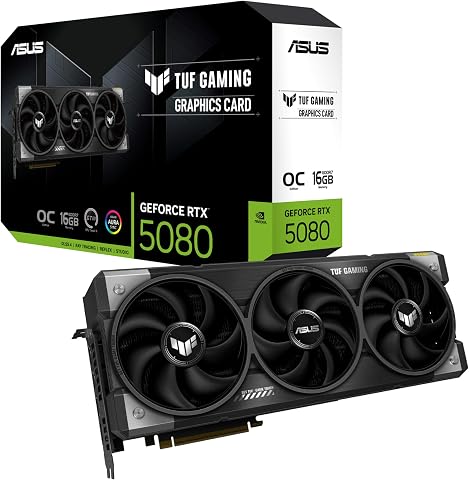 ASUS TUF Gaming GeForce RTX 5080 16GB GDDR7 OC Edition Graphics CardView on Amazon →
 - 3
 GIGABYTE GeForce RTX 5080 Gaming OC 16G Graphics CardView on Amazon →
 - 4
 ASUS NVIDIA GeForce RTX 5070 OC Edition Graphics Card (PCIe 5.0, 12GB GDDR7,…View on Amazon →
 - 5
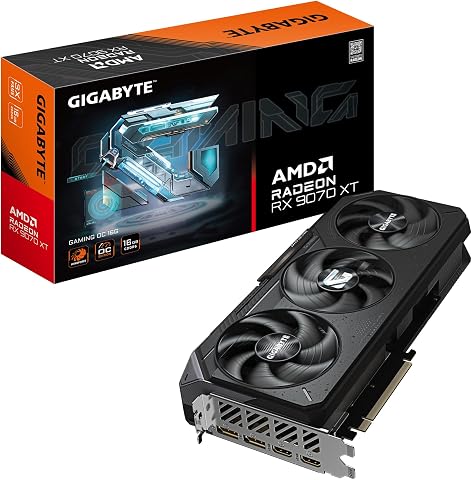 GIGABYTE Radeon RX 9070 XT Gaming OC 16G Graphics CardView on Amazon →
 - 6
 ASUS Prime Radeon RX 9070 XT 16GB GDDR6 OC Edition Gaming Graphics CardView on Amazon →
 - 7
 ASRock Radeon RX 9070 Challenger 16GB OC Graphics Card, RDNA 4, 2520MHz Boost…View on Amazon →
 - 8
 Kelinx AISURIX RX 580 8GB GDDR5 Graphics Card with Dual HDMI and DisplayPortView on Amazon →
 - 9
 GT 730 Graphics Card 4GB DDR3 64-bit with HDMI, DisplayPort, VGAView on Amazon →
 - 10
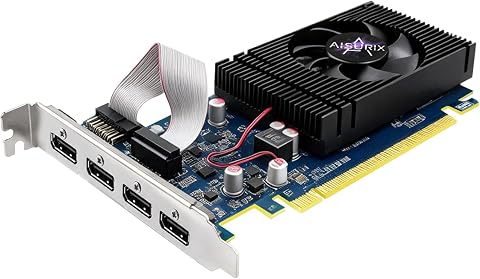 AISURIX GT 740 4GB GDDR5 Low-Profile Graphics Card with 4 HDMI PortsView on Amazon →
How the Picks Map to PC Builds
ThorstenMeyerAI.com’s list treats graphics-card selection as more than a performance ranking. A high-end card may be excessive for office work or a basic monitor, while a powerful model may not fit a small case or work with an older power supply. The guide’s categories give readers a starting point for matching GPU capability to the PC they already own.
For people considering AI or creative workloads, the article does not establish which card is best for a particular application. Software support, memory capacity and measured performance can vary by task. Readers should check the requirements and benchmarks for the programs they use rather than treat the site’s gaming-focused ranking as an AI performance comparison.
The guide also advises checking upgrade constraints that can affect total cost. A larger card may require a new power supply or case changes, while an older display-focused model may solve a monitor-connection problem without meeting modern gaming demands. ThorstenMeyerAI.com recommends checking these constraints before buying.
What the Ranking Compares
ThorstenMeyerAI.com says its ordering weighs generation, performance tier, memory, cooling, physical fit and display connectivity. The guide groups the RTX 5080 and RX 9070 XT cards at the high end, the RX 9070 and RTX 5070 as less extreme modern alternatives, and older models as options for specific needs. It says use case shaped the ranking alongside raw capability.
The article advises buyers to start with the games, software and monitor they actually use, then check exact card dimensions, slot thickness, power-supply capacity and required connectors. It notes that performance can vary between games and that memory capacity alone does not determine speed. These are presented as buying considerations, not findings from a published testing program.
Performance and Pricing Still Unspecified
The supplied ThorstenMeyerAI.com source does not identify a publication date, prices or direct benchmark data, and it does not explain the detailed scoring behind each position. Its top-pick label is the site’s recommendation, not a confirmed result from comparative testing described in the material.
The source also does not specify which AI applications or workloads were evaluated, if any. It provides no specific memory capacities, dimensions, power requirements or connector lists for all 10 cards. Those details can differ by board version, so buyers should verify the exact manufacturer specifications before purchase.
Check Exact Specs Before Buying
ThorstenMeyerAI.com provides a shortlist, not a final compatibility check. Before ordering, readers should compare current prices and independent results for the games or applications they use, then confirm dimensions, power connectors, PSU capacity and display outputs for the exact model. The supplied material specifies no follow-up testing or update.
Key Questions
Which card does the guide name as its overall pick?
ThorstenMeyerAI.com names the ASUS TUF Gaming GeForce RTX 5080 as its overall choice for a high-end gaming build. The supplied source does not include benchmark data supporting a direct performance comparison with the other RTX 5080 models.
Which options are presented as less demanding modern upgrades?
The guide identifies the ASRock Radeon RX 9070 Challenger and ASUS Prime GeForce RTX 5070 as options for buyers weighing an upgrade against a more modest system.
Are the GT 730 and GT 740 aimed at demanding new games?
No. ThorstenMeyerAI.com describes these older cards as better suited to basic display output or narrower needs, with low-profile fit highlighted for the AISURIX GT 740. The guide does not position them as alternatives to the newest cards for demanding gaming.
Does the ranking establish the best card for AI applications?
No. Although the topic includes AI, the supplied material does not report AI-specific benchmarks or application testing. Buyers should check performance and software compatibility for their particular workload.
What should buyers check before installing a card?
The guide recommends confirming the card’s case dimensions, available airflow, power-supply capacity and connectors. Buyers should also check that its display outputs match the monitors in use and compare performance in the games or software that matter to them.
Source: ThorstenMeyerAI.com
Fall Picks
fall essentials
As an affiliate, we earn on qualifying purchases.


![IKEA Made A Mod For Skyrim [Video]](https://digitechbytes.com/wp-content/uploads/2026/09/ikea-made-a-mod-for-skyrim-video-featured-560x300.jpg)