📊 Full opportunity report: AI And Human Oversight: Improving Agency Delivery With Review Trackers on IdeaNavigator AI — validation score, market gap, and execution plan.
TL;DR
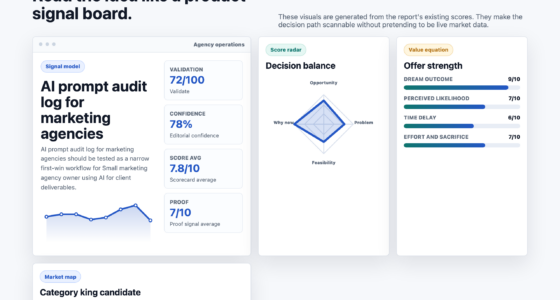
A prototype review tracker for AI-assisted service delivery is being tested at agencies to address visibility gaps. It helps monitor AI-generated and human-owned tasks, aiming to catch issues earlier and improve quality.
A new human-review tracker for AI-assisted agency delivery is being tested as a targeted workflow improvement. The tracker enables agency delivery leads to log each client task as either AI-generated or human-owned, monitor review status, and identify which outputs require human sign-off before delivery. This development addresses a key visibility gap that has emerged as agencies incorporate AI into their workflows, with the goal of catching errors earlier and reducing post-delivery client complaints.
The tracker is designed specifically for agencies running AI-assisted delivery services, where current project management tools do not distinguish between AI-generated outputs and human work. This lack of clarity often results in missed review steps, slipping handoffs, and quality issues surfacing only after client feedback. The prototype allows a delivery lead to create a unified view of all tasks, marking each as either AI or human, and tracking review and approval status in real-time.
According to an anonymous source involved in the testing, the tracker is a minimal viable product (MVP) that aims to validate whether improved visibility reduces errors. The plan involves recruiting eight AI-services agencies to run one live client engagement each through the system for three weeks. The primary metric will be whether review gates catch issues earlier than traditional workflows, potentially reducing rework and improving client satisfaction.
The tracker is offered as a per-seat monthly subscription, targeting the service-delivery operations software market. Its development responds to the rapid integration of AI steps into agency workflows, which has created a gap in oversight that generic project trackers cannot fill. The goal is to provide a narrow but effective solution that can be scaled if successful.
Why Improved Oversight of AI Tasks Matters
This development is significant because it directly addresses a critical challenge in AI-assisted service delivery: ensuring quality and accountability when AI outputs are involved. By offering real-time visibility into which tasks are AI-generated and which are human-owned, agencies can better manage handoffs and review processes. Early detection of errors can reduce costly rework, improve client satisfaction, and build trust in AI-enabled workflows. As AI becomes more embedded in service operations, tools like this review tracker could become standard practice for maintaining quality standards and operational efficiency.
As an affiliate, we earn on qualifying purchases.
Background on AI Integration in Service Agencies
Over the past year, many service agencies have accelerated the adoption of AI tools to enhance productivity and scale their operations. However, this integration has revealed gaps in existing project management systems, which lack the ability to differentiate between AI-generated and human work. This has led to oversight challenges, with errors often only identified after client complaints or project delivery. The idea of a dedicated review tracker emerged as a response to these issues, aiming to improve transparency and oversight in AI-assisted workflows.
Initial discussions and small-scale tests have shown promise, but comprehensive validation is still underway. The concept aligns with broader industry trends toward automation and better workflow management, emphasizing the need for specialized tools that support AI-human collaboration effectively.
“The tracker allows us to see at a glance which tasks still need human review, reducing the risk of errors slipping through.”
— an anonymous source involved in testing
Unconfirmed Impact and Broader Adoption Potential
It is not yet clear whether the review tracker will significantly reduce errors in practice or if agencies will adopt it widely after the pilot phase. The sample size is limited, and long-term effects on quality and client satisfaction remain to be validated. Additionally, questions remain about integration with existing project management tools and scalability beyond initial testing agencies.
Next Steps for Validation and Scaling
The current phase involves running the tracker with eight agencies over three weeks to measure its effectiveness in early error detection. Pending positive results, developers plan to refine the tool and seek broader adoption across the industry. Further studies may explore integration with popular project management platforms and potential enhancements, such as automated alerts or AI performance metrics.
Key Questions
How does the review tracker improve AI-assisted workflows?
The tracker provides real-time visibility into which tasks are AI-generated or human-owned, tracks review status, and ensures necessary sign-offs before delivery, reducing errors and rework.
Is this tracker meant to replace existing project management tools?
No, it is designed as a complementary system focused specifically on oversight of AI and human task ownership, intended to integrate with existing workflows.
When will the tracker be available for wider use?
Following successful pilot testing and validation, developers plan to refine the system and seek broader industry adoption, but a specific release date has not yet been announced.
What are the main benefits of using this review tracker?
It enhances oversight, helps catch errors earlier, reduces client complaints, and improves overall quality in AI-assisted service delivery.
Source: IdeaNavigator AI