
The TCL 55-inch QM6K is my best overall 4K smart TV for sports viewing because its Mini LED QLED display balances brightness, contrast, screen size, and price more convincingly than the rest of this lineup. The Sony BRAVIA XR 43-inch is the premium motion pick, pairing a 120Hz panel and XR processor with HDMI 2.1, while the Hisense 43-inch E6 offers a more affordable route to QLED color. Buyers must choose between smoother motion, stronger daylight visibility, wider group seating, and a larger screen rather than relying on resolution alone. Budget LED models can handle casual games, but their simpler backlights and less explicit motion credentials place them below the Mini LED and 120Hz leaders. Continue reading for the full breakdown of all 15 options and the buyer each one suits best.
Complete the kit



Key Takeaways
- The amazon.com/dp/B0D4P1T8RV?tag=digitechbytes.com-20&ascsubtag=dc-310300″ target=”_blank” rel=”nofollow sponsored noopener”>TCL QM6K leads overall because its 55-inch Mini LED QLED package offers the best balance of sports-friendly brightness, contrast, room-filling size, and attainable positioning.
- The Sony BRAVIA XR is the motion specialist: it is the only model here that explicitly combines 120Hz, an XR processor, and HDMI 2.1, though its 43-inch screen limits its appeal in large rooms.
- Screen size creates the sharpest tradeoff. The 75-inch TCL S5 delivers more stadium-like scale than the higher-ranked 43-inch models, but its standard LED design is less ambitious than the Mini LED contenders.
- Mini LED separates the stronger bright-room picks. The TCL QM6K, Samsung M70H, and Hisense E7SF have a backlight advantage over the many basic LED televisions in this group.
- Smart-platform preference matters most among the value models. Fire TV appears repeatedly, while Roku TV and Google TV provide clearer alternatives for buyers who dislike Amazon’s interface.




| 4K smart TVs for sports viewing | Screen Size | Resolution | Smart Platform |
|---|---|---|---|
| Insignia 43" Class F50 Series | 43 inches | 4K UHD (2160p) | — |
| Sony 43 Inch BRAVIA 2 II LED 4 | 43 inches | 4K HDR | Google TV |
| TCL 75-Inch Class S5 UHD 4K LE | 75 inches | UHD 4K | Fire TV |
| Amazon Ember 43" 4-Series 4K U | 43 inches | 4K Ultra HD | — |
| Sony 65 Inch BRAVIA 4K HDR Sma | 65 inches | 4K UHD | — |
| Hisense 43-Inch E6 Cinema Seri | 43 inches | 4K UHD | Fire TV |
| Roku Smart TV 2026 | 43 inches | 4K HDR | Roku |
| Sony 43 Inch BRAVIA XR Series | 43 inches | 4K HDR | Google TV with Gemini AI |
| TOSHIBA 43-Inch Class C350 Ser | 43 inches | 4K UHD | Fire TV with Alexa |
| TCL 55 Inch Class QM6K Series | 55 inches | 4K HDR | Google TV with voice remote and Alexa support |
| Samsung 43-Inch Class QLED Q7F | 43 inches | 4K | — |
| Samsung 43-Inch Class Crystal | 43 inches | 4K | — |
| Samsung 43-Inch Class Mini LED | 43 inches | 4K | — |
| Samsung 43-Inch Class Crystal | 43 inches | 4K UHD | — |
| Hisense 55" E7 Cinema Series H | 55 inches | 4K UHD | Fire TV |
More Details on Our Top Picks
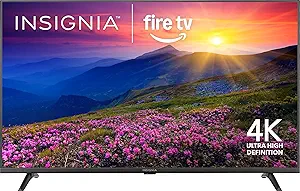
Insignia 43″ Class F50 Series LED 4K UHD Smart Fire TV
I place the Insignia F50 in the mixed-gear slot because its broad port selection suits viewers combining streaming sports, a cable box, and older audio or video hardware. For live games, 4K resolution and HDR10 can add clarity and contrast, while DTS Virtual-X aims for a wider sound field without extra speakers. Compared with the Amazon Ember 4-Series, it gives up HDR10+, Wi-Fi 6, and a fourth HDMI input, making it the less future-facing choice. The 43-inch screen also works better at close range than across a large living room. I see its real advantage in flexible connectivity and simple Fire TV access; buyers chasing more advanced motion handling should move toward the Sony BRAVIA 2 II or TCL S5.
Pros:- Broad connectivity includes Ethernet, composite, optical, coaxial, USB, and a headphone jack
- 4K UHD resolution with HDR10 support
- Fire TV interface and Alexa voice control
- DTS Virtual-X sound and VESA wall-mount compatibility
Cons:- The 43-inch screen can feel undersized in a large room
- HDR support is limited to HDR10 in the supplied product data
- Only three HDMI ports, with no enhanced refresh rate or VRR feature listed
Best for: Apartment sports viewers connecting a cable box, streaming services, and older audio or video equipment to one compact TV
Not ideal for: Viewers with large seating areas or those seeking 120 Hz motion features and broader HDR format support
- Screen Size:43 inches
- Resolution:4K UHD (2160p)
- HDR:HDR10
- Sound:DTS Virtual-X
- HDMI Ports:3
- Connectivity:Wi-Fi, Ethernet, USB, HDMI, composite, optical, coaxial, headphone jack
- Voice Assistant:Alexa via Fire TV remote
- Wall Mount:VESA 200×300
Our verdict“I recommend the Insignia F50 for compact sports setups that value connection flexibility more than advanced motion technology.”
Sony 43 Inch BRAVIA 2 II LED 4K HDR Smart Google TV (K-43S20M2)
I rank the Sony BRAVIA 2 II as the compact motion specialist because Motionflow XR directly addresses the blur and judder that can make rapid passes difficult to follow. The 4K Processor X1 and Triluminos Pro also prioritize detail and natural-looking team colors. Compared with the Insignia F50, this Sony presents a stronger picture-processing case and offers Google Cast alongside AirPlay 2, though its premium features may carry a higher price. Its 43-inch panel remains better suited to a bedroom or close seating position than a wide family room. The PS5 modes add gaming value but matter little to sports-only households. I favor its balance of motion control and compact dimensions; the TCL S5 is the better choice when sheer scale matters more.
Pros:- Motionflow XR is designed to improve fast-moving sports presentation
- 4K Processor X1 supports sharp, detailed HDR images
- Triluminos Pro expands color reproduction for uniforms and playing surfaces
- Google TV, AirPlay 2, and Google Cast provide broad streaming flexibility
Cons:- A 43-inch screen offers limited impact from longer seating distances
- Premium Sony processing may command a higher price than basic 43-inch models
- Dolby Vision and Dolby Atmos are not specified in the supplied product data
Best for: Sports fans in bedrooms, apartments, or small dens who prioritize cleaner motion and flexible casting
Not ideal for: Buyers furnishing a large viewing room or anyone unlikely to benefit from Sony processing and PS5-specific features
- Screen Size:43 inches
- Resolution:4K HDR
- Processor:4K Processor X1
- Color Technology:Triluminos Pro
- Motion Technology:Motionflow XR
- Smart Platform:Google TV
- Casting:Apple AirPlay 2 and Google Cast
- Gaming Features:Auto HDR Tone Mapping and Auto Genre Picture Mode
Our verdict“I would choose the BRAVIA 2 II for a small-room sports setup where motion handling matters more than screen size.”
TCL 75-Inch Class S5 UHD 4K LED Smart TV with Fire TV (75S551F, 2024 Model)
I put the TCL 75-inch S5 first for buyers seeking stadium-like scale without stepping away from a conventional LED panel. Its Motion Rate 240 and specified 120 Hz VRR give it the strongest motion-related specification set in this batch, although VRR benefits console games more directly than live broadcasts. Dolby Vision, HDR10+, HDR10, and HLG provide broad compatibility across sports streams and other content. Compared with the Sony 65-inch BRAVIA K-65S30, the TCL supplies ten extra inches and a listed high-refresh gaming feature, while the Sony makes a clearer case for improving lower-resolution feeds. Dolby Atmos and Fire TV round out the package. Its main compromise is room fit: 75 inches can overwhelm a small space and expose flaws in heavily compressed broadcasts.
Pros:- Large 75-inch screen creates an immersive view of the full field or court
- Motion Rate 240 and 120 Hz VRR provide strong action and gaming credentials
- Supports Dolby Vision, HDR10+, HDR10, and HLG
- Dolby Atmos, Fire TV, AirPlay 2, and Alexa are built in
Cons:- The 75-inch footprint is poorly suited to small rooms
- VRR has more direct value for gaming than ordinary live sports broadcasts
- A screen this large can make compression artifacts in weak feeds easier to see
Best for: Families with a large living room who want football, basketball, racing, or hockey displayed at maximum scale
Not ideal for: Apartment viewers with short seating distances or sports fans whose feeds are often low-resolution and heavily compressed
- Screen Size:75 inches
- Resolution:UHD 4K
- HDR Formats:Dolby Vision, HDR10+, HDR10, HLG
- Motion Rate:240
- VRR:120 Hz
- Audio:Dolby Atmos
- Smart Platform:Fire TV
- Model Year:2024
Our verdict“I recommend the TCL S5 when big-screen impact and broad HDR support outweigh concerns about space and imperfect broadcast quality.”
Amazon Ember 43″ 4-Series 4K Ultra HD Smart TV with Fire TV and Alexa Remote
I choose the Amazon Ember 4-Series for Fire TV households that frequently switch among sports apps, consoles, and set-top boxes. Its Wi-Fi 6 connection and four HDMI inputs give it an advantage over the Insignia F50, which lists three HDMI ports and lacks Wi-Fi 6. HDR10+ can adjust contrast more precisely with compatible content, while Instant On reduces the delay before a game or app appears. The quad-core processor and Alexa remote support quick content discovery, though actual streaming stability still depends on the router and internet service. Compared with the Sony BRAVIA 2 II, the Ember lacks a stated sports-focused motion system such as Motionflow XR. I see this as a connected entertainment hub rather than a picture-performance leader, and its 43-inch size limits its appeal in larger rooms.
Pros:- Wi-Fi 6 supports modern home networks and high-resolution streaming
- Four HDMI inputs accommodate multiple source devices
- HDR10+ offers dynamic HDR support with compatible content
- Instant On, Alexa voice control, AirPlay, and Fire TV simplify daily access
Cons:- The 43-inch screen has limited impact at longer viewing distances
- Dolby Vision is not listed among the supported HDR formats
- No dedicated motion-enhancement or 120 Hz VRR feature is specified
Best for: Fire TV users with several HDMI devices and a Wi-Fi 6 network who watch sports from multiple streaming apps
Not ideal for: Motion-sensitive sports fans or large-room viewers who need a bigger panel and dedicated action-processing features
- Screen Size:43 inches
- Resolution:4K Ultra HD
- HDR:HDR10+
- Processor:Quad-core
- Wireless Connectivity:Wi-Fi 6 and AirPlay
- HDMI Inputs:4
- Remote:Alexa Voice Remote Enhanced
- Additional Features:Ambient Experience, Instant On, Amazon Luna, Xbox Game Pass
Our verdict“I favor the Amazon Ember for connected Fire TV households that value app access and device capacity over advanced sports motion processing.”
Sony 65 Inch BRAVIA 4K HDR Smart Google TV (K-65S30)
I give the Sony 65-inch BRAVIA K-65S30 the upscaling role because 4K X-Reality PRO and the X1 processor are designed to improve lower-resolution sources toward 4K. That matters when sports arrive through cable channels or compressed streams rather than pristine UHD feeds. Triluminos Pro, Dolby Vision, and Dolby Atmos strengthen color, contrast, and sound for other viewing as well. Compared with the TCL 75-inch S5, this Sony sacrifices ten inches and lacks a specified 120 Hz VRR feature, but it presents a stronger processing proposition for mixed-quality broadcasts. It also offers a much larger picture than the 43-inch BRAVIA 2 II, although Motionflow XR is not listed here. I recommend it for varied sports sources, provided the premium price and more involved feature set fit the buyer.
Pros:- 4K X-Reality PRO is designed to improve lower-resolution sports feeds
- 4K HDR Processor X1 and Triluminos Pro support detailed, vivid images
- Dolby Vision and Dolby Atmos broaden home-cinema capability
- Google TV, AirPlay 2, and Chromecast offer flexible content access
Cons:- Premium pricing may place it beyond value-focused budgets
- No 120 Hz, VRR, or HDMI 2.1 capability is specified in the supplied data
- The feature set may take longer to learn than a basic Fire TV interface
Best for: Living-room viewers who alternate between cable sports, HD broadcasts, and 4K streaming services of varying picture quality
Not ideal for: High-refresh enthusiasts who demand a specified 120 Hz or VRR feature, or shoppers working within a tight TV budget
- Screen Size:65 inches
- Resolution:4K UHD
- HDR:HDR and Dolby Vision
- Audio:Dolby Atmos
- Processor:4K HDR Processor X1
- Color Technology:Triluminos Pro
- Upscaling:4K X-Reality PRO
- Streaming and Casting:Google TV, Google Assistant, AirPlay 2, Chromecast
- Included Content:5 movie credits and 12 months of Sony Pictures Core
Our verdict“I would buy the K-65S30 for a medium-to-large room when improving mixed-quality sports feeds matters more than obtaining the biggest or fastest panel.”
Hisense 43-Inch E6 Cinema Series Hi-QLED 4K UHD Smart Fire TV (43E6QF)
I place the Hisense E6 Cinema Series ahead of the Roku Select Series for viewers who want richer team colors and broader HDR support from a compact screen. Its Hi-QLED panel and Dolby Vision should give uniforms, courts, and daytime fields more visual energy, while MEMC and Motion Rate 120 aim to reduce blur during quick plays. The AI light sensor also adapts the picture when a bright afternoon room becomes darker at night. Still, Motion Rate 120 does not confirm a native 120Hz panel, so the Sony BRAVIA XR remains my stronger 43-inch choice for demanding motion handling. The 43-inch footprint also feels undersized across a large living room, and Dolby Atmos cannot compensate fully for the limits of compact built-in speakers. I see this as a color-focused small-room pick rather than a performance leader.
Pros:- Hi-QLED technology produces a wider, more vivid color presentation than basic LED models
- Dolby Vision, HDR10+, HDR10, and HLG provide broad compatibility with sports and streaming sources
- MEMC and Motion Rate 120 target smoother fast-action playback
- AI light sensing and 4K upscaling adapt the picture to the room and lower-resolution broadcasts
Cons:- Motion Rate 120 is not the same as a confirmed native 120Hz refresh rate
- The 43-inch screen can feel too small for group viewing in a spacious room
- Compact onboard audio may not deliver the scale implied by Dolby Atmos
Best for: Apartment dwellers and bedroom viewers who want vivid sports color, broad HDR compatibility, and Fire TV in a 43-inch set
Not ideal for: Large-room viewers or motion-sensitive fans who want a confirmed native 120Hz panel
- Screen Size:43 inches
- Display Technology:Hi-QLED
- Resolution:4K UHD
- HDR Formats:Dolby Vision, HDR10+, HDR10, HLG
- Motion Technology:Motion Rate 120 and MEMC
- Smart Platform:Fire TV
- Audio:Dolby Atmos
- Connectivity:Wi-Fi 6
- Picture Features:AI Light Sensor and AI 4K Upscaler
Our verdict“I recommend the Hisense E6 to small-room sports fans who value vivid color more than verified high-refresh performance.”
Roku Smart TV 2026 – 43-Inch Select Series 4K HDR LED TV with Voice Remote
I rank the Roku Select Series as the easiest entry point for fans who care more about finding a game quickly than adjusting picture controls. The straightforward Roku interface, voice remote, and broad assistant support make switching among sports apps less cumbersome than the feature-heavy Sony BRAVIA XR. Bluetooth Headphone Mode is useful for late-night matches when speakers would disturb other people. Its limits become clearer once play starts: HDR10 is less flexible than the Hisense E6 model’s wider HDR selection, and the supplied data does not identify dedicated motion processing or a high native refresh rate. Fast camera pans may lack the polish of the TCL QM6K, while built-in sound may need help from a soundbar. The 43-inch LED panel also suits close seating better than a large watch party. For me, convenience earns this role, not outright sports-picture performance.
Pros:- Roku interface offers simple navigation and quick access to streaming apps
- Voice remote works with Roku Voice and supports major external voice assistants
- Bluetooth Headphone Mode supports private late-night viewing
- Frameless 43-inch design fits compact entertainment spaces
Cons:- No specified high native refresh rate or dedicated sports motion system
- HDR10 support is narrower than the Hisense E6 and TCL QM6K format coverage
- Built-in sound may require an external speaker system for match-day impact
Best for: Casual sports streamers in bedrooms or apartments who want quick app access and private Bluetooth listening
Not ideal for: Picture enthusiasts and large watch-party hosts who need advanced motion control, expansive HDR support, or a bigger screen
- Screen Size:43 inches
- Display Type:LED
- Resolution:4K HDR
- HDR Support:HDR10
- Smart Platform:Roku
- Wireless Connectivity:Wi-Fi and Bluetooth
- Remote:Voice remote
- Private Listening:Bluetooth Headphone Mode
Our verdict“I favor the Roku Select Series for casual fans who want the simplest route to streamed sports and can accept modest motion credentials.”
Sony 43 Inch BRAVIA XR Series 4K HDR Smart Google TV with XR Processor, Dolby Vision/Atmos, 120Hz, HDMI 2.1, PS5 Features
Among the compact models, I give the Sony BRAVIA XR the performance lead because its native 120Hz refresh rate provides a firmer basis for clean ball movement and smooth camera pans than the Hisense E6 model’s Motion Rate 120 label. The XR Processor adds picture and noise reduction that can help compressed cable feeds look cleaner, while Dolby Vision and Dolby Atmos broaden its appeal beyond live games. Four HDMI 2.1 ports, VRR, and ALLM also make it far more flexible than the Roku Select Series for buyers who split their time between sports and current-generation consoles. Buyers pay for that depth, and the many picture, gaming, and Gemini AI functions may feel excessive to someone seeking basic streaming. Its 43-inch size still limits viewing distance and group appeal. I rank it below the TCL QM6K overall because Sony’s smaller panel delivers less stadium-like scale.
Pros:- Native 120Hz refresh rate supports clearer fast motion than rate-based marketing systems
- XR Processor applies AI picture optimization and noise reduction to varied broadcast sources
- Four HDMI 2.1 ports with VRR and ALLM support modern consoles and other high-bandwidth devices
- Dolby Vision, Dolby Atmos, and DTS:X provide broad home-entertainment support
Cons:- Premium positioning may be difficult to justify for buyers who only stream occasional games
- The 43-inch screen lacks the group-viewing scale of the 55-inch TCL QM6K
- Extensive picture, gaming, and smart features create a steeper setup curve
Best for: Sports and console-gaming enthusiasts who need strong motion handling and HDMI 2.1 features in a compact room
Not ideal for: Budget-minded watch-party hosts who would gain more from a larger screen than advanced processing
- Screen Size:43 inches
- Resolution:4K HDR
- Processor:XR Processor with AI Technology
- Refresh Rate:120Hz
- HDR Support:Dolby Vision
- Audio:Dolby Atmos, DTS:X, X-Balanced Speakers
- HDMI:4 HDMI 2.1 ports
- Gaming Features:VRR, ALLM, Auto HDR Tone Mapping, Auto Genre Picture Mode
- Smart Platform:Google TV with Gemini AI
Our verdict“I would choose the Sony BRAVIA XR when compact size is mandatory but motion clarity and gaming connectivity cannot be compromised.”
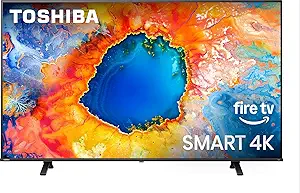
TOSHIBA 43-Inch Class C350 Series LED 4K UHD Smart Fire TV with Voice Remote and Alexa
I see the Toshiba C350 Series as the Fire TV choice for buyers who move between televised sports and console play. Compared with the Roku Select Series, its VRR, ALLM, and eARC provide a more capable connection set for gaming and external audio, while Dolby Vision adds richer HDR compatibility. Ultimate Motion is intended to smooth rapid action, and the Super Contrast Booster may help players stand apart from the field. Yet Toshiba does not state a native refresh rate here, so I would not place it above the Sony BRAVIA XR for motion-sensitive viewers. Connectivity details are also sparse, and getting VRR, HDR, and audio return settings aligned may take more setup than the Roku model requires. Like the Hisense E6, its 43-inch screen works best at a short distance. I recommend it for feature breadth within Fire TV, with some uncertainty around panel speed and speaker capability.
Pros:- VRR and ALLM provide useful gaming support alongside sports streaming
- Dolby Vision expands HDR playback beyond basic HDR10-only sets
- eARC simplifies sending higher-quality audio to a compatible soundbar or receiver
- Fire TV combines streaming apps, live channels, Alexa, and voice control
Cons:- No native refresh rate is specified, leaving motion capability less certain than on the Sony BRAVIA XR
- Limited connectivity details make device planning harder
- Speaker output and volume capability are not stated
Best for: Small-room Fire TV users who watch sports, connect a game console, and plan to use a soundbar through eARC
Not ideal for: Buyers who need a documented native 120Hz panel or fully specified connectivity before purchasing
- Screen Size:43 inches
- Display Type:LED
- Resolution:4K UHD
- HDR Support:Dolby Vision
- Motion Technology:Ultimate Motion
- Contrast Technology:Super Contrast Booster
- Gaming Features:ALLM and VRR
- Audio:Dolby Atmos with eARC
- Smart Platform:Fire TV with Alexa
Our verdict“I recommend the Toshiba C350 to compact-room Fire TV fans who want console-friendly connections and will accept incomplete panel details.”
TCL 55 Inch Class QM6K Series Mini LED QLED 4K HDR Smart Google TV
I rank the TCL QM6K first because it combines the two upgrades that matter most for sports: a larger, brighter-looking display architecture and genuinely high refresh capability. Its 55-inch Mini LED QLED panel offers more watch-party scale, color volume, and contrast control than every 43-inch model in this batch. The native 144Hz refresh rate also gives rapid passes and sweeping camera motion a stronger foundation than the Hisense E6 or Toshiba C350, while exceeding the Sony BRAVIA XR’s 120Hz figure. Broad HDR support, Onkyo audio, and Google TV round out a versatile package. The tradeoff is space and likely cost: this is harder to place in a bedroom, and its picture and motion settings may require patient adjustment. Buyers committed to Fire TV may also prefer the Hisense. Even so, the best blend of scale and motion makes this my sports leader.
Pros:- 55-inch Mini LED QLED panel provides stronger group-viewing scale, color, and contrast than the 43-inch options
- Native 144Hz refresh rate is the highest specified rate in this batch
- Dolby Vision, HDR10+, HDR10, and HLG cover a wide range of HDR sources
- Onkyo audio and Dolby Atmos offer a stronger sound foundation than unspecified basic speaker systems
Cons:- The 55-inch footprint is less suitable for tight bedrooms and compact furniture
- Premium display technology may place it above basic LED models in price
- Advanced picture and motion controls may take time to configure well
Best for: Dedicated sports fans hosting small watch parties who want a 55-inch screen, strong contrast, and high-refresh motion
Not ideal for: Small-bedroom viewers, strict Fire TV users, or buyers who want a basic set with minimal picture adjustment
- Screen Size:55 inches
- Series:QM6K
- Display Technology:Mini LED QLED
- Resolution:4K HDR
- HDR Formats:Dolby Vision, HDR10+, HDR10, HLG
- Refresh Rate:144Hz native
- Motion Rate:480
- Audio:Onkyo with Dolby Atmos
- Smart Platform:Google TV with voice remote and Alexa support
Our verdict“I choose the TCL QM6K for buyers who want the strongest mix of sports-friendly size, contrast, color, and verified refresh performance.”
Samsung 43-Inch Class QLED Q7F Series Smart TV (2025 Model, 43Q7F)
I place the Samsung Q7F above Samsung’s Crystal UHD models for viewers who want richer team colors and stronger highlight detail in a compact room. Its QLED panel and Quantum HDR should give bright uniforms, illuminated scoreboards, and shaded sections of a stadium more visual separation than the Samsung U8000F. The Q4 AI Gen1 processor also adjusts picture and sound, which can help mixed-quality broadcasts appear more consistent. This is not my first choice for rapid action, though: Samsung provides no stated refresh-rate advantage, while the Samsung M70H offers 120Hz. Connectivity details are also sparse, and the 43-inch screen may feel undersized across a large living room. I see this as a color-focused compact pick, not the strongest motion performer.
Pros:- QLED color adds richness to uniforms, fields, and broadcast graphics
- Quantum HDR and HDR10+ improve highlight and shadow separation
- AI processing adjusts picture and sound for varied broadcast sources
- Samsung TV Plus supplies more than 2,700 free streaming channels
Cons:- No refresh rate or advanced sports-motion specification is provided
- Connectivity details are not stated
- 43-inch screen lacks the immersion of the 55-inch Hisense E7
Best for: I recommend this for apartment dwellers and bedroom viewers who prioritize vivid team colors and HDR contrast over a large screen.
Not ideal for: I would skip it for hockey, motorsport, or gaming fans seeking a documented 120Hz or 144Hz refresh rate.
- Model Year:2025
- Screen Size:43 inches
- Display Technology:QLED
- Resolution:4K
- HDR:Quantum HDR, HDR10+
- Processor:Q4 AI Gen1
- Sound:Object Tracking Sound Lite
- Smart Features:Samsung Vision AI, Gaming Hub, Alexa Built-in
- Security:Samsung Knox Security
Our verdict“I would choose the Q7F for colorful sports viewing in a small room, but motion-focused buyers should move up to the M70H.”
Samsung 43-Inch Class Crystal UHD U8000H Series Smart TV (2026 Model, 43U8000H)
I rank the Samsung U8000H as the value-minded choice for viewers who watch several sports without juggling paid services. Samsung TV Plus supplies more than 2,700 free channels, while the Crystal Processor 4K sharpens lower-resolution feeds that might otherwise look soft on a 4K panel. Motion Xcelerator gives it a sports-specific advantage over basic entry-level sets, but Samsung does not state a high native refresh rate. That leaves the 120Hz Samsung M70H better suited to fast puck movement and sweeping camera pans. The U8000H also lacks documented HDR support, so it cannot match the Q7F’s HDR10+ presentation for contrast. I view its low-friction streaming package as the main attraction, with picture ambition kept at a more modest level.
Pros:- Crystal Processor 4K improves the sharpness of lower-quality broadcasts
- Motion Xcelerator is aimed at smoother sports and game movement
- Samsung TV Plus includes more than 2,700 free channels
- Color Booster adds extra intensity to fields and uniforms
Cons:- No HDR format is specified
- No high native refresh rate is documented
- Streaming features depend on an internet connection
Best for: I recommend this for budget-conscious cord-cutters who want free sports content and useful 4K upscaling in a bedroom or small den.
Not ideal for: I would skip it for HDR enthusiasts or serious motion purists because HDR support and a high native refresh rate are not documented.
- Model Year:2026
- Screen Size:43 inches
- Series:U8000H
- Resolution:4K
- Processor:Crystal Processor 4K
- Motion Technology:Motion Xcelerator
- Picture Features:Color Booster, 4K Upscaling
- Content:Samsung TV Plus with 2,700+ free channels
- Voice Assistant:Alexa Built-in
Our verdict“I would buy the U8000H for affordable, easy-access sports streaming, while paying more for the M70H if motion clarity leads the decision.”
Samsung 43-Inch Class Mini LED M70H Series Smart TV (2026 Model, 43M70H)
The Samsung M70H earns my compact performance slot because its Mini LED backlight and 120Hz refresh rate address two major sports-viewing demands: controlled contrast and cleaner motion. Compared with the Samsung Q7F, the 120Hz panel is better equipped for quick passes, racing footage, and rapid camera movement. Mini LED HDR should also retain more detail around bright stadium lights than Samsung’s basic U8000H. The tradeoff is value: this model carries premium display hardware in a 43-inch frame, while the 55-inch Hisense E7 delivers a larger screen and faster 144Hz rate. Samsung also provides little sound detail, so buyers planning a full match-day setup may need external audio. I rank it highly for small-room motion clarity, not maximum screen size per dollar.
Pros:- 120Hz refresh rate supports clearer fast-action movement
- Mini LED HDR improves brightness control and dark-scene contrast
- Pure Spectrum Color is designed for vivid, lifelike color
- Gaming Hub and specialized sports and gaming modes add versatility
Cons:- Premium display hardware may make it expensive for a 43-inch TV
- Sound capabilities are not described in detail
- Smaller screen is less immersive for group viewing than the Hisense E7
Best for: I recommend this for sports fans in apartments, offices, or bedrooms who want 120Hz motion and Mini LED contrast without fitting a large television.
Not ideal for: I would skip it for shoppers seeking the largest screen per dollar or anyone expecting detailed built-in audio specifications.
- Model Year:2026
- Screen Size:43 inches
- Series:M70H
- Resolution:4K
- Display Technology:Mini LED
- Refresh Rate:120Hz
- HDR:Mini LED HDR
- Color Technology:Pure Spectrum Color
- Gaming Features:Gaming Hub, Motion Xcelerator + DLG
Our verdict“I would pick the M70H when 120Hz sports motion matters more than getting a larger screen for the same budget.”
Samsung 43-Inch Class Crystal UHD U8000F 4K Smart TV (2025 Model)
I give the Samsung U8000F the style-first role because its slim bezel and metal-sheet design fit neatly into a bedroom, kitchen, or carefully arranged living space. Its 4K upscaling can clean up softer broadcasts, and Motion Xcelerator up to 60Hz provides adequate handling for casual football or baseball viewing. Yet this is a clear step below the Samsung M70H for rapid sports: the M70H combines 120Hz motion with Mini LED contrast, while the U8000F has no stated HDR support. The newer Samsung U8000H also adds Color Booster, making that model the more picture-focused budget choice. What keeps the U8000F relevant is its polished physical design, Samsung Knox protection, and extensive free content. I would treat it as a room-friendly everyday TV that can show sports, rather than a specialist sports display.
Pros:- Slim metal-sheet design looks refined in compact spaces
- 4K upscaling improves lower-resolution television feeds
- Samsung Knox Security protects connected-TV data
- Samsung TV Plus offers more than 2,700 free channels
Cons:- Motion technology is limited to 60Hz
- No HDR format is specified
- 43-inch screen is too small for many group-viewing rooms
Best for: I recommend this for casual sports viewers who need an attractive 43-inch television for a bedroom, kitchen, or design-conscious small living room.
Not ideal for: I would skip it for fans sensitive to motion blur because its motion processing tops out at 60Hz and no HDR support is stated.
- Model Year:2025
- Screen Size:43 inches
- Resolution:4K UHD
- Design:Metal sheet, slim bezel, aircraft-inspired
- Security:Samsung Knox Security
- Content:Samsung TV Plus with 2,700+ free channels
- Motion Technology:Motion Xcelerator up to 60Hz
Our verdict“I would choose the U8000F for design and casual viewing, but not when fast-motion performance is the main buying priority.”
Hisense 55″ E7 Cinema Series Hi-QLED Mini-LED 4K UHD Smart Fire TV (55E7SF, 2026 Model)
I rank the Hisense E7 Cinema Series highest in this batch for viewers building a sports-centered living room. Its 55-inch screen offers more group-viewing impact than every 43-inch Samsung here, while the 144Hz native refresh rate gives fast passes, racing action, and camera pans stronger motion credentials than the 120Hz Samsung M70H. Hi-QLED Mini-LED lighting and broad HDR support also help preserve bright highlights and darker crowd detail. Dolby Atmos adds a more ambitious audio format than the M70H’s unspecified sound system. This capability comes with added cost and setup complexity; buyers may need time to tune motion smoothing, AI modes, and Fire TV preferences. A 75-inch TCL S5 still suits a much larger room better. For balanced size and speed, though, I see the E7 as the strongest sports-first package among these five.
Pros:- 144Hz native refresh rate is well suited to fast sports and gaming
- Hi-QLED Mini-LED backlighting supports bright highlights and controlled contrast
- Dolby Vision IQ, HDR10+ Adaptive, HDR10, and HLG cover major HDR formats
- 55-inch screen provides better group-viewing impact than the 43-inch models
Cons:- Premium feature set may carry a higher price
- Numerous picture and motion settings can require careful setup
- 55-inch size may still feel small in rooms suited to a 75-inch television
Best for: I recommend this for households watching football, basketball, hockey, or motorsport together in a medium-size living room.
Not ideal for: I would skip it for small bedrooms, tight budgets, or buyers who prefer a simple picture setup with few processing options.
- Model Year:2026
- Screen Size:55 inches
- Display Technology:Hi-QLED Mini-LED
- Resolution:4K UHD
- Refresh Rate:144Hz native
- HDR Support:Dolby Vision IQ, HDR10+ Adaptive, HDR10, HLG
- Sound:Dolby Atmos
- Smart Platform:Fire TV
Our verdict“I would choose the Hisense E7 for a medium-size room where big-screen immersion and high-refresh-rate sports motion share equal priority.”
How We Picked
I ranked these televisions specifically for live sports rather than treating general movie quality as the main goal. My weighting placed motion handling and refresh capability at 35%, followed by brightness, contrast, and backlight control at 30%. Screen size and room suitability accounted for 15%, smart-platform usability for 10%, and feature-based value for 10%. Models with explicit 120Hz support, stronger processing, or Mini LED backlighting moved upward because those features can improve fast play, bright broadcasts, and daytime viewing.
I also compared each television with the closest alternatives in this list. A larger basic LED model gained credit for immersion but lost ground when its motion credentials or backlight control were less persuasive; a premium 43-inch model earned points for processing but was marked down for limited scale. Temporary sale prices did not drive the order, since they change too quickly, so value reflects the supplied feature set and likely market tier. I also treated unclear refresh-rate claims cautiously rather than assuming that every motion-related marketing label represents a native high-refresh panel.
| 4K smart TVs for sports viewing | Smart Platform |
|---|---|
| Insignia 43" Class F50 Series | — |
| Sony 43 Inch BRAVIA 2 II LED 4 | Google TV |
| TCL 75-Inch Class S5 UHD 4K LE | Fire TV |
| Amazon Ember 43" 4-Series 4K U | — |
| Sony 65 Inch BRAVIA 4K HDR Sma | — |
| Hisense 43-Inch E6 Cinema Seri | Fire TV |
| Roku Smart TV 2026 | Roku |
| Sony 43 Inch BRAVIA XR Series | Google TV with Gemini AI |
| TOSHIBA 43-Inch Class C350 Ser | Fire TV with Alexa |
| TCL 55 Inch Class QM6K Series | Google TV with voice remote and Alexa support |
| Samsung 43-Inch Class QLED Q7F | — |
| Samsung 43-Inch Class Crystal | — |
| Samsung 43-Inch Class Mini LED | — |
| Samsung 43-Inch Class Crystal | — |
| Hisense 55" E7 Cinema Series H | Fire TV |
Factors to Consider When Choosing 4K Smart TVs For Sports Viewing
I would choose a sports television by matching its motion, brightness, size, and viewing angles to the room before comparing smart features. A display that looks excellent from one central seat may disappoint a group spread across a sectional, while an oversized screen can expose compression in lower-quality broadcasts. The factors below help separate features that change the game-day experience from labels that add little practical value.
Prioritize Native Refresh Rate Over Motion Labels
A native 120Hz panel is the clearest upgrade for buyers sensitive to blur during football passes, hockey movement, or rapid camera pans. Most live broadcasts still arrive at 50 or 60 frames per second, so 120Hz does not create extra source detail, but it gives the television more flexibility when displaying and processing that signal. Marketing terms such as motion rate may describe software rather than the panel’s real refresh capability. I would verify the native panel specification instead of comparing branded motion numbers across manufacturers. Aggressive motion smoothing can make movement look artificial or introduce halos around players, so adjustable processing is more useful than a permanently forceful setting. Buyers who mainly watch slower sports or occasional games can save money with a standard panel, while frequent hockey, basketball, and motorsport viewers have more reason to pay for 120Hz.
Match Screen Size to Seating Distance and Source Quality
A larger screen makes formations, score graphics, and distant players easier to follow, which gives the 65- and 75-inch models a genuine sports advantage. Size alone does not guarantee a cleaner image, since compressed cable feeds can look rough when enlarged from a short distance. For a typical living room, 55 or 65 inches often offers a better balance than 43 inches without dominating the space. A 43-inch television fits bedrooms, kitchens, and close seating, but it provides less shared-event impact even when its processing is superior. I would also measure the stand or wall area because listed screen size does not reveal the television’s full width or foot placement. If the choice is between a huge basic LED display and a smaller Mini LED model, decide whether immersion or cleaner contrast matters more in the intended room.
Account for Daylight, Glare, and Backlight Control
Sports are often watched during the day, making sustained brightness and reflection control more relevant than perfect black levels in a dark room. Mini LED backlights use many smaller lighting zones, which can produce brighter highlights while keeping dark uniforms and crowd areas from looking washed out. QLED describes a color-enhancing layer rather than the backlight itself, so a QLED television is not automatically a Mini LED television. Standard LED models can still work well in rooms with curtains or controlled lighting, especially when viewed straight on. I would avoid judging brightness from vivid store modes, which often exaggerate color and sharpening. For rooms with uncovered windows, Mini LED is the upgrade most likely to remain visible during afternoon games, though screen reflections and panel finish still affect the result.
Plan for Group Viewing Angles
Wide seating changes the buying decision because color and contrast can fade when viewers move away from the center. Panel type, screen coating, and manufacturer processing all influence off-axis performance, yet these details are often missing from retail titles. A television with excellent head-on contrast may be the wrong choice for a party where several people sit near the room’s edges. I would place viewing-angle performance above perfect black levels when the main use is hosting groups. A swiveling stand or adjustable wall mount can help in smaller spaces, but it cannot serve viewers seated on both sides at once. Buyers with one main seat can favor stronger direct-view contrast, while regular hosts should seek credible angle measurements in full reviews before ordering.
Choose a Smart Platform Around Your Sports Services
App availability matters more than the number of apps advertised. I would list the exact services used for local broadcasts, league packages, cable replacement, and regional coverage, then confirm that each has a supported television app. Fire TV offers close Alexa integration but appears on many models in this roundup, which makes those sets feel similar during everyday use. Roku TV is generally aimed at straightforward navigation, while Google TV can be a better fit for viewers already using Google accounts and casting. Built-in platforms age faster than display hardware, so a replaceable streaming device can solve future software gaps. For that reason, I would not accept weaker motion or picture quality merely to obtain a preferred interface; an external streamer is easier to replace than the panel.
Budget for Inputs, Audio, and the Full Setup
HDMI 2.1 carries the most value for sports fans who also play games, especially when paired with 4K at 120Hz, variable refresh rate, and low-latency support. Broadcast viewing alone does not require a full set of advanced HDMI ports, so paying more for them makes less sense if no modern console will be connected. Count the cable box, streaming device, console, disc player, and soundbar before deciding how many ports are sufficient. Built-in television speakers can make commentary clear, but they rarely create the scale that a large screen suggests. A soundbar connected through eARC or ARC may improve intelligibility and crowd atmosphere more than moving one step up within a closely matched entry-level TV range. I would compare the total setup cost, including mounts, cables, audio, and any external streamer, rather than using panel price alone.
Frequently Asked Questions
Is a 120Hz TV worth paying more for when most sports broadcasts are 60fps?
120Hz can still be worthwhile because it gives the television more flexibility when processing 50Hz and 60Hz feeds, especially during rapid pans and fast play. It cannot restore detail removed by broadcast compression or turn a low-frame-rate source into a true high-frame-rate feed. The benefit depends heavily on the television’s processing and the motion settings selected. I would pay extra for 120Hz if hockey, basketball, motorsport, or gaming dominates the viewing schedule. Casual viewers of slower sports may get better value from a brighter 60Hz television with a larger screen.
Should I choose Mini LED or QLED for daytime sports?
Mini LED is usually the more useful daylight upgrade because it changes how the screen is illuminated and can improve brightness and local contrast. QLED can expand color volume, but the label does not promise advanced dimming or strong reflection handling. Some televisions, including models in this roundup, combine both technologies and gain benefits from each. I would favor that combination for a bright family room where games run throughout the afternoon. In a shaded bedroom or smaller space, a lower-priced QLED or standard LED set may already be bright enough.
Is a 43-inch premium TV better than a 55- or 65-inch budget TV for sports?
The answer depends on seating distance and whether motion precision or immersion matters more. A premium 43-inch model such as the Sony BRAVIA XR can offer stronger processing and explicit 120Hz support, but distant players will still appear smaller than on a 65-inch screen. From close seating in a bedroom or compact apartment, the smaller premium set can be the better choice. Across a large living room, I would usually accept some picture compromise to gain more scale. The best middle ground in this list is a 55-inch Mini LED model, which avoids the most severe version of either tradeoff.
Does the built-in smart platform affect sports picture quality?
The platform itself does not improve the panel, but app quality, stream resolution, frame-rate handling, and service support can affect what reaches the screen. The same event may look different across a cable box, built-in app, and external streaming device because each path uses different compression or output settings. I would choose the television for its display performance, then use an external device if the preferred app is missing or unreliable. Confirm that the service supports 4K or HDR for the events watched, since many live channels remain HD. A polished interface is convenient, but it should not outrank motion handling, brightness, or screen size.
When should I spend more on the TV instead of adding a soundbar?
Spend more on the television when the upgrade buys a 120Hz panel, better processing, or Mini LED backlighting, since audio equipment cannot replace those display improvements. Add a soundbar when the preferred TV already handles motion and daylight well but commentary sounds thin or muddy. For entry-level models with similar panels, a modest soundbar may change the game-day experience more than moving to a nearby television tier. Buyers who watch in a noisy room should favor clear dialogue and a dedicated center channel over heavy bass alone. I would reserve enough of the budget for audio rather than pairing an expensive large screen with hard-to-hear commentary.
Conclusion
For the widest range of sports viewers, my best overall pick is the TCL 55-inch QM6K because its Mini LED QLED design and useful 55-inch scale balance picture quality, brightness, and room fit. The Hisense 43-inch E6 is my value choice for buyers who want QLED color and Fire TV without moving into the premium tier. Beginners who prioritize easy everyday navigation should start with the 43-inch Roku Select Series, though its basic LED hardware is aimed more at casual viewing than demanding motion fans.
The Sony BRAVIA XR 43-inch is my premium recommendation for motion-sensitive viewers and console owners, thanks to its stated 120Hz panel, XR processor, and HDMI 2.1 support; buyers with distant seating should skip it for a larger model. For stadium-like scale, I would choose the 75-inch TCL S5, accepting simpler backlight technology in exchange for a much bigger image. Bright-room shoppers should compare the Samsung M70H and Hisense E7SF with the QM6K, while buyers wanting a balanced 65-inch Google TV should look at the Sony K-65S30. My final choice would come down to one priority: the QM6K for balance, Sony XR for motion, Hisense E6 for value, Roku for simplicity, or TCL S5 for sheer size.