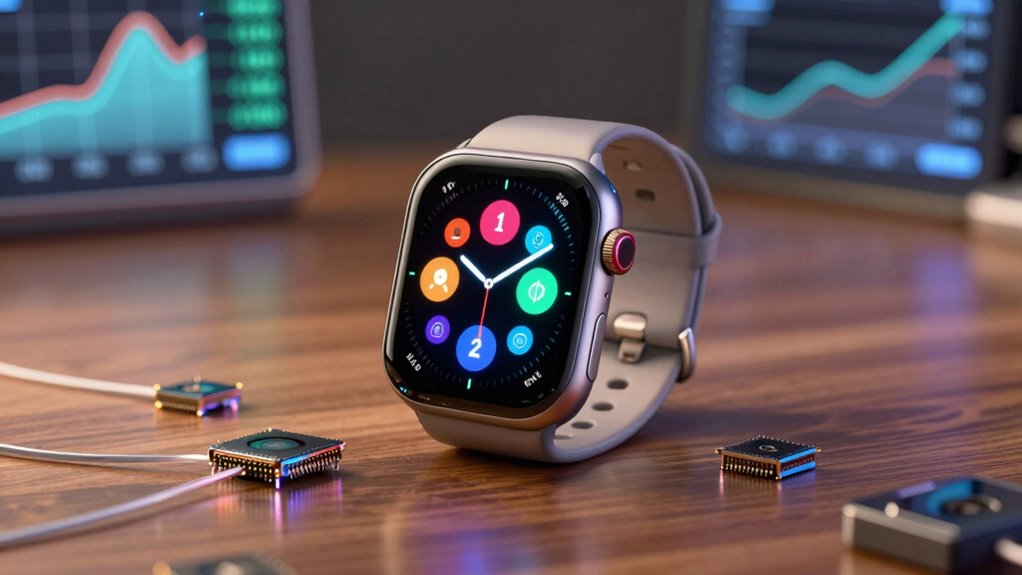

New smartwatch sensors could transform how you track your health by continuously monitoring things like sweat composition, blood chemistry, and essential signs with greater accuracy. They can detect early signs of health issues, provide real-time alerts, and support chronic condition management. Environmental sensors will warn you about pollutants or allergens nearby. These innovations make your device smarter and more personalized. Stay with us to explore how these cutting-edge sensors could impact your health and daily life.
Key Takeaways
- Future sensors analyzing sweat composition for personalized health insights and early health issue detection.
- Continuous blood chemistry and inflammation markers for proactive medical monitoring.
- Advanced optical and bioelectrical sensors providing highly accurate vital sign measurements.
- Environmental sensors detecting pollutants and allergens to improve outdoor activity safety.
- Integrated security features ensuring sensitive health data protection and secure data sharing.
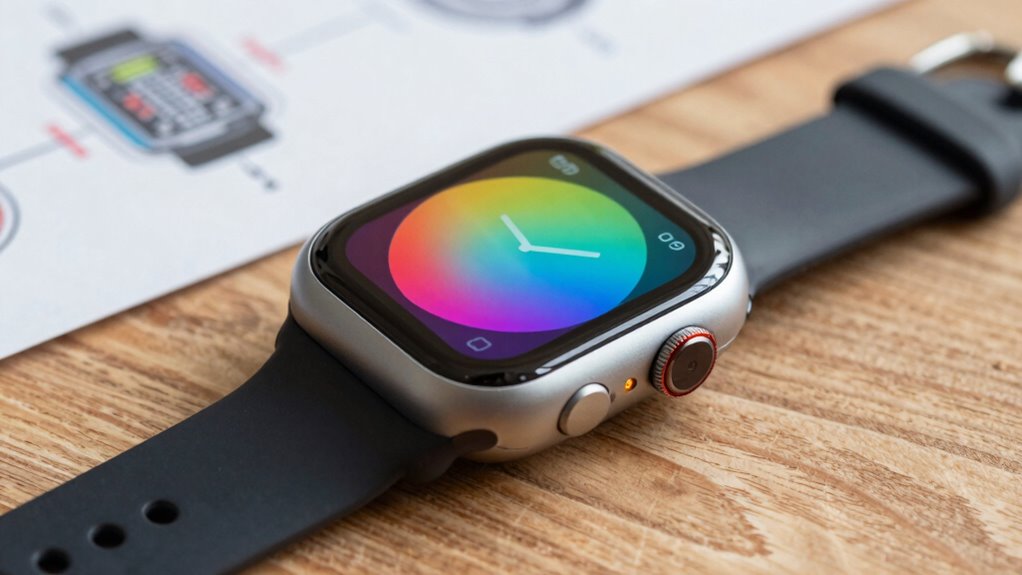
Smartwatch sensors are the core components that enable these devices to monitor your health, fitness, and environment in real-time. As technology advances, new sensors could substantially enhance your ability to track fitness metrics and monitor your overall health more accurately. Imagine sensors capable of detecting subtle physiological changes that you might not notice on your own. For example, future sensors could analyze your sweat composition to provide insights into hydration levels, electrolyte balance, or stress markers, making fitness tracking more personalized and precise.
In addition to improving fitness tracking, upcoming sensors could revolutionize health monitoring by offering early detection of medical conditions. Sensors that continuously analyze blood chemistry or detect markers of inflammation could alert you to potential health issues long before symptoms appear. This proactive approach may allow for timely intervention, reducing the risk of serious complications. For instance, sensors that detect fluctuations in blood sugar levels could be game-changers for diabetics, providing real-time data without the need for invasive finger-pricks.
Moreover, advancements in optical and bioelectrical sensors could allow smartwatches to monitor more complex vital signs, such as blood pressure, oxygen saturation, and even respiratory rate with greater accuracy. These sensors would enable you to keep a close eye on your health status during daily activities or exercise, giving you a detailed picture of your wellbeing. They could also help in managing chronic conditions, providing continuous data that can be shared with healthcare professionals for better treatment planning. In addition, integrating multiple sensor types can create a more comprehensive health overview, further empowering users to make informed decisions. Incorporating data security measures is also crucial as these sensors collect sensitive health information, ensuring your data remains protected. According to recent research, cybersecurity strategies are essential in safeguarding personal health data from potential breaches. As these sensors become more prevalent, standardized protocols will be needed to ensure compatibility and reliable data exchange across devices and platforms.
Environmental sensing capabilities are also poised to improve, with sensors that detect pollutants, allergens, or harmful gases in your surroundings. This information could be essential for people with respiratory conditions or allergies, alerting you when air quality drops or when you’re exposed to potential irritants. Such sensors could help you make smarter decisions about outdoor activities or indoor air purification.
As these new sensors become more integrated and sophisticated, your smartwatch could evolve into not just a fitness or health gadget but a comprehensive health assistant. It will serve as an early warning system, a health coach, and an environmental monitor, all in one device. This convergence of sensors will empower you to take greater control of your health, making preventive care more accessible and personalized than ever before. The future of smartwatch sensors holds the promise of truly transforming how you understand and manage your wellbeing. Additionally, advanced security features inspired by enterprise governance frameworks can ensure that your health data remains protected and compliant with privacy standards.

Smart Watch 1.96" AMOLED 410 * 502 High Definition Color Screen Smart Watch, Full Health Monitor Smartwatch for Men Women, Low Power Consumption Smartwatch (Silver)
- Extreme Environment Durability: Designed for exploration and endurance
- Fast Body Temperature Measurement: One-key temperature check on wrist
- Comprehensive Health Monitoring: Heart rate, blood pressure, sleep tracking
As an affiliate, we earn on qualifying purchases.
As an affiliate, we earn on qualifying purchases.
Frequently Asked Questions
How Accurate Are New Smartwatch Sensors Compared to Traditional Medical Devices?
New smartwatch sensors are increasingly accurate, but their precision depends on proper sensor calibration and data integration with medical standards. You can rely on them for general health tracking, but they might not replace traditional devices for critical measurements. When calibrated correctly, they provide valuable insights, yet always verify with professional medical devices for diagnosis. Continuous advancements are closing the accuracy gap, making smartwatches more trustworthy over time.
What Privacy Concerns Arise With Advanced Smartwatch Sensor Data Collection?
While advanced smartwatch sensors can transform health tracking, they also raise privacy concerns. You might worry about sensitive data like heart rate or location being shared without your permission. To address this, companies should implement robust data encryption and prioritize user consent, ensuring your information stays protected. You need transparency about how your data is collected and used, so you retain control over your personal health insights.
Can These Sensors Detect Early Signs of Specific Health Conditions?
These advanced sensors can indeed detect early signs of specific health conditions by monitoring personalized health data continuously. Sensor integration allows your smartwatch to track subtle changes in heart rate, blood oxygen, or even glucose levels, alerting you to potential issues before symptoms appear. This proactive approach empowers you to seek early intervention, increasing your chances of better outcomes while customizing health management to your unique needs.
How Long Do These Advanced Sensors Typically Last Before Needing Replacement?
Your smartwatch sensors typically last between one to two years before needing replacement, like a car with a finite mileage. Battery lifespan influences how long they operate daily, while regular sensor calibration guarantees accuracy. You should check manufacturer guidelines for specific details, but proper maintenance can extend sensor performance. Keep an eye on calibration reminders, and replacing sensors at recommended intervals keeps your health insights precise and reliable.
Are There Any Limitations to the Types of Activities These Sensors Can Monitor?
Yes, there are limitations based on sensor calibration and activity specificity. Some sensors may struggle with accurately monitoring high-impact or intense activities, as calibration can drift over time. Additionally, certain sensors are designed for specific activities like heart rate tracking or sleep monitoring, making them less effective for others. You might find that for ideal performance, regular calibration and selecting sensors suited for your activity type are essential.
Conclusion
As smartwatch sensors continue to evolve, they’re transforming how you monitor your health and stay connected. With new sensors on the horizon, you’ll gain even deeper insights into your well-being and daily activities. Imagine a future where your watch anticipates your needs before you even realize them. Are you ready to embrace this technological revolution and let your smartwatch become your ultimate health companion? The possibilities are truly exciting—what will you discover next?