
For families comparing GPS trackers for Alzheimer’s patients, the best fit depends on whether the main concern is wandering, calling for help, or finding someone indoors. I name the SecuLife Medical Alert Pendant my best overall pick for combining GPS tracking, fall detection, and two-way calling, while the AngelSense GPS Tracker stands out for voice communication and the Tack GPS Plus Care Bundle for fall alerts and indoor location features. These options differ in how they are worn, what alerts they provide, and how much setup and ongoing service they may involve. A tracker can support a care plan, but it cannot replace supervision or emergency response. Read on for the full comparison and guidance on choosing a device that suits the wearer’s routine.

Get the latest gadgets delivered free with Prime
- Fast, free delivery on millions of items
- Prime Video, Amazon Music and more included
- Member-only deals all year
Complete the kit



Key Takeaways
- The SecuLife Medical Alert Pendant is the strongest all-around match when a family wants GPS, fall detection, and two-way calling in one wearable.
- Fall detection and location tracking solve different problems: the SecuLife devices and Fajocru watch add fall-related alerts, while several trackers focus more narrowly on location.
- Indoor location is a meaningful differentiator. Tack’s GPS, Wi-Fi positioning, and indoor elevation features address a gap that basic GPS-only devices may have inside buildings.
- Wearability can matter as much as feature count. Pendant, wristband, watch, keychain, and compact tracker designs suit different comfort levels and routines.
- Not every product is purpose-built as a medical alert wearable. Vehicle, personal-item, and iOS-oriented trackers may fit particular use cases, but buyers should check alerting, calling, compatibility, and service requirements before relying on them for care.
| PAJ 4G GPS Tracker for Kids and Seniors |  | Best for Longer Battery Life | Connectivity: 4G cellular | Battery life: Up to 5 days | Battery capacity: 1500 mAh | VIEW ON AMAZON | See Our Full Breakdown |
| SecuLife Medical Alert Pendant with Fall Detection, GPS Tracking, and Two-Way Calling |  | Best Overall for Emergency Response | Connectivity: 4G LTE cellular | Features: Fall detection, SOS calling, GPS tracking, geofencing, two-way calling | Water resistance: IP67 | VIEW ON AMAZON | See Our Full Breakdown |
| SecuLife SOS Medical Alert Wristband with Fall Detection, GPS Tracking, Geofencing, and Two-Way Calling |  | Best for Wrist-Worn SOS Access | Connectivity: Cellular | Features: SOS alerts, fall detection, GPS tracking, geofencing, two-way calling | Water resistance: IP67 | VIEW ON AMAZON | See Our Full Breakdown |
| AngelSense GPS Tracker with Two-Way Voice for Kids, Adults, and Seniors |  | Best for Detailed Safety Monitoring | Connectivity: Cellular | Battery life: 48 hours | Dimensions: 1.73 x 2.4 x 0.63 inches | VIEW ON AMAZON | See Our Full Breakdown |
| Galawelly GPS Tracker for Kids with Real-Time Location Tracking |  | Best for Subscription-Free Core Tracking | App: DEONETAG | Compatibility: Android and iPhone | Subscription: No recurring fee for core tracking | VIEW ON AMAZON | See Our Full Breakdown |
| Quvjd GPS Tracker for Vehicles and Personal Items |  | Best for Magnetic Vehicle Placement | Model: TG06 | Size: 1.3 inches in diameter | Weight: 0.5 ounces | VIEW ON AMAZON | See Our Full Breakdown |
| Tack GPS Plus Tracker with GPS, Wi-Fi Positioning, and Indoor Elevation | 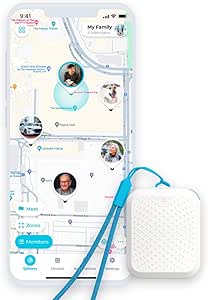 | Best for Location and Safety Features | Model: Tack GPS Plus | Connectivity: Cellular and Wi-Fi positioning | Battery life: Up to 30 days | VIEW ON AMAZON | See Our Full Breakdown |
| Wgluupk GPS Tracker with Wristband and Keychain Design |  | Best Apple Find My Wristband | Model: JHX07 | Compatibility: Apple Find My app on iPhone | Connectivity: Apple Find My network and Bluetooth close-range locating | VIEW ON AMAZON | See Our Full Breakdown |
| Fajocru Fall Detection Smart Watch for Seniors with GPS, SOS Alerts, and 4G |  | Best for Wearable Alerts and Communication | Operating system: Android Wear 1.0 | Connectivity: 4G cellular | GPS: Built-in GPS with geofencing | VIEW ON AMAZON | See Our Full Breakdown |
| Mini GPS Tracker with Watch Band for iOS |  | Best Compact iOS Wearable Locator | Model: A12123 | Compatibility: iOS only | Connectivity: Bluetooth 4.0 | VIEW ON AMAZON | See Our Full Breakdown |
| Tack GPS Plus Care Bundle with Fall Detection, SOS Alerts, and Indoor Elevation Finder |  | Best for Longer Battery Life | Brand: Tack | Model: Tack GPS Plus Bundle | Battery life: Up to 30 days | VIEW ON AMAZON | See Our Full Breakdown |
| gps trackers for alzheimers patient | Battery life | Connectivity | Weight |
|---|---|---|---|
| PAJ 4G GPS Tracker for Kids an | Up to 5 days | 4G cellular | 41 g |
| SecuLife Medical Alert Pendant | Up to 6 days; listed average is 5 days | 4G LTE cellular | — |
| SecuLife SOS Medical Alert Wri | 1 day | Cellular | — |
| AngelSense GPS Tracker with Tw | 48 hours | Cellular | 0.02 kg |
| Galawelly GPS Tracker for Kids | — | — | — |
| Quvjd GPS Tracker for Vehicles | Up to 720 days | — | 0.5 ounces |
| Tack GPS Plus Tracker with GPS | Up to 30 days | Cellular and Wi-Fi positioning | 30 g |
| Wgluupk GPS Tracker with Wrist | Up to 1 year | Apple Find My network and Bluetooth close-range locating | — |
| Fajocru Fall Detection Smart W | — | 4G cellular | — |
| Mini GPS Tracker with Watch Ba | Over 12 months of standby, based on 15 uses per day | Bluetooth 4.0 | 9 g |
| Tack GPS Plus Care Bundle with | Up to 30 days | — | 30 g |
More Details on Our Top Picks
PAJ 4G GPS Tracker for Kids and Seniors
For families who mainly need location checks and geofence alerts, the PAJ is a straightforward choice with a useful advantage over the SecuLife SOS Medical Alert Wristband: its battery is listed for up to five days, rather than one. Live tracking and location history can help caregivers check where a wearer has been, while alerts can notify them when the tracker crosses a set boundary. At 41 g, it is compact, though the product data does not specify a dedicated wearing method, so families should plan how it will stay securely with the person. Unlike the Galawelly tracker, PAJ requires a service subscription; in return, it uses 4G cellular and includes a SIM card. The recurring service and regular recharging are meaningful tradeoffs, and it lacks the listed SOS calling and fall detection found on SecuLife’s pendant.
Pros:- 4G live tracking, location history, and geofence alerts support remote location checks
- Up to five days of listed battery life is longer than the SecuLife SOS Wristband’s one day
- Compact 41 g design
- Includes a SIM card, with listed 24/7 multilingual support
Cons:- A subscription is required for service
- The battery needs regular recharging, about every five days at the stated maximum
- No fall detection or SOS calling is listed
Best for: Caregivers who want cellular location tracking, geofence alerts, and several days between charges, and can manage a subscription and a secure way to carry the tracker
Not ideal for: Families seeking fall detection or one-touch emergency calling, or those who want to avoid recurring service fees
- Connectivity:4G cellular
- Battery life:Up to 5 days
- Battery capacity:1500 mAh
- Weight:41 g
- Dimensions:2.09 x 0.67 x 2.09 inches
- Location features:Live tracking, location history, geofence alerts
- App compatibility:Android and iOS
- Subscription:Required
- Warranty:4-year manufacturer warranty
Our verdict“Choose the PAJ if location monitoring and a longer recharge interval matter more than built-in emergency calling or subscription-free use.”
SecuLife Medical Alert Pendant with Fall Detection, GPS Tracking, and Two-Way Calling
The SecuLife pendant makes the most sense when a family needs more than location updates: it combines GPS tracking with fall detection, SOS calling, and two-way voice. That makes it better suited than the PAJ 4G GPS Tracker for caregivers who want the wearer to be able to call for help from the device, not just be located through an app. Its IP67 water resistance also supports everyday wear around water, while geofencing adds a boundary alert for caregivers. The tradeoff is a required monthly subscription, and battery expectations are not perfectly consistent in the supplied information: it advertises up to six days but also lists five days as average. Compared with the SecuLife SOS Wristband, the pendant has a longer stated battery life, though families should check which form the wearer is more likely to keep on.
Pros:- Combines GPS tracking and geofencing with fall detection and SOS calling
- Two-way cellular calling allows communication through the pendant
- IP67 water-resistance rating
- Advertised battery life of up to six days is longer than the SecuLife SOS Wristband’s listed one day
Cons:- Service requires a monthly subscription
- Battery life is described as up to six days, while the listed average is five
- A pendant may not suit a wearer who prefers or tolerates a wrist-worn device
Best for: Caregivers who want a wearable with GPS, fall alerts, and two-way emergency calling, and are comfortable with a monthly service subscription
Not ideal for: Families focused only on location tracking, avoiding recurring fees, or needing a battery-life figure that is consistent across the listing
- Connectivity:4G LTE cellular
- Features:Fall detection, SOS calling, GPS tracking, geofencing, two-way calling
- Water resistance:IP67
- Battery capacity:1000 mAh
- Battery life:Up to 6 days; listed average is 5 days
- Subscription:Required; listed at $20 per month
- Compatible devices:Android and iOS
- Included items:Charging cable, SIM card, user manual
Our verdict“Pick this pendant when emergency calling and fall detection matter as much as location tracking, and the subscription fits your care plan.”
SecuLife SOS Medical Alert Wristband with Fall Detection, GPS Tracking, Geofencing, and Two-Way Calling
This SecuLife model stands out for a wearer who is more likely to keep a wristband on than a pendant. Its screen-free design keeps the interaction simple: one button can contact preset contacts, while automatic fall detection, GPS, geofencing, and two-way calling add caregiver monitoring. Against the SecuLife Medical Alert Pendant, it offers a wrist-worn format but gives up substantial time between charges: the wristband is listed for one day of battery life, compared with up to six days advertised for the pendant. IP67 protection is useful for rain, splashes, and handwashing, but it does not offset the daily charging burden. A monthly subscription is required, and the listed fee is higher than the pendant’s. I would skip it if the wearer cannot reliably charge or keep track of a device each day.
Pros:- One-button SOS access paired with automatic fall detection
- GPS tracking and geofence alerts support caregiver monitoring
- Two-way calling with hands-free auto-answer
- IP67 rating supports wear during handwashing and everyday splashes
Cons:- Listed battery life is only one day, creating a frequent charging task
- A monthly subscription is required
- The listed $25 monthly subscription is higher than the SecuLife pendant’s listed fee
Best for: Families whose loved one prefers a simple wrist-worn device and can follow a daily charging routine
Not ideal for: Caregivers seeking longer battery life, lower recurring service costs, or a device that can be left unattended for several days between charges
- Connectivity:Cellular
- Features:SOS alerts, fall detection, GPS tracking, geofencing, two-way calling
- Water resistance:IP67
- Battery life:1 day
- Battery capacity:680 mAh
- Compatible devices:Android and iOS smartphones
- Subscription:Required; listed at $25 per month
- Warranty:1 year
Our verdict“Choose this wristband when familiar wrist placement and one-button help access outweigh the need for multi-day battery life.”
AngelSense GPS Tracker with Two-Way Voice for Kids, Adults, and Seniors
AngelSense is the most monitoring-focused option here, with real-time location, route history, geofencing, proactive alerts, and safe-ride monitoring alongside SOS and two-way voice. That broader alert set may suit a family that wants more context than the PAJ tracker’s core location and boundary tools provide. Its speakerphone can auto-answer calls, and the included sensory-friendly wearing sleeve offers a way to secure the device for someone who dislikes a standard clip or exposed tracker. The tradeoffs are substantial: listed battery life is 48 hours, and the subscription is tied to a one-year contract at the stated monthly rate. Compared with the SecuLife pendant, AngelSense lists a wider set of monitoring features, but its contract and shorter stated battery life make it a less flexible choice for families who want a simpler service commitment.
Pros:- Real-time GPS and route history provide more context than a location-only check
- Proactive alerts, geofencing, and safe-ride monitoring add monitoring options beyond the PAJ tracker
- Two-way voice and SOS support communication and help requests
- Includes a sensory-friendly wearing sleeve
Cons:- Listed features require a subscription with a one-year contract
- Listed battery life is 48 hours
- The broader monitoring feature set may be unnecessary for families who only need location and geofence alerts
Best for: Caregivers who need proactive location and route monitoring, two-way voice, and a secure wearing option for a sensory-sensitive wearer
Not ideal for: Families who want to avoid a one-year service contract, minimize charging frequency, or need a simple tracker without a broad monitoring setup
- Connectivity:Cellular
- Battery life:48 hours
- Dimensions:1.73 x 2.4 x 0.63 inches
- Weight:0.02 kg
- Features:Real-time GPS, two-way voice, SOS, geofencing, proactive alerts, safe-ride monitoring, fall detection
- Subscription:Required; listed at $49.99 per month with a one-year contract
- Warranty:1 year
- Material:Plastic
Our verdict“Choose AngelSense when detailed safety alerts and a secure, sensory-aware wearing option justify a contract and frequent charging.”
Galawelly GPS Tracker for Kids with Real-Time Location Tracking
Galawelly’s clearest advantage is that its core tracking requires no SIM card or recurring subscription, unlike the PAJ 4G tracker and the SecuLife wearables. It provides real-time location and up to seven days of route history through the DEONETAG app, and its IP68 rating gives it a more water-resistant profile than the listed IP67 SecuLife devices. The holder can attach to a wristband, keychain, backpack, or luggage, so families have several ways to keep it with the wearer. That flexibility is useful, but the listing does not specify battery life or charging details, and the tracker depends on a compatible phone and its app. It also does not list fall detection or SOS calling, so it is a better fit for location-focused monitoring than for a family seeking a medical alert device.
Pros:- Core tracking does not require a SIM card or recurring subscription
- Real-time location and up to seven days of route history are listed
- IP68 water-resistance rating
- Holder can attach to a wristband, keychain, backpack, or luggage
Cons:- Requires the DEONETAG app and a compatible Android or iPhone device
- Battery life and charging details are not specified
- No fall detection or SOS calling is listed
Best for: Caregivers who want app-based location and route history without a recurring tracking fee, and can choose a reliable attachment point for the wearer
Not ideal for: Families who need fall detection, SOS calling, cellular service through an included SIM, or clear battery and charging information before buying
- App:DEONETAG
- Compatibility:Android and iPhone
- Subscription:No recurring fee for core tracking
- SIM card:Not required
- Location features:Real-time tracking and up to 7 days of route history
- Water resistance:IP68
- Included holder options:Wristband, keychain, backpack, or luggage attachment
- Number of items:3
Our verdict“Choose Galawelly for subscription-free, app-based location tracking if emergency alerts and clearly stated battery life are not your main needs.”
Quvjd GPS Tracker for Vehicles and Personal Items
The built-in magnet and tiny form make the Quvjd easiest to attach discreetly to a vehicle or other metal item. It can also be carried as a personal locator, but its phone-finding-service approach differs from the Tack GPS Plus, which has cellular and Wi-Fi positioning, geofencing, fall detection, and SOS alerts. For an Alzheimer’s care plan, that distinction matters: Quvjd’s listing does not explain location-update accuracy or range, and it does not describe caregiver alerts or emergency features. Its replaceable battery, advertised for up to 720 days, and no-subscription setup may suit families seeking a low-maintenance locator, but phone-service compatibility is part of the equation. I would treat this as a supplementary way to locate belongings or a vehicle, not a substitute for a dedicated personal safety tracker.
Pros:- Compact, lightweight design with a built-in magnet for attaching to metal surfaces
- Replaceable lithium battery advertised to last up to 720 days
- No SIM card or monthly subscription required, according to the listing
- Compatible with iOS and Android smartphones
Cons:- The listing does not specify location-update accuracy or tracking range
- Phone-finding features depend on supported services and compatible devices
- No listed geofencing, fall detection, or SOS alert feature
Best for: Families with an iPhone or Android phone seeking a low-maintenance magnetic locator for a vehicle or personal item, as a supplement to an Alzheimer’s safety plan.
Not ideal for: Caregivers who need dependable live tracking, defined location range, geofencing, fall detection, or an SOS channel for a person who may wander.
- Model:TG06
- Size:1.3 inches in diameter
- Weight:0.5 ounces
- Battery life:Up to 720 days
- Battery:Replaceable lithium battery
- Compatibility:iOS and Android smartphones
- Supported applications:Find My Phone, Works
- Mounting:Built-in magnet
Our verdict“Choose Quvjd for long-lasting magnetic location support for a vehicle or item, not as a primary wandering-safety tracker.”
Tack GPS Plus Tracker with GPS, Wi-Fi Positioning, and Indoor Elevation
Geofencing, fall detection, and an SOS button give the Tack GPS Plus a more safety-focused feature set than the Quvjd or the Apple Find My-based Wgluupk. GPS and Wi-Fi positioning are intended to support use indoors and outdoors, while location history and indoor elevation add context beyond a basic nearby locator. Its preinstalled SIM and 30-day subscription make initial setup more direct, but continued service requires a paid plan. Battery life is listed at up to 30 days, so caregivers still need a charging routine, unlike the much longer advertised battery life of Quvjd. The 30 g tracker includes a strap, though its size and carrying style may not suit everyone. This is the stronger fit when caregiver alerts and ongoing location features matter more than avoiding a subscription.
Pros:- Combines geofencing, fall detection, location history, and an SOS alert button
- Uses cellular and Wi-Fi positioning for indoor and outdoor tracking
- Includes a preinstalled SIM and 30-day subscription period
- Up to 30 days of listed battery life
Cons:- A paid subscription is required after the initial 30 days
- Battery life is shorter than the long-life trackers in this group and requires charging
- Caregivers should confirm cellular coverage where the wearer spends time
Best for: Caregivers who want a person-worn tracker with geofencing, fall alerts, SOS access, and indoor/outdoor positioning, and are prepared to maintain a subscription.
Not ideal for: Families seeking a no-fee locator, or someone unlikely to wear and regularly recharge a separate tracker.
- Model:Tack GPS Plus
- Connectivity:Cellular and Wi-Fi positioning
- Battery life:Up to 30 days
- Battery capacity:750 mAh
- Weight:30 g
- Dimensions:1.85 x 1.46 x 0.67 inches
- Features:Geofencing, location history, fall detection, SOS alerts, and indoor elevation
- Included service:Preinstalled SIM with 30-day free subscription
- Cellular coverage:AT&T, T-Mobile, and Sprint in the USA; roaming in 120+ countries
Our verdict“Pick Tack GPS Plus when alerts and broader tracking features outweigh subscription costs and regular charging.”
Wgluupk GPS Tracker with Wristband and Keychain Design
The adjustable wristband and Apple Find My compatibility make Wgluupk a simple option for households already using iPhones. Unlike the cellular Tack GPS Plus, it has no SIM or monthly fee; it relies on Apple’s Find My network for locating and Bluetooth for nearby sound alerts. That keeps ownership straightforward, but it also means this is not equivalent to a dedicated GPS tracker with its own cellular connection. The listing gives an approximate Bluetooth range of 60 m (200 ft), and network-based locating depends on Apple’s system and available devices. Up to one year of battery life and IP68 resistance reduce routine upkeep, while left-behind notifications may help with forgotten items. I would choose it for lightweight, everyday locating—not for fall detection, SOS response, or assured live monitoring.
Pros:- Works with Apple Find My and requires no SIM or monthly fee
- Adjustable silicone wristband and keychain design offer flexible carrying
- Battery life is listed at up to one year
- IP68 dust and water resistance, plus sound and left-behind alerts
Cons:- Requires an iPhone and Apple’s Find My network
- Bluetooth sound locating is limited to approximately 60 m (200 ft)
- No listed fall detection, SOS alerts, or dedicated cellular tracking
Best for: iPhone-using families who want a wearable, low-maintenance locator with left-behind alerts and no recurring service fee.
Not ideal for: Android households or caregivers who need dedicated GPS updates, cellular coverage, fall alerts, or an emergency call feature.
- Model:JHX07
- Compatibility:Apple Find My app on iPhone
- Connectivity:Apple Find My network and Bluetooth close-range locating
- Bluetooth range:Approximately 60 m (200 ft)
- Battery life:Up to 1 year
- Water and dust resistance:IP68
- Included design:Adjustable silicone wristband and keychain design
- SIM and monthly fee:SIM not required; no monthly fee
Our verdict“Choose Wgluupk for low-fee locating in an Apple household, but not as a stand-alone safety system for wandering risk.”
Fajocru Fall Detection Smart Watch for Seniors with GPS, SOS Alerts, and 4G
Fall detection, GPS geofencing, and SOS alerts give the Fajocru a more active caregiver-safety role than the wristband-style Wgluupk, which relies on Apple Find My and lacks listed emergency features. The smartwatch also offers two-way voice chat, health readings, and reminders, making it the most feature-packed wearable here. A key limitation is the SIM arrangement: the included data-only SIM provides one year of data, but voice calls need a separate SIM with voice service. That could complicate setup for families expecting the included service to support calls. The listing describes blood pressure as a reference feature, so I would not treat it as a medical measurement. Its large touchscreen and magnetic charger may be useful for someone comfortable wearing and operating a watch, but the extra functions may be unnecessary for someone who needs only location support.
Pros:- Combines built-in GPS, geofencing, fall detection, and SOS notifications
- Two-way voice chat adds a communication option beyond basic locator tags
- Includes heart-rate, activity, and reminder features
- Preinstalled data-only SIM includes one year of data
Cons:- Voice calls require a separate SIM with voice service
- Blood pressure is described as a reference feature, not a dependable medical reading
- A feature-rich touchscreen watch may be harder to manage than a simple wristband tracker
Best for: Caregivers seeking a senior-oriented watch with fall alerts, SOS, geofencing, reminders, and two-way voice chat, and willing to check SIM and service requirements.
Not ideal for: Someone who may remove or struggle with a touchscreen watch, or families expecting the included data-only SIM to support voice calls without added setup.
- Operating system:Android Wear 1.0
- Connectivity:4G cellular
- GPS:Built-in GPS with geofencing
- Fall detection:Automatic fall alerts and SOS notifications
- Communication:Two-way voice chat; voice calls require a SIM with voice service
- Health features:Heart rate, blood pressure, blood oxygen, step count, sedentary and medication reminders
- Water resistance:IP67; listed depth 1 meter
- Included service:Preinstalled data-only SIM with one year of free data
Our verdict“Choose Fajocru for a wearable alert and communication hub if the wearer can manage a smartwatch and you arrange separate voice service when needed.”
Mini GPS Tracker with Watch Band for iOS
Its 9 g body and included watch band make this mini locator easier to carry on the wrist than the larger Fajocru smartwatch. It pairs with Apple’s Find My app and uses a replaceable CR2032 battery, with standby life stated as over 12 months under specified usage conditions. That can reduce charging chores, but the device is iOS-only and its Bluetooth 4.0 connection is not the same as a cellular GPS service with dedicated caregiver alerts. The listing calls its communication distance unlimited, yet does not explain how that claim relates to Bluetooth or Find My network availability, so I would not rely on it as a guaranteed live-tracking range. Compared with Wgluupk, it offers a similarly simple Apple-based locating approach, while Wgluupk specifies IP68 resistance and left-behind notifications. This is best treated as a compact locator, not a medical alert device.
Pros:- Compact 35 × 35 × 5 mm body weighs 9 g
- Works with Apple’s Find My app and has no monthly subscription fee
- Includes a watch band for wrist carrying
- CR2032 battery is rated for over 12 months of standby under stated usage conditions
Cons:- Compatible only with iOS devices
- No listed fall detection, geofencing, or SOS feature
- The stated unlimited communication distance is not clearly explained alongside Bluetooth 4.0 connectivity
Best for: iPhone households wanting a small, lightweight wrist-worn locator with a long stated battery life and no monthly subscription.
Not ideal for: Android users or caregivers who need cellular GPS, fall detection, SOS alerts, or clearly defined live-tracking coverage.
- Model:A12123
- Compatibility:iOS only
- Connectivity:Bluetooth 4.0
- Battery:CR2032, 240 mAh at 3 V
- Battery life:Over 12 months of standby, based on 15 uses per day
- Size:Approximately 35 × 35 × 5 mm
- Weight:9 g
- Alert volume:80–100 dB
- Included:Tracker, watch band, and user manual
Our verdict“Pick this mini locator for lightweight Find My use on an iPhone, but choose a cellular tracker when caregiver alerts or defined tracking coverage are needed.”
Tack GPS Plus Care Bundle with Fall Detection, SOS Alerts, and Indoor Elevation Finder
For families who need location alerts without asking an older adult to carry a phone, the Tack GPS Plus Care Bundle pairs cellular tracking with fall detection, one-touch SOS, geofencing, and an indoor elevation finder. The elevation feature can help distinguish floors in a building, while the pouch and breakaway lanyard offer different ways to carry the tracker. Its battery life of up to 30 days is a standout against options such as the SecuLife Medical Alert Pendant, which centers on two-way calling rather than this bundle’s long stated runtime.
The tradeoff is that Tack does not list two-way calling, so it may be less suited to conversations during an alert. Cellular service also requires a subscription after the included 30 days. I’d choose it for location-focused monitoring and fewer charging reminders, but compare it with voice-enabled devices if speaking directly with the wearer is a priority.
Pros:- Up to 30 days of stated battery life can reduce how often caregivers need to manage charging.
- Fall detection and one-click SOS provide alert options beyond location tracking.
- Indoor elevation information may help caregivers identify which floor the wearer is on.
- Includes a pouch and breakaway lanyard, with cellular connectivity that does not rely on a phone or Bluetooth connection.
Cons:- A subscription is required after the included 30-day period.
- Two-way calling is not listed, unlike the SecuLife Medical Alert Pendant.
- The 30-day battery figure is an advertised maximum; actual runtime may vary with use and connection conditions.
Best for: Families seeking location, geofence, and fall alerts for a person with Alzheimer’s who may not carry a phone and benefits from fewer charging reminders.
Not ideal for: Caregivers who need two-way voice communication through the tracker or want to avoid an ongoing cellular subscription.
- Brand:Tack
- Model:Tack GPS Plus Bundle
- Battery life:Up to 30 days
- Battery capacity:750 mAh
- Dimensions:1.85 x 1.46 x 0.67 inches
- Weight:30 g
- Connectivity and coverage:Cellular; AT&T, T-Mobile, and Sprint in the USA, with roaming in 120+ countries
- Included accessories:Fabric pin pouch with magnetic key, breakaway neck lanyard, SIM card, and USB cable
- Subscription and warranty:30-day subscription included; plans start at US$2.95/month; 12-month warranty
Our verdict“Choose this bundle for long stated battery life and location-focused alerts, but pick a voice-enabled pendant if direct conversation during an alert matters more.”

How We Picked
I ranked these devices around the situations families managing Alzheimer’s-related wandering may face: a person leaves a familiar area, needs help after a fall, or cannot be reached by phone. I gave more weight to useful combinations of location sharing, dependable alert options, and direct communication than to a long feature list alone. Wearable comfort and how naturally a device fits a daily routine also mattered, since a tracker that is left at home cannot help locate its wearer.
The order reflects the products’ apparent caregiving focus and the breadth of their stated features, not a claim that any device can prevent wandering or guarantee a rescue. Medical-alert wearables with calling and fall alerts rank ahead of trackers aimed mainly at vehicles or personal belongings. I also accounted for indoor positioning, form factor, compatibility, and likely setup or service demands. Buyers should confirm current coverage, subscription terms, battery life, alert behavior, and caregiver app requirements with the manufacturer before purchase.
Factors to Consider When Choosing Gps Trackers For Alzheimers Patients
Choosing a tracker is less about collecting the most features and more about matching the device to the person’s habits, risks, and support network. I would work through these decisions before comparing individual models.
Match the device to the risk you are addressing
Start by naming the problem the tracker needs to help with: wandering beyond a familiar area, being unable to call for help, or a fall that goes unnoticed. Location tracking alone does not provide medical-alert response, and fall detection does not necessarily give caregivers a precise location. If more than one risk matters, look for a device that combines functions rather than assuming a basic tracker covers them all. Ask who will receive alerts, who can respond, and what happens if the first contact does not answer. A written response plan can reveal whether you need two-way calling, geofencing, or a staffed monitoring service. Avoid buying features that nobody in the care team can monitor consistently.
Check how location works indoors and outdoors
GPS can be useful outdoors, but location may become less precise inside homes, shops, care facilities, or large buildings. Wi-Fi positioning and indoor location features may help in some settings, though performance depends on the device and local conditions. Ask how often locations update, whether the app shows a current position or a last-known one, and how it signals weak coverage. A geofence can notify a caregiver when someone crosses a set boundary, but it is not a physical barrier and may not prevent an exit. Choose boundaries that reflect the person’s real routine instead of setting so many that caregivers begin ignoring alerts. If indoor wandering is the main concern, prioritize location behavior in the places the wearer visits most.
Choose a form factor the wearer will keep on
A pendant, wristband, watch, keychain, and small tracker each ask the wearer to build a different habit. Someone who dislikes jewelry may remove a pendant, while a person accustomed to a watch may find a wrist-worn device easier to accept. Comfort and consistent wear usually matter more than a larger feature list if the device is meant to accompany the wearer every day. Check the weight, fastening method, charging routine, and whether the device can be worn during the activities that matter. Consider whether the wearer may mistake it for an unfamiliar object or take it off when changing clothes. If possible, introduce the device calmly and practice wearing and charging it as part of a familiar routine.
Understand alerts, calling, and who responds
Product labels such as SOS, emergency alert, and medical alert can describe different levels of support. Some devices notify chosen contacts, while others may offer a monitoring service; do not assume an alert automatically reaches emergency services. Verify whether two-way calling works through the device, whether contacts must use an app, and what happens when a call is missed. Fall detection can be useful, but motion, fit, and the type of fall may affect whether an event is detected. Ask how caregivers can test alerts and update contact lists without disrupting daily use. The right setup is the one the family can respond to reliably, not merely the one with the most alert types.
Plan for coverage, charging, and ongoing service
Many GPS wearables rely on cellular networks, apps, or paid service plans, so confirm coverage in the wearer’s regular locations before choosing a model. Battery life and charging habits are care-plan issues, not minor specifications: a depleted tracker cannot send a useful location. Find out how the device signals a low battery, how long a charge takes, and whether it can be worn while charging. Check subscription requirements, cancellation terms, device compatibility, and whether multiple caregivers can access location and alerts. Assign one person to check charge and connectivity as part of an existing routine. A lower-complexity device may be the better choice if its service and maintenance are easier for the family to sustain.
Frequently Asked Questions
Should I choose a GPS tracker or a medical alert device for someone with Alzheimer’s?
Choose based on the situation you most need to address. A location-focused tracker can help caregivers find someone who has wandered, while a medical alert wearable may add calling or fall notifications. Some devices combine these roles, but the exact alert path and response service can differ. Check whether alerts go to family, a monitoring center, or both, and confirm who is expected to act. If the wearer may not remember to press a button, hands-free fall or location alerts may matter more than a manual SOS feature.
Will a GPS tracker work inside a house or care facility?
GPS can be less precise indoors, and walls or building layout may affect location updates. Some trackers add Wi-Fi or other indoor positioning features, but performance varies by site and should not be assumed from a feature name alone. Ask the manufacturer what location method is used indoors and whether the device reports a current or last-known position. If possible, check the tracker in the wearer’s usual home or facility before relying on it. Pair location technology with a caregiver plan for places where signals may be limited.
Can I rely on fall detection to summon help automatically?
No fall-detection feature should be treated as a guarantee that every fall will be detected or that help will arrive without delay. Detection can depend on movement, device fit, connectivity, and the product’s alert setup. Confirm whether a detected fall contacts caregivers or a staffed service, and whether someone can speak with the wearer through the device. Ask how to test the alert process and what backup steps the manufacturer recommends. Keep a separate plan for situations where the device is not worn, is out of battery, or cannot connect.
What should I do if my family member removes or forgets the tracker?
Choose a form factor that fits an existing habit, such as a watch or pendant the person already finds comfortable, and make wearing it part of a predictable daily routine. A device left on a charger or in a drawer cannot provide location information, whatever its advertised features. Discuss any resistance with the care team and avoid treating the tracker as a substitute for supervision. Some families may prefer a discreet, familiar design, while others may find a visible alert wearable easier to maintain. Check whether the app can notify caregivers when the device is offline or has a low battery.
Do these trackers require a subscription, and what should I verify before buying?
Service needs vary by device, so confirm whether cellular connectivity, location updates, calling, or caregiver alerts require a recurring plan. Check coverage where the wearer lives and travels, plus whether the app works with the caregivers’ phones. Ask about battery expectations, charging alerts, service cancellation, and any limits on caregiver accounts. A device that depends on a plan or app may stop providing key functions if that service lapses. Verify these details with the manufacturer before purchase rather than assuming every listed feature works without ongoing service.
Conclusion
For a broad mix of location, fall detection, and calling, I recommend the SecuLife Medical Alert Pendant as best overall. Buyers seeking a more specialized location-and-voice approach should compare the AngelSense GPS Tracker, while the Tack GPS Plus Care Bundle is the best pick for indoor-location features and fall-related alerts. For a simpler starting point, I would look at the PAJ 4G GPS Tracker for Kids and Seniors, while checking its service, alert, and calling details against the family’s needs. The SecuLife SOS Wristband and Fajocru watch may suit people who prefer wrist-worn alerts; vehicle, item, and iOS-oriented trackers make more sense for narrower use cases than as automatic substitutes for medical-alert wearables. Before deciding, match the device to the wearer’s comfort, the caregiver response plan, coverage, and charging routine.