If you’re searching for virtual reality headsets, the Meta Quest 3 512GB stands out as the best overall for its blend of sharp optics, strong standalone performance, and deep content library. For budget-focused buyers, the Meta Quest 3S 128GB delivers nearly the same experience at a lower entry point, while the HTC VIVE Focus Vision offers premium mixed reality and PC VR flexibility for professionals. The main tradeoffs come down to standalone versus PC-tethered play, tracking quality, and which ecosystem you already own. Continue reading for a full breakdown of all 15 options, including renewed models and smartphone-based headsets, so you can pick the one that fits your setup and expectations.

Get the latest gadgets delivered free with Prime
- Fast, free delivery on millions of items
- Prime Video, Amazon Music and more included
- Member-only deals all year
Complete the kit

Key Takeaways
- The Meta Quest 3 series dominates this roundup: the 512GB model wins for overall performance, while the Quest 3S is the value pick with the same core tracking and controllers.
- Renewed units, like the Quest 2 128GB and Quest 3 512GB Premium, offer meaningful savings but require checking warranty terms and cosmetic condition before buying.
- Smartphone VR headsets such as the DESTEK V5 are only suitable for passive video watching—they lack positional tracking and are not for interactive gaming.
- HTC VIVE Focus Vision is the only headset here that bridges standalone convenience and high-fidelity PC VR via DisplayPort, making it the choice for mixed-use professionals.
- PlayStation VR’s Iron Man bundle is a niche option: it only works with PS4/PS5, and its tracking is older tech compared to modern inside-out systems.
| Meta Quest Pro VR/MR Headset | 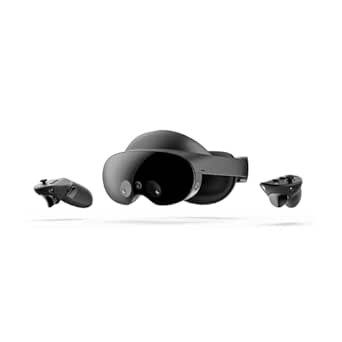 | Best for Work and Mixed Reality | Platform: Standalone | Storage: 256 GB | Memory: 12 GB RAM | VIEW ON AMAZON | See Our Full Breakdown |
| Meta Quest 2 128GB All-in-One VR Headset (Renewed) |  | Best for Budget-Minded VR Beginners | Storage: 128 GB | Resolution: 1832 x 1920 pixels per eye | Field of view: 89 degrees | VIEW ON AMAZON | See Our Full Breakdown |
| Samsung HMD Odyssey+ Windows Mixed Reality Headset with 2 Wireless Controllers, 3.5″ Black (XE800ZBA-HC1US) |  | Best for Windows PC Display and Audio | Display: 3.5-inch AMOLED | Resolution: 2880 x 1600 | Refresh rate: 90 Hz | VIEW ON AMAZON | See Our Full Breakdown |
| HTC VIVE Focus Vision Mixed Reality and PC VR Headset with Controllers |  | Best for Flexible Standalone and PC VR | Resolution: 2448 x 2448 pixels per eye | Field of view: Up to 120 degrees | Refresh rate: 90 Hz | VIEW ON AMAZON | See Our Full Breakdown |
| Meta Quest 3 512GB VR Headset (Renewed Premium) |  | Best Overall Standalone Mixed Reality | Storage: 512 GB | Processor: Snapdragon XR2 Gen 2 | Display: 4K+ | VIEW ON AMAZON | See Our Full Breakdown |
| Meta Quest 3 512GB VR Headset with Batman: Arkham Shadow |  | Best Overall | Storage: 512 GB | Memory: 8 GB RAM | Processor: Snapdragon XR2 Gen 2 | VIEW ON AMAZON | See Our Full Breakdown |
| Meta Quest 3S 128GB VR Headset (Renewed Premium) |  | Best Budget Standalone | Storage: 128 GB | Memory: 8 GB RAM | Processor: Snapdragon XR2 Gen 2 | VIEW ON AMAZON | See Our Full Breakdown |
| DESTEK V5 Smartphone VR Headset with Controller |  | Best Smartphone VR | Compatible screen size: 5.5–7.2 inches | Field of view: 110 degrees | Lens features: Anti-blue-light, 92% light transmission | VIEW ON AMAZON | See Our Full Breakdown |
| Meta Quest 3S 128GB VR Headset with Gorilla Tag Bundle |  | Best for Active Gamers | Storage: 128 GB | Memory: 8 GB RAM | Processor: Qualcomm Snapdragon XR2 Gen 2 | VIEW ON AMAZON | See Our Full Breakdown |
| HTC VIVE Focus Vision XR Headset with DisplayPort PC VR Streaming Kit |  | Best Premium PC VR | Resolution: 2448 × 2448 per eye | Field of view: Up to 120 degrees | Refresh rate: 90 Hz | VIEW ON AMAZON | See Our Full Breakdown |
| Meta Quest 2 All-in-One VR Headset, 256 GB (Renewed) |  | Best Renewed Standalone | Storage: 256 GB | Display: LCD | Resolution: 1832 × 1920 pixels per eye | VIEW ON AMAZON | See Our Full Breakdown |
| DESTEK V5 VR Headset with 50000+ VR Movies – Fits All Smartphone Sizes |  | Best Smartphone VR | Connectivity: Bluetooth | Field of view: 110 degrees | Item weight: 4.8 ounces | VIEW ON AMAZON | See Our Full Breakdown |
| Oculus Quest 2 128GB All-in-One VR Headset Set |  | Best Complete Starter Set | Storage: 128 GB | Display resolution: 1832 × 1920 pixels per eye | Included controllers: Two Touch controllers | VIEW ON AMAZON | See Our Full Breakdown |
| Meta Quest 3 512GB VR Headset with Gorilla Tag Monkenaut Bundle |  | Best Overall | Storage: 512 GB | Memory: 8 GB RAM | Processor: Snapdragon XR2 Gen 2 | VIEW ON AMAZON | See Our Full Breakdown |
| Sony PlayStation VR Marvel’s Iron Man Bundle |  | Best Console VR | Compatible platforms: PlayStation 4, PlayStation 5 | Display: OLED | Resolution: 1920 × 1080 | VIEW ON AMAZON | See Our Full Breakdown |
| virtualreality headset | Field of view | Storage | Connectivity | Refresh rate |
|---|---|---|---|---|
| Meta Quest Pro VR/MR Headset | 106 degrees | 256 GB | USB Type-C | — |
| Meta Quest 2 128GB All-in-One | 89 degrees | 128 GB | — | Up to 120 Hz |
| Samsung HMD Odyssey+ Windows M | 110 degrees | — | — | 90 Hz |
| HTC VIVE Focus Vision Mixed Re | Up to 120 degrees | 128 GB; expandable up to 2 TB with MicroSD | DisplayPort, USB, Wi-Fi | 90 Hz |
| Meta Quest 3 512GB VR Headset | 110 degrees | 512 GB | — | 120 Hz |
| Meta Quest 3 512GB VR Headset | 110 degrees | 512 GB | — | — |
| Meta Quest 3S 128GB VR Headset | 96 degrees | 128 GB | — | 90 Hz |
| DESTEK V5 Smartphone VR Headse | 110 degrees | — | Bluetooth | — |
| Meta Quest 3S 128GB VR Headset | 110 degrees | 128 GB | Auxiliary, USB, Wi-Fi | — |
| HTC VIVE Focus Vision XR Heads | Up to 120 degrees | — | DisplayPort, USB, Wi-Fi | 90 Hz |
| Meta Quest 2 All-in-One VR Hea | 90 degrees | 256 GB | Bluetooth | 90 Hz |
| DESTEK V5 VR Headset with 5000 | 110 degrees | — | Bluetooth | — |
| Oculus Quest 2 128GB All-in-On | — | 128 GB | — | — |
| Meta Quest 3 512GB VR Headset | — | 512 GB | Bluetooth, USB Type-C | 120 Hz |
| Sony PlayStation VR Marvel’s I | 110 degrees | — | HDMI, USB | 90 Hz |
More Details on Our Top Picks
Meta Quest Pro VR/MR Headset
The Meta Quest Pro is the specialist pick here for buyers who want mixed reality and collaboration as much as conventional VR. Its full-color passthrough, 106-degree field of view, and self-tracking Touch Pro controllers support virtual displays, expressive gestures, and hands-on creative work without a PC. Compared with the Meta Quest 3 512GB, it has less storage and is heavier, but its 12 GB of RAM and controller-focused features suit work and social applications particularly well. The tradeoff is tangible: at 879 g, it may become tiring in longer sessions, and a Meta account is required. I’d choose it for mixed-reality workflows rather than as the default gaming headset.
Pros:- Full-color passthrough supports mixed-reality use in a real room
- Self-tracking Touch Pro controllers offer detailed gesture input and haptic feedback
- 12 GB RAM supports work, creative, and collaboration use
- Pancake lenses and a 106-degree field of view
Cons:- At 879 g, the headset is heavy for extended wear
- 256 GB storage is less than the 512 GB Meta Quest 3
- A Meta account is required
Best for: Professionals and creators who want standalone mixed reality, virtual displays, and expressive controller input
Not ideal for: Buyers prioritizing lighter extended gaming sessions, larger storage, or a headset that does not require a Meta account
- Platform:Standalone
- Storage:256 GB
- Memory:12 GB RAM
- Field of view:106 degrees
- Lens technology:Pancake
- Sensors:10 VR/MR sensors
- Connectivity:USB Type-C
- Weight:879 g
Our verdict“Choose the Meta Quest Pro for controller-rich work and mixed reality, not for a lightweight, storage-first gaming setup.”
Meta Quest 2 128GB All-in-One VR Headset (Renewed)
The renewed Meta Quest 2 128GB is the straightforward entry point for buyers who want room-scale VR without connecting a computer. Its inside-out tracking and included Touch controllers keep setup simple, while a refresh rate of up to 120 Hz gives supported experiences room to feel responsive. Unlike the Samsung HMD Odyssey+, it does not require a Windows PC, making it easier to use in homes without a gaming computer. The compromises are its older-generation position in this lineup, a listed 2.5-hour battery life, and the uncertainty that comes with a renewed unit. Its 90-day limited warranty is shorter than many buyers may prefer. I’d pick it for accessible standalone VR, but favor the Meta Quest 3 for newer mixed-reality features and more storage.
Pros:- Standalone operation avoids the need for a compatible PC
- Inside-out room-scale tracking simplifies setup
- Two Touch controllers and basic accessories are included
- Refresh rate reaches up to 120 Hz
Cons:- Renewed condition comes with a 90-day limited warranty
- Listed battery life is 2.5 hours
- 128 GB storage is less than the 512 GB Meta Quest 3
Best for: First-time VR buyers who want room-scale standalone play and are comfortable buying a renewed headset
Not ideal for: Buyers who want new condition, a longer warranty, full-color mixed reality, or extended sessions without charging
- Storage:128 GB
- Resolution:1832 x 1920 pixels per eye
- Field of view:89 degrees
- Refresh rate:Up to 120 Hz
- Battery life:2.5 hours
- Tracking:Inside-out; room-scale
- Included controllers:Two Touch controllers
- Warranty:90-day limited warranty
Our verdict“Choose this renewed Quest 2 for an accessible standalone introduction to VR, provided its shorter warranty and battery life suit you.”
Samsung HMD Odyssey+ Windows Mixed Reality Headset with 2 Wireless Controllers, 3.5″ Black (XE800ZBA-HC1US)
The Samsung HMD Odyssey+ is the PC-tethered choice for buyers who value a high-resolution AMOLED view and integrated headphones over wireless freedom. Its 2880 x 1600 display, 110-degree field of view, and 90 Hz refresh rate give it a wider visual presentation than the 89-degree Meta Quest 2. Built-in AKG headphones also spare you from arranging separate audio gear and deliver spatial sound directly at the headset. The tradeoff is the required compatible Windows PC: unlike the standalone Quest 2 and Quest 3, this headset cannot offer the same untethered setup. Its content is tied to the Windows Mixed Reality platform, which narrows its appeal for buyers seeking a broad, current standalone ecosystem. I’d shortlist it for a PC-based VR setup, not for casual living-room use.
Pros:- 2880 x 1600 AMOLED display provides detailed visuals
- 110-degree field of view is wider than the Meta Quest 2’s listed 89 degrees
- Built-in AKG headphones deliver 360-degree spatial audio
- Includes two wireless 6DOF controllers
Cons:- Requires a compatible Windows PC and is not standalone
- Content is limited to the Windows Mixed Reality platform
- Listed weight is 1.8 pounds
Best for: Windows PC owners who want an AMOLED display, wide field of view, and built-in spatial audio
Not ideal for: Buyers without a compatible Windows PC or those who want standalone, cable-free VR and a broader platform choice
- Display:3.5-inch AMOLED
- Resolution:2880 x 1600
- Refresh rate:90 Hz
- Field of view:110 degrees
- Controllers:Two wireless 6DOF controllers
- Operating system:Windows Mixed Reality / Windows 10
- Audio:Built-in AKG headphones with 360-degree spatial sound
- Weight:1.8 pounds
Our verdict“Pick the Odyssey+ if you already have a compatible Windows PC and want its display and integrated audio more than standalone convenience.”
HTC VIVE Focus Vision Mixed Reality and PC VR Headset with Controllers
The HTC VIVE Focus Vision earns its place as the most flexible PC-and-standalone option in this group. Its 2448 x 2448 pixels per eye, field of view up to 120 degrees, and support for DisplayPort streaming give PC VR users a path to high-fidelity visuals, while standalone operation adds freedom when a computer is not part of the session. Eye and hand tracking extend its control options beyond the controller-only approach of the Samsung HMD Odyssey+. A hot-swappable main battery with a reserve battery can also help reduce downtime during longer use. That flexibility brings setup demands: PC streaming requires a direct Ethernet connection to the Wi-Fi router, and some tracking features need separately supported trackers. I’d favor it for technically equipped enthusiasts, not plug-and-play simplicity.
Pros:- Supports both standalone VR and PC VR
- High-resolution display with a field of view up to 120 degrees
- Built-in eye and hand tracking
- Hot-swappable main battery and reserve front battery support longer sessions
Cons:- PC VR streaming requires a direct Ethernet connection to the Wi-Fi router
- Some face and body tracking features require separately supported trackers
- 128 GB internal storage is below the 512 GB Meta Quest 3
Best for: VR enthusiasts who want both standalone use and DisplayPort PC VR, plus eye or hand tracking
Not ideal for: Buyers seeking simple wireless PC streaming, minimal setup, or tracking features that work without separately supported hardware
- Resolution:2448 x 2448 pixels per eye
- Field of view:Up to 120 degrees
- Refresh rate:90 Hz
- Memory:12 GB RAM
- Storage:128 GB; expandable up to 2 TB with MicroSD
- Tracking:Eye and hand tracking; supports face and body trackers
- Connectivity:DisplayPort, USB, Wi-Fi
- Battery:Hot-swappable main battery with reserve front battery
Our verdict“Choose the VIVE Focus Vision if you want one headset for standalone and wired PC VR and are prepared for its network and tracker requirements.”
Meta Quest 3 512GB VR Headset (Renewed Premium)
The Meta Quest 3 512GB is the strongest all-rounder in this batch because it pairs standalone convenience with full-color passthrough and generous storage. Its Snapdragon XR2 Gen 2 processor, 4K+ resolution, and 120 Hz refresh rate make it the more capable general-purpose choice over the renewed Meta Quest 2, while 512 GB leaves more room for games and immersive apps than either the Quest 2 or Quest Pro listed here. Unlike the PC-dependent Samsung HMD Odyssey+, it does not require a computer to run VR experiences. The downsides matter: the listing is Renewed Premium, battery life is about 2.2 hours, and use requires an account. I’d make it my default pick for a standalone headset, but not for buyers who need long sessions away from charging.
Pros:- Standalone operation with full-color passthrough for mixed reality
- 512 GB storage provides more room than the listed Quest 2 and Quest Pro
- Snapdragon XR2 Gen 2 processor and 4K+ display
- 120 Hz refresh rate and 110-degree field of view
Cons:- Battery life is about 2.2 hours
- Requires an account
- Renewed Premium condition may not suit buyers seeking a new headset
Best for: Standalone VR and mixed-reality buyers who want ample storage, newer processing, and no PC requirement
Not ideal for: Buyers who need long battery life, do not want an account requirement, or prefer a new-condition headset
- Storage:512 GB
- Processor:Snapdragon XR2 Gen 2
- Display:4K+
- Refresh rate:120 Hz
- Field of view:110 degrees
- Memory:8 GB RAM
- Battery life:2.2 hours
- Condition:Renewed Premium
Our verdict“Choose the renewed Quest 3 for the most versatile standalone mix of VR, mixed reality, and storage, if its battery life and condition work for you.”
Meta Quest 3 512GB VR Headset with Batman: Arkham Shadow
The Quest 3 512GB is the headset I’d recommend to most people, and it earns that spot by balancing performance, storage, and mixed reality in a way nothing else in this lineup quite matches. Compared with the Quest 3S, the Quest 3’s pancake lenses and 2064×2208 per-eye resolution deliver noticeably sharper text and less edge blur, which matters if you plan to read menus or watch movies. The 512GB of storage also gives you room for a large library without juggling deletions — something the 128GB 3S can’t offer. The full-color passthrough is smooth enough for practical mixed reality, and the Touch Plus controllers track precisely. The tradeoff is battery life: at about 2.4 hours, you’ll be charging between sessions, and the higher price than the 3S is real. If you want the best standalone experience without stepping up to a PC-tethered premium option like the Vive Focus Vision, this is it.Pros:- Sharp pancake lenses with 2064×2208 resolution per eye
- 512GB storage and 8GB RAM handle large libraries and multitasking
- Full-color passthrough enables convincing mixed reality
- Includes Batman: Arkham Shadow and Touch Plus controllers
Cons:- Battery life around 2.4 hours limits marathon sessions
- Premium price over the Quest 3S for storage and lens gains
- No DisplayPort option for lossless PC VR like the Vive Focus Vision
Best for: Gamers and content consumers who want the sharpest standalone display, generous storage, and reliable mixed reality without needing a PC.
Not ideal for: Budget-conscious buyers who don’t need 512GB of storage or the sharper lenses — the Quest 3S gets you most of the same software at a lower cost.
- Storage:512 GB
- Memory:8 GB RAM
- Processor:Snapdragon XR2 Gen 2
- Display resolution:2064 × 2208 per eye
- Field of view:110 degrees
- Battery life:2.4 hours
- Lens type:Pancake
- Controllers:Touch Plus
Our verdict“Buy the Quest 3 512GB if you want the best all-around standalone headset with room to grow.”
Meta Quest 3S 128GB VR Headset (Renewed Premium)
The Quest 3S (Renewed Premium) is the pick for anyone who wants the Quest 3’s software and processing power without paying for the sharper lenses or extra storage. It runs the same Snapdragon XR2 Gen 2 and 8GB RAM as the Quest 3 512GB, so games and apps perform identically — the difference is in the optics. The Quest 3S uses fresnel lenses with a 96-degree field of view, which is narrower than the Quest 3’s 110 degrees, and the 2064×2208 resolution is slightly lower per eye. You’ll notice softer text and more glare in bright scenes, but for fast-paced gaming and fitness, the difference is minor. The 128GB storage is workable if you stick to a few games at a time. Battery life is about 3 hours, a bit better than the Quest 3. Being a renewed unit, condition can vary, but the price savings make it a smart entry point for standalone VR.Pros:- Same Snapdragon XR2 Gen 2 and 8GB RAM as the Quest 3
- Full-color passthrough with dual RGB cameras
- Slightly longer battery life than the Quest 3 at about 3 hours
- Supports hand tracking and Touch controllers
Cons:- Fresnel lenses produce softer image and narrower 96-degree field of view
- Renewed condition means cosmetic wear is possible
- 128GB storage fills quickly with large game installs
Best for: Newcomers and casual gamers who want Quest 3 performance at a lower price and don’t need 512GB of storage or the sharpest optics.
Not ideal for: Enthusiasts who care about visual clarity and a wide field of view — the Quest 3’s pancake lenses are worth the extra cost for them.
- Storage:128 GB
- Memory:8 GB RAM
- Processor:Snapdragon XR2 Gen 2
- Display:LCD, 2064 × 2208 per eye
- Refresh rate:90 Hz
- Field of view:96 degrees
- Battery life:3 hours
- Weight:515 g
Our verdict“Choose the Quest 3S if you’re after Quest 3 performance on a budget and can accept the optical tradeoffs.”
DESTEK V5 Smartphone VR Headset with Controller
The DESTEK V5 is a completely different animal from the Meta headsets in this roundup — it’s a phone holder, not a standalone system. That makes it the right choice if you already own a 5.5–7.2-inch smartphone and want to try VR without dropping hundreds of dollars. Its 110-degree field of view matches the Quest 3’s spec, and the anti-blue-light lenses with 92% light transmission keep the image bright. The included Bluetooth controller works well on Android for navigating apps and games, but iOS users get limited functionality — a serious caveat if you’re an iPhone owner. Compared with the Quest 3S, the DESTEK V5 relies entirely on your phone’s display and sensors, so tracking is more basic and there’s no room-scale movement. It’s also comfortable for glasses wearers, which the Quest headsets can’t claim without prescription lens inserts. For casual video watching and simple games, it’s a low-cost entry, but serious VR enthusiasts will outgrow it fast.Pros:- Wide 110-degree field of view with anti-blue-light lenses
- Fits phones from 5.5 to 7.2 inches, including many large models
- Accommodates glasses wearers
- Includes Bluetooth controller and access to free VR apps
Cons:- Controller features are severely limited on iOS
- No positional tracking — only head rotation based on phone sensors
- Image quality depends entirely on your phone’s screen resolution
Best for: Budget shoppers who already own a compatible smartphone and want to sample VR for movies and simple games without a dedicated headset.
Not ideal for: iPhone users who expect full controller support — iOS limits the controller to basic functions, making Android the only real option for gaming.
- Compatible screen size:5.5–7.2 inches
- Field of view:110 degrees
- Lens features:Anti-blue-light, 92% light transmission
- Connectivity:Bluetooth
- Dimensions:7.1 × 3.3 × 4.1 inches
- Included accessories:VR controller
- Warranty:1 year
Our verdict“Pick the DESTEK V5 if you want an inexpensive, phone-based VR experience and you’re on Android.”
Meta Quest 3S 128GB VR Headset with Gorilla Tag Bundle
The Quest 3S Gorilla Tag bundle is the same hardware as the standard Quest 3S, but it’s tailored for players who live in movement-heavy games. The included Gorilla Tag items give you exclusive in-game cosmetics, and the three-month games catalog trial lets you sample a rotating library — though you’ll need to watch the auto-renewal terms. Compared with the standard Quest 3S, this bundle adds value for fans of the game, but the hardware itself is identical: same Snapdragon XR2 Gen 2, same 128GB storage, same 110-degree field of view. That’s actually a point in its favor over the renewed Quest 3S, which has a narrower 96-degree field of view — this new unit gets the wider optics. The 2.5-hour battery life is a real constraint for active sessions; you’ll want to plan charging breaks. For anyone who spends hours in Gorilla Tag or similar fitness titles, the bundled extras and new condition make this the more attractive Quest 3S option.Pros:- Includes exclusive Gorilla Tag items and a three-month games catalog trial
- Wide 110-degree field of view with dual RGB passthrough
- New condition with full warranty, unlike the renewed Quest 3S
- Lightweight design and adjustable headband for active play
Cons:- Battery life is about 2.5 hours, short for marathon sessions
- Games catalog trial requires eligibility and auto-renews if not cancelled
- 128GB storage may be limiting for a large library
Best for: Fitness-focused gamers who play Gorilla Tag regularly and want exclusive in-game items plus a fresh warranty.
Not ideal for: Players who already own Gorilla Tag and don’t care about cosmetics — the standard Quest 3S is cheaper for the same hardware.
- Storage:128 GB
- Memory:8 GB RAM
- Processor:Qualcomm Snapdragon XR2 Gen 2
- Resolution:1832 × 1920 per eye
- Field of view:110 degrees
- Battery life:2.5 hours
- Connectivity:Auxiliary, USB, Wi-Fi
- Additional features:Dual RGB cameras, adjustable headband
Our verdict“Grab this bundle if you’re a Gorilla Tag regular who wants the extras and a new-condition Quest 3S.”
HTC VIVE Focus Vision XR Headset with DisplayPort PC VR Streaming Kit
The VIVE Focus Vision is the heavyweight champion for those who refuse to compromise on resolution or flexibility. Its 2448×2448 pixels per eye and 120-degree field of view outclass every Meta headset in this roundup — the Quest 3 512GB can’t match that pixel density, and the Quest 3S’s 96-degree field of view looks narrow by comparison. What really sets it apart is the dual-mode design: it works standalone, but the included DisplayPort PC VR Streaming Kit lets you connect to a gaming PC for lossless, low-latency play. Eye and hand tracking are built in, and the depth sensor enables solid mixed reality. The hot-swappable battery is a clever solution to the battery-life problem that plagues the Quest 3 — you can swap in a spare and keep playing. The tradeoffs are real: it’s heavier, more expensive, and some tracking features require additional accessories like VIVE Ultimate Trackers. If you’re building a serious VR setup, this is the one.Pros:- 5K-class resolution at 2448×2448 per eye with a 120-degree field of view
- Dual standalone and DisplayPort PC VR modes
- Built-in eye and hand tracking with depth sensor for mixed reality
- Hot-swappable battery and expandable MicroSD storage up to 2TB
Cons:- Heavier and more expensive than the Quest 3 lineup
- Some tracking features require optional VIVE Ultimate Trackers
- A spare battery is necessary to take advantage of hot-swapping
Best for: VR enthusiasts and professionals who need the highest resolution, PC VR connectivity, and the ability to swap batteries for extended sessions.
Not ideal for: Casual users who want a simple, all-in-one headset — the Quest 3 512GB is lighter, easier to set up, and far more affordable.
- Resolution:2448 × 2448 per eye
- Field of view:Up to 120 degrees
- Refresh rate:90 Hz
- Memory:12 GB RAM
- Expandable storage:Up to 2 TB via MicroSD
- Connectivity:DisplayPort, USB, Wi-Fi
- Tracking:Eye, hand, and camera-based; supports up to 5 VIVE Ultimate Trackers
- Battery:Detachable hot-swappable
Our verdict“Invest in the VIVE Focus Vision if you demand top-tier visuals and PC VR flexibility above all else.”
Meta Quest 2 All-in-One VR Headset, 256 GB (Renewed)
If you want a true standalone VR experience without paying for the latest hardware, this renewed Meta Quest 2 makes a strong case. The 256 GB storage is twice what the standard Quest 2 offers, giving you room for a large library of games and apps. Compared with the Meta Quest 3, this model trades away mixed reality and the faster Snapdragon XR2 Gen 2 processor, but it still delivers a crisp 1832 × 1920 per-eye display and a smooth 90 Hz refresh rate. The included silicone grip covers and adjustable knuckle straps are a thoughtful addition, protecting your controllers during active play. The tradeoff is that this is a renewed unit with only a 90-day warranty, so you’re accepting some risk on long-term reliability. For budget-conscious gamers who want a capable standalone headset, this is the pick.
Pros:- Standalone design requires no PC or phone
- High-resolution per-eye display with 90 Hz refresh rate
- Generous 256 GB storage for games and apps
- Includes silicone grip covers and adjustable knuckle straps
Cons:- Renewed condition carries a shorter 90-day warranty
- Older processor compared with the Quest 3
- No mixed-reality passthrough capabilities
Best for: Budget-conscious VR newcomers who want a large storage capacity and don’t mind buying renewed hardware
Not ideal for: Shoppers who need a full manufacturer warranty or want the latest mixed-reality features found in the Quest 3
- Storage:256 GB
- Display:LCD
- Resolution:1832 × 1920 pixels per eye
- Refresh rate:90 Hz
- Field of view:90 degrees
- Connectivity:Bluetooth
- Weight:1.8 pounds
- Warranty:90-day limited warranty
Our verdict“A smart budget entry into standalone VR if you’re comfortable with renewed gear and want ample storage.”
DESTEK V5 VR Headset with 50000+ VR Movies – Fits All Smartphone Sizes
For a completely different approach, the DESTEK V5 turns any Android phone into a portable VR cinema. Unlike the standalone Meta Quest 2, this headset has no internal hardware — it relies entirely on your smartphone’s screen. The headline feature is access to over 50,000 free VR movies with no subscription, which makes it a fantastic low-cost option for casual movie buffs. The 110° field of view is wider than the Quest 2’s 90°, and the blue-light-blocking lenses reduce eye strain during long viewing sessions. The included Bluetooth controller with touch buttons simplifies navigation, though iOS users are limited to YouTube playback only. The tradeoff is that you’re getting a passive viewer, not a gaming platform — don’t expect motion tracking or interactive experiences. If you already own a compatible Android phone and just want to watch films in a virtual theater, this is the cheapest way in.
Pros:- Access to 50,000+ free VR movies with no subscription
- Wide 110° field of view with blue-light-blocking lenses
- Breathable eco-friendly padding for comfortable extended wear
- Includes Bluetooth controller with touch buttons
Cons:- iOS support is limited to YouTube playback only
- No motion tracking or positional sensors
- Performance depends heavily on your phone’s screen quality
Best for: Casual viewers who want a budget-friendly way to watch VR movies using an existing Android smartphone
Not ideal for: Gamers seeking interactive VR experiences or iPhone users who want more than YouTube playback
- Connectivity:Bluetooth
- Field of view:110 degrees
- Item weight:4.8 ounces
- Color:Black
- Compatible devices:Smartphones with 5.5″ to 7.2″ screens
- Display type:LCD
Our verdict“A great pick for Android owners who want a simple, cheap VR movie viewer rather than a full gaming system.”
Oculus Quest 2 128GB All-in-One VR Headset Set
This Oculus Quest 2 bundle is the most complete entry-level package I’ve seen. Unlike the renewed Quest 2, which comes with just the basics, this set throws in two AA batteries, a silicone cover, a glasses spacer, a charging cable, a power adapter, controller grip covers, and adjustable knuckle straps — everything you need to start playing out of the box. The hand tracking is a standout feature that the DESTEK V5 can’t touch, letting you interact with menus and games without picking up controllers. The 1832 × 1920 per-eye resolution is identical to the Quest 3’s crispness, though the Quest 3’s faster processor and mixed reality are missing here. The 128 GB storage is adequate for most libraries, but you’ll hit the ceiling faster than the 256 GB version. For a first-time VR buyer who wants a hassle-free setup with all accessories included, this is the safest bet.
Pros:- Hand tracking for controller-free interaction
- High-resolution display at 1832 × 1920 per eye
- Complete accessory bundle includes batteries, charging cable, glasses spacer, and more
- Adjustable knuckle straps and grip covers protect controllers
Cons:- 128 GB storage fills up quickly with large game libraries
- Older processor compared with the Quest 3
- No mixed-reality passthrough
Best for: First-time VR buyers who want a complete, ready-to-play package with hand tracking and all necessary accessories
Not ideal for: Enthusiasts who need more storage or want the mixed-reality capabilities of the Quest 3
- Storage:128 GB
- Display resolution:1832 × 1920 pixels per eye
- Included controllers:Two Touch controllers
- Included accessories:Two AA batteries, silicone cover, glasses spacer, charging cable, power adapter, controller grip covers, knuckle straps
- Platform:Standalone Meta Quest
Our verdict“The ideal choice for newcomers who want a turnkey VR setup without hunting for extra accessories.”
Meta Quest 3 512GB VR Headset with Gorilla Tag Monkenaut Bundle
The Meta Quest 3 is the most advanced headset in this lineup, and the 512 GB version with the Gorilla Tag bundle only sweetens the deal. Compared with the Oculus Quest 2, this model leaps ahead with a Snapdragon XR2 Gen 2 processor, 8 GB of RAM, and a 2064 × 2208 per-eye resolution that makes text and distant objects noticeably sharper. The 120 Hz refresh rate delivers smoother motion than the Quest 2’s 90 Hz, and the full mixed-reality passthrough lets you blend virtual objects with your real room — something no other product here attempts. The included Gorilla Tag Monkenaut bundle adds a popular multiplayer title, and the three-month Meta Horizon+ trial gives you access to a library of games. The biggest drawback is battery life, listed at just 2.2 hours, which means you’ll want a charging cable nearby for longer sessions. For anyone who wants the best standalone VR experience available today, this is the one.
Pros:- Wireless standalone with full mixed-reality passthrough
- 512 GB storage and 8 GB RAM for large libraries and smooth multitasking
- 120 Hz refresh rate with 2064 × 2208 per-eye resolution
- Includes Gorilla Tag Monkenaut bundle and three-month Meta Horizon+ trial
Cons:- Battery life of only 2.2 hours limits extended play
- Premium price point compared with Quest 2 models
- Requires a Meta account for full functionality
Best for: VR enthusiasts who want the sharpest visuals, fastest performance, and mixed-reality features in a standalone headset
Not ideal for: Budget shoppers who don’t need cutting-edge specs or who plan to play for more than two hours at a stretch
- Storage:512 GB
- Memory:8 GB RAM
- Processor:Snapdragon XR2 Gen 2
- Display resolution:2064 × 2208 pixels per eye
- Refresh rate:120 Hz
- Battery life:2.2 hours
- Connectivity:Bluetooth, USB Type-C
- Operating system:Meta Horizon OS
Our verdict“The definitive standalone VR headset for those who want the best performance and are willing to pay for it.”
Sony PlayStation VR Marvel’s Iron Man Bundle
If you own a PlayStation 4 or 5, this PS VR bundle is the only way to get a dedicated VR experience that leverages your console’s power. Unlike the standalone Meta Quest 3, this headset is tethered to your console, but that’s not a bad thing — it means you get the smooth performance of your PS4/PS5 without worrying about battery life. The included PlayStation Camera and two Move motion controllers make it a true plug-and-play package, and Marvel’s Iron Man VR is a standout title that lets you fly and fight using your hands. The OLED display offers deep blacks and vibrant colors, though the 1920 × 1080 resolution is lower than the Quest 3’s per-eye count. The 110° field of view matches the DESTEK V5’s wide angle. The tradeoff is that you’re locked into the PlayStation ecosystem, and the headset’s tracking requires a clear camera view. For PlayStation owners who want a complete VR setup with a great exclusive game, this bundle is hard to beat.
Pros:- Complete bundle includes headset, camera, and two Move controllers
- OLED display with deep contrast and 110° field of view
- Marvel’s Iron Man VR offers motion-controlled flight and combat
- Armor and abilities can be customized in Tony Stark’s garage
Cons:- Requires a PlayStation 4 or 5 to operate
- Resolution (1920 × 1080) is lower than the Quest 3’s per-eye display
- Tethered design limits movement compared with wireless headsets
Best for: PlayStation 4 or 5 owners who want a complete VR bundle with a popular exclusive game and motion controls
Not ideal for: PC gamers or those who want a wireless, standalone headset without console requirements
- Compatible platforms:PlayStation 4, PlayStation 5
- Display:OLED
- Resolution:1920 × 1080
- Refresh rate:90 Hz
- Field of view:110 degrees
- Connectivity:HDMI, USB
- Included items:Headset, camera, two Move controllers, Iron Man VR, Demo Disc 3.0, cables, headphones
Our verdict“The best choice for PlayStation gamers who want a turnkey VR bundle with a fantastic exclusive title.”

How We Picked
I evaluated these headsets across five core criteria: visual clarity (resolution, lens type, refresh rate), tracking accuracy (inside-out vs. external sensors), content accessibility (which app stores and platforms they support), comfort and fit (weight distribution, face gasket, adjustability), and value (what you get for the price, including renewed options). I also weighed whether a headset works standalone or needs a PC or console, since that determines the overall cost of entry.
Ranking logic: standalone headsets with inside-out tracking and a robust game library ranked higher because they suit the broadest audience. PC-tethered and console-locked headsets fell lower unless they offered unique features like the VIVE’s DisplayPort option. Smartphone-based headsets sit at the bottom because they lack positional tracking and interactive content, but I still included them for casual users who want a cheap introduction.
| virtualreality headset | Connectivity |
|---|---|
| Meta Quest Pro VR/MR Headset | USB Type-C |
| Meta Quest 2 128GB All-in-One | — |
| Samsung HMD Odyssey+ Windows M | — |
| HTC VIVE Focus Vision Mixed Re | DisplayPort, USB, Wi-Fi |
| Meta Quest 3 512GB VR Headset | — |
| Meta Quest 3 512GB VR Headset | — |
| Meta Quest 3S 128GB VR Headset | — |
| DESTEK V5 Smartphone VR Headse | Bluetooth |
| Meta Quest 3S 128GB VR Headset | Auxiliary, USB, Wi-Fi |
| HTC VIVE Focus Vision XR Heads | DisplayPort, USB, Wi-Fi |
| Meta Quest 2 All-in-One VR Hea | Bluetooth |
| DESTEK V5 VR Headset with 5000 | Bluetooth |
| Oculus Quest 2 128GB All-in-On | — |
| Meta Quest 3 512GB VR Headset | Bluetooth, USB Type-C |
| Sony PlayStation VR Marvel’s I | HDMI, USB |
Factors to Consider When Choosing Virtualreality Headsets
Before you buy a VR headset, you need to understand a few key differences that will shape your experience. These factors go beyond the spec sheet and often determine whether a headset becomes a daily driver or gathers dust.
Standalone vs. PC-Tethered vs. Console-Locked
The biggest decision is whether you want a headset that runs on its own or one that needs a powerful PC or a PlayStation. Standalone headsets like the Meta Quest 3 have a built-in processor and battery, so you can play anywhere without wires. PC-tethered headsets (like the HTC VIVE Focus Vision when connected via DisplayPort) offer higher graphical fidelity but require a compatible gaming PC and a physical cable. Console-locked headsets such as PlayStation VR only work with the PlayStation console you already own. If you don’t have a gaming PC, a standalone headset is almost always the right choice—it’s simpler and more portable.
Tracking Technology: Inside-Out vs. External Sensors
Modern headsets use inside-out tracking, where cameras on the headset map your room and track the controllers without external base stations. This is what the Meta Quest 3 and Quest 3S use, and it works well in most lighting conditions. Older systems like the original PlayStation VR rely on external cameras or lights, which can lose tracking if you turn around. Inside-out tracking is the clear winner for ease of setup and freedom of movement. For professional use, the HTC VIVE Focus Vision also supports inside-out, but its DisplayPort PC VR mode gives you the option of more precise tracking in a fixed play space.
Content Library and Ecosystem
The headset is only as good as the games and apps you can run. Meta’s Quest store has the largest standalone library, including exclusives like Batman: Arkham Shadow and Gorilla Tag, plus a growing catalog of mixed reality apps. SteamVR is the best option for PC VR, with thousands of titles, but you need a compatible PC and a headset that supports PC streaming (like Quest via Link cable or VIVE via DisplayPort). PlayStation VR has a handful of exclusive titles like Iron Man, but the library is much smaller and mostly older. If you want the most games, go with a Quest headset—it gives you access to both the Quest store and Steam VR.
Comfort and Fit: Weight, Straps, and Face Gaskets
A headset that feels heavy or pinches your face will ruin the experience. Weight distribution matters more than total weight—a well-balanced headset with a halo strap (like the HTC VIVE) feels lighter than a front-heavy unit. The Meta Quest 3 and 3S come with a soft strap that works but can be upgraded with an Elite Strap for better support. Check the face gasket material: some headsets have foam that absorbs sweat and can be washed, while others use plastic that may not fit all face shapes. If you wear glasses, look for headsets with enough depth or adjustable IPD (interpupillary distance) to avoid lens scratching.
Resolution, Refresh Rate, and Field of View
Higher resolution reduces the ‘screen door’ effect (visible pixels) and makes text easier to read. The Meta Quest 3 has a per-eye resolution of 2064×2208, which is noticeably sharper than the Quest 2’s 1832×1920. Refresh rate matters for motion sickness—90Hz or higher is recommended for comfortable play. Field of view (FOV) determines how immersive the experience feels; a wider FOV makes you feel like you’re looking through a scuba mask less. The Quest 3 offers a horizontal FOV of about 110 degrees, while the Quest 2 is around 90 degrees. For media consumption, a higher FOV is nice, but for gaming, resolution and refresh rate are more important.
Refurbished and Renewed Units: What to Watch For
Several entries in this roundup are renewed or refurbished, which can save you money but come with caveats. Renewed units are typically tested and certified by the manufacturer or a third party, but they may show cosmetic wear and have a shorter warranty. Check the return policy and whether the headset includes the original controllers and cables. Also, battery health matters—a used headset may have degraded battery life. If you’re buying a renewed Quest 2 or Quest 3, make sure the lenses are free of scratches and the tracking cameras work. For peace of mind, consider buying a new unit if the price difference is small, especially for a device you’ll use frequently.
Frequently Asked Questions
Is a smartphone VR headset like the DESTEK V5 worth buying?
Only if you want to watch 360-degree videos or play very simple apps. Smartphone VR headsets have no positional tracking—they only respond to head rotation, so you can’t walk around or interact with virtual objects. The DESTEK V5 is fine for casual movie watching on a plane, but it won’t give you a real VR gaming experience. If you have any interest in interactive content, save your money for a standalone headset like the Quest 3S, which offers full motion tracking and a huge library of games.
What’s the difference between the Meta Quest 3 and Quest 3S?
The Quest 3S is a budget version that uses the same Snapdragon XR2 Gen 2 processor and same controllers as the Quest 3, but it has a lower-resolution display (1832×1920 per eye) and a narrower field of view. The Quest 3 has sharper optics and a wider FOV, which makes a noticeable difference in text readability and immersion. The Quest 3S also uses the older Fresnel lenses instead of the Quest 3’s pancake lenses, so it’s slightly heavier and less comfortable. If you can afford the extra cost, the Quest 3 is worth it for the visual upgrade; if you’re on a tight budget, the 3S still plays all the same games.
Can I use a PlayStation VR headset with a PC?
The original PlayStation VR (like the Iron Man bundle) is designed exclusively for PS4 and PS5 consoles. It does not natively work with a PC—you would need unofficial adapters and software, which often result in poor tracking and compatibility issues. If you want to play PC VR games, you’re better off with a Quest headset that supports PC Link or a dedicated PC VR headset like the HTC VIVE Focus Vision. The PSVR’s tracking system, which relies on a camera, is not supported on PC without significant hacking.
Are renewed VR headsets safe to buy?
Renewed headsets from reputable sellers are generally safe, but you should check the warranty and return policy. Renewed units are tested to work, but they may have scratches on the lenses or controllers that affect the experience. Battery life can also be shorter than a new unit. Look for a warranty of at least 90 days and a return window that lets you test the headset. If you’re buying a renewed Quest 2 or Quest 3, verify that the face gasket is clean and that the tracking cameras function properly. In this roundup, the renewed Quest 3 Premium and Quest 3S Premium are good options if you want a lower price, but a new unit is always safer for long-term use.
What do I need to run PC VR games with a Quest headset?
To play PC VR games with a Meta Quest headset, you need a gaming PC that meets the minimum requirements: a GPU equivalent to an NVIDIA GTX 1060 or better, a CPU like an Intel i5-4590 or AMD Ryzen 5 1500X, and at least 8GB of RAM. You also need either a USB-C cable to use Oculus Link or a Wi-Fi 6 router for wireless Air Link. The Quest 3 and 3S support both methods, but for the best experience, a wired connection is more stable. If you have a powerful PC, this gives you access to Steam VR’s massive library, which is a huge advantage over standalone-only headsets.
Conclusion
After comparing all 15 headsets, the Meta Quest 3 512GB is the best overall pick for most people because it combines sharp visuals, a huge game library, and reliable tracking in a standalone package. For budget buyers, the Meta Quest 3S 128GB is the best value—you get the same processor and controllers as the Quest 3, just with a lower-resolution display. If you’re a professional or a hardcore PC VR enthusiast, the HTC VIVE Focus Vision is the best premium option thanks to its DisplayPort PC VR support and high-end mixed reality features. Beginners who just want to try VR without a big investment should consider a renewed Quest 2 128GB, but be aware of the older lenses and lower resolution. For casual video watching only, the DESTEK V5 works, but it’s not a true VR headset. Finally, if you’re a PlayStation owner and want exclusive Marvel content, the PSVR Iron Man bundle is a niche choice, but its dated tracking makes it hard to recommend over a Quest. Choose based on your budget, gaming PC, and how much you value visual fidelity.
Fall Picks
fall essentials
As an affiliate, we earn on qualifying purchases.