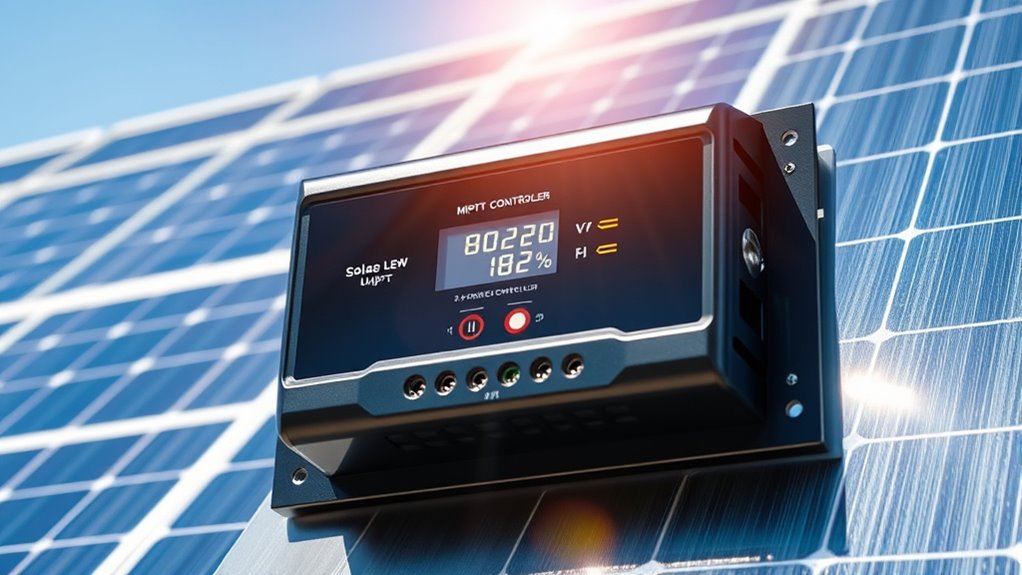

When selecting a solar charge controller MPPT, the goal is to maximize energy harvest while ensuring system reliability. The Victron Energy SmartSolar stands out as the overall best, thanks to its advanced Bluetooth features and high efficiency. For budget-conscious buyers, the Eco-Worthy MPPT Controller offers great value with solid performance and Bluetooth connectivity. Meanwhile, the Renogy 60A MPPT provides extensive input capacity suitable for larger systems. The main challenge lies in balancing cost, features, and system compatibility. Continue reading for a detailed breakdown of these options and what makes each one suitable for different needs.
Complete the kit



Key Takeaways
- High-current models like the Renogy 60A are best for large, high-capacity solar setups but come with higher price tags.
- Bluetooth and WiFi connectivity significantly enhance ease of monitoring and management, especially for DIY enthusiasts.
- Build quality and protections (like overvoltage and temperature shutdown) vary widely and impact system longevity.
- Pricing often correlates with features such as input voltage range, display quality, and communication options.
- Choosing a controller compatible with your battery type (LiFePO4, AGM, Gel) is crucial for optimal performance.


More Details on Our Top Picks
Victron Energy SmartSolar MPPT Solar Charge Controller 100V 50A 12/24V with Bluetooth
This Victron Energy SmartSolar stands out for its sophisticated synchronization features and Bluetooth connectivity, making it ideal for complex solar setups. Compared to the Renogy 60A MPPT, it offers more detailed system monitoring and flexible configuration, though its setup can be daunting for beginners. Its ability to maximize power output even in shaded conditions is a key advantage, especially for those managing larger or more intricate systems. However, it requires careful matching with compatible batteries and might overwhelm new users with its advanced options. For those with experience in solar system management who prioritize system integration and real-time control, this controller offers unmatched flexibility.
Pros:- Maximizes power output even in shaded conditions
- Supports system synchronization for multiple controllers
- Bluetooth connectivity for real-time monitoring and configuration
Cons:- Requires compatible battery setup for optimal performance
- Complex setup may be challenging for beginners
Best for: Experienced solar installers or hobbyists managing complex, multi-controller setups
Not ideal for: Beginners or users seeking a simple plug-and-play solution without Bluetooth or advanced features
- Voltage:12/24V
- Current:50A
- Max Voltage:100V
- Connectivity:Bluetooth
- Features:Synchronized charging, load output, firmware updates
Our verdict“This controller suits experienced users who need advanced system integration and monitoring features.”
Renogy 60A MPPT Solar Charge Controller 12V/24V/36V/48V, 150V Solar Input, Bluetooth Compatible
The Renogy 60A MPPT controller provides a broad voltage support up to 150V, making it ideal for systems with multiple panels in series. It excels in extreme temperature environments, with full-load operation from -31°F to 113°F, and supports various battery types including Lithium, AGM, and Gel, offering great flexibility. Compared to the Victron SmartSolar, its LCD display and optional Bluetooth monitoring make it more user-friendly for those who prefer straightforward interfaces, although the Bluetooth module is sold separately, adding an extra step for mobile monitoring. Its robust design is perfect for off-grid installations in challenging climates, but the installation complexity can be high for novice users. Overall, this model offers a reliable, versatile solution for large or multi-panel systems.
Pros:- Supports high solar input voltage up to 150V
- Reliable operation in extreme temperatures
- Supports various battery types and voltages
Cons:- Bluetooth monitoring requires a separate module
- Installation may be complex for beginners
Best for: Off-grid property owners or remote systems with high panel voltages needing versatile battery support
Not ideal for: Beginners or those looking for an all-in-one, easy-to-install solution without additional modules
- Maximum Solar Input:150V
- Battery Voltage Support:12V/24V/36V/48V
- Maximum Current:60A
- Temperature Range:-31°F to 113°F
- Warranty:2 years
Our verdict“Ideal for users with high-voltage systems seeking durability and flexibility in challenging environments.”
ECO-WORTHY MPPT Solar Charge Controller 40A with Bluetooth, 12V/24V Auto, LCD Display, Compatible with LiFePO4 and Other Batteries
This ECO-WORTHY 40A MPPT controller offers high efficiency and broad battery compatibility, including LiFePO4, making it a solid choice for off-grid and RV setups. Its automatic voltage detection and LCD display simplify installation, especially for those new to solar. Bluetooth monitoring via app adds convenience, though the capacity limits it to smaller systems compared to the 60A or 50A options. While its advanced algorithms deliver over 99% tracking accuracy, users must note that this unit requires an external temperature sensor for optimal performance. The setup can be complex for beginners, but for those with moderate energy needs and a focus on remote monitoring, it provides a balanced mix of features and affordability.
Pros:- High efficiency with >99% tracking accuracy
- Bluetooth app for remote monitoring
- Automatic system voltage detection
Cons:- Requires external temperature sensor for best performance
- Limited to 40A capacity, not suited for large systems
Best for: RVers or small off-grid solar enthusiasts with moderate energy demands
Not ideal for: Large-scale systems or users seeking high current capacity without external sensors
- Maximum Current:40A
- System Voltage:12V/24V Auto
- Display:LCD
- Bluetooth:Yes
- Protection Features:Overcharge, over-discharge, short circuit, overload
Our verdict“This controller is well-suited for off-grid users needing reliable, moderate capacity management with remote monitoring.”
Victron Energy SmartSolar MPPT Solar Charge Controller 75V, 15A, 12/24V with Bluetooth
Compared with the larger 100V, 50A model, this Victron 75V, 15A controller is more compact and suited for smaller systems. It offers intelligent algorithms and Bluetooth connectivity, making system monitoring straightforward. Its lower current and voltage limits mean it’s ideal for modest installations or as a supplementary unit in larger setups. The main tradeoff is its limited capacity, which restricts its use to smaller arrays or backup systems. Its Bluetooth support simplifies remote adjustments, but it doesn’t support synchronization across multiple units, unlike the 100V version. For users with limited space or smaller solar arrays, this controller provides reliable performance without the bulk.
Pros:- Compact size ideal for limited space
- Bluetooth app for easy monitoring
- Supports 12/24V systems with intelligent algorithms
Cons:- Limited to 15A current capacity
- No multi-controller synchronization support
Best for: Small household or RV owners with modest solar arrays needing reliable control
Not ideal for: Large-scale systems or those requiring extensive system integration
- Voltage:75V
- Current:15A
- Battery Voltage Support:12/24V
- Connectivity:Bluetooth
Our verdict“This is a great choice for small systems where space-saving and Bluetooth monitoring are priorities.”
Renogy Solar Charge Controller Rover 40A 12V/24V MPPT
The Renogy Rover 40A MPPT controller offers a straightforward, reliable solution for basic off-grid setups. Its high 98% efficiency and support for multiple battery types, including Lithium, make it a versatile choice for those new to solar. Unlike the ECO-WORTHY model, it lacks Bluetooth monitoring out of the box, but it features an LCD display that provides real-time system data. Its simple installation and robust protection features make it ideal for entry-level systems, though it doesn’t support advanced synchronization or remote management. If budget is a primary concern and system complexity is low, the Rover provides dependable performance without unnecessary extras.
Pros:- High 98% efficiency with MPPT technology
- Supports multiple battery types including Lithium
- Simple installation with protective features
Cons:- No Bluetooth monitoring included
- Limited to 40A, not suitable for large systems
Best for: Beginners or budget-conscious users setting up small off-grid systems
Not ideal for: Large, complex, or remote systems requiring advanced monitoring features
- Maximum Current:40A
- Voltage Compatibility:12V/24V
- Technology:MPPT
- Temperature Range:-40°F to 149°F
Our verdict“Ideal for newcomers seeking a reliable, affordable MPPT controller for small-scale off-grid projects.”
ECO-WORTHY 60A MPPT Solar Charge Controller with Bluetooth & WiFi, 150V Max PV Input, 12/24/36/48V for Lead-Acid/Lifepo4 Batteries
This ECO-WORTHY model stands out for its high efficiency thanks to MPPT technology, maximizing energy harvest even on cloudy days. Its support for Bluetooth and WiFi monitoring offers convenient system oversight, surpassing basic controllers like the SUNAPEX with its limited outputs. However, the setup can be complex, and the Bluetooth/WiFi modules might require separate shipment, which could be a drawback for less tech-savvy users. Compared to the Victron SmartSolar, it provides similar protection features but with more advanced communication options, although it may lack long-term durability details. This controller suits those who want detailed system control and extensive battery compatibility, but not ideal for users seeking plug-and-play simplicity or long-term reliability data.
Pros:- High MPPT efficiency for maximum power extraction
- Wireless monitoring via Bluetooth and WiFi
- Supports multiple load control modes and battery types
- Includes system protections for safety
Cons:- Bluetooth/WiFi modules may need separate shipping
- Complex setup requiring technical knowledge
- Limited info on long-term durability
Best for: System integrators or advanced DIYers needing remote monitoring and flexible battery options
Not ideal for: Beginners or those seeking a plug-and-play solution with straightforward setup
- Max PV Input:150V
- Rated Charging Current:60A
- System Voltage Compatibility:12V/24V/36V/48V
- Battery Types:Lead-Acid, Lifepo4
- Charging Stages:4-stage for lead-acid, 2-stage for lifepo4
Our verdict“This pick suits those who prioritize system customization and remote monitoring over simplicity and ease of setup.”
POWLAND 120A MPPT Solar Charge Controller for 12V-96V Systems
This high-capacity controller makes a clear statement for large off-grid setups, offering up to 98% MPPT efficiency and supporting voltages up to 96V, surpassing smaller units like the SUNAPEX in current capacity. Its automatic voltage sensing simplifies installation across varied systems, but the unit’s weight and size can be prohibitive for portable or space-constrained applications. The comprehensive protections and LCD display enable real-time system monitoring, similar to the Victron SmartSolar, yet it may require more technical expertise to configure properly. It’s ideal for users with substantial solar arrays and a need for robust, high-current control, but less suited for small-scale or portable systems due to its bulk.
Pros:- High maximum input voltage and current for large systems
- Advanced protections improve safety and battery longevity
- Real-time LCD monitoring simplifies system oversight
- Automatic voltage sensing for versatile configurations
Cons:- Heavy, less portable design
- Setup complexity requiring technical skill
- Bulky size may limit placement options
Best for: Large off-grid installations or mobile solar setups needing high current capacity
Not ideal for: Casual users or small-scale systems with limited space and lower power needs
- Max Input Voltage:230V
- Max Current:120A
- Voltage Compatibility:12V/24V/36V/48V/60V/72V/84V/96V
- Protection Features:Reverse polarity, overload, open-circuit
- Battery Types:LiFePO4, AGM, GEL, Flooded Lead-Acid
Our verdict“This controller is best for users with large-scale, high-current solar setups who value safety and detailed monitoring, not for small or portable systems.”
SUNAPEX MPPT Solar Charge Controller 12V 10A for LiFePO4, AGM, Gel Batteries with USB & Type-C Output
This small but efficient MPPT controller excels for portable or small-scale setups, offering precise charging for 12V batteries with integrated USB and Type-C ports for device charging. Its support for multiple battery types ensures versatility, similar to the Victron BlueSolar but with a more compact design. However, its limited 10A current rating restricts larger systems, and it only works with 12V batteries, making it unsuitable for bigger setups. The LCD display provides real-time voltage and current info, but the need for correct polarity and lack of a built-in converter can pose installation challenges. This controller makes the most sense for mobile or emergency systems where space and simplicity are priorities.
Pros:- Efficient MPPT charging with real-time display
- Dual USB and Type-C outputs for device charging
- Supports multiple battery chemistries
- Zero battery drain when idle
Cons:- Limited to 12V batteries and 10A current
- No built-in polarity converter
- Not suitable for larger or higher voltage systems
Best for: Camping, small off-grid setups, or portable solar solutions needing integrated device charging
Not ideal for: Large or high-power systems requiring higher current capacity or 24V/36V compatibility
- Voltage:12V
- Current:10A
- Battery Types:LiFePO4, AGM, Gel, Lead-Acid
- Outputs:Type-C & USB
- Protection Features:Overcharge, Over-voltage, Reverse Current, Reverse Polarity, Short-Circuit, Over-temperature
Our verdict“This controller is ideal for small, portable, or emergency solar setups where space is tight and charging needs are modest.”
Victron Energy SmartSolar MPPT Solar Charge Controller 100V, 20A, 48V with Bluetooth
This Victron model offers a blend of high efficiency and smart features, making it suitable for more experienced users seeking detailed system control. Its Bluetooth connectivity allows easy monitoring and configuration, while the 20A current supports mid-sized 48V systems. Compared to the BlueSolar 75V controller, it provides a more robust power capacity, ideal for slightly larger setups. The intelligent algorithms optimize battery health and overall system performance, but the setup can be intricate for those unfamiliar with Victron’s ecosystem. This controller is well-suited for users who want a reliable, feature-rich MPPT unit with remote monitoring, though it might be overkill for small or simple systems.
Pros:- High MPPT efficiency for maximum energy harvest
- Bluetooth connectivity for easy remote monitoring
- Supports system synchronization for multiple controllers
- Advanced load management for battery protection
Cons:- Requires compatible batteries and solar panels
- Setup complexity may challenge novices
- No built-in display, relies on Bluetooth app
Best for: DIY enthusiasts or small commercial operators needing system insight and Bluetooth control
Not ideal for: Beginners or systems with very low power needs, where simpler controllers suffice
- Voltage:100V
- Current:20A
- Battery Voltage:48V
- Connectivity:Bluetooth
Our verdict“This controller is best for users who value system intelligence, remote control, and scalability, not for those needing plug-and-play simplicity.”
Victron Energy BlueSolar MPPT Solar Charge Controller 75V, 15A, 12/24V
This BlueSolar model offers reliable MPPT performance at a more affordable price point, making it suitable for small or budget-sensitive setups. Its 75V input limit and 15A current support typical 12V and 24V systems efficiently, outperforming non-MPPT controllers in energy harvesting. Bluetooth optional via an external dongle adds remote monitoring capability, but the controller itself does not include built-in wireless features. Compared with the SUNAPEX 10A controller, it provides a higher current capacity and broader compatibility, yet it may lack some of the advanced protections or display features found in higher-end models. This unit is a solid choice for those wanting decent efficiency without extra features or high power demands.
Pros:- Reliable MPPT technology maximizes energy capture
- Compatible with multiple battery types
- Affordable without sacrificing core performance
- Optional Bluetooth via external dongle
Cons:- Requires separate Bluetooth dongle for wireless monitoring
- Limited to 75V maximum input voltage
- No display or advanced protections built-in
Best for: Small residential or hobbyist solar setups on a budget
Not ideal for: Large or high-voltage systems, or users needing integrated monitoring without additional accessories
- Voltage:75V
- Current:15A
- Battery Compatibility:AGM, Gel, LiFePO4, Flooded Lead-Acid
- Bluetooth:Optional via dongle
Our verdict“This controller is well-suited for small-scale, budget-conscious installations where reliable MPPT performance is desired but advanced features are not a priority.”
Renogy Rover 30A 12V/24V MPPT Solar Charge Controller with LCD Display
The Renogy Rover 30A stands out for its robust compatibility with multiple battery types, including lithium, and its high-precision MPPT tracking that reaches 99.9% efficiency. Compared to the ECO-WORTHY 40A controller, it offers more detailed real-time monitoring via an LCD and Bluetooth, making it suitable for users who want both performance and visibility. Its safeguards against surges and reverse polarity add reliability, but the setup can be complex for those unfamiliar with advanced solar systems. The limited 30A capacity means it’s best for smaller to medium-sized setups, not large arrays. Overall, this model is ideal for off-grid cabins or marine applications where precise monitoring matters.
Pros:- High efficiency MPPT tracking with 99.9% accuracy
- Supports multiple battery types including lithium
- Built-in surge and reverse polarity protection
- Backlit LCD and Bluetooth compatibility for real-time data
Cons:- Bluetooth module sold separately, adding extra cost
- Setup may require technical knowledge
- Limited to 30A capacity for smaller systems
Best for: Advanced DIYers or professionals managing off-grid cabins or marine setups needing detailed monitoring and flexible battery support.
Not ideal for: Beginners or small-scale residential users who prefer plug-and-play simplicity, as the setup complexity may be challenging.
- Max Input Power:400W (12V) / 800W (24V)
- Voc:≤ 100V
- Current:30A
- Voltage:12V/24V auto-detect
- Temperature Range:-40°F to 149°F
- Surge Protection:6kV lightning surge
Our verdict“This controller is best suited for experienced users needing precise monitoring and versatile battery compatibility in medium-sized off-grid systems.”
40A Solar Charge Controller, 12V/24V MPPT with LCD, Dual USB Ports, for RV, Boat, Off-Grid Systems
The 40A MPPT Controller offers a significant step up in solar harvesting efficiency, boosting energy extraction by over 30% compared to PWM types like the SOLPERK. Its support for multiple battery chemistries, including LiFePO4 and AGM, makes it versatile for various applications. The dual USB ports and LCD screen facilitate easy device charging and system monitoring, which is a practical feature for RV owners or boaters. However, the lack of wireless connectivity means it’s less suited for remote system management, and installation requires careful attention to wiring. Its rugged metal casing ensures durability in outdoor environments, but it might be overkill for small, simple setups.
Pros:- Increases solar power extraction by over 30%
- Supports multiple battery types with automatic recognition
- Dual USB ports and LCD for easy device charging and system oversight
- Rugged metal casing for outdoor durability
Cons:- Requires proper installation for optimal performance
- Limited to 40A capacity, not suitable for large arrays
- No wireless or remote monitoring features
Best for: RV owners or boaters seeking a reliable, high-efficiency MPPT controller with convenient USB charging and straightforward monitoring.
Not ideal for: Users with larger or more complex systems requiring remote monitoring or higher current capacity, as it maxes out at 40A.
- Max Current:40A
- Voltage:12V/24V
- Display:LCD
- USB Ports:Dual
- Battery Compatibility:LiFePO4, Lithium, AGM, GEL, Flooded
- Protection Features:Over-voltage, short-circuit, reverse polarity
Our verdict“This controller delivers excellent value for RV or boat owners who prioritize efficiency and built-in USB charging in medium-sized systems.”
Solar Charge Controller 100A 12V/24V/36V/48V Intelligent LCD Display Battery Regulator with Dual USB
Compared with smaller controllers like the Renogy Rover 30A, this 100A MPPT model accommodates much larger solar arrays and multiple voltage systems, making it ideal for bigger off-grid projects. Its automatic recognition of battery types and voltages simplifies setup, while the high tracking efficiency of over 99.5% ensures maximum energy harvest. The large size and complex setup requirements mean it’s best suited for experienced installers or professional systems. The absence of wireless monitoring may be a drawback for those who prefer remote oversight, but the comprehensive safety protections make it a reliable choice for demanding applications.
Pros:- Supports multiple voltage systems with automatic recognition
- High tracking efficiency of 99.5% or higher
- Multiple safety protections including surge and overheating
- Large LCD display for real-time data
Cons:- Setup can be complex for users without technical experience
- Large physical size may not fit small enclosures
- Price not specified, potentially high for budget-conscious buyers
Best for: Professionals or serious DIYers managing large solar arrays across multiple voltage systems needing high current capacity and reliable operation.
Not ideal for: Small-scale or beginner projects, as the size and setup complexity may be overwhelming and unnecessary.
- Maximum Current:100A
- Voltage Compatibility:12V, 24V, 36V, 48V
- USB Ports:2 (5V each)
- Input Voltage:Maximum 100V
- Protection Features:Surge, short circuit, overheating
- Display:Backlit LCD
Our verdict“This controller is best suited for large-scale, multi-voltage off-grid systems managed by experienced installers seeking high efficiency and safety.”
100A MPPT Solar Charge Controller, 12V/24V Battery Regulator with LCD Display and Dual USB Ports
The 100A MPPT Controller offers a straightforward, high-capacity solution for large 12V or 24V systems, emphasizing ease of installation through auto-recognition of battery voltage and type. Its high efficiency — up to 99% — maximizes solar charging, while the integrated LCD allows real-time system monitoring. For users seeking a plug-and-play experience, this controller simplifies setup, but its design limits it to only 12V and 24V systems, making it unsuitable for higher voltage or complex multi-voltage arrays. The safety protections cover common risks but lack wireless connectivity, which could be a drawback for remote system management.
Pros:- Easy plug-and-play installation with auto-recognition
- High charging efficiency up to 99%
- Built-in safety protections for batteries and system
- LCD display for real-time insights
Cons:- Limited to 12V and 24V systems
- May be complex for absolute beginners without technical knowledge
- Price details not provided, which could be a concern
Best for: Large residential or small commercial systems where ease of installation and high current capacity are priorities, especially for users familiar with basic technical setup.
Not ideal for: Systems requiring remote monitoring or multi-voltage flexibility beyond 12V/24V setups, as it is limited to these voltages.
- Current:100A
- Voltage:12V/24V
- Display:LCD
- Ports:Dual USB
- Protection Features:Overcharge, short-circuit, reverse polarity
- Max Input Voltage:Maximum 100V
Our verdict“This controller offers a reliable, high-capacity option for users managing large, straightforward systems who value simplicity and efficiency.”
SOLPERK MPPT Solar Charge Controller 10A 12V Waterproof IP67
For small-scale outdoor setups, the SOLPERK 10A MPPT offers a rugged, waterproof IP67 design that stands out for outdoor durability and ease of use. Compared to larger controllers like the Renogy Rover, its limited 10A capacity makes it suitable for smaller solar arrays or emergency backup systems. The MPPT technology ensures 30% higher efficiency than PWM controllers, but the basic LED indicator lacks detailed diagnostics, making troubleshooting less straightforward. Its plug-and-play SAE connector simplifies installation, though it only supports 12V systems, restricting its use in larger or more complex setups.
Pros:- High efficiency MPPT charging with 30% improvement over PWM
- Waterproof IP67 rating suitable for outdoor use
- Easy plug-and-play SAE connection for quick setup
- Multiple protections extend battery life
Cons:- Limited to 12V systems only
- Basic LED indicators lack detailed diagnostics
- Max current of only 10A limits system size
Best for: Outdoor hobbyists or small-scale solar users needing a waterproof, easy-to-install controller for 12V batteries in outdoor environments.
Not ideal for: Larger systems or applications requiring detailed diagnostics or multi-voltage compatibility, as it’s limited to 12V and basic indicators.
- Max Current:10A
- Voltage:12V
- Protection:Over-voltage, under-voltage, overload, short circuit, anti-back connect
- Waterproof Rating:IP67
- Battery Compatibility:AGM, Gel, Flooded, Lithium
- Features:LED indicators, plug-and-play SAE port
Our verdict“This waterproof MPPT controller is ideal for small outdoor projects where durability and simplicity are more important than capacity or advanced diagnostics.”
How We Picked
The products in this roundup were evaluated based on key criteria relevant to real-world solar installations. Performance metrics like maximum input voltage, current capacity, and efficiency were prioritized to ensure reliable energy harvesting. Usability features such as Bluetooth, LCD displays, and ease of installation influenced our rankings, as they improve user experience. Build quality and protection features are also critical for durability in varied environments. Cost was considered alongside feature set to identify the best value options, and models offering compatibility with different battery types were favored for versatility. The final ranking balances these factors to match different user needs and system sizes.Factors to Consider When Choosing Solar Charge Controllers Mppt
Choosing the right MPPT solar charge controller involves more than just comparing specifications. Understanding your system’s size, battery type, and monitoring preferences will help narrow down your options. Features like input voltage range, communication interfaces, and build quality can dramatically affect long-term reliability. It’s also important to consider future expansion plans, as some controllers support higher voltages or additional features that can accommodate growth. Avoid common mistakes such as selecting a controller with insufficient current capacity or incompatible battery chemistry, which can lead to performance issues or damage.System Size and Current Capacity
Ensure the controller’s maximum current rating exceeds your solar array’s current output to prevent overloads. Larger systems with higher wattages require controllers with higher input voltage and current capabilities, like 60A or more. Overspecifying slightly provides margin for peak conditions and future expansion, but buying a controller with too high a capacity for a small system might be unnecessary and more expensive. Always match the controller’s specifications to your system to optimize efficiency and longevity.
Voltage Compatibility and Input Range
The controller must support your solar array’s voltage, especially if you plan to add panels later. Look for models with a wide input voltage range, which accommodate different panel configurations and inverters. For example, systems with 48V batteries or high-voltage arrays benefit from controllers that handle 75V or more. Choosing a controller with insufficient voltage capacity can limit your system’s potential or cause shutdowns during high voltage conditions.
Monitoring and Connectivity
Features like Bluetooth, WiFi, and LCD displays make a significant difference in managing and troubleshooting your system. Bluetooth-enabled controllers are ideal for small setups or DIY users who want quick access via smartphones. WiFi options are better suited for larger or more complex systems requiring remote monitoring. High-quality displays provide real-time data but may add to the cost. Prioritize connectivity features based on how much hands-on management you desire.
Build Quality and Protections
Robust build quality ensures your controller withstands environmental factors like heat, humidity, and dust. Look for features such as overvoltage, temperature protection, and short-circuit safeguards to extend the lifespan of your system. Cheaper models may lack these protections, increasing the risk of damage during adverse conditions. Investing in well-protected controllers is especially wise for off-grid or outdoor installations.
Compatibility with Battery Types
Different batteries, such as LiFePO4, AGM, or Gel, require specific charging profiles. Verify that the controller supports your battery chemistry to avoid overcharging or undercharging, which can degrade performance or shorten lifespan. Some controllers are versatile and support multiple chemistries, offering greater flexibility if you plan to switch batteries later. Compatibility with a broad range of batteries adds value, especially for off-grid systems or long-term installations.
Frequently Asked Questions
Can I upgrade my solar charge controller later?
Yes, many MPPT controllers are designed with expandability in mind, supporting higher voltages or current ratings. When selecting a controller, consider future system growth, such as adding more panels or upgrading batteries. Models with wider voltage input ranges and higher current capacities provide more flexibility for upgrades. Always check compatibility with your existing setup before replacing or expanding the controller to prevent mismatched components.
Is Bluetooth connectivity necessary for a solar charge controller?
Bluetooth connectivity is not essential but adds significant convenience for system monitoring and troubleshooting. It allows you to view real-time data on your smartphone without needing additional hardware. For smaller or less complex setups, manual monitoring via LCD may suffice, but for larger systems or off-grid setups, remote monitoring via Bluetooth or WiFi can save time and facilitate proactive maintenance.
How do I match a controller with my battery type?
Matching your controller with your battery chemistry is crucial to ensure proper charging and longevity. Many controllers come with adjustable settings for different chemistries, like LiFePO4, AGM, or Gel. Always verify that the controller explicitly supports your battery type; otherwise, you risk damaging the batteries or reducing their lifespan. Reading the manufacturer specifications and user manuals helps confirm compatibility before purchasing.
What’s the difference between PWM and MPPT controllers?
MPPT controllers are more efficient than PWM types because they can adjust their input to maximize power extraction from your panels, especially in varying sunlight conditions. This means higher energy yields, particularly in colder or cloudy weather. Although MPPT controllers tend to cost more upfront, they often pay for themselves over time through increased energy harvest. For larger or more complex systems, MPPT is generally the better choice.
Should I prioritize features over price?
While sticking to your budget is understandable, investing in a controller with essential features like high input voltage, robust protections, and good monitoring capabilities often results in better long-term performance. Cheaper controllers may lack durability or critical protections, leading to costly repairs or system failure. Balance your immediate costs with the value of features that ensure reliability and ease of use, especially in off-grid or remote setups.
Conclusion
For most users, the Victron Energy SmartSolar MPPT strikes the best balance of advanced features, build quality, and ease of use—ideal as the best overall pick. Budget-conscious buyers seeking solid performance without breaking the bank should consider the ECO-WORTHY MPPT Controller as the best value. For those with large systems or planning to expand, the Renogy 60A MPPT offers ample capacity and flexibility. Beginners will appreciate models with straightforward interfaces, such as the Renogy Rover 30A. Lastly, for off-grid or outdoor setups, rugged options like the SOLPERK 10A Waterproof provide durability and reliability. Your choice depends on your system size, budget, and monitoring needs, but these picks cover a range of applications and priorities.