For a smart thermostat for a large home, I’d start with the ecobee Smart Thermostat Enhanced for its broader room-comfort approach, then compare the Honeywell Home T5 for scheduling and the Amazon Smart Thermostat for a simpler connected upgrade. A single thermostat can manage one HVAC system, but it cannot independently correct temperature differences across distant rooms without compatible sensors or zoning. The main tradeoffs are room-level comfort versus installation complexity, advanced controls versus ease of use, and feature breadth versus HVAC compatibility. I’ve ranked these 15 models around those needs rather than treating smart features as a substitute for whole-home coverage. Read on for the full breakdown and help matching a thermostat to your system and floor plan.

Get the latest gadgets delivered free with Prime
- Fast, free delivery on millions of items
- Prime Video, Amazon Music and more included
- Member-only deals all year
Complete the kit



Key Takeaways
- Room coverage matters more than app features. The ecobee Smart Thermostat Enhanced stands out for buyers focused on uneven temperatures, while a connected thermostat alone still controls only the system or zone it is wired to.
- Compatibility can outweigh sophistication. Models such as the Riseem STN701W are explicitly limited to single-stage HVAC systems, making system verification especially important in larger homes with more involved equipment.
- Honeywell offers several distinct control styles. The T5 focuses on scheduling, the X2S on straightforward Wi-Fi control, and the Color models on a more information-rich display; these are not interchangeable choices.
- Budget-oriented models suit simpler upgrades. Amazon Smart Thermostat, Sensi Lite ST25, and Vine models keep the shortlist accessible for buyers who need basic connected control, but they are less compelling when room-by-room comfort is the priority.
- Near-duplicate listings need careful checking. The roundup includes the Honeywell X2S in two colors and Google Nest in two colors, so buyers should compare model number, wiring needs, and included accessories rather than assume color variants add different capabilities.
| Vine ST300 Wi-Fi Smart Thermostat with Large Knob and Nightlight |  | Best for Easy On-Wall Control | Model: ST300 | Display: 3.5-inch LCD touchscreen | Connectivity: Wi-Fi | VIEW ON AMAZON | See Our Full Breakdown |
| Vine Smart Wi-Fi Thermostat with Alexa and Google Assistant |  | Best for Schedule and Maintenance Reminders | Connectivity: Wi-Fi | Voice assistants: Amazon Alexa and Google Assistant | Programming: 7-day schedule with 8 periods | VIEW ON AMAZON | See Our Full Breakdown |
| Amazon Smart Thermostat |  | Best for Alexa-Centered Homes | Model number: S6ED3R | Dimensions: 3.56 × 3.56 × 0.84 in | Compatibility: Most 24V HVAC systems; not compatible with 110–240V systems | VIEW ON AMAZON | See Our Full Breakdown |
| Google Nest Smart Thermostat, Snow |  | Best for Google Home and DIY Setup | Connectivity: Wi-Fi (2.4 GHz and 5 GHz) and Bluetooth Low Energy | Power source: Battery powered | Voltage: 24 volts | VIEW ON AMAZON | See Our Full Breakdown |
| Sensi Lite Wi-Fi Smart Thermostat, ST25 | 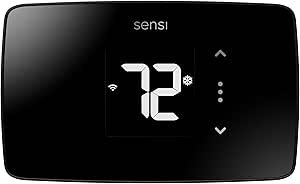 | Best for Flexible DIY Installation | Model: ST25 | Connectivity: Wi-Fi (2.4 GHz) | Smart-home compatibility: Amazon Alexa, Google Assistant, SmartThings | VIEW ON AMAZON | See Our Full Breakdown |
| ecobee Smart Thermostat Essential – WiFi Thermostat |  | Best for Multi-Platform Smart Homes | Connectivity: Wi-Fi | Smart-home compatibility: Apple HomeKit, Google Assistant, Amazon Alexa, iOS, Android | HVAC support: Gas, oil, electric, dual fuel, forced air, heat pumps, boilers | VIEW ON AMAZON | See Our Full Breakdown |
| Honeywell Home X2S Smart Wi-Fi Thermostat |  | Best for Matter-Compatible Basic Scheduling | Model: RTH2SMC/N | Connectivity: Matter and Wi-Fi, 2.4 or 5 GHz, 802.11 b/g/n | System compatibility: Up to 2 heat/2 cool conventional; up to 2 heat/1 cool heat pump with electric backup | VIEW ON AMAZON | See Our Full Breakdown |
| ecobee Smart Thermostat Enhanced |  | Best ecobee Pick for Homes Without a C-Wire | Connectivity: Wi-Fi | Controller compatibility: Amazon Alexa, Android, Apple HomeKit, Google Assistant, iOS | Compatible HVAC: Air conditioner, boiler, furnace, heat pump, humidifier | VIEW ON AMAZON | See Our Full Breakdown |
| Honeywell Home X2S Smart Wi-Fi Thermostat, Gray |  | Best Neutral-Finish Matter Pick | Connectivity: Wi-Fi | Smart-home compatibility: Matter, Amazon Alexa, Google Assistant, Apple HomeKit | System compatibility: Up to 2 heat/2 cool conventional or 2 heat/1 cool heat pump | VIEW ON AMAZON | See Our Full Breakdown |
| Honeywell Home Wi-Fi Smart Color Programmable Thermostat, Gray |  | Best for a Customizable Color Display | Model: RTH9585WF1004 | Display: Customizable color touchscreen | Connectivity: Wi-Fi | VIEW ON AMAZON | See Our Full Breakdown |
| Honeywell Home RTH9600WF Smart Color Wi-Fi Thermostat |  | Best for Clear, At-a-Glance Control | Model: RTH9600WF | Connectivity: Wi-Fi | Display: Selectable color LCD touchscreen | VIEW ON AMAZON | See Our Full Breakdown |
| Riseem STN701W Wi-Fi Smart Thermostat for Single-Stage HVAC Systems |  | Best Basic Pick for Single-Stage Systems | Model: STN701W-Blue | System compatibility: Single-stage, 1 heat/1 cool conventional HVAC | Wi-Fi: 2.4 GHz only | VIEW ON AMAZON | See Our Full Breakdown |
| Google Nest Smart Thermostat, Charcoal | 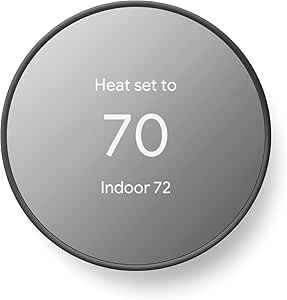 | Best for DIY Installation | Color: Charcoal | Connectivity: Wi-Fi (2.4 GHz and 5 GHz), Bluetooth Low Energy | Display: 2-inch LCD screen | VIEW ON AMAZON | See Our Full Breakdown |
| Honeywell Home T5 Smart Wi-Fi Thermostat |  | Best for Schedule and Location-Based Automation | Model: RTH8800WF2022 | Connectivity: Wi-Fi | Display: 4.95-inch LCD touchscreen | VIEW ON AMAZON | See Our Full Breakdown |
| Sensi ST55 Wi-Fi Smart Thermostat |  | Best for Broad Smart-Home Compatibility | Model: ST55 | Connectivity: Wi-Fi | HVAC compatibility: Air conditioner, boiler, furnace, heat pump | VIEW ON AMAZON | See Our Full Breakdown |
| smart thermostat for large home | Connectivity | Display | Power | Model |
|---|---|---|---|---|
| Vine ST300 Wi-Fi Smart Thermos | Wi-Fi | 3.5-inch LCD touchscreen | Hardwired; C-wire required | ST300 |
| Vine Smart Wi-Fi Thermostat wi | Wi-Fi | LCD | — | — |
| Amazon Smart Thermostat | — | — | — | — |
| Google Nest Smart Thermostat | Wi-Fi (2.4 GHz and 5 GHz) and Bluetooth Low Energy | LCD, 1.07-inch screen | — | — |
| Sensi Lite Wi-Fi Smart Thermos | Wi-Fi (2.4 GHz) | — | Battery or C-wire | ST25 |
| ecobee Smart Thermostat Essent | Wi-Fi | 3.74-inch color LCD touchscreen | Battery powered; optional Power Extender Kit for homes without a C-wire | — |
| Honeywell Home X2S Smart Wi-Fi | Matter and Wi-Fi, 2.4 or 5 GHz, 802.11 b/g/n | — | 24 VAC; C-wire required | RTH2SMC/N |
| ecobee Smart Thermostat Enhanc | Wi-Fi | 4-inch LCD screen | Corded electric; 24 volts | — |
| Honeywell Home X2S Smart Wi-Fi | Wi-Fi | LCD | — | — |
| Honeywell Home Wi-Fi Smart Col | Wi-Fi | Customizable color touchscreen | AC power; C-wire required | RTH9585WF1004 |
| Honeywell Home RTH9600WF Smart | Wi-Fi | Selectable color LCD touchscreen | — | RTH9600WF |
| Riseem STN701W Wi-Fi Smart The | — | Backlit LCD | 24V AC; C-wire required | STN701W-Blue |
| Google Nest Smart Thermostat | Wi-Fi (2.4 GHz and 5 GHz), Bluetooth Low Energy | 2-inch LCD screen | — | — |
| Honeywell Home T5 Smart Wi-Fi | Wi-Fi | 4.95-inch LCD touchscreen | 24 volts; C-wire or power adapter may be required | RTH8800WF2022 |
| Sensi ST55 Wi-Fi Smart Thermos | Wi-Fi | 5-inch LED screen | 24V AC, corded electric | ST55 |
More Details on Our Top Picks
Vine ST300 Wi-Fi Smart Thermostat with Large Knob and Nightlight
For a large home, the Vine ST300 makes day-to-day adjustments approachable even for household members who would rather not open an app. Its 3.5-inch touchscreen and physical knob give it a more hands-on control setup than the app-centered Amazon Smart Thermostat, while Wi-Fi, voice assistants, and a seven-day schedule still support remote management across busy routines. Auto Home/Away mode can help adapt settings as occupancy changes, and the dimmable nightlight and child lock add practical household touches. The tradeoff is that the product data does not list room sensors or multi-zone coordination, so the thermostat alone may not address uneven temperatures across a sprawling floor plan. I’d also check system wiring before choosing it: a C-wire is required, and compatibility depends on the home’s 24V equipment.
Pros:- Large touchscreen and physical knob make local adjustments accessible without a phone.
- Seven-day scheduling and Auto Home/Away mode support changing household routines.
- Works with Alexa and Google Assistant and offers app-based remote control.
- Dimmable nightlight and child lock add useful household controls.
Cons:- Requires a C-wire, which may add installation work for homes without one.
- No room sensors or multi-zone features are listed for balancing temperatures across a large home.
- Compatibility should be confirmed for the specific 24V conventional or heat-pump system.
Best for: Households in larger homes that want a prominent physical control for shared use alongside app and voice control, and whose HVAC system has a C-wire.
Not ideal for: Owners of homes with no C-wire or highly uneven room temperatures who need documented room sensors or multi-zone control.
- Model:ST300
- Display:3.5-inch LCD touchscreen
- Connectivity:Wi-Fi
- Voice assistants:Amazon Alexa and Google Assistant
- Scheduling:7-day programmable
- Additional features:Auto Home/Away mode, dimmable nightlight, child lock
- Power:Hardwired; C-wire required
- Compatibility:Many 24V conventional and heat-pump systems
Our verdict“Choose the ST300 if easy, shared on-wall control matters more than room-by-room temperature management.”
Vine Smart Wi-Fi Thermostat with Alexa and Google Assistant
The standard Vine Smart Wi-Fi Thermostat earns its place for households that want a detailed weekly routine and useful reminders without the ST300’s larger touchscreen-and-knob emphasis. Its seven-day schedule with eight periods allows different settings throughout the day, while temperature alerts and filter reminders can help occupants keep tabs on a home that is harder to monitor room by room. App control, geofencing, and Alexa or Google Assistant support add remote convenience. Compared with the Amazon Smart Thermostat, this Vine model has broader listed schedule and reminder features, but it still does not list room sensors or zone control—an important limitation when a large house has temperature differences between floors. It also requires a C-wire, and buyers should verify compatibility before installation.
Pros:- Eight daily schedule periods allow more detailed routines than a basic single schedule.
- Temperature alerts and filter reminders offer helpful maintenance prompts.
- Remote control is available through the Vine Thermostat or Smart Life app.
- Supports Alexa, Google Assistant, geofencing, vacation mode, and child lock.
Cons:- C-wire is required for operation.
- No room sensors or multi-zone control are listed for large-home temperature balancing.
- Compatibility needs checking against the home’s specific 24V system.
Best for: Families in larger 24V homes who want multiple daily schedule periods, geofencing, and filter or temperature reminders in one thermostat.
Not ideal for: Buyers without a C-wire, or households seeking room-by-room sensing and zone control to manage uneven temperatures.
- Connectivity:Wi-Fi
- Voice assistants:Amazon Alexa and Google Assistant
- Programming:7-day schedule with 8 periods
- Compatibility:24V AC conventional, heat-pump, heat-only, or cool-only systems
- Display:LCD
- Additional features:Auto-away, geofence, vacation mode, child lock, temperature alerts, filter reminders
- Wiring:C-wire required
- Dimensions:0.98 × 3.54 × 3.54 in (D × W × H)
Our verdict“Pick this Vine model over the ST300 if schedule detail and maintenance reminders matter more than a large physical control.”
Amazon Smart Thermostat
The Amazon Smart Thermostat is a straightforward fit for a large home already organized around Alexa: residents can manage schedules through the Alexa app and use compatible Echo devices for automatic adjustments. That ecosystem link gives it a different appeal from the Vine ST300, whose physical knob and touchscreen are better suited to people who want direct control at the wall. Amazon also lists indoor humidity sensing, emergency heat mode, vacation mode, and an energy dashboard, giving owners useful system information without a more elaborate interface. The limitations matter in a large house: voice control depends on a separate Alexa-enabled device, it supports only 2.4 GHz Wi-Fi, and no room sensors or zone controls are listed. A C-wire or separately sold power adapter is also required.
Pros:- Alexa app supports remote control and scheduling.
- Compatible Echo devices can support automatic temperature adjustments and voice control.
- Includes indoor humidity sensing, emergency heat mode, vacation mode, and an energy dashboard.
- Works with most 24V HVAC systems and includes guided app-based installation.
Cons:- Requires a C-wire or a separately sold power adapter kit.
- Supports 2.4 GHz Wi-Fi only, not 5 GHz.
- Voice control requires a separate Alexa-enabled device, and no room sensors are listed.
Best for: Alexa households that want app-based schedules, compatible Echo automation, and basic energy and humidity information from one central thermostat.
Not ideal for: Homes using 5 GHz-only Wi-Fi, buyers seeking built-in voice control or room-by-room sensing, and installations without a C-wire or compatible power adapter.
- Model number:S6ED3R
- Dimensions:3.56 × 3.56 × 0.84 in
- Compatibility:Most 24V HVAC systems; not compatible with 110–240V systems
- Power requirement:C-wire or separately sold power adapter kit
- Wi-Fi:2.4 GHz, 802.11 b/g/n; does not support 5 GHz
- Control:Alexa app, Ring app, compatible Echo devices, and three touch buttons
- Features:Schedules, indoor humidity sensing, emergency heat mode, vacation mode, energy dashboard
- Certifications:ENERGY STAR and ECOLOGO Gold
Our verdict“Choose the Amazon model if Alexa is already central to your home and a simple, single-thermostat setup suits your layout.”
Google Nest Smart Thermostat, Snow
The Google Nest Thermostat is a good match for larger homes where occupants want remote adjustments and automatic temperature changes without a complicated installation process. Its Google Home app control and ability to adjust settings when residents leave can reduce the need to manage every change manually. Compared with the Amazon Smart Thermostat, Nest supports both 2.4 and 5 GHz Wi-Fi and works with Google Assistant, Alexa, and Matter-certified voice assistants; that flexibility can suit mixed-device households. Still, the small 1.07-inch display is less inviting for frequent adjustments at the wall than the Vine ST300’s larger screen and knob. Nest lists HVAC monitoring and maintenance alerts, but not room sensors or zone control, so it may not solve temperature imbalance across distant rooms. Some systems also need a C-wire or power accessory.
Pros:- Remote control through the Google Home app supports adjustments away from home.
- Can adjust temperature when residents leave.
- Supports 2.4 and 5 GHz Wi-Fi and several voice-assistant ecosystems.
- Designed for DIY installation and includes HVAC monitoring and maintenance alerts.
Cons:- Small 1.07-inch screen is less suited to frequent on-wall adjustments than the Vine ST300’s display and knob.
- Some heating, cooling, heat-pump, or zone-controlled systems may need a C-wire or power accessory.
- Remote features and voice control depend on internet, Wi-Fi, and compatible devices; room sensors are not listed.
Best for: DIY-minded households with a Google Home setup that want app control, away adjustments, and compatibility with multiple smart-home platforms.
Not ideal for: People who prefer a large, easy-to-read wall display or need room sensors and zone control to address uneven temperatures across a large floor plan.
- Connectivity:Wi-Fi (2.4 GHz and 5 GHz) and Bluetooth Low Energy
- Power source:Battery powered
- Voltage:24 volts
- Display:LCD, 1.07-inch screen
- Control:Button and voice control
- Temperature control:Heating and cooling
- Compatibility:Google Assistant, Alexa, Android, iOS, and Matter-certified voice assistants
- Color:Snow
Our verdict“Choose Nest for flexible smart-home integration and DIY convenience, but look elsewhere if large-home room balancing is your main goal.”
Sensi Lite Wi-Fi Smart Thermostat, ST25
The Sensi Lite ST25 stands out for buyers who want app-based control and flexible installation options without committing to a thermostat that always needs a C-wire. It can run on batteries or a C-wire, though heat-pump and heat/cool-only systems do require the C-wire. That makes it a more adaptable installation prospect than the Amazon Smart Thermostat, which needs a C-wire or a separate power adapter kit. In a large home, geofencing, scheduling, and energy reports can help manage the system from a phone and track usage, but the listed features do not include room sensors or zone control. The 2.4 GHz Wi-Fi limit and incomplete height dimension also leave some practical questions for planning. I’d favor it for straightforward DIY upgrades, not for correcting room-to-room temperature gaps.
Pros:- Battery or C-wire power offers flexibility for many installations.
- DIY setup includes a built-in level and step-by-step instructions.
- App control, scheduling, geofencing, and energy usage reports support remote management.
- Compatible with Alexa, Google Assistant, and SmartThings.
Cons:- C-wire is required for heat-pump and heat/cool-only systems.
- 2.4 GHz Wi-Fi only may not suit homes set up exclusively for 5 GHz.
- Height is not provided in the listed dimensions, and no room sensors or zone controls are listed.
Best for: DIY-focused owners of larger 24V homes who want app scheduling, geofencing, and energy reports, especially when their system can run without a C-wire.
Not ideal for: Heat-pump or heat/cool-only system owners without a C-wire, households needing room-by-room temperature control, or buyers who require complete published dimensions.
- Model:ST25
- Connectivity:Wi-Fi (2.4 GHz)
- Smart-home compatibility:Amazon Alexa, Google Assistant, SmartThings
- Power:Battery or C-wire
- Voltage:24 volts
- Display and control:LCD; app, touch, and voice
- Dimensions:0.88 in deep × 5.0 in wide; height not provided
- Warranty:3 years
Our verdict“Pick the Sensi Lite for a flexible DIY smart-thermostat upgrade, provided its wiring and single-thermostat approach fit your home.”
ecobee Smart Thermostat Essential – WiFi Thermostat
For a large home already connected to several smart-home platforms, the ecobee Smart Thermostat Essential is a flexible starting point: it supports Apple HomeKit, Google Assistant, and Alexa, and its automatic scheduling and auto-away features can reduce unnecessary heating or cooling. Its 3.74-inch color touchscreen offers a more visual interface than the LCD on the Honeywell Home X2S. It also supports a broad range of listed HVAC types, including boilers and heat pumps, though buyers still need to check their particular system before installation.
The large-home caveat is room coverage: SmartSensors are sold separately, so the thermostat alone may not address temperature differences between floors or distant rooms. Unlike the ecobee Smart Thermostat Enhanced, this package does not include a Power Extender Kit; one is optional for homes without a C-wire. I’d choose it for ecosystem flexibility, not as a complete room-by-room comfort package.
Pros:- Supports Apple HomeKit, Google Assistant, and Amazon Alexa
- Automatic scheduling and auto-away features can help limit heating and cooling when rooms are unoccupied
- Color touchscreen provides a clear local control interface
- Supports listed systems including boilers, heat pumps, and dual-fuel setups
Cons:- SmartSensors for room-by-room comfort are sold separately
- Power Extender Kit for homes without a C-wire is optional and sold separately
- HVAC compatibility should be checked before purchase and installation
Best for: Homeowners with compatible 24 VAC HVAC who want one thermostat to work across Alexa, Google, and Apple HomeKit, and are open to adding sensors later.
Not ideal for: Owners seeking room-by-room temperature balancing out of the box, or anyone who wants the no-C-wire accessory included rather than sold separately.
- Connectivity:Wi-Fi
- Smart-home compatibility:Apple HomeKit, Google Assistant, Amazon Alexa, iOS, Android
- HVAC support:Gas, oil, electric, dual fuel, forced air, heat pumps, boilers
- Display:3.74-inch color LCD touchscreen
- Power:Battery powered; optional Power Extender Kit for homes without a C-wire
- Finish and shape:Matte white; round
- Certification:ENERGY STAR certified
Our verdict“Choose the ecobee Essential if broad smart-home compatibility matters more than having room sensors and a no-C-wire kit included.”
Honeywell Home X2S Smart Wi-Fi Thermostat
The Honeywell Home X2S suits large-home buyers who want dependable schedules and smart-home integration without needing a color touchscreen. Its Matter certification and Wi-Fi support give it a place in compatible Alexa, Google Assistant, and Apple HomeKit setups, while several schedule formats let households tailor temperature changes to work and weekend routines. Compared with the Honeywell Home Wi-Fi Smart Color Programmable Thermostat, the X2S emphasizes Matter integration and flexible schedules rather than a customizable color display and energy reports.
That simpler approach has limits. The X2S requires a C-wire, and its stated compatibility excludes 120–240 V electric baseboard heat. For a large house, the listed features help coordinate schedules, but the product information does not specify room sensors for correcting uneven temperatures across floors. I’d shortlist it when the wiring and HVAC configuration fit and straightforward control is the priority.
Pros:- Matter-certified with Alexa, Google Assistant, and Apple HomeKit support
- Offers 7-day, 5-1-1, 5-2, one-week, and non-programmable scheduling options
- Auto-away, optional humidity display, and filter reminders add useful routine controls
- Supports specified conventional and heat-pump configurations
Cons:- C-wire and 24 VAC power are required
- Not compatible with 120–240 V electric baseboard heat
- LCD display is less customizable than the color touchscreen on Honeywell’s RTH9585WF
Best for: Households with a C-wire and compatible conventional or heat-pump HVAC that want Matter-supported controls and multiple scheduling formats.
Not ideal for: Owners of 120–240 V electric baseboard systems or homes without a C-wire who want to avoid wiring changes or an added power solution.
- Model:RTH2SMC/N
- Connectivity:Matter and Wi-Fi, 2.4 or 5 GHz, 802.11 b/g/n
- System compatibility:Up to 2 heat/2 cool conventional; up to 2 heat/1 cool heat pump with electric backup
- Power:24 VAC; C-wire required
- Display and control:LCD; app and buttons
- Scheduling:7-day, 5-1-1, 5-2, one-week, or non-programmable
- Supported heating:Hot water and forced air using gas, oil, or electricity
- Warranty:2 years
Our verdict“Pick the X2S if your wiring and HVAC match its requirements and you want Matter support with flexible schedules rather than a feature-rich color display.”
ecobee Smart Thermostat Enhanced
Of the two ecobee models here, the Smart Thermostat Enhanced makes a more ready-to-install choice for a home without a C-wire because its Power Extender Kit is included. Occupancy- and schedule-based adjustments can reduce needless heating or cooling, while app and voice-assistant controls make changes accessible away from the wall. It supports Alexa, Google Assistant, Apple HomeKit, and SmartThings, giving it broader listed ecosystem reach than the Honeywell Home X2S.
For a large home, though, occupancy automation is not the same as measuring temperatures in every room. SmartSensors are sold separately, so rooms far from the thermostat may still need added hardware for more tailored comfort. The included kit is a practical advantage over the ecobee Essential, but buyers should confirm HVAC compatibility before installation. I’d favor this model when wiring flexibility matters more than getting room sensors in the box.
Pros:- Includes a Power Extender Kit for homes without a C-wire
- Adjusts temperature using occupancy and schedule information
- Works with Alexa, Google Assistant, Apple HomeKit, and SmartThings
- Supports listed equipment including air conditioners, boilers, furnaces, heat pumps, and humidifiers
Cons:- SmartSensors for room-by-room comfort are sold separately
- HVAC compatibility needs to be checked before installation
- Power is listed as corded electric, so installation still depends on suitable system wiring
Best for: Owners of compatible HVAC systems who lack a C-wire and want an included Power Extender Kit, app control, and broad voice-assistant support.
Not ideal for: Buyers who need room-by-room temperature sensing included, or those unwilling to verify compatibility with their specific HVAC equipment.
- Connectivity:Wi-Fi
- Controller compatibility:Amazon Alexa, Android, Apple HomeKit, Google Assistant, iOS
- Compatible HVAC:Air conditioner, boiler, furnace, heat pump, humidifier
- Display:4-inch LCD screen
- Power:Corded electric; 24 volts
- Included accessories:Power Extender Kit, trim kit, one lithium-ion battery
- Certification:ENERGY STAR certified
- Mounting:Wall mount
Our verdict“Choose the ecobee Enhanced over the Essential if you need the included Power Extender Kit, but budget for separate sensors if distant rooms need targeted control.”
Honeywell Home X2S Smart Wi-Fi Thermostat, Gray
This gray version of the Honeywell Home X2S is a fit for buyers who want a less conspicuous finish and the same practical mix of Matter, Wi-Fi, and flexible schedules. It supports Alexa, Google Assistant, and Apple HomeKit, and offers app, button, and voice control. Against the white X2S in this roundup, the meaningful distinction is mainly appearance; both listings describe similar system limits and scheduling features. Compared with the Honeywell Home Wi-Fi Smart Color Programmable Thermostat, this model trades a customizable color touchscreen for Matter support and a simpler LCD interface.
Its C-wire requirement narrows installation options, and some homes may need a power adapter. The listed compatibility also excludes systems outside its specified conventional and heat-pump configurations, so large-home owners should verify the equipment setup before choosing it. I’d pick this version for a gray wall or trim scheme, not for extra room coverage: no room-sensor system is listed.
Pros:- Matter-certified and compatible with Alexa, Google Assistant, and Apple HomeKit
- Supports multiple schedule formats and auto-away
- Provides humidity display and air-filter reminders
- Gray finish offers an alternative to the white X2S
Cons:- Requires a C-wire; some installations may also need a power adapter
- Compatibility is limited to specified conventional and heat-pump configurations
- Does not list room sensors for addressing temperature variation across a large home
Best for: Homeowners with compatible conventional or heat-pump systems who want a gray thermostat, Matter integration, and schedule choices.
Not ideal for: Homes without a C-wire, 120–240 V electric baseboard systems, or buyers choosing between the two X2S finishes based on features rather than appearance.
- Connectivity:Wi-Fi
- Smart-home compatibility:Matter, Amazon Alexa, Google Assistant, Apple HomeKit
- System compatibility:Up to 2 heat/2 cool conventional or 2 heat/1 cool heat pump
- Power wiring:C-wire required; adapter may be needed
- Display:LCD
- Control:App, push button, and voice
- Scheduling:5-1-1, 5-2, 7-day, one-week, or non-programmable
- Mounting and finish:Wall mount; gray
- Warranty:2 years
Our verdict“Choose the gray X2S when its finish suits your room and your system meets its wiring and HVAC limits; otherwise, the white X2S offers the same stated core approach.”
Honeywell Home Wi-Fi Smart Color Programmable Thermostat, Gray
The Honeywell Home RTH9585WF stands apart from the X2S models with a customizable color touchscreen, remote app control, energy reports, and equipment alerts. That display can make local adjustments easier to read, while flexible scheduling and temperature holds let households set routines around different days. For a large home, the reports and alerts offer more system feedback than the simpler feature set described for the Honeywell Home X2S; the X2S, by contrast, adds Matter certification, which this model’s supplied details do not list.
Compatibility is broad across the listed forced-air, hot-water, steam, and heat-pump systems, but it is not universal: a C-wire is required, and 120–240 V electric baseboard heat is excluded. The product information does not list room sensors, so a colorful interface does not solve floor-to-floor temperature differences by itself. I’d choose it for visible controls and reporting, not sensor-based zoning.
Pros:- Customizable color touchscreen makes local controls easy to distinguish
- App provides remote temperature control
- Flexible scheduling and temperature holds support household routines
- Energy reports and equipment alerts provide additional system information
Cons:- Requires a C-wire
- Not compatible with 120–240 V electric baseboard heat
- No room-sensor support is specified for correcting temperature differences across floors
Best for: Homeowners with a C-wire and compatible HVAC who value a readable, customizable thermostat display, app control, and equipment reports.
Not ideal for: Owners of 120–240 V electric baseboard heat, homes without a C-wire, or buyers whose main need is room-by-room temperature balancing.
- Model:RTH9585WF1004
- Display:Customizable color touchscreen
- Connectivity:Wi-Fi
- System compatibility:Forced-air gas, oil, or electric; hot water and steam; heat pumps with electric backup
- Power:AC power; C-wire required
- Voice assistants:Amazon Alexa and Google Home
- Certification:ENERGY STAR
- Mounting and color:Wall mount; gray
Our verdict“Pick the RTH9585WF if a customizable color screen and system reports matter more to you than the X2S’s listed Matter support.”
Honeywell Home RTH9600WF Smart Color Wi-Fi Thermostat
For a large home where you want to adjust settings from the thermostat itself as well as remotely, the RTH9600WF’s customizable color touchscreen is its main advantage. App access, flexible schedules, smart alerts, and automatic heat-to-cool switching give household members several ways to manage changing conditions without relying on one control method. Compared with the Google Nest Smart Thermostat, which emphasizes app-led scheduling and away adjustments, this Honeywell puts more of its appeal on a readable, information-rich wall display. That does not add room-by-room control, so it cannot solve uneven temperatures across multiple zones on its own. I’d also check wiring and HVAC compatibility before choosing it: a C-wire is required, and it does not support 120–240V electric baseboard heat.
Pros:- Customizable color touchscreen makes on-wall adjustments and status checks easy to see.
- App and compatible voice assistant control allow remote temperature changes.
- Flexible scheduling and energy-use insights support planned operation across the week.
- Smart alerts and automatic heat-to-cool switching reduce manual routine adjustments.
Cons:- Requires a C-wire, which may mean checking wiring or arranging an installation change.
- Does not support 120–240V electric baseboard heating.
- A single thermostat does not provide separate room or zone control for a large home.
Best for: Households with compatible central HVAC that want a prominent touchscreen, remote access, and scheduled heating and cooling.
Not ideal for: Homes with electric baseboard heat, no available C-wire, or multiple zones that need separate temperature control.
- Model:RTH9600WF
- Connectivity:Wi-Fi
- Display:Selectable color LCD touchscreen
- Compatible systems:Forced-air gas, oil, or electric; hot water and steam; heat pumps with electric backup
- Voice assistants:Amazon Alexa, Google Assistant, Microsoft Cortana
- Installation requirement:C-wire required
- Not compatible with:120–240V electric baseboard heat
- Dimensions:1 × 4.75 × 3.5 inches
Our verdict“Choose this Honeywell if your home has compatible, wired central HVAC and you value a full-color wall interface more than room-by-room control.”
Riseem STN701W Wi-Fi Smart Thermostat for Single-Stage HVAC Systems
The Riseem STN701W makes the most sense when a large home has a compatible single-stage, 1 heat/1 cool system and the buyer wants straightforward remote scheduling rather than a broad smart-home feature set. Its seven-day program lets you set different routines across the week, while app, remote, and button controls offer alternatives when a phone is not handy. Compared with the Sensi ST55, it has a narrower stated system fit and fewer listed integration and monitoring features, so I would not choose it for a complicated multi-stage setup. Its specified temperature control within 2°F gives a useful performance reference, but it does not replace zoning or additional thermostats when temperatures vary across a large floor plan. Check both system type and wiring first: it requires a 24V C-wire and works only on 2.4 GHz Wi-Fi.
Pros:- Seven-day programmable scheduling supports different weekday and weekend routines.
- App, remote, and physical button controls give several ways to adjust settings.
- Backlit LCD is easier to read in dim hallways or utility areas.
- Specified temperature control accuracy is within 2°F.
Cons:- Limited to single-stage, 1 heat/1 cool conventional HVAC systems.
- Requires a 24V C-wire and cannot run on batteries.
- Supports 2.4 GHz Wi-Fi only.
Best for: Owners of a large home with compatible single-stage, 1 heat/1 cool conventional HVAC who want app-based control and weekly schedules.
Not ideal for: Homes with heat pumps, multistage equipment, unsupported HVAC types, no C-wire, or Wi-Fi networks that rely only on 5 GHz.
- Model:STN701W-Blue
- System compatibility:Single-stage, 1 heat/1 cool conventional HVAC
- Wi-Fi:2.4 GHz only
- Power:24V AC; C-wire required
- Temperature control accuracy:Within 2°F
- Scheduling:7-day programmable
- Display:Backlit LCD
- Dimensions:0.98 × 4.72 × 3.86 inches
Our verdict“Pick the Riseem for a compatible single-stage home that needs simple scheduling and remote adjustments, not broad HVAC compatibility or advanced integrations.”
Google Nest Smart Thermostat, Charcoal
For owners who want a simpler installation path, the Google Nest Smart Thermostat is designed for DIY setup and works without a C-wire in many homes. Its Google Home app scheduling and ability to adjust temperatures when the home is empty can make routine control easier without frequent trips to a thermostat in another part of the house. Compared with the Honeywell Home RTH9600WF, it offers a more app-centered experience rather than a customizable color touchscreen with smart alerts and heat-to-cool switching. That simplicity has limits for a large home: the listed features do not provide room sensors or independent zone control, and compatibility varies by HVAC system. Some installations still need a C-wire or compatible power accessory, and remote controls depend on working Wi-Fi and internet.
Pros:- Designed for DIY installation and works without a C-wire in many homes.
- Google Home app supports remote access and user-created schedules.
- Can adjust temperature when the home is empty.
- Works with Google Assistant and Matter-certified voice assistants.
Cons:- Some HVAC systems require a C-wire or compatible power accessory.
- Remote controls and notifications require working internet and Wi-Fi.
- Does not provide the listed room-by-room control needed to address temperature differences across a large home.
Best for: DIY-minded homeowners with compatible HVAC who want Google Home scheduling, remote control, and a thermostat that may work without a C-wire.
Not ideal for: Owners who need room-by-room temperature control, depend on an always-available offline interface, or have HVAC wiring that requires a C-wire accessory.
- Color:Charcoal
- Connectivity:Wi-Fi (2.4 GHz and 5 GHz), Bluetooth Low Energy
- Display:2-inch LCD screen
- Power source:Battery powered; two A batteries included
- Voltage:24 volts
- Control:Remote and voice control
- Mounting:Wall mount
- HVAC compatibility:Heating and cooling; compatibility varies by HVAC system
Our verdict“Choose the Nest if easy app-led control and a potentially simpler DIY installation matter more than a color touchscreen or explicit multi-zone features.”
Honeywell Home T5 Smart Wi-Fi Thermostat
The T5 is a strong fit for households whose routines vary, since it combines seven-day scheduling with geofencing that can adjust operation based on household members’ location. Auto-away mode, vacation settings, fan control, energy reports, and voice-platform support add useful ways to manage a central system without requiring manual changes every time plans shift. Compared with the Riseem STN701W, the T5 lists broader smart-home support and location-based control; compared with the Honeywell Home RTH9600WF, its standout is geofencing rather than a customizable color screen. Those features still control the thermostat’s connected system, not separate rooms, so large homes with uneven temperatures may need a zoning solution. Wiring is another tradeoff: a C-wire or power adapter may be required, and heating-only oil furnace systems have a stated C-wire limitation.
Pros:- Combines seven-day scheduling with geofencing for routines that change during the day.
- Auto-away and vacation modes reduce the need for manual schedule edits.
- Supports Amazon Alexa, Android, Apple HomeKit, Google Assistant, and iOS.
- Energy reports and personalized tips provide feedback on system use.
Cons:- A C-wire or power adapter may be needed depending on wiring and HVAC setup.
- Does not support heating-only oil furnace systems without a C-wire.
- Geofencing controls the thermostat rather than creating independent temperatures in separate areas.
Best for: Households with changing schedules and compatible heating and cooling that want location-based adjustments, app control, and voice-platform support.
Not ideal for: Homes without compatible wiring or a suitable power adapter, heating-only oil furnace systems without a C-wire, or buyers seeking room-by-room control.
- Model:RTH8800WF2022
- Connectivity:Wi-Fi
- Display:4.95-inch LCD touchscreen
- Scheduling:7-day programmable
- Automation:Geofencing and auto-away mode
- Compatible controllers:Amazon Alexa, Android, Apple HomeKit, Google Assistant, iOS
- Power:24 volts; C-wire or power adapter may be required
- Energy certification:ENERGY STAR
Our verdict“Choose the T5 if location-based automation and flexible schedules suit your household, after confirming wiring and system compatibility.”
Sensi ST55 Wi-Fi Smart Thermostat
The Sensi ST55 is the most flexible choice here for buyers who already use several smart-home platforms: it supports Alexa, Apple HomeKit, Google Assistant, SmartThings, and Vera. App access, schedules, energy reports, equipment alerts, and filter reminders make it a practical everyday controller for compatible HVAC, while the built-in level and app instructions support DIY installation. Compared with the Riseem STN701W, the Sensi lists a broader range of platforms and equipment types; unlike the Google Nest Smart Thermostat, its appeal is not centered on Google Home scheduling. For a large home, though, broad connectivity is not the same as multi-zone control: the listed features do not independently regulate separate rooms. C-wire needs also depend on the setup, and HVAC compatibility should be checked before installation.
Pros:- Works with Amazon Alexa, Apple HomeKit, Google Assistant, SmartThings, and Vera.
- Built-in level and app instructions support DIY installation.
- Offers scheduling, remote access, and energy-use reports.
- Equipment alerts and filter reminders help prompt routine HVAC maintenance.
Cons:- C-wire requirements vary by HVAC setup and should be checked before installation.
- Compatibility depends on the specific HVAC equipment.
- Listed features do not provide independent room-by-room temperature control.
Best for: Homeowners with compatible air conditioning, boiler, furnace, or heat-pump systems who want DIY setup and integrations across several smart-home platforms.
Not ideal for: Buyers who need verified compatibility with a specific unusual or multistage system, or who expect one thermostat to resolve room-to-room temperature differences.
- Model:ST55
- Connectivity:Wi-Fi
- HVAC compatibility:Air conditioner, boiler, furnace, heat pump
- Compatible platforms:Amazon Alexa, Apple HomeKit, Google Assistant, SmartThings, Vera
- Display:5-inch LED screen
- Power:24V AC, corded electric
- C-wire:Not required in most applications
- Mounting:Wall mount
Our verdict“Pick the Sensi ST55 if broad platform support and guided DIY installation are your priorities and your HVAC system is confirmed compatible.”

How We Picked
I ranked these thermostats for the specific challenge of managing comfort in a large home: temperature variation between rooms, compatibility with varied HVAC setups, usable scheduling and app controls, and the practical limits of controlling a large area from one thermostat. Models with features or product positioning that better address comfort beyond the thermostat’s immediate location rank ahead of basic connected controls, while clear system restrictions weigh against broader recommendations.
I also compared the lineup by setup demands, interface, smart-home support, and value in use, not by feature count alone. A simple thermostat can be the better choice for a single-zone home with straightforward wiring; a more capable model makes more sense when household schedules or uneven room temperatures call for extra control. Since several listings are color variants or closely related models, I treat them as distinct only where their stated model or feature set supports a meaningful choice. HVAC compatibility varies by installation, so I do not treat any model as universally compatible.
| smart thermostat for large home | Connectivity |
|---|---|
| Vine ST300 Wi-Fi Smart Thermos | Wi-Fi |
| Vine Smart Wi-Fi Thermostat wi | Wi-Fi |
| Amazon Smart Thermostat | — |
| Google Nest Smart Thermostat | Wi-Fi (2.4 GHz and 5 GHz) and Bluetooth Low Energy |
| Sensi Lite Wi-Fi Smart Thermos | Wi-Fi (2.4 GHz) |
| ecobee Smart Thermostat Essent | Wi-Fi |
| Honeywell Home X2S Smart Wi-Fi | Matter and Wi-Fi, 2.4 or 5 GHz, 802.11 b/g/n |
| ecobee Smart Thermostat Enhanc | Wi-Fi |
| Honeywell Home X2S Smart Wi-Fi | Wi-Fi |
| Honeywell Home Wi-Fi Smart Col | Wi-Fi |
| Honeywell Home RTH9600WF Smart | Wi-Fi |
| Riseem STN701W Wi-Fi Smart The | — |
| Google Nest Smart Thermostat | Wi-Fi (2.4 GHz and 5 GHz), Bluetooth Low Energy |
| Honeywell Home T5 Smart Wi-Fi | Wi-Fi |
| Sensi ST55 Wi-Fi Smart Thermos | Wi-Fi |
Factors to Consider When Choosing Smart Thermostat For Large Homes
Large homes pose a coverage problem as much as a thermostat problem. Before choosing a model, I’d map how the home is divided into HVAC zones, identify the rooms that run too hot or cold, and check whether the system can act on information from those areas. The following factors help prevent buying a capable thermostat that cannot solve the underlying comfort issue.
Map HVAC Zones Before Comparing Features
Start by finding out how many heating and cooling systems serve the house and whether each floor or area has its own zone. One thermostat generally controls the equipment and zone to which it is wired; a smart app does not turn a single-zone system into multi-zone control. If the home has separate thermostats already, you may need a compatible model for each zone rather than one central replacement. Ask an HVAC professional how dampers, zone panels, and equipment staging interact before changing controls. A common mistake is buying for square footage alone, when the system’s wiring and zoning determine what the thermostat can actually manage. Prioritize compatibility and zone planning before voice control or display style.
Treat Room Sensors as a Coverage Tool, Not a Cure-All
Temperature differences can come from sun exposure, poor air balance, closed doors, insulation, or undersized equipment, and a sensor only reports conditions where it is placed. If a thermostat supports remote sensors, check whether they are sold separately, how the system uses their readings, and whether you can select which rooms matter at different times. A sensor may help the thermostat respond to a bedroom at night, but it cannot force air into a room that the ductwork cannot serve. For persistent hot and cold spots, duct balancing or zoning work may do more than replacing the thermostat. Avoid assuming that a larger home automatically needs a sensor-based setup; first identify the rooms and times that cause discomfort. This distinction helps separate control problems from airflow problems.
Verify Wiring, Equipment, and Power Requirements
Before ordering, photograph the existing thermostat wiring and record the heating and cooling equipment type, including whether it uses heat pumps, multiple stages, or auxiliary heat. A thermostat’s smart features matter little if it cannot correctly operate the system, and some models have narrower compatibility than their general descriptions suggest. Check whether a C-wire is required or whether the product provides another supported power option; do not assume an adapter is included. If wiring labels are unclear, have a qualified installer identify them rather than guessing from wire color. Larger homes are more likely to have complex equipment or multiple zones, so the cost of a compatibility error can include both a return and another service visit. Confirm the exact model’s compatibility documentation before choosing.
Choose Scheduling and Automation Around Household Routines
In a large household, different wake times, work patterns, and sleeping areas can make a schedule more useful than frequent manual adjustments. Look for controls that let you create schedules that match the system’s zones and the rooms people occupy, rather than assuming one household schedule fits everyone. Geofencing can help when residents share predictable travel patterns, but it may be less useful when people come and go separately. Voice-assistant support is convenient for quick changes, yet it does not replace clear scheduling or reliable local controls. Consider who will manage the settings and whether other household members can adjust them without disrupting the plan. The most useful automation is the one the household can understand and maintain.
Balance Display, App, and On-Wall Usability
A large or color display can make temperature and schedule changes easier to read from across a room, while a simpler interface may suit buyers who mainly use an app. In a large home, decide where each thermostat is mounted and who will use it there; a hallway control should be legible and straightforward for guests or family members. Review whether key adjustments work at the device itself, since Wi-Fi or app access should not be the only practical way to control heating and cooling. Smart-home integrations can add convenience, but they also add setup steps and depend on the services and network in use. Avoid paying for a feature-rich interface if the thermostat will be managed almost entirely through an existing home platform. Match the interface to everyday use, not just the product listing.
Know When a Thermostat Upgrade Is Not Enough
If one floor is consistently uncomfortable, a thermostat replacement may help only when the existing control strategy is the cause. Air leaks, insulation gaps, blocked returns, dirty filters, and poorly balanced ducts can all create uneven temperatures that software cannot fix. Before spending on a more advanced model, note which rooms are affected, at what times, and whether the problem occurs during heating, cooling, or both. A technician can check airflow and equipment operation, while an energy assessment can identify building-envelope issues. A thermostat upgrade is most valuable when the system works properly and the main need is better scheduling or smarter control. Treat persistent room imbalance as a home-system question, not automatically as a thermostat feature gap.
Frequently Asked Questions
Can one smart thermostat control temperatures throughout a large, multi-story home?
One thermostat can control the HVAC equipment connected to it, but it measures conditions near its own location unless the system uses compatible remote sensors. In a multi-story home, that reading may not reflect the temperature in bedrooms, a sunny upper floor, or a basement. If the home has separate HVAC zones, each zone typically needs its own compatible control. If it has only one zone, sensors may help guide temperature decisions where supported, but they cannot create independent heating or cooling for each floor. I’d confirm the existing system layout before expecting a single thermostat to solve whole-home temperature differences.
Should I choose a thermostat with room sensors or invest in HVAC zoning?
Room sensors can help a compatible thermostat pay attention to temperatures away from its wall location, which is useful when discomfort varies by room or time of day. Zoning uses equipment controls and dampers to direct heating or cooling to separate areas, offering more independent control but requiring compatible HVAC infrastructure. Sensors do not add ducts, airflow, or separate equipment, so they cannot resolve every hot- or cold-room problem. If the issue is a modest temperature difference tied to occupancy, sensors may be a practical first step. If several floors need different temperatures at the same time, ask an HVAC professional whether zoning is feasible.
How can I tell whether a smart thermostat will work with my heat pump or multistage system?
Identify the exact HVAC equipment and thermostat wiring before choosing a model, including heat-pump terminals, auxiliary heat, and the number of heating and cooling stages. Then check the compatibility information for the exact thermostat version, not just the product family name. A model designed for single-stage equipment may not support a more complex setup, and wire colors alone are not a reliable guide to function. If the wiring diagram or system type is uncertain, have an installer confirm compatibility before purchase. That check is particularly useful in large homes, where separate zones may use different equipment or controls.
Is Wi-Fi coverage throughout the house needed for a smart thermostat to work?
Wi-Fi is generally needed for app access, remote adjustments, and connected services, but the thermostat’s basic local operation may continue if the internet connection drops. The exact behavior depends on the model, so check what schedules and controls remain available offline. A large home can have weak signal near a thermostat mounted in a distant mechanical area or on another floor. Test connectivity at the installation location rather than relying on signal strength beside the router. If coverage is poor, improving the network may be a better fix than selecting a thermostat with more app features.
When is a premium thermostat worth choosing over a basic Wi-Fi model?
A more advanced model can be worthwhile when its specific controls address a real household need, such as managing comfort using compatible room sensors or coordinating more demanding schedules. It is less useful when the home has one straightforward zone and the household only wants remote temperature changes. Compare the cost of added equipment, sensors, installation, or subscriptions alongside the thermostat itself. If rooms remain uncomfortable because of airflow or insulation, premium controls may not solve the underlying issue. I’d pay more for a capability that matches a diagnosed problem, not simply for a longer feature list.
Conclusion
For most buyers seeking a best overall starting point, I’d choose the ecobee Smart Thermostat Enhanced because this roundup puts extra weight on managing room-to-room comfort, while still requiring buyers to confirm sensor and system compatibility. For best value, compare the Amazon Smart Thermostat and Sensi Lite ST25 if the home has straightforward wiring and one main zone. The Honeywell Home T5 is my pick for buyers who care most about schedule-based control, while the Google Nest Smart Thermostat offers a recognizable, streamlined option for people who favor simple connected operation. For beginners, I’d shortlist the Amazon model or a basic Sensi option after checking compatibility; for a display-focused setup, look at Honeywell’s Color models. If your home has one thermostat serving several floors with persistent temperature gaps, prioritize a professional zone and airflow assessment before choosing any model.
Halloween Picks
halloween
As an affiliate, we earn on qualifying purchases.