The Sennheiser MKE 600 is my best overall shotgun microphone pick for its versatile XLR and battery-powered operation, while the RØDE VideoMic NTG stands out for flexible camera-mounted recording and the RØDE VideoMicro II for a compact, simple setup. The right choice depends on whether you need an XLR mic for a boom or a compact model that mounts on a camera or phone. Battery options, output connections, wind handling, and physical size create the main tradeoffs. A more directional microphone can help focus on a subject, but it cannot replace close placement or a quiet recording space. Read on for the full breakdown of all 15 options and help matching a microphone to your gear.

Get the latest gadgets delivered free with Prime
- Fast, free delivery on millions of items
- Prime Video, Amazon Music and more included
- Member-only deals all year
Complete the kit


Key Takeaways
- The MKE 600 leads for flexible production setups: it offers a more adaptable XLR-based path than the camera-first RØDE VideoMicro II and MKE 400.
- Camera-mounted convenience comes with different connection needs: the VideoMic NTG, VideoMic Pro+, VideoMic GO II, and compact VideoMicro II serve on-camera workflows, but buyers should check output and power compatibility before choosing.
- Phone and camera compatibility is not identical across small mics: the SMALLRIG, COMICA VM20, Movo VXR10, and Movo X1-Mini target mobile-friendly use, so the included cable or adapter matters as much as the microphone.
- XLR models suit rigs that can support them: the Audio-Technica AT875R and BOYA BY-BM6060 options can fit boom or recorder setups, but they require more attention to cabling, mounting, and power than plug-in camera mics.
- Bundles add convenience, not a different microphone: the two MKE 600 packages keep the same core mic, so choose between them by the supplied shock mount, windshield, cable, and other accessories rather than expecting a change in sound.
| Sennheiser MKE 600 Professional Shotgun Microphone | 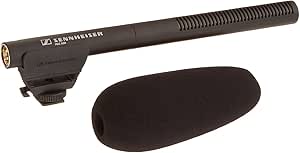 | Best for Dedicated Camera Rigs | Microphone type: Shotgun | Polar pattern: Supercardioid | Power: Phantom power or 1 AA battery | VIEW ON AMAZON | See Our Full Breakdown |
| Movo VXR10 Universal Shotgun Microphone |  | Best Value for Mixed Camera and Mobile Kits | Microphone type: Shotgun | Polar pattern: Unidirectional | Connection: 3.5 mm jack | VIEW ON AMAZON | See Our Full Breakdown |
| SMALLRIG Shotgun Microphone for Cameras and Smartphones |  | Best Compact Stereo Option | Microphone type: Shotgun | Polar pattern: Unidirectional | Channels: 2 | VIEW ON AMAZON | See Our Full Breakdown |
| COMICA VM20 Shotgun Microphone for Cameras and Smartphones |  | Best for On-Mic Audio Control | Microphone type: Shotgun condenser | Polar pattern: Super-cardioid | Low-cut filters: 75 Hz and 150 Hz | VIEW ON AMAZON | See Our Full Breakdown |
| Movo X1-Mini Supercardioid Shotgun Microphone with USB-C and 3.5 mm Outputs |  | Best for USB-C and Multi-Device Setups | Microphone type: Shotgun | Polar pattern: Supercardioid | Outputs: 3.5 mm TRS, 3.5 mm TRRS, USB-C | VIEW ON AMAZON | See Our Full Breakdown |
| RØDE VideoMic Pro+ On-Camera Shotgun Microphone |  | Best for Flexible Power | Microphone type: Shotgun condenser | Polar pattern: Unidirectional | Connectivity: 3.5 mm jack; Micro USB power | VIEW ON AMAZON | See Our Full Breakdown |
| BOYA BY-BM6060 XLR Shotgun Microphone |  | Best XLR Kit for Wind Protection | Microphone type: Shotgun condenser | Polar pattern: Super cardioid | Connectivity: 3-pin XLR | VIEW ON AMAZON | See Our Full Breakdown |
| RØDE VideoMicro II Ultra-Compact On-Camera Shotgun Microphone | 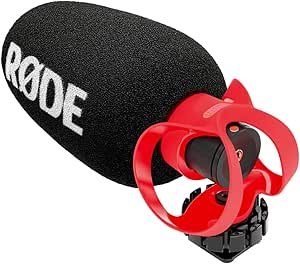 | Best Compact Pick | Microphone type: Shotgun | Polar pattern: Unidirectional | Connector: 3.5 mm jack | VIEW ON AMAZON | See Our Full Breakdown |
| Sennheiser MKE 600 Shotgun Microphone with Auray Shock Mount and Windshield |  | Best for XLR Camera Work | Microphone type: Shotgun | Polar pattern: Unidirectional | Connectivity: XLR | VIEW ON AMAZON | See Our Full Breakdown |
| Audio-Technica AT875R Condenser Shotgun Microphone |  | Best Lightweight Broadcast Pick | Model: AT875R | Microphone type: Condenser shotgun | Dimensions: 9.5 × 5 × 2.75 inches | VIEW ON AMAZON | See Our Full Breakdown |
| Rode VideoMic NTG Camera-mount Shotgun Microphone, Black |  | Best Overall for Hybrid Camera and USB Recording | Polar pattern: Supercardioid | Connectivity: Auto-sensing 3.5 mm, USB-C | Signal-to-noise ratio: 79 dB | VIEW ON AMAZON | See Our Full Breakdown |
| Sennheiser MKE 600 Shotgun Microphone Bundle with Shockmount, 20‑ft XLR Cable & Cleaning Cloth |  | Best XLR Bundle for Camera Production | Connectivity: XLR | Pickup pattern: Unidirectional | Frequency response: Up to 20,000 Hz | VIEW ON AMAZON | See Our Full Breakdown |
| BOYA BY-BM6060 Super-Cardioid Shotgun Condenser Microphone |  | Best Flexible-Power XLR Value | Connectivity: XLR | Polar pattern: Supercardioid | Phantom power: 24–48V | VIEW ON AMAZON | See Our Full Breakdown |
| Sennheiser MKE 400 Directional On-Camera Shotgun Microphone |  | Best for Camera-to-Smartphone Switching | Microphone type: Supercardioid condenser shotgun | Connectivity: Wired 3.5 mm TRS and TRRS | Power: Battery powered; AAA batteries included | VIEW ON AMAZON | See Our Full Breakdown |
| RØDE VideoMic GO II Compact On-Camera Shotgun Microphone |  | Best Compact Battery-Free Pick | Connectivity: 3.5 mm TRS, USB-C | Weight: 60 g | Polar pattern: Supercardioid | VIEW ON AMAZON | See Our Full Breakdown |
| shotgun microphone | Polar pattern | Microphone type | Weight | Signal-to-noise ratio |
|---|---|---|---|---|
| Sennheiser MKE 600 Professiona | Supercardioid | Shotgun | 15.2 oz | 75 dB |
| Movo VXR10 Universal Shotgun M | Unidirectional | Shotgun | 51 g | — |
| SMALLRIG Shotgun Microphone fo | Unidirectional | Shotgun | 35 g | 70 |
| COMICA VM20 Shotgun Microphone | Super-cardioid | Shotgun condenser | — | — |
| Movo X1-Mini Supercardioid Sho | Supercardioid | Shotgun | — | 80 dB |
| RØDE VideoMic Pro+ On-Camera S | Unidirectional | Shotgun condenser | 4.32 ounces | 74 dB |
| BOYA BY-BM6060 XLR Shotgun Mic | Super cardioid | Shotgun condenser | 4.6 oz | 76 dB |
| RØDE VideoMicro II Ultra-Compa | Unidirectional | Shotgun | 24 g in product information; 39 g in overview | 78 dB |
| Sennheiser MKE 600 Shotgun Mic | Unidirectional | Shotgun | 128 g | 78 dB |
| Audio-Technica AT875R Condense | — | Condenser shotgun | 2.88 ounces | — |
| Rode VideoMic NTG Camera-mount | Supercardioid | — | — | 79 dB |
| Sennheiser MKE 600 Shotgun Mic | — | — | — | — |
| BOYA BY-BM6060 Super-Cardioid | Supercardioid | — | 230 g | 80 dB |
| Sennheiser MKE 400 Directional | — | Supercardioid condenser shotgun | 344 g | — |
| RØDE VideoMic GO II Compact On | Supercardioid | — | 60 g | 79 dB |
More Details on Our Top Picks
Sennheiser MKE 600 Professional Shotgun Microphone
The Sennheiser MKE 600 is the strongest fit here for a camera rig that needs a full-length, directional microphone and dependable power options. Its supercardioid pickup helps prioritize sound in front of the camera, while the switchable low-cut filter can reduce low-frequency wind rumble. Unlike the compact, plug-in-powered Movo VXR10, it can run on phantom power or an AA battery, making it more adaptable across camera setups. The included shock mount and foam windshield also mean fewer essentials to source separately. The tradeoff is its wired-only connection and substantial 15.2-ounce weight; this is less convenient for phone-first creators or a lightweight travel kit.
Pros:- Supercardioid pickup reduces emphasis on sound from the sides and rear
- Switchable low-cut filter helps manage low-frequency wind noise
- Runs on phantom power or one AA battery
- Includes a shock mount and foam windshield
Cons:- Wired connection limits convenience compared with more flexible mobile setups
- At 15.2 ounces, it is heavier than compact options such as the Movo VXR10
Best for: Videographers building a dedicated camera or camcorder rig who want directional pickup, wind filtering, and a choice of phantom or AA power.
Not ideal for: Phone-first creators and travelers seeking a very light, cable-free setup; this model is comparatively heavy and uses a wired connection.
- Microphone type:Shotgun
- Polar pattern:Supercardioid
- Power:Phantom power or 1 AA battery
- Signal-to-noise ratio:75 dB
- Weight:15.2 oz
- Dimensions:10.08 × 0.79 × 4.02 in
- Enclosure material:Aluminum
- Included accessories:MZS 600 shock mount and MZW 600 foam windshield
Our verdict“Choose the MKE 600 for a full-size camera rig that needs directional audio and flexible power, not for a lightweight phone setup.”
Movo VXR10 Universal Shotgun Microphone
The Movo VXR10 earns its place as a compact, accessory-rich option for creators who switch between cameras and compatible mobile devices. Its 3.5 mm connection, small 51-gram body, and included camera and smartphone cables make it more travel-friendly than the full-size Sennheiser MKE 600. The aluminum body and integrated shock mount help limit handling noise, while the included furry windscreen adds practical outdoor coverage. Compared with the SMALLRIG model, the VXR10 offers a more extensive kit of mounts, cables, and a case, but it is a single-channel microphone and relies on the connected device for plug-in power. Device compatibility takes checking: some phones need an adapter, and not every camera accepts an external mic.
Pros:- Compact 51-gram body is easy to pack
- Includes camera and smartphone cables plus two shock mounts
- Furry and other windscreen options support outdoor recording
- Aluminum construction and integrated shock mount help reduce handling noise
Cons:- Requires plug-in power from a compatible device
- Some phones need a separate Lightning or USB-C adapter
- Correct TRS or TRRS cable selection is necessary for the device
Best for: Traveling creators who record with a compatible camera and smartphone and want a compact microphone with cables, mounts, and wind protection included.
Not ideal for: Users who need stereo capture, an onboard battery, or guaranteed phone compatibility without checking connectors and adapters.
- Microphone type:Shotgun
- Polar pattern:Unidirectional
- Connection:3.5 mm jack
- Frequency range:100–20,000 Hz
- Impedance:200 ohm
- Power:No battery; requires compatible device plug-in power
- Weight:51 g
- Included accessories:Fuzzy windscreen, carrying case, camera and smartphone cables, original shock mount, and Rycote shock mount
Our verdict“Pick the VXR10 for a small, accessory-packed kit spanning compatible cameras and phones, but check device connections before buying.”
SMALLRIG Shotgun Microphone for Cameras and Smartphones
The SMALLRIG Shotgun Microphone stands apart from the other picks by offering two-channel stereo recording in a body just over three inches long. That makes it a useful choice for compact camera or phone rigs where a stereo capture is more appealing than the single-channel approach of the Movo X1-Mini or Movo VXR10. Its shock mount helps reduce vibration, and the included foam and furry windscreens give buyers options for different conditions. Operation needs no batteries, keeping the setup simple, but the 3.5 mm TRRS connection can require an adapter depending on the device. Its listed specs also provide less detail about power and device compatibility than the COMICA VM20, so buyers should verify their input and recording setup before relying on it.
Pros:- Two-channel stereo recording differentiates it from the single-channel alternatives
- Compact 35-gram design suits small camera and phone rigs
- Shock mount helps reduce vibration
- Includes both foam and furry windscreens
Cons:- 3.5 mm TRRS connection may require an adapter for some devices
- No onboard battery or gain controls are listed
- Device compatibility depends on the correct input or adapter
Best for: Compact-rig creators who want stereo recording, included wind protection, and a battery-free microphone for a compatible camera or smartphone.
Not ideal for: Users needing adjustable gain, onboard battery status, or direct compatibility with devices lacking a 3.5 mm TRRS input.
- Microphone type:Shotgun
- Polar pattern:Unidirectional
- Channels:2
- Connection:3.5 mm TRRS
- Signal-to-noise ratio:70
- Weight:35 g
- Dimensions:3.23 × 0.79 × 0.79 in
- Mounting:Cold shoe mount or 1/4-inch tripod screw
Our verdict“Choose SMALLRIG when compact stereo capture matters more than onboard controls or broad connector flexibility.”
COMICA VM20 Shotgun Microphone for Cameras and Smartphones
The COMICA VM20 is the control-focused pick in this group: its 10-level gain adjustment, two low-cut filter choices, and OLED power display give creators more ways to adapt audio at the microphone. That makes it more configurable than the simpler Movo VXR10, which has no listed gain adjustment or battery display. The super-cardioid pattern helps favor sound in front, while the rechargeable battery avoids reliance on phantom power or a fresh AA battery like the Sennheiser MKE 600. The package includes both TRS and TRRS cabling for compatible devices. Its main catch is connection planning: USB-C phones need a separate 3.5 mm adapter, and the VM20 does not include an XLR cable, so it is not a ready-made choice for an XLR-based audio chain.
Pros:- 10-level gain adjustment provides on-mic input control
- Selectable 75 Hz and 150 Hz low-cut filters help address low-frequency noise
- OLED display shows battery status
- Rechargeable battery and included TRS and TRRS cables support compatible setups
Cons:- USB-C phones require a separate 3.5 mm-to-USB-C adapter
- No XLR cable is included
- Rechargeable battery requires charging rather than drawing phantom power
Best for: Camera and mobile creators who want adjustable gain, selectable low-cut filtering, and a visible battery status indicator on the microphone.
Not ideal for: XLR-only recording setups and USB-C phone users who want to connect without purchasing an additional adapter.
- Microphone type:Shotgun condenser
- Polar pattern:Super-cardioid
- Low-cut filters:75 Hz and 150 Hz
- Gain adjustment:10 levels
- Battery:3.7 V, 300 mAh rechargeable lithium battery
- Standby time:Up to 60 hours
- Connectors:3.5 mm TRS, 3.5 mm TRRS, USB-C charging
- Frequency range:20 Hz–20 kHz
Our verdict“Choose the VM20 if hands-on gain and filter controls matter more than direct XLR or adapter-free USB-C connection.”
Movo X1-Mini Supercardioid Shotgun Microphone with USB-C and 3.5 mm Outputs
The Movo X1-Mini is the most connector-flexible pick here for creators who move between a camera, smartphone, and computer. Its supplied USB-C, TRS, and TRRS cables avoid the cable juggling that can come with the Movo VXR10, whose kit requires choosing the appropriate connection and may call for a phone adapter. Supercardioid pickup and an integrated shock mount target room and handling noise, while the foam and furry windscreens offer different levels of wind coverage. Digital mode supports up to 24-bit audio, a useful fit for compatible digital recording devices. There are limits: it is single-channel, needs plug-in power, and its listed connector details do not remove the need to confirm how each device handles USB-C audio.
Pros:- Includes USB-C, TRS, and TRRS cables for varied compatible devices
- Supercardioid pattern helps focus pickup toward the subject
- Digital mode supports up to 24-bit audio
- Includes an integrated shock mount, two windscreens, and a carrying case
Cons:- Single-channel recording does not provide stereo capture
- Requires plug-in power from a compatible recording device
- Device-specific USB-C audio support should be checked before purchase
Best for: Creators recording across USB-C phones or computers and cameras who want multiple supplied cables, wind protection, and a compact directional mic.
Not ideal for: Buyers seeking stereo capture, an onboard battery, or a microphone that operates independently of plug-in power.
- Microphone type:Shotgun
- Polar pattern:Supercardioid
- Outputs:3.5 mm TRS, 3.5 mm TRRS, USB-C
- Digital audio resolution:Up to 24-bit
- Signal-to-noise ratio:80 dB
- Channels:1
- Power:Plug-in power
- Enclosure material:Aluminum
- Included accessories:Rycote shockmount, foam and furry windscreens, TRS, TRRS, and USB-C cables, carrying case
Our verdict“Pick the X1-Mini for a multi-device kit with USB-C and analog cables, provided single-channel, plug-in-powered recording suits your workflow.”
RØDE VideoMic Pro+ On-Camera Shotgun Microphone
The VideoMic Pro+ is a strong fit for camera operators who want an on-camera shotgun microphone with more control over power and tone than the simpler VideoMicro II. Its three power options—the included rechargeable battery, two AA batteries, or Micro USB—make it easier to adapt to a long shoot or a depleted battery. Automatic power switching can also help prevent accidental drain, while the high-pass filter, high-frequency boost, pad, and safety channel give users options for different recording conditions. Compared with the compact, battery-free VideoMicro II, this model is more configurable but also heavier and dependent on a power source. Its 3.5 mm connection suits camera setups, though it is not the XLR choice for a field recorder or audio mixer. I’d pick it for versatility, not for the lightest rig.
Pros:- Rechargeable, AA, and Micro USB power options provide useful backup flexibility.
- Automatic power switching helps conserve power when the camera is turned off.
- High-pass filter, high-frequency boost, pad, and safety channel provide recording adjustments.
- Metal enclosure and built-in battery door suit regular camera-bag use.
Cons:- Needs a battery or power connection, unlike the battery-free VideoMicro II.
- The 3.5 mm connection is less suited to XLR-based production setups.
- The listed product information specifies a single channel.
Best for: Camera operators who want an on-camera 3.5 mm microphone with multiple power choices and onboard audio adjustments.
Not ideal for: Travel shooters prioritizing the smallest battery-free setup, or audio crews that need an XLR microphone for a mixer or recorder.
- Microphone type:Shotgun condenser
- Polar pattern:Unidirectional
- Connectivity:3.5 mm jack; Micro USB power
- Frequency range:40 Hz–20 kHz
- Signal-to-noise ratio:74 dB
- Power options:Included LB-1 rechargeable battery, 2 AA batteries, or Micro USB
- Weight:4.32 ounces
- Enclosure material:Metal
Our verdict“Choose the VideoMic Pro+ if you want a configurable on-camera shotgun microphone with flexible power, and skip it if a simple, battery-free mic is your priority.”
BOYA BY-BM6060 XLR Shotgun Microphone
The BOYA BY-BM6060 makes sense for buyers who need an XLR shotgun microphone and want basic wind protection included from the outset. Its super-cardioid pattern is designed to limit side and rear pickup, while the switchable low-cut filter can help reduce unwanted low-frequency rumble. The included shock mount, foam windshield, and furry windshield give it a more production-ready accessory set than the on-camera RØDE VideoMicro II, which uses a 3.5 mm connection and targets a smaller camera setup. The tradeoff is compatibility: this BOYA needs an XLR input, so it is a poor match for a camera with only a 3.5 mm mic jack unless suitable equipment is added. It can use phantom power or one AA battery, but battery operation still means tracking a replaceable cell.
Pros:- Super-cardioid pickup helps reduce side and rear sounds.
- Switchable low-cut filter offers a way to limit low-frequency noise.
- Runs on 24–48V phantom power or one AA battery.
- Includes a shock mount, foam windshield, furry windshield, and storage bag.
Cons:- XLR output requires compatible recording equipment.
- AA battery operation adds a separate power item to manage.
- Less suited to compact on-camera rigs than the 3.5 mm RØDE VideoMicro II.
Best for: Video crews with XLR-equipped cameras, recorders, or mixers who want a directional mic and wind accessories in one kit.
Not ideal for: Mobile creators or camera users limited to a 3.5 mm input who want a direct, compact connection.
- Microphone type:Shotgun condenser
- Polar pattern:Super cardioid
- Connectivity:3-pin XLR
- Power:24–48V phantom power or 1 AA battery
- Signal-to-noise ratio:76 dB
- Weight:4.6 oz
- Dimensions:10 × 1 × 2 in
- Included accessories:Shock mount, foam windshield, fur windshield, zipper bag, user manual
Our verdict“Pick the BY-BM6060 for an XLR production kit that benefits from included wind protection, but not for a 3.5 mm camera or phone setup.”
RØDE VideoMicro II Ultra-Compact On-Camera Shotgun Microphone
The VideoMicro II is the simplest choice here for creators who want directional audio without adding batteries or complicated controls to a small camera rig. Its 80 mm body and low listed weight make it easier to leave mounted on a camera than the larger, XLR-connected BOYA BY-BM6060. It also works with cameras and smartphones when paired with the appropriate included cable, and the HELIX isolation mount is designed to reduce handling noise. Foam and furry windshields cover common wind conditions. The compromise is a wired 3.5 mm connection: buyers need a compatible input or cable, and this is not an XLR production mic. The provided weight figures conflict—24 g in product information versus 39 g in the overview—so I would not rely on a single exact weight when balancing a rig.
Pros:- Compact 80 mm form and light listed weight suit small camera setups.
- Requires no batteries or complicated onboard controls.
- HELIX isolation mount helps limit handling noise.
- Includes foam and furry windshields plus TRS and TRRS cables.
Cons:- Wired 3.5 mm connection requires a compatible input or cable.
- Listed weight differs between product details and overview.
- Its 3.5 mm setup is less appropriate for XLR production systems such as the BOYA BY-BM6060.
Best for: Vloggers and mobile video creators who need a small, battery-free directional mic for a camera or compatible smartphone.
Not ideal for: Production teams working with XLR recorders, or buyers who need wireless operation or a clearly specified weight for a tightly balanced rig.
- Microphone type:Shotgun
- Polar pattern:Unidirectional
- Connector:3.5 mm jack
- Compatible devices:Camera, smartphone
- Length:80 mm
- Weight:24 g in product information; 39 g in overview
- Signal-to-noise ratio:78 dB
- Included accessories:HELIX isolation mount, foam windshield, furry windshield, SC7 TRS-to-TRRS cable, SC13 TRS-to-TRS cable
Our verdict“Choose the VideoMicro II for a compact, battery-free camera or phone setup, but look elsewhere if your workflow depends on XLR.”
Sennheiser MKE 600 Shotgun Microphone with Auray Shock Mount and Windshield
The MKE 600 is the more production-oriented option for buyers who want a directional shotgun microphone that can run from either phantom power or a battery. That flexibility helps when moving between a powered camera setup and equipment without phantom power. Its switchable low-cut filter is useful for reducing low-frequency noise, and the included Auray shock mount, professional windshield, foam windshield, and pouch make this bundle more ready for location work than the AT875R listing, which emphasizes a lightweight mic but specifies a nonstandard battery requirement. The MKE 600 still calls for an XLR connection, so it is not a direct fit for many small cameras or phones. Battery users also need to watch the low-battery indicator rather than treating it as a set-and-forget mic.
Pros:- Unidirectional pickup is suited to focused dialogue capture.
- Can run on battery or phantom power.
- Switchable low-cut filter helps address low-frequency noise.
- Bundle includes a shock mount, two wind protection options, and a carry pouch.
Cons:- XLR connectivity limits direct compatibility with many compact cameras and phones.
- Battery users need to monitor the low-battery indicator.
- At 128 g, it is heavier than the 2.88-ounce Audio-Technica AT875R listing.
Best for: Videographers using XLR-equipped camcorders or DSLRs who need battery or phantom-power operation and bundled mounting and wind protection.
Not ideal for: Phone creators and camera operators without XLR inputs, or anyone seeking the lightest camera-mounted microphone.
- Microphone type:Shotgun
- Polar pattern:Unidirectional
- Connectivity:XLR
- Power source:Battery or phantom power
- Signal-to-noise ratio:78 dB
- Weight:128 g
- Dimensions:13 × 5.4 × 3.4 in
- Included accessories:Auray universal shock mount, professional windshield, foam windshield, carry pouch
Our verdict“Choose this MKE 600 bundle for flexible power and included field accessories on an XLR camera setup, not for a phone or minimal rig.”
Audio-Technica AT875R Condenser Shotgun Microphone
The AT875R stands out for buyers who want a lightweight shotgun microphone for video production or broadcast work and value a narrow pickup angle for distant subjects. At a listed 2.88 ounces, it is lighter than the 128 g Sennheiser MKE 600 bundle, which may matter on a camera-mounted setup or boom where added weight becomes tiring. Its off-axis rejection is intended to keep side and rear sounds less prominent, while the tailored response is described as helping minimize camera and handling noise. This is a more specialized production choice than the battery-free, 3.5 mm RØDE VideoMicro II: the AT875R is intended for ENG/EFP work, but the supplied information lists a nonstandard battery requirement without detailing a connector or power arrangement. Buyers should confirm that requirement and their equipment compatibility before choosing it.
Pros:- Listed weight of 2.88 ounces helps keep camera and boom setups lighter.
- Narrow pickup angle suits capturing audio from a more distant subject.
- Off-axis rejection helps reduce sounds from the sides and rear.
- Designed for video production and ENG/EFP broadcast use.
Cons:- Requires a nonstandard battery, which may complicate power planning.
- The supplied product data does not specify a connector or detailed power arrangement.
- More specialized for production work than the plug-in 3.5 mm RØDE VideoMicro II.
Best for: ENG/EFP operators and broadcast crews who prioritize a light microphone with a narrow pickup angle for video production.
Not ideal for: Casual camera or phone creators seeking a straightforward 3.5 mm mic, or buyers who want a clearly documented, conventional power setup.
- Model:AT875R
- Microphone type:Condenser shotgun
- Dimensions:9.5 × 5 × 2.75 inches
- Weight:2.88 ounces
- Battery requirement:1 nonstandard battery
- Intended use:Video production and broadcast (ENG/EFP)
Our verdict“Choose the AT875R for lightweight ENG/EFP work and focused pickup, but confirm its power and connection needs before building it into a rig.”
Rode VideoMic NTG Camera-mount Shotgun Microphone, Black
The VideoMic NTG earns my top spot for buyers who want one shotgun microphone to cover camera work and desk recording. Its auto-sensing 3.5 mm connection and USB-C output make it more flexible across cameras, computers, and compatible mobile devices than the XLR-focused Sennheiser MKE 600 bundle. Variable gain, a high-pass filter, a -20 dB pad, and a safety channel give creators more control over changing recording levels, while headphone monitoring helps catch problems during a take. The tradeoff is that it is larger than compact camera mics and relies on a rechargeable internal battery. iOS users also need a separate Lightning cable. I’d choose it over the battery-free VideoMic GO II when onboard level tools matter more than the simplest possible setup.
Pros:- 3.5 mm auto-sensing and USB-C connections support camera and computer workflows.
- Variable gain, high-pass filter, -20 dB pad, boost, and safety channel offer useful recording control.
- Headphone output and peak-level indicator support monitoring while recording.
- Broadcast-grade acoustic design is specified for natural sound and low self-noise.
Cons:- Larger than compact options such as the RØDE VideoMic GO II.
- Internal rechargeable battery may need attention during long recording sessions.
- iOS compatibility requires a separate Lightning cable.
Best for: Video creators who switch between camera shoots and USB recording on a computer or compatible mobile device and want onboard gain and monitoring controls.
Not ideal for: Creators seeking an ultralight, battery-free camera mic, or iPhone users who do not want to buy a separate Lightning cable.
- Polar pattern:Supercardioid
- Connectivity:Auto-sensing 3.5 mm, USB-C
- Signal-to-noise ratio:79 dB
- Audio sensitivity:120 dB
- Impedance:1 ohm
- Power:USB microphone; one included lithium-polymer battery
- Form factor:Shotgun
Our verdict“Choose the VideoMic NTG if you want a feature-rich shotgun mic that can move between camera and USB recording without giving up onboard monitoring.”
Sennheiser MKE 600 Shotgun Microphone Bundle with Shockmount, 20‑ft XLR Cable & Cleaning Cloth
This MKE 600 bundle suits filmmakers who want an XLR shotgun microphone and core mounting accessories in one package. Its high directivity is designed to favor sound from the camera’s line of sight while reducing side and rear noise, a different working style from the more connection-flexible Rode VideoMic NTG. The switchable low-cut filter helps address wind rumble, and battery or phantom-power operation lets it work with cameras that lack phantom power as well as compatible audio gear. The included shockmount, foam windshield, and 20-foot cable make it a practical production setup. Its main limitation is the XLR-only connection: it is less convenient for direct phone or USB recording than the NTG. AA batteries add another item to manage, and this remains a single-channel mic.
Pros:- High directivity targets sound from the camera’s line of sight and rejects side and rear noise.
- Switchable low-cut filter helps reduce wind rumble.
- Can run on battery or phantom power.
- Bundle includes a shockmount, 20-foot XLR cable, and foam windshield.
Cons:- XLR connection is less convenient than the 3.5 mm and USB-C options on the Rode VideoMic NTG.
- Battery operation requires AA batteries.
- Single-channel design does not provide multiple recorded channels.
Best for: Camera operators and small production teams using XLR-capable cameras or audio interfaces who want a directional mic with a bundled cable and shockmount.
Not ideal for: Mobile-first creators or owners of cameras without XLR input who want direct 3.5 mm or USB-C connectivity.
- Connectivity:XLR
- Pickup pattern:Unidirectional
- Frequency response:Up to 20,000 Hz
- Power:Battery or phantom power
- Channels:1
- Enclosure material:Metal
- Included bundle items:Shockmount, 20-foot XLR cable, foam windshield, microfiber cleaning cloth
- Dimensions:13.5 × 6 × 6 inches
Our verdict“Pick this bundle for an XLR-based camera setup that benefits from a long cable and included shockmount, but choose the VideoMic NTG for easier USB and mobile connectivity.”
BOYA BY-BM6060 Super-Cardioid Shotgun Condenser Microphone
The BOYA BY-BM6060 is a straightforward choice for buyers building an XLR kit who want flexibility in how the mic gets power. It accepts 24–48V phantom power or one AA battery, so it can suit a recorder or camera rig with phantom power as well as setups where that supply is unavailable. Its supercardioid pattern and included suspension mount, fur windshield, and foam windshield give it a useful production-ready starting point. Compared with the Sennheiser MKE 600 bundle, the BOYA offers the same broad kind of XLR workflow and battery option, but the supplied data does not specify a low-cut filter or include a long XLR cable. It is also single-channel and XLR-only, so it is a poor fit for direct phone or USB-C recording.
Pros:- Runs on 24–48V phantom power or one AA battery.
- Supercardioid pickup pattern is suited to focused directional recording.
- Includes suspension shockmount plus fur and foam windshields.
- Aluminum enclosure and 230 g weight make its physical build and carrying load clear.
Cons:- XLR connection limits direct use with phones and USB-C devices.
- Single-channel design offers no multiple-channel recording.
- Supplied product data does not list a low-cut filter or an XLR cable.
Best for: Independent filmmakers and interview crews who already use XLR gear and need a shotgun mic that can run on phantom power or a single AA battery.
Not ideal for: Creators recording directly to smartphones or USB devices, or buyers who need a documented low-cut filter and bundled XLR cable.
- Connectivity:XLR
- Polar pattern:Supercardioid
- Phantom power:24–48V
- Alternative power:One AA battery
- Frequency range:60 Hz–20 kHz
- Impedance:200 ohms
- Signal-to-noise ratio:80 dB
- Weight:230 g
- Included accessories:Suspension shockmount, fur windshield, foam windshield, cold-shoe mount
Our verdict“Choose the BY-BM6060 if you need a flexible-power XLR shotgun with wind protection included, and skip it if your setup depends on direct USB or phone connections.”
Sennheiser MKE 400 Directional On-Camera Shotgun Microphone
The Sennheiser MKE 400 is aimed at creators who move between a camera and a phone but prefer a compact, self-contained wired setup. The supplied TRS and TRRS cables cover common camera and mobile connections, while built-in wind protection and shock absorption reduce the need to assemble those parts separately. A low-cut filter, adjustable sensitivity, and headphone output give it more practical control than a bare-bones on-camera mic. Compared with the Rode VideoMic NTG, the MKE 400 is a more camera-and-phone-specific option; the NTG adds USB-C connectivity and a broader set of onboard gain tools. This Sennheiser instead offers a metal enclosure and included furry windshield. Its AAA-battery power and single-channel output are drawbacks for long sessions or buyers seeking a battery-free, multichannel setup.
Pros:- TRS and TRRS cables support common camera and smartphone connections.
- Built-in wind protection and shock absorption help simplify an on-camera setup.
- Low-cut filter and adjustable sensitivity provide useful recording controls.
- Headphone output allows monitoring, and a furry windshield is included.
Cons:- Requires AAA batteries, unlike the battery-free RØDE VideoMic GO II.
- Single-channel output does not support multichannel recording.
- Does not list USB-C connectivity like the Rode VideoMic NTG.
Best for: DSLR and mirrorless camera users who also record on a smartphone and want the necessary connection cables and wind protection in the package.
Not ideal for: Creators who want USB-C recording, battery-free operation, or a microphone for multichannel capture.
- Microphone type:Supercardioid condenser shotgun
- Connectivity:Wired 3.5 mm TRS and TRRS
- Power:Battery powered; AAA batteries included
- Channels:1
- Enclosure material:Metal
- Weight:344 g
- Dimensions:9.45 × 4.53 × 2.76 inches
- Included accessories:TRS cable, TRRS cable, furry windshield, pouch, AAA batteries
Our verdict“Choose the MKE 400 if you want a camera-and-phone shotgun kit with both connection cables included, but look to the VideoMic NTG for USB-C and more extensive level controls.”
RØDE VideoMic GO II Compact On-Camera Shotgun Microphone
For a light camera rig or travel kit, the RØDE VideoMic GO II prioritizes low weight and simple connections over onboard controls. At 60 g, it is a markedly lighter choice than the Sennheiser MKE 400 listed here, and its 3.5 mm TRS and USB-C outputs cover cameras as well as compatible phones, tablets, and computers. The supplied HELIX isolation mount and windshield help manage handling noise and wind without adding a separate accessory search. Its battery-free design also removes charging and battery replacement from the routine. The tradeoff is a leaner control set than the Rode VideoMic NTG: advanced audio processing requires RØDE Central, and the supplied details do not describe onboard gain controls or a headphone output. I’d favor it for portability, not hands-on adjustment.
Pros:- 60 g weight keeps camera and travel setups light.
- 3.5 mm TRS and USB-C outputs support cameras and compatible smart devices.
- Requires no battery.
- Includes HELIX isolation mount, windshield, and SC14 cable.
Cons:- Advanced audio processing requires RØDE Central.
- Supplied product data does not list onboard gain controls or headphone monitoring.
- Single-channel design does not provide multichannel capture.
Best for: Traveling video creators and lightweight camera-rig users who want a small shotgun mic that can connect to both cameras and USB-C devices without batteries.
Not ideal for: Operators who want onboard gain adjustments, a listed headphone-monitoring output, or advanced processing without companion software.
- Connectivity:3.5 mm TRS, USB-C
- Weight:60 g
- Polar pattern:Supercardioid
- Frequency range:20 Hz–20 kHz
- Signal-to-noise ratio:79 dB
- Channels:1
- Power:Corded electric; no battery required
- Included accessories:HELIX isolation mount, windshield, SC14 cable
Our verdict“Choose the VideoMic GO II for a lightweight, battery-free camera and USB-C setup, but select the VideoMic NTG if you need more onboard recording controls.”

How We Picked
I ranked these shotgun microphones by how well their design matches common recording setups: camera-mounted video, phone content, boom operation, and XLR recording. I weighed connection and power flexibility, portability, mounting and wind protection, and the practical setup burden alongside the microphone’s intended directional role. A feature only counted as an advantage when it addressed a real buyer need; extra cables or outputs are useful only if they fit the gear already in the kit.
The order favors adaptable options that can serve more than one workflow without making setup unnecessarily complex. Dedicated XLR models remain strong choices for buyers with compatible recorders or mixers, while compact on-camera microphones rank higher for run-and-gun use. Bundle versions are treated as accessory packages rather than distinct microphone designs, and closely related models are differentiated by their form factor and connection approach. I did not treat any shotgun microphone as a substitute for good placement, room control, or suitable wind protection.
| shotgun microphone | Microphone type | Polar pattern |
|---|---|---|
| Sennheiser MKE 600 Professiona | Shotgun | Supercardioid |
| Movo VXR10 Universal Shotgun M | Shotgun | Unidirectional |
| SMALLRIG Shotgun Microphone fo | Shotgun | Unidirectional |
| COMICA VM20 Shotgun Microphone | Shotgun condenser | Super-cardioid |
| Movo X1-Mini Supercardioid Sho | Shotgun | Supercardioid |
| RØDE VideoMic Pro+ On-Camera S | Shotgun condenser | Unidirectional |
| BOYA BY-BM6060 XLR Shotgun Mic | Shotgun condenser | Super cardioid |
| RØDE VideoMicro II Ultra-Compa | Shotgun | Unidirectional |
| Sennheiser MKE 600 Shotgun Mic | Shotgun | Unidirectional |
| Audio-Technica AT875R Condense | Condenser shotgun | — |
| Rode VideoMic NTG Camera-mount | — | Supercardioid |
| Sennheiser MKE 600 Shotgun Mic | — | — |
| BOYA BY-BM6060 Super-Cardioid | — | Supercardioid |
| Sennheiser MKE 400 Directional | Supercardioid condenser shotgun | — |
| RØDE VideoMic GO II Compact On | — | Supercardioid |
Factors to Consider When Choosing Shotgun Microphone
Before choosing a shotgun microphone, match it to the way you record rather than choosing by microphone length or the word “directional” alone. The right connection, power arrangement, mounting position, and recording environment can matter more than a feature list. These factors can help narrow the field before comparing individual models.
Match the Output to Your Recording Gear
Start by checking what your camera, phone, recorder, or mixer can accept. A 3.5 mm connection is common on cameras, but newer phones may need a compatible adapter, and not every cable carries the same signal type. XLR microphones usually suit recorders, mixers, or camera rigs with XLR inputs; adding adapters can create extra setup points and may not provide the power a microphone needs. Don’t assume a physical plug guarantees compatibility. Check whether your device expects a microphone-level input and whether it supplies plug-in power or phantom power. Choose the simplest connection path that meets your recording needs, unless you have a clear reason to build a more modular audio setup.
Decide Between Camera Mounting and Boom Placement
A camera-mounted shotgun is quick to set up, but its distance from the subject can leave dialogue thin or room-heavy, even when the mic is directional. A boom lets you position the microphone closer and outside the frame, which often matters more than buying a longer or more expensive model. The tradeoff is added equipment, an operator or stand, and the need to monitor framing and movement. For solo video, a compact on-camera mic may be the practical choice because it stays with the camera. For interviews, short films, or dialogue-heavy scenes, plan around placement first and select a microphone and mount that suit the boom. Avoid assuming that a shotgun microphone will isolate speech perfectly in a reverberant room.
Check Power and Recording Controls
Microphones vary in how they receive power: some use a battery, some draw power from a camera or phone connection, and XLR models may call for phantom power. That affects run time, compatibility, and how much you need to manage during a shoot. Battery operation can help when a camera lacks suitable plug-in power, but it adds a battery to check and carry. Built-in controls can also change the workflow: a gain adjustment or output option may be useful when moving between quiet speech and louder sources, but only if you understand how it interacts with camera input levels. Check the microphone’s power requirements against the specific device you plan to use. Keeping a simple power and cable checklist can prevent silent or distorted recordings.
Treat Wind Protection as Part of the Setup
Wind noise can overwhelm dialogue outdoors, and a foam cover alone may not be enough in a breeze. Think about where you will record and whether the microphone package includes protection suited to that environment. A furry windshield, foam cover, and enclosed blimp-style protection are not interchangeable; the required level depends on wind strength and how exposed the microphone will be. Adding a windshield can increase bulk and may affect how easily the microphone fits a camera rig or bag. Bundles can save setup effort when their accessories match your needs, but they are less useful if you already own compatible protection. Leave room in your kit for wind protection rather than treating it as an optional afterthought.
Balance Compactness Against Mounting and Handling
Compact microphones are easier to carry and less obtrusive on small cameras, but a lightweight setup can still pick up handling noise if the mount does not isolate movement. A shock mount helps reduce vibration transferred from a camera, boom, or operator; it cannot remove all noise created by touching or moving the rig. Check the mounting method, cable routing, and space around the camera screen or lens before committing to a form factor. Smartphone users should also account for the phone case, port location, and whether the mount blocks the screen or controls. A larger microphone may offer a more production-oriented connection, while a small model can make spontaneous recording easier. Choose for the complete rig, not just the microphone’s dimensions.
Pay for Workflow Flexibility You Will Use
Extra outputs, switches, and bundled accessories can be valuable when they solve a real problem in your setup. A mic that can serve both camera and computer workflows may reduce the need for separate recording gear, but only if its connections and controls work with both devices. Conversely, a dedicated XLR model may be a better fit for a recorder-based kit than a compact mic loaded with features you will never use. Consider the cost of missing pieces too: adapters, cables, mounts, and wind protection can change the practical value of a package. Avoid paying for a bundle whose accessories duplicate gear you already own. The best upgrade is often a better recording position or a needed accessory, not a more elaborate microphone.
Frequently Asked Questions
Can I connect an XLR shotgun microphone directly to a camera?
Only if the camera has an XLR input or you add a compatible adapter or audio interface. Check whether the microphone needs phantom power and whether your camera or adapter can supply it. A simple passive cable does not convert an XLR microphone into a powered camera-ready system. Also check how the camera handles input level, since a strong signal can clip before it reaches the recording file. If you record often, a recorder or interface with suitable inputs and monitoring may offer a cleaner, more predictable setup.
Will a shotgun microphone make dialogue clear in a noisy room?
It may help emphasize sound arriving from the direction it faces, but it will not remove noise or reverberation from the room. Place the microphone as close to the speaker as the shot allows, aim it carefully, and reduce competing noise where possible. A boom placed just outside the frame can produce a better result than mounting the mic far away on the camera. In a reflective room, soft furnishings or a quieter location may help more than changing microphones. For persistent background noise, record a short test and listen on headphones before filming the full scene.
Should I choose a camera-mounted mic or an XLR model for interviews?
Choose based on who will place and monitor the microphone. A camera-mounted model is convenient for a solo shooter and quick, informal interviews, but it may sit far from the speaker. An XLR microphone on a boom is a stronger fit when you can position it near the subject and use a recorder or mixer with the right inputs. That setup adds cables, mounting gear, and power planning, so it is less convenient for spontaneous work. For interviews that matter, microphone placement and monitoring should guide the choice more than the format alone.
What should I check before using a shotgun microphone with my phone?
Confirm that the microphone’s output, cable, and any adapter match your phone’s port and recording app. Phones may require a USB-C or Lightning audio adapter, and some adapters support charging but not microphone input. A phone case or grip can also block the connector or leave too little room to mount the mic. Check whether the microphone needs its own battery or receives power through the connection. Make a short test recording and play it back before a shoot, since a connected microphone is not always the input the phone actually records.
Is a microphone bundle a better choice than buying the mic alone?
A bundle is useful when it includes accessories you need, such as a shock mount, windshield, or compatible cable. Compare each item with your existing kit and check that the mount fits your camera, boom, or microphone body. A longer cable can help with boom placement but may be unnecessary for a compact camera setup. Bundled accessories do not change the microphone’s core design, so they should not be mistaken for a different performance tier. If you already own the right accessories, the standalone microphone may be the simpler fit.
Conclusion
For a versatile main microphone, I would start with the Sennheiser MKE 600, my best overall pick for buyers who want an XLR-oriented option with battery operation. The Movo VXR10 is my best value-style choice for a compact camera-and-phone workflow, while the RØDE VideoMic NTG is my premium pick for buyers who want a feature-rich camera-mounted option. Beginners who want a small, straightforward setup should look at the RØDE VideoMicro II; it avoids the added XLR workflow of the MKE 600. For boom and recorder setups, compare the Audio-Technica AT875R and BOYA BY-BM6060 with your input and power requirements. If you prefer a ready-made MKE 600 package, choose the shock-mount or cable bundle by the accessories your kit is missing. My final rule: pick for your recording position and connection first, then narrow by size and extras.
Halloween Picks

10 ft Halloween Inflatable Archway with Built-in LEDs

15-Foot Halloween Pumpkin Inflatable with LED Lights and Air Blower

Fun Costumes 5.5ft Mary the Unhappily Ever After Bride Animatronic Halloween Decoration
As an affiliate, we earn on qualifying purchases.