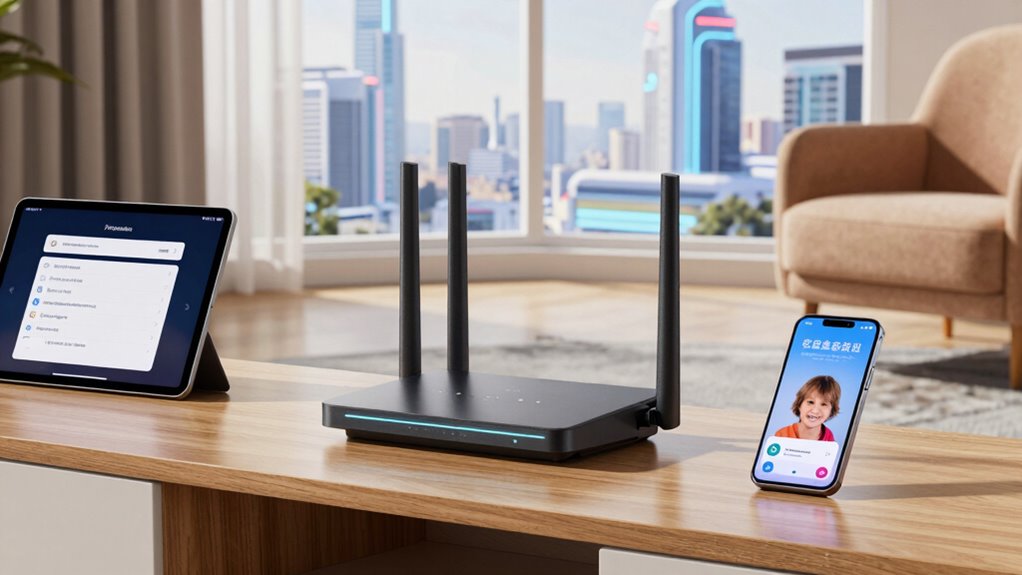

Choosing the right router with parental controls in 2026 means balancing speed, security, and ease of management. The ASUS RT-AX1800S stands out for its WiFi 6 support and advanced security features, making it ideal for tech-savvy families. The TP-Link AC1900 offers reliable dual-band performance with MU-MIMO and Beamforming, perfect for households with multiple devices. The Tenda AC1200 provides a budget-friendly option with solid dual-band speeds and user-friendly app controls. Each option has its tradeoffs: the ASUS offers cutting-edge WiFi 6 but at a higher price, the TP-Link balances performance with more straightforward setup, and the Tenda emphasizes affordability but lacks gigabit Ethernet. This guide will help you decide which router aligns best with your needs.

Get the latest gadgets delivered free with Prime
- Fast, free delivery on millions of items
- Prime Video, Amazon Music and more included
- Member-only deals all year
Complete the kit



Key Takeaways
- The ASUS RT-AX1800S provides WiFi 6 speeds and top-tier security, ideal for busy or security-conscious households.
- The TP-Link AC1900 offers strong dual-band performance with MU-MIMO and Beamforming, suited for households with many connected devices.
- The Tenda AC1200 is a budget-friendly choice with easy setup and parental controls but lacks gigabit Ethernet and WiFi 6.
- All three routers include parental controls, but their complexity and security features vary, influencing ease of use.
- Performance tradeoffs include WiFi standards, port speeds, and security features, so matching these to your household’s tech needs is key.
| TP-Link AC1900 Wireless MU-MIMO WiFi Router – Dual Band Gigabit Internet for Home, Parental Controls & Beamforming |  | Best Performance for Multi-Device Homes | Speed: up to 1.9 Gbps | Bands: Dual Band (2.4 GHz and 5 GHz) | Technology: MU-MIMO, Beamforming | VIEW ON AMAZON | See Our Full Breakdown |
| ASUS RT-AX1800S Dual Band WiFi 6 Extendable Router with Network Security and Parental Controls |  | Best Future-Proof Router with Security | WiFi Standard: WiFi 6 (802.11ax) | Antenna: External x 4 | Processor: Dual-core | VIEW ON AMAZON | See Our Full Breakdown |
| router with parental control | Speed | Bands | Technology | Antennas |
|---|---|---|---|---|
| TP-Link AC1900 Wireless MU-MIM | up to 1.9 Gbps | Dual Band (2.4 GHz and 5 GHz) | MU-MIMO, Beamforming | 4 |
| ASUS RT-AX1800S Dual Band WiFi | — | — | — | — |
More Details on Our Top Picks
TP-Link AC1900 Wireless MU-MIMO WiFi Router – Dual Band Gigabit Internet for Home, Parental Controls & Beamforming
The TP-Link AC1900 offers a balanced mix of speed and coverage, making it suitable for streaming, gaming, and multiple connected devices. Its dual-band speeds up to 1.9 Gbps and MU-MIMO technology help distribute bandwidth efficiently, while Beamforming enhances signal reliability. Setup via the TP-Link Tether app is straightforward, but the lack of detailed security features may be a concern for security-conscious users. Compared with the ASUS and Tenda, this router is better suited for households with many devices that need reliable performance without the premium price of WiFi 6. Its main drawback is that some users find the configuration options limited or may find the app less intuitive than others.
Pros:- Strong dual-band speeds up to 1.9 Gbps
- Reliable coverage with Beamforming
- Supports multiple devices simultaneously with MU-MIMO
- Easy setup via mobile app
Cons:- Limited detailed security options
- No WiFi 6 support
- Potential complexity for non-technical users
Best for: Families with multiple high-bandwidth devices needing reliable coverage
Not ideal for: Users seeking the latest WiFi 6 standards or advanced security features
- Speed:up to 1.9 Gbps
- Bands:Dual Band (2.4 GHz and 5 GHz)
- Technology:MU-MIMO, Beamforming
- Antennas:4
- Features:Parental Controls, Smart Connect, Airtime Fairness
Our verdict“A solid, mid-range router that balances performance with ease of use, ideal for multi-device households.”
ASUS RT-AX1800S Dual Band WiFi 6 Extendable Router with Network Security and Parental Controls
The ASUS RT-AX1800S delivers WiFi 6 performance, supporting MU-MIMO and OFDMA for efficient, fast wireless connectivity. Its multiple gigabit ports facilitate high-speed wired connections, and AiProtection offers robust security, including VPN support. The router’s extendable nature with AiMesh allows for larger coverage areas, making it suitable for large homes or growing networks. Compared to the other two options, it offers the latest WiFi technology but comes with a higher price tag and may require a more technical setup for advanced features. Its real strength lies in combining high-speed WiFi with enterprise-grade security, making it a strong choice for security-minded families.
Pros:- Supports WiFi 6 for faster, more efficient speeds
- Multiple gigabit ports for wired devices
- Enhanced security with AiProtection and VPN
- Extendable with AiMesh
Cons:- Higher cost compared to other options
- Performance varies based on environment
- More complex setup for advanced features
Best for: Tech-savvy households seeking future-proof WiFi 6 performance and high security
Not ideal for: Those on a tight budget or with basic internet needs
- WiFi Standard:WiFi 6 (802.11ax)
- Antenna:External x 4
- Processor:Dual-core
- Ports:1 x Gigabit WAN, 4 x Gigabit LAN
- Security:AiProtection Classic, VPN
Our verdict“A premium choice that combines cutting-edge WiFi technology with robust security, ideal for demanding or security-conscious users.”

How We Picked
Our selection process focused on routers that explicitly include parental controls and are well-rated for home use in 2026. We evaluated each device based on speed, security features, ease of setup, and coverage capabilities. Compatibility with the latest WiFi standards, such as WiFi 6, was prioritized for future-proofing. We also considered user interface simplicity, app management features, and the ability to handle multiple devices simultaneously. Price point and value for money played a role, especially for families on a budget or those seeking premium security. Finally, we compared reviews and technical specs to ensure each option offers a meaningful benefit for families seeking parental controls.
Factors to Consider When Choosing Router With Parental Controls
Choosing a router with parental controls in 2026 means focusing on speed, security, ease of management, and future-proofing. The right device should fit your household’s size, device count, and technical comfort level. Understanding what sets WiFi standards apart, how security features protect your family, and which management tools simplify parent supervision will help you make an informed decision.Key Features to Consider
When selecting a router with parental controls, prioritize WiFi standards (WiFi 6 offers faster speeds and better efficiency), security features (like VPN support and AiProtection), and management options (mobile app controls are essential for easy supervision). Consider the number of wired ports for devices that need a stable connection, and whether coverage extendability is important for larger homes. The complexity of setup and ongoing management will vary, so match the router’s interface and features to your comfort level.
Performance and Security Tradeoffs
Higher performance routers often come with advanced security features, but they may also require more technical knowledge to configure correctly. Budget models tend to offer simpler parental controls but might lack in security or speed. WiFi 6 models provide future-proofing but at a premium, while dual-band routers balance cost and performance for most families. Keep in mind that the security features—such as built-in VPNs or AiProtection—can significantly influence your online safety.
Ease of Use and Management
Most modern routers include mobile app management, which simplifies parental controls and device monitoring. Look for intuitive interfaces and clear instructions, especially if you’re less familiar with networking. Some models, like the ASUS RT-AX1800S, offer extended features and customization, but this can come with a learning curve. Simpler models like the Tenda AC1200 are easier for less technical users but may lack advanced options.
Frequently Asked Questions
Can I control my child’s internet access remotely?
Yes, most routers with parental controls include mobile app features that allow you to manage internet access remotely. This typically involves pausing or scheduling internet times for specific devices, which can be done from anywhere with an internet connection. Check the app compatibility and features before purchasing to ensure remote control is straightforward and reliable.
Are parental controls effective against tech-savvy kids?
While parental controls can block or limit access to certain content or sites, tech-savvy children may find ways to bypass restrictions. The most effective approach combines these controls with open communication, setting clear boundaries, and using routers that offer comprehensive security features like VPNs or content filtering. Regular updates and monitoring also help maintain control over internet use.
Do I need a specific internet plan to use these routers?
Most routers are compatible with standard broadband plans, but your maximum internet speed will be limited by your service provider’s plan. For optimal performance, especially if you opt for WiFi 6 models like the ASUS RT-AX1800S, ensure your internet plan supports the higher speeds these routers can deliver. Always check the compatibility with your ISP before purchase.
How secure are these routers against cyber threats?
Security varies among the options. The ASUS RT-AX1800S offers robust AiProtection, VPN support, and regular firmware updates, making it a strong choice for security-conscious families. The TP-Link AC1900 provides basic security but lacks advanced features, while the Tenda AC1200 has minimal built-in security. Always keep your router’s firmware updated to maximize security.
Can these routers grow with my home’s needs?
Yes, especially models like the ASUS RT-AX1800S, which supports AiMesh for extending coverage and WiFi 6 for future speeds. The TP-Link AC1900 is also expandable to some extent but lacks WiFi 6. Budget models like the Tenda are less adaptable but may suffice for small or less demanding households. Consider future needs and coverage when choosing.
Conclusion
For families prioritizing the latest technology and maximum security, the ASUS RT-AX1800S makes a compelling choice despite its higher price. Households with many devices and less tech expertise might prefer the TP-Link AC1900, which balances performance with ease of setup. Those on a budget seeking basic parental controls will find the Tenda AC1200 offers reliable coverage at a lower cost. Your decision should match your household’s device load, security needs, and technical comfort level.
Halloween Picks
halloween
As an affiliate, we earn on qualifying purchases.