For most households, I’d start with the Instant Pot Duo 6-Quart: its multi-function design and everyday capacity make it the most balanced choice in this lineup. The Instant Pot Duo Mini suits smaller kitchens and portions, while the Presto 23-Quart is the specialist pick for home canning rather than routine weeknight meals. The main decision is whether you want an electric cooker with guided settings or a stovetop model with more direct control, plus how much capacity and cleanup you can manage. Materials matter too: stainless steel, aluminum, and ceramic-coated pots each bring different care and cooking tradeoffs. Read on for the full comparison, buying advice, and picks matched to different kitchens.

Get the latest gadgets delivered free with Prime
- Fast, free delivery on millions of items
- Prime Video, Amazon Music and more included
- Member-only deals all year
Complete the kit


Key Takeaways
- The Instant Pot Duo 6-Quart is the most versatile everyday pick in this group; the 3-quart Mini is better for small portions, not batch cooking.
- Electric and stovetop models solve different problems: the electric cookers favor built-in programs and hands-off operation, while stovetop choices favor direct heat control and simpler cooking functions.
- The Presto 23-Quart stands apart as a canner; its large size is useful for canning workloads but excessive for buyers seeking a compact everyday cooker.
- Capacity labels are not the same as usable meal capacity. A large pot can be unwieldy in a small kitchen, while a compact model may limit batch meals and entertaining.
- Pot material changes the ownership tradeoff: stainless steel prioritizes durability, ceramic coating favors easier food release, and aluminum can be lighter but calls for attention to care and compatibility.
| Instant Pot Duo 7-in-1 Mini Electric Pressure Cooker, 3 Quart, Stainless Steel |  | Best Compact Electric Pick | Capacity: 3 quarts | Functions: Pressure cook, slow cook, sauté, steam, rice, yogurt, and warm | Inner pot: 18/8 stainless steel with tri-ply bottom | VIEW ON AMAZON | See Our Full Breakdown |
| Hawkins 3 Litre Contura Black Pressure Cooker (CB30) |  | Best Compact Stovetop Pick | Capacity: 3 litres | Model: CB30 | Body material: Hard-anodised | VIEW ON AMAZON | See Our Full Breakdown |
| Cosori 6-Quart 9-in-1 Pressure Cooker with Ceramic-Coated Inner Pot |  | Best for Ceramic-Coated Cleanup | Capacity: 6 quarts | Functions: 9-in-1, including pressure cook, rice, steam, slow cook, sauté, and sous vide | Power: 1100 watts | VIEW ON AMAZON | See Our Full Breakdown |
| Presto 23-Quart Pressure Canner and Cooker |  | Best for Home Canning | Capacity: 23 quarts | Material: Heavy-gauge aluminum | Range compatibility: Regular and smooth-top ranges | VIEW ON AMAZON | See Our Full Breakdown |
| Ninja HyperHeat 9-in-1 Pressure Cooker, 6.5-qt, Stone Purple, PC201SP |  | Best for Family-Size Searing | Model: PC201SP | Capacity: 6.5 qt | Functions: Pressure cook, slow cook, rice, sous vide, steam, sear/sauté, and yogurt | VIEW ON AMAZON | See Our Full Breakdown |
| RVGMBO 3-in-1 18/8 Stainless Steel Pressure Cooker, 8 Quart |  | Best Adjustable-Pressure Stovetop Pick | Capacity: 8 quarts | Material: 18/8 stainless steel | Pressure range: 0–15 PSI | VIEW ON AMAZON | See Our Full Breakdown |
| Our Place Dream Cooker 6 Qt Ceramic Nonstick Pressure Cooker & Multicooker |  | Best for Easy-Cleanup Multicooking | Capacity: 6 quarts | Inner-pot coating: PFAS-free ceramic nonstick | Functions: Pressure cook, slow cook, sauté/sear, and keep warm | VIEW ON AMAZON | See Our Full Breakdown |
| Instant Pot Duo 6-Quart 7-in-1 Electric Pressure Cooker | 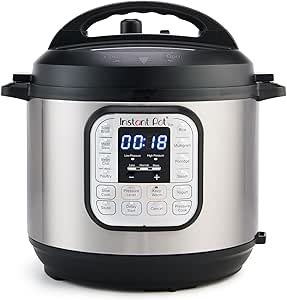 | Best for Preset-Driven Versatility | Capacity: 6 quarts | Cooking functions: 7 | Smart programs: 13 | VIEW ON AMAZON | See Our Full Breakdown |
| RVGMBO 8-Quart 3-in-1 Stainless Steel Pressure Cooker |  | Best for Simple Stovetop Control | Capacity: 8 quarts | Material: 18/8 stainless steel | Pressure range: 10–15 PSI | VIEW ON AMAZON | See Our Full Breakdown |
| SVKLHY 3-in-1 304 Stainless Steel Pressure Cooker, 10 Quart |  | Best for Large-Batch Stovetop Cooking | Capacity: 10 quarts | Material: 304 stainless steel (18/8) | Pressure settings: Three grades, 10–15 PSI | VIEW ON AMAZON | See Our Full Breakdown |
| KOBACH 8QT Stainless Steel Pressure Cooker |  | Best for Induction-Compatible Capacity | Capacity: 8 qt | Material: Stainless steel | Maximum pressure: 17 PSI | VIEW ON AMAZON | See Our Full Breakdown |
| IMUSA 7-Quart Aluminum Stovetop Pressure Cooker |  | Best for Straightforward Stovetop Cooking | Capacity: 7 quarts | Material: Aluminum | Cooktop type: Stovetop | VIEW ON AMAZON | See Our Full Breakdown |
| pressure cooker | Capacity | Material |
|---|---|---|
| Instant Pot Duo 7-in-1 Mini El | 3 quarts | — |
| Hawkins 3 Litre Contura Black | 3 litres | — |
| Cosori 6-Quart 9-in-1 Pressure | 6 quarts | — |
| Presto 23-Quart Pressure Canne | 23 quarts | Heavy-gauge aluminum |
| Ninja HyperHeat 9-in-1 Pressur | 6.5 qt | — |
| RVGMBO 3-in-1 18/8 Stainless S | 8 quarts | 18/8 stainless steel |
| Our Place Dream Cooker 6 Qt Ce | 6 quarts | — |
| Instant Pot Duo 6-Quart 7-in-1 | 6 quarts | — |
| RVGMBO 8-Quart 3-in-1 Stainles | 8 quarts | 18/8 stainless steel |
| SVKLHY 3-in-1 304 Stainless St | 10 quarts | 304 stainless steel (18/8) |
| KOBACH 8QT Stainless Steel Pre | 8 qt | Stainless steel |
| IMUSA 7-Quart Aluminum Stoveto | 7 quarts | Aluminum |
More Details on Our Top Picks
Instant Pot Duo 7-in-1 Mini Electric Pressure Cooker, 3 Quart, Stainless Steel
I’d choose the Instant Pot Duo Mini when counter and storage space matter more than batch size. Its 3-quart pot handles pressure cooking alongside slow cooking, sautéing, steaming, rice, yogurt, and warming, so it covers more everyday tasks than the similarly sized Hawkins Contura stovetop cooker. The stainless-steel inner pot with a tri-ply bottom is a useful distinction for buyers who prefer an uncoated cooking surface, and the dishwasher-safe parts reduce cleanup work. More than 10 safety mechanisms add reassurance for new electric-cooker owners. The tradeoff is capacity: this model is a better fit for singles, couples, or side dishes than family meals or batch cooking. Its extensive recipe library is accessed through the app, which may not appeal to buyers who want guidance on the appliance itself.
Pros:- Compact 3-quart capacity suits small meals and limited storage space.
- Seven cooking functions cover more than pressure cooking alone.
- Stainless-steel inner pot has a tri-ply bottom and no ceramic coating.
- Dishwasher-safe lid and pot simplify cleanup.
Cons:- Small capacity limits family-size meals and batch cooking.
- Access to the extensive recipe library depends on the included app.
Best for: Singles, couples, and small-kitchen cooks who want several electric cooking modes in a compact pressure cooker.
Not ideal for: Large households and batch cooks who need room for family-size mains, or buyers who prefer not to use an app for recipe ideas.
- Capacity:3 quarts
- Functions:Pressure cook, slow cook, sauté, steam, rice, yogurt, and warm
- Inner pot:18/8 stainless steel with tri-ply bottom
- Power:700 watts
- Voltage:120 V, 60 Hz
- Safety:More than 10 safety mechanisms
- Included accessories:Stainless-steel steamer rack
- Cleanup:Dishwasher-safe lid and inner pot
Our verdict“Choose the Duo Mini for compact, versatile electric cooking for one or two; pick the Cosori 6-Quart instead when you need more meal capacity.”
Hawkins 3 Litre Contura Black Pressure Cooker (CB30)
The Hawkins Contura is the straightforward choice for cooks who want a small stovetop pressure cooker rather than an electric multi-cooker. Its hard-anodised body heats quickly, while the non-reactive interior helps keep food flavors from being affected by the cooking surface. The stainless-steel safety lid stays locked until pressure has dropped, a practical feature for buyers who value a clear mechanical safeguard. Compared with the Instant Pot Duo Mini, the Contura has no slow-cook, yogurt, or other electric programs; its appeal is a focused pressure-cooking setup without an appliance control panel. At 3 litres, it is sized for modest meals and the stated 3–4 servings, but that leaves little room for larger batches. I’d skip it if one-pot versatility or a larger family capacity is the priority.
Pros:- Hard-anodised body heats quickly.
- Non-reactive interior helps preserve food flavor.
- Stainless-steel safety lid remains locked until pressure drops.
- Compact 3-litre size is suited to small-household servings.
Cons:- Limited capacity restricts large meals and batch cooking.
- Offers pressure cooking rather than the multiple cooking modes found on electric models.
Best for: Stovetop cooks preparing meals for a small household who want a compact pressure cooker with a non-reactive interior.
Not ideal for: Buyers seeking electric cooking presets, extra functions, or enough capacity for large family meals and batch cooking.
- Capacity:3 litres
- Model:CB30
- Body material:Hard-anodised
- Lid material:Stainless steel
- Color:Black
- Stated serving size:Designed for 3–4 people
- Lid safety:Locks until pressure is released
Our verdict“Pick the Contura for compact, focused stovetop pressure cooking; choose the Instant Pot Duo Mini if you want electric presets and more cooking functions.”
Cosori 6-Quart 9-in-1 Pressure Cooker with Ceramic-Coated Inner Pot
For a household that wants one electric cooker for pressure cooking and several other methods, the Cosori 6-Quart offers a useful middle ground between the compact Instant Pot Duo Mini and larger-capacity options. Its 6-quart capacity is better suited to shared meals, while the nine cooking modes include sous vide, rice, steaming, slow cooking, and sautéing. The ceramic-coated inner pot and dishwasher-safe lid and accessories make cleanup a selling point, especially compared with stainless-steel cookware that may need more hands-on scrubbing. Twelve safety features and a steam-venting design add practical safeguards. The tradeoffs are that quick steam release can splatter when cooking liquid-heavy foods, and its slow-cook setting runs at a low temperature. I’d compare it with the Ninja HyperHeat if a larger pot and stronger searing focus matter more.
Pros:- Six-quart capacity suits shared meals better than compact 3-quart cookers.
- Nine cooking modes include sous vide, pressure cooking, and sautéing.
- Ceramic-coated pot and dishwasher-safe parts support easier cleanup.
- Twelve safety features and a safer steam-venting design.
Cons:- Quick steam release may splatter with recipes containing a lot of liquid.
- Slow-cook setting uses a low temperature.
Best for: Households wanting a mid-size electric pressure cooker with multiple cooking modes and an easy-clean ceramic-coated pot.
Not ideal for: Cooks who frequently quick-release liquid-heavy dishes, or buyers who need a higher-temperature slow-cook setting.
- Capacity:6 quarts
- Functions:9-in-1, including pressure cook, rice, steam, slow cook, sauté, and sous vide
- Power:1100 watts
- Voltage:120 V AC
- Product dimensions:13.4 × 12.6 × 12.5 inches
- Inner pot:Ceramic-coated; 9.41 × 9.41 × 6.18 inches
- Inner pot diameter:8.66 inches
- Weight:11.9 lb
- Safety features:12
Our verdict“Choose the Cosori for a versatile six-quart cooker with ceramic-coated cleanup; consider the Ninja HyperHeat if you want a larger capacity and a roomy searing surface.”
Presto 23-Quart Pressure Canner and Cooker
The Presto 23-Quart Pressure Canner and Cooker earns its place for home preservers, not for cooks seeking a convenient everyday electric multicooker. Its large capacity is built around canning: it holds up to 26 half-pint jars, 20 pint jars, or 7 quart jars, and it can also serve as a boiling-water canner or large-capacity pressure cooker. Heavy-gauge aluminum supports fast, even heating, while the pressure dial gauge lets the cook monitor processing pressure. That makes it a different kind of purchase from the Cosori 6-Quart, which is easier to fit into routine meal prep but is not presented as a canner. The Presto’s size is a real commitment in a small kitchen, and its gauge readings require attention at higher altitudes. It also lacks the countertop convenience and multiple presets of an electric model.
Pros:- Large capacity accommodates substantial canning batches.
- Works as a pressure canner, boiling-water canner, and pressure cooker.
- Heavy-gauge aluminum provides fast, even heating.
- Pressure dial gauge helps monitor processing pressure.
Cons:- Large size can be cumbersome to store and handle in a small kitchen.
- Gauge readings require attention at higher altitudes.
- Less suited to routine countertop cooking than an electric multi-cooker.
Best for: Home canners preserving vegetables, meat, poultry, or seafood in substantial batches who have suitable storage and stovetop space.
Not ideal for: Apartment cooks with limited storage, or buyers looking primarily for a compact electric cooker for quick everyday meals.
- Capacity:23 quarts
- Material:Heavy-gauge aluminum
- Range compatibility:Regular and smooth-top ranges
- Jar capacity:26 half-pints, 20 pints, or 7 quarts
- Included:Canning/cooking rack and 76-page instruction and recipe book
- Pressure monitoring:Pressure dial gauge
- Warranty:12-year limited warranty
Our verdict“Buy the Presto for large-batch home canning and stovetop versatility; choose the Cosori instead for a more compact electric cooker focused on everyday meals.”
Ninja HyperHeat 9-in-1 Pressure Cooker, 6.5-qt, Stone Purple, PC201SP
The Ninja HyperHeat stands out for cooks who want a family-size pressure cooker that can also sear without crowding ingredients across a narrow surface. Its 6.5-quart capacity and 9.5-inch cooking surface give it an advantage over the Cosori 6-Quart when browning larger portions, while the removable SimpliServe pot can go from cooking to serving. Nine functions cover pressure cooking, slow cooking, sous vide, steaming, rice, yogurt, and sear/sauté. The ceramic nonstick pot is PFAS-free, and the stated capacity accommodates up to a 4-pound chicken or 5-pound roast. HyperHeat is described as cooking up to twice as fast as traditional methods, though results depend on the task. One timing caveat: rice and grain estimates exclude pressure build-up and release. The larger footprint and specialized serving pot may be more than small kitchens need.
Pros:- 6.5-quart capacity suits family meals and larger cuts of meat.
- 9.5-inch cooking surface gives ingredients more room for searing and sautéing.
- Removable SimpliServe pot supports cooking and serving in the same vessel.
- PFAS-free ceramic nonstick pot and nine cooking functions.
Cons:- Rice and grain cooking times exclude pressure build-up and release.
- Larger capacity and serving-pot design may be unnecessary for small households.
- Claims of cooking up to twice as fast depend on the cooking method and task.
Best for: Families cooking larger cuts of meat or batches who want pressure cooking, a broad searing surface, and a pot that can serve at the table.
Not ideal for: Small households with limited counter or storage space, or cooks who rely on listed rice and grain times as total meal times.
- Model:PC201SP
- Capacity:6.5 qt
- Functions:Pressure cook, slow cook, rice, sous vide, steam, sear/sauté, and yogurt
- Power:1200 watts
- Pot material:PFAS-free ceramic nonstick
- Cooking surface diameter:9.5 inches
- Stated servings:8–10 people
- Color:Stone Purple
Our verdict“Choose the Ninja HyperHeat for family-size pressure cooking and a roomy searing surface; the Cosori is a more restrained fit if a six-quart capacity is enough.”
RVGMBO 3-in-1 18/8 Stainless Steel Pressure Cooker, 8 Quart
The RVGMBO RV041 suits cooks who want stovetop pressure control plus a pot they can use without the pressure lid. Its three settings spanning 0–15 PSI offer more adjustment than the RVGMBO RV011’s 10–15 PSI range, while the included glass lid and steamer basket add everyday uses beyond pressure cooking. The 8-quart capacity leaves room for batch cooking, and compatibility with induction, gas, and electric cooktops makes it flexible across kitchens. Six safety protections and one-touch locking support straightforward operation, though this remains a manual stovetop cooker rather than an electric model with timed programs. Cleanup also takes extra care: the pressure lid must be hand-washed, even though the pot body, glass lid, and basket are dishwasher safe. Choose it for adaptable stovetop cooking, not hands-off automation.
Pros:- Three pressure settings from 0–15 PSI provide a wider adjustment range than the RVGMBO RV011.
- 8-quart capacity supports larger meals and batch cooking.
- Glass lid and steamer basket let the pot serve non-pressure cooking tasks.
- Works on gas, electric, and induction cooktops.
Cons:- Pressure lid requires hand washing.
- Manual stovetop operation requires attention to pressure and cooking time.
Best for: Stovetop cooks who want an 8-quart cooker with adjustable pressure and separate steaming and stockpot uses.
Not ideal for: Buyers who want automatic cook programs or a pressure lid they can put in the dishwasher.
- Capacity:8 quarts
- Material:18/8 stainless steel
- Pressure range:0–15 PSI
- Cooktop compatibility:Gas, electric, and induction
- Included components:Pressure cooker, glass lid, steamer rack
- Safety features:Six protections
- Dishwasher-safe parts:Pot body, steamer basket, and glass lid; pressure lid is not dishwasher safe
- Model number:RV041-8QT-US
Our verdict“Choose the RVGMBO RV041 if you want an adjustable-pressure 8-quart stovetop cooker that also steams and simmers, and skip it if you want automated cooking.”
Our Place Dream Cooker 6 Qt Ceramic Nonstick Pressure Cooker & Multicooker
The Our Place Dream Cooker makes sense for cooks who value a tidy countertop setup and easy food release as much as pressure cooking. Its PFAS-free ceramic nonstick pot offers a different cleanup approach from the stainless-steel inner pot in the Instant Pot Duo: it can be appealing when sticky foods and scrubbing are a concern, though buyers who prefer uncoated steel may favor the Instant Pot. The Dream Cooker combines pressure cooking with slow cooking, sautéing/searing, and warming, covering several regular tasks without the broader seven-function range of the Duo. Its hands-free auto steam release and touchscreen simplify the release and control process, but there are no preset programs, so you must set cooking details yourself. The 6-quart size suits many household meals, yet it is still a countertop appliance and may not fit cramped kitchens.
Pros:- PFAS-free ceramic nonstick inner pot supports easy food release and cleanup.
- Pressure cook, slow cook, sauté/sear, and keep warm functions cover several common tasks.
- Hands-free auto steam release avoids manually venting steam.
- Touchscreen controls provide a simple interface.
Cons:- No preset cooking programs, so cooking times and settings need manual input.
- Its 6-quart countertop footprint may be too large for very limited kitchen space.
Best for: Home cooks who want a 6-quart electric pressure cooker with a nonstick pot, touchscreen controls, and hands-free steam release.
Not ideal for: People who want one-touch preset programs, an uncoated stainless-steel pot, or a compact appliance for a very small kitchen.
- Capacity:6 quarts
- Inner-pot coating:PFAS-free ceramic nonstick
- Functions:Pressure cook, slow cook, sauté/sear, and keep warm
- Control type:Touchscreen
- Steam release:Hands-free automatic release
- Safety features:Nine built-in safety mechanisms
Our verdict“Pick the Dream Cooker for easy-clean ceramic cooking and automatic steam release, but choose the Instant Pot Duo if you want more cooking functions and preset programs.”
Instant Pot Duo 6-Quart 7-in-1 Electric Pressure Cooker
The Instant Pot Duo is the clearest fit for buyers who want an electric pressure cooker to handle more than pressure cooking. Its seven functions and 13 one-touch programs cover tasks such as rice, yogurt, steaming, and slow cooking, giving it a broader preset-led toolkit than the Our Place Dream Cooker, which has four functions but no preset programs. The 6-quart capacity works for many household meals, while the 18/8 stainless-steel pot with tri-ply bottom offers an uncoated alternative to the Dream Cooker’s ceramic nonstick surface. Dishwasher-safe lid and inner pot help keep routine cleanup simple. The tradeoff is capacity: this model is less suitable for large batch cooking than the 8-quart RVGMBO stovetop options, and the many functions may be unnecessary if you only want a basic pressure cooker.
Pros:- Seven cooking functions cover a wide range of everyday tasks.
- Thirteen one-touch programs reduce manual setting adjustments.
- Dishwasher-safe lid and inner pot simplify cleanup.
- 18/8 stainless-steel cooking pot has a tri-ply bottom.
Cons:- Six-quart capacity may be limiting for large households or batch cooking.
- Its multiple functions and programs may add unnecessary complexity for buyers seeking a basic cooker.
Best for: Households looking for a versatile electric cooker with preset programs for pressure cooking, rice, yogurt, steaming, and more.
Not ideal for: People who regularly cook large batches, want a stovetop cooker, or only need a straightforward pressure cooker.
- Capacity:6 quarts
- Cooking functions:7
- Smart programs:13
- Power:1000 watts
- Voltage and frequency:120 V, 60 Hz
- Cooking pot:18/8 stainless steel with tri-ply bottom
- Safety features:More than 10, including overheat protection and lid lock
- Included accessory:Stainless steel steamer rack
- Certifications:UL and ULC listed
Our verdict“Choose the Instant Pot Duo if you want a 6-quart electric pressure cooker with broad functions and presets, but look to an 8-quart stovetop model for larger batches.”
RVGMBO 8-Quart 3-in-1 Stainless Steel Pressure Cooker
The RVGMBO RV011 is a straightforward choice for cooks who prefer a manual stovetop cooker over an electric appliance. Its 10–15 PSI adjustment gives some pressure choice, while the 3-layer encapsulated base is designed to distribute heat across gas, electric, and induction cooktops. A glass lid and steamer basket also let the 8-quart pot serve as a conventional pot or steamer. Compared with the RVGMBO RV041, this model has a narrower listed pressure range; the RV041 reaches down to 0 PSI and offers three settings. The RV011’s one-hand locking mechanism can make lid handling more convenient, but it does not add the digital timer or automated programs found on the Instant Pot Duo. Choose this model if manual control and stovetop compatibility matter more than automation.
Pros:- 8-quart capacity accommodates larger meals.
- Three-layer encapsulated base is designed for even heat distribution.
- Compatible with induction, gas, and electric cooktops.
- Glass lid and steamer rack extend its use beyond pressure cooking.
Cons:- Manual operation requires monitoring during cooking.
- No digital timer or automated cooking programs.
- Its 10–15 PSI range is narrower than the RVGMBO RV041’s 0–15 PSI range.
Best for: Cooks who want a large stainless-steel stovetop pressure cooker for induction, gas, or electric use and prefer manual controls.
Not ideal for: Buyers who want timed electric programs, automated pressure management, or more pressure-range adjustment than 10–15 PSI.
- Capacity:8 quarts
- Material:18/8 stainless steel
- Pressure range:10–15 PSI
- Base:3-layer encapsulated base
- Cooktop compatibility:Induction, gas, and electric
- Operation mode:Manual
- Included components:Pressure cooker, glass lid, steamer rack
- Model:RV011-8QT-US-N7-F
Our verdict“Choose the RVGMBO RV011 if you want an 8-quart manual stovetop cooker with a locking mechanism and broad cooktop compatibility, not electric convenience.”
SVKLHY 3-in-1 304 Stainless Steel Pressure Cooker, 10 Quart
The SVKLHY 10-quart cooker earns its place for cooks who need more room than the 8-quart RVGMBO models provide. That added capacity is useful for large batches, while its 304 stainless steel construction and 3-layer encapsulated base suit regular stovetop use across induction, gas, and electric ranges. Three pressure settings between 10 and 15 PSI provide manual adjustment, and the glass lid and steamer basket let the pot do double duty when pressure cooking is not needed. Compared with the Instant Pot Duo, this is a larger, stovetop-focused option rather than an electric appliance with presets and a timer. Its one-hand locking mechanism helps with lid operation, but manual pressure monitoring remains part of cooking. The 10-quart body can also take up too much storage and counter space for smaller households.
Pros:- 10-quart capacity provides more room than the 8-quart RVGMBO stovetop models.
- 304 stainless steel and a 3-layer encapsulated base are suited to stovetop cooking.
- Three pressure settings offer manual adjustment from 10–15 PSI.
- Includes a glass lid, steamer basket, and recipe book.
Cons:- Large capacity can be bulky for small kitchens and smaller households.
- Manual operation requires attention to pressure levels.
- Does not offer the digital timer or automated programs found on the Instant Pot Duo.
Best for: Large households and batch cooks who need a high-capacity stainless-steel pressure cooker for an induction, gas, or electric stovetop.
Not ideal for: Single-person households, small kitchens, or buyers who want an electric cooker with automated programs and timing.
- Capacity:10 quarts
- Material:304 stainless steel (18/8)
- Pressure settings:Three grades, 10–15 PSI
- Base:3-layer encapsulated base
- Cooktop compatibility:Induction, gas, and electric
- Control method:Mechanical knob and push button
- Included components:Pressure cooker, glass lid, steamer basket, recipe book
- Model:SV011-10QT-US-N10
Our verdict“Choose the SVKLHY if your priority is 10-quart stovetop capacity for big batches, and skip it if you want compact storage or automated cooking.”
KOBACH 8QT Stainless Steel Pressure Cooker
The KOBACH 8QT is a strong fit for cooks who want a large stovetop pressure cooker that works on induction, gas, and ceramic cooktops. Its stated maximum pressure of 17 PSI and cooking-time reduction claim of up to 70% make it suited to big batches of beans, soups, and braises. The one-hand lid operation and upright lid design may also make handling less awkward than a more conventional lid setup. Compared with the IMUSA 7-Quart Aluminum Stovetop Pressure Cooker, KOBACH offers an extra quart and stainless steel construction, but IMUSA includes an automatic pressure regulator. KOBACH’s triple overpressure protection is a notable safety feature, though the product details do not specify additional pressure settings or control functions. Its larger capacity also takes up more storage space, and dishwasher-safe parts do not eliminate the need to manage a bulky cooker.
Pros:- 8-quart capacity accommodates large batches
- Works with gas, induction, and ceramic cooktops
- Triple overpressure protection system
- One-hand opening and upright lid design simplify lid handling
Cons:- Large capacity can be cumbersome to store and handle
- No automatic pressure regulator is listed in the supplied product details
- The claimed cooking-time reduction does not specify which foods or conditions it applies to
Best for: Households that cook large stovetop batches and need a stainless steel pressure cooker compatible with induction.
Not ideal for: Small households or cooks with limited cabinet space who rarely need an 8-quart pot; shoppers who want stated automatic pressure regulation.
- Capacity:8 qt
- Material:Stainless steel
- Maximum pressure:17 PSI
- Cooktop compatibility:Gas, induction, and ceramic
- Cleaning:Dishwasher safe
- Lid operation:One-hand opening with upright lid design
- Safety:Triple overpressure protection
- Additional features:Measurement lines and dual side handles
Our verdict“Choose the KOBACH if you need an induction-compatible stainless steel cooker for large batches and can spare the storage space.”
IMUSA 7-Quart Aluminum Stovetop Pressure Cooker
The IMUSA 7-Quart Aluminum Stovetop Pressure Cooker suits cooks who want a conventional stovetop model for staples such as beans, soups, chili, and meat. Its automatic pressure regulator handles pressure control without requiring an electric multicooker’s extra programs, while the safety valve and locking mechanism provide listed safeguards during cooking. Cool-touch side and helper handles give the pot two grip points when moving it. Against the KOBACH 8QT Stainless Steel Pressure Cooker, IMUSA has one quart less capacity and aluminum rather than stainless steel, and its listed cooktop type is simply stovetop. In return, its pressure regulation is explicitly specified. The mirror-polished exterior gives it a finished look, but aluminum will not appeal to shoppers set on stainless steel, and the product information does not confirm induction compatibility or dishwasher-safe cleaning.
Pros:- 7-quart capacity works for family-size portions and batch cooking
- Automatic pressure regulator is specified
- Safety valve and locking mechanism are included
- Cool-touch side handle and helper handle provide two grip points
Cons:- Aluminum construction may not suit buyers who prefer stainless steel
- Induction compatibility is not specified
- Dishwasher-safe cleaning is not listed
Best for: Cooks who regularly make beans, soups, or meats on a stovetop and prefer a listed automatic pressure regulator over extra cooker functions.
Not ideal for: Shoppers who require stainless steel, confirmed induction compatibility, or an electric pressure cooker with multiple cooking modes.
- Capacity:7 quarts
- Material:Aluminum
- Cooktop type:Stovetop
- Exterior finish:Mirror-polished
- Interior finish:Natural
- Pressure control:Automatic pressure regulator
- Safety features:Safety valve and locking mechanism
- Handles:Cool-touch side handle and helper handle
Our verdict“Pick the IMUSA for familiar stovetop pressure cooking with automatic regulation, provided aluminum construction fits your cookware preferences.”

How We Picked
I compared the 12 pressure cookers by the decisions that affect ownership: cooker type, practical capacity, cooking versatility, ease of operation, construction, and maintenance. I also separated everyday electric multicookers from stovetop pressure cookers and the dedicated pressure canner, since those products serve different jobs and should not be judged by the same feature checklist. Where product details identify a coating or material, I treated that as a real care and durability tradeoff rather than a blanket advantage.
The ranking favors models that suit a broad range of routine cooking needs without demanding unusual space or a specialized use case. The Instant Pot Duo 6-Quart leads for its balance of capacity and multi-function use; the Mini ranks better for small households, and the Presto canner is placed for buyers with a specific canning need. Other options earn their place through features such as a ceramic-coated pot, larger stated capacity, or stovetop construction, but those strengths do not outweigh fit and usability for every buyer. I avoid treating similar-looking 8-quart stainless models as interchangeable: buyers should confirm the exact controls, compatibility, and care guidance for the model they choose.
Factors to Consider When Choosing Pressure Cookers
Before choosing a pressure cooker, I’d match its design to the way you cook rather than starting with a feature count. The lineup includes electric multicookers, stovetop models, and a dedicated canner, and each asks for a different balance of space, attention, and upkeep.
Choose Electric or Stovetop Based on How You Cook
An electric pressure cooker is a better fit if you want built-in programs and a single countertop appliance for several cooking tasks. A stovetop model gives you direct control over the burner and may suit someone who already cooks comfortably with pots and pans. Neither type is automatically faster in every kitchen: heating, pressure release, and the food itself all affect the total time. Avoid buying a multicooker just for a long list of settings if you will mainly use pressure cooking. Conversely, a stovetop cooker may feel less convenient if you want programmed operation and do not want to monitor the burner. Decide how much hands-on attention you are willing to give before comparing features.
Size the Cooker for Real Meals and Storage
Think about the largest meal you regularly make, not just the number of people at your table. Pressure cooking generally requires room inside the pot, so a vessel filled to its brim is not a practical measure of usable capacity. A 3-quart cooker can make sense for a small household or limited counter space, but it may restrict leftovers and batch cooking. Larger 8- or 10-quart options offer more room, yet take up more storage space and can be awkward to handle when full. Check the cooker’s exterior dimensions and weight as well as its stated capacity. If you cook for one or two most days but host occasionally, a mid-size model may be a more manageable compromise than buying for rare gatherings.
Match the Material to Your Care Habits
Stainless steel is a practical choice for buyers who prioritize a robust cooking surface and do not mind a little more attention to sticking. Ceramic-coated pots can make food release and cleanup easier, but a coating changes how you should handle utensils and long-term wear. Aluminum can be relatively light, though buyers should follow the maker’s instructions for cleaning, storage, and cooktop compatibility. Do not assume every pot is dishwasher-safe or that replacement inner pots are easy to find. Check care directions before buying if you regularly cook sticky foods or rely on dishwasher cleanup. Material is not just a feel-good spec; it shapes daily maintenance and the cooker’s condition over time.
Separate Everyday Pressure Cooking From Canning
A pressure canner is built for a different workload from a countertop cooker used for dinner. The Presto 23-Quart makes sense for buyers who specifically plan to process jars, but its size can be a poor fit for a household looking for a general-purpose appliance. Do not assume that any pressure cooker can safely replace a pressure canner for every canning task. Check the product’s intended use and follow current food-preservation guidance for the recipes and foods you plan to process. If canning is only an occasional idea, consider whether storing and managing a large vessel is worthwhile. For ordinary meals, a smaller electric or stovetop pressure cooker is usually the more relevant category.
Pay for Useful Controls, Not a Long Feature List
Extra cooking modes help when they replace appliances or simplify tasks you already do; otherwise, they can add controls without changing your routine. Beginners may value clear settings and straightforward operation more than maximum flexibility. Experienced cooks may prefer a simple stovetop design or a model whose cooking functions match familiar recipes. Before choosing a model, check whether its functions cover the foods you make and whether the controls make it easy to set pressure and time. Also look at what is included and what requires a separate accessory. A focused cooker that suits your habits can be a better purchase than a feature-heavy model you rarely use.
Frequently Asked Questions
Should I choose the 3-quart or 6-quart Instant Pot Duo?
I’d choose the 3-quart Mini if you usually cook small portions, have limited counter or cupboard space, and do not depend on leftovers. The 6-quart model is the more flexible choice for family meals, batch cooking, and recipes that need extra room. A smaller pot can become limiting even when cooking for only one or two people if you like to prepare several servings at once. A larger model takes more room, so measure your storage spot before deciding. For a single all-purpose cooker, the 6-quart is the safer fit for varied meal sizes.
Can I use the Presto 23-Quart pressure canner as my everyday pressure cooker?
The Presto is the lineup’s specialist option for buyers who need a large pressure canner, not the natural default for everyday meals. Its capacity can take substantial storage space and may be inconvenient for routine cooking. Check the manufacturer’s instructions to confirm which cooking tasks the specific model supports; do not assume canning and pressure cooking requirements are identical. If your main goal is weeknight dinners, a countertop electric cooker or smaller stovetop model is likely easier to live with. Choose the canner when its intended canning role justifies its size.
Is an electric pressure cooker a better choice for a first-time buyer?
An electric model may be easier for a beginner who prefers preset programs and does not want to adjust heat on a stove. That convenience does not remove the need to learn safe filling, sealing, and release procedures. A stovetop cooker can also work for a new user who is comfortable monitoring a burner and following its instructions. Compare how clearly each model explains operation and cleaning, rather than relying only on its number of functions. If you want a straightforward start, prioritize clear controls and a size that fits the meals you already make.
Does a ceramic-coated inner pot make more sense than stainless steel?
A ceramic-coated pot may appeal if easy food release and simpler cleanup are high priorities. Stainless steel is a stronger match for buyers who favor a durable cooking surface and accept that some foods may need more attention to prevent sticking. A coating also brings care requirements, so check the maker’s utensil and cleaning guidance before choosing it. Neither material makes a cooker universally better; the right fit depends on what you cook and how you maintain cookware. Consider replacement-pot availability as part of the decision, especially if you expect frequent use.
Is an 8- or 10-quart pressure cooker worth choosing over a 6-quart model?
A larger cooker is useful if you regularly make big batches, cook for a larger household, or need room for larger ingredients. If most meals are modest, the extra capacity can mean more storage demands without much practical benefit. Check the exterior footprint and the weight of the pot, since those can matter as much as the number printed in the product name. Also confirm that your usual recipes scale well; extra capacity alone does not mean every recipe should be enlarged. For mixed everyday use, a 6-quart cooker remains a more manageable middle ground for many kitchens.
Conclusion
For the broadest range of everyday meals, I recommend the Instant Pot Duo 6-Quart as the best overall; it balances capacity with multi-function electric cooking. The Instant Pot Duo Mini is the best fit for small kitchens and smaller portions, while the Presto 23-Quart is the clear choice for buyers whose priority is pressure canning. For a premium-style alternative, the Our Place Dream Cooker is the standout to compare if its ceramic-coated pot and multicooker approach suit your preferences, though buyers should weigh coating care against stainless options. Beginners who want programmed operation can start with an electric model such as the Duo 6-Quart, while experienced cooks who prefer direct burner control may favor a stovetop cooker. If value means getting the size and functions you will actually use, choose the simplest model that fits your meals instead of paying for capacity or modes you do not need.