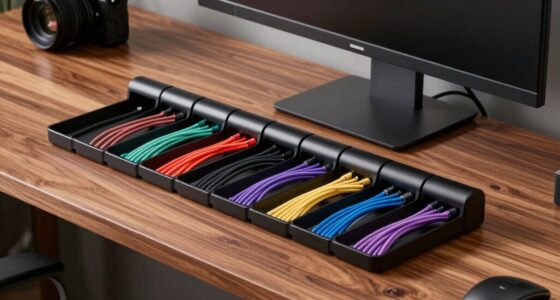
For a studio power conditioner, my best overall pick is the Furman PL-PLUS C for a rack setup that benefits from front-panel access and included extension cables. The Furman AC-215A is a more compact choice, while the Radial Power-2 suits studios that want a straightforward rack-mounted power hub. The main tradeoffs are rack space versus portability, outlet count versus the room you actually need, and basic power distribution versus features such as sequencing or voltage protection. Read on for the full comparison, including which models make sense for small rooms, larger racks, and specific power-management needs.

Get the latest gadgets delivered free with Prime
- Fast, free delivery on millions of items
- Prime Video, Amazon Music and more included
- Member-only deals all year
Complete the kit



Key Takeaways
- The Furman PL-PLUS C is my best overall rack pick because its rack format and included extension cables offer a practical fit for equipment spread across a studio setup.
- The Furman AC-215A and the two Black Lion Audio PG-P models serve different compact-use needs: the AC-215A is a small conditioner, while the PG-P options are portable units rather than rack-centered hubs.
- Sequencing is a distinct buying priority, not a universal upgrade. MICNAUX, Pyle PCO875, and STABCL combine rack distribution with sequencer functions, which may suit coordinated power-up routines.
- Outlet count alone does not settle the choice. The AudioQuest PowerQuest 303 lists 12 outlets, while other models focus on rack integration, compact placement, or added connectivity.
- Match the product to the system before paying for extra features: a compact studio may favor a smaller footprint, while a multi-device rack may benefit more from outlet layout and power sequencing.
| MICNAUX 20A Rack-Mount Power Conditioner and Sequencer, 10 Outlets |  | Best for Sequenced Rack Power | Form factor: Rack-mount | Outlets: 10 total: 8 sequenced rear and 2 always-on front | Input voltage: 110–230V | VIEW ON AMAZON | See Our Full Breakdown |
| TODN N600 Audio Power Conditioner |  | Best for Multi-Voltage Setups | Model: N600 | Voltage range: 100–250V | Maximum load: 2500W | VIEW ON AMAZON | See Our Full Breakdown |
| Pyle PCO875 10-Outlet Rack-Mount Power Sequencer and Conditioner |  | Best for a Straightforward Rack Upgrade | Model: PCO875 | Form factor: 1U rack-mount | Outlets: 10 total: 8 rear and 2 always-on front | VIEW ON AMAZON | See Our Full Breakdown |
| Furman AC-215A Compact Power Conditioner with Auto-Resetting Voltage Protection |  | Best Compact Protection for a Small Setup | Model: AC-215A | Input voltage: 120V AC | Current and maximum power: 10A; 1200W | VIEW ON AMAZON | See Our Full Breakdown |
| Pyle PC0850.5 1U Rack-Mount Power Conditioner with 7 Outlets |  | Best for a Compact 120V Rack | Model: PC0850.5 | Form factor: 1U rack-mount | Outlets: 7 total: 6 rear and 1 front | VIEW ON AMAZON | See Our Full Breakdown |
| Black Lion Audio PG-P Portable Power Conditioner |  | Best Compact Pick | Outlets: 6 | Surge protection: 540 joules | Voltage: 120 V | VIEW ON AMAZON | See Our Full Breakdown |
| STABCL 10-Outlet Rack-Mount Power Conditioner and Surge Sequencer with USB and USB-C |  | Best for Sequential Rack Power | Model: ST-368 | Outlets: 10 universal sockets: 8 rear and 2 front | Maximum output per channel: 10 A | VIEW ON AMAZON | See Our Full Breakdown |
| Furman PL-PLUS C Power Conditioner with Two Extension Cables |  | Best for Voltage Protection | Model: PL-PLUSC | Outlets: 2 listed | Plug type: Type B, 3-pin (North American) | VIEW ON AMAZON | See Our Full Breakdown |
| Black Lion Audio PG-P Plus Portable Power Conditioner and Surge Protector |  | Best Portable All-Rounder | Model: PG-P Plus (PGPPLUS) | Outlets: 8 | USB ports: 2: USB-A and USB-C | VIEW ON AMAZON | See Our Full Breakdown |
| Radial Power-2 Rackmount Power Conditioner |  | Best for Rack Integration | Outlets: 9 | Voltage: 120 V | Maximum current: 15 A | VIEW ON AMAZON | See Our Full Breakdown |
| AudioQuest PowerQuest 303 12-Outlet Power Conditioner |  | Best for High-Outlet Studio Racks | Outlets: 12 total: 4 high-current and 8 linear-filtered | Amperage: 15 A | Surge protection: Non-sacrificial; withstands up to 6000 V or 3000 A | VIEW ON AMAZON | See Our Full Breakdown |
| power conditioner for studio | Outlets | Model |
|---|---|---|
| MICNAUX 20A Rack-Mount Power C | 10 total: 8 sequenced rear and 2 always-on front | — |
| TODN N600 Audio Power Conditio | 5 filtered universal outlets | N600 |
| Pyle PCO875 10-Outlet Rack-Mou | 10 total: 8 rear and 2 always-on front | PCO875 |
| Furman AC-215A Compact Power C | — | AC-215A |
| Pyle PC0850.5 1U Rack-Mount Po | 7 total: 6 rear and 1 front | PC0850.5 |
| Black Lion Audio PG-P Portable | 6 | — |
| STABCL 10-Outlet Rack-Mount Po | 10 universal sockets: 8 rear and 2 front | ST-368 |
| Furman PL-PLUS C Power Conditi | 2 listed | PL-PLUSC |
| Black Lion Audio PG-P Plus Por | 8 | PG-P Plus (PGPPLUS) |
| Radial Power-2 Rackmount Power | 9 | — |
| AudioQuest PowerQuest 303 12-O | 12 total: 4 high-current and 8 linear-filtered | — |
More Details on Our Top Picks
MICNAUX 20A Rack-Mount Power Conditioner and Sequencer, 10 Outlets
The MICNAUX stands out for studios that need to power up rack gear in a chosen order, rather than simply add more outlets. Its eight independently controlled sequenced rear outlets can organize a rack’s startup, while two always-on front outlets keep frequently used accessories accessible. The 20A rating and 2000W maximum give it a different capacity profile from the Pyle PCO875, which is rated at 13A and also provides ten outlets. An LCD voltage display, bypass mode, and external dry-contact remote add monitoring and control options that the PCO875’s listed feature set does not include. The tradeoff is that the MICNAUX lists 110V output, so buyers with equipment requiring another output voltage should check compatibility before choosing it. It is also a full-width rack unit, not a compact desktop solution.
Pros:- Eight sequenced rear outlets have independent controls
- Two always-on front outlets add convenient access
- 20A rating and 2000W maximum capacity
- LCD voltage display, bypass mode, and external remote-switch support
Cons:- Listed 110V output may not match equipment requiring another voltage
- Rack-mount dimensions make it less suitable for a small desktop setup
Best for: Studio owners building a rack who want independently controlled startup sequencing, remote switching, and ten outlets.
Not ideal for: International studios or owners of gear that requires an output voltage other than the listed 110V, and anyone seeking a small portable conditioner.
- Form factor:Rack-mount
- Outlets:10 total: 8 sequenced rear and 2 always-on front
- Input voltage:110–230V
- Output voltage:110V
- Current and maximum power:20A; 2000W
- Display:LCD voltage display
- Control features:Independent outlet controls, bypass mode, and external dry-contact switch
- Enclosure:Metal; 18.86 × 7.24 × 1.77 inches
Our verdict“Choose the MICNAUX if independent sequencing and remote control matter more to your rack than compact size or a broadly specified output voltage.”
TODN N600 Audio Power Conditioner
The TODN N600 is the lineup’s flexible choice for a studio with equipment operating across a broad input-voltage range. It accepts 100–250V and supports a stated maximum load of 2500W, while its five filtered universal outlets simplify power distribution where plug compatibility permits. EMI and line-noise filtering, surge protection, and self-recovering over-current protection give it a broader protection and monitoring feature set than the Pyle PC0850.5, which is designed for 120V and has seven outlets. The N600 also adds two USB ports and a digital voltage display. Those strengths come with a tradeoff: five outlets may be limiting in a larger rack, and universal outlets may not fit every plug. Its 15.7-inch enclosure is also less compact than a small-format option such as the Furman AC-215A.
Pros:- 100–250V input range suits a wider range of electrical setups
- EMI and AC line-noise filtering with surge and over-current protection
- Digital voltage display and two USB ports
- Aluminum enclosure may help shield interference and dissipate heat
Cons:- Five outlets may not cover a densely equipped studio rack
- Universal outlets may not accept every plug type
- The listed 15.7-inch length takes more space than compact conditioners
Best for: Studio owners with compatible plugs and equipment spanning different input-voltage ranges who want filtering, voltage visibility, and USB ports in one unit.
Not ideal for: Buyers who need seven or more outlets, country-specific outlet formats, or a compact unit for mounting behind a single device.
- Model:N600
- Voltage range:100–250V
- Maximum load:2500W
- Outlets:5 filtered universal outlets
- USB ports:2
- Protection:Surge protection up to 10kV and self-recovering over-current protection
- Enclosure:Aluminum
- Dimensions and weight:15.7 × 4 × 2.2 inches; 2.8 lbs
Our verdict“Pick the TODN N600 for a compatible multi-voltage setup that needs filtering and voltage monitoring, but not a high outlet count.”
Pyle PCO875 10-Outlet Rack-Mount Power Sequencer and Conditioner
The Pyle PCO875 makes sense for a studio that wants rack-based power distribution with a useful outlet layout, but does not need the MICNAUX’s 20A capacity or remote switching. Its eight rear outlets and two always-on front outlets mirror that practical arrangement, and the 1U metal housing fits a standard rack. Surge and overload protection, an LCD voltage display, and a USB charging port cover basic studio convenience; the USB port’s charging specifications are not provided, so I would treat it as an accessory rather than a dependable device-charging feature. The main compromise is capacity: at 13A and 2000W, it is rated below the MICNAUX’s 20A model. The listed features also do not describe independent outlet controls or sequencing details, making this a less control-focused pick for complex racks.
Pros:- Ten outlets include eight rear outlets and two always-on front outlets
- 1U metal housing fits a standard equipment rack
- LCD voltage display and built-in surge and overload protection
- USB charging port adds an extra connection point
Cons:- 13A rating is lower than the MICNAUX’s 20A capacity
- USB charging specifications are not provided
- Listed features do not specify independent outlet controls or sequencing details
Best for: Home-studio and project-studio owners who need ten rack-mounted outlets, front access, and basic surge and overload protection.
Not ideal for: Users who need a 20A unit, independently controlled sequencing, or clearly specified USB charging performance.
- Model:PCO875
- Form factor:1U rack-mount
- Outlets:10 total: 8 rear and 2 always-on front
- Current and power capacity:13A; 2000W
- Protection:Surge and overload protection
- Display:LCD voltage display
- USB:1 charging port
- Dimensions and weight:18.9 × 8.3 × 1.9 inches; 5.95 lbs
Our verdict“Choose the PCO875 for a straightforward 1U, ten-outlet rack setup, and choose the MICNAUX instead if higher current capacity and defined sequencing are priorities.”
Furman AC-215A Compact Power Conditioner with Auto-Resetting Voltage Protection
The Furman AC-215A is the most space-conscious pick here for protecting a small group of studio devices rather than distributing power across a full rack. Its auto-resetting voltage shutdown cuts power during unsafe voltage conditions and restores it when conditions return to a safe range; AC line-noise filtering and surge and spike protection add useful safeguards for audio or video gear. Unlike the ten-outlet MICNAUX and Pyle PCO875, the AC-215A is intended for a more limited setup, with a 10A, 1200W rating and a compact-mounting focus. Mounting brackets support placement behind a display, on a wall, or in a rack. That flexibility does not make it a high-capacity rack distributor, and its listed 120V AC input narrows its fit compared with the TODN N600’s 100–250V range.
Pros:- Auto-resetting shutdown responds to unsafe voltage conditions
- Filters AC line noise and provides surge and spike protection
- Compact format supports wall, rack, or behind-device mounting
- Mounting brackets are included
Cons:- 10A and 1200W limits make it a poor fit for a heavily loaded rack
- Listed 120V AC input is less flexible than the TODN N600’s 100–250V range
- Does not offer the ten-outlet distribution of the MICNAUX or Pyle PCO875
Best for: Musicians, editors, and small-studio owners protecting a few sensitive devices where discreet mounting and automatic voltage shutdown matter.
Not ideal for: Owners of large equipment racks, high-current amplifiers, or gear requiring an input voltage outside the listed 120V AC specification.
- Model:AC-215A
- Input voltage:120V AC
- Current and maximum power:10A; 1200W
- Protection:Surge and spike protection; auto-resetting voltage shutdown
- Filtering:AC line-noise filtering for audio and video
- Mounting:Rack, wall, or behind-device mounting; brackets included
- Enclosure:Stainless steel
- Dimensions and weight:11.25 × 10.75 × 2.75 inches; 3.9 lb
Our verdict“Choose the AC-215A when compact mounting and automatic voltage protection matter more than high capacity or numerous outlets.”
Pyle PC0850.5 1U Rack-Mount Power Conditioner with 7 Outlets
The Pyle PC0850.5 is a direct fit for a modest 120V rack that needs basic filtered power without the ten-outlet layout of the PCO875. It provides seven outlets—six rear and one front—in a 1U aluminum-and-steel chassis, with an AC noise filter and push-to-reset breaker. Its stated RFI and EMI filtering addresses interference concerns, while the breaker provides a way to reset after an overload. Compared with the PCO875, this model gives up three outlets and an LCD voltage display; compared with the Furman AC-215A, it offers more connections in a rack-ready form, but does not list automatic voltage shutdown. The 10A limit and 120V design also make it a poor match for higher-current or multi-voltage installations, and its captive cord cannot be detached.
Pros:- Seven outlets split between six rear and one front connection
- 1U aluminum-and-steel chassis fits a standard rack
- AC noise filter reduces RFI and EMI interference
- Push-to-reset breaker provides overload protection
Cons:- 10A maximum current limits suitability for higher-load equipment
- Designed for 120V/60Hz power
- Captive 1.5m power cord cannot be detached
Best for: Owners of small 120V studio racks who need seven connections, basic noise filtering, and a resettable overload breaker.
Not ideal for: Studios needing more than seven outlets, automatic voltage shutdown, a detachable power cord, or support for other voltage standards.
- Model:PC0850.5
- Form factor:1U rack-mount
- Outlets:7 total: 6 rear and 1 front
- Voltage and maximum current:120V; 10A
- Protection:Surge and overload protection; 10A push-to-reset breaker
- Filtering:AC noise filter for RFI and EMI
- Peak impulse current and energy dissipation:1200A; 150 joules
- Chassis and cord:Aluminum-and-steel; 1.5m captive Type A power cord
Our verdict“Choose the PC0850.5 for a modest 120V rack that needs seven outlets and basic filtering, but not voltage monitoring or automatic shutdown.”
Black Lion Audio PG-P Portable Power Conditioner
The Black Lion Audio PG-P is the simplest fit here for a small studio that needs filtered, surge-protected power without using a rack space. Its six outlets and 9-foot cable make it easier to place beside a desk or a compact recording setup than the rack-mounted Radial Power-2. The stainless steel enclosure and 3.1-pound weight suit a unit that may move between rooms or travel to a rehearsal space. Compared with the PG-P Plus, this model skips two outlets, USB charging, and a voltage meter; its appeal is a more basic portable setup rather than extra monitoring and convenience features. The tradeoff is limited capacity for a growing rig, and the listed 540-joule surge protection does not establish a specific level of protection for every installation. It is intended for indoor use and professional audio equipment.
Pros:- Six outlets combine surge protection and audio filtration in a portable unit.
- Nine-foot power cable gives flexibility when the wall outlet is not near the desk.
- Stainless steel enclosure balances portability with a durable housing.
- Simple feature set suits smaller setups that do not need USB ports or voltage monitoring.
Cons:- Six outlets may be insufficient as a studio expands.
- No voltage meter or USB charging ports are listed.
- Indoor use and 120 V operation limit where it is suited.
Best for: Home-studio owners who need a portable six-outlet conditioner for a desk-based interface, monitors, and a few other audio devices.
Not ideal for: Studio owners with a large rack or frequent power-status monitoring needs; the PG-P Plus offers more outlets, USB charging, and a voltage meter.
- Outlets:6
- Surge protection:540 joules
- Voltage:120 V
- Power cable length:9 ft
- Weight:3.1 lb
- Enclosure material:Stainless steel
- Recommended use:Indoor
- Warranty:2 years
Our verdict“Choose the PG-P for a compact indoor studio that needs basic filtered power and portability more than extra outlets or monitoring.”
STABCL 10-Outlet Rack-Mount Power Conditioner and Surge Sequencer with USB and USB-C
The STABCL ST-368 is the most control-oriented rack option in this group: its sequential power control and independent channel switches can help organize how a rack of audio gear is turned on and off. Ten sockets, split between the front and rear, also make it more flexible than the two-outlet Furman PL-PLUS C for a multi-device rig. An LCD voltage display and channel status lights provide useful at-a-glance information, while USB and USB-C ports can handle small charging needs. The tradeoff is that the listed capacity needs careful attention: the specs state 3,000 W maximum, while the product title claims 3,300 W, so I would use the lower figure when planning a load. Its 100–125 V input range also makes it a North American-oriented choice, not a universal-voltage rack unit.
Pros:- Ten sockets provide more connection capacity than the Furman PL-PLUS C.
- Sequential control and independent channel switches add hands-on power management.
- LCD voltage display and LED status indicators make rack power easier to monitor.
- USB and USB-C ports provide charging without taking up an AC outlet.
Cons:- The 3,000 W specification conflicts with the title’s 3,300 W claim.
- The 100–125 V input range limits use outside compatible electrical systems.
- The 10 A maximum per channel and 30 A total require load planning across connected equipment.
Best for: Studio owners with several rack components who want sequenced startup, individually switched channels, and a voltage display in one 1U unit.
Not ideal for: Buyers outside the 100–125 V range or anyone who needs a clearly stated higher power capacity; the listed maximum is 3,000 W despite the title’s 3,300 W claim.
- Model:ST-368
- Outlets:10 universal sockets: 8 rear and 2 front
- Maximum output per channel:10 A
- Maximum total output:30 A
- Maximum power:3,000 W listed
- Input voltage:100–125 V AC
- Rack size:1U
- Charging ports:USB and USB-C
Our verdict“Pick the ST-368 when sequenced rack control and plentiful outlets matter more than a broad input-voltage range or unambiguous capacity claims.”
Furman PL-PLUS C Power Conditioner with Two Extension Cables
The Furman PL-PLUS C earns its place for studios that prioritize voltage safeguards over outlet count. Its Extreme Voltage Shutdown is a distinct advantage over the Black Lion Audio PG-P, whose supplied details list surge protection and audio filtration but no shutdown feature. The segmented LED voltmeter also gives users a visible way to check incoming voltage, while the included IEC extension cables can help reach equipment that sits farther from the conditioner. Furman’s Series Multi-Stage Protection and Linear Filtering Technology round out a protection-focused feature set. The main compromise is stark: only two outlets are listed, far fewer than the Radial Power-2’s nine or the STABCL’s ten. I would treat it as a targeted power-protection unit for a small number of important devices, not as the central outlet hub for a full studio rack.
Pros:- Extreme Voltage Shutdown disconnects connected equipment during unsafe voltage conditions.
- Segmented LED voltmeter makes incoming voltage visible.
- Series Multi-Stage Protection and Linear Filtering Technology target surge and electrical-noise concerns.
- Two IEC extension cables can improve equipment placement flexibility.
Cons:- Only two outlets are listed, limiting its usefulness as a studio power hub.
- Polycarbonate enclosure differs from the stainless steel housings on the Black Lion Audio and Radial options.
- Type B North American plug limits compatibility with other regions.
Best for: Studio owners who want voltage monitoring and shutdown protection for a small number of high-priority devices, such as a monitor system or recording chain.
Not ideal for: Anyone seeking one conditioner to power a complete rack; the two listed outlets are far fewer than the Radial Power-2 or STABCL ST-368 provides.
- Model:PL-PLUSC
- Outlets:2 listed
- Plug type:Type B, 3-pin (North American)
- Special features:Surge protection, segmented LED voltmeter, voltage shutdown
- Enclosure material:Polycarbonate
- Included cables:2 IEC extension cables, 18 AWG
- Mounting:Mountable
- Color:Black
Our verdict“Choose the PL-PLUS C when voltage shutdown and monitoring matter more than powering many studio devices from one unit.”
Black Lion Audio PG-P Plus Portable Power Conditioner and Surge Protector
The PG-P Plus bridges desktop convenience and studio monitoring better than the basic PG-P: it adds eight outlets, USB-A and USB-C charging, and a voltage meter while keeping a 9-foot cable and portable stainless steel housing. That makes it a stronger fit for a studio desk with audio gear and small accessories, while the PG-P remains the simpler choice for buyers who only need six outlets and filtration. Recessed feet and mounting options give it more placement flexibility than a fixed 1U unit such as the Radial Power-2. Its PG-P filtering technology and Panasonic capacitors are described as reducing electrical noise, but the USB charging output is not specified, so I would not choose it around demanding charging requirements. The North American Type B plug also narrows its regional fit.
Pros:- Eight outlets offer more capacity than the standard PG-P.
- USB-A and USB-C ports add charging convenience without occupying AC sockets.
- Voltage meter and LED indicators help monitor power status.
- Recessed feet and mounting options support desk, studio, or performance-space placement.
Cons:- USB charging output is not specified, making device compatibility harder to judge.
- Type B, 3-pin plug is not suited to every region.
- Portable form may be less convenient than a 1U rack conditioner for permanently installed rack systems.
Best for: Home and project-studio owners who need a portable conditioner with enough outlets for a desk setup, USB charging, and a visible voltage reading.
Not ideal for: Buyers outside North America or users who need a specified USB charging rate; the listed plug is Type B and USB output details are absent.
- Model:PG-P Plus (PGPPLUS)
- Outlets:8
- USB ports:2: USB-A and USB-C
- Power cable length:9 ft
- Plug type:Type B, 3-pin (North American)
- Enclosure material:Stainless steel
- Mounting:Recessed feet and mounting options
- Warranty:2 years
Our verdict“Choose the PG-P Plus if you want a portable studio power hub with more outlets and monitoring than the basic PG-P.”
Radial Power-2 Rackmount Power Conditioner
The Radial Power-2 is the clearest rack-first choice here, pairing a 1U stainless steel chassis with nine outlets, surge protection, and RF noise filtering. Four outlets are spaced for wall-wart adapters, which can prevent bulky plugs from blocking neighboring sockets—a practical advantage over the evenly grouped outlet arrangements described for the portable Black Lion Audio PG-P models. Its slide-out tray with multicolor LED illumination also helps when locating connections in a dim rack, and the front USB port offers a simple charging point. Compared with the STABCL ST-368, the Power-2 has fewer outlets and no listed sequential control or voltage display, so it is less suited to users seeking those controls. Its 120 V, Type B configuration also makes it a poor fit for other electrical regions.
Pros:- Nine outlets include four spaced to accommodate wall-wart adapters.
- RF noise filtering and surge protection suit connected studio and live-sound equipment.
- Slide-out tray with multicolor LED illumination helps with visibility in a rack.
- Stainless steel 1U enclosure is designed for rack integration.
Cons:- 120 V operation and Type B plug limit regional compatibility.
- No sequential power control or voltage display is listed, unlike the STABCL ST-368.
- At 12.4 pounds, it is heavier than the portable Black Lion Audio PG-P options.
Best for: Studio and live-sound users building a North American 1U rack who need nine outlets, RF filtering, and room for wall-wart adapters.
Not ideal for: Users who need sequential startup, a voltage display, or international voltage compatibility; the STABCL includes sequencing and an LCD, while this unit is specified for 120 V and Type B plugs.
- Outlets:9
- Voltage:120 V
- Maximum current:15 A
- USB ports:1
- Plug type:Type B, 3-pin
- Weight:12.4 lb
- Rack size:1U
- Enclosure material:Stainless steel
Our verdict“Choose the Power-2 for a North American rack that needs practical outlet spacing and RF filtering rather than sequencing or voltage readouts.”
AudioQuest PowerQuest 303 12-Outlet Power Conditioner
The PowerQuest 303 suits studios that need one rack-mounted unit for a large mix of equipment. Its four high-current outlets are intended for amplifiers, while eight linear-filtered outlets serve source components; that division makes it more flexible for a mixed studio rack than the simpler outlet layouts of the Radial Power-2 or Furman AC-215A. It also adds non-sacrificial surge protection and cuts AC power when voltage reaches 140 VAC, giving the system a defined response to severe electrical conditions.
The tradeoff is its footprint: at 17 × 17 inches, it may be awkward in a compact setup, and its North American Type A plug limits where it fits. Buyers who need a portable unit should compare the smaller Black Lion Audio PG-P instead. The 303 is a stronger match for a fixed studio rack with many components, but it does not solve placement constraints or provide more than a 15 A rating.
Pros:- Twelve outlets split between four high-current and eight linear-filtered connections
- Non-sacrificial surge protection rated to withstand up to 6000 V or 3000 A
- Extreme-voltage protection disconnects power in under 0.25 seconds at 140 VAC
- Detachable 2-meter cable and 2RU rack ears are included
Cons:- The 17 × 17-inch dimensions can restrict rack or floor placement
- Its North American Type A, 2-pin plug limits regional compatibility
- The 15 A rating may not suit setups with greater current demands
Best for: Studio owners building a fixed rack with several source components and amplifiers who want separate outlet groups and rack-mount hardware.
Not ideal for: Mobile recording setups, compact desks, or studios outside North America that cannot use its Type A, 2-pin plug.
- Outlets:12 total: 4 high-current and 8 linear-filtered
- Amperage:15 A
- Surge protection:Non-sacrificial; withstands up to 6000 V or 3000 A
- Extreme-voltage shutdown:Disengages AC power in under 0.25 seconds at 140 VAC
- Power cable:Detachable 2-meter PQ-415 cable included
- Rack mounting:2RU rack ears included
- Dimensions and weight:17 in L × 17 in W; 10.2 lb
- Plug type:Type A, 2-pin (North America)
- Warranty:Five years
Our verdict“Choose the PowerQuest 303 for a fixed, equipment-heavy studio rack that benefits from grouped outlets; choose a compact conditioner if space or portability matters more.”

How We Picked
I compared the 11 listed models as studio power-management tools, focusing on the needs that change day-to-day usability: outlet capacity and layout, rack or portable placement, sequencing features, and any stated voltage-protection or connectivity functions. I also weighed how clearly each product’s format and feature set map to a real studio setup, rather than treating a higher outlet count or a longer feature list as an automatic advantage.
The ranking favors products with a clear role and a practical balance of features for their form factor. Rack models with sequencing are placed for studios that need coordinated power-up, compact and portable units suit smaller or flexible setups, and models with broader outlet counts have value when the equipment list calls for it. I did not treat power conditioners as substitutes for correct grounding, circuit capacity, or electrical work; buyers should check product specifications and compatibility before connecting valuable equipment.
Factors to Consider When Choosing Power Conditioner For Studio
Choosing a conditioner starts with your equipment and room, not the longest feature list. I’d map the outlets, placement, and power-up routine first, then decide whether rack integration, portability, or added protection matters most.
Count the Devices You Need to Connect
List every device you expect to plug in, including monitors, interfaces, outboard gear, and chargers, then leave room for likely additions. The advertised outlet count can be misleading if some outlets are hard to reach or occupied by bulky plugs. Check whether the layout separates front-panel access from rear connections, and whether that arrangement suits your rack or desk. Avoid filling every socket with non-audio accessories before confirming the unit’s electrical limits. A conditioner cannot make an overloaded circuit safe, so account for the circuit and equipment draw as well as the number of receptacles. For a fixed rack, orderly rear access may matter more than a high count; for a changing setup, spare outlets have practical value.
Choose Rack-Mount or Portable Placement
A rack-mounted model keeps power connections in one place and can reduce cable sprawl around a studio rack. Its tradeoff is that it takes rack space and may be awkward if your gear lives across a desk, pedalboard, or mobile recording rig. Portable models can move with a setup, but they do not provide the same integrated rack layout. Measure available rack units and clearance before buying, including room for cables and ventilation around nearby equipment. Also decide where you want the power switch and connections to sit; convenience is lost if the unit ends up blocked behind furniture. A compact footprint is most useful when it solves a placement problem, not simply because it is smaller.
Decide Whether Power Sequencing Fits Your Workflow
Sequencing can make sense when you want connected equipment to power up or down in a set order. It may help organize a larger rack routine, but it adds little for a small setup that is switched on manually without difficulty. Before choosing a sequencer, confirm that its outlets and control arrangement suit the equipment you intend to connect. Do not assume that sequencing alone protects every device from every electrical problem. If your main concern is simply having a convenient master switch, a model without a sequencing feature may be easier to match to your needs. Pay for sequencing when it improves a recurring workflow, not as a general badge of studio quality.
Separate Surge Protection From Voltage Regulation
Product names often group protection features together, but the exact functions differ by model. Read the manufacturer’s specifications to identify what the unit claims to protect against and whether it provides voltage monitoring, regulation, or only power distribution and surge-related features. Do not infer a capability from the word “conditioner” alone. A power conditioner also cannot correct poor grounding, damaged wiring, or an undersized branch circuit. If your studio has recurring electrical issues, ask a qualified electrician to evaluate the source rather than expecting a rack unit to resolve it. This check can prevent paying for features that do not address the actual problem.
Check Compatibility and Electrical Capacity
Confirm the conditioner’s voltage, current rating, plug type, and outlet configuration against both the studio’s supply and the equipment manuals. A model with more outlets is not automatically able to support more total load. Add up the expected draw and keep the unit within its stated limits, especially when connecting amplifiers or other high-draw gear. Avoid chaining conditioners or power strips unless the manufacturers explicitly allow that setup. For equipment with unusual plugs or adapters, verify that connections will fit without blocking neighboring outlets. These checks are more useful than selecting a model by outlet count alone.
Pay for Features You Will Actually Use
Extra USB connections, extension cables, display features, and sequencing can each solve a real setup problem, but unused extras add complexity without improving your workflow. Start by identifying the main friction point: too few outlets, scattered power access, a need for coordinated startup, or a unit that must travel. Then compare candidates by the feature that addresses that issue and confirm their specifications. A simpler model can be the better value when your studio needs basic distribution in a compact form. A more feature-rich unit makes sense when its added functions replace separate accessories or simplify regular sessions. Keep the decision tied to your equipment list and habits rather than assuming premium positioning means a better fit.
Frequently Asked Questions
Do I need a rack-mount conditioner for a small home studio?
Not necessarily. A rack unit is most useful when your equipment already lives in a rack or you want power connections grouped together. For a desk-based setup with only a few devices, a compact or portable model may be easier to place and reach. Compare the outlet layout and rated capacity with your actual gear instead of buying rack hardware for its appearance. If you expect to build a rack later, check whether the current model will still suit that layout.
Should I choose a sequencer if I have several pieces of studio gear?
Choose sequencing when powering devices in a particular order is part of your routine or when a centralized startup process would simplify a larger rack. A high device count by itself does not mean sequencing is necessary. Check how the model handles its outlets and whether the sequence matches the equipment manuals. If you usually switch everything on manually and have no startup-order concern, a simpler conditioner may be a better fit. Do not treat sequencing as a replacement for checking total electrical load.
Can a power conditioner fix hum or buzzing in my studio?
It may help organize power connections, but it is not a guaranteed cure for hum or buzz. Noise can come from grounding problems, audio cable routing, connected devices, or wiring faults that a conditioner cannot resolve. Before replacing equipment, isolate the source by changing one connection or device at a time and consult a qualified electrician if you suspect a wiring issue. Check the specific model’s documented functions instead of assuming every conditioner filters all unwanted noise. A tidy power setup can help with cable management, but that is different from diagnosing an audio fault.
Is a conditioner with more outlets always the better choice?
No. Outlet count says how many devices may connect, not how much total electrical load the unit can safely support or how convenient the layout will be. A 12-outlet model can be a poor fit if plugs block one another or the unit does not fit your placement. Conversely, a smaller unit may suit a compact rig with a clear outlet plan. Compare the outlet arrangement, rated capacity, and your likely expansion needs together. Leave a little room for future gear without exceeding the unit or circuit limits.
Can I plug an amplifier into any studio power conditioner?
Do not assume that every model is suitable for every amplifier. Check the conditioner’s stated electrical rating and the amplifier’s power requirements, then confirm compatibility in their manuals. Some studio setups combine low-draw signal gear with equipment that places a greater demand on the circuit, so total load matters. If the documentation is unclear, ask the manufacturer or a qualified electrician rather than relying on the product category name. The conditioner should not be used to bypass an unsuitable outlet or overloaded circuit.
Conclusion
For a rack-based studio seeking a balanced setup, I’d start with the Furman PL-PLUS C as best overall, especially when the included extension cables suit the room layout. My best value pick is the Pyle PC0850.5 for buyers who want a 1U rack format and seven outlets without needing a more specialized feature set. Beginners with a compact setup should look at the Furman AC-215A for its smaller form, while the Black Lion Audio PG-P is my portable pick for flexible placement. For a rack that needs sequencing, compare the MICNAUX, Pyle PCO875, and STABCL by their outlet layouts and documented specifications; buyers who prioritize a larger outlet count can look at the AudioQuest PowerQuest 303. The right choice depends on your gear, available space, and power routine—not on outlet count or feature names alone.
Halloween Picks
halloween
As an affiliate, we earn on qualifying purchases.