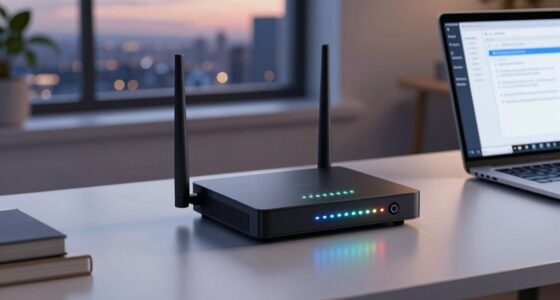
The search for network switches managed usually comes down to balancing port count, PoE capacity, and configuration depth. I rank the TP-Link TL-SG108PE V3 as the best overall pick because its eight-port layout, four PoE ports, and approachable controls suit many home and small-office networks. The TP-Link TL-SG105E is my value choice for basic VLAN and traffic management, while the TP-Link TL-SG1428PE is the premium option for larger PoE deployments. Buyers must choose between simple web-managed models and deeper centralized management, while avoiding unnecessary spending on ports or power capacity they will never use. Keep reading for the full breakdown of all 14 switches and the buyer each one serves best.
Open a free Amazon Business account
Business pricing, bulk buying and tax-exempt orders.
Create a free accountAs an affiliate, we earn on qualifying purchases.
Complete the kit



Key Takeaways
- TP-Link TL-SG108PE V3 offers the strongest balance of manageable size, PoE support, and useful network controls, which puts it ahead of simpler eight-port alternatives.
- TP-Link TL-SG105E is the value leader for buyers who need VLANs and monitoring but do not need PoE or centralized administration.
- TP-Link TL-SG1428PE earns the premium position through scale; its port density and PoE focus make more sense for camera and access-point fleets than for a small desk setup.
- The comparison showed that five-port models are not interchangeable: the NETGEAR GS305EP prioritizes compact PoE, the GS305E favors easy setup, and the Omada-managed TP-Link model favors centralized control.
- PoE and loop-prevention labels do not automatically mean rich management; buyers considering the TP-Link LS108GP or other control-light models should verify VLAN, monitoring, and configuration capabilities before buying.
| TP-Link TL-SG1024DE 24-Port Gigabit Easy Smart Managed Ethernet Switch |  | Best for Large Wired Networks | Number of ports: 24 | Port type: Gigabit Ethernet | Management class: Easy Smart managed | VIEW ON AMAZON | See Our Full Breakdown |
| TP-Link TL-SG108E 8-Port Gigabit Easy Smart Managed Switch |  | Best Value Pick | Number of ports: 8 | Port speed: Gigabit Ethernet | Management class: Easy Smart managed | VIEW ON AMAZON | See Our Full Breakdown |
| NETGEAR GS305EP 5-Port PoE Gigabit Ethernet Smart Managed Switch |  | Best Compact PoE Switch | Number of ports: 5 | PoE+ ports: 4 | PoE power budget: 63W | VIEW ON AMAZON | See Our Full Breakdown |
| TP-Link TL-SG105E 5-Port Gigabit Ethernet Easy Smart Switch |  | Best for Minimal Managed Setups | Number of ports: 5 | Port speed: Gigabit Ethernet | Management: Web interface and software | VIEW ON AMAZON | See Our Full Breakdown |
| TP-Link 16-Port Gigabit Managed Switch |  | Best Mid-Sized Network Pick | Number of ports: 16 | Port type: RJ45 Gigabit Ethernet | Management: Web interface | VIEW ON AMAZON | See Our Full Breakdown |
| NETGEAR GS305E 5-Port Gigabit Easy Smart Managed Switch |  | Best Compact Metal Switch | Number of Ports: 5 | Port Speed: 1.0 Gbps | Management: Easy Smart Managed | VIEW ON AMAZON | See Our Full Breakdown |
| TP-Link LS108GP 8-Port PoE Gigabit Ethernet Switch |  | Best Unmanaged PoE Alternative | Number of Ports: 8 | Port Speed: Gigabit Ethernet | Switching Data Rate: 16 Gbps | VIEW ON AMAZON | See Our Full Breakdown |
| NETGEAR GS308E 8-Port Gigabit Easy Smart Managed Switch |  | Best Overall | Number of Ports: 8 | Port Speed: Gigabit Ethernet | Management: Easy Smart web GUI | VIEW ON AMAZON | See Our Full Breakdown |
| TP-Link 8-Port Gigabit Easy Managed Switch with Omada |  | Best for Omada Networks | Number of Ports: 8 Gigabit ports | Management: Omada SDN Controller and app | VLAN Support: Yes | VIEW ON AMAZON | See Our Full Breakdown |
| NETGEAR GS105Ev2 5-Port Gigabit Easy Smart Managed Switch |  | Best for Basic Monitoring | Number of Ports: 5 | Port Speed: 1000 Megabits per second | Switch Type: Managed | VIEW ON AMAZON | See Our Full Breakdown |
| TP-Link 5 Port Gigabit Managed Switch |  | Best Compact Omada Switch | Number of ports: 5 | Port interface: RJ45 | Port speed: 1 Gbps | VIEW ON AMAZON | See Our Full Breakdown |
| TP-Link TL-SG108PE V3 8-Port Gigabit PoE Switch |  | Best Value PoE Pick | Number of ports: 8 Gigabit Ethernet ports | PoE ports: 4 PoE+ ports | Total PoE power: 64W | VIEW ON AMAZON | See Our Full Breakdown |
| TP-Link TL-SG1428PE 24-Port Gigabit Easy Smart Managed PoE+ Switch |  | Best for Large PoE Deployments | PoE+ ports: 24 | Additional copper ports: 2 Gigabit non-PoE ports | SFP slots: 2 | VIEW ON AMAZON | See Our Full Breakdown |
| NETGEAR GS308EP 8-Port PoE Gigabit Ethernet Easy Smart Managed Switch |  | Best for Eight Low-Power PoE Devices | Number of ports: 8 Gigabit Ethernet ports | PoE ports: 8 PoE+ ports | Total PoE power budget: 62W | VIEW ON AMAZON | See Our Full Breakdown |
| network switches managed | Number of ports | VLAN support | Management | Port speed |
|---|---|---|---|---|
| TP-Link TL-SG1024DE 24-Port Gi | 24 | Yes | — | — |
| TP-Link TL-SG108E 8-Port Gigab | 8 | Up to 32 VLANs | — | Gigabit Ethernet |
| NETGEAR GS305EP 5-Port PoE Gig | 5 | Yes | Web-managed | — |
| TP-Link TL-SG105E 5-Port Gigab | 5 | Yes | Web interface and software | Gigabit Ethernet |
| TP-Link 16-Port Gigabit Manage | 16 | Yes | Web interface | — |
| NETGEAR GS305E 5-Port Gigabit | 5 | — | Easy Smart Managed | 1.0 Gbps |
| TP-Link LS108GP 8-Port PoE Gig | 8 | — | — | Gigabit Ethernet |
| NETGEAR GS308E 8-Port Gigabit | 8 | Up to 64 VLANs | Easy Smart web GUI | Gigabit Ethernet |
| TP-Link 8-Port Gigabit Easy Ma | 8 Gigabit ports | Yes | Omada SDN Controller and app | — |
| NETGEAR GS105Ev2 5-Port Gigabi | 5 | — | — | 1000 Megabits per second |
| TP-Link 5 Port Gigabit Managed | 5 | — | — | 1 Gbps |
| TP-Link TL-SG108PE V3 8-Port G | 8 Gigabit Ethernet ports | Yes | Smart web-based interface | — |
| TP-Link TL-SG1428PE 24-Port Gi | — | — | Web-based interface | — |
| NETGEAR GS308EP 8-Port PoE Gig | 8 Gigabit Ethernet ports | — | — | — |
More Details on Our Top Picks
TP-Link TL-SG1024DE 24-Port Gigabit Easy Smart Managed Ethernet Switch
I rank the TP-Link TL-SG1024DE as the strongest choice here for buyers who need 24 Gigabit ports without moving to a more elaborate enterprise platform. Its VLAN, QoS, monitoring, and 9K jumbo-frame support provide useful traffic control for a busy office, lab, or structured home network. Compared with the TP-Link 16-Port Managed Switch, it offers eight more connections and more room for expansion, making its higher-capacity role clear. The compromise is power delivery: unlike the NETGEAR GS305EP, it cannot run cameras, access points, or phones over Ethernet. Its easy-smart management is also less capable than a fully managed Layer 2 platform. I would choose it for broad wired connectivity, but skip it when PoE or advanced routing features are central requirements.
Pros:- Twenty-four Gigabit ports accommodate larger wired networks
- VLAN and QoS controls help separate devices and prioritize traffic
- 9K jumbo frames can improve efficiency during large local transfers
- Three-year warranty provides longer-term purchase protection
Cons:- No PoE support for powered network devices
- Easy-smart controls are less extensive than full enterprise management
- Silent or fanless operation is not confirmed in the supplied data
Best for: Growing offices, labs, and advanced home networks that need many managed Gigabit connections without PoE
Not ideal for: Camera or access-point deployments that need Ethernet data and power from the same switch
- Number of ports:24
- Port type:Gigabit Ethernet
- Management class:Easy Smart managed
- VLAN support:Yes
- QoS support:Yes
- Jumbo frame:9K
- PoE support:No
- Warranty:3 years
Our verdict“This is my pick for buyers who prioritize port capacity and practical traffic controls over PoE and enterprise-grade management.”
TP-Link TL-SG108E 8-Port Gigabit Easy Smart Managed Switch
The TP-Link TL-SG108E earns my value slot by combining eight Gigabit ports with VLAN, QoS, IGMP snooping, and link aggregation in a durable metal enclosure. It gives a home office or small business more room than the five-port TP-Link TL-SG105E while remaining easier to place than the 16- and 24-port models. Up to 32 VLANs make it useful for separating work devices, guests, and smart-home hardware rather than merely adding Ethernet sockets. Compared with the NETGEAR GS305EP, however, it trades away PoE+ power for three additional data ports and a lower-complexity role. I also would not treat “plug and play” as meaning management needs no knowledge; configuring VLANs and aggregation still calls for networking basics. It is the balanced choice when useful controls and port count matter equally.
Pros:- Eight Gigabit ports strike a useful balance between capacity and size
- Supports VLANs, QoS, IGMP snooping, and link aggregation
- Metal enclosure and shielded ports suit permanent installations
- Desktop and wall-mount options offer flexible placement
Cons:- No PoE support
- Eight ports can be restrictive for a growing office
- Advanced settings require basic networking knowledge
Best for: Home-office users and small businesses that need eight managed ports for VLAN-separated wired devices
Not ideal for: Buyers powering IP cameras, VoIP phones, or access points, because the switch provides no PoE
- Number of ports:8
- Port speed:Gigabit Ethernet
- Management class:Easy Smart managed
- VLAN support:Up to 32 VLANs
- QoS support:Yes
- IGMP snooping:Yes
- Link aggregation:Yes
- Mounting:Desktop or wall
- Warranty:3 years
Our verdict“I recommend this model to buyers seeking the broadest management feature set at an approachable eight-port scale.”
NETGEAR GS305EP 5-Port PoE Gigabit Ethernet Smart Managed Switch
I place the NETGEAR GS305EP ahead of the other five-port choices when powering devices is the main goal. Four PoE+ ports with a 63W budget can support a compact mix of cameras, phones, and access points, while uninterrupted PoE keeps those devices powered during switch firmware updates or reboots. The TP-Link TL-SG105E costs that flexibility by omitting PoE, though it may be a simpler fit for ordinary computers and printers. The GS305EP also brings VLAN and QoS controls, silent operation, and desktop or wall placement to noise-sensitive rooms. Its limits are equally clear: five total ports leave only modest expansion space, and 63W may fall short for several power-hungry endpoints. I rank it as a specialized managed switch, not the best general-purpose value, because much of its appeal depends on actually needing centralized Ethernet power.
Pros:- Four PoE+ ports supply data and power through one cable
- A 63W power budget supports several moderate-power endpoints
- Uninterrupted PoE keeps connected devices powered during updates or reboots
- Silent compact design works well near occupied desks
Cons:- Five total ports provide little expansion capacity
- The 63W budget can restrict combinations of higher-power devices
- Advanced configuration still requires networking knowledge
Best for: Small camera, VoIP, or wireless-access-point installations needing four managed PoE+ connections in a quiet room
Not ideal for: Expanding wired offices or high-power PoE deployments that need more than five ports or a budget above 63W
- Number of ports:5
- PoE+ ports:4
- PoE power budget:63W
- Data rate:1000 Mbps
- Management:Web-managed
- VLAN support:Yes
- QoS support:Yes
- Mounting:Desktop or wall
- Upper temperature rating:60°C
Our verdict“This is my choice for a small managed network where four PoE+ endpoints matter more than future port expansion.”
TP-Link TL-SG105E 5-Port Gigabit Ethernet Easy Smart Switch
The TP-Link TL-SG105E makes my list for buyers who need only a few wired connections but still want VLAN separation and traffic monitoring. It is a more management-focused choice than an unmanaged five-port switch, yet its compact desktop or wall-mounted format avoids the unused capacity of the TP-Link TL-SG108E. Energy-saving technology can cut consumption by up to 75%, which suits an always-on home office or small workspace. Compared with the NETGEAR GS305EP, this model lacks PoE and cannot power a camera or access point, but that omission keeps its purpose centered on basic Gigabit segmentation. The five-port ceiling is the biggest constraint: after accounting for the router uplink, only four ports remain for devices. I would pick it for a small, stable network, not one likely to grow soon.
Pros:- VLAN support allows basic separation of work, guest, or device traffic
- Web interface and software provide accessible monitoring controls
- Compact desktop or wall-mounted format fits limited spaces
- Energy-saving technology can reduce power use by up to 75%
Cons:- Only five ports, with one typically occupied by the network uplink
- No PoE support
- Listed 220V power requirement may limit suitability in some regions
Best for: Home offices and microbusinesses with four or fewer wired endpoints that need basic VLAN and monitoring controls
Not ideal for: Growing networks and PoE-device installations, since usable endpoint capacity is small and Ethernet power is absent
- Number of ports:5
- Port speed:Gigabit Ethernet
- Management:Web interface and software
- VLAN support:Yes
- Traffic monitoring:Yes
- Mounting:Desktop or wall
- Voltage:220V
- Upper temperature rating:40°C
- Maximum stated power saving:Up to 75%
Our verdict“I recommend it for a small fixed network that needs simple managed controls without paying for unused ports.”
TP-Link 16-Port Gigabit Managed Switch
I see the TP-Link 16-Port Gigabit Managed Switch as the middle ground between compact smart switches and the 24-port TL-SG1024DE. Its 16 Gigabit ports suit a small office with desktops, printers, servers, and uplinks while avoiding the larger port surplus of the 24-port model. QoS, VLAN, IGMP, and LAG provide more control than simple plug-and-play language might suggest: buyers can separate departments, manage multicast traffic, and combine compatible links for extra bandwidth or resilience. Against the TP-Link TL-SG108E, it doubles connection capacity but takes up more installation space and may be unnecessary for a home office. It also omits PoE, leaving cameras and access points dependent on separate injectors or power supplies. My ranking favors it for networks that have outgrown eight ports but do not need the scale of a 24-port switch.
Pros:- Sixteen Gigabit ports offer practical capacity for mid-sized wired networks
- VLAN and QoS controls support segmentation and traffic prioritization
- IGMP and LAG add useful multicast and link-management options
- Metal casing supports durable desktop or wall installation
Cons:- No PoE support for cameras, phones, or access points
- More capacity and physical bulk than most home offices need
- Sixteen ports may still be restrictive for larger business growth
Best for: Small offices and advanced home networks that have outgrown eight ports but do not need a 24-port rack-scale deployment
Not ideal for: PoE installations or very small networks where most of the 16 ports would remain unused
- Number of ports:16
- Port type:RJ45 Gigabit Ethernet
- Management:Web interface
- VLAN support:Yes
- QoS support:Yes
- IGMP support:Yes
- Link aggregation:Yes
- Mounting:Desktop or wall
- Case material:Metal
Our verdict“This is my mid-capacity pick for buyers who need twice the reach of an eight-port switch without jumping to 24 ports.”
NETGEAR GS305E 5-Port Gigabit Easy Smart Managed Switch
I rank the NETGEAR GS305E as the strongest compact choice for buyers who want basic traffic control without filling a desk or wiring cabinet. Its VLAN and QoS tools let me separate devices and prioritize sensitive traffic, while the fanless metal enclosure is quieter and sturdier than the plastic GS105Ev2. Compared with the eight-port NETGEAR GS308E, this model takes up less room and suits a smaller endpoint count, but it leaves almost no capacity for expansion. The interface is aimed at approachable management rather than enterprise administration, so buyers needing detailed access policies or remote fleet control should move toward the TP-Link Omada model. Five gigabit ports and no PoE also limit its usefulness for camera or access-point installations. I see it as a focused switch for a modest wired network, not a foundation for rapid growth.
Pros:- Compact metal housing is better suited to exposed desktop placement than plastic alternatives
- VLAN and QoS controls provide useful segmentation and traffic prioritization
- Fanless operation works well in offices and other quiet rooms
- Desktop and wall mounting support flexible installation
Cons:- Five ports leave limited capacity after accounting for the uplink
- No PoE support for cameras, phones, or wireless access points
- Easy Smart management lacks the depth of an Omada-controlled switch
Best for: I recommend it to home-office and microbusiness buyers who need VLANs and QoS for four or fewer connected devices in a tight space.
Not ideal for: I would skip it for growing networks or PoE deployments because five ports provide little expansion room and cannot power connected devices.
- Number of Ports:5
- Port Speed:1.0 Gbps
- Management:Easy Smart Managed
- Mounting Options:Desktop or wall-mount
- Energy Efficiency:IEEE 802.3az Energy Efficient Ethernet
- Design:Fanless compact metal housing
Our verdict“I would choose the GS305E for a small, quiet network that needs basic management in a sturdy compact enclosure.”
TP-Link LS108GP 8-Port PoE Gigabit Ethernet Switch
The TP-Link LS108GP is the outlier in this managed-switch roundup: it is unmanaged, so I only recommend it when powering devices matters more than configuring traffic. Its 65W PoE budget can support several cameras, phones, or access points, and automatic recovery can restart an unresponsive powered device without a site visit. Extend mode also serves long cable runs that would be awkward for a standard installation. The NETGEAR GS308E is the better choice for VLANs, QoS, and network visibility, but it supplies no PoE at all. This TP-Link model reverses that balance by offering up to 30W per port with no VLAN configuration, port mirroring, or managed security controls. The fanless metal case suits quiet locations, though the 65W shared ceiling may restrict combinations of power-hungry hardware. I rank it as a practical PoE utility switch, not a true managed-network substitute.
Pros:- Eight gigabit ports accommodate a useful small-site device count
- 65W PoE budget can power several moderate-demand endpoints
- Extend mode supports longer-distance PoE connections
- PoE auto recovery can restart unresponsive powered devices
Cons:- Unmanaged design provides no VLAN, QoS, or port-level configuration
- Shared 65W budget can become restrictive across multiple high-demand devices
- Thirty watts per port cannot serve hardware requiring higher-power PoE standards
Best for: I recommend it to small camera or access-point installations that need silent PoE delivery but do not require VLANs or remote configuration.
Not ideal for: I would skip it when network segmentation, traffic monitoring, port configuration, or centralized management is part of the buying brief.
- Number of Ports:8
- Port Speed:Gigabit Ethernet
- Switching Data Rate:16 Gbps
- Switch Type:Unmanaged
- PoE Power Budget:65W
- Maximum PoE per Port:30W
- Case Material:Metal
- Dimensions:7.72 x 4.76 x 5.16 inches
- Weight:1.48 pounds
Our verdict“I would buy the LS108GP only when straightforward PoE delivery outweighs every benefit of managed switching.”
NETGEAR GS308E 8-Port Gigabit Easy Smart Managed Switch
I place the NETGEAR GS308E first for buyers seeking a useful balance of port count, approachable management, and quiet operation. Its web interface exposes up to 64 VLANs, QoS, IGMP snooping, loop detection, and cable testing without tying the network to a controller platform. That makes it easier to adopt than the TP-Link Omada model, though the TP-Link offers richer controls such as LAG, port mirroring, and storm control. Compared with the five-port GS305E, the GS308E gives a small office more room to add printers, workstations, and media devices before another switch becomes necessary. The compromise is management depth: this remains an Easy Smart product rather than an enterprise switch. It also lacks PoE, so cameras and access points need injectors or separate power. I rank it highest because eight silent gigabit ports and sensible controls fit the broadest range of managed home and small-business networks.
Pros:- Eight ports offer more growth room than five-port compact switches
- Web management avoids dependence on separate management software
- VLAN, QoS, IGMP snooping, and loop detection cover common small-network needs
- Fanless metal housing supports silent, durable operation
Cons:- No PoE support for cameras, phones, or access points
- Management options are shallower than the TP-Link Omada model
- Eight ports remain restrictive for a growing office
Best for: I recommend it to home labs and small offices needing eight quiet gigabit ports, VLAN segmentation, and browser-based management without a controller.
Not ideal for: I would skip it for PoE endpoints or networks requiring enterprise-grade access controls and detailed centralized administration.
- Number of Ports:8
- Port Speed:Gigabit Ethernet
- Management:Easy Smart web GUI
- VLAN Support:Up to 64 VLANs
- QoS:Yes
- IGMP Snooping:Yes
- Loop Detection:Yes
- Cable Test:Yes
- Housing:Fanless metal
Our verdict“I see the GS308E as the safest all-around choice for buyers who want accessible managed features without PoE or controller overhead.”
TP-Link 8-Port Gigabit Easy Managed Switch with Omada
I rank this TP-Link 8-port managed switch as the best fit for buyers already building around Omada. Centralized controller and app access make repeated configuration easier across a wider network, while LAG, port mirroring, storm control, and port isolation give administrators more diagnostic and traffic-control options than the NETGEAR GS308E provides. Those extras matter when the switch forms part of a structured small-business deployment rather than a single standalone desk setup. The tradeoff is platform dependence: getting the full value requires the Omada management environment, whereas the GS308E offers simpler browser-based control without that commitment. There is also no stated PoE support, and eight ports can disappear quickly once uplinks, access points, and workstations are counted. Its fanless metal construction keeps it suitable for occupied rooms. I recommend it for centralized small-network administration, but it is more system-oriented than a buyer needing only basic VLANs may want.
Pros:- Omada controller and app support centralized administration
- LAG and port mirroring provide useful performance and diagnostic options
- Port isolation and storm control add stronger traffic safeguards
- Fanless metal design suits quiet workspaces
Cons:- Full management value depends on adopting the Omada platform
- No stated PoE support for powered network devices
- Eight ports may be too few for an expanding managed deployment
Best for: I recommend it to small businesses and home-lab operators already using Omada who want centralized control and stronger layer-two tools.
Not ideal for: I would skip it for buyers avoiding controller ecosystems or needing PoE and more than eight physical connections.
- Number of Ports:8 Gigabit ports
- Management:Omada SDN Controller and app
- VLAN Support:Yes
- Loop Prevention:Yes
- Link Aggregation:LAG supported
- Monitoring:Port mirroring and IGMP snooping
- Traffic Control:QoS and storm control
- Port Security:Port isolation
- Design:Fanless metal case with shielded ports
Our verdict“I would choose this model for an Omada-based network that benefits from richer controls more than controller-free simplicity.”
NETGEAR GS105Ev2 5-Port Gigabit Easy Smart Managed Switch
The NETGEAR GS105Ev2 makes the most sense when I need only a few gigabit connections and basic managed visibility in a very small footprint. Its easy-management software is less demanding than an Omada deployment, and desktop or wall mounting helps fit it behind a monitor or beneath a desk. Compared with the GS305E, however, its plastic case is less reassuring for exposed or equipment-room placement, while both models impose the same five-port ceiling. The GS308E is a better long-term purchase when more wired devices are likely because it doubles the usable room for endpoints at the cost of a larger enclosure. This model stays quiet and energy-conscious, but buyers should not expect enterprise controls or PoE. The supplied data also leaves power-adapter details unclear. I reserve this pick for lightweight monitoring and small fixed networks where expansion is unlikely.
Pros:- Very compact dimensions suit desks and small media cabinets
- Easy managed interface is approachable for basic monitoring
- Desktop or wall mounting allows discreet placement
- Fanless, energy-efficient operation suits quiet rooms
Cons:- Five ports leave little room for later expansion
- Plastic construction is less rugged than the metal GS305E
- Power-supply inclusion is unclear in the supplied product data
Best for: I recommend it to single-desk offices, media cabinets, and small home networks needing basic management for four or fewer endpoints.
Not ideal for: I would skip it for equipment racks, growing offices, or powered-device installations because the plastic housing, five-port limit, and absent PoE reduce flexibility.
- Number of Ports:5
- Port Speed:1000 Megabits per second
- Switch Type:Managed
- Interface:RJ45
- Voltage:12 Volts
- Case Material:Plastic
- Dimensions:3.7 x 3.9 x 1.06 inches
- Weight:8.96 ounces
- Upper Temperature Rating:122°F
Our verdict“I would pick the GS105Ev2 for a fixed five-port setup that needs simple monitoring more than rugged construction or advanced control.”
TP-Link 5 Port Gigabit Managed Switch
I rank the TP-Link 5 Port Gigabit Managed Switch as the best compact choice for buyers already using Omada. Its centralized controller and app support make it easier to manage VLANs, QoS, loop prevention, and traffic controls across several compatible devices. That gives it a management advantage over the TP-Link TL-SG105E, which is aimed at simpler standalone administration. The fanless metal enclosure also suits a desk, media cabinet, or quiet home office. Its limitation is physical capacity: five Gigabit ports leave little space for expansion once a computer, access point, printer, and other wired equipment are connected. Unlike the TP-Link TL-SG108PE V3, it provides no stated PoE support, so cameras and access points may require separate injectors or power adapters.
Pros:- Omada controller and app support enable centralized administration
- VLAN, QoS, IGMP Snooping, storm control, and loop prevention provide useful Layer 2 controls
- Fanless operation suits noise-sensitive rooms
- Compact metal enclosure is more durable than a plastic desktop case
Cons:- Five ports provide little room for network expansion
- No stated PoE capability for powering cameras or access points
- Power-supply inclusion is unclear in the provided product data
Best for: Omada users who need silent VLAN management for a small office, home lab, or media cabinet with no more than five wired connections
Not ideal for: Camera and access-point installations that need PoE, or growing networks likely to exceed five ports
- Number of ports:5
- Port interface:RJ45
- Port speed:1 Gbps
- Switch type:Managed Layer 2
- Management platform:Omada SDN Controller and app
- Cooling:Fanless
- Upper temperature rating:40°C
- Weight:0.45 kg
Our verdict“I recommend this model for small Omada-managed networks that prioritize silent operation and traffic control over PoE and port capacity.”
TP-Link TL-SG108PE V3 8-Port Gigabit PoE Switch
The TP-Link TL-SG108PE V3 occupies the value position because it combines eight Gigabit connections, four PoE+ ports, and basic smart management without moving into a large rack-style switch. Compared with the NETGEAR GS308EP, only half of its ports supply power, but its stated 64W PoE allocation is slightly higher. It makes sense when only a few cameras, phones, or access points need power while computers and uplinks use the remaining ports. VLANs, QoS, and IGMP Snooping offer enough control for segmenting a small network and handling multicast traffic. I would not choose it for demanding powered hardware: the supplied data lists 15.4W per port, which can restrict devices with higher consumption. It also lacks the deeper management scope associated with more advanced managed switches.
Pros:- Four PoE+ ports reduce the need for separate device power adapters
- Eight Gigabit ports provide a useful mix of powered and unpowered connections
- VLAN, QoS, and IGMP Snooping cover common small-network management needs
- Fanless design operates quietly
Cons:- Only four of the eight ports provide PoE
- Listed 15.4W per-port output may not support higher-draw PoE devices
- Smart management is less advanced than a fully managed business switch
Best for: Small offices installing up to four modest-power IP cameras, VoIP phones, or access points alongside non-PoE equipment
Not ideal for: Buyers who need power on all eight ports, more than 15.4W per powered device, or advanced Layer 2 administration
- Number of ports:8 Gigabit Ethernet ports
- PoE ports:4 PoE+ ports
- Total PoE power:64W
- Listed PoE power per port:15.4W
- Management:Smart web-based interface
- VLAN support:Yes
- Traffic features:QoS and IGMP Snooping
- Cooling:Fanless
- Warranty:Limited lifetime
Our verdict“I see this as the strongest value for a small network that needs four powered connections and straightforward web management.”
TP-Link TL-SG1428PE 24-Port Gigabit Easy Smart Managed PoE+ Switch
For a camera-heavy office or multi-access-point installation, I place the TP-Link TL-SG1428PE ahead of the smaller models. Its 250W shared PoE budget and support for up to 30W per powered port accommodate far more equipment than either the TP-Link TL-SG108PE V3 or NETGEAR GS308EP. Two SFP slots also give network planners dedicated fiber-uplink options rather than consuming ordinary copper connections. Web management, VLAN support, and PoE auto recovery help administrators separate traffic and restart an unresponsive powered device remotely. The tradeoff is scale and complexity: this is excessive for a home office with three or four endpoints, and auto recovery requires configuration before it becomes useful. It also remains an Easy Smart rather than advanced managed platform, so buyers needing extensive routing, security policies, or enterprise automation should move higher.
Pros:- Large 250W PoE budget supports dense camera, phone, or access-point deployments
- Up to 30W per PoE+ port accommodates higher-draw compatible devices
- Two SFP slots provide dedicated fiber-uplink flexibility
- PoE auto recovery can restart unresponsive powered devices
Cons:- Oversized and unnecessarily complex for small networks
- PoE auto recovery must be configured before it can help
- Easy Smart management lacks the depth of enterprise-class platforms
Best for: Small businesses, surveillance installers, and multi-access-point sites powering many PoE devices from one centrally managed switch
Not ideal for: Home users with a handful of endpoints or enterprise administrators who need advanced routing and policy automation
- PoE+ ports:24
- Additional copper ports:2 Gigabit non-PoE ports
- SFP slots:2
- Maximum PoE power per port:30W
- Total PoE power budget:250W
- Management:Web-based interface
- Network segmentation:VLAN support
- Device recovery:Configurable PoE auto recovery
- Warranty:3 years
Our verdict“I recommend this switch when PoE capacity, port density, and SFP uplinks matter more than compact size or enterprise-grade controls.”
NETGEAR GS308EP 8-Port PoE Gigabit Ethernet Easy Smart Managed Switch
The defining advantage of the NETGEAR GS308EP is simple: all eight Gigabit ports can deliver PoE+. That makes it better suited than the TP-Link TL-SG108PE V3 when every connection serves a phone, camera, or access point. The catch is its 62W total power ceiling. Divided across eight devices, that budget favors low-draw hardware rather than eight demanding endpoints running near maximum output. Basic smart controls are approachable for buyers who want light configuration, while desktop and wall mounting make placement flexible. Compared with the TP-Link TL-SG1428PE, however, this model offers far less power headroom and no listed SFP uplinks or similarly broad management features. Its plastic enclosure is another compromise for buyers who prefer a rugged metal chassis. I rank it as a specialized all-port PoE choice, not the most capable managed switch.
Pros:- All eight Gigabit ports support PoE+
- 62W shared budget suits groups of low-power network devices
- Basic management interface keeps routine configuration approachable
- Desktop and wall-mount options support flexible placement
Cons:- 62W total budget can become restrictive when many devices draw power together
- Management and security features are limited compared with more advanced switches
- Plastic enclosure offers less physical durability than metal alternatives
Best for: Small offices powering up to eight low-draw VoIP phones, compact IP cameras, or modest wireless access points
Not ideal for: Installations with several high-power PoE devices or administrators seeking advanced security controls and fiber uplinks
- Number of ports:8 Gigabit Ethernet ports
- PoE ports:8 PoE+ ports
- Total PoE power budget:62W
- Interface:RJ45
- Switching capacity:16 Gbps
- Switch type:PoE managed
- Placement:Desktop or wall mount
- Case material:Plastic
- Upper temperature rating:123°F
Our verdict“I would choose the GS308EP when every port needs PoE but the connected devices have modest combined power demands.”
How We Picked
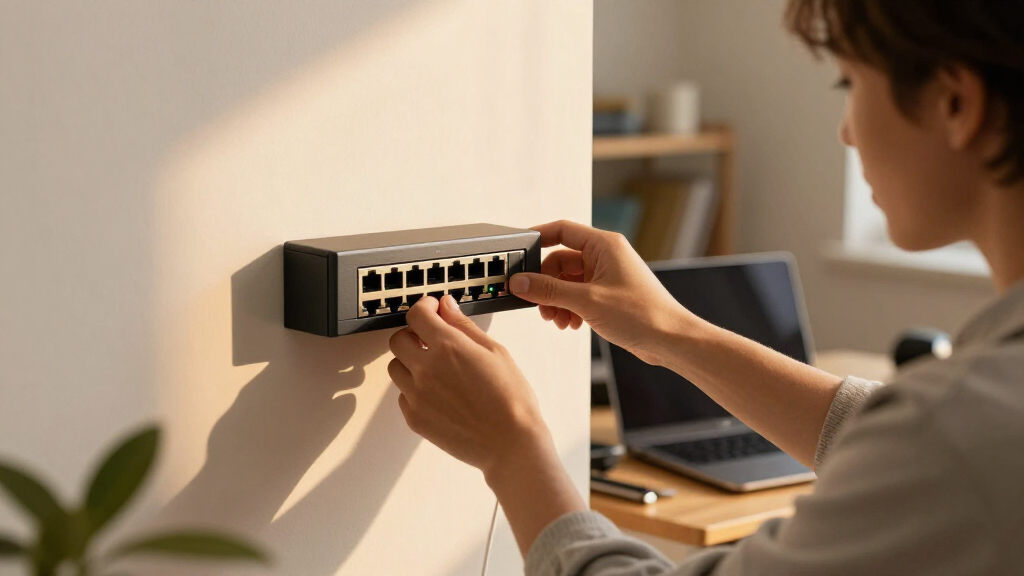
I ranked these switches by management capability, usable connectivity, and buyer value rather than treating every device with a web interface as equivalent. VLAN support, loop prevention, traffic prioritization, port monitoring, PoE controls, and centralized administration received weight according to how much practical control they add. I also compared port count against physical size, since an inexpensive five-port model can become poor value when it immediately requires replacement. PoE models were judged by the number of powered ports and the shared power budget, not simply by the presence of a PoE badge. Models ranked higher when their capabilities formed a clear, useful package without forcing buyers to pay for excessive capacity.
Ease of setup shaped the beginner rankings, while Omada support and higher port density mattered more for growing networks. Fanless operation, mounting choices, metal construction, warranty coverage, and configuration maintenance also affected placement. I treated the TP-Link TL-SG108PE V3 as the strongest all-rounder, the TL-SG105E as the value benchmark, and the TL-SG1428PE as the high-capacity premium reference. Comparable NETGEAR models gained ground through straightforward interfaces and compact designs, but some cost more for similar port counts. Lower-ranked products still fill valid roles, though their limited management depth, lack of PoE, smaller expansion margin, or narrower use case makes them less flexible.
Factors to Consider When Choosing Network Switches Managed
I recommend choosing a managed switch by working backward from the devices, network rules, and growth expected during the next few years. The best match is not automatically the model with the most ports or the longest feature list. A useful comparison starts with management depth, then accounts for PoE demand, expansion space, and installation conditions. The sections below explain where buyers commonly overspend, where cutting costs creates problems, and which capabilities change daily network administration.
Match the Management Level to the Network
Easy Smart switches usually provide VLANs, traffic prioritization, loop protection, and basic monitoring through a local web interface. That feature set is enough for separating work devices from entertainment hardware or creating a simple guest network. A centrally managed model, such as an Omada-compatible switch, becomes more useful when several switches and access points must share policies. Buyers should not expect a low-cost web-managed switch to provide advanced routing, detailed access-control rules, or enterprise-style automation. Paying for deeper management makes sense when configuration consistency matters across multiple rooms or sites. For one small switch, simple local controls may save money and reduce setup work.
Buy Enough Ports for Real Expansion
A five-port switch supplies only four downstream connections when one port links back to the router or another switch. That makes compact models suitable for a television area, desk, or small camera cluster, but restrictive as the network grows. I prefer leaving at least two spare ports after accounting for uplinks, access points, cameras, storage devices, and wired computers. Eight ports suit many homes, while 16- and 24-port models fit structured wiring panels and expanding offices. Buying too many ports increases cost, footprint, and sometimes power use, yet replacing an undersized switch can cost more than starting one tier higher. The right choice provides practical expansion space without turning unused capacity into the main purchase.
Calculate PoE by Watts, Not Port Labels
A switch may advertise several PoE ports while lacking enough total power to run every connected device at its maximum draw. Add the peak requirements of cameras, access points, phones, and controllers, then leave a reasonable power reserve for startup spikes and later additions. The 802.3af and 802.3at standards also matter because higher-draw access points or pan-tilt-zoom cameras may need PoE+ rather than basic PoE. Per-port power controls can remotely restart a frozen device, which adds more practical value than raw wattage alone. Buyers powering only one or two low-draw devices may be better served by a compact NETGEAR GS305EP or TP-Link TL-SG108PE V3. Larger installations justify the higher shared budget of the TL-SG1428PE. Choosing a non-PoE switch plus separate injectors can be cheaper at very small scale, but cable clutter rises quickly.
Check Uplinks, Throughput, and Traffic Patterns
Every model here centers on Gigabit Ethernet, but network performance also depends on where traffic converges. Several cameras recording to one server or multiple computers accessing network storage can crowd a single Gigabit uplink even when each edge port runs at full speed. Buyers with heavy local traffic should examine switching capacity and uplink design, not just the number of RJ45 sockets. SFP slots can simplify fiber runs between floors or buildings, while ordinary home networks rarely gain much from them. Link aggregation may help compatible storage systems, though both ends must support the same setup and a single transfer usually remains limited by one link. If internet access is the main workload, basic Gigabit switching is often sufficient; demanding storage and media workflows may warrant faster multi-gigabit hardware outside this lineup.
Plan for Noise, Placement, and Maintenance
Fanless metal switches are a strong fit for bedrooms, studios, and open offices because they operate quietly and handle everyday physical wear. High-power PoE models can produce more heat, so they need open airflow rather than a sealed cabinet. Desktop, wall-mount, and rack-compatible designs serve different installations, and awkward cable direction can matter more than a small difference in chassis size. I also favor interfaces that support configuration backups, clear port labels, and firmware updates that remain easy to locate. A bargain model becomes frustrating when a reset erases undocumented VLAN settings or device discovery depends on an outdated utility. Buyers managing remote or business-critical equipment should place more weight on support, warranty coverage, and recoverable configurations than on a small upfront saving.
Frequently Asked Questions
Do I need a managed switch if my router already has Ethernet ports?
A router provides basic wired connectivity, but it usually offers few ports and limited control over traffic between connected devices. I would choose a managed switch when the network needs VLAN separation, traffic monitoring, loop protection, or PoE management. An unmanaged switch remains adequate when every device can share one trusted network and troubleshooting needs are minimal. Managed controls become more useful for home offices, cameras, access points, and lab equipment. The extra cost of an Easy Smart model is often modest, making it a sensible step up when future segmentation is likely.
Can a managed switch create a secure IoT or guest VLAN by itself?
A managed switch can tag and separate VLAN traffic, but it usually cannot provide the complete firewall and routing policy by itself. The router must understand those VLANs and control communication between them, while compatible access points are needed when wireless devices join separate networks. I recommend checking VLAN support across the full network path before buying the switch. Mixing VLAN-aware and non-aware equipment can leave devices without connectivity or place them on the wrong network. The switch supplies the wired separation, while the router provides addressing, internet access, and security rules.
How much PoE budget should I buy for cameras and access points?
Add the maximum rated draw of every planned powered device rather than relying on typical consumption figures. I would then add roughly 20 percent of spare capacity for startup demand, replacements, and modest expansion. Confirm that each port supports the standard required by the connected device, since a sufficient total budget does not fix a per-port power mismatch. A small PoE switch works well for a few fixed cameras or one access point, while a 24-port model suits a larger distributed installation. If the calculated requirement sits close to the switch limit, choose the next power tier rather than operating continuously at the ceiling.
Is an Easy Smart switch enough, or should I choose Omada management?
An Easy Smart switch is usually enough for one location needing basic VLANs, prioritization, port statistics, and loop controls. Omada management makes more sense when several compatible switches and access points need centralized configuration and monitoring. I would not pay for the broader platform solely to manage one small switch unless expansion is already planned. Platform-based management can also create vendor dependence because its main benefit grows when more equipment comes from the same ecosystem. Buyers who value independent devices and simple local access may prefer standalone web management.
Should I buy a 5-port, 8-port, or 24-port managed switch?
A five-port model fits a single desk, entertainment center, or compact PoE cluster, but the uplink often leaves only four usable device connections. Eight ports provide a better balance for many homes and small offices, especially when several wired devices may be added later. A 24-port switch makes sense for structured cabling, numerous cameras, or a central business cabinet. I recommend counting every planned endpoint, reserving an uplink, and adding at least two spare connections before choosing. Avoid buying a large switch solely for status; unused ports, added size, and higher cost do not improve a small network.
What are the best managed switch?
The best managed switch depends on your network size, performance needs, and preferred level of control. The picks above include options suited to home labs, small businesses, growing offices, and more demanding installations. When comparing them, consider port count, supported speeds, Power over Ethernet requirements, VLAN capabilities, security tools, management interface, and opportunities for future expansion. Also check whether the switch fits your existing rack or workspace and works smoothly with your current equipment. Prioritize reliable hardware, clear configuration tools, and the features you will genuinely use rather than choosing solely by the longest specification list.
Conclusion
For most buyers, I recommend the TP-Link TL-SG108PE V3 as the best overall because it combines eight Gigabit ports, useful management tools, and PoE without requiring a large installation. The TP-Link TL-SG105E is the best value for a compact non-PoE network that still needs VLANs and monitoring. Beginners should favor the NETGEAR GS305E when straightforward five-port management matters more than power delivery or expansion. Buyers wanting eight non-PoE ports can step up to the NETGEAR GS308E or TP-Link Easy Smart eight-port model, with ecosystem preference and price separating them.
For a small powered-device cluster, the NETGEAR GS305EP is the best compact PoE choice, while the GS308EP better suits buyers who need power across a wider eight-port layout. I would choose the TP-Link TL-SG1428PE as the premium pick for a larger camera, phone, or access-point deployment, and the TL-SG1024DE when 24-port density matters without PoE. Buyers building around centralized administration should select the Omada-managed TP-Link five-port model, provided its limited port count matches the installation.
NFL season / tailgating Picks
team gear
As an affiliate, we earn on qualifying purchases.