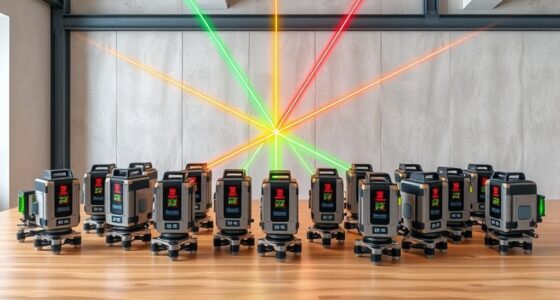
A good outdoor motion sensor light should match the area you need to cover, the power source you can support, and how much light you want when motion is detected. My best overall pick is the LUTEC 32W LED Motion Sensor Security Flood Light, a hardwired 3500-lumen option that balances strong coverage with a more moderate output than the 7500-lumen LUTEC model. For locations without convenient wiring, the Tuffenough remote-control solar lights offer adjustable settings, while the GE PAR38 bulbs suit fixtures you already own. The main tradeoffs are dependable wired power versus easier solar installation, and broad bright coverage versus smaller, targeted lighting. Read on for the full breakdown of all 15 options and help choosing the right fit.

Get the latest gadgets delivered free with Prime
- Fast, free delivery on millions of items
- Prime Video, Amazon Music and more included
- Member-only deals all year
Complete the kit



Key Takeaways
- The LUTEC 32W floodlight is the most balanced wired pick: its 3500-lumen output sits between the UME 2000-lumen model and LUTEC’s much brighter 7500-lumen three-head light.
- Solar options vary more by format and controls than by headline claims: multi-head wall lights suit broad areas, while nipify’s spotlights are a better match for targeted illumination.
- The Tuffenough remote-control model adds hands-on control: that can help when changing modes from the ground matters, but buyers still need a sunny mounting location for solar charging.
- Bulbs solve a different problem from complete fixtures: GE’s PAR38 pair and Torkase’s E26 bulbs can suit compatible existing sockets, but they do not offer the same fixture-placement flexibility as a security floodlight.
- Hardwired lights make more sense for consistent high-output coverage: the LEPOWER and two LUTEC floodlights avoid reliance on sunlight, while solar six-packs prioritize wider placement with less wiring.




| motion sensor light outdoor | Brightness | Power source | Color temperature | Lighting modes |
|---|---|---|---|---|
| MIHANI Solar Motion Sensor Flo | 2,500 lumens per light | Solar | — | 3 |
| HMCITY 120 LED Outdoor Solar L | Up to 960 lumens | — | 6500K daylight white | 3 |
| UME 19W LED Outdoor Motion Sen | 2,000 lumens | Hardwired, 120V AC | 5000K | — |
| LUTEC 32W LED Motion Sensor Se | 3,500 lumens | 120V corded electric | 5000K | Test, Security, Dusk to Dawn, Manual Override |
| GE LED+ PAR38 Outdoor Motion S | 1,200 lumens | — | 3000K warm white | — |
| Torkase Motion Sensor Light Bu | 1,100 lumens | — | 5,000 K | — |
| LUTEC 72W 7500-Lumen 3-Head LE | 7,500 lumens | Hardwired, 120 V | 5,000 K | Test, Security, Dusk to Dawn, Manual Override |
| Tuffenough Solar Outdoor Secur | — | Solar | 6,500 K | — |
| Tuffenough Solar Outdoor Light | — | Solar | 6,500 K | — |
| Daphino 2500LM Solar Lights | — | Solar | 6,500 K | — |
| 6-Pack Solar Motion Sensor Out | Up to 800 lumens | Solar | — | 3 |
| LEPOWER 40W Hardwired Outdoor | Up to 4,000 lumens | Hardwired, 120 volts | — | — |
| nipify Solar Outdoor Spotlight | Up to 1,000 lumens | Solar | — | 3 |
| HMCITY Outdoor Solar Lights | 800 lumens | Solar; up to 20.5% solar cell conversion rate | — | 3 |
| Aootek Solar Motion Sensor Lig | 800 lumens | — | — | 3 |
More Details on Our Top Picks
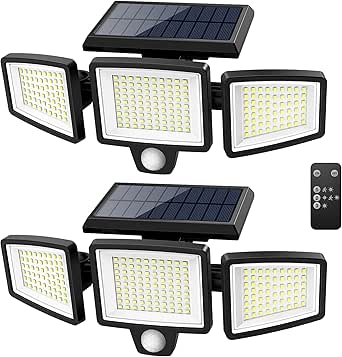
MIHANI Solar Motion Sensor Flood Lights, 2500 Lumens, 3 Heads, 2-Pack
For buyers who want broad, bright coverage without wiring, the MIHANI pair combines three adjustable heads with a 270° illumination angle and 2,500 lumens per light. Its motion sensor detects movement across a 180° area up to 30 feet away, making it a stronger fit for lighting wider approaches than the smaller HMCITY 120 LED wall lights. Three lighting modes also let you choose how the fixtures respond, rather than relying on a single motion setting.
The tradeoff is dependence on sunlight: charging and runtime can vary with placement and weather, so a shaded wall may limit performance. There is no remote control, either, and push-button controls are less convenient to adjust from indoors. Choose this pair for sunny, open mounting spots; choose the hardwired UME floodlight if reliable power matters more than avoiding wiring.
Pros:- Three adjustable heads spread light across a 270° illumination angle.
- 2,500-lumen output per fixture provides brighter coverage than the 960-lumen HMCITY lights.
- Three lighting modes allow different motion-activated setups.
- Solar power and an IP65 rating avoid wiring while supporting outdoor installation.
Cons:- Charging and runtime can suffer in shaded locations or during periods of limited sunlight.
- No remote control; adjustments use the push-button control.
- The 6500K light is cool white and may feel stark near living areas.
Best for: Homeowners with sunny mounting locations who want two wide-coverage solar lights for a driveway, yard, or side entrance.
Not ideal for: Buyers mounting lights in heavy shade or needing predictable all-night output, since charging and runtime depend on available sunlight.
- Pack quantity:2 lights
- Brightness:2,500 lumens per light
- Light heads:3 adjustable heads
- Illumination angle:270°
- Motion detection:180° sensor, up to 30 feet
- Lighting modes:3
- Power source:Solar
- Weather resistance:IP65
Our verdict“Pick the MIHANI pair for bright, wide solar coverage where each fixture can receive ample sunlight.”
HMCITY 120 LED Outdoor Solar Lights with Motion Sensor, 3 Lighting Modes, IP65 Waterproof – 6 Pack, Black Shell, Daylight White
The HMCITY six-pack is a practical choice when the goal is to add motion-triggered light at several separate spots, such as a garden path, patio edges, and a shed entrance. Each compact wall light delivers up to 960 lumens and includes three lighting modes, so the set favors distributed coverage over the concentrated punch of the MIHANI 2,500-lumen floodlights. Its monocrystalline solar panel is specified to charge in 6–8 hours of sunlight, and included mounting hardware keeps installation straightforward.
That placement flexibility comes with a real limitation: each unit needs useful sun exposure for dependable charging, so shaded walls can weaken the case for a solar set. These lights also provide less output per fixture than either the MIHANI or hardwired UME floodlight. I’d choose them for multiple modest lighting points, not for illuminating a large driveway with one fixture.
Pros:- Six units make it possible to cover multiple outdoor locations.
- Three lighting modes provide options for motion response.
- Monocrystalline panels are specified to charge in 6–8 hours of sunlight.
- IP65 housing and wall-mount hardware suit outdoor installation.
Cons:- Optimal charging depends on sunlight, limiting performance in shaded locations.
- At up to 960 lumens per light, output is lower than the MIHANI and UME floodlights.
- The compact lights are better for distributed area lighting than broad, powerful driveway coverage.
Best for: Homeowners who want to install motion lights at several sunny garden, patio, or walkway locations without running wiring.
Not ideal for: Buyers who need high-output security lighting from a single fixture or whose mounting spots receive little direct sunlight.
- Pack quantity:6 lights
- LED count:120 per light
- Brightness:Up to 960 lumens
- Color temperature:6500K daylight white
- Lighting modes:3
- Charging time:6–8 hours of sunlight
- Mounting:Wall mount
- Weather resistance:IP65
Our verdict“Choose this six-pack when you want modest solar motion lighting spread across several sunny outdoor spots.”
UME 19W LED Outdoor Motion Sensor Flood Light, 2 Adjustable Heads, 2000 Lumens, 5000K, IP65 Waterproof
The UME is a straightforward hardwired pick for buyers who want consistent motion lighting without relying on sun or battery charging. Its 2,000-lumen output, adjustable dual heads, and detection range up to 50 feet suit a driveway, garage, or porch where a permanent fixture makes sense. The selectable 1-, 3-, or 10-minute lighting duration gives more control over how long the light stays on than the GE LED+ bulbs, which are a simpler replacement-bulb solution.
Its main tradeoff is the installation commitment: this is a 120V wired fixture, not a solar or plug-in option. The LUTEC 32W light reaches 3,500 lumens and detects movement up to 69 feet, so the UME is the more restrained choice when those extra levels of reach and brightness are unnecessary. A three-year warranty and IP65 rating support a fixed outdoor installation, but wiring may call for an electrician.
Pros:- 2,000 lumens provide useful floodlight output without matching the higher draw of the LUTEC 32W model.
- Adjustable dual heads can direct light toward separate areas.
- Detection reaches up to 50 feet, with 1-, 3-, and 10-minute duration settings.
- IP65 weather resistance and a three-year warranty suit permanent outdoor use.
Cons:- Requires hardwired 120V installation; there is no solar, battery, or plug-in option.
- At 2,000 lumens, it is less bright and has shorter stated detection reach than the LUTEC 32W floodlight.
- A fixed wired location makes it less flexible to reposition than solar wall lights.
Best for: Homeowners replacing or adding a wired fixture at a garage, porch, or driveway who want adjustable heads and timed motion lighting.
Not ideal for: Renters or anyone avoiding electrical work, as this fixture requires a 120V hardwired connection.
- Power:19 watts
- Brightness:2,000 lumens
- Color temperature:5000K
- Motion detection range:Up to 50 feet
- Lighting duration:1, 3, or 10 minutes
- Power source:Hardwired, 120V AC
- Mounting:Wall mount
- Weather resistance:IP65
- Warranty:3 years
Our verdict“Choose the UME for dependable, adjustable floodlighting at a location where hardwired installation is acceptable.”
LUTEC 32W LED Motion Sensor Security Flood Light, 3500 Lumens, 5000K, Black
Among these wired fixtures, the LUTEC is the pick for buyers who need the longest stated detection range and strongest output. It delivers 3,500 lumens and senses movement up to 69 feet across a 180° angle, out-reaching the UME’s 50-foot detection range and 2,000 lumens. Adjustable dual heads help aim that light, while four modes—including dusk-to-dawn and manual override—give it more operating flexibility than the UME’s timed motion setup.
The added reach and brightness make sense for larger approaches, but they also mean this is a more powerful fixture than a small porch may need. It requires 120V wired power, and manual override depends on a specific wall-switch sequence, which can be less intuitive than a simple control. Its aluminum, IP65 housing is a sturdier choice than the ABS solar fixtures, but it cannot match their wiring-free installation.
Pros:- 3,500-lumen output is higher than the UME hardwired floodlight’s 2,000 lumens.
- Motion detection reaches up to 69 feet across a 180° sensing angle.
- Four modes include dusk-to-dawn and manual override.
- IP65-rated aluminum housing is suited to outdoor exposure.
Cons:- Requires a 120V wired connection, unlike the MIHANI and HMCITY solar options.
- Manual override requires a specific wall-switch sequence.
- Its high output and broad detection reach may be excessive for a small porch or narrow entry.
Best for: Homeowners with a large driveway or yard who want a wired security light with long-range motion detection and multiple operating modes.
Not ideal for: Renters, buyers without a wired mounting point, or anyone seeking a compact low-output light for a small entry.
- Wattage:32 watts
- Brightness:3,500 lumens
- Color temperature:5000K
- Motion detection:Up to 69 feet
- Sensing angle:180°
- Lighting modes:Test, Security, Dusk to Dawn, Manual Override
- Timer settings:Test, 1, 3, or 10 minutes
- Material:Aluminum
- Power source:120V corded electric
Our verdict“Choose the LUTEC when a large outdoor area calls for more brightness and detection reach than the UME provides.”
GE LED+ PAR38 Outdoor Motion Sensor Floodlight Bulbs, 15W, Warm White, 2-Pack
The GE LED+ bulbs are the simplest route here if you already have compatible outdoor fixtures and want motion activation without replacing the whole light. Screw them into an E26 medium-base socket and each provides 1,200 lumens of 3000K warm-white light, activating when movement is detected at night. Unlike the wired UME and LUTEC floodlights, they avoid a fixture replacement or separate sensor setup; unlike the MIHANI solar pair, they do not depend on sunshine for charging.
This convenience comes with a narrower job description. Detection reaches up to 24 feet across a 90° viewing angle, so the bulbs are better suited to a nearby entry than a broad driveway; the LUTEC reaches up to 69 feet. They also require a compatible E26 fixture, and motion sensing is intended for nighttime use. Choose them for an easy retrofit, not for adjustable heads or wide-area security coverage.
Pros:- Installs in a compatible E26 medium-base fixture without replacing the fixture.
- Nighttime motion activation needs no app, hub, or Wi-Fi.
- Two bulbs provide 1,200 lumens each in warm-white 3000K light.
- Weather-resistant design is intended for outdoor use.
Cons:- Detection range is up to 24 feet with a 90° viewing angle, much narrower than the LUTEC floodlight.
- Requires a compatible E26 medium-base fixture.
- Motion sensing is intended to operate at night, limiting use compared with full-featured security fixtures.
Best for: Homeowners with outdoor E26 medium-base fixtures who want a simple nighttime motion-light upgrade without apps, hubs, or fixture rewiring.
Not ideal for: Buyers who need long-range detection, broad driveway coverage, adjustable light heads, or motion activation during the day.
- Pack size:2 bulbs
- Bulb shape:PAR38
- Base:E26 medium
- Wattage:15 watts
- Brightness:1,200 lumens
- Color temperature:3000K warm white
- Motion detection range:Up to 24 feet
- Sensor viewing angle:90°
Our verdict“Choose these bulbs for a quick nighttime motion upgrade in existing E26 fixtures, not for long-range security lighting.”
Torkase Motion Sensor Light Bulbs – E26 Dusk-to-Dawn Activated Security
The Torkase bulb is the simplest way in this group to add motion-triggered light when you already have a suitable outdoor fixture. Its E26 base fits many standard sockets, while 1,100 lumens gives a porch, stairway, or garage entry useful illumination without installing a separate floodlight. Unlike the LUTEC 72W three-head floodlight, it needs no hardwired fixture replacement, but its 8–16-foot sensing range is much shorter and it cannot spread light across a large yard. The sensor also needs an exposed position in a downward-facing, open fixture; enclosed or recessed housings can block its operation. Choose it for convenient, localized lighting, not broad property coverage.
Pros:- Standard E26 A19 form fits many existing sockets.
- 1,100 lumens provides useful localized light while drawing 13 W.
- Motion and low-light activation switch illumination on automatically.
- Rated life of up to 30,000 hours reduces bulb replacement frequency.
Cons:- 8–16-foot detection range is limited compared with the LUTEC floodlight’s stated range of up to 69 feet.
- Requires an open, downward-facing fixture with an exposed sensor.
- The 30–45-second shutoff may be brief for lingering or repeated outdoor tasks.
Best for: Homeowners with a downward-facing, open E26 fixture near a porch, doorway, stairway, or garage entry.
Not ideal for: Buyers who need to light a driveway or yard, or whose outdoor fixture is enclosed, recessed, or mounted so the sensor cannot remain exposed.
- Base and shape:E26, A19
- Power:13 W
- Brightness:1,100 lumens
- Color temperature:5,000 K
- Motion range:8–16 ft
- Shutoff delay:30–45 seconds
- Operating life:Up to 30,000 hours
- Use and fixture requirement:Indoor or outdoor open fixtures; sensor must remain exposed
Our verdict“Choose the Torkase bulb if you want automatic entry lighting from an existing open E26 fixture and do not need wide-area coverage.”
LUTEC 72W 7500-Lumen 3-Head LED Motion Sensor Security Floodlight
For buyers prioritizing reach and strong coverage over easy installation, the LUTEC 72W floodlight is the most capable wired option in this group. Its 7,500 lumens and three adjustable heads let you aim light across a garage frontage, yard, or porch, while motion detection reaches up to 69 feet across a 180-degree angle. That is a major step up from the localized Torkase sensor bulb, but it also means committing to hardwired installation rather than replacing a bulb or mounting a solar unit. Four modes and 1-, 3-, and 10-minute timer settings provide more control than the basic options, though setup takes more effort. Its IP65-rated aluminum body suits exposed outdoor placement; buyers without a suitable electrical connection should favor the wireless Tuffenough models instead.
Pros:- 7,500-lumen output supports broad security lighting.
- Three adjustable heads allow light to be aimed at separate areas.
- Motion detection reaches up to 69 feet across a 180-degree angle.
- IP65-rated aluminum construction and four lighting modes suit outdoor security use.
Cons:- Hardwired 120 V installation is less convenient than the solar Tuffenough lights.
- Large, bright fixture may be excessive for a small entry or close-range task.
- Its range and timer controls may require careful aiming and setup to suit the site.
Best for: Homeowners with a hardwired outdoor connection who want broad, bright coverage for a garage, driveway, or yard.
Not ideal for: Renters or buyers avoiding electrical work, and anyone seeking a small light for a narrow doorway.
- Power source:Hardwired, 120 V
- Power:72 W
- Brightness:7,500 lumens
- Color temperature:5,000 K
- Motion detection:Up to 69 ft; 180-degree angle
- Timer settings:1, 3, or 10 minutes
- Lighting modes:Test, Security, Dusk to Dawn, Manual Override
- Dimensions:12.99 × 8.07 × 5.12 in
Our verdict“Pick the LUTEC if you have hardwiring available and want adjustable, long-range illumination across a large outdoor area.”
Tuffenough Solar Outdoor Security Lights, 4-Pack
The four-pack Tuffenough set makes sense when several walls or approach points need motion-triggered lighting without running wiring. Each solar unit has three adjustable heads, up to 2,500 lumens, and a remote with three lighting modes, so you can spread coverage across a property rather than rely on one central fixture. Compared with the nearly identical Tuffenough two-pack, this listing supplies twice as many lights, making it a better fit for multiple mounting locations, though both share a 26-foot sensing distance and dependence on sunlight. The 270-degree detection angle is broad on paper, but placement height and angle can affect performance. Choose this set for distributed coverage; skip it if shaded mounting spots make regular solar charging unreliable.
Pros:- Four lights support coverage at multiple locations without outdoor wiring.
- Each unit offers three adjustable heads and up to 2,500 lumens.
- Remote control and three lighting modes allow changes without reaching the fixture.
- IP65 rating is suited to outdoor exposure.
Cons:- Charging performance depends on adequate sunlight at each installation site.
- 26-foot sensing distance is shorter than the hardwired LUTEC floodlight’s stated range.
- Sensor results may vary with mounting height and angle.
Best for: Homeowners who need several wireless motion lights for separate entrances, fences, or paths with sun-exposed mounting locations.
Not ideal for: Buyers with heavily shaded walls, or those who need long-range detection beyond 26 feet.
- Number of lights:4
- Power source:Solar
- LEDs per light:210
- Maximum brightness:Up to 2,500 lumens
- Color temperature:6,500 K
- Motion detection:Up to 26 ft; 270-degree angle
- Battery capacity:1,800 mAh
- Controls and modes:Remote control; 3 lighting modes
- Water resistance:IP65
Our verdict“Choose this four-pack when you want to distribute solar motion lighting across several sunny outdoor locations.”
Tuffenough Solar Outdoor Lights 2500LM 210 LED Security Lights with Remote Control, 3 Heads Motion Sensor Lights, IP65 Waterproof, 270° Wide Angle Flood Wall Lights with 3 Modes (2 Packs)
This Tuffenough two-pack suits buyers who want the same general style of wireless lighting as the four-pack but have only one or two spots to cover. Each light is listed at up to 2,500 lumens, with three heads, a remote, and three modes; the 26-foot motion range is useful around doors, walls, and fences, though it will not match the reach of the hardwired LUTEC. Its 270-degree illumination angle and IP65 rating add flexibility for exposed mounting, while solar power avoids running cable. The tradeoff is shared with the four-pack: both depend on sufficient sunlight, and sensor performance can suffer if installed at an unsuitable height or angle. This is the more focused purchase when two fixtures are enough; the four-pack makes more sense for broader property coverage.
Pros:- Two-light set covers a pair of entrances or outdoor areas without wiring.
- Three adjustable heads provide up to 2,500 lumens per light.
- Remote control and three modes make operation more flexible.
- IP65 construction and wall mounting suit outdoor use.
Cons:- Solar charging can be reduced by cloudy conditions or shaded placement.
- 26-foot sensing range is less suited to large yards than the LUTEC hardwired model.
- Improper sensor height or angle may limit motion detection.
Best for: Buyers with two sun-exposed mounting locations who want remote-adjustable, wire-free security lights.
Not ideal for: People needing lights for several separate areas, or locations where limited sunlight could restrict solar charging.
- Number of lights:2
- Power source:Solar
- LED count:210 per light
- Maximum brightness:2,500 lumens
- Color temperature:6,500 K
- Motion sensing:Up to 26 ft
- Illumination and detection angle:270 degrees
- Battery and voltage:1,800 mAh; 3.7 V DC
- Water resistance:IP65
Our verdict“Pick this two-pack when you need solar motion lighting at two locations and do not need the broader quantity of the four-pack.”
Daphino 2500LM Solar Lights, Motion Sensor Outdoor Lights, 3-Head, 2-Pack
The Daphino two-pack stands out on paper for a listed 40-foot motion range, longer than the 26 feet specified for both Tuffenough sets. That extra reach may suit a fence or approach where movement should trigger light before someone reaches the wall, while its solar power and two-fixture format keep installation wire-free. It also offers up to 2,500 lumens, three adjustable heads, and IP65 protection, placing its headline output alongside the Tuffenough options. The control information is less clear: the description specifies a push button, while the product data also lists a remote controller, so buyers should not count on remote operation. Solar charging remains a constraint shared with the Tuffenough lights, and the listed 12-hour runtime may vary with charging conditions.
Pros:- Listed 40-foot motion range exceeds the 26-foot range specified for the Tuffenough sets.
- Two solar-powered fixtures avoid running outdoor wiring.
- Three adjustable heads and up to 2,500 lumens support broad illumination.
- IP65 waterproof rating is suited to outdoor mounting.
Cons:- Charging performance depends on direct sunlight.
- Control details conflict: the description specifies push-button control, while the data also lists a remote.
- The stated 12-hour runtime depends on charge conditions and may not be consistent in low-sun locations.
Best for: Buyers seeking a two-light solar setup with a stated 40-foot sensing range for a fence or approach.
Not ideal for: Shaded locations, or buyers who require confirmed remote control and predictable performance beyond the listed specifications.
- Number of lights:2
- Power source:Solar
- Maximum brightness:2,500 lumens
- LED count:156
- Motion detection range:40 ft
- Color temperature:6,500 K
- Lighting heads:3 adjustable heads
- Water resistance:IP65
- Listed runtime:Up to 12 hours on a full charge
Our verdict“Choose Daphino if its stated 40-foot detection range matters most and you can accept uncertainty about remote control.”
6-Pack Solar Motion Sensor Outdoor Lights
For buyers who need several wall-mounted lights without adding electrical wiring, this six-light solar set spreads coverage across entrances, sheds, and side paths. Each light is rated for up to 800 lumens, with a 120° sensor that detects motion up to 26 feet away; compared with the LEPOWER 40W Hardwired Outdoor LED Motion Sensor Security Light, it gives up raw brightness and long-range detection but avoids a hardwired installation. Three modes let you choose between motion-triggered light and less abrupt overnight illumination. The tradeoff is the usual solar dependence: performance relies on panels getting enough sunlight, and strong-light mode shuts off after 20 seconds. Its IP65 rating suits exposed outdoor mounting, though buyers wanting sustained, high-output security lighting should choose a wired fixture instead.
Pros:- Six lights can cover multiple outdoor locations from one set
- Solar power avoids wiring and a nearby electrical connection
- Three lighting modes allow different approaches to overnight illumination
- 120° detection reaches up to 26 feet, with an IP65 rating for outdoor exposure
Cons:- Charging and runtime depend on available sunlight
- Strong-light mode switches off after 20 seconds
- At up to 800 lumens per light, it is less suited to broad, high-output security coverage than the hardwired LEPOWER fixture
Best for: Homeowners who want to add motion lighting to several sunny walls, gates, or outbuildings without running electrical cable
Not ideal for: Buyers who need dependable high-output lighting through long or cloudy nights, or want a strong-light mode that stays on longer than 20 seconds
- Pack size:6 lights
- Brightness:Up to 800 lumens
- Light source:149 SMD LEDs
- Motion detection:120° angle; up to 26 feet
- Lighting modes:3
- Power source:Solar
- Water resistance:IP65
- Mounting:Wall mount; screws, tape, or rope
Our verdict“Choose this set for multiple sunny mounting spots without wiring; choose a hardwired floodlight if brightness and consistent operation matter more.”
LEPOWER 40W Hardwired Outdoor LED Motion Sensor Security Light
The LEPOWER is the strongest fit here for buyers prioritizing long-range detection and steady wired power. Its two adjustable heads produce up to 4,000 lumens, while the sensor covers up to 72 feet across 180°—a much broader reach than the 6-Pack Solar Motion Sensor Outdoor Lights and the Aootek six-pack, both rated for detection up to 26 feet. Adjustable sensitivity and 1-, 5-, or 10-minute lighting periods give you more control over how it responds and how long the area stays lit. That reach and output make it a practical choice for a driveway or open approach, but the fixture needs a 120-volt hardwired connection, so installation is less flexible than solar alternatives. Its maximum timer is also 10 minutes, not continuous illumination.
Pros:- Up to 4,000 lumens from two adjustable LED heads
- 180° detection angle and range up to 72 feet
- Adjustable sensor sensitivity and selectable 1-, 5-, or 10-minute lighting duration
- IP65-rated aluminum fixture for wall or eave mounting
Cons:- Hardwired 120-volt installation limits placement and may require electrical work
- Lighting duration tops out at 10 minutes
- Less convenient to distribute across multiple locations than the solar six-light set
Best for: Homeowners with a wired wall or eave location who need bright lighting and motion detection across a driveway, yard entrance, or broad approach
Not ideal for: Renters and buyers without an existing electrical connection, or anyone seeking a portable, no-wiring light for several separate locations
- Power:40 watts
- Brightness:Up to 4,000 lumens
- Light heads:2 adjustable LED heads
- Power source:Hardwired, 120 volts
- Motion detection:Up to 72 feet; 180° angle
- Lighting duration:1, 5, or 10 minutes
- Water resistance:IP65
- Mounting:Wall or eave mount
Our verdict“Pick the LEPOWER for a wired security point that needs broad, bright coverage; skip it if easy installation without wiring is your priority.”
nipify Solar Outdoor Spotlights with Motion Sensor, 4-Pack
The nipify set is the most placement-flexible choice for buyers who want motion lighting aimed along a garden edge, path, or wall. Unlike the wall-only HMCITY Outdoor Solar Lights, these spotlights can be installed with ground stakes or mounted on a wall, making it easier to direct light toward planting beds or a walkway. The listed output reaches up to 1,000 lumens, and three modes include motion-activated full brightness, dim light that brightens on detection, and constant night lighting. That mix favors adaptable accent and path coverage over the wide-area security reach of the hardwired LEPOWER, whose sensor range is specified at 72 feet. nipify’s detection distance is not provided, so buyers needing a confirmed long-range sensor should look elsewhere. Solar charging and outdoor-only use also limit placement choices.
Pros:- Ground stakes and wall mounting suit paths, gardens, and exterior walls
- Three modes include motion-only, dim-to-bright, and constant night lighting
- Listed output reaches up to 1,000 lumens
- Solar operation avoids running power wiring
Cons:- Lighting performance depends on solar charging conditions
- Motion detection range and angle are not specified in the supplied product data
- Designed for outdoor use only
Best for: Gardeners and homeowners who want solar motion lights that can be staked beside a path or mounted to an outdoor wall
Not ideal for: Buyers who need a stated long-range detection distance, indoor use, or dependable illumination where sunlight is limited
- Pack size:4
- Brightness:Up to 1,000 lumens
- LED count:56
- Lighting modes:3
- Sensor:PIR motion sensor
- Power source:Solar
- Installation:Ground insertion or wall mounting
- Water resistance:Waterproof
Our verdict“Choose nipify for solar spotlights that can sit in the ground or mount on a wall, but choose a model with a stated sensor range for security planning.”
HMCITY Outdoor Solar Lights, 120 LEDs, 3 Modes, Motion Sensor, IP65 Waterproof, 2-Pack
With a 270° lighting angle, this HMCITY two-pack suits walls where light needs to spread sideways across a patio, doorway, or garden edge rather than aim like a spotlight. Its three modes include motion activation, always-on lighting, and dim-to-bright response, giving more overnight options than a simple motion-only fixture. Compared with the nipify Solar Outdoor Spotlights, HMCITY is a wall-mounted choice rather than a ground-stake option; compared with the six-light solar set, it provides fewer fixtures but lists a broad 270° light spread. The 800-lumen output is useful for nearby outdoor areas, not a substitute for the LEPOWER’s 4,000-lumen wired floodlight when covering a large driveway. Solar charging and the need to mount the units are the main compromises.
Pros:- 270° lighting angle spreads light across a broad nearby area
- Three modes include motion, always-on, and dim-to-bright operation
- Solar power avoids electrical wiring
- IP65-rated ABS construction is designed for outdoor exposure
Cons:- Solar performance depends on charging conditions
- Wall mounting requires a suitable surface and mounting method
- Two-light pack offers fewer placement points than the six-light solar set
Best for: Homeowners who want wide-spreading solar light on patio, garden, or entry walls and value several nighttime modes
Not ideal for: Buyers who need ground-stake placement, a large multi-location pack, or the high output and long-range sensing of a hardwired security fixture
- Pack size:2
- LED count:120
- Brightness:800 lumens
- Lighting angle:270°
- Lighting modes:3
- Coverage area:Up to 30 m²
- Power source:Solar; up to 20.5% solar cell conversion rate
- Water resistance:IP65
Our verdict“Pick HMCITY for broad, wall-mounted solar lighting around nearby outdoor areas, not for high-output driveway security.”
Aootek Solar Motion Sensor Lights, 120 LEDs, Black, 6-Pack
Aootek’s six-pack makes sense when the goal is to add the same basic motion response at several doors, gates, or exterior walls. Its 120° sensor reaches up to 26 feet, and three modes offer high-brightness activation, steady low light, or a dim-to-bright response. That matches the detection range of the 6-Pack Solar Motion Sensor Outdoor Lights, but Aootek specifies a rechargeable lithium-ion battery and a 1.2W monocrystalline panel. The high-brightness response lasts 15 seconds before changing modes, a shorter burst than the other six-pack’s 20-second strong-light period. At 800 lumens, these are useful for nearby approaches rather than broad security coverage; the wired LEPOWER is a better fit for longer-range detection and sustained, high-output illumination. Solar charging remains dependent on direct sunlight.
Pros:- Six lights can serve several outdoor mounting points
- Three modes cover motion-triggered, steady-low, and dim-to-bright use
- PIR sensor detects motion up to 26 feet across 120°
- IP65-rated design with rechargeable lithium-ion battery
Cons:- Charging performance depends on direct sunlight
- High-brightness motion response lasts 15 seconds before changing modes
- 800-lumen output and 26-foot detection range are limited for large security areas
Best for: Homeowners who want six compact wall-mounted lights for nearby doors, gates, or paths and prefer motion-activated or low-level solar lighting
Not ideal for: Buyers who need long-range detection, long high-brightness periods, or reliable charging at shaded mounting locations
- Pack size:6 lights
- Light sources:120 LEDs
- Brightness:800 lumens
- Motion detection:Up to 26 feet; 120° angle
- Lighting modes:3
- Battery:Rechargeable lithium-ion
- Solar panel:1.2W monocrystalline silicon; up to 20.5% conversion rate
- Water resistance:IP65
- Dimensions:4.13 × 2.75 inches
Our verdict“Choose Aootek for several nearby solar motion-lighting points, but opt for a hardwired floodlight when the area is large or needs longer illumination.”

How We Picked
I compared these options by how well their power source, light output, coverage, controls, and installation demands match common outdoor jobs: lighting a doorway, covering a driveway, brightening a path, or upgrading an existing socket. I gave weight to clear, buyer-relevant distinctions such as adjustable heads, stated lumen output, included modes, remote controls, waterproof ratings, and whether a product is a complete fixture or only a bulb. Where details are not specified, I avoid treating them as an advantage.
The order favors practical versatility and a clear use case, not a claim that one format suits every home. The LUTEC 32W leads as a balanced hardwired security light; the solar multi-packs follow for installation flexibility, with control-rich or broad-coverage options standing apart. The 7500-lumen LUTEC earns a place for buyers who need more output, but its intensity is not a default benefit for every yard. Bulbs rank as specialized solutions because socket compatibility and existing fixture placement limit where they can work.
Factors to Consider When Choosing Motion Sensor Light Outdoor
Before choosing a model, match the light to the site rather than comparing headline lumen numbers alone. The same fixture can be useful at a driveway and excessive beside a small entry, while a solar light may work well on a sunny wall but disappoint under eaves or heavy shade. These checks can help narrow the field before you buy.
Choose the power source around the mounting location
A hardwired floodlight is a strong fit where a suitable electrical connection already exists and you want output that does not depend on daily sunlight. Solar avoids new wiring and can suit sheds, gates, and detached garages, but its performance depends on exposure and the panel’s position. A common mistake is mounting a solar unit where the light reaches the target but the panel stays shaded. Check whether the panel is built into the fixture or can be placed separately, and think through seasonal shade before choosing. If the location has little direct sun, a wired light or compatible bulb may be a more dependable choice.
Size brightness and beam coverage to the task
Lumens give a useful comparison of stated brightness, but they do not tell the whole story: beam direction, head adjustment, mounting height, and surrounding walls all affect what the light reaches. A 2000-lumen fixture may be enough for an entry, while a driveway or larger yard may call for more output or multiple heads. Very bright light can spill into neighboring windows or make a small space uncomfortable. Look for adjustable heads when you need to direct coverage, and avoid buying the highest output simply because the number is larger. Aim the fixture at the walking or parking area rather than toward a neighbor’s property or passing traffic.
Think about sensor placement before installation
Motion detection works best when the sensor has a clear view of the approach, not just the area directly beneath the light. Walls, vegetation, parked vehicles, and mounting height can block or alter detection. A sensor aimed at a busy sidewalk may trigger more often than one aimed across a private path. Check the product’s stated detection angle and range when available, then compare those figures with the approach you need to cover. If a listing does not provide a range, avoid assuming it will cover a long driveway. A well-aimed modest light can be more useful than a brighter fixture with a poorly placed sensor.
Compare operating modes and controls
Some fixtures provide several lighting modes, while others keep operation simpler; the right choice depends on whether you want a steady low glow, motion-triggered brightness, or a basic on-and-off response. More modes can add flexibility, but they can also make setup less straightforward if the controls are difficult to reach. A remote can be handy on a high-mounted unit, though it is not a substitute for checking the sensor’s placement or the solar panel’s exposure. Before installation, identify how each mode behaves and whether the light stays on continuously or only responds to movement. Pick controls you will actually use rather than paying attention to a mode count alone.
Treat weather protection and upkeep as part of the fit
An outdoor rating such as IP65 signals protection against dust and water exposure under specified test conditions, but it does not mean every installation is immune to weather-related wear. Follow the mounting and sealing instructions, especially around wired connections, and avoid placing the light where water can pool. Solar panels need occasional cleaning, and leaves or grime can reduce the light available for charging. For wired fixtures, consider whether you can safely reach the unit for cleaning or adjustment. If the fixture is exposed to harsh weather, favor a clearly rated outdoor model and check how its mounting method suits the surface.
Decide whether you need a complete fixture or a bulb
A motion-sensing bulb can be a straightforward upgrade when you already have a compatible outdoor socket in a useful position. It is less adaptable than a dedicated fixture because its direction and coverage depend on the existing lamp housing. Check the base type, bulb shape, fixture enclosure, and whether the socket’s orientation suits the sensor. A full floodlight offers more control over head direction and sensor placement, but may call for more installation work. Do not buy a bulb based on its motion feature alone if the current fixture is enclosed, poorly aimed, or positioned beyond the area you need lit.
Frequently Asked Questions
Should I choose a solar or hardwired outdoor motion sensor light?
Choose based on the mounting location and how consistent you need the light to be. Hardwired models such as the LUTEC and LEPOWER options do not rely on sunlight, making them a practical match for high-use areas when wiring is available. Solar models can simplify installation at detached or hard-to-wire locations, but they need useful sun exposure to recharge. Check for shade at the panel position throughout the day, not only where the light beam will point. If wiring is unavailable and the location is shaded, a solar fixture may not meet your expectations.
Is a 7500-lumen floodlight too bright for a home?
It can be more light than a small entrance or narrow side yard needs, though it may suit a larger driveway or open area. Brightness alone does not determine comfort: head direction, mounting height, and nearby windows also matter. The lineup includes lower-output choices such as the UME 2000-lumen floodlight and the LUTEC 3500-lumen model, which may be easier to direct toward a smaller target. Aim a powerful fixture down and away from neighboring windows. Choose the 7500-lumen option when the coverage area justifies it, not simply because it has the largest output.
Can I replace my outdoor fixture with a motion sensor bulb?
Possibly, if the existing fixture has a compatible socket and its position gives the bulb a clear view of the area you want to cover. GE’s PAR38 bulbs and Torkase’s E26 bulbs address different socket formats, so check the bulb base and fixture requirements before ordering. An enclosed or deeply recessed housing can limit sensor visibility or affect suitability. Bulbs are convenient when the existing fixture is already well placed, but a complete floodlight gives you more control over sensor and beam direction. If the current fixture points away from the path or driveway, replacing the whole fixture may be the better fix.
How many solar motion lights do I need for a driveway or yard?
Start by dividing the area into the approaches and dark zones you want covered, then consider each light’s placement and beam direction. A multi-pack can help cover several entry points, but the package count does not guarantee continuous or overlapping coverage. Place units where panels receive good sunlight and where sensors face approaching movement; walls and parked vehicles can create gaps. For a broad driveway, one bright, adjustable fixture may be easier to aim than several small lights, while separate lights can work better around paths and gates. Check the stated coverage details where available, since the product names alone do not establish detection range.
What should I check before mounting a solar light under an eave?
Check whether the eave blocks direct sunlight from reaching the panel, and whether the light’s integrated panel can still face a bright area. A shaded panel may not collect enough energy for the use pattern you expect, even if the lamp itself covers the doorway well. Also make sure the sensor is not hidden by the eave or aimed at branches and passing traffic. If you cannot find a sunny, unobstructed mounting position, consider a wired fixture or a model designed with a separately placeable panel if the product specifies one. Mounting height and access for panel cleaning matter too.
Conclusion
For most buyers with an available connection, I’d choose the LUTEC 32W, 3500-lumen floodlight as the best overall because it offers a useful middle ground between the UME’s lower output and the much brighter LUTEC 72W. For best value in flexible coverage, compare the HMCITY, Aootek, and Tuffenough solar multi-packs by the number of locations you need to light and the controls you want; their solar format avoids wiring, but depends on sun exposure. The best premium-style pick for maximum output is the LUTEC 72W when a large area genuinely calls for 7500 lumens. For beginners, the HMCITY solar options are a straightforward starting point if their modes and wall-mount format suit the site; for a specific need, choose nipify spotlights for targeted areas or GE and Torkase bulbs when you already have a compatible, well-positioned socket. Match the light to the mounting spot first, then select the output and controls that fit the area.