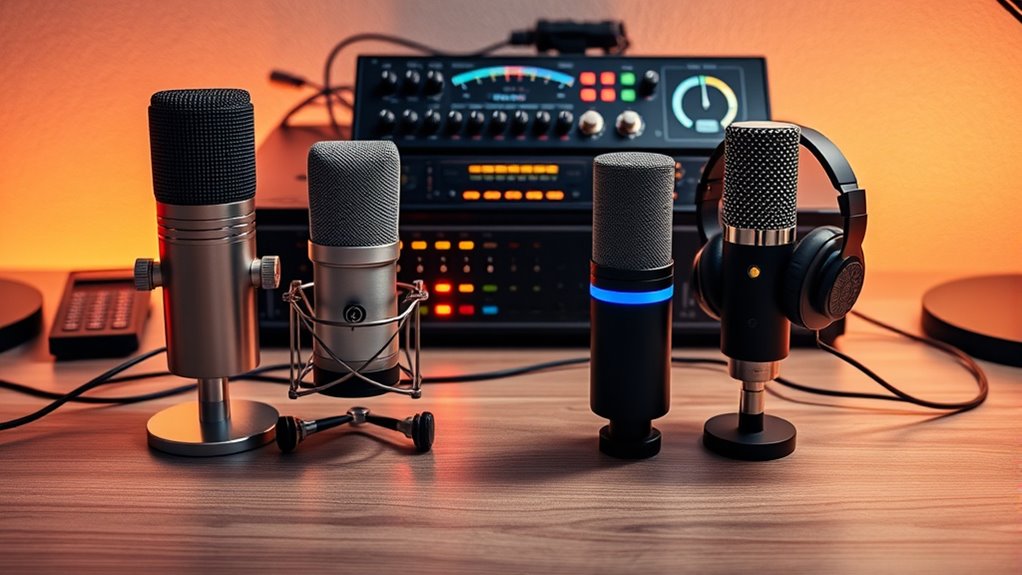

For most podcast hosts, I’d start with the FIFINE AmpliTank K688: its USB/XLR connections make it easier to begin simply and add recording gear later. The Shure MV7+ stands out as a premium dynamic option, while the Logitech Blue Yeti suits hosts who want multiple pickup patterns for different recording setups. The main tradeoff is between convenient USB condensers, which can capture more room sound, and dynamic microphones, which often suit untreated spaces better but may need closer placement. Wireless and lavalier models solve mobility problems rather than serving as the default choice for a desk-based show. Read on for the full breakdown of all 15 picks and how their differences affect podcast recording.

Get the latest gadgets delivered free — and shop member deals
- Fast, free delivery on millions of items
- Access to Prime Big Deal Days deals on October 6–7
- Prime Video, Amazon Music and more included
Complete the kit

Key Takeaways
- USB/XLR flexibility separates several strong long-term picks. The amazon.com/dp/B07Y1C6GDS?tag=digitechbytes.com-20&ascsubtag=dc-621985″ target=”_blank” rel=”nofollow sponsored noopener”>FIFINE K688 and K688CT, plus the FIFINE AM8 models, let buyers start with USB and retain an XLR connection for a later studio setup.
- Dynamic microphones are the more practical fit for untreated rooms. The Shure MV7+, RØDE PodMic, and FIFINE dynamic options are better aligned with close-mic recording than the roundup’s USB condenser kits.
- The Blue Yeti’s pickup patterns offer a different kind of versatility. Its selectable patterns can suit changing recording formats, while many other desk models are built around a more focused single-speaker setup.
- Included stands and accessories affect readiness, not just convenience. The T669, TC-777, and AM8T kits bundle useful setup pieces, but buyers should still check whether the included support fits their desk and recording posture.
- Wireless and compact lavalier picks serve a separate use case. The MAONO PD200W and Mini Mic Pro make more sense for mobile or cable-free recording than as automatic substitutes for a stationary podcast microphone.
| FIFINE T669 USB Condenser Microphone Kit |  | Best Complete Starter Kit | Connectivity: USB | Connectors: USB Type-A, USB Type-C | Polar pattern: Unidirectional | VIEW ON AMAZON | See Our Full Breakdown |
| Mini Mic Pro Wireless Lavalier Microphone for iPhone and Android | 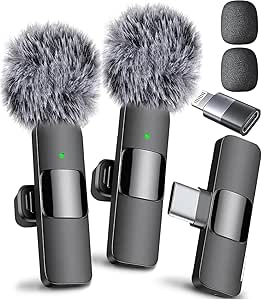 | Best for Mobile and Two-Person Recording | Connectivity: Wireless | Connectors: Lightning, USB Type-C | Microphone type: Omnidirectional lavalier | VIEW ON AMAZON | See Our Full Breakdown |
| FIFINE AmpliTank K688 Dynamic XLR/USB Microphone |  | Best for a Podcast Setup That Can Grow | Microphone type: Dynamic | Connectivity: USB, XLR | Polar pattern: Unidirectional cardioid | VIEW ON AMAZON | See Our Full Breakdown |
| MAONO A04 USB Condenser Microphone Kit |  | Best for High-Resolution USB Recording | Connectivity: USB, USB Type-C | Capsule: 16 mm electret condenser | Polar pattern: Cardioid | VIEW ON AMAZON | See Our Full Breakdown |
| Logitech Blue Yeti USB Microphone, Blackout |  | Best for Multi-Format Desktop Recording | Connectivity: USB | Microphone design: Tri-capsule array | Pickup patterns: Cardioid, omnidirectional, bidirectional, stereo | VIEW ON AMAZON | See Our Full Breakdown |
| TONOR TC-777 USB Condenser Microphone with Tripod Stand and Pop Filter | 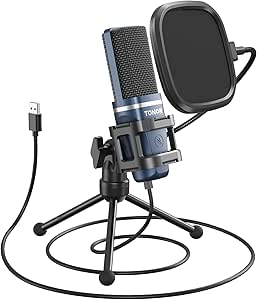 | Best Budget-Friendly Starter Kit | Connectivity: USB Type-A | Pickup pattern: Cardioid (unidirectional) | Frequency response: 20 kHz | VIEW ON AMAZON | See Our Full Breakdown |
| Amazon Basics USB Condenser Microphone with Cardioid Pickup and Adjustable Stand |  | Best for Simple Computer-Based Podcasting | Connectivity: USB | Pickup pattern: Cardioid (unidirectional) | Diaphragm: 14 mm | VIEW ON AMAZON | See Our Full Breakdown |
| RØDE PodMic Cardioid Dynamic Broadcast Microphone | 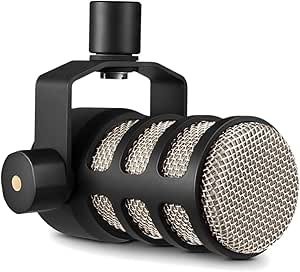 | Best for a Dedicated XLR Podcast Studio | Microphone type: Dynamic | Connectivity: XLR | Polar pattern: Unidirectional (cardioid) | VIEW ON AMAZON | See Our Full Breakdown |
| MAONO PD200W Hybrid Wireless Podcast Microphone |  | Best for Flexible Two-Person Recording | Microphone type: Dynamic | Connectivity: Wireless, USB, XLR | Polar pattern: Unidirectional (cardioid) | VIEW ON AMAZON | See Our Full Breakdown |
| FIFINE AmpliTank K688CT USB/XLR Dynamic Podcast Microphone Kit | 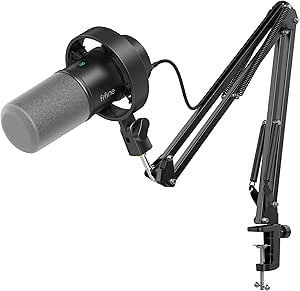 | Best Complete USB-to-XLR Upgrade Kit | Microphone type: Dynamic | Connectivity: USB, XLR | Polar pattern: Cardioid (unidirectional) | VIEW ON AMAZON | See Our Full Breakdown |
| Shure MV7+ Podcast Dynamic Microphone with Stand (Black) |  | Best for a Flexible Studio Upgrade | Connectivity: USB-C, XLR | Polar pattern: Unidirectional | Frequency response: 50 Hz | VIEW ON AMAZON | See Our Full Breakdown |
| ZealSound K66 USB Condenser Microphone with Noise Reduction, Gain and Mute Controls |  | Best for Multi-Device Beginners | Microphone type: USB condenser | Pickup pattern: Cardioid | Frequency response: 40 Hz–18 kHz | VIEW ON AMAZON | See Our Full Breakdown |
| Logitech Blue Yeti USB Microphone, Midnight Blue |  | Best for Multi-Person Recording | Connectivity: USB | Connector: USB Type-A | Pickup patterns: Cardioid, omnidirectional, bidirectional, stereo | VIEW ON AMAZON | See Our Full Breakdown |
| FIFINE AmpliGame AM8T USB/XLR Dynamic Gaming Microphone Kit with Boom Arm |  | Best Complete Boom-Arm Kit | Connectivity: USB, XLR | Microphone type: Dynamic | Polar pattern: Cardioid (unidirectional) | VIEW ON AMAZON | See Our Full Breakdown |
| FIFINE AmpliGame AM8 USB/XLR Dynamic Microphone |  | Best Value USB-to-XLR Starter | Connectivity: USB, XLR | Microphone type: Dynamic | Polar pattern: Unidirectional cardioid | VIEW ON AMAZON | See Our Full Breakdown |
| microphones for podcasting | Connectivity | Signal-to-noise ratio | Polar pattern | Frequency response |
|---|---|---|---|---|
| FIFINE T669 USB Condenser Micr | USB | 78 dB | Unidirectional | 20 Hz–20 kHz |
| Mini Mic Pro Wireless Lavalier | Wireless | — | — | — |
| FIFINE AmpliTank K688 Dynamic | USB, XLR | 80 dB | Unidirectional cardioid | — |
| MAONO A04 USB Condenser Microp | USB, USB Type-C | 70 dB | Cardioid | — |
| Logitech Blue Yeti USB Microph | USB | — | — | 20 Hz–20 kHz |
| TONOR TC-777 USB Condenser Mic | USB Type-A | 80 dB | — | 20 kHz |
| Amazon Basics USB Condenser Mi | USB | 75 dB | — | 20 Hz–20 kHz |
| RØDE PodMic Cardioid Dynamic B | XLR | — | Unidirectional (cardioid) | 20 Hz–20 kHz |
| MAONO PD200W Hybrid Wireless P | Wireless, USB, XLR | 82 dB | Unidirectional (cardioid) | — |
| FIFINE AmpliTank K688CT USB/XL | USB, XLR | 80 dB | Cardioid (unidirectional) | — |
| Shure MV7+ Podcast Dynamic Mic | USB-C, XLR | 65 dB | Unidirectional | 50 Hz |
| ZealSound K66 USB Condenser Mi | — | — | — | 40 Hz–18 kHz |
| Logitech Blue Yeti USB Microph | USB | 70 dB | — | 20 Hz–20 kHz |
| FIFINE AmpliGame AM8T USB/XLR | USB, XLR | 80 dB | Cardioid (unidirectional) | — |
| FIFINE AmpliGame AM8 USB/XLR D | USB, XLR | 80 dB | Unidirectional cardioid | 50 Hz–16 kHz |
More Details on Our Top Picks
FIFINE T669 USB Condenser Microphone Kit
The FIFINE T669 suits a first home-podcast setup where getting the microphone positioned and managing plosives matter as much as connecting it. Its included boom arm, shock mount, and double-layer pop filter spare you from sourcing basic accessories separately, while plug-and-play USB keeps setup straightforward. The cardioid pattern focuses on sound from in front, though, as a condenser mic, it is less suited than the dynamic FIFINE AmpliTank K688 to a noisy room or a host who wants to work very close to the mic. The T669 also depends on a wired USB connection and cannot be used with Xbox. I’d choose it over the MAONO A04 when the boom arm’s stated reach is the priority, but both are entry-level condenser kits that benefit from a quiet recording space.
Pros:- Plug-and-play USB connection for compatible computers
- Includes boom arm, shock mount, and double-layer pop filter
- Adjustable arm offers up to 30 inches of reach
- Cardioid pickup pattern focuses on sound from the front
Cons:- Wired USB connection limits recording mobility
- Incompatible with Xbox
- Condenser design is less suited to untreated, noisy rooms than the dynamic FIFINE AmpliTank K688
Best for: New podcasters recording at a desk on a compatible laptop or desktop who want an arm and pop filter included.
Not ideal for: Xbox users, people recording away from a computer, and hosts in noisy rooms who need a close-working dynamic microphone.
- Connectivity:USB
- Connectors:USB Type-A, USB Type-C
- Polar pattern:Unidirectional
- Frequency response:20 Hz–20 kHz
- Signal-to-noise ratio:78 dB
- Cable length:8.2 ft
- Included accessories:Boom arm stand, shock mount, double pop filter, USB cable
- Compatibility:Laptop, desktop, PC, PS4, PS5; incompatible with Xbox
Our verdict“Choose the T669 for an affordable-in-complexity desk setup with essential mounting and pop-filter accessories already included.”
Mini Mic Pro Wireless Lavalier Microphone for iPhone and Android
Unlike desk-focused choices such as the Logitech Blue Yeti, the Mini Mic Pro clips to clothing and connects wirelessly to compatible phones, tablets, or laptops. That makes it a better fit for interviews recorded on location, video-first podcasts, or two speakers who need the included pair of lavalier microphones. Its Lightning and USB-C adapters simplify switching between many mobile devices, and foam and deadcat tips help when recording outdoors. The tradeoff is a different workflow from a conventional podcast mic: the omnidirectional lavaliers capture sound around each wearer rather than focusing on a single front-facing voice, and battery life is limited to up to six hours per charge. I’d pick it over the Blue Yeti for portability, but not for a permanent, hands-on desktop recording station.
Pros:- Includes two lavalier microphones for two-person recording
- USB-C and Lightning adapters support a range of compatible devices
- Compact, lightweight design is convenient for mobile recording
- Foam and deadcat tips provide options for wind protection
Cons:- Battery life is limited to up to six hours per charge
- Omnidirectional pickup captures sound around the wearer rather than focusing on one direction
- Does not provide the desktop stand and onboard controls of the Logitech Blue Yeti
Best for: Mobile podcasters and interviewers who record two people on compatible phones, tablets, or laptops and need a compact wireless setup.
Not ideal for: Desk-based hosts seeking onboard mic controls, a USB desktop workflow, or longer recording sessions without charging breaks.
- Connectivity:Wireless
- Connectors:Lightning, USB Type-C
- Microphone type:Omnidirectional lavalier
- Compatible devices:Android phones, iPhone, iPad, tablets, laptops
- Battery life:Up to 6 hours per charge
- Weight:80 g
- Dimensions:3 × 0.5 × 0.25 inches
- Included components:2 lavalier microphones, receiver, USB charging cable, 2 clips, 2 foam tips, 2 deadcat tips
Our verdict“Pick the Mini Mic Pro for portable, two-person phone recording, not as a substitute for a desk-centered podcast microphone.”
FIFINE AmpliTank K688 Dynamic XLR/USB Microphone
The FIFINE AmpliTank K688 earns its place for podcasters who want a straightforward USB start without giving up the option to move to XLR later. Its dynamic cardioid design is better suited to close-mic speech and rooms with some background noise than the condenser FIFINE T669, though it needs to be positioned close to the speaker. Over USB, mute, gain, headphone-volume controls, and real-time monitoring keep routine adjustments at the mic; those controls do not carry over to XLR. The metal body, shock mount, and windscreen support a focused desk setup, but the box does not include an XLR cable, boom arm, or stand. Compared with the RØDE PodMic, the K688 offers USB as well as XLR, making it less dependent on separate recording gear at the outset.
Pros:- USB and XLR connectivity support a simple start and later setup changes
- Dynamic cardioid pickup is suited to close-mic speech
- USB controls include mute, gain, and headphone monitoring
- Includes a shock mount and windscreen
Cons:- Boom arm, microphone stand, and XLR cable are not included
- Mute, gain, and monitoring controls work only over USB
- Designed for close use, so hosts need to maintain mic position
Best for: Solo podcasters who want USB recording now and the option to connect through XLR as their studio setup develops.
Not ideal for: Hosts who need a complete stand-and-cable kit, prefer to record from farther away, or expect USB controls to work over XLR.
- Microphone type:Dynamic
- Connectivity:USB, XLR
- Polar pattern:Unidirectional cardioid
- Frequency range:50 Hz–16 kHz
- Maximum SPL:130 dB
- Signal-to-noise ratio:80 dB
- Cable length:8.2 ft (2.5 m) USB cable
- Included accessories:Shock mount, windscreen, USB-C to USB-A cable, 5/8-inch to 3/8-inch adapter
Our verdict“Choose the K688 if you want a close-working dynamic mic with USB convenience and a path to XLR recording.”
MAONO A04 USB Condenser Microphone Kit
The MAONO A04 is a condenser kit for a computer-based host who wants an included arm and a stated 192 kHz/24-bit sampling rate. That spec gives recording software a high-resolution capture format, but it does not by itself guarantee a better-sounding podcast; room acoustics and mic placement still matter. As with the FIFINE T669, its cardioid pickup and condenser design make a quiet space a better match than a noisy one. The A04 includes a scissor arm, shock mount, pop filter, and windscreen, giving it a useful desk setup out of the box. It claims broader compatibility than the T669, including mobile phones, but buyers need to check the connection and setup required for their device. The desk clamp fits surfaces under 2.1 inches thick, which can rule out some desks.
Pros:- Lists 192 kHz/24-bit audio sampling
- Includes an adjustable scissor arm, shock mount, pop filter, and windscreen
- Plug-and-play USB connection
- Compatibility listing includes computers, PS4, PS5, and mobile phones
Cons:- Desk clamp fits desktops less than 2.1 inches thick
- Incompatible with Xbox
- Condenser cardioid setup is less suited to noisy rooms than the dynamic FIFINE AmpliTank K688
Best for: Computer-based podcasters who want an included scissor arm and a microphone that lists high-resolution sampling specifications.
Not ideal for: Hosts with desks thicker than the clamp limit, Xbox users, or people recording in noisy spaces who would benefit more from a dynamic mic.
- Connectivity:USB, USB Type-C
- Capsule:16 mm electret condenser
- Polar pattern:Cardioid
- Sampling rate:192 kHz/24-bit
- Frequency range:30 Hz–16 kHz
- Signal-to-noise ratio:70 dB
- Weight:1.35 kg
- Included accessories:Adjustable scissor arm stand, metal shock mount, pop filter, foam windscreen, boom arm base, USB-A/USB-C to USB-B cable
Our verdict“Choose the A04 for a feature-rich USB condenser desk kit, provided its clamp fits your desk and your recording space is quiet.”
Logitech Blue Yeti USB Microphone, Blackout
The Logitech Blue Yeti stands apart from the single-pattern FIFINE T669 and MAONO A04 with four selectable pickup patterns: cardioid for a solo host, bidirectional for two people facing each other, omnidirectional for a group, and stereo for a broader sound field. That flexibility makes it useful when one desk microphone needs to cover several recording formats. Onboard gain, mute, pattern, and headphone-volume controls also make adjustments accessible, while real-time monitoring helps a host hear the signal. The tradeoff is that pattern choice requires care: modes intended for multiple speakers can pick up more room sound than a focused solo setup. It connects by USB and includes a desktop stand, but full Blue VO!CE functionality requires Logitech G HUB, unlike simpler plug-and-play kits such as the FIFINE T669.
Pros:- Four pickup patterns accommodate solo, two-person, group, and stereo recording
- Onboard gain, mute, pattern-selection, and headphone-volume controls
- Real-time, no-latency monitoring
- Plug-and-play USB setup on PC and Mac
Cons:- Full Blue VO!CE functionality requires Logitech G HUB
- Desktop stand is less flexible to position than the included boom arms in the FIFINE T669 and MAONO A04 kits
- Multiple-speaker pickup patterns can capture more room sound than a focused solo pattern
Best for: Desktop podcasters who record solo episodes, interviews, or small group discussions and want to change pickup patterns at the mic.
Not ideal for: Hosts who need a portable or wireless mic, want an included boom arm, or prefer not to install Logitech G HUB for Blue VO!CE effects.
- Connectivity:USB
- Microphone design:Tri-capsule array
- Pickup patterns:Cardioid, omnidirectional, bidirectional, stereo
- Frequency response:20 Hz–20 kHz
- Channels:2
- Impedance:16 ohms
- Compatibility:PC and Mac
- Power source:Corded electric
Our verdict“Pick the Blue Yeti if one desktop microphone needs to handle several podcast formats through selectable patterns and onboard controls.”
TONOR TC-777 USB Condenser Microphone with Tripod Stand and Pop Filter
The TONOR TC-777 suits a first podcast setup where a simple USB connection and the basic recording accessories matter more than room to upgrade. Its cardioid pickup pattern focuses on the speaker in front, while the included tripod, shock mount, and pop filter help address desk vibration and plosive sounds without a separate accessory hunt. Compared with the Amazon Basics USB Condenser Microphone, the TC-777 includes a mini shock mount and pop filter in the box; the Amazon Basics model instead offers a 360° adjustable stand. One-click mute and volume control are useful for calls and solo recording, but this is a single-channel USB mic, not a flexible multi-mic recording setup. It also won’t work with Xbox, so check your platform before choosing it.
Pros:- Plug-and-play USB Type-A connection
- Includes a foldable tripod, mini shock mount, and pop filter
- One-click mute and volume controls
- Compatible with Windows, Mac, PS4, and PS5
Cons:- Not compatible with Xbox
- Single-channel recording limits multi-mic setups
- The supplied tripod offers less positioning flexibility than an adjustable boom arm
Best for: First-time podcasters recording solo on a Windows or Mac computer or a compatible PlayStation, who want a USB mic with basic accessories included.
Not ideal for: Xbox users, co-hosts needing multiple channels, and podcasters who want an XLR connection for future equipment upgrades.
- Connectivity:USB Type-A
- Pickup pattern:Cardioid (unidirectional)
- Frequency response:20 kHz
- Signal-to-noise ratio:80 dB
- Included accessories:Foldable tripod, mini shock mount, pop filter, power cord, manual
- Cable length:70 in (180 cm)
- Weight:345 g
- Warranty:Two years
Our verdict“Choose the TC-777 for a straightforward solo podcast setup with useful accessories included, provided you do not need Xbox support or multiple channels.”
Amazon Basics USB Condenser Microphone with Cardioid Pickup and Adjustable Stand
The Amazon Basics USB Condenser Microphone keeps a computer-based podcast setup uncomplicated: it connects by USB, needs no additional drivers on supported systems, and adds a one-tap mute for quick pauses. Its 360° adjustable stand makes it easier to aim the mic than the fixed-footprint setup of the TONOR TC-777, while the built-in shock absorber helps limit vibration reaching the capsule. The 14 mm diaphragm and cardioid pickup pattern suit a solo speaker positioned in front of the mic, rather than a group gathered around it. Compared with the TONOR, it does not list a separate pop filter among its included accessories. Its USB-only, single-channel design also keeps it less adaptable than the FIFINE AmpliTank K688CT, which can switch to XLR as a setup grows.
Pros:- Plug-and-play USB setup on supported Windows and macOS computers
- 360° adjustable stand helps position the mic toward the speaker
- One-tap mute for quick pauses during recording
- Can mount on compatible tripods or microphone stands
Cons:- Computer compatibility is limited to supported Windows and macOS versions
- Single-channel audio is not suited to recording several speakers on separate channels
- No separate pop filter is listed among the included accessories
Best for: Solo podcasters who record on a supported Windows or macOS computer and want an adjustable desktop USB mic with simple controls.
Not ideal for: Console users, multi-person recording setups, and podcasters who want XLR connectivity or an included pop filter.
- Connectivity:USB
- Pickup pattern:Cardioid (unidirectional)
- Diaphragm:14 mm
- Frequency response:20 Hz–20 kHz
- Signal-to-noise ratio:75 dB
- Mute function:One-tap mute
- Stand:360° adjustable
- Compatibility:Windows 7 or higher; macOS 10.10 or higher
Our verdict“Pick this for uncomplicated solo podcast recording at a computer, but choose the FIFINE AmpliTank K688CT if you want an XLR upgrade path.”
RØDE PodMic Cardioid Dynamic Broadcast Microphone
The RØDE PodMic is the dedicated broadcast-style choice in this group: its dynamic capsule and cardioid pattern are aimed at close speech and help keep attention on the host rather than surrounding room noise. An internal pop filter and shock mounting reduce the need to add those features externally, and the metal body with integrated swing mount gives it a more studio-oriented build than the USB desktop models here. Compared with the TONOR TC-777 or Amazon Basics USB mic, the PodMic is not a plug-and-play computer microphone: it needs an XLR interface or mixer. That extra equipment can make it a better fit for a planned studio chain, but a poor match for a beginner seeking the simplest route to recording. It also has no USB fallback if you want to connect directly to a computer.
Pros:- Dynamic cardioid design is suited to close podcast speech and room-noise rejection
- Internal pop filter and shock mounting are built in
- Durable all-metal body with integrated swing mount
- Compatible with XLR interfaces, mixers, and RØDECaster Pro
Cons:- Requires a separate XLR audio interface or mixer
- No USB connection for direct computer recording
- The box lists the microphone with its integrated mount, not a complete desktop recording kit
Best for: Podcasters building an XLR-based studio around a mixer, audio interface, or RØDECaster Pro, especially those recording close to the mic.
Not ideal for: Beginners who need direct USB connection, mobile recording, or an all-in-one kit with a stand and accessories beyond the integrated mount.
- Microphone type:Dynamic
- Connectivity:XLR
- Polar pattern:Unidirectional (cardioid)
- Frequency response:20 Hz–20 kHz
- Impedance:150 ohm
- Material:Metal
- Weight:937 g
- In the box:PodMic with integrated swing mount
Our verdict“Choose the PodMic for a dedicated XLR podcast chain and close-mic speech, not for a plug-and-play USB setup.”
MAONO PD200W Hybrid Wireless Podcast Microphone
The MAONO PD200W stands apart from the wired USB and XLR mics in this group by offering wireless, USB, and XLR connectivity. That range suits podcasters who want to record at a desk now but may also move a setup or bring in a second wireless mic later. The stated support for two wireless microphones recording to separate tracks is a useful distinction from the single-channel TONOR TC-777 and Amazon Basics models. Its dynamic cardioid design and three-stage noise cancellation target voice recording where background sound needs attention, while the battery is rated for up to 60 hours with RGB lighting off. The tradeoff is a heavier, more complex package than a basic USB mic, and camera or Lightning accessories are sold separately. Its listed frequency response is only 16 kHz, a spec to weigh against the RØDE PodMic‘s listed 20 Hz–20 kHz range.
Pros:- Wireless, USB, and XLR connections support different recording setups
- Can support two wireless microphones on separate tracks
- Three-stage noise cancellation and cardioid pickup target background sound
- Battery life is listed at up to 60 hours with RGB lighting off
Cons:- Camera and Lightning accessories are sold separately
- Listed frequency response is limited to 16 kHz
- At 1.32 kg, it is heavier than the desktop USB options in this batch
Best for: Two-person podcast teams and mobile creators who want wireless recording flexibility alongside USB and XLR options.
Not ideal for: Buyers seeking a lightweight, bare-bones desktop mic, or creators who need included camera and Lightning accessories.
- Microphone type:Dynamic
- Connectivity:Wireless, USB, XLR
- Polar pattern:Unidirectional (cardioid)
- Signal-to-noise ratio:82 dB
- Maximum SPL:128 dB
- Wireless range:Up to 60 m
- Battery life:Up to 60 hours (RGB off)
- Included accessories:Desktop stand, USB-C to USB-A&C cable, Type-C receiver, Type-C adapter cable
Our verdict“Choose the PD200W if wireless flexibility and separate tracks for two mics matter more than a lighter, simpler desktop setup.”
FIFINE AmpliTank K688CT USB/XLR Dynamic Podcast Microphone Kit
The FIFINE AmpliTank K688CT is the most ready-to-mount wired kit here: it pairs a dynamic cardioid mic with a metal boom arm, shock mount, and windscreen. USB mode adds tap-to-mute, gain, and headphone-volume controls, so a new podcaster can make practical adjustments without adding a mixer. Unlike the RØDE PodMic, it can connect directly to a computer over USB; unlike the TONOR TC-777, it can also move to an XLR setup later. That flexibility has limits: the mic controls are unavailable over XLR, and the clamp only fits desks under two inches thick. Its listed 50 Hz–16 kHz frequency range is narrower on paper than the PodMic’s 20 Hz–20 kHz range, so buyers comparing specs should factor that into their choice rather than treating the connections as the only difference.
Pros:- USB and XLR connections allow a computer setup and a later interface-based setup
- Includes a metal boom arm, shock mount, and windscreen
- USB mode provides mute, gain, and headphone-volume controls
- Dynamic cardioid pickup is suited to focused voice recording
Cons:- Microphone controls are unavailable when connected via XLR
- Desk clamp fits desks under two inches thick
- Listed frequency range is 50 Hz–16 kHz
Best for: Podcasters who want a boom-arm kit for USB recording now, with the option to connect through XLR equipment later.
Not ideal for: People with desks at least two inches thick, or users who need mute, gain, and headphone controls to remain available over XLR.
- Microphone type:Dynamic
- Connectivity:USB, XLR
- Polar pattern:Cardioid (unidirectional)
- Frequency range:50 Hz–16 kHz
- Maximum SPL:130 dB
- Signal-to-noise ratio:80 dB
- Controls:Tap-to-mute button, gain knob, headphone volume control (USB mode)
- Included accessories:Metal boom arm, shock mount, windscreen
- Desk clamp compatibility:Desks under 2 inches thick
Our verdict“Pick the K688CT for a ready-to-mount USB podcast kit that can later join an XLR setup, if your desk fits the clamp.”
Shure MV7+ Podcast Dynamic Microphone with Stand (Black)
The Shure MV7+ is the strongest fit here for podcasters who want to start with USB and keep an XLR studio setup within reach. Its USB-C and XLR connections make it more adaptable than the USB-only Logitech Blue Yeti, while voice isolation and real-time denoising target the room noise and echo that can undermine spoken-word recordings. Auto Level Mode can help keep your voice more consistent if your distance from the mic changes, and the LED touch panel adds quick mute control and visual feedback.
The tradeoff is a more involved software experience: full customization relies on MOTIV Mix, and its 3.6-pound weight calls for a sturdy support surface. I’d choose it over the FIFINE AM8T when noise handling and software-based control matter more than having a boom arm included.
Pros:- USB-C and XLR connectivity support both direct computer recording and a future interface-based setup.
- Voice Isolation and real-time denoising are aimed at reducing room noise and echo in spoken-word recordings.
- Auto Level Mode adjusts gain as voice distance and volume change.
- LED touch panel provides mute control and visual feedback.
Cons:- Full customization and control features require MOTIV Mix.
- At 3.6 pounds, it needs a sturdy desk or microphone support.
Best for: Podcasters planning to move from USB recording to an XLR interface while recording in a room with some background noise.
Not ideal for: New podcasters who want a simple mic with an included boom arm and no companion software for customization.
- Connectivity:USB-C, XLR
- Polar pattern:Unidirectional
- Frequency response:50 Hz
- Audio sensitivity:40 dB
- Signal-to-noise ratio:65 dB
- Weight:3.6 lb
- Enclosure material:Metal
- Compatible operating systems:Windows 10, macOS 12
Our verdict“Choose the MV7+ if you want a noise-conscious podcast mic that can serve both a USB setup and a later XLR studio.”
ZealSound K66 USB Condenser Microphone with Noise Reduction, Gain and Mute Controls
The ZealSound K66 suits a new podcaster who wants to record across a computer, tablet, phone, or console without adding an audio interface. Its USB connection with USB-C and Lightning adapters gives it broader device reach than the USB-A Logitech Blue Yeti, and physical gain, monitoring, echo, and mute controls make basic adjustments accessible without a software session. The headphone jack also supports zero-latency monitoring, so speakers can hear their voice while recording.
That convenience comes with limits. This is a condenser microphone, so its noise reduction mode may not behave the same way in every room, and the supplied details don’t specify a stand or other positioning accessories. Compared with the dynamic Shure MV7+, the K66 is aimed more at straightforward device compatibility than room-noise management or a future XLR setup.
Pros:- USB setup with USB-C and Lightning adapters supports a broad range of devices.
- Physical controls cover mic volume, monitoring volume, echo, and mute.
- Zero-latency headphone monitoring helps speakers follow their voice while recording.
- Noise reduction mode offers an additional way to manage background sound.
Cons:- Noise reduction performance may vary with the recording environment.
- No stand or other included positioning accessories are specified.
Best for: First-time podcasters recording on a mix of phones, tablets, and computers who want physical controls and direct headphone monitoring.
Not ideal for: Speakers recording in a noisy or echo-prone room, or anyone who needs XLR connectivity or a confirmed included stand.
- Microphone type:USB condenser
- Pickup pattern:Cardioid
- Frequency response:40 Hz–18 kHz
- Sampling rate:46 kHz
- Sensitivity:−45 dB ±3 dB
- Monitoring:3.5 mm headphone jack, zero-latency
- Controls:Microphone volume, monitoring volume, echo, mute
- Compatibility:Windows PC, Mac, PS4, PS5, iPhone, iPad, and USB-C devices
Our verdict“Pick the K66 for accessible controls and flexible device connections, but choose a dynamic model if room noise is your main concern.”
Logitech Blue Yeti USB Microphone, Midnight Blue
The Logitech Blue Yeti earns its place for podcasters who need to change how a mic hears the room. Its four pickup patterns—cardioid, omnidirectional, bidirectional, and stereo—make it more adaptable than the cardioid FIFINE AM8 when recording a solo host one day and a face-to-face conversation another. Onboard controls for gain, mute, pattern selection, and headphone volume also keep common adjustments close at hand, while zero-latency monitoring helps with live recording.
The flexibility is not the same as a quiet-room advantage: the Yeti is a USB condenser, and its multiple patterns are useful only when the recording layout calls for them. It connects over USB Type-A, unlike the USB-C/XLR Shure MV7+, and Blue VO!CE effects require Logitech G HUB. I’d favor it for varied participant arrangements, not for someone seeking a dynamic mic with a path to XLR.
Pros:- Four pickup patterns accommodate solo, face-to-face, and wider group recording setups.
- Onboard gain, mute, pattern, and headphone-volume controls support quick adjustments.
- Zero-latency monitoring lets the host hear audio while recording.
- Included desktop stand and USB connection support a direct computer setup.
Cons:- Blue VO!CE effects require Logitech G HUB.
- USB Type-A connection and USB-only design offer less upgrade flexibility than the Shure MV7+.
Best for: Podcasters who record solo episodes as well as two-person or group conversations and want selectable pickup patterns.
Not ideal for: Hosts who need XLR connectivity, USB-C, or a dynamic mic better suited to limiting pickup from a noisy room.
- Connectivity:USB
- Connector:USB Type-A
- Pickup patterns:Cardioid, omnidirectional, bidirectional, stereo
- Microphone form factor:Tri-capsule array
- Frequency response:20 Hz–20 kHz
- Signal-to-noise ratio:70 dB
- Channels:2
- Enclosure material:Metal
- Color:Midnight Blue
Our verdict“Choose the Blue Yeti when changing participant layouts matters more than XLR expansion or a dynamic mic design.”
FIFINE AmpliGame AM8T USB/XLR Dynamic Gaming Microphone Kit with Boom Arm
The FIFINE AmpliGame AM8T is the most ready-to-position option in this group: its kit includes a metal boom arm, desk clamp, windscreen, and USB cable. That makes it a more complete desk setup than the FIFINE AM8, which supplies the microphone but not this boom-arm kit. The dynamic, cardioid design is geared toward a single host speaking close to the mic, while USB and XLR connections let the setup grow from direct computer recording to an interface or mixer.
On-mic mute, gain, and headphone controls reduce the need to reach for software during a session. The compromises are practical: the XLR cable is not included, and the clamp fits desktops under two inches thick. Its RGB lighting is a gaming-oriented extra rather than a podcasting advantage, so I’d favor the Shure MV7+ instead if noise-control features matter more than included mounting hardware.
Pros:- Includes a boom arm, desk clamp, windscreen, and USB-to-USB-C cable.
- USB and XLR connections allow direct computer use and interface-based recording.
- On-mic mute, gain, and headphone controls support adjustments during recording.
- Dynamic cardioid design suits close, single-speaker podcasting.
Cons:- XLR cable is not included.
- Desk clamp fits desktops less than two inches thick.
Best for: Solo podcasters building a desk setup who want a dynamic USB/XLR mic and an included boom arm for close positioning.
Not ideal for: People with desks two inches thick or more, or buyers who want to connect over XLR without sourcing a separate cable.
- Connectivity:USB, XLR
- Microphone type:Dynamic
- Polar pattern:Cardioid (unidirectional)
- Frequency range:50 Hz–16 kHz
- Signal-to-noise ratio:80 dB
- Included accessories:Boom arm stand, C-clamp, 8.2 ft USB-to-USB-C cable, windscreen, user manual
- XLR cable:Not included
- Weight:2.6 lb
Our verdict“Choose the AM8T if an included boom arm and flexible USB/XLR connections matter more than advanced noise processing.”
FIFINE AmpliGame AM8 USB/XLR Dynamic Microphone
The FIFINE AmpliGame AM8 is a practical entry point for podcasters who want a dynamic mic with an upgrade route but don’t need the AM8T’s included boom arm kit. USB mode provides tap-to-mute, headphone monitoring, gain and volume controls, plus RGB lighting; XLR mode can connect to a mixer or interface when the recording setup grows. Its cardioid pattern and recommended close speaking distance of two to six inches make it a straightforward fit for a solo host who can keep consistent mic technique.
Compared with the AM8T, this model has fewer included mounting accessories, so buyers should plan their own positioning support. XLR also requires a separate cable, and switching to that connection disables the RGB and function keys. The Shure MV7+ offers more advanced voice isolation and automatic level adjustment, but the AM8 makes sense when basic USB convenience and later XLR use are the priorities.
Pros:- USB and XLR connectivity support a direct computer setup and later interface use.
- USB mode includes tap-to-mute, headphone monitoring, gain, and volume controls.
- Cardioid pickup pattern and close recording distance suit a single host.
- RGB lighting has a memory function in USB mode.
Cons:- XLR cable is not included.
- RGB lighting and function keys are unavailable in XLR mode.
- The product details do not specify an included boom arm or stand, unlike the AM8T kit.
Best for: Solo podcasters who want to begin with USB controls and may add an interface later, while supplying their own stand or boom arm.
Not ideal for: Buyers who need a complete boom-arm kit, want the USB controls in XLR mode, or prefer automatic gain adjustment.
- Connectivity:USB, XLR
- Microphone type:Dynamic
- Polar pattern:Unidirectional cardioid
- Frequency response:50 Hz–16 kHz
- Signal-to-noise ratio:80 dB
- Channels:1
- Recommended recording distance:2–6 in
- Thread sizes:3/8 in and 5/8 in
- Enclosure materials:ABS plastic and metal
Our verdict“Choose the AM8 if you want a USB/XLR dynamic mic with onboard USB controls and already have a way to mount it.”

How We Picked
I compared these 15 microphones for podcasting by looking at the factors that change a real recording setup: connection options, microphone type, control access, included mounting gear, and fit for a quiet treated room versus an ordinary home space. I also considered whether each model is aimed at a single host, changing formats, or mobile recording. A microphone’s specifications matter only when they help a buyer get the sound and workflow their show needs.
The ranking gives more weight to podcast-ready flexibility and practical usability than to accessory count alone. Dynamic USB/XLR options rank strongly because they can support both a simple start and a later interface-based setup; premium models earn a place when their extra features serve a clear need. Beginner kits and straightforward USB models remain useful choices, but their narrower upgrade paths or greater sensitivity to room sound affect their position. Wireless and lavalier microphones are included for distinct recording situations, not treated as direct replacements for every desk microphone.
| microphones for podcasting | Polar pattern | Microphone type |
|---|---|---|
| FIFINE T669 USB Condenser Micr | Unidirectional | — |
| Mini Mic Pro Wireless Lavalier | — | Omnidirectional lavalier |
| FIFINE AmpliTank K688 Dynamic | Unidirectional cardioid | Dynamic |
| MAONO A04 USB Condenser Microp | Cardioid | — |
| Logitech Blue Yeti USB Microph | — | — |
| TONOR TC-777 USB Condenser Mic | — | — |
| Amazon Basics USB Condenser Mi | — | — |
| RØDE PodMic Cardioid Dynamic B | Unidirectional (cardioid) | Dynamic |
| MAONO PD200W Hybrid Wireless P | Unidirectional (cardioid) | Dynamic |
| FIFINE AmpliTank K688CT USB/XL | Cardioid (unidirectional) | Dynamic |
| Shure MV7+ Podcast Dynamic Mic | Unidirectional | — |
| ZealSound K66 USB Condenser Mi | — | USB condenser |
| Logitech Blue Yeti USB Microph | — | — |
| FIFINE AmpliGame AM8T USB/XLR | Cardioid (unidirectional) | Dynamic |
| FIFINE AmpliGame AM8 USB/XLR D | Unidirectional cardioid | Dynamic |
Factors to Consider When Choosing Microphones For Podcasting
Before choosing, I’d match the microphone to the room, recording format, and connection you can realistically use. These decisions often matter more than a long feature list: a good fit makes recording repeatable, while the wrong setup can add room noise, awkward positioning, or unnecessary equipment.
Match the Microphone to Your Room
Room sound can shape a recording as much as the microphone itself. A condenser may capture detail, but it can also pick up keyboard clicks, reflections, and household noise that a treated studio would soften. A dynamic model used close to the speaker can be a more forgiving choice in an untreated bedroom or office, though it still needs sensible placement and gain. Buyers often try to fix a noisy room by turning down the microphone, then compensate by increasing gain and bring the noise back. If you share a space, prioritize a quiet recording schedule, soft furnishings, and close, consistent mic technique before buying extra accessories. Choose based on the room you have, not the studio you hope to build later.
Choose USB, XLR, or Both Based on Your Workflow
USB microphones connect directly to a computer and keep a solo setup simple, which is useful when you want to record without buying an interface. XLR connects through an audio interface or mixer, adding equipment but making it easier to build a multi-microphone setup and adjust the signal chain. A USB/XLR model can bridge those approaches, though having both connectors does not automatically mean every control or feature works identically over each connection. A common mistake is buying XLR for future flexibility without budgeting for the interface, cables, and desk space that go with it. If you expect to host in-person guests or record several microphones at once, plan the whole signal path before choosing. For a single-host show, straightforward USB may be all you need.
Plan for Solo Shows, Guests, and Remote Interviews
A microphone that works well for one person close to a desk setup may not fit a group discussion. For in-person guests, separate microphones usually provide more control over each voice than asking several people to share one mic. Multiple pickup patterns, such as those available on the Blue Yeti models, can offer format flexibility, but pickup pattern changes do not remove room reflections or guarantee even levels around a table. Remote interviews create a different problem: each participant’s recording quality depends on their own microphone, room, and connection. Think through how many speakers will be in the room, how far each person sits from a mic, and whether you need independent tracks. Buying for the show you actually produce avoids paying for flexibility that stays unused.
Check Mounting, Placement, and Desk Noise
Included tripods and desktop stands can get a beginner recording quickly, but they may put the microphone too low or too far away for a comfortable speaking position. A boom arm can help position a mic near the speaker and clear desk space, yet it needs a secure mounting point and can transmit bumps if handled carelessly. USB condensers can make keyboard and desk sounds more apparent, so placement matters even when the microphone includes a pop filter. Buyers often focus on the bundled stand and overlook whether it fits their desk, chair, and speaking posture. Check the microphone’s mounting options before adding a stand or arm to your setup. Stable, repeatable positioning is more useful than a bundle with accessories you cannot comfortably use.
Decide Whether Mobility Justifies Wireless
A wireless or lavalier microphone is useful when the speaker moves around, records on a phone, or needs a compact setup away from a desk. For a seated podcast, a conventional USB or XLR microphone usually offers a more direct recording workflow and avoids adding wireless components to manage. Wireless recording introduces practical checks: battery charge, transmitter placement, receiver compatibility, and the possibility of signal interruptions. Phone users should confirm connector compatibility with their device and recording app instead of assuming every included adapter will suit their setup. A lavalier can be easier to carry, but its clipped position and clothing contact affect sound in ways a desk microphone does not. Pay for mobility when the format demands it, not just because wireless sounds more advanced.
Prioritize Controls You Will Use and a Sustainable Upgrade Path
Accessible mute and gain controls can make solo recording easier, especially when you need to pause quickly or adjust your voice level between segments. Yet extra controls matter less if they are hard to reach once the microphone is mounted or if your recording software already handles the same task. Think about the full ownership path: cables, stands, interface needs, storage, and whether the microphone will still suit your show if it adds a co-host. A higher-end model is easier to justify when its connectivity or control features solve a current workflow problem, not merely a possible future one. Conversely, a simple USB microphone can be a sensible choice if your setup is stable and you do not expect to expand it. Choose features that reduce friction in your actual recording routine.
Frequently Asked Questions
Should I choose a dynamic or condenser microphone for a spare bedroom podcast?
I’d usually lean toward a dynamic microphone if the room has hard surfaces, computer noise, or activity you cannot control. A close speaking position can help it focus on your voice, though careful gain and placement still matter. A condenser can suit a quiet, treated room when you want a more open capture, but it may reveal room reflections that are easy to miss while monitoring. Neither type removes the need for a quiet space and consistent mic distance. Choose by the room’s sound and noise, not by the microphone label alone.
Is a USB/XLR microphone worth choosing if I only record through USB now?
It can be worthwhile if you expect to add an audio interface, mixer, or additional microphones later. The XLR connection gives you a path toward that setup without replacing the microphone, while USB keeps the current workflow simple. Check the model’s connection requirements and controls, since not every feature necessarily behaves the same over USB and XLR. If your show will remain a solo computer recording, the extra connection may not change your day-to-day experience. I’d treat it as useful flexibility, not a reason by itself to buy a more complicated setup.
Can one microphone record a host and an in-person guest clearly?
It can, but sharing one microphone makes voice balance and placement harder, especially if the speakers sit at different distances. A multi-pattern microphone may offer more ways to capture a small group, but the room and seating arrangement still affect the result. Separate microphones usually give each speaker more consistent positioning and make editing easier, though they require more connections and setup. For occasional guest segments, a shared mic may be an acceptable compromise if both people can sit close and speak evenly. For a regular co-host or guest format, plan around separate recording channels rather than relying on one mic’s pattern choices.
Do I need a pop filter or boom arm for a podcast microphone?
A pop filter can reduce bursts of air from sounds such as “p” and “b,” but it cannot fix a microphone placed too close or directly in the airflow. Some microphones include a filter, so check the bundle before buying another. A boom arm is helpful when a desktop stand leaves the mic too low, blocks your workspace, or makes close placement uncomfortable. It is not mandatory if the supplied stand lets you keep a stable speaking position. Consider your posture and desk layout first, then buy accessories that solve a specific placement problem.
When does a wireless or lavalier microphone make more sense than a desk microphone?
Choose wireless or a lavalier when you need to move, record on a compatible phone, or capture a speaker away from a fixed desk. Those strengths matter for field interviews and mobile video, but they bring extra steps such as charging, pairing, and checking the receiver connection. For a stationary solo podcast, a USB or XLR microphone is usually the simpler fit. Before choosing a mobile model, confirm that its connectors work with your phone and that your recording app accepts the input. Let the recording format decide whether mobility is worth the added setup.
Conclusion
For the best overall balance, I’d choose the FIFINE AmpliTank K688 for its USB/XLR path from a simple start to a more expandable setup. The best value-style choice is the FIFINE T669 kit for a beginner who wants a ready-to-set-up USB condenser bundle, while the best premium pick is the Shure MV7+ for buyers prioritizing a dynamic podcast-focused setup. New hosts seeking an uncomplicated desktop option can compare the TONOR TC-777 with the included-gear approach of the T669. For specific needs, I’d pick the MAONO PD200W for wireless flexibility, the Mini Mic Pro for compact phone recording, and the Blue Yeti when multiple pickup patterns matter. If your room is noisy, start with a close-positioned dynamic model; if you record on the move, prioritize mobile compatibility instead.
Halloween Picks
halloween
As an affiliate, we earn on qualifying purchases.