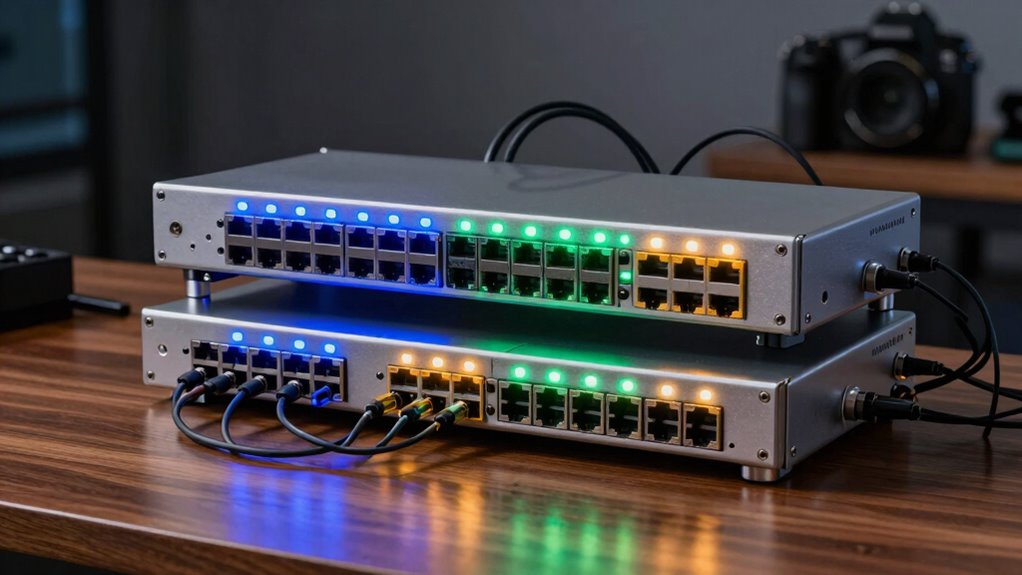

When selecting a managed switch for a homelab, the goal is to balance performance, flexibility, and ease of use. The best overall pick in this category is the TP-Link Omada SG2428LP, praised for its comprehensive features and reliability. The SODOLA 8-Port 2.5Gb Web Managed Switch stands out for those seeking higher speed options, while the NETGEAR GS308EP offers a straightforward PoE solution at a budget-friendly price. These choices reflect common tradeoffs: cost versus features, speed versus simplicity, and capacity versus future-proofing. Continue reading for an in-depth comparison of these and other top options to find the best fit for your homelab.

Get the latest gadgets delivered free with Prime
- Fast, free delivery on millions of items
- Prime Video, Amazon Music and more included
- Member-only deals all year
Complete the kit



Key Takeaways
- The top managed switches balance port count, speed, and management features for versatile homelab setups.
- Higher port and speed options often come at increased costs but provide better scalability for growing labs.
- PoE capabilities are valuable for powering network devices directly but may not be necessary for all users.
- Ease of use and management interface quality significantly impact the overall experience, especially for beginners.
- Choosing switches with future-proof features like 10G uplinks can help extend the lifespan of your homelab investments.
| SODOLA 6-Port Easy Web Managed Switch, 4x 2.5G RJ-45, 2x 10G SFP+ |  | Best Overall for High-Speed, Compact Home Networks | Ports: 4x 2.5G RJ-45, 2x 10G SFP+ | Management: Web-managed (VLAN, QoS, LACP, IGMP snooping) | Housing: Aluminum alloy, fanless | VIEW ON AMAZON | See Our Full Breakdown |
| TP-Link TL-SG1024DE 24-Port Gigabit Easy Smart Managed Ethernet Switch |  | Best Value for Large, Budget-Friendly Networks | Ports: 24 Gigabit | Jumbo Frame: 9K | Management: Easy Smart Managed | VIEW ON AMAZON | See Our Full Breakdown |
| SODOLA 8-Port 2.5Gb Web Managed Switch with 10G SFP+ |  | Best for High-Bandwidth Homelabs with Compact Design | Number of Ports: 8 x 2.5G RJ45, 1 x 10G SFP+ | Data Transfer Rate: 2.5 Gbps (10 Gbps SFP+) | Switch Type: Managed | VIEW ON AMAZON | See Our Full Breakdown |
| SODOLA 5-Port 2.5Gb Managed Switch with 10G SFP+, Aluminum Alloy, LACP/QoS/VLAN/IGMP |  | Best Compact Managed Switch for Small, High-Speed Networks | Ports: 5 x 2.5G RJ-45, 1 x 10G SFP+ | Management: Web-managed (LACP, VLAN, QoS, IGMP snooping) | Housing: Aluminum alloy, fanless | VIEW ON AMAZON | See Our Full Breakdown |
| SODOLA 2.5Gb Managed Switch with 4x 2.5GBase-T Ports, 1x 10GBase-T Uplink, and 1x SFP+ |  | Best for Hybrid 2.5G/10G Uplink Flexibility in Small Homelabs | Ports: 4 x 2.5G RJ-45, 1 x 10G RJ-45, 1 x 10G SFP+ | Backplane Bandwidth: 60Gbps | Management: Web-based (Link Aggregation, VLAN, IGMP, QoS) | VIEW ON AMAZON | See Our Full Breakdown |
| MokerLink 4-Port 2.5G PoE Managed Switch with 2 x 10G SFP+ Slots |  | Best Compact Managed Switch with PoE and Uplinks | Ports: 4 x 2.5G Ethernet (PoE), 2 x 10G SFP+ | PoE Standard: IEEE 802.3af/at | PoE Budget: 78W total, 30W max per port | VIEW ON AMAZON | See Our Full Breakdown |
| NETGEAR GS308EP 8-Port PoE+ Gigabit Ethernet Easy Smart Managed Switch |  | Best Power-Ready Gigabit Switch for Small Devices | Ports: 8x Gigabit Ethernet | PoE: 8x PoE+ ports, 62W total | Switch Type: PoE Managed (Easy Smart) | VIEW ON AMAZON | See Our Full Breakdown |
| NETGEAR 8-Port Gigabit Ethernet Easy Smart Managed Network Switch (GS308E) |  | Best Budget-Friendly Fully Managed Switch for Small Networks | Ports: 8 x 1Gbps Ethernet | Management: Web GUI, VLAN, QoS, IGMP snooping | Housing: Fanless metal | VIEW ON AMAZON | See Our Full Breakdown |
| TP-Link TL-SG205E 5-Port Gigabit Easy Managed Switch |  | Best Entry-Level Managed Switch with Omada SDN Support | Ports: 5 | Management: Omada SDN Controller, Omada App | Features: VLAN, QoS, IGMP Snooping, LAG | VIEW ON AMAZON | See Our Full Breakdown |
| TP-Link TL-SG108E 8-Port Gigabit Easy Smart Managed Switch |  | Best Budget-Friendly Managed Switch with Advanced Features | Ports: 8 Gigabit Ethernet | Management: Web interface, VLAN, QoS | VLAN Support: Up to 32 VLANs | VIEW ON AMAZON | See Our Full Breakdown |
| TP-Link Omada SG2428LP 24-Port Gigabit PoE+ Managed Switch |  | Best for Centralized Network Management in Small to Medium Homelabs | Port Count: 24 | Port Type: Gigabit Ethernet | PoE Support: PoE+ | VIEW ON AMAZON | See Our Full Breakdown |
| TP-Link TL-SG208E 8-Port Gigabit Easy Managed Switch |  | Best Compact Managed Switch for Small Homelabs | Ports: 8 | Port Speed: Gigabit | Management: Omada SDN & App | VIEW ON AMAZON | See Our Full Breakdown |
| TP-Link TL-SG108PE V3 8-Port Gigabit Easy Smart Managed PoE Switch |  | Best Budget-Friendly PoE Switch for Small Devices | Ports: 8 | PoE Ports: 4 (802.3af) | PoE Budget: 57W | VIEW ON AMAZON | See Our Full Breakdown |
| TP-Link Omada ES206X-M2 5-Port 2.5G Easy Managed Switch |  | Best High-Speed Compact Switch for Growing Homelabs | Ports: 5× 2.5 Gbps | SFP+ Slot: 1× 10 Gbps | Management: Cloud via Omada | VIEW ON AMAZON | See Our Full Breakdown |
| TP-Link TL-SG1016PE 16-Port Gigabit PoE Switch (Easy Smart Managed) |  | Best Power-Ready Switch for Larger Homelabs with PoE Needs | Total Ports: 16 | PoE+ Ports: 8 | PoE Power Budget: 150W | VIEW ON AMAZON | See Our Full Breakdown |
| managed switch for homelab | Management | Ports |
|---|---|---|
| SODOLA 6-Port Easy Web Managed | Web-managed (VLAN, QoS, LACP, IGMP snooping) | 4x 2.5G RJ-45, 2x 10G SFP+ |
| TP-Link TL-SG1024DE 24-Port Gi | Easy Smart Managed | 24 Gigabit |
| SODOLA 8-Port 2.5Gb Web Manage | — | — |
| SODOLA 5-Port 2.5Gb Managed Sw | Web-managed (LACP, VLAN, QoS, IGMP snooping) | 5 x 2.5G RJ-45, 1 x 10G SFP+ |
| SODOLA 2.5Gb Managed Switch wi | Web-based (Link Aggregation, VLAN, IGMP, QoS) | 4 x 2.5G RJ-45, 1 x 10G RJ-45, 1 x 10G SFP+ |
| MokerLink 4-Port 2.5G PoE Mana | Web GUI, Layer 2 (VLAN, LACP, QoS, security) | 4 x 2.5G Ethernet (PoE), 2 x 10G SFP+ |
| NETGEAR GS308EP 8-Port PoE+ Gi | Web GUI, VLAN, QoS | 8x Gigabit Ethernet |
| NETGEAR 8-Port Gigabit Etherne | Web GUI, VLAN, QoS, IGMP snooping | 8 x 1Gbps Ethernet |
| TP-Link TL-SG205E 5-Port Gigab | Omada SDN Controller, Omada App | 5 |
| TP-Link TL-SG108E 8-Port Gigab | Web interface, VLAN, QoS | 8 Gigabit Ethernet |
| TP-Link Omada SG2428LP 24-Port | Omada Cloud | — |
| TP-Link TL-SG208E 8-Port Gigab | Omada SDN & App | 8 |
| TP-Link TL-SG108PE V3 8-Port G | Web interface | 8 |
| TP-Link Omada ES206X-M2 5-Port | Cloud via Omada | 5× 2.5 Gbps |
| TP-Link TL-SG1016PE 16-Port Gi | Web-based | — |
More Details on Our Top Picks
SODOLA 6-Port Easy Web Managed Switch, 4x 2.5G RJ-45, 2x 10G SFP+
This switch stands out for its blend of high-speed multi-gig ports and silent operation, making it ideal for homelabs demanding fast interconnects. Compared to the TP-Link TL-SG1024DE, which offers more ports but lacks 10G uplinks, the SODOLA provides a focused high-performance solution. Its fanless aluminum housing ensures quiet, cool operation, while web-based management simplifies setup for users comfortable with basic network configuration. The main tradeoff is its limited port count—perfect for small, high-speed segments but unsuitable for larger networks needing more ports, which makes the TP-Link switch a better fit for expanding setups.
Pros:- High-speed 2.5G and 10G SFP+ connectivity for fast data transfer
- Fanless aluminum design ensures silent, reliable operation
- Web-based management with VLAN, QoS, and LACP for easy configuration
- Flexible mounting options with magnetic feet
Cons:- Limited to 6 ports, restricting expandability
- Optimal performance depends on upgrading connected devices to 2.5G or higher
Best for: Tech enthusiasts with small but high-bandwidth homelabs needing fast, silent switches.
Not ideal for: Large-scale homelabs or small offices requiring more than six ports or advanced management features.
- Ports:4x 2.5G RJ-45, 2x 10G SFP+
- Management:Web-managed (VLAN, QoS, LACP, IGMP snooping)
- Housing:Aluminum alloy, fanless
- Mounting:Magnetic pads, included rubber feet
- Standards:802.3az EEE, auto-MDI/MDIX
- Compatibility:Computers, servers, NAS, WiFi 6 APs
Our verdict“This switch is perfect for those needing a compact, silent, high-speed switch for small homelabs with future-proof 10G uplinks.”
TP-Link TL-SG1024DE 24-Port Gigabit Easy Smart Managed Ethernet Switch
With 24 gigabit ports, the TP-Link TL-SG1024DE excels in providing extensive connectivity at a budget-friendly price. It surpasses the smaller SODOLA 6-Port in capacity but offers fewer high-speed uplinks—no 10G support here. Its advanced features like VLAN, QoS, and port mirroring make it suitable for larger homelabs or small offices. However, its fanless design, while quiet, limits mounting options in enclosed spaces, and its smart management features are more basic than fully managed enterprise switches, which might be a limitation for more complex setups. Still, it offers a good balance of features and affordability.
Pros:- 24 gigabit ports for extensive device connections
- Supports Jumbo Frames up to 9K for better performance with large files
- Easy setup with plug-and-play and smart management features
- Three-year warranty with free support
Cons:- Fanless design limits options for mounting in enclosed racks
- Limited management features compared to enterprise switches
Best for: Home network owners needing many gigabit ports for multiple devices and simple management.
Not ideal for: Homelabs requiring multi-gig or 10G uplinks or advanced enterprise features.
- Ports:24 Gigabit
- Jumbo Frame:9K
- Management:Easy Smart Managed
- Features:Port Mirroring, Loop Prevention, VLAN, IGMP Snooping, QoS
- Warranty:3 years
Our verdict“This switch offers ample gigabit capacity and simple management for larger homelabs on a budget, with some limitations in advanced features.”
SODOLA 8-Port 2.5Gb Web Managed Switch with 10G SFP+
This switch stands out for its combination of 8 x 2.5G ports plus a 10G SFP+ uplink, making it suitable for bandwidth-heavy tasks like 4K streaming or NAS transfers. Its fanless aluminum housing ensures quiet operation, and the web interface supports VLAN, QoS, LACP, and IGMP snooping—no CLI needed—streamlining setup for home users. Compared to the 6-port SODOLA, this model offers more ports and a dedicated 10G uplink, but still requires connected devices to support 2.5G speeds to maximize benefits. Its compact size and passive cooling make it perfect for tight spaces, though the higher cost and the need for compatible devices can be limitations.
Pros:- 8 x 2.5G ports plus a 10G SFP+ uplink for high-speed data transfers
- Fanless aluminum housing keeps it silent and cool
- Web management with VLAN, QoS, and LACP for easy configuration
- Compact, lightweight design with magnetic feet
Cons:- Optimal performance requires 2.5G devices on all ports
- Price and availability may be limited without detailed ratings
Best for: Homelab builders requiring a high-bandwidth switch with multiple 2.5G ports and a 10G uplink in a small footprint.
Not ideal for: Larger networks or users lacking 2.5G-compatible devices, as full performance depends on device support.
- Number of Ports:8 x 2.5G RJ45, 1 x 10G SFP+
- Data Transfer Rate:2.5 Gbps (10 Gbps SFP+)
- Switch Type:Managed
- Housing:Aluminum alloy, fanless
- Cooling:Passive
- Dimensions:6.3″ L x 3.58″ W x 0.98″ H
Our verdict“A solid choice for high-bandwidth needs in small homelabs with space constraints and future-proof port options.”
SODOLA 5-Port 2.5Gb Managed Switch with 10G SFP+, Aluminum Alloy, LACP/QoS/VLAN/IGMP
This 5-port switch offers a balanced combination of five 2.5G ports and a 10G SFP+ uplink, making it ideal for small but fast homelabs. Its fanless aluminum housing guarantees silent operation, and its web interface supports essential features like VLAN, QoS, LACP, and IGMP snooping—suitable for users who want straightforward management without CLI complexity. Compared to larger switches like the 24-port TP-Link, this model is more suited for limited spaces and simpler setups, though its fewer ports may restrict expansion. The main tradeoff is its limited port count, which works well for small networks but not for larger environments.
Pros:- Web-based management with no CLI needed
- Aluminum alloy housing reduces heat and keeps operation silent
- Flexible mounting options for tight spaces
- Backward compatible with 1G/100M devices
Cons:- Limited to 5 ports, reducing expandability
- Management features are basic compared to enterprise switches
Best for: Home users needing a compact, high-speed switch with advanced features in a small footprint.
Not ideal for: Growing homelabs that require more than five ports or enterprise-level features.
- Ports:5 x 2.5G RJ-45, 1 x 10G SFP+
- Management:Web-managed (LACP, VLAN, QoS, IGMP snooping)
- Housing:Aluminum alloy, fanless
- Mounting:Magnetic pads, rubber feet
- Standards:802.3az EEE, auto-MDI/MDIX
- Compatibility:Backward compatible with 1G/100M
Our verdict“Ideal for small, high-speed setups where space and silent operation are priorities, but not suited for large or expanding networks.”
SODOLA 2.5Gb Managed Switch with 4x 2.5GBase-T Ports, 1x 10GBase-T Uplink, and 1x SFP+
This switch offers a versatile mix of four 2.5G ports, a 10G uplink, and an SFP+ slot, making it one of the most flexible options for small homelabs that require multiple high-speed connections. Its web interface supports link aggregation, VLAN, IGMP, and QoS, providing a manageable, hybrid setup. The toggle between plug-and-play and managed modes adds convenience, though setup may be confusing for beginners unfamiliar with IP configuration, especially since default IP is 192.168.0.1. Compared to the other SODOLA models, this one emphasizes hybrid uplink options, but its management features are more basic than full enterprise switches, limiting advanced control.
Pros:- Flexible 2.5G and 10G port configuration with SFP+ support
- Dual operation modes: plug-and-play or managed web interface
- Web management including VLAN, QoS, and link aggregation
- Easy to connect with standard Ethernet cables
Cons:- Setup can be confusing for beginners due to default IP and mode toggle
- Basic management features compared to enterprise-grade switches
Best for: Homelab enthusiasts wanting flexible port configurations for mixed high-speed uplinks and simple management.
Not ideal for: Users seeking extensive management features or larger port counts—its limited ports and basic features may be restrictive.
- Ports:4 x 2.5G RJ-45, 1 x 10G RJ-45, 1 x 10G SFP+
- Backplane Bandwidth:60Gbps
- Management:Web-based (Link Aggregation, VLAN, IGMP, QoS)
- Default IP:192.168.0.1
- Default Login:admin/admin
- Modes:Plug-and-Play / Managed
Our verdict“A highly adaptable switch suited for small homelabs needing hybrid uplinks and straightforward management, but not for those requiring extensive control or higher port counts.”
MokerLink 4-Port 2.5G PoE Managed Switch with 2 x 10G SFP+ Slots
This switch stands out for packing 2.5G PoE ports and 10G SFP+ uplinks into a compact, fanless metal case. Compared with larger switches like the NETGEAR GS308EP, its PoE capabilities on fewer ports limit power-hungry devices but make it ideal for small setups demanding PoE and high-speed uplinks without noise or bulk. The Layer 2 management features—VLAN, LACP, QoS—offer solid control for homelabs that need network segmentation and traffic prioritization. However, the absence of passive 24V PoE support and a modest 78W PoE budget may restrict device choices, especially for dense setups. The built-in power supply and sturdy design make it a reliable desktop or wall-mounted option for NAS, servers, or WiFi APs.
Pros:- 2.5G PoE ports support modern IP devices and access points
- Compact, fanless design ensures silent operation
- Full Layer 2 management with VLAN, LACP, QoS
Cons:- SFP modules are not included, adding to initial cost
- Limited 78W total PoE budget may restrict high-power device deployment
Best for: Home users with small-scale setups needing PoE and 10G uplinks in a space-efficient package
Not ideal for: Larger homelabs requiring passive 24V PoE or support for many high-power PoE devices simultaneously
- Ports:4 x 2.5G Ethernet (PoE), 2 x 10G SFP+
- PoE Standard:IEEE 802.3af/at
- PoE Budget:78W total, 30W max per port
- Backplane Bandwidth:60Gbps
- Management:Web GUI, Layer 2 (VLAN, LACP, QoS, security)
- Form Factor:Mini, desktop/wall-mount, metal fanless casing
Our verdict“This switch suits small homelabs needing PoE with high-speed uplinks in a quiet, space-saving form factor.”
NETGEAR GS308EP 8-Port PoE+ Gigabit Ethernet Easy Smart Managed Switch
This model makes the most sense for users seeking a straightforward, reliable PoE switch with decent management tools. Compared to the TP-Link TL-SG108E, it offers PoE+ on all ports and a slightly higher 62W power budget, making it suitable for small IP camera networks or VoIP setups. Its fanless design guarantees silent operation, and the web interface simplifies VLAN, QoS, and port monitoring setup. However, the 62W total PoE budget can be limiting if multiple high-power devices are connected simultaneously. Its management features are basic but sufficient for most small homelabs, though it lacks advanced options found in full managed switches. Overall, this switch balances power, simplicity, and quiet operation effectively.
Pros:- PoE+ on all 8 ports supports a variety of powered devices
- Silent, fanless operation ideal for quiet environments
- Simple web management for VLANs, QoS, and port monitoring
Cons:- Limited 62W total PoE power may restrict high-power device use
- Basic management features lack advanced automation or scripting
Best for: Home or small office users deploying multiple PoE devices like cameras or VoIP phones
Not ideal for: Larger networks or setups requiring advanced management beyond basic VLAN and QoS controls
- Ports:8x Gigabit Ethernet
- PoE:8x PoE+ ports, 62W total
- Switch Type:PoE Managed (Easy Smart)
- Management:Web GUI, VLAN, QoS
- Form Factor:Desktop or wall-mount
Our verdict“This switch offers a balance of power and simplicity for small PoE deployments in homelabs or offices.”
NETGEAR 8-Port Gigabit Ethernet Easy Smart Managed Network Switch (GS308E)
Compared with the TP-Link TL-SG108E, the NETGEAR GS308E offers a slightly more comprehensive set of management features, including VLAN support for up to 64 VLANs and IGMP snooping, which is useful for multicast traffic and small streaming setups. Its plug-and-play setup makes it accessible for users comfortable with basic management, but it still provides useful diagnostics like cable testing and storm control. The fanless, sturdy metal design ensures silent operation, making it ideal for home offices or small labs. Its limitation remains in the relatively straightforward management interface, which may not satisfy users seeking advanced automation or scripting capabilities. Nevertheless, it strikes a good balance between affordability, features, and quiet operation.
Pros:- Supports VLANs, QoS, IGMP snooping for traffic management
- Fanless, sturdy metal housing ensures silent operation
- Easy setup with web GUI and network diagnostics
Cons:- Limited to 1Gbps ports, not suitable for higher speeds
- Basic management interface may lack advanced features
Best for: Small-scale homelabs requiring basic managed switching with VLAN support and network diagnostics
Not ideal for: Large or complex networks needing advanced scripting or automation features
- Ports:8 x 1Gbps Ethernet
- Management:Web GUI, VLAN, QoS, IGMP snooping
- Housing:Fanless metal
- Diagnostics:Cable test, storm control
- Size:8-port desktop switch
Our verdict“This switch provides essential managed features for small homelabs at an affordable price, with quiet operation and reliable build quality.”
TP-Link TL-SG205E 5-Port Gigabit Easy Managed Switch
This compact 5-port switch stands out for its centralized management via Omada SDN Controller, making it ideal for users wanting to expand control over multiple switches. Compared with the TP-Link TL-SG108E, it offers more advanced features like port isolation, LAG, and storm control, which are beneficial for segmented and resilient homelab setups. Its integration with Omada makes software updates and management scalable for growing environments. However, its limited 5 ports may restrict expansion, and the reliance on centralized management means it’s less straightforward for users preferring standalone devices. This switch is best suited for homelabs planning to grow or requiring specific VLAN and redundancy features.
Pros:- Supports VLAN, QoS, port isolation, and LAG for advanced control
- Managed via Omada SDN Controller or app for centralized management
- Compact size with gigabit speeds
Cons:- Limited to 5 ports, restricting future expansion
- Requires Omada software for full management, adding setup complexity
Best for: Homelab enthusiasts needing manageable, scalable switches with centralized control
Not ideal for: Small, static networks where simplicity and minimal configuration are preferred
- Ports:5
- Management:Omada SDN Controller, Omada App
- Features:VLAN, QoS, IGMP Snooping, LAG
- Layer:Layer 2
- Form Factor:Desktop
Our verdict“This switch is a good fit for homelabs that value centralized management and scalable features over sheer port count.”
TP-Link TL-SG108E 8-Port Gigabit Easy Smart Managed Switch
This 8-port switch offers a compelling mix of features at an accessible price, making it suitable for homelabs that need VLAN, QoS, and link aggregation without breaking the bank. Its easy web management supports up to 32 VLANs and includes essential Layer 2 features like IGMP snooping and port mirroring. Compared with simpler unmanaged switches, the TL-SG108E provides better traffic control and diagnostics, but it requires some initial configuration to enable these features. The sturdy metal design and shielded ports add durability, and a three-year warranty supports long-term reliability. It’s a versatile choice for users wanting manageable performance with minimal complexity.
Pros:- Supports VLAN, QoS, link aggregation, and port mirroring
- Sturdy metal housing with shielded ports for durability
- Affordable price with three-year warranty
Cons:- Requires configuration to fully utilize features
- Limited management interface compared to higher-end switches
Best for: Home or small office users seeking an affordable, feature-rich managed switch
Not ideal for: Large networks or environments requiring advanced automation or scripting capabilities
- Ports:8 Gigabit Ethernet
- Management:Web interface, VLAN, QoS
- VLAN Support:Up to 32 VLANs
- Layer 2 Features:IGMP snooping, port mirroring
- Construction:Sturdy metal with shielded ports
Our verdict“This switch balances affordability and features, making it ideal for homelabs that need more than basic connectivity but less than enterprise complexity.”
TP-Link Omada SG2428LP 24-Port Gigabit PoE+ Managed Switch
The TP-Link Omada SG2428LP stands out for its extensive port count and cloud management capabilities, making it ideal for those who want to control a larger homelab environment remotely. Compared to smaller switches like the TP-Link TL-SG108PE, it offers more ports and integrated security features, but its advanced cloud platform can introduce a learning curve and setup complexity. The fanless design ensures quiet operation, which is beneficial in a home setting, yet the lack of explicit PoE power budget details could be a limitation for powering multiple devices. Overall, this switch is best suited for homelab builders who prioritize scalable management and security over simplicity.
Pros:- Supports Omada cloud management for remote control
- Fanless passive cooling for silent operation
- Rich security and network features including ACL and VLAN
Cons:- Setup of cloud management may be complex for beginners
- PoE power budget is not specified, limiting device powering options
Best for: Homelab enthusiasts needing centralized management and high port density.
Not ideal for: Casual users or those new to managed switches who prefer plug-and-play simplicity.
- Port Count:24
- Port Type:Gigabit Ethernet
- PoE Support:PoE+
- Cooling:Fanless passive
- Management:Omada Cloud
- Security Features:802.1X, ACL, DHCP snooping
Our verdict“This switch is perfect for homelab users who need scalable, secure management with a quiet design, but requires some network expertise for full utilization.”
TP-Link TL-SG208E 8-Port Gigabit Easy Managed Switch
The TP-Link TL-SG208E offers a manageable yet straightforward solution for smaller homelabs, providing 8 gigabit ports with centralized control via Omada SDN. Compared with the larger SG2428LP, it’s less scalable but easier to set up and operate. Its web-only management interface makes it accessible to users who prefer browser-based control, though it lacks CLI access for advanced configurations. This switch is well-suited for those with limited space or simpler network needs, but it might fall short if your homelab grows beyond 8 devices or requires more granular management features.
Pros:- Gigabit speeds on all ports
- Centralized management via Omada SDN
- Easy web-based setup and management
Cons:- No CLI management access for advanced users
- Limited to 8 ports, restricting scalability
Best for: Homelabers with small network setups and limited space who want manageable control without complexity.
Not ideal for: Power users or expanding labs needing extensive VLAN or security features beyond basic management.
- Ports:8
- Port Speed:Gigabit
- Management:Omada SDN & App
- Features:VLAN, QoS, IGMP Snooping
- Management Interface:Web only
Our verdict“This switch suits small homelabs seeking straightforward, web-managed gigabit connectivity without extensive configuration options.”
TP-Link TL-SG108PE V3 8-Port Gigabit Easy Smart Managed PoE Switch
The TL-SG108PE V3 balances affordability with essential PoE features, making it appealing for homelabs deploying IP cameras, VoIP phones, or wireless access points. Compared with more advanced switches like the TL-SG1016PE, it offers PoE support on 4 ports with up to 15.4W each, which limits device options but simplifies setup for small deployments. Its web-based management simplifies configuration, though it’s not a full enterprise-grade switch and lacks CLI access. This model is ideal for users who need PoE for a handful of devices and prefer easy management without the complexity of larger switches.
Pros:- PoE support on 4 ports for powering small devices
- Easy web management with no software installation
- Affordable price point with a lifetime warranty
Cons:- Only 4 PoE ports limit device deployment
- No CLI for advanced configuration
Best for: Homelab owners deploying PoE devices with small power requirements and simple management needs.
Not ideal for: Large-scale setups or users needing full managed switch features like LACP or advanced security.
- Ports:8
- PoE Ports:4 (802.3af)
- PoE Budget:57W
- Management:Web interface
- Switching Capacity:16 Gbps
Our verdict“This switch works well for small PoE device setups in homelabs that prioritize simplicity and affordability over advanced features.”
TP-Link Omada ES206X-M2 5-Port 2.5G Easy Managed Switch
The Omada ES206X-M2 offers a compact, high-speed solution with 2.5G ports and a 10G uplink, making it excellent for homelabs that need faster interconnects without taking up much space. Compared to traditional gigabit switches like the TL-SG208E, its multi-gig ports provide a performance boost for data-intensive tasks or clustered storage. Its fanless design supports silent operation, and cloud management ensures easy control. However, the limited number of ports—only 5—may restrict future expansion, and the absence of a dedicated management console could be a drawback for advanced users.
Pros:- High-speed 2.5G ports plus a 10G SFP+ uplink
- Fanless, silent operation
- Cloud management via Omada web or app
Cons:- Limited to only 5 ports, restricting expansion
- No detailed review or long-term reliability data available
Best for: Homelabers requiring high-speed connectivity between a few critical devices or servers in a small form factor.
Not ideal for: Larger networks or users needing extensive port selection or advanced management features.
- Ports:5× 2.5 Gbps
- SFP+ Slot:1× 10 Gbps
- Management:Cloud via Omada
- Cooling:Fanless
- Casing:Metal
Our verdict“This switch is ideal for small, high-performance homelabs focused on fast interconnects in a compact design, but not suited for larger setups requiring many ports.”
TP-Link TL-SG1016PE 16-Port Gigabit PoE Switch (Easy Smart Managed)
The TL-SG1016PE combines a generous 16 ports with a substantial PoE budget, making it suitable for expanding homelabs that deploy multiple PoE devices like access points or cameras. Compared to smaller PoE switches like the TL-SG108PE, it offers double the ports and a 150W power budget, enabling more devices or higher power requirements. Its web-managed interface provides essential features such as VLAN, QoS, and IGMP Snooping, but it doesn’t include advanced enterprise features or CLI access, which could limit customization. This switch is ideal for those needing a balance of port density and PoE capacity in a manageable form factor.
Pros:- Large 150W PoE power budget across 8 PoE+ ports
- Easy web management with plug-and-play setup
- Supports VLAN, QoS, IGMP Snooping, and LAG
Cons:- Only half of the ports support PoE
- Limited technical support hours
Best for: Homelab setups with multiple PoE devices, requiring a larger port count and higher power budget.
Not ideal for: Small, low-budget labs or users seeking full CLI management and advanced features beyond web interface.
- Total Ports:16
- PoE+ Ports:8
- PoE Power Budget:150W
- Management:Web-based
- Features:VLAN, QoS, IGMP Snooping
Our verdict“This switch is a solid choice for medium-sized homelabs needing PoE on multiple ports with straightforward management, though it lacks full enterprise features.”
How We Picked
Products were selected based on their relevance and performance in a homelab environment, focusing on performance, build quality, ease of management, and value for money. Priority was given to switches offering a good balance of features suitable for both newcomers and advanced users, including VLAN support, QoS, and uplink options. We also considered user reviews and industry reputation to ensure reliability and support. The ranking reflects how well each switch meets the typical needs of a homelab, with a focus on scalability, ease of use, and expandability.Factors to Consider When Choosing Managed Switch For Homelab
Choosing the right managed switch for your homelab involves understanding key factors that influence performance and usability. A switch’s port count determines how many devices you can connect, while speed options like 1G or 2.5G support your current and future bandwidth needs. Management features, such as VLANs and QoS, offer network segmentation and traffic prioritization, which are crucial for complex setups. Power over Ethernet (PoE) can simplify powering devices like cameras or access points, but adds to cost and complexity. Compatibility with existing infrastructure and future expansion plans are also vital considerations to avoid costly upgrades later.Port Count and Speed
Understanding your current and future device requirements is key to selecting an appropriate port count. While 8-ports might suffice for small setups, larger labs benefit from 16 or more ports, especially if you plan to add more devices. Speed support, such as 1G, 2.5G, or 10G uplinks, influences data transfer rates and network responsiveness. For most homelabs, 1G is standard, but 2.5G or 10G uplinks provide a significant performance boost, especially for data-heavy applications or storage servers. Investing in higher speeds upfront can save money in the long run by reducing bottlenecks.
Management Features
Effective management tools are essential for maintaining a stable and flexible network. Features like VLAN support allow segmentation, improving security and organization. QoS prioritization helps ensure critical traffic, such as VoIP or streaming, isn’t disrupted. User-friendly interfaces, whether via web GUI or mobile apps, reduce setup time and troubleshooting frustration. For those new to networking, switches with simplified management options or cloud integration can ease the learning curve. Advanced users should prioritize switches that support CLI and detailed monitoring capabilities for granular control.
PoE Capabilities
PoE (Power over Ethernet) simplifies powering network devices directly through the switch, eliminating the need for separate power supplies. This feature is particularly useful for deploying IP cameras, wireless access points, or VoIP phones. However, PoE switches tend to be more expensive and generate more heat, requiring adequate ventilation. If your homelab includes or plans to include PoE devices, investing in a switch with PoE+ support can streamline setup and reduce clutter. For basic setups or if PoE is unnecessary, a standard managed switch may offer better value.
Future-Proofing and Expandability
When choosing a switch, consider how well it can adapt to future needs. Features like 10G uplinks, additional SFP+ ports, or modular designs extend a switch’s lifespan. Compatibility with emerging standards ensures your network remains scalable without needing immediate upgrades. Budget-conscious buyers might opt for switches that cover current needs well, then upgrade later, but sacrificing some features now could limit flexibility. Think about your long-term plans, including potential expansion, to avoid bottlenecks and additional costs down the line.
Build Quality and Support
Durability and manufacturer support often determine the long-term value of a switch. Metal enclosures and high-quality components resist wear and heat. Reliable vendors provide firmware updates, technical support, and warranty services, which are critical for troubleshooting issues. While premium brands tend to offer better support, they also come at higher prices. For a homelab, balancing build quality with cost is key—aim for a device that’s robust enough to handle continuous operation without overpaying for enterprise-grade features you won’t use.
Frequently Asked Questions
Do I need a managed switch for my small homelab?
For small homelabs with only a few devices, an unmanaged switch might suffice, but a managed switch offers significant advantages in flexibility and control. Managed switches allow you to segment traffic, prioritize data, and troubleshoot more effectively, which becomes valuable as your setup grows or becomes more complex. If you plan to add additional devices or want more control over your network, investing in a managed switch early can save time and effort later on. For very basic setups, a simple unmanaged switch could be enough, but for long-term scalability, a managed option is usually better.
Is 2.5G support worth it for a homelab?
Support for 2.5G speeds can provide a noticeable performance boost compared to standard 1G connections, especially when transferring large files or streaming data internally. While not essential for all users, it offers a middle ground between 1G and 10G, often at a more affordable price point. If your homelab includes NAS devices, high-speed storage, or virtualized environments, 2.5G support can improve responsiveness without the higher cost of 10G switches. However, to fully leverage 2.5G, your other equipment must also support these speeds, which could add to overall costs.
Should I prioritize PoE in my homelab switch?
PoE can simplify cabling and reduce the need for extra power adapters, making it appealing for deploying wireless access points or IP cameras. However, PoE switches tend to be more expensive and generate more heat, which could be a concern depending on your setup. If you plan to power multiple PoE devices or want a cleaner, more integrated network, prioritizing PoE support makes sense. Conversely, if your devices don’t require PoE, choosing a non-PoE switch can save money and reduce complexity.
How important are uplink ports for a homelab?
Uplink ports connect your switch to your main network or other switches, and their speed impacts overall network performance. For small setups, a single gigabit uplink might suffice, but as you expand, higher-speed uplinks like 10G become valuable for maintaining fast data transfer rates. Having multiple uplink options also provides redundancy and scalability. If you anticipate future growth or transfer large amounts of data between devices, selecting a switch with 10G uplinks ensures your network can handle increased traffic without bottlenecks.
Conclusion
For most users starting a homelab, the TP-Link Omada SG2428LP offers a well-rounded combination of features, management, and future-proofing, making it the best overall choice. Budget-conscious builders should consider the NETGEAR GS308EP for PoE support at a lower price point. Those seeking high-speed internal data transfer will find the SODOLA 8-Port 2.5Gb Web Managed Switch compelling. Beginners or casual users might prefer simpler, easy-to-manage models like the TP-Link TL-SG105E. For advanced setups requiring extensive expandability, switches with 10G uplinks and modular options will serve longer-term needs effectively.
As an affiliate, we earn on qualifying purchases.Halloween Picks
halloween