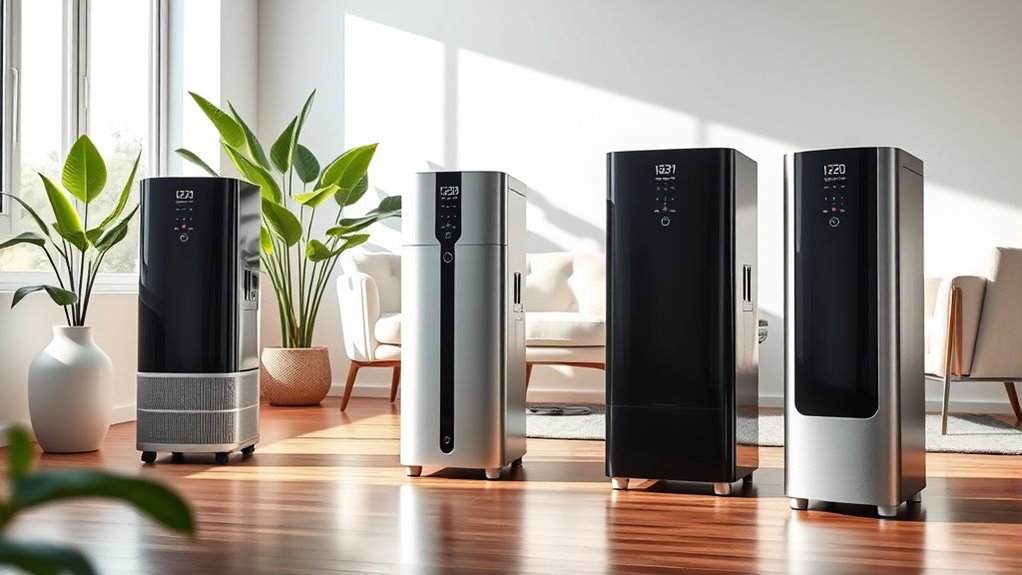
Among high-end air purifiers for allergies, I rank the IQAir HealthPro Plus XE as the best overall for buyers prioritizing advanced particle filtration, while the Coway Airmega 350 stands out for large rooms and the Coway Mighty for a balanced everyday setup. The key tradeoffs are room coverage, filtration design, noise at useful fan speeds, and the ongoing work of replacing filters. A larger unit is not automatically better if it is too loud to run consistently or difficult to maintain. I compare all 15 options by allergy-relevant performance, usability, upkeep, and fit for different homes. Continue reading for the full breakdown and help matching a purifier to your room and routine.

Get the latest gadgets delivered free with Prime
- Fast, free delivery on millions of items
- Prime Video, Amazon Music and more included
- Member-only deals all year
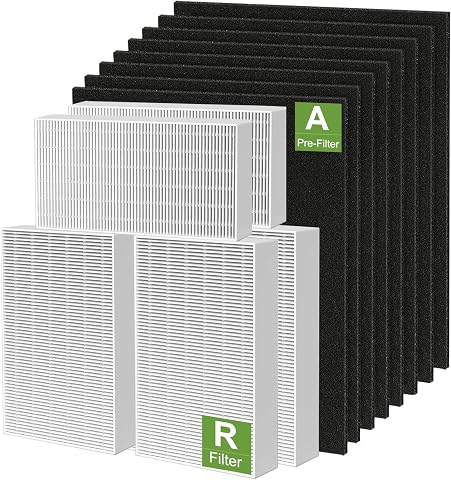
Complete the kit

Key Takeaways
- The lineup splits into distinct roles: the IQAir HealthPro Plus XE is the filtration-focused pick, while the Coway Airmega 350 and Blueair Blue Pure 211i Max are better suited to buyers prioritizing broad room coverage.
- Room size and usable fan speed matter together. A purifier rated for a large area may not deliver the same cleaning rate if its highest setting is too disruptive for regular use.
- The Coway Mighty offers a strong middle ground for shoppers who want a familiar, versatile room purifier without choosing the largest or most specialized model.
- Compact models solve placement problems, not whole-home needs. The Dyson HushJet, Levoit Core 300-P, and GermGuardian AC4825E are easier to place in smaller spaces but are not substitutes for a correctly sized large-room unit.
- Filter upkeep changes the long-term fit. Buyers should compare replacement-filter availability, cleaning requirements, and features such as washable pre-filters—not just the initial filtration claims.
| AirDoctor AD3500 Air Purifier |  | Best for Fine-Particle Allergy Filtration | Coverage: 630 sq. ft. in 15 minutes; up to 2,520 sq. ft. in 1 hour | Filtration: Pre-filter, activated carbon filter, and UltraHEPA filter | Particle capture: 99.99% of airborne particles at 0.003 microns | VIEW ON AMAZON | See Our Full Breakdown |
| Dyson HushJet Compact Air Purifier, White/Silver |  | Best Compact Pick for Bedrooms | Coverage: Up to 203 sq. ft. | Air changes per hour: 4.8 | Particle capture: 99.97% of particles as small as 0.3 microns | VIEW ON AMAZON | See Our Full Breakdown |
| GermGuardian AC4825E HEPA Tower Air Purifier, 22-Inch, Gray |  | Best Simple Tower for Smaller Rooms | Model: AC4825E | Height: 22 in. | Filter type: HEPA with activated-carbon pre-filter | VIEW ON AMAZON | See Our Full Breakdown |
| IQAir HealthPro Plus XE Air Purifier with HyperHEPA Filtration and Wi-Fi |  | Best Premium Pick for Large Rooms | Filtration: HyperHEPA; captures 99.995% of airborne particles down to 0.003 microns | Recommended room size: Up to 1,125 sq. ft. | Connectivity: Wi-Fi with IQAir AirVisual app integration | VIEW ON AMAZON | See Our Full Breakdown |
| PuroAir 400 HEPA Air Purifier for Large Rooms |  | Best for Broad Stated Coverage | Coverage: Up to 2,000 sq. ft. in 1 hour | Filtration: Pre-filter, HEPA filter, and activated carbon | Pollutant filtration: Up to 99.9% | VIEW ON AMAZON | See Our Full Breakdown |
| Coway Mighty AP-1512HH(W) Air Purifier, White |  | Best for Balanced Everyday Allergy Control | Model: AP-1512HH(W) | Color: White | Coverage: Up to 1,748 sq. ft. in 60 minutes | VIEW ON AMAZON | See Our Full Breakdown |
| Medify MA-112 PRO Air Purifier with H13 True HEPA Filter |  | Best for Very Large Open Spaces | Coverage: 5,948 sq. ft. per hour; 2,974 sq. ft. in 30 minutes | CADR: 1,019 | Filtration: Dual True HEPA H13 | VIEW ON AMAZON | See Our Full Breakdown |
| Blueair Blue Pure 311i Max Air Purifier |  | Best Smart Pick for Bedrooms and Home Offices | Coverage: Up to 2,107 sq. ft. per hour | Cleaning rate: 439 sq. ft. in 12.5 minutes | Filtration: HEPASilent dual filtration | VIEW ON AMAZON | See Our Full Breakdown |
| ECOSELF HAP602 Air Purifier for Large Rooms, White |  | Best for Quiet PM2.5 Monitoring | Model: HAP602 | Color: White | Filtration: 3-stage | VIEW ON AMAZON | See Our Full Breakdown |
| Levoit Core 300-P Air Purifier |  | Best Compact Pick for Smaller Allergy-Prone Rooms | Model: Core 300-P | Motor power: 56W | CADR: 143 CFM smoke; 153 CFM dust; 167 CFM pollen | VIEW ON AMAZON | See Our Full Breakdown |
| Coway Airmega 350 Air Purifier for Large Rooms, Beige |  | Best for Broad Allergy Coverage | Coverage area: Up to 2,640 ft² | CADR: Dust 376; smoke 352; pollen 450 | Filtration: Vacuumable pre-filter, activated carbon filter, and HEPA filter | VIEW ON AMAZON | See Our Full Breakdown |
| FreAire Air Purifier for Large Rooms up to 2,600 sq. ft. with Washable Pre-Filter |  | Best for Low-Fuss Maintenance | Coverage: Up to 2,600 sq. ft. per hour | Filter: HEPA filter with washable pre-filter | Particle capture: 99.97% | VIEW ON AMAZON | See Our Full Breakdown |
| Winix 5510 Air Purifier with App Support |  | Best for App-Controlled Allergy Care | Room coverage: Up to 1,882 sq. ft. per hour | Filter: True HEPA | Particle capture: 99.99% of airborne allergens as small as 0.01 microns | VIEW ON AMAZON | See Our Full Breakdown |
| Blueair Blue Pure 211i Max Air Purifier |  | Best for Open-Plan Spaces | Model: Blue Pure 211i Max | Coverage: Up to 674 sq. ft. in 12.5 minutes; 3,235 sq. ft. in one hour | Filtration: HEPASilent dual filtration | VIEW ON AMAZON | See Our Full Breakdown |
| KNKA APH4000 Air Purifier for Home, White |  | Best for Pet-Focused Flexibility | Smoke/dust/PM2.5 CADR: 226 CFM (384 m³/h) | Pollen CADR: 244 CFM (415 m³/h) | Coverage: Up to 1,695 ft² with one air refresh per hour | VIEW ON AMAZON | See Our Full Breakdown |
| highend air purifiers for allergie | Coverage | Filtration |
|---|---|---|
| AirDoctor AD3500 Air Purifier | 630 sq. ft. in 15 minutes; up to 2,520 sq. ft. in 1 hour | Pre-filter, activated carbon filter, and UltraHEPA filter |
| Dyson HushJet Compact Air Puri | Up to 203 sq. ft. | — |
| GermGuardian AC4825E HEPA Towe | — | — |
| IQAir HealthPro Plus XE Air Pu | — | HyperHEPA; captures 99.995% of airborne particles down to 0.003 microns |
| PuroAir 400 HEPA Air Purifier | Up to 2,000 sq. ft. in 1 hour | Pre-filter, HEPA filter, and activated carbon |
| Coway Mighty AP-1512HH(W) Air | Up to 1,748 sq. ft. in 60 minutes | Four-stage: washable pre-filter, deodorization filter, bipolar device, and HEPA filter |
| Medify MA-112 PRO Air Purifier | 5,948 sq. ft. per hour; 2,974 sq. ft. in 30 minutes | Dual True HEPA H13 |
| Blueair Blue Pure 311i Max Air | Up to 2,107 sq. ft. per hour | HEPASilent dual filtration |
| ECOSELF HAP602 Air Purifier fo | Up to 2,400 sq. ft. every 30 minutes | 3-stage |
| Levoit Core 300-P Air Purifier | — | — |
| Coway Airmega 350 Air Purifier | — | Vacuumable pre-filter, activated carbon filter, and HEPA filter |
| FreAire Air Purifier for Large | Up to 2,600 sq. ft. per hour | — |
| Winix 5510 Air Purifier with A | — | — |
| Blueair Blue Pure 211i Max Air | Up to 674 sq. ft. in 12.5 minutes; 3,235 sq. ft. in one hour | HEPASilent dual filtration |
| KNKA APH4000 Air Purifier for | Up to 1,695 ft² with one air refresh per hour | — |
More Details on Our Top Picks
AirDoctor AD3500 Air Purifier
For buyers prioritizing capture of very fine airborne particles, the AirDoctor AD3500 pairs an UltraHEPA filter rated to capture 99.99% of particles down to 0.003 microns with activated carbon for gases and odors. Its PM2.5 sensor and Auto Mode can adjust fan speed as readings change, reducing the need to manage settings manually. Coverage is presented at several cleaning rates: 630 square feet in 15 minutes, or up to 2,520 square feet in an hour. That makes the cleaning-time context important when comparing it with the IQAir HealthPro Plus XE, which lists a recommended room size of up to 1,125 square feet but also captures particles down to 0.003 microns. The tradeoff is ongoing filter upkeep, with carbon replacement every six months and UltraHEPA replacement every 12 months.
Pros:- UltraHEPA filter is rated to capture 99.99% of airborne particles down to 0.003 microns.
- Activated carbon filter helps reduce gases and household odors.
- PM2.5 monitoring and Auto Mode adjust fan operation in response to air quality.
- Four fan speeds, Boost, and timer offer flexible operation.
Cons:- Carbon and UltraHEPA filters have separate recurring replacement schedules.
- Coverage varies by cleaning interval, so the largest figure should not be treated as equivalent to a faster room-cleaning rating.
Best for: Allergy-sensitive households seeking very fine particle filtration, odor reduction, and automatic response to changing air quality.
Not ideal for: Buyers who want minimal filter maintenance or a simple coverage figure that does not depend on cleaning time.
- Coverage:630 sq. ft. in 15 minutes; up to 2,520 sq. ft. in 1 hour
- Filtration:Pre-filter, activated carbon filter, and UltraHEPA filter
- Particle capture:99.99% of airborne particles at 0.003 microns
- Air quality monitoring:PM2.5 sensor with color-coded indicator
- Fan speeds:4
- Controls:Auto Mode, Boost, timer, and filter indicator
- Carbon filter replacement:Every 6 months
- UltraHEPA filter replacement:Every 12 months
Our verdict“Choose the AD3500 if fine-particle capture and sensor-driven operation matter more to you than minimizing filter upkeep.”
Dyson HushJet Compact Air Purifier, White/Silver
The Dyson HushJet is the most room-specific choice here: it is sized for spaces up to 203 square feet, with 4.8 air changes per hour and a 24 dB Sleep mode for overnight use. Its sealed design is intended to keep captured pollutants from escaping, while electrostatic and activated carbon filters target particles, allergens, odors, and gases. The app and compatible voice services add remote control, schedules, and air quality reports—useful if the purifier sits across a bedroom or office. Compared with the GermGuardian AC4825E, the Dyson offers app connectivity and a stated filter life of up to five years, but it covers a much smaller room than the GermGuardian’s listed hourly coverage. Its compact footprint comes with a clear limit: it is not the pick for large shared spaces.
Pros:- 24 dB Sleep mode is suited to quiet overnight operation.
- Rated for 4.8 air changes per hour in rooms up to 203 sq. ft.
- Sealed design helps limit pollutant escape from the unit.
- Filter life is stated as up to five years.
Cons:- Coverage is limited compared with the AirDoctor AD3500 and PuroAir 400.
- Remote app and voice features require compatible devices and connectivity.
Best for: People with allergies who want a compact, connected purifier for a bedroom, nursery, or small home office.
Not ideal for: Households seeking one purifier for a large living area or buyers who do not want app or voice features.
- Coverage:Up to 203 sq. ft.
- Air changes per hour:4.8
- Particle capture:99.97% of particles as small as 0.3 microns
- Filter types:Electrostatic and activated carbon
- Filter life:Up to 5 years
- Sleep mode noise:24 dB
- Dimensions:9.06 x 9.06 x 18.5 in.
- Weight:6.9 lb
- Certification:AHAM Certified
Our verdict“Pick the HushJet for a small sleep space where quiet operation and connected controls matter more than broad coverage.”
GermGuardian AC4825E HEPA Tower Air Purifier, 22-Inch, Gray
The GermGuardian AC4825E keeps allergy-focused filtration straightforward: its HEPA filter is rated to capture 99.97% of dust, pollen, and pet dander as small as 0.1 microns, with an activated-carbon pre-filter for household odors. The tower format and three fan speeds, including sleep mode, suit buyers who want basic controls rather than app-based monitoring. Its coverage claims distinguish between 153 square feet every 12.5 minutes and up to 743 square feet once per hour, so it is better matched to a smaller room at a more frequent cleaning rate. The Dyson HushJet is a quieter, connected alternative for a bedroom, while this GermGuardian lists broader hourly coverage and optional UV-C. That UV-C feature is not required for its HEPA filtration, and the extra bulb adds a maintenance item.
Pros:- HEPA filtration is rated to capture 99.97% of particles as small as 0.1 microns.
- Activated-carbon pre-filter helps reduce pet and cooking odors.
- Three fan speeds include a sleep mode.
- Optional UV-C and CARB, ETL, and Zero Ozone Verified certifications are listed.
Cons:- Coverage changes substantially by cleaning interval, with 153 sq. ft. listed every 12.5 minutes.
- Replacement filters and, if used, UV-C bulbs add maintenance.
- UV-C is optional rather than part of the core particle-filtering system.
Best for: Allergy sufferers who want a conventional tower for a bedroom or modest-sized room, with odor filtration and simple fan settings.
Not ideal for: Buyers who want app controls, automatic air-quality adjustment, or large-room cleaning at a frequent air-change rate.
- Model:AC4825E
- Height:22 in.
- Filter type:HEPA with activated-carbon pre-filter
- Particle capture:99.97% of particles as small as 0.1 microns
- Room coverage:153 sq. ft. every 12.5 minutes; up to 743 sq. ft. once per hour
- Fan speeds:3, including sleep mode
- UV-C light:Optional
- Certifications:CARB Certified, ETL Certified, Zero Ozone Verified
Our verdict“Choose the AC4825E for uncomplicated HEPA filtration in a smaller room, not for connected controls or rapid whole-room coverage.”
IQAir HealthPro Plus XE Air Purifier with HyperHEPA Filtration and Wi-Fi
The IQAir HealthPro Plus XE is the premium large-room choice for buyers who put fine-particle filtration and monitored operation ahead of a compact footprint. Its HyperHEPA system is rated to capture 99.995% of airborne particles down to 0.003 microns, and the recommended room size reaches 1,125 square feet. Three sensor-based smart modes and AirVisual app integration let the unit adjust filtration and provide remote air-quality monitoring. Compared with the AirDoctor AD3500, it lists a smaller maximum room size but a higher stated capture percentage; the AirDoctor, by contrast, provides more explicit filter replacement intervals and a PM2.5 indicator. IQAir’s Swiss manufacturing and energy-efficient fan system may appeal to buyers seeking a high-spec system, but the provided information does not settle warranty terms: confirm coverage with IQAir before buying.
Pros:- HyperHEPA filtration is rated to capture 99.995% of particles down to 0.003 microns.
- Recommended for rooms up to 1,125 sq. ft.
- Three sensor-based smart modes adjust filtration automatically.
- Wi-Fi and the AirVisual app support remote control and air-quality monitoring.
Cons:- Warranty coverage is not fully specified in the product information and requires confirmation.
- The listed room size is smaller than the PuroAir 400’s stated maximum coverage.
Best for: Buyers with a large room and allergy concerns who prioritize very fine particle capture, sensor-based modes, and app monitoring.
Not ideal for: People seeking confirmed warranty details before purchase or a compact purifier for a small room.
- Filtration:HyperHEPA; captures 99.995% of airborne particles down to 0.003 microns
- Recommended room size:Up to 1,125 sq. ft.
- Connectivity:Wi-Fi with IQAir AirVisual app integration
- Automatic modes:3 sensor-based smart modes
- Manufacturing origin:Switzerland
- Fan system:Energy-efficient fan system
- Warranty:May be backed by a 10-year limited warranty; contact IQAir for details
Our verdict“Choose the HealthPro Plus XE for fine-particle filtration and connected control in a large room if you are comfortable confirming warranty terms directly.”
PuroAir 400 HEPA Air Purifier for Large Rooms
The PuroAir 400 is the broad-coverage option in this group, with a stated capacity of up to 2,000 square feet in one hour. Its three-layer system combines a pre-filter, HEPA filter, and activated carbon to address common allergy triggers such as dust, pollen, and pet dander, alongside smoke and VOCs. A smart particle sensor and sleep mode add automatic operation without making app connectivity a requirement. Compared with the IQAir HealthPro Plus XE, the PuroAir lists a larger maximum area, while the IQAir gives a more specific capture claim for particles down to 0.003 microns. The PuroAir’s 99.9% filtration statement does not specify a particle size in the provided data, so buyers focused on ultrafine-particle performance may prefer the AirDoctor AD3500 or IQAir. Its large-room claim also depends on the stated one-hour cleaning conditions.
Pros:- Stated coverage reaches up to 2,000 sq. ft. in one hour.
- Pre-filter, HEPA filter, and activated carbon target particles, odors, and VOCs.
- Particle sensor supports automatic response to air quality.
- Sleep mode and a two-year warranty are listed.
Cons:- The one-hour coverage claim depends on stated testing conditions.
- The provided filtration percentage does not specify the particle size captured.
- The stated maximum room area is smaller than the AirDoctor AD3500’s one-hour coverage figure.
Best for: Households wanting one purifier for a broad shared area, with particle sensing, a sleep mode, and a stated two-year warranty.
Not ideal for: Buyers who need a precise particle-size capture specification or want a stated faster cleaning interval for a large room.
- Coverage:Up to 2,000 sq. ft. in 1 hour
- Filtration:Pre-filter, HEPA filter, and activated carbon
- Pollutant filtration:Up to 99.9%
- Sensor:Smart particle sensor
- Sleep mode:Yes
- Warranty:2 years
- Certifications:CARB, ETL, ISO, and UL
Our verdict“Choose the PuroAir 400 if broad stated coverage and automatic particle sensing matter more than a detailed ultrafine-particle capture specification.”
Coway Mighty AP-1512HH(W) Air Purifier, White
The Coway Mighty earns its place for pairing HEPA filtration with useful automation rather than relying on raw room capacity alone. Its four-stage system includes a washable pre-filter for larger debris, a HEPA filter for fine particles, and a deodorization filter for odors; the built-in monitor can adjust fan speed as air quality changes. Compared with the Blueair Blue Pure 311i Max, the Mighty adds a washable pre-filter and a light-off option, while Blueair offers app-based scheduling and stated capture down to 0.1 microns. The Coway’s large coverage figure is based on one air change per hour, so allergy-focused buyers should judge it by the room size and cleaning speed they need, not the headline area alone. Its three-year warranty is a useful plus, though room conditions affect results.
Pros:- Four-stage filtration combines a washable pre-filter, HEPA filter, deodorization filter, and bipolar device.
- Automatic fan adjustment responds to monitored air quality.
- Filter alerts and pre-filter cleaning reminders support routine upkeep.
- Air-quality indicator can be turned off for a darker sleeping space.
Cons:- The up-to-1,748-square-foot coverage figure is based on cleaning once per hour, not rapid repeated cleaning.
- Performance can vary with room layout and air conditions.
- The product data does not specify app control or a numerical noise range.
Best for: People seeking automatic particle and odor control in a shared living space who value a washable pre-filter and visible air-quality feedback.
Not ideal for: Buyers who need rapid, repeated air cleaning across a very large room; the stated coverage assumes one cleaning cycle per hour.
- Model:AP-1512HH(W)
- Color:White
- Coverage:Up to 1,748 sq. ft. in 60 minutes
- Filtration:Four-stage: washable pre-filter, deodorization filter, bipolar device, and HEPA filter
- Particle reduction:99.97% of 0.3-micron particles
- Modes:Auto and Eco
- Controls and alerts:Air-quality monitor, timer, filter indicator, and light-off option
- Warranty:3 years
Our verdict“Choose the Coway Mighty for automated, multi-stage allergy filtration and straightforward upkeep, but match its cleaning rate to your room rather than its largest coverage figure.”
Medify MA-112 PRO Air Purifier with H13 True HEPA Filter
For allergy control across an expansive, connected space, the Medify MA-112 PRO stands apart in this group: its stated rate reaches 2,974 square feet in 30 minutes, backed by dual H13 True HEPA filters. That scale makes it a different proposition from the Coway Mighty AP-1512HH(W), whose coverage figure is based on a 60-minute cycle and is better suited to less demanding room sizes. The Medify also includes wheels, so moving its high-capacity filtration between rooms is more practical. Its tradeoff is upkeep and sound: the listed filter life is only 3,000 hours or roughly four to five months, and maximum noise reaches 58 dB. Sleep mode dims the panel, but buyers sensitive to operating noise should plan to run it at a lower setting when nearby.
Pros:- High stated cleaning capacity for large spaces: 2,974 square feet in 30 minutes.
- Dual H13 True HEPA filtration targets particles from 0.1 to 0.3 microns.
- Wheels make repositioning the large-capacity unit easier.
- Sleep mode dims the panel, and child lock helps prevent unintended changes.
Cons:- Maximum noise level is listed at 58 dB.
- Replacement filter life is listed as 3,000 hours or about four to five months.
- Its high capacity may be more than a small or single-room allergy setup needs.
Best for: Households with a large open-plan living area that need high-volume filtration for airborne pollen, dust, smoke, or pet dander.
Not ideal for: Light sleepers or buyers seeking a low-maintenance bedroom purifier, given the 58 dB maximum noise level and four-to-five-month filter interval.
- Coverage:5,948 sq. ft. per hour; 2,974 sq. ft. in 30 minutes
- CADR:1,019
- Filtration:Dual True HEPA H13
- Particle removal:99.97% of airborne particles from 0.1 to 0.3 microns
- Fan speeds:4
- Maximum noise level:58 dB
- Timer:2–12 hours
- Filter life:3,000 hours or 4–5 months
- Certifications and warranty:CARB and ETL; limited lifetime warranty
Our verdict“Pick the Medify MA-112 PRO when large-room cleaning speed matters more than quiet operation and longer filter intervals.”
Blueair Blue Pure 311i Max Air Purifier
The Blueair Blue Pure 311i Max suits allergy sufferers who want quiet, sensor-led filtration in a bedroom, living room, or home office. Its HEPASilent dual filtration captures 99.97% of airborne particles down to 0.1 microns, while sensors can adjust the fan and the app adds monitoring, scheduling, and filter-life tracking. Compared with the Levoit Core 300-P, Blueair offers far more stated hourly coverage and app features; Levoit’s smaller-room focus and specified CADR figures make it easier to size for a compact space. Blueair’s 360-degree intake gives placement flexibility, but its 2,107-square-foot figure is an hourly rate, not a rapid-cleaning claim for that entire area. Filter replacements remain an ongoing task, and the product data gives no filter-life interval.
Pros:- Captures 99.97% of airborne particles down to 0.1 microns.
- Sensor-based fan adjustment can respond to changing air quality.
- App provides air-quality monitoring, scheduling, and filter-life tracking.
- 23–50 dB operation and 360-degree air intake suit shared and sleeping spaces.
Cons:- The 2,107-square-foot coverage figure is stated per hour, so it is not a rapid-cleaning capacity for that area.
- Replacement filters are required over time.
- The supplied product data does not give a filter-life interval.
Best for: People who want quieter automatic allergy filtration with app scheduling for a medium-sized bedroom, living room, or home office.
Not ideal for: Buyers who need clearly specified rapid cleaning for a very large room or want a published filter replacement interval before choosing.
- Coverage:Up to 2,107 sq. ft. per hour
- Cleaning rate:439 sq. ft. in 12.5 minutes
- Filtration:HEPASilent dual filtration
- Particle capture:99.97% of airborne particles down to 0.1 microns
- Noise level:23–50 dB
- Air intake:360°
- Controls:Mobile app and automatic sensor-based fan speed
Our verdict“Choose the Blueair 311i Max for app-connected, relatively quiet allergy filtration in everyday rooms, not for the fastest large-room cleaning in this lineup.”
ECOSELF HAP602 Air Purifier for Large Rooms, White
The ECOSELF HAP602 is a practical fit for buyers who want live PM2.5 readings and a quiet sleep setting alongside broad stated room coverage. Its three-stage filtration is rated for up to 2,400 square feet every 30 minutes, putting it closer to the Medify MA-112 PRO in stated large-room reach than the bedroom-focused Levoit Core 300-P. The Medify, however, lists dual H13 filtration and a CADR figure; ECOSELF’s supplied data does not identify its filter stages or give a particle-capture percentage, so allergy buyers have less filtration detail to compare. A 20 dB sleep mode may suit nighttime use, while auto mode, three fan speeds, and child lock keep operation simple. Filter changes every three to six months add a recurring maintenance commitment, and this unit will not pick up pet hair from floors or fabrics.
Pros:- Stated coverage reaches up to 2,400 square feet every 30 minutes.
- Real-time PM2.5 sensor and display show particle readings.
- 20 dB sleep mode is suited to nighttime operation.
- Auto mode, three fan speeds, and child lock support straightforward household use.
Cons:- The supplied data does not specify filter-stage materials or a particle-capture percentage.
- Filter replacement is listed every three to six months.
- It is not intended to remove substantial pet hair from floors or fabrics.
Best for: Households wanting a quiet nighttime purifier with visible PM2.5 readings for a large shared room and airborne allergen concerns.
Not ideal for: Buyers who need detailed, independently comparable filtration specifications or expect an air purifier to remove settled pet hair from furniture and floors.
- Model:HAP602
- Color:White
- Filtration:3-stage
- Coverage:Up to 2,400 sq. ft. every 30 minutes
- Air-quality monitoring:Real-time PM2.5 sensor and display
- Fan speeds:3
- Modes:Auto and sleep
- Sleep-mode noise:20 dB
- Filter replacement:Every 3 to 6 months
Our verdict“Choose the ECOSELF HAP602 for quiet operation and visible PM2.5 monitoring, but favor a model with more detailed filtration specifications if filter performance is your main deciding factor.”
Levoit Core 300-P Air Purifier
The Levoit Core 300-P is the most space-conscious choice here for a bedroom or other smaller room, with AHAM-verified CADR figures that give buyers a clearer basis for sizing than a broad hourly coverage claim. Its stated 222-square-foot room size is refreshed 4.8 times per hour, a useful match for concentrated pollen, dust, and pet-dander concerns. That makes it more appropriate for a single room than the Medify MA-112 PRO, which is built around far larger spaces. Levoit also keeps nighttime use simple with a 24 dB Sleep Mode, a timer, and display lights that can be switched off. The tradeoff is reach: its 1,073-square-foot figure assumes only one refresh per hour, so it is not the choice for fast whole-room cleaning at that scale. It is designed for 120V use in the United States.
Pros:- AHAM-verified CADR figures are provided separately for smoke, dust, and pollen.
- Specified to refresh a 222-square-foot room 4.8 times per hour.
- 24 dB Sleep Mode and switchable display lights suit nighttime use.
- Timer offers 2-, 4-, 6-, and 8-hour settings.
Cons:- The 1,073-square-foot coverage figure is based on one refresh per hour, not frequent cleaning.
- Designed for 120V use in the United States only.
- Manufacturer recommends official Levoit replacement filters.
Best for: People who want a compact purifier for a bedroom, nursery, or home office and can size the unit around its more frequent-cleaning room rating.
Not ideal for: Buyers seeking one unit for a large open-plan home, or those outside the United States who need a different voltage configuration.
- Model:Core 300-P
- Motor power:56W
- CADR:143 CFM smoke; 153 CFM dust; 167 CFM pollen
- Filtration efficiency:99.97% for airborne particles 0.1 to 0.3 μm
- Sleep Mode noise:24 dB
- Room coverage:222 sq. ft. refreshed 4.8 times per hour; 1,073 sq. ft. refreshed once per hour
- Timer settings:2, 4, 6, or 8 hours
- Voltage:120V
- Certifications:AHAM verified, FCC certified, ETL listed, CARB compliant
Our verdict“Pick the Levoit Core 300-P for quiet, well-specified filtration in one smaller room, but choose a higher-capacity model for rapid cleaning across larger spaces.”
Coway Airmega 350 Air Purifier for Large Rooms, Beige
The Airmega 350 earns this role with a strong pollen CADR of 450 and listed coverage up to 2,640 square feet, making it a compelling choice for large shared spaces where seasonal allergens circulate. Its vacuumable pre-filter helps collect larger debris before air reaches the HEPA stage, while activated carbon adds odor and VOC reduction. Compared with the Winix 5510, it lists more extensive room coverage, but Winix adds app control and states a finer particle-capture claim. The Airmega’s real-time sensor detects particles as small as PM 10, so shoppers wanting explicit PM2.5 monitoring may prefer another model. Auto, Turbo, and Eco modes and a low 21.6 dB minimum offer flexible operation, though filter replacement costs and intervals are not specified.
Pros:- Pollen CADR of 450 suits allergy-focused use.
- Listed coverage reaches up to 2,640 square feet.
- Vacuumable pre-filter, activated carbon, and HEPA filtration address particles, odors, and VOCs.
- Auto and Eco modes, ENERGY STAR certification, and a 21.6 dB minimum support flexible daily operation.
Cons:- The air-quality monitor is specified for particles as small as PM 10, not PM2.5.
- Filter replacement interval and cost are not provided.
- Large-area coverage claims are based on laboratory testing and may vary in a home.
Best for: Households with seasonal pollen concerns that need an automatically adjusting purifier for a large living area or open-plan space.
Not ideal for: Buyers who want app control, PM2.5-specific monitoring, or clear filter replacement intervals and costs before choosing.
- Coverage area:Up to 2,640 ft²
- CADR:Dust 376; smoke 352; pollen 450
- Filtration:Vacuumable pre-filter, activated carbon filter, and HEPA filter
- Particle capture:Up to 99.97% of particles down to 0.3 microns
- Noise level:As low as 21.6 dB
- Modes:Auto, Turbo, Eco
- Certifications:ENERGY STAR
- Warranty:3-year limited manufacturer warranty
Our verdict“Choose the Airmega 350 for broad, pollen-conscious coverage in a large space, but look elsewhere if app control or clearly stated filter upkeep matters most.”
FreAire Air Purifier for Large Rooms up to 2,600 sq. ft. with Washable Pre-Filter
FreAire makes a practical case for allergy households that want a large-room purifier with simple upkeep: its washable pre-filter can catch larger debris before it reaches the HEPA filter, and a reminder flags when filter replacement is due. It lists coverage up to 2,600 square feet per hour, close to the Coway Airmega 350, and adds a PM2.5 display that gives a more targeted view of fine-particle readings than Coway’s stated PM 10 detection. Four fan speeds, automatic adjustment, and a 22 dB sleep mode with lights off support day-and-night use. The tradeoff is maintenance cadence: the HEPA filter is recommended for replacement every 3–6 months, and the description recommends official replacement filters. Its listed room coverage does not by itself establish how frequently the full room’s air is cleaned.
Pros:- Washable pre-filter helps reduce debris reaching the main filter.
- PM2.5 monitoring and auto mode provide a live reading with automatic fan response.
- Sleep mode is rated at 22 dB and turns the lights off.
- Filter replacement reminder and stated certifications add practical maintenance guidance.
Cons:- HEPA filter replacement is recommended every 3–6 months.
- The description recommends official FreAire replacement filters.
- The coverage figure is not paired with a stated air-change rate for allergy-focused sizing.
Best for: Families seeking a large-room purifier with a washable first-stage filter, PM2.5 readings, and a visible filter-change reminder.
Not ideal for: Buyers who prefer longer stated HEPA replacement intervals or want clearly specified air-change performance for a particular room size.
- Coverage:Up to 2,600 sq. ft. per hour
- Filter:HEPA filter with washable pre-filter
- Particle capture:99.97%
- Air quality sensor:PM2.5
- Fan speeds:4
- Timer:2, 4, 6, or 8 hours
- Sleep mode noise:22 dB
- Recommended filter replacement:Every 3–6 months
- Certifications:ETL, FCC, EPA, CARB, DOE
Our verdict“Pick FreAire if washable pre-filter maintenance and PM2.5 feedback matter more than a clearly defined room air-change rate.”
Winix 5510 Air Purifier with App Support
The Winix 5510 is the strongest fit here for shoppers who want to manage filtration from a phone as well as rely on automatic fan changes. Its True HEPA filter targets pollen, dust, smoke, and pet dander, while an advanced carbon filter addresses household odors and VOCs. The stated particle-capture claim reaches 99.99% of airborne allergens as small as 0.01 microns; that is more specific than the Blueair Blue Pure 211i Max description, which emphasizes HEPASilent filtration without a capture percentage. Winix’s listed 1,882-square-foot coverage is for one air change per hour, so allergy sufferers seeking frequent cleaning should size by their actual room and desired air changes rather than treating that figure as a guarantee of intensive purification. Its 23.5 dB low setting and automated sleep mode help keep nighttime operation unobtrusive, but large-room claims need careful interpretation.
Pros:- True HEPA filtration is aimed at common airborne allergens, including pollen and pet dander.
- Carbon filter helps reduce odors and VOCs.
- Winix Smart App, air-quality monitoring, and automatic fan adjustment add remote control.
- Washable fine-mesh pre-filter and automated sleep mode support ongoing use.
Cons:- The 1,882 sq. ft. coverage figure is based on one air change per hour.
- The description does not give a replacement interval for the filters.
- Lowest-speed noise is listed at 23.5 dB, slightly higher than the 21.6 dB minimum stated for the Coway Airmega 350.
Best for: Allergy-prone pet owners who want app control, automatic operation, and a washable pre-filter for routine upkeep.
Not ideal for: Buyers who need a stated high air-change rate across a large room or who do not want to rely on a phone app for added control.
- Room coverage:Up to 1,882 sq. ft. per hour
- Filter:True HEPA
- Particle capture:99.99% of airborne allergens as small as 0.01 microns
- Odor control:Advanced carbon filter
- Pre-filter:Washable fine mesh
- App compatibility:Winix Smart App
- Noise level:23.5 dB on lowest speed
- Certifications:AHAM Verified and UL Certified
Our verdict“Choose the Winix 5510 if app-enabled control and allergen-focused filtration matter more than aggressive air turnover across a very large room.”
Blueair Blue Pure 211i Max Air Purifier
Among these five, the Blue Pure 211i Max has the largest stated one-hour coverage figure: 3,235 square feet. That makes it a compelling candidate for open layouts where one purifier must serve a broad area, while its faster-cycle claim—674 square feet in 12.5 minutes—offers a more useful reference for a defined zone. Blueair’s HEPASilent dual filtration is described as capturing pollen, dust, smoke, pet dander, and mold particles; the listing does not provide a capture percentage or particle-size threshold, unlike the Winix 5510. A 360-degree intake and automatic fan adjustment help it respond to changing air quality, and app controls provide monitoring and filter-life tracking. The tradeoff is that the supplied product details omit dimensions, weight, and noise information, leaving placement and quiet-room suitability harder to judge than for the Coway Airmega 350.
Pros:- Listed coverage reaches 3,235 sq. ft. in one hour, the broadest stated area among these five products.
- HEPASilent dual filtration is described for pollen, dust, smoke, pet dander, and mold particles.
- 360-degree air intake supports placement within a larger room.
- App includes air-quality monitoring and filter-life tracking, with automatic fan adjustment.
Cons:- No particle-capture percentage or particle-size threshold is provided in the supplied product data.
- Dimensions and weight are not listed, making placement planning difficult.
- Noise level is not specified, so bedroom suitability is harder to judge.
Best for: Households with open-plan living areas that want app-based air-quality monitoring and automatic adjustment.
Not ideal for: Buyers who need published noise, size, weight, or particle-capture figures before selecting a purifier for a bedroom or tight space.
- Model:Blue Pure 211i Max
- Coverage:Up to 674 sq. ft. in 12.5 minutes; 3,235 sq. ft. in one hour
- Filtration:HEPASilent dual filtration
- Air intake:360°
- Controls:Mobile app control and automatic fan speed adjustment
- Air-quality features:Sensors and app-based air-quality monitoring
- Filter tracking:App-based filter-life tracking
- Color:Blue
Our verdict“The Blue Pure 211i Max suits open-plan homes that value broad listed coverage and app monitoring, but buyers needing detailed filtration or noise figures should compare alternatives first.”
KNKA APH4000 Air Purifier for Home, White
The KNKA APH4000 is the lineup’s most explicitly pet-oriented option, with a dedicated PET mode alongside Auto, Eco, and Sleep. Its dual three-stage cartridges combine washable pre-filters, high-efficiency filters, and activated carbon, giving households a way to address both airborne debris and common pet-related odors. Unlike the Blueair Blue Pure 211i Max, KNKA supplies CADR values—226 CFM for smoke, dust, and PM2.5, and 244 CFM for pollen—which help buyers compare cleaning capacity. Its headline coverage of 1,695 square feet is based on one air refresh per hour; for more frequent turnover, the stated rate is 4.8 air refreshes per hour in rooms up to 350 square feet. That smaller-room figure is more relevant to allergy management, but filters are recommended every 3–6 months.
Pros:- Dedicated PET mode offers a specific operating choice for pet households.
- Dual three-stage filter cartridges combine washable pre-filters, high-efficiency filtration, and activated carbon.
- Provides separate smoke/dust/PM2.5 and pollen CADR values.
- Lists 4.8 air refreshes per hour in rooms up to 350 square feet, plus a real-time air-quality display.
Cons:- The 1,695 sq. ft. coverage figure is for one air refresh per hour; stronger turnover is specified only for rooms up to 350 sq. ft.
- Filter replacement is recommended every 3–6 months.
- Sleep noise is listed at 22–24 dB, not a single fixed figure.
Best for: Pet-owning households that want a dedicated pet mode, odor-reducing carbon filtration, and frequent stated air refreshes in a smaller room.
Not ideal for: Buyers expecting frequent air cleaning throughout a large open space, or those seeking longer filter intervals.
- Smoke/dust/PM2.5 CADR:226 CFM (384 m³/h)
- Pollen CADR:244 CFM (415 m³/h)
- Coverage:Up to 1,695 ft² with one air refresh per hour
- Air refresh rate:4.8 times per hour in rooms up to 350 ft²
- Filter system:Dual cartridges; washable pre-filter, high-efficiency filter, and activated carbon filter
- Modes:PET, ECO, Sleep, Auto
- Fan speeds:4
- Sleep noise level:22–24 dB
- Filter replacement interval:Every 3–6 months
Our verdict“Choose the KNKA APH4000 for pet-focused controls and frequent turnover in a modest-sized room, not for intensive purification across its full listed coverage area.”

How We Picked
I ranked these purifiers around the needs of allergy sufferers: particle filtration, airflow suited to the room, noise that could affect everyday use, controls, maintenance, and build quality. I gave more weight to clear fit for a real use case than to broad coverage claims alone; a unit only helps when it can run consistently in the space where symptoms are a concern. Filter design and maintenance also mattered, since replacement needs and cleaning tasks shape the ongoing effort of ownership.
The order reflects how well each model balances those factors, not a claim that one purifier suits every home. The IQAir HealthPro Plus XE leads for buyers focused on filtration, while large-room picks such as the Coway Airmega 350 and Blueair Blue Pure 211i Max earn attention for a different need. Compact and value-oriented models rank lower overall because their room fit or feature set is narrower, though they may be a better match for bedrooms, apartments, or secondary spaces. I treat app support, sensors, and washable components as useful when they solve a clear maintenance or usability problem—not as replacements for appropriate sizing and regular operation.
Factors to Consider When Choosing Highend Air Purifiers For Allergies
Choosing among high-end air purifiers for allergies is less about collecting the most features and more about matching filtration and airflow to the room you actually use. I would settle room fit, operating habits, and filter upkeep before comparing smart controls or design details.
Size for the Room You Want to Clean
Start with the room where you spend the most time, rather than adding together every room in the home. Coverage figures can describe performance at different fan speeds, so check whether the stated area aligns with a cleaning rate suitable for frequent particle removal. Open layouts, high ceilings, and doors that stay open can make a nominal room-size match less reliable. A unit that is modestly oversized may let you run a quieter setting, but a much larger purifier can take up space and still leave adjoining rooms untreated. Avoid assuming that one powerful machine will clean an entire multi-room home through open doorways. For several enclosed rooms, separate appropriately sized units may fit the problem better.
Read Filtration Claims in Context
For airborne allergy triggers such as pollen, dust, and pet dander, focus on the filter system and the purifier’s airflow, not just a label on the box. True HEPA and higher-grade filtration terms describe filter characteristics, but they do not tell you by themselves how quickly a complete unit moves air through that filter. A tightly sealed filter path helps limit air bypass, while a pre-filter can capture larger debris before it reaches the main filter. Ionization or other add-on technologies should be judged separately from particle filtration, especially if you prefer a simpler system. Check the manufacturer’s guidance for filter replacement and compatible parts before buying. Do not treat an air purifier as a replacement for source control, cleaning, or medical advice.
Choose a Noise Level You Can Live With
Noise affects whether a purifier can run for long periods, especially in bedrooms, nurseries, or work areas. Maximum airflow may be useful during a short cleanup, but the loudest setting is rarely the one many people want overnight. Compare noise information across several settings when it is available, rather than relying on a single low-speed figure. A quieter model can be the better allergy choice if it encourages steady operation, even when another option advertises greater coverage. Auto modes can reduce manual adjustments, though sensor response and control behavior vary. If possible, plan where the unit will sit so airflow is not blocked by furniture or directed straight at a sleeping area.
Work Out the Maintenance Routine Before You Buy
Filter replacement is an ongoing ownership task, so check the recommended schedule and whether replacement filters are readily available for the exact model. A washable pre-filter can reduce the dust and hair reaching the main filter, but it still needs periodic cleaning and complete drying before reuse. Filter-life indicators are convenient prompts, not a guarantee that every home will follow the same replacement interval. Pets, smoke, cooking, and seasonal pollen can all change how quickly filters collect particles. Look for a design that makes filter access straightforward if you expect to clean or replace it often. A complicated maintenance routine can undercut the benefit of a feature-rich purifier.
Pay for Features That Match Your Routine
App control is useful when you want to change settings remotely, check status, or schedule operation, but it does not improve filtration on its own. Built-in particle sensors and automatic modes can help a purifier respond to changing indoor conditions; still, sensor readings may not capture every allergy trigger. A simple manual model may suit someone who prefers stable settings and fewer connected features. Consider whether controls are easy to use from the device itself, since app access may not always be convenient. Design also matters when the purifier will sit in a bedroom or shared living area for years. I would pay for added functionality only when it makes consistent operation or upkeep easier.
Think in Rooms, Not Whole-Home Promises
Portable purifiers work most predictably in the space where they are placed, and a single unit should not be expected to clean every closed room at once. If allergy symptoms follow you between a bedroom and living area, decide which space needs priority or plan for more than one device. Keep doors, stairways, and room layout in mind when interpreting coverage claims. A compact purifier can be a sensible bedside or office choice, while a large-room model may be more suitable for an open living area. Avoid buying solely by the biggest advertised area; performance at a useful, tolerable setting matters more. This room-by-room approach can prevent paying for capacity that your layout cannot use effectively.
Frequently Asked Questions
Is the highest-coverage purifier automatically the best choice for allergies?
No. Coverage claims are only useful when they match your room and the fan setting you can tolerate day to day. A large unit running quietly may move less air than its maximum rating suggests, while an oversized purifier can be inconvenient in a small bedroom. Check room dimensions, airflow guidance, and noise at the settings you expect to use. For a home with several closed rooms, one high-capacity purifier may not replace separate units. Choose for the room and routine, not the largest number on the package.
Should I choose a specialist filtration model or a purifier with app controls?
Choose based on the problem you need to solve first. A filtration-focused model such as the IQAir HealthPro Plus XE is a stronger fit for buyers prioritizing its filter system, while app support can make remote control and scheduling easier on models such as the Winix 5510. App features do not make a filter more effective, and specialist filtration does not automatically provide the easiest controls. Decide whether your main concern is the filtration approach or the convenience of managing operation. If both matter, compare the specific model’s filter requirements and control features rather than relying on category labels.
Can one air purifier cover my bedroom and living room?
Usually, one portable purifier works best in the room where it is operating, particularly when doors are closed or the spaces are separated by a hallway. Open layouts may allow some air movement between connected areas, but that does not mean every room receives the same cleaning. If nighttime symptoms are the priority, place a correctly sized unit in the bedroom first. For allergy concerns in several regularly used spaces, consider separate units rather than moving one purifier back and forth. A purifier is also only one part of managing allergens; cleaning and reducing sources still matter.
How should I compare replacement-filter needs before buying?
Check the recommended replacement interval, the exact compatible filter, and whether the manufacturer provides clear guidance for your model. Those details are more useful than assuming every filter lasts the same length of time. Homes with pets, frequent cooking, or heavy seasonal pollen may load filters faster than a lightly used space. A washable pre-filter can catch larger debris but does not remove the need to maintain or replace the main filter. Make sure you are comfortable with both the schedule and the availability of replacement parts before settling on a purifier.
Is a compact purifier enough for a small bedroom?
It can be, if its rated room coverage and airflow suit the bedroom and you can run it regularly without disruptive noise. Compact models such as the Levoit Core 300-P and Dyson HushJet are easier to place than large-room units, but a smaller footprint does not mean they are suited to every room size. Measure the space and compare the manufacturer’s coverage guidance with the cleaning rate you want. Also think about where the purifier will sit, since a blocked inlet or outlet can limit useful airflow. If the bedroom is large or open to another area, a higher-capacity model may be a better fit.
Conclusion
For most buyers seeking one allergy-focused room purifier, I recommend the IQAir HealthPro Plus XE as the best overall because its filtration-led design is the clearest match for that priority. Choose the Coway Mighty as the best value-oriented all-rounder, and consider the Coway Airmega 350 or Blueair Blue Pure 211i Max when your main need is a larger room. The Dyson HushJet or Levoit Core 300-P make more sense for compact spaces and buyers who want a straightforward first purifier. For app-supported control, look at the Winix 5510; for a filtration-focused premium choice, stay with the IQAir. Match the unit to the room, check its upkeep needs, and favor a setting you can run consistently over a capacity claim you are unlikely to use.
Halloween Picks
halloween
As an affiliate, we earn on qualifying purchases.