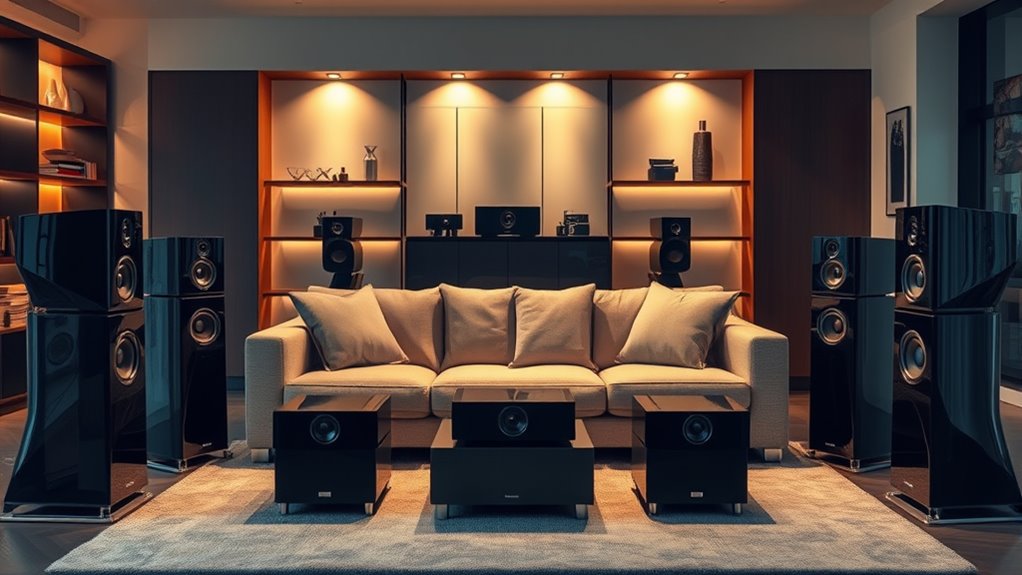

Shopping for hi-fi speaker systems for home means choosing between two very different paths: compact all-in-one stereo units that handle CDs, Bluetooth, and radio in one box, or component-based setups that demand an amplifier and more floor space but reward you with fuller, room-filling sound. My top pick, the Denon D-M41, wins overall because it delivers genuine audiophile-grade two-channel sound with a built-in amp and matched bookshelf speakers — a complete system that doesn’t need anything else. If you mainly want movies and streaming, the HiMuses M514 with true 5.1.4 Dolby Atmos is the standout home-theater pick, while the JBL Cove M1 is the easiest option if voice control and multi-room audio top your list. The main tradeoffs in this category are stereo fidelity versus surround immersion, simplicity versus expandability, and shelf-space convenience versus floor-standing power. Keep reading for the full breakdown of all 13 systems and who each one actually suits.

Get the latest gadgets delivered free with Prime
- Fast, free delivery on millions of items
- Prime Video, Amazon Music and more included
- Member-only deals all year
Complete the kit



Key Takeaways
- The Denon D-M41 separated itself as best overall because it’s the only true hi-fi system here — a proper amplifier plus matched bookshelf speakers — while most of the list consists of convenience-focused all-in-one units.
- Dolby Atmos claims vary widely: the HiMuses M514 delivers genuine 5.1.4 channels with upfiring drivers and a separate sub, while the Ultimea 5.1.2ch sound bar achieves Atmos effects through processing at a much lower complexity and ceiling-bounce compromise.
- Several budget shelf systems (the HANLIM 30W, Philips Bluetooth Stereo, and generic 30W micro systems) overlap heavily — the differentiators came down to remote quality, input flexibility, and build, not raw specs.
- Two products are niche tools, not general home picks: the Rockville RCS80-1 is a 70V commercial multi-room distribution system, and the Q Acoustics 3090Ci is a center channel that only makes sense added to an existing surround setup.
- Floor-standing towers like the Polk Monitor XT70 beat every shelf system for bass and dynamics without a subwoofer, but they demand amplification, floor space, and are sold as single speakers — budgeting double is mandatory.
| HANLIM 30W HiFi Shelf Stereo System with CD Player, Bluetooth, FM Radio, and Remote Control |  | Best Budget CD Micro System | Power Output: 30W (15W + 15W) | Connectivity: Bluetooth, USB, AUX in, 3.5mm headphone jack | Supported Formats: CD, CD-R, CD-RW, MP3, WMA | VIEW ON AMAZON | See Our Full Breakdown |
| JBL Cove M1 Compact Wi-Fi Home Speaker with Alexa+ (Black) |  | Best Smart Multi-Room Speaker | Model: Cove M1 | Color: Black | Connectivity: Wi-Fi, Bluetooth, AirPlay, Google Cast, Spotify Connect, Tidal Connect, Qobuz Connect, Roon Ready | VIEW ON AMAZON | See Our Full Breakdown |
| Polk Audio Monitor XT70 Large Home Tower Speaker (Single, Midnight Black) |  | Best Passive Tower for Hi-Res Listening | Type: Passive tower speaker (single) | Tweeter: 1 inch | Woofers: Two 6.5″ Dynamically Balanced | VIEW ON AMAZON | See Our Full Breakdown |
| Ultimea Aura A40 Pro 7.1ch Surround Sound Bar with Subwoofer |  | Best Value Home Theater Surround | Channel Configuration: 7.1 surround sound | Connectivity: Bluetooth 6.0, wired | Frequency Response: Down to 45 Hz | VIEW ON AMAZON | See Our Full Breakdown |
| Philips Bluetooth Stereo System with CD Player, USB, and FM Radio |  | Best Retro-Styled Compact Hi-Fi | Brand: Philips | Power Output: 18W | Speaker Configuration: 2.0 stereo | VIEW ON AMAZON | See Our Full Breakdown |
| Denon D-M41 Home Theater Mini Amplifier and Bookshelf Speaker Pair |  | Best Audiophile Value | Model: D-M41 | Included Components: Stereo CD/FM Receiver, 2x SC-M41 Bookshelf Speakers | Speaker Power: 2x30W | VIEW ON AMAZON | See Our Full Breakdown |
| Philips FX10 Bluetooth Stereo System with CD Player, 230W RMS, USB, FM Radio, and Remote Control |  | Best for Loud, Casual Listening | Model: FX10 | Power Output: 230W RMS | Amplifier: Dual amplifier design | VIEW ON AMAZON | See Our Full Breakdown |
| Home CD Stereo Shelf System, 30W Micro HiFi System with Bluetooth |  | Best Budget Micro System | Power Output: 30W (2x15W RMS) / 50W max | Connectivity: Bluetooth, USB, 3.5mm aux-in, headphone jack | Media Support: CD/CD-R/CD-RW, MP3/WMA via USB, FM radio | VIEW ON AMAZON | See Our Full Breakdown |
| Saiyin 5.0 Home Theater System, HiFi Surround Sound Speakers |  | Best Budget Surround Foundation | Total Power: 230W peak | Configuration: 5.0 channel (4 bookshelf, 1 center) | Woofer Size: 3 inches | VIEW ON AMAZON | See Our Full Breakdown |
| HiMuses M514 True 5.1.4 Dolby Atmos Home Theater System with Subwoofer |  | Best Premium Atmos Setup | Brand: HiMuses | Model: M514 | Channel Configuration: 5.1.4 | VIEW ON AMAZON | See Our Full Breakdown |
| Rockville RCS80-1 60W 70V Commercial Amplifier with 6 Black Cube Speakers |  | Best for Multi-Room Whole-House Audio | Amplifier Power: 60 Watts RMS | Impedance Support: 70V, 100V, 8-ohm, 4-ohm | Speakers Included: 6 x 3.5-inch 2-way cube speakers | VIEW ON AMAZON | See Our Full Breakdown |
| Q Acoustics 3090Ci Center Speaker – English Walnut |  | Best Center Channel for Home Theater Dialogue | Speaker Type: Center channel | Enclosure: 2-way reflex | Drivers: 2 x 4″ mid/bass, 1 x 0.9″ tweeter | VIEW ON AMAZON | See Our Full Breakdown |
| Ultimea 5.1.2ch Sound Bar with Dolby Atmos and Surround Sound System |  | Best Budget Dolby Atmos Package | Channels: 5.1.2 | Audio Format: Dolby Atmos | Connectivity: HDMI eARC, CEC | VIEW ON AMAZON | See Our Full Breakdown |
| hifi speaker systems for home | Connectivity |
|---|---|
| HANLIM 30W HiFi Shelf Stereo S | Bluetooth, USB, AUX in, 3.5mm headphone jack |
| JBL Cove M1 Compact Wi-Fi Home | Wi-Fi, Bluetooth, AirPlay, Google Cast, Spotify Connect, Tidal Connect, Qobuz Connect, Roon Ready |
| Polk Audio Monitor XT70 Large | — |
| Ultimea Aura A40 Pro 7.1ch Sur | Bluetooth 6.0, wired |
| Philips Bluetooth Stereo Syste | Bluetooth, USB, audio in |
| Denon D-M41 Home Theater Mini | Bluetooth, 2x digital inputs, headphone jack |
| Philips FX10 Bluetooth Stereo | Bluetooth, USB, Audio-in |
| Home CD Stereo Shelf System | Bluetooth, USB, 3.5mm aux-in, headphone jack |
| Saiyin 5.0 Home Theater System | — |
| HiMuses M514 True 5.1.4 Dolby | — |
| Rockville RCS80-1 60W 70V Comm | — |
| Q Acoustics 3090Ci Center Spea | — |
| Ultimea 5.1.2ch Sound Bar with | HDMI eARC, CEC |
More Details on Our Top Picks
HANLIM 30W HiFi Shelf Stereo System with CD Player, Bluetooth, FM Radio, and Remote Control
This option stands out for packing a full shelf-system experience — CD player, FM radio, USB, and Bluetooth — into a footprint that fits a bookshelf. Compared with the Philips Bluetooth Stereo System later in this roundup, the HANLIM offers noticeably more power at 30W versus 18W, plus six selectable sound modes that let listeners shape output for jazz, rock, or bass-heavy playlists. The silk tweeters and carbon fiber woofers are a step above typical micro-system drivers at this level. The tradeoffs are real, though: USB playback is limited to MP3 and WMA, Bluetooth headphones won’t pair, and the remote ships without batteries. This pick makes the most sense for buyers who still own a CD collection and want one tidy, affordable unit rather than a component-based setup.
Pros:- Six sound modes (Pop, Jazz, Rock, Classic, Flat, Bass) allow genuine tonal customization
- Silk tweeters and carbon fiber woofers outperform typical micro-system drivers
- Broad input selection: CD, CD-R/RW, USB, AUX, Bluetooth, and FM radio
- Compact main unit fits standard shelving without dominating the space
Cons:- No Bluetooth headphone support, a surprising gap for a modern system
- USB port only reads MP3 and WMA files, capping at 32GB drives
- Remote requires AAA batteries that aren’t included
Best for: CD collectors and casual listeners who want an all-in-one shelf system with multiple inputs under one remote
Not ideal for: Headphone listeners and audiophiles — Bluetooth headphones aren’t supported and 30W won’t satisfy large-room listening
- Power Output:30W (15W + 15W)
- Connectivity:Bluetooth, USB, AUX in, 3.5mm headphone jack
- Supported Formats:CD, CD-R, CD-RW, MP3, WMA
- Radio:FM, 87.5–108MHz
- Speakers:2 stereo speakers with silk tweeters and carbon fiber woofers
- Main Unit Dimensions:6.3 x 8.5 x 7 inches
- Weight:8.5 lbs (3.9 kg)
- USB Capacity:Up to 32GB
Our verdict“A sensible all-in-one pick for CD loyalists who want versatile playback and tweakable sound without buying separate components.”
JBL Cove M1 Compact Wi-Fi Home Speaker with Alexa+ (Black)
Where the HANLIM shelf system anchors a single room, the JBL Cove M1 is built around whole-home audio — Wi-Fi streaming, AirPlay, Google Cast, Spotify Connect, Tidal Connect, and Roon Ready all in one compact box. Its automatic room tuning measures the space and balances the sound accordingly, something no CD-based system here can do. Alexa+ adds hands-free voice control, and the “Music Follows Me” feature hands playback off between Cove speakers as you move through the house. The catch: real stereo separation or home-theater depth requires buying additional JBL Cove or Bar MK2 units, so the entry price understates the full cost. Setup also depends entirely on the JBL One app, which will frustrate anyone who prefers plug-and-play simplicity.
Pros:- Ultra-wide, detailed sound with deep bass from a compact single-box design
- Automatic room tuning adapts output to the acoustics of each space
- Broadest streaming support in this lineup: Wi-Fi, Bluetooth, AirPlay, Cast, Spotify, Tidal, Qobuz, Roon
- Music Follows Me enables seamless whole-home playback across paired JBL speakers
Cons:- Stereo pairing and home theater use require purchasing additional JBL devices
- Initial setup and advanced configuration require the JBL One app
Best for: Stream-first households that want voice control and expandable multi-room audio throughout the home
Not ideal for: Buyers who want stereo or surround sound from a single purchase, and anyone avoiding app-dependent setup
- Model:Cove M1
- Color:Black
- Connectivity:Wi-Fi, Bluetooth, AirPlay, Google Cast, Spotify Connect, Tidal Connect, Qobuz Connect, Roon Ready
- Voice Assistant:Alexa+
- App:JBL One
- Key Features:Constant Sound Field, AI Sound Boost, Music Follows Me, Auracast
- Multi-Room Compatibility:JBL Cove series, JBL Bar MK2 series
Our verdict“The clear choice for streaming-centric buyers who value voice control and multi-room expansion over physical media or true stereo from one box.”
Polk Audio Monitor XT70 Large Home Tower Speaker (Single, Midnight Black)
The XT70 plays a different game than everything else here: it’s a passive tower speaker, meaning it needs an amplifier or receiver — unlike the powered JBL Cove M1 or the Ultimea Aura A40 Pro, which are self-contained. What that buys you is genuine hi-fi scale: two 6.5″ dynamically balanced woofers and two 8″ passive radiators produce bass depth and midrange openness that compact systems simply can’t match. It also handles high-resolution audio and Dolby Atmos/DTS:X when built into a larger system. The honest tradeoffs: it’s sold as a single speaker, so stereo means buying two, plus an amp, plus floor space for 40-plus-inch cabinets. Compared with the Denon D-M41 bookshelf pair elsewhere in this guide, the XT70 trades desk-friendly size for room-filling authority.
Pros:- Two 6.5″ woofers plus dual 8″ passive radiators deliver deep, punchy bass without a subwoofer
- Supports high-resolution streaming from Apple Music, Amazon Music HD, Tidal, and Spotify
- Dolby Atmos and DTS:X compatible for future surround expansion
- Rubber feet provide stable placement on both carpet and hardwood
Cons:- Sold as a single speaker — stereo listening doubles the cost
- Requires a separate amplifier or receiver, unlike powered options here
- Large cabinet footprint demands dedicated floor space
Best for: Audiophiles building a component system who want hi-res-capable tower performance with real bass without a separate subwoofer
Not ideal for: Apartment dwellers and plug-and-play buyers — it requires an amplifier, a second unit for stereo, and serious floor space
- Type:Passive tower speaker (single)
- Tweeter:1 inch
- Woofers:Two 6.5″ Dynamically Balanced
- Passive Radiators:Two 8 inch
- Impedance:4–8 Ohm
- Audio Formats:Dolby Atmos, DTS:X
- Hi-Res Streaming Support:Apple Music, Amazon Music HD, Tidal, Spotify
- Color:Midnight Black
Our verdict“The pick for listeners willing to build a proper component system who want tower-scale hi-fi sound rather than an all-in-one convenience.”
Ultimea Aura A40 Pro 7.1ch Surround Sound Bar with Subwoofer
For movie nights, nothing else in this batch competes on channel count: the A40 Pro delivers a true 7.1-channel layout with a dedicated subwoofer and four adjustable surround speakers. Its VocalMatrix and VoiceMX dialogue processing solves the most common soundbar complaint — muffled speech — while BassMX pushes low-end response down to 45Hz. Compared with the HiMuses M514 5.1.4 Dolby Atmos system in this guide, the A40 Pro trades Atmos height channels for a lower-cost, more configurable package, including a 10-band EQ and 121 app presets. Bluetooth 6.0 keeps latency low enough for gaming. But the surround experience isn’t wireless-clean: the subwoofer and one rear speaker need wired connections, and the multi-speaker setup takes genuine effort. It’s a home theater tool, not a music-first hi-fi system like the Polk XT70.
Pros:- VocalMatrix and VoiceMX technologies make dialogue genuinely clear in dense mixes
- 7.1 channels with four adjustable surround speakers enable precise audio placement
- 121 presets and a 10-band EQ offer unusually deep customization via the app
- Bluetooth 6.0 delivers stable, low-latency streaming for gaming
Cons:- Subwoofer and one rear speaker require wired connections despite the hybrid design
- Multi-speaker setup is more involved than a single soundbar
- Not water-resistant, limiting placement flexibility
Best for: Movie and gaming households that want true surround immersion and deep EQ control without an Atmos-level price
Not ideal for: Music-first listeners and minimalists — the multi-speaker wired/wireless setup is involved and the tuning leans cinematic rather than neutral
- Channel Configuration:7.1 surround sound
- Connectivity:Bluetooth 6.0, wired
- Frequency Response:Down to 45 Hz
- Surround Speakers:Four adjustable speakers
- Audio Technologies:VocalMatrix, VoiceMX, BassMX
- Control:Ultimea app (121 presets, 10-band EQ)
- Mounting:Tabletop or wall mount
- Dimensions:15.75″D x 2.76″W x 3.54″H
- Weight:10.1 lbs
Our verdict“The strongest surround-for-the-money pick here for film and game nights, provided you accept a more involved setup than a plug-in stereo system.”
Philips Bluetooth Stereo System with CD Player, USB, and FM Radio
This Philips micro system wins on charm and simplicity: a retro-inspired design paired with modern Bluetooth, CD, and USB playback, all controlled by an infrared remote. It’s the easiest system in this guide to set up — no app, no account, no Wi-Fi, which immediately distinguishes it from the JBL Cove M1 and its app-dependent configuration. The catch is output: at 18W total, it trails the 30W HANLIM shelf system and falls well short of the Philips FX10’s 230W RMS found later in this roundup. That makes it a bedroom, kitchen, or office system rather than a living-room centerpiece. Streaming options are also basic — Bluetooth only, with no built-in streaming services or Wi-Fi. For buyers who prioritize aesthetics and effortless operation over raw volume, those tradeoffs are easy to accept.
Pros:- Retro styling that suits classic audio and vintage-leaning decor
- Genuinely simple setup with no app or account required
- Covers the essentials: Bluetooth, CD, MP3 via USB, and audio-in
- Compact footprint works on shelves and small furniture
Cons:- 18W output is modest and struggles in larger rooms
- No Wi-Fi or built-in streaming services beyond Bluetooth
- Corded power limits placement flexibility
Best for: Design-conscious buyers who want a simple, good-looking CD and Bluetooth system for a bedroom, kitchen, or office
Not ideal for: Large-room listeners and streamers — 18W won’t carry a living room, and there’s no Wi-Fi or built-in streaming support
- Brand:Philips
- Power Output:18W
- Speaker Configuration:2.0 stereo
- Connectivity:Bluetooth, USB, audio in
- Audio Formats:CD, MP3
- Dimensions:20 x 12 x 15 inches
- Weight:9.8 lbs
- Power Source:Corded electric
Our verdict“A style-first micro system for small spaces where looks and simplicity matter more than power or smart features.”
Denon D-M41 Home Theater Mini Amplifier and Bookshelf Speaker Pair
This option stands out for buyers who want genuine hi-fi sound without assembling components piece by piece. The D-M41 bundles a receiver and matched bookshelf speakers, so nothing is left to guesswork, and Denon’s triple noise reduction design keeps the signal clean whether the source is Bluetooth, CD, or a TV connected via the two digital inputs. Compared with the Philips FX10, which chases raw power, the Denon prioritizes refinement and tonal balance, which matters more in a bedroom or study than sheer volume. The dedicated headphone amplifier is a thoughtful touch the Saiyin and HiMuses systems can’t match. The tradeoff is scale: 30W per channel fills small to mid-size rooms beautifully but runs out of headroom in larger spaces, and input count is modest by receiver standards.
Pros:- Receiver and matched speakers included as a complete system
- Triple noise reduction design keeps Bluetooth and digital sources clean
- Two digital inputs make TV integration simple
- Dedicated headphone amplifier for quality private listening
Cons:- 30W per channel is underpowered for large rooms
- Fewer physical inputs than full-size receivers
Best for: Audiophiles on a budget who want a matched, ready-to-play stereo system for a bedroom, office, or living room up to about 200 square feet
Not ideal for: Home theater builders with big rooms — the 30W output and two-speaker layout can’t deliver reference-level volume or surround immersion
- Model:D-M41
- Included Components:Stereo CD/FM Receiver, 2x SC-M41 Bookshelf Speakers
- Speaker Power:2x30W
- Woofer Size:4.75 inches
- Tweeter:1-inch silk dome
- Connectivity:Bluetooth, 2x digital inputs, headphone jack
- Signal Technology:Triple Noise Reduction Design
Our verdict“If clean, natural two-channel sound in a compact all-in-one package is the goal, this is the smartest starting point in the lineup.”
Philips FX10 Bluetooth Stereo System with CD Player, 230W RMS, USB, FM Radio, and Remote Control
Where the Denon D-M41 whispers refinement, the Philips FX10 goes the other direction: 230W RMS through a dual amplifier design means this system plays loud without the harshness that cheap single-amp boxes develop at high volume. The bass reflex cabinets give music real punch, and the MAX Sound button is a one-press volume and bass boost — genuinely useful at a party, less useful for critical listening. Connectivity is broad for the category: Bluetooth, CD, USB, and FM cover nearly every source a casual listener owns, though there’s no Wi-Fi or smart assistant support, which the JBL Cove M1 offers natively. Bluetooth range is also on the short side, so phone-in-pocket streaming across a room can stutter.
Pros:- 230W RMS output easily fills large rooms and gatherings
- Dual amplifier design keeps highs clear at high volume
- Multiple sources: Bluetooth, CD, USB, and FM in one unit
- MAX Sound button delivers instant bass and volume boost
Cons:- Short Bluetooth range limits wireless streaming flexibility
- No Wi-Fi or smart assistant integration
Best for: Casual listeners and party hosts who want big, energetic sound with CD and radio playback in a single box, no assembly required
Not ideal for: Smart-home users — there’s no Wi-Fi, app control, or voice assistant integration, so it stays a dumb (if loud) stereo
- Model:FX10
- Power Output:230W RMS
- Amplifier:Dual amplifier design
- Speaker Type:Bass reflex
- Connectivity:Bluetooth, USB, Audio-in
- Media Support:CD, MP3, FM radio
- Included Accessories:Remote control
Our verdict“This pick makes the most sense for listeners who value volume and versatility over audiophile subtlety or smart features.”
Home CD Stereo Shelf System, 30W Micro HiFi System with Bluetooth
This micro shelf system is the cheapest path to a complete hi-fi setup in this roundup — CD player, FM radio, Bluetooth, USB, and aux-in all in one compact chassis. The built-in DSP with five EQ presets (flat, classic, rock, pop, jazz) lets listeners shape sound to taste, something the Philips FX10 doesn’t offer at any price. Compared with the HANLIM 30W shelf system, it matches the power output but adds more playback modes and a retro styling that suits a bedroom or kitchen counter. Realism is required: at 2x15W RMS, this is background and nearfield listening, not room-filling sound, and the speakers will strain at high volume. Quirks like FAT-only USB support and Bluetooth limited to streaming (no headphones) keep expectations appropriately modest.
Pros:- Complete all-in-one: CD, FM, Bluetooth, USB, and aux playback
- DSP with 5 EQ modes and 3 repeat modes for tailored listening
- Compact, stylish footprint fits shelves and small spaces
- Remote control included for convenient operation
Cons:- Only 2x15W RMS — limited volume and bass for larger rooms
- USB limited to FAT16/32 drives with MP3/WMA files only
Best for: First-time buyers, students, or anyone wanting a cheap, space-saving CD and Bluetooth system for a bedroom, kitchen, or office desk
Not ideal for: Anyone expecting real hi-fi dynamics — 30W total output and small drivers can’t fill a living room or handle bass-heavy music at volume
- Power Output:30W (2x15W RMS) / 50W max
- Connectivity:Bluetooth, USB, 3.5mm aux-in, headphone jack
- Media Support:CD/CD-R/CD-RW, MP3/WMA via USB, FM radio
- Sound Processing:Built-in DSP with 5 EQ modes
- Playback Modes:One / all / random repeat
- Dimensions:16.9 x 20.5 x 8.66 inches
- Weight:6 pounds
- Included:Micro system, remote control, user manual
Our verdict“A sensible budget choice for casual, close-range listening where convenience matters more than power or fidelity.”
Saiyin 5.0 Home Theater System, HiFi Surround Sound Speakers
The Saiyin 5.0 package takes a different approach from every soundbar in this roundup: instead of amplified convenience, it offers five passive speakers — four 40W bookshelves plus a 75W center channel — as building blocks for a real surround setup. The dedicated center channel is the standout, anchoring dialogue far more clearly than any two-channel system like the Denon D-M41 can manage. Wall or shelf mounting flexibility helps with awkward room layouts. The catch is fundamental: this is speakers only. Buyers need an external AV receiver or amplifier and their own speaker wire, which adds cost and complexity the Philips FX10 avoids entirely. There’s also no subwoofer, so movie bass falls to whatever the buyer adds later — the HiMuses M514 includes one; this doesn’t.
Pros:- Dedicated 75W center channel dramatically improves dialogue clarity
- True 5.0 layout for genuine surround immersion
- Retro wooden enclosures blend with home decor
- Wall or shelf mounting suits varied room layouts
Cons:- Requires a separate amplifier or AV receiver not included
- Speaker wires not in the package
- No subwoofer, leaving low-frequency impact to future upgrades
Best for: DIY home theater builders who already own (or plan to research) an AV receiver and want an affordable 5.0 speaker foundation
Not ideal for: Plug-and-play buyers — with no amplifier, no wires, and no subwoofer included, this system produces no sound out of the box
- Total Power:230W peak
- Configuration:5.0 channel (4 bookshelf, 1 center)
- Woofer Size:3 inches
- Impedance:6 Ohm
- Enclosure:ABS, metal, MDF with wood grain
- Mounting:Wall mount or shelf
- Type:Passive (requires external amplifier)
Our verdict“This pick makes the most sense for hands-on buyers building a surround system piece by piece around their own receiver.”
HiMuses M514 True 5.1.4 Dolby Atmos Home Theater System with Subwoofer
Sitting at the top of this lineup, the HiMuses M514 delivers a true 5.1.4 Dolby Atmos configuration — four height channels, four surrounds, a dedicated center, and a wired subwoofer — which no soundbar here, including the Ultimea Aura A40 Pro, can replicate with authentic driver placement. The numbers translate directly: 25Hz bass extension reaches the subterranean rumble movie mixes are built around, while 16 aluminum-magnesium alloy drivers and independent crossovers keep dialogue crisp through the center channel. Handcrafted wooden cabinets reduce resonance and look the part in a finished living room. Compared with the Saiyin 5.0 kit, this is the complete article — amplifier-side design, sub included — but the wired subwoofer constrains placement, and running nine speakers means cable management and a genuinely involved setup process.
Pros:- True 5.1.4 layout with dedicated height channels for real Dolby Atmos
- Subwoofer reaches 25Hz for deep, controlled low-end
- 16 premium alloy drivers with independent hi-fi crossovers
- Handcrafted wooden cabinets minimize resonance
Cons:- Wired subwoofer limits placement flexibility
- Complex multi-speaker setup demands time and cable planning
Best for: Dedicated home theater enthusiasts with a dedicated media room who want genuine Atmos height effects and reference-grade bass from one coordinated package
Not ideal for: Apartment dwellers and casual viewers — the multi-speaker installation effort and footprint are overkill for occasional TV watching
- Brand:HiMuses
- Model:M514
- Channel Configuration:5.1.4
- Peak Power:900W
- Frequency Response:Down to 25Hz
- Driver Count:16 aluminum-magnesium alloy drivers
- Subwoofer Volume:13.5L (wired)
- Cabinet Material:Wood
- Audio Format:Dolby Atmos
Our verdict“For buyers building a serious movie room and unwilling to compromise on height effects or bass depth, this is the ceiling of the roundup.”
Rockville RCS80-1 60W 70V Commercial Amplifier with 6 Black Cube Speakers
This pick stands out for something no stereo shelf system in this lineup can do: distribute audio across six rooms from a single amplifier. The 70V distributed audio architecture means wire runs can stretch far longer than conventional 8-ohm setups allow, and the selectable power taps (6W, 3W, 1.5W) let you balance volume room by room. Compared with the Denon D-M41, which focuses serious fidelity into one listening space, the Rockville trades refinement for coverage — its frequency response bottoms out at 130Hz, so bass is thin by hi-fi standards. Connectivity is genuinely flexible, with Bluetooth, USB, SD, FM, and mic paging onboard, making it as comfortable in a home workshop or patio setup as in a café.
Pros:- Scalable 70V system supports long wire runs and adding more speakers later
- Six inputs including Bluetooth, USB, SD, FM radio, and microphone paging
- Swivel wall mounts and quick-disconnect terminals simplify installation
- Durable ABS enclosures hold up in garages, patios, and commercial spaces
Cons:- Frequency response starts at 130Hz, leaving music sounding thin without deep bass
- 70V wiring and impedance matching demand setup knowledge most homeowners lack
Best for: Homeowners who want background music and paging across multiple rooms, patios, or a home business
Not ideal for: Critical listeners — the 130Hz low-end cutoff and small 3.5-inch drivers can’t deliver full-range music fidelity
- Amplifier Power:60 Watts RMS
- Impedance Support:70V, 100V, 8-ohm, 4-ohm
- Speakers Included:6 x 3.5-inch 2-way cube speakers
- Frequency Response:130Hz – 20kHz
- Speaker Taps:6W, 3W, 1.5W selectable
- Inputs:Bluetooth, USB, SD, FM Radio, RCA, Mic
- Mounting:Swivel wall mount
Our verdict“Buy this if your priority is audio in many rooms at once rather than rich stereo sound in one room.”
Q Acoustics 3090Ci Center Speaker – English Walnut
Where most entries here are all-in-one systems, the 3090Ci does one job with real precision: dialogue. Its twin 4-inch mid/bass drivers and decoupled tweeter keep voices anchored and intelligible, while P2P (point-to-point) bracing stiffens the cabinet so vocals don’t smear against panel resonance. Compared with the Saiyin 5.0 surround package, which spreads modest drivers across a whole room, this single center channel delivers noticeably cleaner spoken-word clarity — the difference between following a whispered scene and rewinding for it. The English Walnut finish is a genuine step up aesthetically, and low-profile terminals let it slide into standard AV shelving. The tradeoff is honest: it is one component, not a system, so you’ll need an amplifier and left/right speakers to build around it.
Pros:- Twin 4-inch drivers deliver exceptionally clear, centered dialogue
- P2P bracing and decoupled tweeter reduce cabinet vibration artifacts
- Elegant English Walnut finish with chrome bezels suits modern AV furniture
- Handles up to 100 watts for pairing with capable receivers
Cons:- Single-purpose component — no amplification, subwoofer, or surround channels included
- At 6 kg and 16.9 inches wide, it needs sturdy, appropriately sized shelving
Best for: Home theater builders upgrading an existing AV setup who prioritize crisp movie and TV dialogue
Not ideal for: Anyone wanting a plug-and-play system — this requires a receiver, amplification, and companion speakers
- Speaker Type:Center channel
- Enclosure:2-way reflex
- Drivers:2 x 4″ mid/bass, 1 x 0.9″ tweeter
- Impedance:6 ohms
- Maximum Power:100 watts
- Dimensions:16.9″ W x 8.5″ D x 6″ H
- Weight:6 kg
- Finish:English Walnut
Our verdict“This makes the most sense for someone assembling a component home theater who refuses to compromise on dialogue clarity.”
Ultimea 5.1.2ch Sound Bar with Dolby Atmos and Surround Sound System
This model brings true Dolby Atmos — with dedicated up-firing drivers, rear surrounds, and a subwoofer — to a price tier where 2-channel soundbars usually live. Compared with its sibling, the Ultimea Aura A40 Pro, it steps up to genuine height channels for overhead effects, though the HiMuses M514 still edges it out with a 5.1.4 layout if you want one more layer of vertical immersion. The HDMI eARC connection preserves lossless Atmos bitstreams, which matters more than it sounds — optical-only bars silently downgrade to basic surround. Customization is unusually deep here: a 10-band graphic EQ, 121 presets, and app-based OTA updates give it tuning flexibility the Philips FX10 shelf system simply doesn’t offer. The one real limitation is no DTS support, which affects some Blu-ray libraries.
Pros:- Genuine 5.1.2 layout with up-firing Atmos drivers and rear surrounds
- HDMI eARC enables lossless Atmos transmission from the TV
- 10-band EQ, 121 presets, and OTA updates via the app allow deep tuning
- CEC sync handles power and volume automatically with the TV
Cons:- No DTS compatibility, so some Blu-ray discs fall back to basic audio
- Sound bar form factor can’t match the musical fidelity of dedicated bookshelf speakers like the Denon D-M41
Best for: Movie watchers who want overhead Atmos effects and rear surrounds without a component-based theater build
Not ideal for: DTS-heavy Blu-ray collectors or audiophiles wanting true hi-fi stereo music playback
- Channels:5.1.2
- Audio Format:Dolby Atmos
- Connectivity:HDMI eARC, CEC
- EQ:10-band graphic EQ via app
- Presets:121
- DTS Support:Not compatible
- Components:Sound bar, subwoofer, rear surround speakers
Our verdict“This is the pick for viewers who want real Atmos immersion from a single box-and-speakers package, as long as DTS isn’t part of your library.”

How We Picked
I judged each system against what a home listener actually experiences day to day: sound quality for the money, ease of setup, input flexibility (Bluetooth, CD, USB, TV, turntable), build quality, and how well the product’s format matches its intended room. A 30W shelf system and a floor-standing tower can both be excellent — but only when matched to the right buyer, so I weighted each product against realistic use cases like bedroom listening, apartment movie nights, and whole-home audio.
Ranking favored systems that solve a problem completely rather than partially. The Denon D-M41 earns the top spot because it delivers authentic hi-fi separation and amplification in one purchase; the HiMuses M514 ranks high for buyers who want true Atmos without assembling components. Products requiring additional purchases (the Polk tower needs an amp; the Q Acoustics center needs four more speakers) were evaluated as total-system propositions, not just on their standalone merits. Convenience units were held to a simpler standard — reliability, usability, and honest expectations about 30W output — and ranked accordingly.
Factors to Consider When Choosing Hifi Speaker Systems For Home
Before picking a specific system, it helps to understand the structural choices in home audio — because the most common buying mistakes happen at the format level, not the brand level.Stereo Fidelity or Surround Immersion?
The single biggest decision is whether you listen to music in two channels or watch movies in surround. A stereo pair like the Denon D-M41’s bookshelf speakers creates imaging and depth that no sound bar can replicate for music, while a 5.1.4 system like the HiMuses M514 wraps you in cinematic sound that stereo can’t touch for film. Trying to buy one system that does both at a budget usually ends in disappointment on both fronts. A common mistake is buying a surround package primarily for music — surround processing often makes stereo recordings sound diffuse. If your listening splits roughly 50/50, a quality stereo system with a good sound stage is usually the safer bet, and you can add theater later.
Wattage Numbers Lie — Understand What 30W Really Means
Shelf systems advertise 30W and tower speakers advertise 200W, but these numbers describe different measurements under different conditions. A 30W micro system is fine for a bedroom or desk but will strain in a living room, sounding thin and harsh at higher volumes. Conversely, towers like the Polk Monitor XT70 are rated conservatively and play far louder than their numbers suggest with clean amplification. Also watch for PMPO ratings — inflated marketing figures in the thousands of watts that describe nothing usable. The honest metric is RMS wattage into a stated impedance. Match power to room size: small rooms need surprisingly little, and under-driving large speakers does more sonic damage than under-powering small ones.
Count the Hidden Costs of Component Systems
An all-in-one system costs what the sticker says. A component system rarely does. The Polk Monitor XT70 is sold as a single speaker, so a pair costs double — plus an amplifier or receiver, plus speaker wire. The Q Acoustics 3090Ci center channel is one piece of a five-to-seven-speaker puzzle. Buyers routinely budget for the speakers and forget the electronics driving them, which is where cheap receivers undermine good drivers. Before choosing this path, price the entire chain: speakers, amplification, cabling, and any source components. If that total feels uncomfortable, an integrated system like the Denon or Philips units delivers most of the satisfaction with none of the arithmetic.
Connectivity: Buy for the Sources You Actually Use
Be honest about how you listen. If everything comes from your phone, Bluetooth quality (look for aptX support) matters more than a CD player you’ll never touch. If you have a physical collection, the CD-equipped Philips and HANLIM systems earn their shelf space. Wi-Fi speakers like the JBL Cove M1 add multi-room audio and voice assistants, which Bluetooth alone can’t do — but they tie you into an ecosystem and depend on your network stability. A phono input, present on the Denon D-M41, is a quiet differentiator for vinyl owners that many buyers discover they needed only after purchase. List your three most-used sources before comparing spec sheets, and eliminate anything that doesn’t support all three.
Room Size and Placement Decide More Than Specs
A powerful system in a small room sounds boomy; a weak system in a large open-plan space disappears. Bookshelf speakers need stands or shelf space away from walls; towers need floor area and breathing room behind them; Dolby Atmos systems need a flat, reflective ceiling to work at all — vaulted or heavily treated ceilings defeat upfiring drivers. Sound bars with surround satellites, like the Ultimea packages, trade placement precision for convenience but need power outlets near the rear speaker positions. Measure your room and map where speakers would actually sit before falling for any system. The best-specced setup placed poorly loses to a modest system placed well every time.
Frequently Asked Questions
Is the Denon D-M41 really better than cheaper Bluetooth shelf systems if I mostly stream from my phone?
For casual background listening, honestly, no — a 30W Bluetooth shelf system will do the job, and the Denon’s advantages won’t be obvious at low volume. The difference appears in clarity, bass depth, and volume without distortion. The D-M41’s amplifier and matched bookshelf speakers produce a stereo image where you can place instruments in space, and they hold together at volumes where small shelf systems start to compress and harshen. It also has an optical input for your TV and a phono input for a turntable, so it grows with you. If streaming at conversational volume is genuinely your entire use case, save your money; if you ever sit down and just listen, the gap is real.
Do I actually need Dolby Atmos, or is 5.1 surround enough for movies?
Atmos adds height effects — rain falling from above, aircraft passing overhead — using upfiring drivers that bounce sound off your ceiling, as in the HiMuses M514 and both Ultimea systems. It’s genuinely immersive, but it depends entirely on a flat, hard ceiling; vaulted ceilings or acoustic panels blunt the effect. Standard 5.1 still delivers 90% of the home-theater experience and is more forgiving of room quirks. Atmos also requires Atmos-encoded content, which means streaming services or Blu-rays that support it. If your ceiling cooperates and you watch a lot of modern blockbusters, Atmos is worth it; otherwise a solid 5.1 setup like the Saiyin delivers more predictable results per dollar.
Can I use the Polk Monitor XT70 tower speaker by itself, or do I need two?
You need two for music, and the listing price is per single speaker — a common trap for first-time tower buyers. Music is mixed in stereo, so one tower gives you half the presentation, with no imaging and instruments piled into one location. The XT70 does contain multiple drivers in one cabinet, so a single unit can work as a front channel in a home-theater setup paired with other speakers, but that’s a niche configuration. You’ll also need an amplifier or receiver, since towers are passive — factor that into the total. If the full cost of a pair plus amplification exceeds your budget, a complete amplified system like the Denon D-M41 is the smarter starting point.
Why would anyone buy the Rockville RCS80-1 commercial system for a home?
Most people shouldn’t — it exists on this list because some buyers have needs that consumer systems can’t meet. Its 70-volt distribution design lets you run many small speakers across long cable runs, powering six cube speakers from one amplifier — useful for whole-house audio, a garage, patio coverage, or a basement workspace where sound everywhere matters more than sound quality anywhere. The tradeoff is clear: 70V systems sacrifice fidelity for reach and scale, and the cube speakers sound functional rather than refined. If you want music in five rooms on a budget, it’s a legitimate answer; if you want to enjoy music in one room, skip it entirely and look at the Denon or HiMuses instead.
Are the budget 30W shelf systems like the HANLIM and generic micro systems worth buying, or should I just get a Bluetooth speaker?
They serve different purposes, and the shelf systems earn their place through features a portable Bluetooth speaker lacks: a CD player, FM radio, USB playback, and a remote control. If you have a CD collection, want kitchen radio, or like a dedicated unit that stays plugged in and always ready, a 30W shelf system is the right tool and costs little. Sound-wise, expect clear midrange and modest bass — they fill a bedroom or office nicely but won’t shake a living room. A good portable Bluetooth speaker may actually sound punchier but offers no disc playback and needs charging. The mistake to avoid is buying a shelf system expecting hi-fi sound; it’s a convenience appliance, and a fine one.
Conclusion
After comparing all 13 systems, the right choice comes down to what kind of listener you are. For best overall, the Denon D-M41 is the clearest recommendation — it’s the only option here that delivers true hi-fi sound as a complete, ready-to-enjoy package, with inputs for your TV, phone, and turntable. For best value, the Philips FX10 offers real power and input flexibility at shelf-system pricing, beating the smaller 30W units without a large step up in cost. For best premium, the HiMuses M514 with genuine 5.1.4 Dolby Atmos delivers the most immersive home-theater experience in the lineup. For beginners, the JBL Cove M1 removes every setup hurdle — plug in, connect Wi-Fi, and ask Alexa to play — making it the easiest entry into home audio. For specific needs: choose the Polk Monitor XT70 pair if you have amplification and space for serious stereo, the Saiyin 5.0 or Ultimea bars for affordable movie night surround, and the Rockville RCS80-1 only if you’re wiring multi-room audio rather than listening critically. Skip anything that doesn’t match your room and habits — in home audio, the right format matters more than the right brand.
Columbus Day / Indigenous Peoples' Day Picks
long weekend sales
As an affiliate, we earn on qualifying purchases.