For a Ford Transit roof-mounted AC unit, my best overall pick is the Furrion Chill HE 13,500 BTU, a strong starting point for buyers who want a familiar RV-style rooftop system. The Red Dot 24V stands out for vehicle-focused installation, while the ICECOSMOS Ultra-Slim 12V is worth a look when roof height and a battery-based setup matter most. The main tradeoffs are roof fit and weight, electrical demand, cooling capacity, and whether you need heating or a low-profile design. A unit made for RV roofs may not match a Transit’s roof structure or electrical system without adaptation. Read on for the full comparison and the checks I’d make before choosing.

Get the latest gadgets delivered free with Prime
- Fast, free delivery on millions of items
- Prime Video, Amazon Music and more included
- Member-only deals all year
Complete the kit



Key Takeaways
- Fit comes before BTU claims: RV rooftop models such as the Furrion, VEVOR, and Dometic options may offer familiar capacities, but buyers still need to confirm roof opening, mounting, and clearance for their Transit.
- 12V and 24V models serve different electrical setups: The Red Dot is a 24V choice, while several van-oriented units run on 12V; matching the unit to the vehicle’s power system and available battery capacity matters more than choosing by voltage alone.
- Cooling capacity spans a wide range: The lineup runs from the Aspligo’s listed 8,000 BTU to the TOSOT’s 16,000 BTU, but higher capacity can bring greater power needs, roof load, or installation demands.
- Low-profile designs trade roof bulk for other constraints: The ICECOSMOS Ultra-Slim model may suit buyers concerned about exterior height, while a slim form alone does not establish cooling performance or Transit compatibility.
- Heating changes the value calculation: The 10,000 BTU 12V unit with a 4,500 BTU heater and the TOSOT heat-pump model offer added seasonal use, but buyers should compare heating needs with system complexity and electrical supply.
| Furrion Chill HE RV Roof Air Conditioner, 13,500 BTU, Black (FACR13HESA2-BL-AM) |  | Best for a Conventional RV-Style Installation | Cooling power: 13,500 BTU | Mounting: Rooftop, bolt-on | Fan technology: Dual-fan | VIEW ON AMAZON | See Our Full Breakdown |
| Red Dot 24V Rooftop-Mount AC Unit, R-6101-0-24P |  | Best for 24V Fleet and Equipment Builds | Part number: R-6101-0-24P | Voltage: 24 VDC | Cooling capacity: 21,300 BTU | VIEW ON AMAZON | See Our Full Breakdown |
| EliteBloom 12V Roof-Mounted Vehicle Air Conditioner |  | Best for Remote-Controlled 12V Cooling | Voltage: 12V | Cooling capacity: 2,200W | Airflow: 450 m³/h | VIEW ON AMAZON | See Our Full Breakdown |
| 12V DC Rooftop Air Conditioner for Vans, RVs, Sprinters, and Transit Vans |  | Best for Combined Cooling and Heat | Cooling power: 10,000 BTU | Heating output: 3,500 BTU | Voltage: 12V DC | VIEW ON AMAZON | See Our Full Breakdown |
| 12V RV Air Conditioner with Dual Roof or Wall Mount, 10,000 BTU Cooling and 4,500 BTU Heater | 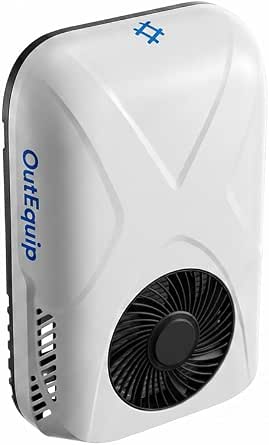 | Best for Flexible Mounting Options | Power: 12V DC | Cooling capacity: 10,000 BTU | Heating capacity: 4,500 BTU PTC | VIEW ON AMAZON | See Our Full Breakdown |
| TOSOT 16,000 BTU Rooftop RV Air Conditioner with Heat Pump |  | Best for Cooling Plus Shoulder-Season Heat | Cooling capacity: 16,000 BTU | Heating capacity: 12,500 BTU | Noise level: 43 dB | VIEW ON AMAZON | See Our Full Breakdown |
| ICECOSMOS Ultra-Slim 12V DC Rooftop RV Air Conditioner |  | Best Low-Profile 12V Pick | Cooling capacity: 10,000 BTU | Power: 12 V DC; 700 W | Noise level: 39 dB in sleep mode | VIEW ON AMAZON | See Our Full Breakdown |
| VEVOR 13,500 BTU Non-Ducted Rooftop RV Air Conditioner |  | Best Straightforward Non-Ducted Cooling | Cooling capacity: 13,500 BTU | Coverage: Up to 107.6 square feet | Noise level: 65 dB | VIEW ON AMAZON | See Our Full Breakdown |
| Dometic FreshJet 3 Series 15,000 BTU RV Rooftop Air Conditioner, White |  | Best for Higher Cooling with Lower Roof Weight | Cooling capacity: 15,000 BTU | Noise level: 58.5 dB | Power: 115 V corded electric; 4,396 W | VIEW ON AMAZON | See Our Full Breakdown |
| Aspligo 12V Rooftop RV Air Conditioner, 8,000 BTU |  | Best for Compact Battery-Powered Builds | Cooling capacity: Listed as 8,000 BTU; product information also lists 7,000 BTU | Voltage and power consumption: 12 V DC; 750 W | Noise level: 50 dB | VIEW ON AMAZON | See Our Full Breakdown |
| OutEquipPro 12V Rooftop RV Air Conditioner, 10,000 BTU |  | Best for 12V Builds | Cooling capacity: 10,000 BTU | Voltage: 12 volts | Power consumption: 2,843 watts | VIEW ON AMAZON | See Our Full Breakdown |
| Dometic Brisk II Rooftop Air Conditioner, 11,000 BTU, Brisk Black |  | Best for 115V Setups | Cooling capacity: 11,000 BTU | Voltage: 115 V | Wattage: 1,316 W | VIEW ON AMAZON | See Our Full Breakdown |
| ford transit roof mounted ac unit | Noise level | Cooling capacity |
|---|---|---|
| Furrion Chill HE RV Roof Air C | 50 dB | — |
| Red Dot 24V Rooftop-Mount AC U | — | 21,300 BTU |
| EliteBloom 12V Roof-Mounted Ve | Below 20 dB | 2,200W |
| 12V DC Rooftop Air Conditioner | 45 dB | — |
| 12V RV Air Conditioner with Du | — | 10,000 BTU |
| TOSOT 16,000 BTU Rooftop RV Ai | 43 dB | 16,000 BTU |
| ICECOSMOS Ultra-Slim 12V DC Ro | 39 dB in sleep mode | 10,000 BTU |
| VEVOR 13,500 BTU Non-Ducted Ro | 65 dB | 13,500 BTU |
| Dometic FreshJet 3 Series 15,0 | 58.5 dB | 15,000 BTU |
| Aspligo 12V Rooftop RV Air Con | 50 dB | Listed as 8,000 BTU; product information also lists 7,000 BTU |
| OutEquipPro 12V Rooftop RV Air | 40 dB | 10,000 BTU |
| Dometic Brisk II Rooftop Air C | 65 dB | 11,000 BTU |
More Details on Our Top Picks
Furrion Chill HE RV Roof Air Conditioner, 13,500 BTU, Black (FACR13HESA2-BL-AM)
For a Transit conversion with an existing RV-style rooftop setup, I’d shortlist the Furrion Chill HE for its 13,500 BTU cooling, dual-fan airflow, and stated 50 dB noise level. Its bolt-on mounting and insulated, aerodynamic shroud suit a vehicle exposed to road spray and wind, while the 91.3-pound weight makes roof reinforcement and safe lifting part of the installation plan. Unlike the Red Dot R-6101-0-24P, this unit is listed as a complete rooftop AC rather than a system that needs a separately sourced compressor and hoses. The tradeoff is that its thermostat, air distribution box, and controller are also sold separately, and it requires a new outdoor unit. I’d skip it if you need a self-contained kit or have not confirmed the Transit roof opening and support.
Pros:- 13,500 BTU cooling with dual-fan airflow
- Insulated, rugged shroud is designed for outdoor and road exposure
- Aerodynamic design aims to reduce wind resistance
- Bolt-on rooftop installation
Cons:- Thermostat, air distribution box, and controller are sold separately
- Requires a new outdoor unit rather than serving as a simple replacement component
- At 91.3 pounds, installation and roof support need careful planning
Best for: Transit conversion owners planning an RV-style rooftop installation who can source the required controls and air distribution box separately.
Not ideal for: Buyers seeking a complete, ready-to-operate package or those unable to accommodate a 91.3-pound rooftop unit and verify roof compatibility.
- Cooling power:13,500 BTU
- Mounting:Rooftop, bolt-on
- Fan technology:Dual-fan
- Noise level:50 dB
- Compressor type:Rotary scroll
- Dimensions:39.13 × 30.13 × 18.13 in
- Weight:91.3 lb
- Color:Black
Our verdict“Choose the Furrion if you want an RV-style 13,500 BTU rooftop unit and are prepared to source its separate controls and distribution components.”
Red Dot 24V Rooftop-Mount AC Unit, R-6101-0-24P
The Red Dot R-6101-0-24P is the specialist pick here: its 24V DC system and 21,300 BTU capacity target truck and equipment cabs, not the typical 12V camper setup. At 40 pounds, it is much lighter than the Furrion Chill HE, and the listed 299 CFM airflow plus service-friendly molded housing may appeal to builders who value access to components. But this is not a complete AC system: the compressor and hose kit are sold separately, so buyers must plan around compatible parts and installation. Its 24V requirement also means a Transit with a 12V house system will need an appropriate electrical arrangement. I’d rank it for specialized builds rather than general van conversions, where the simpler voltage fit of the 12V options is a better match.
Pros:- High stated cooling capacity of 21,300 BTU
- Low-profile rooftop design
- 40-pound listed weight is lighter than the Furrion Chill HE
- Includes evaporator, condenser, drier, and air filter
Cons:- Compressor must be purchased separately
- Hose kit must be purchased separately
- 24V DC power may not match a Transit’s existing 12V system
Best for: Transit builders with a 24V electrical system or fleet upfitters assembling a cab-cooling system from compatible components.
Not ideal for: Owners of standard 12V camper electrical systems who want a complete rooftop air conditioner without sourcing a compressor and hoses.
- Part number:R-6101-0-24P
- Voltage:24 VDC
- Cooling capacity:21,300 BTU
- Airflow:299 CFM
- Current draw:12.9 amps at 27.2 VDC
- Refrigerant:R-134A
- Weight:40 lb
- Included components:Evaporator, condenser, drier, air filter
Our verdict“Pick the Red Dot for a 24V commercial-style build with a planned component setup, not for a straightforward 12V Transit conversion.”
EliteBloom 12V Roof-Mounted Vehicle Air Conditioner
The EliteBloom 12V targets buyers who want roof-mounted cooling with remote operation and a movable outlet, rather than the higher stated BTU capacity of the Furrion or Red Dot units. Its 2,200W cooling figure, 450 m³/h airflow, and claimed noise level below 20 dB are appealing on paper, while low-voltage protection is intended to help guard the battery. There is a specification mismatch to resolve before purchase: the unit is described as 12V, but its protection and recovery thresholds are listed at 21.5V and 25V. It also needs a 250 × 410 mm skylight opening, so a Transit roof may require a dedicated fit check or modification. Compared with the 12V unit from B0HCNRT1L5, it has no stated heating output and less clearly specified installation measurements.
Pros:- Remote control and push-button operation
- 360° adjustable air outlet
- 450 m³/h stated airflow
- Low-voltage protection is included
Cons:- Listed 21.5V protection and 25V recovery figures conflict with the stated 12V system
- Requires a 250 × 410 mm skylight opening that may not match the Transit roof
- Product description and specs provide cooling data but no confirmed heating output
Best for: Transit owners seeking remote-controlled roof cooling who can verify the electrical thresholds and have a compatible 250 × 410 mm roof opening.
Not ideal for: Buyers needing clearly documented 12V battery compatibility, heating, or a unit that fits a standard Transit roof opening without modification.
- Voltage:12V
- Cooling capacity:2,200W
- Airflow:450 m³/h
- Noise level:Below 20 dB
- Low-voltage protection:21.5V
- Low-voltage recovery:25V
- Required skylight size:250 × 410 mm
- Dimensions:68.5 × 68 × 14.5 cm
- Controls:Push button and remote control
Our verdict“Consider the EliteBloom only if its voltage specifications and skylight fit are confirmed for your Transit before installation.”
12V DC Rooftop Air Conditioner for Vans, RVs, Sprinters, and Transit Vans
For a Transit owner who wants both cooling and some shoulder-season warmth from a single roof unit, this 12V rooftop AC offers 10,000 BTU cooling and 3,500 BTU heating. Its stated 45 dB operation is quieter than the Furrion Chill HE’s listed 50 dB, and its electrical protections address common concerns when adding a load to a vehicle system. The 3,500 BTU heat output is modest, though, so I would treat it as supplemental rather than a substitute for a dedicated heater in cold weather. At 59.5 pounds it is lighter than the Furrion, but roof mounting still calls for careful handling. The listed dimensions and maximum window-opening measurements also need checking against the actual Transit roof cutout; unlike the dual-mount B0H4QJRMRT, this model is described as top-mounted only.
Pros:- Provides 10,000 BTU cooling and 3,500 BTU heating
- 12V DC operation suits builds designed around a 12V system
- Listed 45 dB noise level
- Includes overvoltage, undervoltage, overcurrent, and short-circuit protection
Cons:- 3,500 BTU heating output is supplementary, not a primary cold-weather heat source
- At 59.5 pounds, rooftop lifting and installation require care
- Opening measurements and unit dimensions need verification against the Transit roof
Best for: Transit camper owners who want a 12V rooftop unit for summer cooling and occasional, mild-weather supplementary heat.
Not ideal for: Van owners relying on this as their primary cold-weather heater or those who cannot confirm roof-opening and clearance compatibility.
- Cooling power:10,000 BTU
- Heating output:3,500 BTU
- Voltage:12V DC
- Wattage:750 watts
- Noise level:45 dB
- Refrigerant:R-134A
- Dimensions:28.35 × 26.25 × 7.09 in
- Weight:59.5 lb
- Shell material:ABS
Our verdict“Choose this unit if you want one 12V rooftop system for cooling and modest supplementary heat, after confirming the roof fit.”
12V RV Air Conditioner with Dual Roof or Wall Mount, 10,000 BTU Cooling and 4,500 BTU Heater
This dual-mount 12V unit is the flexible choice for Transit builds where a rooftop installation competes with solar panels, racks, or limited roof space. It supports either roof or wall mounting, runs directly from 12V DC, and offers 10,000 BTU cooling plus 4,500 BTU of supplementary PTC heat. That heat rating exceeds the B0HCNRT1L5’s 3,500 BTU, but it is still not presented as a primary heater for a large or very cold van. The 40 dB Sleep mode and phone and remote controls suit overnight use; Turbo mode reaches 53 dB, so quiet operation depends on the selected setting. Before choosing a mounting route, check the required cutout and wall or roof thickness. Unlike the Furrion, this option also lists a wall-installation path, but that flexibility makes fit planning more involved.
Pros:- Supports rooftop or wall installation
- Runs directly on a 12V DC system without an inverter
- 40 dB Sleep mode is quieter than its Eco and Turbo settings
- Includes phone and remote controls with Sleep, Eco, and Turbo modes
Cons:- 4,500 BTU PTC heat is supplementary and not suited as primary heat for very cold or large spaces
- Mounting requires specific roof or wall cutouts and compatible 1.5–3.5-inch thickness
- Noise rises to 53 dB in Turbo mode
Best for: Transit converters balancing rooftop equipment or interior layout constraints who can match either specified cutout and mounting thickness.
Not ideal for: Buyers who need strong primary heating, a universal fit, or quiet operation while running the unit in Turbo mode.
- Power:12V DC
- Cooling capacity:10,000 BTU
- Heating capacity:4,500 BTU PTC
- Mounting options:Rooftop or wall
- Roof cutout:14.1 × 14.1 in
- Wall cutout:14 × 7 in
- Compatible wall or roof thickness:1.5–3.5 in
- Noise levels:40 dB Sleep, 48 dB Eco, 53 dB Turbo
- Minimum stated current draw:21A
Our verdict“Pick this model when roof-versus-wall mounting flexibility matters more than simple installation or primary heating capacity.”
TOSOT 16,000 BTU Rooftop RV Air Conditioner with Heat Pump
For a Ford Transit build that needs strong cooling and some off-season warmth, the TOSOT 16,000 BTU unit is the most versatile pick in this group. Its 12,500 BTU heat pump adds a function missing from the cooling-only VEVOR and Dometic FreshJet 3 models, while Wi-Fi and remote controls offer more ways to adjust it from the cabin. The stated 43 dB noise level is also lower than those products’ listed levels, though figures may reflect different test conditions. The tradeoff is substantial roof weight: at 131 pounds, it calls for careful attention to the Transit’s roof structure and installation plan. Its heat pump is intended for mild conditions, not a substitute for a dedicated heater in cold weather.
Pros:- 16,000 BTU cooling and 12,500 BTU heat-pump heating
- Wi-Fi app and remote control provide flexible operation
- Listed 43 dB noise level is lower than the VEVOR and Dometic FreshJet 3 figures
- Installation hardware is included
Cons:- At 131 pounds, it adds a substantial load to the roof
- Heat-pump heating is described as best for mild shoulder-season conditions
- Ships in two separate packages
Best for: Transit owners who want high cooling capacity, remote controls, and supplemental heat for mild shoulder-season weather
Not ideal for: Builders prioritizing low roof weight or planning to rely on heat-pump output during cold-weather camping
- Cooling capacity:16,000 BTU
- Heating capacity:12,500 BTU
- Noise level:43 dB
- Installation type:Rooftop, non-ducted
- Rooftop opening:14.25 × 14.25 inches
- Voltage and wattage:110 V; 1,550 W
- Dimensions and weight:42.4 × 28.3 × 12.2 inches; 131 pounds
- Controls and warranty:Wi-Fi app and remote control; 2 years
Our verdict“Choose the TOSOT if you want one rooftop unit for strong cooling and mild-weather heat and can accommodate its 131-pound weight.”
ICECOSMOS Ultra-Slim 12V DC Rooftop RV Air Conditioner
The ICECOSMOS suits Transit owners who want roof-mounted cooling without stepping up to a heavier, mains-powered unit. At 46 pounds and 6.5 inches tall, it is much lighter and slimmer than the 131-pound TOSOT, while its 12V DC design can run from a compatible vehicle electrical system without a separate inverter. The 10,000 BTU rating is a more modest cooling target than the TOSOT’s 16,000 BTU or the Dometic FreshJet 3’s 15,000 BTU, so it makes more sense for a smaller cabin or well-insulated van than a large, sun-exposed build. Sleep mode is listed at 39 dB, and ventilation and dehumidify modes add flexibility. It does not provide heat, and a suitable roof opening and 12V power setup are still required.
Pros:- Runs directly on 12V DC without an inverter
- 46-pound weight and 6.5-inch profile help limit roof load and height
- Sleep mode is rated at 39 dB
- Includes a sealing gasket and installation kit
Cons:- 10,000 BTU capacity is lower than the TOSOT and Dometic FreshJet 3
- Cooling only, with no listed heating function
- Requires a compatible 12V power setup and standard roof opening
Best for: Transit van owners building a lighter 12V system who value a low-profile roof unit and have a modest cooling load
Not ideal for: Owners needing higher cooling capacity, built-in heating, or a unit that can work without a compatible 12V electrical system
- Cooling capacity:10,000 BTU
- Power:12 V DC; 700 W
- Noise level:39 dB in sleep mode
- Dimensions and weight:28.5 × 28.5 × 6.5 inches; 46 pounds
- Roof opening fit:Standard 14.1 × 14.1 inches
- Compressor:Rotary scroll, inverter
- Modes:Cooling, dehumidify, ventilation, and 4-way swing
- Refrigerant:R-134A
Our verdict“Pick the ICECOSMOS for a lighter, low-profile Transit installation if 10,000 BTU of cooling and 12V operation fit your build.”
VEVOR 13,500 BTU Non-Ducted Rooftop RV Air Conditioner
The VEVOR 13,500 BTU is a direct-fit style of option for a Transit conversion using a standard rooftop opening and a non-ducted interior setup. It includes an air distribution box, operation panel, and installation hardware, which makes it a more complete package than a replacement outdoor unit alone. Its cooling capacity lands between the 10,000 BTU ICECOSMOS and the 15,000 BTU Dometic FreshJet 3, but the VEVOR is explicitly unsuitable for ducted RV systems. The stated coverage is up to 107.6 square feet, so buyers should compare that figure with their actual van layout rather than assume it will cool every Transit configuration equally. At 65 dB, it is also a louder listed option than the TOSOT or ICECOSMOS.
Pros:- 13,500 BTU cooling capacity
- Includes an air distribution box, operation panel, and installation hardware
- Offers Auto, Cooling, and three-speed Fan modes
- Fits a standard 14.25 × 14.25-inch rooftop vent
Cons:- Not compatible with ducted RV systems
- Listed noise level is 65 dB, higher than the TOSOT and ICECOSMOS figures
- Requires a new outdoor unit
Best for: Transit builders with a non-ducted interior, a standard 14.25-inch roof opening, and a preference for an included distribution box
Not ideal for: Owners with ducted air distribution or anyone prioritizing quiet operation over a straightforward non-ducted package
- Cooling capacity:13,500 BTU
- Coverage:Up to 107.6 square feet
- Noise level:65 dB
- Installation:Rooftop, non-ducted
- Vent opening:14.25 × 14.25 inches
- Voltage and wattage:120 V; 3,956 W
- Modes:Auto, Cooling, and three-speed Fan
- Refrigerant:R-32
Our verdict“Choose the VEVOR when your Transit has a non-ducted layout and you want a packaged rooftop cooling setup rather than a ducted-system replacement.”
Dometic FreshJet 3 Series 15,000 BTU RV Rooftop Air Conditioner, White
The Dometic FreshJet 3 offers a useful middle ground for Transit conversions: its 15,000 BTU cooling rating is close to the TOSOT’s output, but its listed weight is just 65.3 pounds rather than 131. That difference may matter to builders watching roof load, though installation still needs to match the vehicle and chosen air distribution setup. The e-coated evaporator coils add corrosion resistance, while insulated foam construction helps keep weight down. Unlike the 12V ICECOSMOS, this model uses a 115V corded-electric supply, so it suits shore power or an appropriately planned electrical system better than a battery-only build. It has no inverter and no listed heating function. Its stated 58.5 dB noise level is higher than the TOSOT and ICECOSMOS figures, despite the airflow design being described as quieter.
Pros:- 15,000 BTU cooling capacity in a 65.3-pound unit
- Insulated foam construction helps reduce weight
- E-coated evaporator coils resist corrosion
- Compatible with existing air distribution boxes for non-ducted units
Cons:- Requires 115 V power and does not have an inverter
- No heating function is listed
- Listed noise level is 58.5 dB, above the TOSOT and ICECOSMOS figures
Best for: Transit builders seeking substantial cooling with less rooftop weight than the TOSOT and who can supply 115V power
Not ideal for: Battery-only van builds that need direct 12V operation or owners seeking an integrated heating function
- Cooling capacity:15,000 BTU
- Noise level:58.5 dB
- Power:115 V corded electric; 4,396 W
- Dimensions and weight:29.5 × 27.56 × 13.99 inches; 65.3 pounds
- Compressor:Rotary scroll
- Refrigerant:R-410A
- Installation type:Packaged
- Warranty:2 years
Our verdict“The FreshJet 3 is a strong fit if you want near-15,000 BTU cooling without the TOSOT’s roof weight and have a 115V power plan.”
Aspligo 12V Rooftop RV Air Conditioner, 8,000 BTU
The Aspligo 12V targets a different Transit setup from the higher-capacity rooftop units: a compact cabin where running cooling with the engine off matters more than maximum output. It can operate from a 12V system and lists 8–10 hours in ECO mode when paired with a 200 Ah lithium battery, giving buyers a concrete power-system reference point. That runtime is conditional on the stated battery pairing, not a guarantee for every installation. The slim 7-inch profile is less imposing than the TOSOT’s 12.2-inch height, but cooling capacity is stated inconsistently as both 8,000 and 7,000 BTU. The ICECOSMOS is a clearer 10,000 BTU alternative and is lighter at 46 pounds; the Aspligo’s remote and LED display provide simple cabin controls, but it has no listed heating mode.
Pros:- 12V DC operation supports engine-off use with a suitable electrical system
- Slim 7-inch overall profile
- Remote control and LED display simplify operation
- Lists 8–10 hours of ECO-mode runtime with a compatible 200 Ah lithium battery
Cons:- Cooling capacity is inconsistent in the product information: 8,000 BTU and 7,000 BTU are both listed
- Requires a compatible 12V system and substantial current
- Cooling-only operation, with no heating function listed
Best for: Transit owners with a compact, insulated cabin and a 12V battery system who want engine-off cooling
Not ideal for: Buyers needing clearly specified higher cooling capacity, built-in heat, or operation without a substantial 12V power system
- Cooling capacity:Listed as 8,000 BTU; product information also lists 7,000 BTU
- Voltage and power consumption:12 V DC; 750 W
- Noise level:50 dB
- Dimensions and weight:Item: 32 × 28 × 9.8 inches; 59–59.5 pounds
- Overall thickness:7 inches
- Recommended roof opening:Greater than 13.78 × 9.84 inches
- Controls:Remote control with LED display
- Battery runtime:8–10 hours in ECO mode with a 200 Ah lithium battery
Our verdict“Choose the Aspligo for a compact Transit and a battery-backed 12V setup, but confirm the capacity and roof opening before committing.”
OutEquipPro 12V Rooftop RV Air Conditioner, 10,000 BTU
The OutEquipPro is the more relevant fit for a Transit conversion built around a 12V electrical system: its 10,000 BTU rating and rooftop format suit buyers who want vehicle-powered cooling without stepping up to a 115V unit like the Dometic Brisk II. Remote operation and eco, sleep, and turbo modes give you ways to tailor use, while the 40 dB noise rating is far below the Dometic’s listed 65 dB. That quieter specification may matter when the van is also a sleeping space. The tradeoff is electrical planning: the stated 2,843-watt consumption can place a heavy demand on batteries, and runtime depends on available capacity. Its one-year warranty is also shorter than the Dometic’s two years. I’d shortlist it for a carefully planned 12V setup, not for buyers seeking a simple plug-in replacement.
Pros:- 10,000 BTU cooling capacity in a rooftop unit
- 12V operation suits compatible vehicle electrical systems
- 40 dB stated noise level is lower than the Dometic Brisk II’s 65 dB
- Remote control and eco, sleep, and turbo modes offer operating flexibility
Cons:- The stated 2,843-watt consumption can place a substantial load on the electrical system
- Cooling runtime depends on available battery capacity
- One-year warranty is shorter than the Dometic Brisk II’s two-year coverage
Best for: Transit owners building a 12V electrical system who want rooftop cooling, remote controls, and a comparatively low stated noise level.
Not ideal for: Van owners without substantial battery capacity or a compatible 12V setup, and buyers who prioritize a longer warranty or higher cooling capacity.
- Cooling capacity:10,000 BTU
- Voltage:12 volts
- Power consumption:2,843 watts
- Noise level:40 dB
- Dimensions:28.3 × 28.3 × 6.3 inches
- Weight:45 pounds
- Controls:Buttons and remote control
- Warranty:1 year
Our verdict“Choose the OutEquipPro if your Transit has a suitable 12V power system and quieter listed operation matters more than warranty length or extra BTUs.”
Dometic Brisk II Rooftop Air Conditioner, 11,000 BTU, Brisk Black
The Dometic Brisk II suits Transit owners who can supply 115V power and want a little more cooling capacity than the OutEquipPro’s 10,000 BTU. Its 11,000 BTU rating and three-speed blower let you adjust airflow, while the included remote makes operation easier from inside the van. At 77 pounds and 14 inches tall, though, it is heavier and taller than the OutEquipPro’s listed 45-pound, 6.3-inch profile—details that affect roof loading and clearance planning. The Dometic’s 65 dB noise rating is also substantially higher than the OutEquipPro’s 40 dB, a meaningful drawback in a compact sleeping area. Its two-year warranty exceeds the OutEquipPro’s one year, but the Brisk II has no inverter. I’d favor it when 115V compatibility and modestly greater capacity matter more than quiet operation or a low-profile shape.
Pros:- 11,000 BTU capacity exceeds the OutEquipPro’s 10,000 BTU
- Three blower speeds allow airflow adjustment
- Remote controller is included
- Two-year warranty is longer than the OutEquipPro’s one-year coverage
Cons:- Listed 65 dB noise level is considerably higher than the OutEquipPro’s 40 dB
- At 77 pounds and 14 inches tall, it is heavier and taller than the OutEquipPro
- 115V requirement and lack of an inverter may not suit a 12V-focused build
Best for: Transit owners with a compatible 115V power source who want 11,000 BTU cooling, adjustable blower speeds, and a two-year warranty.
Not ideal for: Buyers building around 12V-only power, those sensitive to rooftop height or weight, and van sleepers prioritizing quieter listed operation.
- Cooling capacity:11,000 BTU
- Voltage:115 V
- Wattage:1,316 W
- Noise level:65 dB
- Dimensions:28 × 30 × 14 inches
- Weight:77 pounds
- Blower speeds:3
- Warranty:2 years
Our verdict“Pick the Brisk II if your Transit can supply 115V and its extra cooling capacity and longer warranty outweigh noise, height, and weight.”

How We Picked
I ranked these options around the issues that shape a Ford Transit installation: vehicle and roof compatibility, voltage, cooling capacity, form factor, and whether the unit adds heating. A product name or RV fitment alone does not prove that a unit will fit a Transit roof. The most useful picks are the ones with a clearly defined role and specs that help buyers start matching the unit to their build.
My order gives preference to models with recognizable capacities or vehicle-focused positioning, then separates them by the needs they serve. The Furrion Chill HE leads as a balanced RV-style starting point; the Red Dot earns attention for its 24V vehicle-oriented format, while lower-profile and 12V options suit distinct roof or electrical plans. Higher-capacity and heating models can serve demanding builds, but they rank behind simpler choices when the additional capacity or features may also increase installation and power requirements. Since detailed Transit fitment, draw, dimensions, and installation hardware are not established by the product names alone, I treat those as verification points rather than assumed advantages.
Factors to Consider When Choosing Ford Transit Roof Mounted Ac Unit
Choosing a roof AC for a Transit is a system decision, not just a BTU comparison. I’d check the van’s roof structure, electrical plan, and intended use together; a mismatch in any one of those can outweigh a unit’s headline capacity.
Confirm Roof Fit, Opening, and Clearance
Start with the exact roof location and dimensions, then compare them with the unit’s installation template and mounting requirements. Transit roof heights, factory equipment, solar panels, and conversion layouts can limit where a rooftop unit can sit. Do not assume a standard RV roof opening will match your van or that an adapter solves every structural issue. Check roof load limits and the support method, since the unit’s weight acts on a relatively small area. Also account for exterior height for garages, branches, and parking structures. If the manufacturer cannot confirm fitment, have a qualified installer assess the roof before purchase.
Match Voltage and Power to the Build
A 12V unit may appear convenient in a van, but it can still draw substantial current while cooling. A 24V option such as the Red Dot calls for a compatible electrical system or a suitable conversion plan; it is not a direct swap for every Transit. Ask for running draw, startup requirements, and recommended battery capacity rather than relying on voltage labels. Include inverter losses, wiring length, fuse sizing, and charging sources in the system plan. A common mistake is choosing the AC first and discovering that the battery bank cannot support the desired run time. If cooling while parked is a priority, estimate hours of use and recharge conditions before comparing models.
Choose Capacity for the Van and Climate
BTU ratings offer a useful starting point, but they do not tell the whole story about comfort in a Transit. Insulation, window area, roof color, ventilation, passenger count, and local humidity all affect cooling demand. A smaller unit may be adequate for a well-insulated van used in mild conditions, while a larger unit may make sense for hot climates or frequent door openings. Bigger capacity can also mean higher electrical demand and more rooftop mass, so do not buy the largest rating by default. Look for operating information and installation guidance that reflects vehicle use, not just a larger RV interior. When the cabin is modified, insulation and window covers can reduce how hard the AC must work.
Decide Whether Heating Is Worth the Added Complexity
Some options in this lineup add a heater or heat-pump function, which can make one roof installation serve more seasons. That feature is most useful when the van needs occasional temperature support and the electrical or fuel plan can support it. Check heating output, operating limits, and whether the function relies on shore power or another energy source. Do not treat a modest heater rating as a replacement for a dedicated cold-weather heating system without checking the conditions it can handle. Buyers who mainly travel in warm weather may be better served by a simpler cooling-only unit. Paying for heating makes more sense when it replaces equipment you would otherwise install.
Balance Roof Height, Noise, and Interior Layout
A low-profile rooftop design can help preserve clearance, but exterior shape alone does not reveal cabin noise or airflow quality. Ask where the interior distribution assembly sits and whether it conflicts with cabinets, headroom, or a sleeping area. Air delivery matters in a long van: a unit that cools the space near the roof may leave the rear or cab less comfortable. Check whether the system is ducted or non-ducted and what that means for the planned interior. If quiet operation matters for sleeping, seek verified sound information at the fan settings you expect to use. A compact exterior can still require substantial interior space.
Compare Installation and Service Needs Before Paying More
The total project includes more than the rooftop appliance: wiring, roof reinforcement, sealing, controls, and interior finishing can all affect the final result. Before selecting a premium or high-capacity model, confirm that replacement parts and qualified service are accessible where you travel. A familiar RV brand may be easier to support, while a vehicle-specific or less common unit may better match a particular electrical plan but require extra research. Check warranty terms for van installations and modifications, since RV-focused instructions may not cover every Transit conversion. Buyers new to roof AC should favor clear installation documentation and a local installer willing to support the chosen setup. Paying more is most defensible when it buys a verified fit, useful service support, or a feature the build genuinely needs.
Frequently Asked Questions
Can I install an RV rooftop air conditioner on a Ford Transit?
Possibly, but an RV designation does not confirm Transit compatibility. Compare the unit’s opening dimensions, mounting footprint, roof load, and installation instructions with the specific van roof and any existing equipment. The roof may need reinforcement or a suitable adapter, and the electrical requirements must also fit the conversion. Ask the manufacturer or an installer to confirm the proposed setup before cutting the roof. Treat a listed RV capacity as a product specification, not proof of vehicle fit.
Should I choose a 12V or 24V roof AC for my Transit?
Choose the voltage that fits the electrical architecture you already have or are prepared to build. A 12V model may integrate more simply with a 12V house system, while a 24V unit can suit a 24V setup; either choice still needs a battery and charging plan sized for the actual draw. Compare startup behavior, running current, wiring requirements, and expected hours of cooling. If the van has a mixed-voltage system, include conversion equipment and its losses in the calculation. Voltage by itself does not tell you which unit will run longer or use less energy.
Is the highest BTU rating the best choice for a Transit?
No. A higher BTU rating may help in a large, hot, or poorly insulated cabin, but it can also bring greater power demand and may be more capacity than a compact conversion needs. Compare the rating with insulation, glazing, climate, and how often doors open. The TOSOT’s listed 16,000 BTU is the highest figure in this group, while the Aspligo is listed at 8,000 BTU; neither number alone settles which is right for your van. Ask for power and operating details alongside capacity, then plan around real use rather than choosing by the largest label.
Can a roof-mounted AC run overnight from a Transit’s batteries?
It can only do so if the battery system and charging plan support the unit’s real consumption for the required duration. Request the manufacturer’s running draw and account for fan settings, ambient heat, startup needs, inverter losses if applicable, and other loads used overnight. Battery capacity on paper is not the same as usable energy, especially if the system has limits on depth of discharge. Solar may help replenish energy during the day, but output varies with weather, parking shade, and panel area. Work out a realistic run-time estimate before buying the AC or sizing the battery bank.
Does a heat-pump or heater-equipped rooftop unit replace a van furnace?
Not automatically. The 10,000 BTU unit with a listed 4,500 BTU heater and the TOSOT heat-pump model add heating functions, but their usefulness depends on operating conditions, power availability, and the van’s insulation. Check the heating method, output, temperature limits, and energy source in the full specifications. A roof unit may suit mild-weather trips or occasional supplemental heat, while cold-weather travel can call for a dedicated system designed for prolonged use. Compare the added feature with the weight, wiring, and installation needs it brings.
Conclusion
For a balanced RV-style starting point, I’d choose the Furrion Chill HE 13,500 BTU as best overall, provided its roof fit and electrical demands check out. The VEVOR 13,500 BTU is my value-minded alternative for buyers comparing a straightforward non-ducted setup, while the Dometic FreshJet 3 Series 15,000 BTU is the premium direction for shoppers prioritizing a larger-capacity branded system. Beginners should start with a clearly documented model and get an installer to verify Transit fit before purchase; the Furrion is a reasonable first option to investigate, not a guaranteed direct fit. For a 24V vehicle-focused plan, consider the Red Dot; for a lower-profile roof, compare the ICECOSMOS Ultra-Slim; and for added heating, review the TOSOT heat pump or the 12V model with heater. My final choice would follow confirmed roof compatibility and a power budget, not the product name or BTU figure alone.
Fall Picks
fall essentials
As an affiliate, we earn on qualifying purchases.