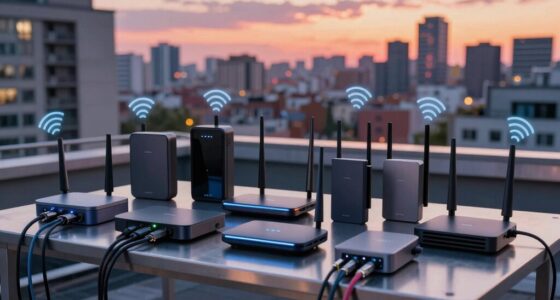
When searching for a cloud managed access point kit, the goal is to find a solution that combines ease of management, reliable performance, and scalable deployment. The NETGEAR WBE710 Tri-Band WiFi 7 Insight Managed Access Point stands out as the best overall due to its robust tri-band support and comprehensive cloud features. Meanwhile, the Cudy BE3600 Dual-Band Wi-Fi 7 Ceiling Mount Access Point offers a compelling balance of value and performance for small to medium-sized setups. The main tradeoffs in this category often involve choosing between advanced features at a higher cost or more straightforward, budget-friendly options with fewer capabilities. Continue reading for a detailed breakdown of these options and how they compare for different needs.
Complete the kit



Key Takeaways
- The top picks balance performance, ease of use, and scalability, with the NETGEAR WBE710 leading for overall excellence.
- Budget options like the Cudy BE3600 provide solid performance but may lack advanced enterprise features.
- Wi-Fi 7 models are gradually replacing Wi-Fi 6, offering faster speeds and better future-proofing, but at a higher price.
- Cloud management features vary widely, with some solutions offering more granular controls and integrations than others.
- Choosing between dual-band and tri-band depends heavily on network size and the number of connected devices.
| NETGEAR WBE710 Tri-Band WiFi 7 Insight Managed Access Point |  | Best Overall for Advanced WiFi 7 Performance | WiFi Technology: WiFi 7 | Bands: Tri-Band | Mounting Options: Ceiling and Wall Mounts | VIEW ON AMAZON | See Our Full Breakdown |
| Cudy BE3600 Dual-Band Wi-Fi 7 Ceiling Mount Access Point, AP3600 |  | Best for Flexible, Open-Source Deployment | Wi-Fi Standard: Wi-Fi 7 | Multi-Link Operation: Yes | PoE Passthrough: Yes | VIEW ON AMAZON | See Our Full Breakdown |
| Cisco Meraki CW9166I-MR Wireless Access Point (Renewed) |  | Best for Enterprise-Grade Wi-Fi with Cloud Management | Technology: Wi-Fi 6 | Deployment: Indoor | Management: Cloud-managed | VIEW ON AMAZON | See Our Full Breakdown |
| TP-Link EAP225 AC1350 Gigabit Wireless Access Point |  | Best for Business Environments with Mesh Support | Wireless Standard: IEEE 802.11ac | Maximum Wireless Speed: 1350 Mbps | Power Supply: 802.3af PoE | VIEW ON AMAZON | See Our Full Breakdown |
| Cisco Meraki MR84-HW Cloud Managed 802.11ac Wireless Access Point (Renewed) |  | Best for Cost-Effective Cloud-Managed Wi-Fi | Model: MR84-HW | Connectivity: 802.11ac | Management: Cloud Managed | VIEW ON AMAZON | See Our Full Breakdown |
| Omada EAP610 Business WiFi 6 AX1800 Dual Band Wireless Gigabit Access Point |  | Best Overall Cloud Managed Access Point | Wireless Technology: Wi-Fi 6 | Speed: 1800 Mbps | Bands: Dual Band | VIEW ON AMAZON | See Our Full Breakdown |
| Omada EAP215-Bridge KIT, Point-to-Point Wireless Bridge |  | Best Outdoor Long-Range Wireless Bridge | Wireless Speed: up to 867 Mbps | Frequency: 5 GHz | Range: up to 3 miles / 5 km | VIEW ON AMAZON | See Our Full Breakdown |
| EnGenius Cloud Managed ECW526 Wi-Fi 7 Tri-Band Access Point |  | Best High-Performance Wi-Fi 7 AP | Wi-Fi Technology: Wi-Fi 7 | Speed: 9.4 Gbps total | Frequency Bands: Tri-band (6 GHz, 5 GHz, 2.4 GHz) | VIEW ON AMAZON | See Our Full Breakdown |
| NETGEAR Cloud Managed WiFi 7 Wireless Multi-Gig Access Point (WBE710) |  | Best High-Capacity Wi-Fi 7 AP | WiFi Standard: WiFi 7 | Bands: Tri-Band | Coverage: 3,000 sq. ft. | VIEW ON AMAZON | See Our Full Breakdown |
| Omada 7 BE5000 Wireless Access Point 2.5G Port with DC Adapter (EAP720) |  | Best High-Capacity Wi-Fi 7 Business AP | Wireless Standard: Wi-Fi 7 | Speed: Up to 5.0 Gbps | Frequency: Dual-band | VIEW ON AMAZON | See Our Full Breakdown |
| MR42 WiFi 5 Access Point | Cloud Managed Dual-Radio 1.9 Gbps | MU-MIMO | ACE 3-Year Warranty |  | Best Overall for High-Speed Dual-Radio WiFi 5 Performance | Wireless Technology: WiFi 5 | Max Speed: 1.9 Gbps | Radio: Dual-Radio | VIEW ON AMAZON | See Our Full Breakdown |
More Details on Our Top Picks
NETGEAR WBE710 Tri-Band WiFi 7 Insight Managed Access Point
The NETGEAR WBE710 stands out for embracing the latest WiFi 7 standard, delivering faster speeds and lower latency compared to older WiFi 6 options like the Cisco Meraki CW9166I-MR. Its tri-band setup helps distribute network load efficiently, making it ideal for high-demand environments. The inclusion of ceiling and wall mounts simplifies installation, while cloud management offers remote monitoring and real-time alerts. However, leveraging WiFi 7’s full potential requires compatible devices, and its higher price reflects the advanced technology. Coverage range details are limited, which might be a concern for larger spaces. This pick is best suited for networks needing cutting-edge speed and low latency, especially in tech-forward businesses.
Pros:- Supports the latest WiFi 7 standard for ultimate speed and low latency
- Flexible installation with ceiling and wall mounting options
- CloudInsight management for remote control and alerts
- Includes Gigabit Ethernet port for wired connections
Cons:- Higher cost due to advanced WiFi 7 features
- Requires compatible devices to realize full performance
- Limited coverage range details
Best for: Tech-savvy enterprises and high-performance network setups requiring the latest WiFi 7 technology
Not ideal for: Small offices or users with devices that do not support WiFi 7, as they won’t benefit fully from the advanced features
- WiFi Technology:WiFi 7
- Bands:Tri-Band
- Mounting Options:Ceiling and Wall Mounts
- Ethernet Port:Gigabit Ethernet
- Warranty:3 Years with CloudCare
- Coverage Range:Limited details
Our verdict“This is a top choice for organizations seeking future-proof, high-speed WiFi in a managed cloud environment.”
Cudy BE3600 Dual-Band Wi-Fi 7 Ceiling Mount Access Point, AP3600
The Cudy BE3600 excels in environments where open-source flexibility and multi-link operation boost performance, making it stand out against more closed systems like TP-Link EAP225. Its support for Wi-Fi 7 with 320 MHz channels and multi-link operation provides high throughput and reduced latency, ideal for demanding office tasks. The PoE passthrough enhances wired coverage, and its open-source Ecosystem allows extensive customization and remote management. However, the need for existing PoE infrastructure and the complexity of setup makes it less accessible for less technical users. This device offers a compelling balance of performance and flexibility, especially for those comfortable with network customization.
Pros:- Supports high-speed Wi-Fi 7 with multi-link for low latency
- PoE passthrough simplifies wired deployment
- Open-source ecosystem enables extensive customization
- Supports 320 MHz channels for high data throughput
Cons:- Requires existing PoE equipment, adding initial setup cost
- Complex installation for non-technical users
- Adapter not included
Best for: Network administrators and tech-savvy businesses implementing open-source solutions with high throughput needs
Not ideal for: Small or non-technical users without existing PoE infrastructure or those seeking plug-and-play simplicity
- Wi-Fi Standard:Wi-Fi 7
- Multi-Link Operation:Yes
- PoE Passthrough:Yes
- Channel Width:320 MHz
- Ecosystem:OpenWiFi
- VPN Support:WPA3, WireGuard, OpenVPN, IPsec
Our verdict“Ideal for advanced users seeking flexible, high-performance Wi-Fi 7 deployment with open-source control.”
Cisco Meraki CW9166I-MR Wireless Access Point (Renewed)
Compared to the TP-Link EAP225, the Cisco Meraki CW9166I-MR offers enterprise-grade Wi-Fi 6 performance, making it better suited for demanding business environments like offices or retail spaces. Its cloud management simplifies remote control and monitoring, while the included mounting kit supports quick deployment. Being a renewed device, it provides a cost-effective option, but the limited warranty and the fact that it’s refurbished mean potential cosmetic wear and less assurance of longevity. The product’s indoor-only design and need for compatible infrastructure could limit its flexibility for some setups. It’s an excellent fit for organizations prioritizing reliable Wi-Fi 6 with simplified management at a lower cost.
Pros:- High-speed Wi-Fi 6 for demanding applications
- Cloud-managed for remote monitoring
- Includes mounting kit for flexible installation
- Renewed for cost savings
Cons:- Limited warranty due to renewal status
- Indoor use only, not suitable for outdoor environments
- Requires compatible infrastructure
Best for: Mid-sized businesses or institutions needing reliable Wi-Fi 6 with cloud management and easy installation
Not ideal for: Home users or small offices seeking Wi-Fi 7 or plug-and-play simplicity
- Technology:Wi-Fi 6
- Deployment:Indoor
- Management:Cloud-managed
- Includes:Mounting kit
- Warranty:Limited (renewed)
- Coverage:Indoor
Our verdict“Best suited for enterprise environments seeking reliable Wi-Fi 6 with cloud control at a budget-friendly price.”
TP-Link EAP225 AC1350 Gigabit Wireless Access Point
The TP-Link EAP225 offers a balanced combination of dual-band AC1350 speeds and enterprise features like MU-MIMO and seamless roaming, making it well-suited for medium-sized offices. Its cloud management via Omada app simplifies centralized control, and mesh support extends coverage effectively. Unlike the NETGEAR WBE710, which emphasizes WiFi 7 speeds, the EAP225 relies on Wi-Fi 5 technology but still provides robust performance for typical business needs. Its reliance on PoE power requires additional infrastructure, which can complicate setup for smaller operations or those without existing PoE switches. Overall, this model delivers reliable performance for network environments requiring straightforward management and decent coverage.
Pros:- Decent dual-band performance with 1350 Mbps max
- Mesh support for extended coverage
- Centralized management via Omada app and cloud
- PoE-powered for simplified wiring
Cons:- Requires PoE switch or adapter, adding setup complexity
- Limited to Wi-Fi 5 technology, less future-proof
- May be overkill for very small setups
Best for: Small to medium-sized enterprises needing reliable Wi-Fi with easy cloud management and mesh capabilities
Not ideal for: Homes or high-demand environments where Wi-Fi 7 or advanced features are required
- Wireless Standard:IEEE 802.11ac
- Maximum Wireless Speed:1350 Mbps
- Power Supply:802.3af PoE
- Ethernet Ports:Gigabit Ethernet
- Management:Omada SDN and Cloud
- Color:White
Our verdict“A reliable choice for small to medium businesses seeking manageable Wi-Fi with mesh and cloud features.”
Cisco Meraki MR84-HW Cloud Managed 802.11ac Wireless Access Point (Renewed)
The Cisco Meraki MR84-HW provides a budget-friendly way to access enterprise-grade cloud-managed Wi-Fi, similar in purpose to the Cisco Meraki CW9166I-MR. While it’s limited to 802.11ac and does not include antennas or licenses, it offers reliable remote management and easy deployment, making it suitable for organizations that already have compatible infrastructure. As a renewed device, it offers significant savings, but the absence of antennas and licenses can restrict its capabilities and future scalability. This model is less ideal for those needing Wi-Fi 6 or Wi-Fi 7, but it still provides solid cloud control at a lower cost, especially for existing Meraki environments.
Pros:- Cloud-managed for remote access and control
- Renewed device offers lower cost
- Includes mounting kit for easy installation
- Good for existing Meraki ecosystems
Cons:- Limited to 802.11ac and no antennas included
- No license for advanced features
- Renewed device may have cosmetic wear
Best for: Organizations seeking affordable, cloud-managed Wi-Fi 5 with existing infrastructure compatibility
Not ideal for: Businesses requiring Wi-Fi 6 or Wi-Fi 7, or those needing antennas included for broader coverage
- Model:MR84-HW
- Connectivity:802.11ac
- Management:Cloud Managed
- Includes:Mounting Kit
- License:No License
- Antennas:Not Included
Our verdict“Suitable for budget-conscious organizations with existing Meraki infrastructure needing reliable cloud control of Wi-Fi 5.”
Omada EAP610 Business WiFi 6 AX1800 Dual Band Wireless Gigabit Access Point
This model stands out for offering a balanced combination of speed, flexibility, and cloud management, making it ideal for small to medium-sized business environments. Compared with the EnGenius ECW526, it provides Wi-Fi 6 speeds that are sufficient for most office needs, while the ECW526’s Wi-Fi 7 tri-band capabilities target high-demand scenarios. The EAP610’s cloud management via Omada SDN is straightforward, yet it requires compatible controllers for advanced mesh features, which could add complexity. Its multiple power options support diverse deployment scenarios, but its pricing and user feedback remain limited, making it less transparent for budget-conscious buyers. For businesses seeking reliable Wi-Fi 6 with cloud control, this pick offers a well-rounded solution, though those needing Wi-Fi 7 or advanced mesh might consider alternatives.
Pros:- Fast Wi-Fi 6 speeds up to 1800 Mbps suitable for business use
- Cloud management with no extra fees simplifies network control
- Flexible installation options with multiple power sources
- Supports seamless roaming for mobile devices
Cons:- Requires compatible SDN controllers for mesh and roaming enhancements
- Limited information on pricing and user reviews
Best for: Small to medium-sized businesses requiring reliable Wi-Fi 6 with seamless cloud management.
Not ideal for: Large enterprise campuses or high-throughput environments needing Wi-Fi 7 or advanced mesh features.
- Wireless Technology:Wi-Fi 6
- Speed:1800 Mbps
- Bands:Dual Band
- Management:Cloud-based, Omada SDN
- Power Options:802.3at PoE+, Passive PoE, DC power
- Warranty:5 years
Our verdict“This access point offers a solid balance of speed and management for SMBs but may fall short for high-end enterprise needs.”
Omada EAP215-Bridge KIT, Point-to-Point Wireless Bridge
This outdoor wireless bridge excels in providing long-range connectivity, supporting up to 3 miles, making it ideal for connecting separate buildings or outdoor spaces. Compared to the EnGenius ECW526, it focuses on outdoor point-to-point links rather than high-speed Wi-Fi for indoor networks. Its weatherproof design with IP65 rating ensures durability against the elements, while its 867 Mbps 5 GHz speed offers reliable data transfer for outdoor applications. However, setup can be challenging for those unfamiliar with PoE and outdoor networking, and it’s limited to outdoor use only. For organizations needing a robust outdoor link with cloud management, this kit delivers excellent performance, though indoor or high-speed Wi-Fi needs will require different solutions.
Pros:- High wireless data transfer at 867 Mbps
- Long-range transmission up to 3 miles
- Weatherproof construction with IP65 rating
- Managed via TP-Link Omada cloud platform
Cons:- Requires PoE or DC power sources, adding setup complexity
- Setup may be complex for beginners
Best for: Facilities requiring outdoor point-to-point links, such as campuses or large outdoor venues.
Not ideal for: Indoor environments or users seeking a general-purpose Wi-Fi access point with mesh features.
- Wireless Speed:up to 867 Mbps
- Frequency:5 GHz
- Range:up to 3 miles / 5 km
- Ports:3× 1000M
- Weatherproof:IP65
- Power Supply:PoE or DC adapters
Our verdict“This outdoor bridge is excellent for long-distance outdoor connectivity but not suited for indoor Wi-Fi needs.”
EnGenius Cloud Managed ECW526 Wi-Fi 7 Tri-Band Access Point
This Wi-Fi 7 tri-band access point is designed for high-demand environments, offering speeds up to 9.4 Gbps across three bands. Compared with the NETGEAR WBE710, which also supports Wi-Fi 7 but emphasizes device support and coverage, the ECW526 targets ultra-fast, low-latency networks with its advanced security and flexible mounting options. Its 10 GbE PoE+ port supports high throughput, suitable for data centers or high-performance enterprise floors. The main tradeoff is the higher cost and the need for compatible client devices to realize Wi-Fi 7 benefits, making it less ideal for small setups without the latest hardware. For organizations with demanding bandwidth needs and existing Wi-Fi 7 devices, this model provides cutting-edge performance, though it may be overkill for basic networks.
Pros:- Gigabit speeds up to 9.4 Gbps across tri-band
- 10 GbE PoE+ port for flexible installation
- Enhanced security with WPA3 and enterprise features
- Easy cloud management and setup
Cons:- High cost due to advanced features
- Requires compatible devices to leverage Wi-Fi 7 benefits
Best for: High-performance enterprise networks or data centers requiring Wi-Fi 7 speeds and security.
Not ideal for: Small offices or environments with only Wi-Fi 5/6 devices, where the added speed won’t be fully utilized.
- Wi-Fi Technology:Wi-Fi 7
- Speed:9.4 Gbps total
- Frequency Bands:Tri-band (6 GHz, 5 GHz, 2.4 GHz)
- Ethernet Port:10 GbE PoE+
- Security:WPA3, WPA3 enterprise
- Management:Cloud and mobile app
Our verdict“This Wi-Fi 7 AP is perfect for fast-paced, security-conscious environments that can leverage its advanced capabilities.”
NETGEAR Cloud Managed WiFi 7 Wireless Multi-Gig Access Point (WBE710)
This NETGEAR model delivers Wi-Fi 7 tri-band performance with support for up to 256 devices, making it a strong candidate for environments with dense device populations. Compared to the EnGenius ECW526, it emphasizes wider coverage and device support, suitable for large offices or venues. Its remote management via the NETGEAR Insight app simplifies deployment and monitoring, though the separate purchase of an AC power adapter adds an extra step. The device’s MU-MIMO and OFDMA support provide efficient traffic handling, but the setup can be daunting for less technical users. For large-scale deployments needing high capacity and remote management, this model offers a compelling balance of performance and scalability.
Pros:- Supports Wi-Fi 7 tri-band for high-speed, reliable connectivity
- Handles up to 256 devices with MU-MIMO and OFDMA
- Flexible deployment options with PoE+ and wall mounting
- Remote management via NETGEAR Insight app
Cons:- AC power adapter sold separately, increasing initial cost
- Requires some technical knowledge for optimal setup
Best for: Large enterprises or public venues with many connected devices and a need for remote management.
Not ideal for: Small offices or users seeking an all-in-one package without separate power accessories.
- WiFi Standard:WiFi 7
- Bands:Tri-Band
- Coverage:3,000 sq. ft.
- Client Support:256 devices
- Ports:2.5G Ethernet
- Power Options:PoE+ or AC adapter (sold separately)
Our verdict“Ideal for high-density environments needing scalable, remote-managed Wi-Fi 7 coverage, with some setup complexity.”
Omada 7 BE5000 Wireless Access Point 2.5G Port with DC Adapter (EAP720)
This high-capacity Wi-Fi 7 access point is designed for demanding business environments, supporting over 250 clients simultaneously with blazing speeds up to 5 Gbps. It offers dual-band 4-stream connections and a 2.5G Ethernet port, providing fast, reliable connectivity with flexibility thanks to PoE and DC power options. Compared with the NETGEAR WBE710, it emphasizes robust capacity and enterprise-grade features, suitable for large offices or data centers. Its advanced networking features and centralized management via Omada Cloud Platform make it a strong choice for scalable deployments. However, its full potential depends on compatible infrastructure, and setup can be technically involved. For large businesses seeking future-proof Wi-Fi 7 infrastructure, this AP is a compelling option, albeit with a need for technical expertise.
Pros:- Supports Wi-Fi 7 with speeds up to 5 Gbps
- Handles over 250 clients with dual 4-stream Wi-Fi
- Flexible deployment via PoE and DC power
- Centralized management with Omada Cloud
Cons:- Requires compatible infrastructure for full performance
- Advanced features may necessitate technical knowledge
Best for: Large enterprises with high client density and existing network infrastructure supporting Wi-Fi 7.
Not ideal for: Small businesses or residential users lacking advanced networking setup skills.
- Wireless Standard:Wi-Fi 7
- Speed:Up to 5.0 Gbps
- Frequency:Dual-band
- Ethernet Port:2.5G
- Max Clients:250+
- Power Supply:PoE and DC
Our verdict“This AP is tailored for large-scale, high-performance networks but demands technical setup and infrastructure compatibility.”
MR42 WiFi 5 Access Point | Cloud Managed Dual-Radio 1.9 Gbps | MU-MIMO | ACE 3-Year Warranty
The MR42 WiFi 5 Access Point stands out for delivering reliable high-speed connectivity with dual-radio technology supporting up to 1.9 Gbps. Compared with the NETGEAR WBE710, which offers WiFi 7, the MR42’s WiFi 5 standard limits future-proofing but ensures broad compatibility and stability for existing devices. Its MU-MIMO support enhances multi-device performance, making it ideal for busy offices or dense environments. While its cloud management simplifies centralized control, it lacks a license for advanced features, which could be a drawback for those needing premium network functions. Setup might be complex for beginners unfamiliar with enterprise-grade equipment, especially since it doesn’t support WiFi 6 or WiFi 7. The inclusion of Gigabit Ethernet ports provides reliable wired options, complementing its wireless capabilities.
Pros:- High-speed dual-radio WiFi 5 connectivity supporting 1.9 Gbps
- Supports MU-MIMO for efficient multi-device handling
- Cloud-managed for centralized control and monitoring
- Includes Gigabit Ethernet ports for wired connections
Cons:- No license included for advanced network features
- Setup can be complex for users unfamiliar with enterprise networking
- Limited to WiFi 5, lacking WiFi 6 or WiFi 7 support
Best for: Small to medium-sized businesses needing high-speed WiFi 5 with centralized cloud management.
Not ideal for: Organizations seeking future-proof WiFi 6 or WiFi 7 technology, or those prioritizing simple plug-and-play solutions.
- Wireless Technology:WiFi 5
- Max Speed:1.9 Gbps
- Radio:Dual-Radio
- MU-MIMO:Yes
- Ethernet Ports:Gigabit Ethernet
- Warranty:ACE 3-Year Warranty
Our verdict“This pick is ideal for SMBs that require robust WiFi 5 performance with centralized cloud management but are not yet ready to upgrade to WiFi 6 or WiFi 7.”

How We Picked
We evaluated these products based on key factors that matter most to buyers: performance reliability, ease of cloud management, build quality, scalability, and value for money. We prioritized models that offer seamless cloud control, robust security features, and future-proof Wi-Fi standards like Wi-Fi 6 and 7. Additionally, we considered user experience, including setup simplicity and ongoing maintenance. The ranking reflects a combination of these technical merits and practical considerations for different deployment sizes and budgets, ensuring options for small businesses, enterprise users, and newcomers alike.
Factors to Consider When Choosing Cloud Managed Access Point Kit
Choosing the right cloud managed access point kit involves weighing several important factors. Beyond raw speed, consider how management features integrate with your existing infrastructure, the scalability of the solution, and future-proofing with the latest Wi-Fi standards. Understanding these broader considerations can help you avoid common pitfalls like underestimating coverage needs or overpaying for features you won’t use.Performance and Speed
Look beyond advertised maximum speeds and assess real-world performance, especially in environments with multiple devices. Wi-Fi 6 and 7 models offer significant improvements in handling high device density, which is critical for busy offices or public spaces. Choosing a model with multi-Gigabit support can future-proof your network, but ensure your existing infrastructure can leverage these speeds.
Cloud Management Capabilities
Not all cloud management platforms are created equal. Some offer extensive analytics, customizable dashboards, and seamless remote control, while others provide basic monitoring. Consider whether the platform integrates with your existing network gear and if it supports features like automatic firmware updates or security alerts. Investing in a solution with strong management tools can save time and reduce ongoing operational costs.
Scalability and Deployment Size
Estimate your network’s growth and choose a kit that scales smoothly. For small setups, a single access point may suffice, but larger environments benefit from solutions that support multiple units under a unified cloud platform. Be wary of solutions that require complex configurations or proprietary hardware that may limit expansion.
Future-Proofing with Wi-Fi Standards
Wi-Fi 6 and Wi-Fi 7 are making their way into the market, promising faster speeds and better device management. While Wi-Fi 7 offers the latest features, it also tends to come at a premium. Consider your current and future device ecosystem—upgrading to Wi-Fi 6 or 7 now can extend your network’s lifespan and performance.
Cost and Total Ownership
Initial costs are just part of the picture. Factor in ongoing expenses like subscription fees for cloud services, firmware updates, and potential hardware replacements. Budget models may save money upfront but could lack long-term management features or scalability, leading to higher costs down the line. Balance your immediate budget with the value of features, security, and ease of management.
Frequently Asked Questions
Can I mix different brands of access points in a cloud-managed network?
Mixing brands is often possible if they support common management protocols like Open Standards or are compatible with the same cloud platform. However, it can complicate management and troubleshooting since different devices may have varying features and interfaces. For smoother operation, sticking to a single ecosystem is generally recommended, especially for larger deployments where centralized control is critical.
Is Wi-Fi 7 worth the upgrade for small businesses now?
Wi-Fi 7 offers significant speed and efficiency improvements, but its benefits may be overkill for small businesses with basic needs. The main advantage lies in future-proofing and handling high-density environments. If your current setup meets your performance needs, upgrading now might not be necessary. However, if you plan to expand or require the latest features, investing in Wi-Fi 7 can provide a longer-term solution.
How important is cloud management compared to traditional on-premises solutions?
Cloud management offers greater flexibility, remote control, and simplified updates, making it ideal for distributed or remote teams. On-premises solutions might provide more control and potentially better security for sensitive environments, but they often require dedicated hardware and complex maintenance. For most modern deployments, cloud-managed access points strike the right balance of convenience and control.
What is the typical lifespan of a cloud managed access point kit?
Most access points are designed to last around 3 to 5 years, depending on usage, technology shifts, and maintenance practices. Investing in models supporting Wi-Fi 6 or 7 can extend this lifespan by ensuring compatibility with new devices and standards. Regular firmware updates also help prolong hardware relevance and security.
Should I prioritize higher throughput or better coverage when choosing a kit?
Both are important, but the choice depends on your environment. High throughput is vital for data-heavy applications, while coverage ensures all areas are reliably served. For large or complex spaces, a combination of high-performance access points and strategic placement can optimize both. Evaluate your specific layout and device needs to balance these factors effectively.
Conclusion
For small businesses or those new to cloud-managed networks, the TP-Link EAP225 offers an accessible entry point with solid features. Larger organizations or those seeking the best overall performance should consider the NETGEAR WBE710 for its advanced capabilities and future readiness. Premium buyers aiming for top-tier security and scalability may prefer the Cisco Meraki CW9166I-MR, despite its higher cost. Budget-conscious buyers will find value in models like the Cudy BE3600 without sacrificing essential performance. Ultimately, your choice should align with your current needs and growth plans, ensuring a reliable, manageable network for years to come.