The Canon EOS Rebel T7 DSLR is my best overall pick among these cameras for beginners because its interchangeable-lens system offers room to learn photography beyond automatic mode. For a simpler point-and-shoot, the Kodak PIXPRO FZ55 keeps operation straightforward, while flip-screen models such as the VJIANGER 4K suit casual video and self-recording. The main tradeoff is between a familiar, compact camera that is easy to carry and a DSLR that offers more control and lens flexibility but takes more learning and space. Specs like high megapixel counts or 8K labels do not by themselves tell you how intuitive a camera will be or how much creative control it offers. Continue reading for the full breakdown and help matching a camera to how you plan to shoot.

Get the latest gadgets delivered free with Prime
- Fast, free delivery on millions of items
- Prime Video, Amazon Music and more included
- Member-only deals all year
Complete the kit



Key Takeaways
- The Canon EOS Rebel T7 models stand apart for learning photography: their DSLR design and interchangeable lenses offer a clearer path from automatic shooting to manual control than the fixed-lens compacts.
- The PIXPRO FZ55 and FZ45 favor simplicity over system growth: they are straightforward point-and-shoot choices, but they do not provide the lens-upgrade path of the Canon cameras.
- Flip screens and bundled accessories target convenience: several compact models include a screen that faces forward, and some packages add batteries, cards, microphones, or extra lenses; check what each specific listing includes.
- Large resolution and video labels do not settle the beginner decision: the 5K, 6K, and 8K compact models also differ in controls, screens, zoom claims, and included gear, so compare usability and intended shooting before headline numbers.
- Canon T7 kit variations need careful comparison: the standard, renewed, double-zoom, and bundle listings differ in condition or included equipment, making the exact package part of the buying decision.
| Kodak PIXPRO FZ55 Compact Digital Camera, 16MP, 5x Optical Zoom, Black | 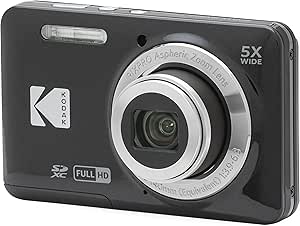 | Best for Simple Everyday Photos | Sensor: 16MP CMOS, 1/2.3-inch | Optical zoom: 5x | Lens: 28mm wide angle | VIEW ON AMAZON | See Our Full Breakdown |
| Yatao 6K WiFi Compact Digital Camera with Flip Screen, Dual Lens, Microphone, and Fill Light |  | Best Beginner Vlogging Bundle | Sensor: CMOS, 1/2.7-inch | Still resolution: 64 MP | Video: 6K | VIEW ON AMAZON | See Our Full Breakdown |
| Zostuic 4K Digital Camera for Beginners and Teens with 180° Flip Screen, 32GB Card, and Two Batteries |  | Best for Teen Beginners | Image sensor: 8MP CMOS, 1/3-inch | Photo resolution: 48 MP | Video: 4K (2160p), 30 FPS | VIEW ON AMAZON | See Our Full Breakdown |
| G-Anica 5K 64MP Digital Camera with Dual Lenses and Wi-Fi |  | Best Accessory-Rich Starter Kit | Photo resolution: 64 MP | Video: 5K | Sensor: CMOS | VIEW ON AMAZON | See Our Full Breakdown |
| 8K Digital Camera, 88MP Autofocus Camera with Wi-Fi |  | Best for High-Resolution Feature Seekers | Photo sensor: 1/2.5-inch CMOS | Photo resolution: 88 MP | Video: 8K, 7680 × 4320 | VIEW ON AMAZON | See Our Full Breakdown |
| 96MP 8K Digital Camera with Wi-Fi, Autofocus, 20x Zoom, and 180° Flip Screen |  | Best for Feature-Seekers on a Beginner Budget | Photo resolution: 96 MP | Video resolution: 8K | Sensor: 1/2.3-inch CMOS | VIEW ON AMAZON | See Our Full Breakdown |
| 4K Digital Camera with 56MP Autofocus, 180° Flip Screen, and 16X Digital Zoom |  | Best Compact Starter for Students | Video resolution: 4K | Photo sensor resolution: 56 MP | Sensor: 1/4-inch CMOS | VIEW ON AMAZON | See Our Full Breakdown |
| Canon EOS Rebel T7 DSLR Camera with EF-S 18-55mm f/3.5-5.6 IS II Lens Kit |  | Best Overall for Learning Photography | Sensor: 24.1MP APS-C CMOS | ISO range: 100–6400, expandable to 12800 | Autofocus: 9-point AF with AI Servo | VIEW ON AMAZON | See Our Full Breakdown |
| 4K 56MP Digital Camera with Autofocus, 16X Zoom, 180° Flip Screen, and 32GB Card |  | Best Starter Bundle for Casual Video | Photo resolution: 56 MP | Video resolution: 4K UHD at 30FPS | Sensor: 1/4-inch CMOS | VIEW ON AMAZON | See Our Full Breakdown |
| Canon EOS Rebel T7 DSLR Camera with 18-55mm Lens (Renewed) |  | Best Renewed DSLR Entry Point | Sensor: 24.1MP APS-C CMOS | Included lens: 18–55mm | Autofocus: 9-point AF with AI Servo | VIEW ON AMAZON | See Our Full Breakdown |
| 8K Digital Camera with 88MP Sensor, Dual Lenses, Wi-Fi, and Touchscreen |  | Best for Selfie-Style Vlogging | Sensor: 1/4-inch CMOS | Photo resolution: 88 MP | Video resolution: 8K UHD 4320p | VIEW ON AMAZON | See Our Full Breakdown |
| VJIANGER 4K Digital Camera, Vlogging Camera with WiFi & Flip Screen |  | Best Lightweight Webcam Option | Sensor: CMOS, 64 MP | Video resolution: 4K UHD 2160p | Screen: 3-inch tilting LCD touchscreen | VIEW ON AMAZON | See Our Full Breakdown |
| Canon EOS Rebel T7 DSLR Camera Double Zoom Lens Kit |  | Best Starter Kit for Learning Photography | Camera type: DSLR | Sensor: 24.1 MP CMOS APS-C | Included lenses: EF-S 18–55mm and EF 75–300mm | VIEW ON AMAZON | See Our Full Breakdown |
| Kodak PIXPRO FZ45 16MP Digital Point-and-Shoot Camera, Black |  | Best Simple Point-and-Shoot | Sensor: 16MP CMOS, 1/2.3-inch | Optical zoom: 4x | Lens: 27mm wide angle | VIEW ON AMAZON | See Our Full Breakdown |
| Canon EOS Rebel T7 DSLR Camera with 18-55mm Lens Bundle |  | Best Beginner DSLR Bundle | Sensor: 24.1MP APS-C CMOS | Image processor: DIGIC 4+ | Included lens: 18–55mm | VIEW ON AMAZON | See Our Full Breakdown |
| cameras for beginner | Sensor | Connectivity | Video resolution | Screen |
|---|---|---|---|---|
| Kodak PIXPRO FZ55 Compact Digi | 16MP CMOS, 1/2.3-inch | — | — | 2.7-inch fixed LCD |
| Yatao 6K WiFi Compact Digital | CMOS, 1/2.7-inch | Wi-Fi and USB-C | — | 3-inch flip screen |
| Zostuic 4K Digital Camera for | — | — | — | 2.8-inch LCD, 180° flip |
| G-Anica 5K 64MP Digital Camera | CMOS | Wi-Fi and USB | — | 3-inch LCD, 180° flip |
| 8K Digital Camera | — | Wi-Fi | — | — |
| 96MP 8K Digital Camera with Wi | 1/2.3-inch CMOS | Wi-Fi | 8K | — |
| 4K Digital Camera with 56MP Au | 1/4-inch CMOS | USB | 4K | — |
| Canon EOS Rebel T7 DSLR Camera | 24.1MP APS-C CMOS | Wi-Fi, NFC | — | — |
| 4K 56MP Digital Camera with Au | 1/4-inch CMOS | — | 4K UHD at 30FPS | 3-inch, 180° flip |
| Canon EOS Rebel T7 DSLR Camera | 24.1MP APS-C CMOS | — | 1080p | — |
| 8K Digital Camera with 88MP Se | 1/4-inch CMOS | Wi-Fi | 8K UHD 4320p | 3.2-inch touchscreen |
| VJIANGER 4K Digital Camera | CMOS, 64 MP | Wi-Fi, USB 2.0 | 4K UHD 2160p | 3-inch tilting LCD touchscreen |
| Canon EOS Rebel T7 DSLR Camera | 24.1 MP CMOS APS-C | Wi-Fi, NFC, HDMI, USB | Full HD 1080p | — |
| Kodak PIXPRO FZ45 16MP Digital | 16MP CMOS, 1/2.3-inch | — | 1080p | 2.7-inch LCD, 230,000 dots |
| Canon EOS Rebel T7 DSLR Camera | 24.1MP APS-C CMOS | Wi-Fi, NFC | 1080p | — |
More Details on Our Top Picks
Kodak PIXPRO FZ55 Compact Digital Camera, 16MP, 5x Optical Zoom, Black
The Kodak PIXPRO FZ55 is the clearest beginner pick here for someone who wants a straightforward camera rather than a bundle of creator features. Its 5x optical zoom gives it a practical advantage over the G-Anica 5K, whose 16x zoom is digital: optical zoom can bring distant subjects closer without relying on digital enlargement. The 28mm wide-angle lens also suits group shots and everyday scenes, while the lightweight body is easy to carry.
The tradeoff is simplicity. The fixed 2.7-inch screen is smaller than the flip displays on the Zostuic and Yatao, and this model lacks their selfie-oriented setup and extra shooting modes. Its 16MP photos and 1080p video are modest beside the high-resolution claims elsewhere in this group. I’d choose it for basic travel and family photography, but not for beginners planning to build a vlogging setup.
Pros:- 5x optical zoom offers more useful reach than the digital zoom on the G-Anica 5K
- 28mm wide-angle lens works well for groups and indoor scenes
- Light 3.7-ounce body is easy to carry
- Records 1080p Full HD video
Cons:- Fixed 2.7-inch LCD is smaller and less flexible than the flip screens on the Zostuic and Yatao
- Digital image stabilization and basic controls limit creative flexibility
- 16MP photos and 1080p video offer less resolution than several other picks here
Best for: First-time camera owners who want a light, uncomplicated point-and-shoot for family outings, travel, and everyday snapshots
Not ideal for: Beginning vloggers or creators who need a flip screen, wireless sharing, or higher-resolution video
- Sensor:16MP CMOS, 1/2.3-inch
- Optical zoom:5x
- Lens:28mm wide angle
- Video:1080p Full HD
- Screen:2.7-inch fixed LCD
- Image stabilization:Digital
- Weight:3.7 ounces
- Memory card support:SD, SDHC, and SDXC up to 512GB; Class 10 or higher
Our verdict“Choose the FZ55 if you want a genuinely simple, pocketable camera with optical zoom rather than a feature-heavy vlogging kit.”
Yatao 6K WiFi Compact Digital Camera with Flip Screen, Dual Lens, Microphone, and Fill Light
The Yatao 6K makes its strongest case as a starter kit for someone who wants to try vlogging without buying each accessory separately. The 3-inch flip screen helps frame selfies, and the included microphone and bi-color fill light give a beginner more control over voice and lighting than the simpler Kodak PIXPRO FZ55. It also includes a 64GB card, two batteries, a charging stand, and wide-angle and macro lenses, so there is more in the box for experimenting.
Its headline numbers need context: the product lists 1× optical zoom, so the advertised 16× zoom is not optical reach like the FZ55’s 5x. The small 1/2.7-inch sensor and unclear zoom details make it harder to judge image quality from the 64MP and 6K claims alone. I’d favor it for casual creator features, not for dependable long-distance photography.
Pros:- Flip screen makes self-recording and framing easier
- Microphone and bi-color fill light provide a useful starter setup for video
- Includes a 64GB card and two batteries
- Wide-angle and macro lenses support different kinds of close-up and group shots
Cons:- The listed optical zoom is only 1×, so the advertised 16× zoom should not be mistaken for optical zoom
- The 1/2.7-inch sensor and high resolution claims do not establish real-world image detail
- The listed battery weight appears inconsistent, adding uncertainty to the product information
Best for: New vloggers who want a flip screen, microphone, light, storage card, and spare battery in one starter package
Not ideal for: Beginners who prioritize verified optical zoom, clearly documented performance, or a simple camera for still photography
- Sensor:CMOS, 1/2.7-inch
- Still resolution:64 MP
- Video:6K
- Screen:3-inch flip screen
- Zoom:16× advertised; optical zoom listed as 1×
- Lenses:Wide-angle and macro
- Connectivity:Wi-Fi and USB-C
- Included items:64GB card, two batteries, microphone, bi-color fill light, lens hood, and charging stand
Our verdict“Pick the Yatao if an all-in-one beginner vlogging bundle matters more than verified optical zoom or straightforward still-photo performance.”
Zostuic 4K Digital Camera for Beginners and Teens with 180° Flip Screen, 32GB Card, and Two Batteries
The Zostuic 4K balances approachable controls and creator-friendly extras, making it a natural fit for teens or first-time users who want to try both photos and video. Its 180° flip screen helps with selfies and basic vlogging, while the included 32GB card, two batteries, and charging cradle reduce the number of extras a beginner needs to source. Compared with the Kodak PIXPRO FZ55, it offers more video tools, including time-lapse, slow motion, and webcam use.
That added flexibility comes with compromises: its 8MP, 1/3-inch sensor sits behind the 48MP photo claim, and its 16x zoom is not identified as optical. The Zostuic also lacks Wi-Fi, so sharing is less convenient than with the Yatao or G-Anica. I’d treat it as a learning camera for casual use rather than a reliable step toward advanced photography; its listed weight is also inconsistent across the product details.
Pros:- 180° flip screen supports selfies and self-recorded video
- Includes a 32GB card, two batteries, and a charging cradle
- Offers time-lapse, slow motion, and webcam use beyond the Kodak PIXPRO FZ55’s basic point-and-shoot approach
- Built-in flash provides an option for dim settings
Cons:- No Wi-Fi, unlike the Yatao and G-Anica, makes wireless sharing unavailable
- The 8MP, 1/3-inch sensor does not substantiate the 48MP photo claim by itself
- Zoom is listed as 16x without clarifying optical versus digital, and weight details conflict
Best for: Teens and first-time camera owners who want a flip screen, basic video effects, and included batteries and storage
Not ideal for: Beginners who want wireless transfers, confirmed optical zoom, or a camera with clearly consistent specifications
- Image sensor:8MP CMOS, 1/3-inch
- Photo resolution:48 MP
- Video:4K (2160p), 30 FPS
- Screen:2.8-inch LCD, 180° flip
- Zoom:16x
- Batteries:Two 800 mAh batteries
- Included storage:32GB card
- Warranty:2 years
Our verdict“Choose the Zostuic as a casual learning camera for a teen or beginner who values a flip screen and included accessories over wireless sharing.”
G-Anica 5K 64MP Digital Camera with Dual Lenses and Wi-Fi
The G-Anica 5K suits beginners who want accessories ready for casual video projects: the package includes an external microphone, tripod, fill light, filters, card reader, memory card, and two batteries. Its 180° flip screen and Wi-Fi add practical convenience for self-recording and phone sharing. Compared with the Zostuic, the G-Anica adds wireless connectivity and a broader creator bundle; compared with the Yatao, it also lists a tripod and filter set.
The main limit is the 16× digital zoom. It enlarges the image electronically rather than providing the optical reach of the Kodak PIXPRO FZ55, so it is a weaker fit for distant subjects. The product details also give conflicting memory-card capacities, which makes the included storage less certain. Its 5K and 64MP figures may appeal on paper, but the listed CMOS sensor and automatic focus details offer little basis for judging actual image quality.
Pros:- Includes an external microphone, tripod, fill light, and filters for basic video setups
- Flip screen helps with selfies and self-recording
- Wi-Fi supports sharing to a phone
- Two rechargeable batteries provide a spare for longer outings
Cons:- 16× digital zoom cannot match the FZ55’s optical zoom for distant subjects
- Memory-card capacity is inconsistent across the product details
- High resolution claims are not enough to establish image quality from the listed sensor information
Best for: Beginner creators who want Wi-Fi, a flip screen, and a broad set of basic filming accessories in one package
Not ideal for: Travel and wildlife beginners who need optical zoom, or buyers who want unambiguous details about included storage
- Photo resolution:64 MP
- Video:5K
- Sensor:CMOS
- Lenses:Wide-angle and macro
- Zoom:16× digital
- Screen:3-inch LCD, 180° flip
- Connectivity:Wi-Fi and USB
- Batteries:Two rechargeable 1500 mAh lithium-ion batteries
- Included accessories:External microphone, tripod, fill light, 3-piece filter set, memory card, and card reader
Our verdict“Choose the G-Anica if you want a ready-to-use creator bundle and phone sharing, but skip it if optical zoom matters more than accessories.”
8K Digital Camera, 88MP Autofocus Camera with Wi-Fi
This 8K Digital Camera is aimed at beginners drawn to a high-resolution feature set without stepping up to a larger interchangeable-lens camera. It lists phase-detection autofocus with nine focus points, electronic anti-shake, Wi-Fi, and webcam mode, giving a first-time user several conveniences for casual photography and video calls. Two batteries are included, and the 3-inch display is larger than the Kodak PIXPRO FZ55’s 2.7-inch fixed screen.
Its 18× zoom is digital, not optical, so it cannot offer the same kind of reach as the FZ55’s 5x optical zoom. The 8K and 88MP labels also do not tell a beginner how the camera will perform in everyday light, while the 13.76-ounce weight is less pocket-friendly than Kodak’s 3.7-ounce body. I’d choose this for its feature set and wireless tools, not as a proven image-quality upgrade.
Pros:- Includes Wi-Fi sharing and webcam mode for flexible beginner use
- Phase-detection autofocus with nine focus points is specified
- Electronic anti-shake may help reduce the effect of small camera movements
- Two rechargeable batteries are included
Cons:- 18× zoom is digital, unlike the Kodak PIXPRO FZ55’s 5x optical zoom
- At 13.76 ounces, it is substantially heavier than the 3.7-ounce Kodak
- The 8K and 88MP claims do not establish image quality in everyday lighting
Best for: Beginners who want Wi-Fi, webcam mode, autofocus, and high-resolution recording claims in a compact fixed-lens camera
Not ideal for: Travelers seeking a truly lightweight pocket camera or photographers who need optical zoom for distant subjects
- Photo sensor:1/2.5-inch CMOS
- Photo resolution:88 MP
- Video:8K, 7680 × 4320
- Autofocus:Phase detection, 9 focus points
- Image stabilization:Electronic
- Zoom:18× digital
- Display:3-inch LCD
- Connectivity:Wi-Fi
- Weight:13.76 ounces
Our verdict“Pick this model if its autofocus, Wi-Fi, and webcam features appeal more than pocketable weight or optical zoom.”
96MP 8K Digital Camera with Wi-Fi, Autofocus, 20x Zoom, and 180° Flip Screen
This compact camera packs in beginner-friendly extras: a flip screen for framing yourself, Wi-Fi for file transfers, webcam functionality, and two batteries for longer outings. Its headline 96MP photos and 8K video sound ambitious, but the 1/2.3-inch sensor and digital-only zoom are a reminder that large resolution numbers do not guarantee better image quality or distant-subject detail. Compared with the Canon EOS Rebel T7, this camera is simpler to carry and offers a more vlogging-oriented screen, while the Canon’s APS-C sensor and interchangeable lens offer a more substantial path to learning photography. I’d choose this model for casual experimentation and social video, not as a substitute for a DSLR. The digital stabilization and zoom also give less dependable support for handheld shots than optical systems can.
Pros:- 180° flip screen makes self-framing easier for vlogs and selfies
- Wi-Fi transfer and webcam functionality add useful sharing and streaming options
- Two included batteries help reduce charging interruptions on trips
- Built-in flash and creative modes give beginners simple ways to experiment
Cons:- 20x digital zoom enlarges the image rather than providing optical reach
- Small 1/2.3-inch sensor may limit image quality compared with the Rebel T7’s APS-C sensor
- Digital stabilization offers less robust shake correction than optical stabilization
Best for: New vloggers who want a compact camera with a selfie screen, wireless transfers, and spare battery included.
Not ideal for: Beginners focused on learning still photography or photographing distant subjects, since it has a small sensor and digital zoom rather than an interchangeable lens or optical zoom.
- Photo resolution:96 MP
- Video resolution:8K
- Sensor:1/2.3-inch CMOS
- Zoom:20x digital
- Display:3.5-inch 180° flip LCD
- Connectivity:Wi-Fi
- Image stabilization:Digital
- Included batteries:2
Our verdict“Pick it for casual vlogging and a generous set of beginner features, but choose the Canon EOS Rebel T7 if image quality and learning with a larger sensor matter more.”
4K Digital Camera with 56MP Autofocus, 180° Flip Screen, and 16X Digital Zoom
For students and travelers who want a camera that is easy to carry and straightforward to operate, this model keeps the basics accessible: autofocus, automatic modes, a 180° flip screen, and USB-C connectivity. The electronic anti-shake and fill light are useful extras for quick clips and selfies, though neither changes the limits of its 1/4-inch sensor. Compared with the 96MP 8K Digital Camera, this one records 4K rather than 8K and has a smaller screen, but its compact, pocket-sized design makes it the more practical everyday carry. Its 16x zoom is digital, so cropping in can reduce detail, and there is no camera flash for dim rooms. I’d treat the 56MP figure as a resolution claim, not a reason to expect DSLR-level results; the Rebel T7 is the stronger choice for image quality and growth.
Pros:- Compact, lightweight design is convenient for school bags and travel
- 180° screen supports self-framing for vlogs and selfies
- Autofocus and automatic modes make basic operation approachable
- Electronic anti-shake and a fill light add help for casual video and close-up shots
Cons:- Small 1/4-inch sensor limits its potential compared with the Canon Rebel T7’s APS-C sensor
- 16x digital zoom can reduce image detail when framing distant subjects
- No camera flash for illuminating indoor scenes
Best for: Students, teens, and travelers who want a lightweight camera for casual 4K clips, selfies, and everyday snapshots.
Not ideal for: Beginners who need better low-light photos, optical zoom, or a camera they can grow into with additional lenses.
- Video resolution:4K
- Photo sensor resolution:56 MP
- Sensor:1/4-inch CMOS
- Zoom:16x digital
- Display:3-inch IPS, 180° flip
- Image stabilization:Electronic anti-shake
- Connectivity:USB
- Battery:Included lithium-ion
Our verdict“Choose this as a simple, portable starter for casual travel and student videos, but look to the Rebel T7 for stronger still-photo capability.”
Canon EOS Rebel T7 DSLR Camera with EF-S 18-55mm f/3.5-5.6 IS II Lens Kit
The Rebel T7 is my strongest pick here for beginners who want to learn photography rather than just point and shoot. Its 24.1MP APS-C sensor gives it a more capable foundation than the small-sensor 4K compact cameras in this lineup, while the included 18–55mm lens covers everyday scenes from group photos to moderate wide-angle views. The optical viewfinder offers a direct way to compose, and Wi-Fi and NFC make sharing less cumbersome. Compared with the Renewed Rebel T7, this kit is the clearer choice for buyers who prefer the described standard kit rather than a renewed unit; the core sensor and autofocus approach are similar. The tradeoffs are a basic 9-point autofocus system and less video-focused handling than a flip-screen compact. Buyers who want selfies or advanced subject tracking should look elsewhere.
Pros:- APS-C sensor offers a stronger starting point for image quality than the small sensors in the compact cameras
- Included 18–55mm lens covers common everyday subjects
- Canon EF and EF-S lens compatibility gives room to expand the system
- Wi-Fi and NFC support wireless photo sharing
Cons:- 9-point autofocus system is basic compared with newer or higher-tier cameras
- Optical viewfinder covers approximately 95% of the frame, so the captured edges may differ slightly from the view
- No flip screen for easy self-framing or vlogging
Best for: First-time photographers who want an interchangeable-lens DSLR, an everyday starter lens, and room to build skills over time.
Not ideal for: Vloggers who need a front-facing screen, or action shooters who want fast, wide-area autofocus.
- Sensor:24.1MP APS-C CMOS
- ISO range:100–6400, expandable to 12800
- Autofocus:9-point AF with AI Servo
- Viewfinder coverage:Approximately 95%
- Included lens:EF-S 18–55mm f/3.5–5.6 IS II
- Connectivity:Wi-Fi, NFC
- Compatible lenses:Canon EF and EF-S lenses, excluding EF-M
Our verdict“Choose this kit if you want the most instructive still-photography starting point in this group and can accept basic autofocus and no selfie screen.”
4K 56MP Digital Camera with Autofocus, 16X Zoom, 180° Flip Screen, and 32GB Card
This compact camera is pitched as a ready-to-go package: it includes a 32GB card, USB cable, and lens hood, alongside a flip screen and USB webcam support. Its 4K recording at 30FPS suits ordinary clips, while the screen and self-timer make solo framing less awkward. Compared with the 56MP 4K Digital Camera with 16X Digital Zoom, it adds a memory card and lists more shooting modes, but both share a small 1/4-inch sensor and digital zoom. Those similarities matter more than the matching high megapixel claims when choosing between them. This model lacks a camera flash and is not water resistant, so it is a poor fit for night scenes or wet-weather travel. Its listed 0.6 kg weight and relatively large dimensions also make it less pocket-friendly than the compact student-oriented option.
Pros:- Included 32GB card lets beginners start recording without sourcing storage separately
- 180° screen supports self-framing for vlogs and selfies
- USB webcam function adds a use beyond stills and clips
- Multiple shooting modes provide straightforward ways to try different styles
Cons:- 16x zoom is digital, not optical
- No camera flash and no water resistance limit use in dim or wet environments
- Listed 0.6 kg weight and dimensions make it less pocketable than the other 4K compact option
Best for: New vloggers and families who want a basic 4K camera bundle with a memory card and webcam capability included.
Not ideal for: Pocket-first travelers, outdoor shooters in wet conditions, and beginners who need optical zoom or a flash for dim settings.
- Photo resolution:56 MP
- Video resolution:4K UHD at 30FPS
- Sensor:1/4-inch CMOS
- Zoom:16x digital
- Screen:3-inch, 180° flip
- Image stabilization:Digital
- Included storage:32GB card
- Water resistance:Not water resistant
Our verdict“Pick this bundle for casual 4K video and included storage, but choose the smaller 56MP compact if portability matters more.”
Canon EOS Rebel T7 DSLR Camera with 18-55mm Lens (Renewed)
This renewed Rebel T7 has the same core beginner appeal as the standard Rebel T7 kit: a 24.1MP APS-C sensor, optical viewfinder, and an 18–55mm lens for learning how focal length changes a shot. Scene Intelligent Auto can handle exposure while a new owner learns composition, and Wi-Fi and NFC simplify sharing. Compared with the standard Rebel T7 kit in this roundup, its main distinction is the renewed condition and stated 90-day warranty, not a different photography experience. It also records Full HD video rather than the 4K offered by the compact cameras, and its 3 fps continuous shooting and 9-point autofocus make it a modest fit for fast action. I’d choose it for a buyer who specifically wants a DSLR and is comfortable purchasing renewed gear; those seeking the simplest video camera should look at a flip-screen compact instead.
Pros:- 24.1MP APS-C sensor provides a strong base for learning still photography
- Included 18–55mm lens covers a useful range of everyday subjects
- Scene Intelligent Auto mode helps beginners start shooting with minimal setup
- Wi-Fi and NFC support wireless sharing
Cons:- Renewed condition comes with a stated 90-day warranty
- 9-point autofocus and 3 fps continuous shooting are limited for moving subjects
- Full HD video lacks the 4K resolution available from the compact cameras in this roundup
Best for: Budget-conscious beginners who want an APS-C DSLR and standard zoom lens, and are comfortable buying a renewed camera with a 90-day warranty.
Not ideal for: Buyers who want 4K video, fast action tracking, a flip screen, or the assurance of a new camera condition.
- Sensor:24.1MP APS-C CMOS
- Included lens:18–55mm
- Autofocus:9-point AF with AI Servo
- ISO range:100–6400, expandable to 12800
- Display:3-inch LCD, 920,000 dots
- Video resolution:1080p
- Continuous shooting:3 frames per second
- Condition and warranty:Renewed; 90 days
Our verdict“Choose this renewed kit if you want DSLR image-making fundamentals and accept its condition and warranty tradeoffs; otherwise, compare it closely with the standard Rebel T7 kit.”
8K Digital Camera with 88MP Sensor, Dual Lenses, Wi-Fi, and Touchscreen
Front-and-rear lenses and a 3.2-inch touchscreen make this the most directly vlogging-oriented pick here: beginners can frame themselves without needing a separate monitor. Its listed 8K video and 88MP photos offer large headline numbers, but the 1/4-inch sensor is a significant limit for image quality, especially in dim settings. The VJIANGER also has a flip screen and Wi-Fi, but its 4K video and smaller display give this model the stronger on-paper recording and framing package. In contrast, the Canon EOS Rebel T7 Double Zoom Kit has a much larger APS-C sensor and interchangeable lenses, making it better suited to learning photography than casual selfie videos. Here, digital stabilization and digital zoom keep the setup simple but cannot provide the optical reach or sensor advantages of the Canon.
Pros:- Front and rear lenses support selfie framing and vlogging
- 3.2-inch touchscreen is larger than the VJIANGER’s 3-inch display
- Includes two batteries, a charging stand, and a 32GB SD card
- Wi-Fi and multiple shooting modes support casual sharing and varied use
Cons:- Small 1/4-inch sensor limits its appeal for demanding image quality
- Digital zoom lacks the image-preserving reach of optical zoom
- Digital stabilization may be less useful for active handheld shooting than optical stabilization
Best for: New vloggers who want a front-facing lens, a large touch display, and included batteries and memory for casual travel clips.
Not ideal for: Beginners prioritizing low-light image quality, optical zoom, or a camera they can grow into with interchangeable lenses.
- Sensor:1/4-inch CMOS
- Photo resolution:88 MP
- Video resolution:8K UHD 4320p
- Screen:3.2-inch touchscreen
- Stabilization:6-axis digital
- Connectivity:Wi-Fi
- Digital zoom:16x
- Included accessories:Two batteries, charging stand, 32GB SD card, lens hood
Our verdict“Choose it for straightforward selfie-style video and bundled essentials, not for low-light photography or room to grow.”
VJIANGER 4K Digital Camera, Vlogging Camera with WiFi & Flip Screen
The VJIANGER is a practical fit for beginners who want one compact camera for travel clips, self-recording, and occasional livestreaming. Its flip-out 3-inch screen helps with self-framing, while Wi-Fi supports remote control and file transfer; its listed webcam function is a useful extra for someone building a simple streaming setup. At 0.65 kg, it is easy to carry, though the Kodak PIXPRO FZ45 is far lighter at 4.1 ounces and better suited to pocketable everyday snapshots. Compared with the 88MP 8K Digital Camera, this VJIANGER trades headline resolution for a more modest 4K video specification and a clearer emphasis on webcam use. Neither model offers optical zoom, and this one’s 1/30-second maximum shutter speed and ISO ceiling of 6400 make dim scenes a weak spot.
Pros:- Flip-out touchscreen makes self-framing easier
- Can serve as a webcam for livestreaming
- Wi-Fi supports remote control and file transfer
- Includes a 32GB SD card
Cons:- Listed 1/30-second maximum shutter speed limits flexibility in low light
- 16x zoom is digital rather than optical
- At 0.65 kg, it is much heavier than the Kodak PIXPRO FZ45
Best for: Traveling beginners and new streamers who want a carryable camera with a flip screen, Wi-Fi, and a webcam option.
Not ideal for: People who often shoot indoors or at night, or buyers who want optical zoom and a pocket-sized camera.
- Sensor:CMOS, 64 MP
- Video resolution:4K UHD 2160p
- Screen:3-inch tilting LCD touchscreen
- Connectivity:Wi-Fi, USB 2.0
- Zoom:16x digital
- Aperture:f/3.5
- ISO range:100–6400
- Weight:0.65 kg
- Dimensions:4.3 x 2.96 x 1.2 in
Our verdict“Pick the VJIANGER for a lightweight vlogging and webcam setup, but look elsewhere for low-light shooting or optical zoom.”
Canon EOS Rebel T7 DSLR Camera Double Zoom Lens Kit
This kit gives a beginner a more useful photography foundation than the compact digital cameras in this roundup: its 24.1MP APS-C sensor pairs with two interchangeable zoom lenses, covering everyday wide shots and distant subjects without relying on digital zoom. The EF-S 18–55mm lens is the natural starting point; the EF 75–300mm adds reach for wildlife or sports, though the camera’s 3 fps burst rate and nine-point autofocus system are modest for fast action. Compared with the Canon EOS Rebel T7 18–55mm Bundle, this version brings a much broader focal range but is less streamlined for a first purchase. The Kodak PIXPRO FZ45 is simpler and far lighter, but it cannot match the Canon’s sensor size or lens flexibility. Full HD video also makes this a photography-first choice, not a 4K video camera.
Pros:- 24.1MP APS-C sensor offers a larger sensor format than the compact cameras here
- Two included zoom lenses cover everyday scenes and distant subjects
- Wi-Fi and NFC support image sharing
- Optical viewfinder provides a direct way to compose photos
Cons:- 3 fps continuous shooting is limiting for fast action
- Nine autofocus points offer less coverage than more advanced camera systems
- Full HD video lacks the higher resolution offered by the VJIANGER
Best for: Beginners who want to learn exposure and lens choice with an APS-C DSLR, especially those photographing subjects at varied distances.
Not ideal for: Travelers seeking a light, simple point-and-shoot or action shooters who need fast bursts and broad autofocus coverage.
- Camera type:DSLR
- Sensor:24.1 MP CMOS APS-C
- Included lenses:EF-S 18–55mm and EF 75–300mm
- Video resolution:Full HD 1080p
- Autofocus:9-point AF with AI Servo
- ISO range:100–6400, expandable to 12,800
- Continuous shooting:3 frames per second
- Connectivity:Wi-Fi, NFC, HDMI, USB
Our verdict“Choose this kit to learn interchangeable-lens photography across a broad focal range, provided size and slower action performance are acceptable.”
Kodak PIXPRO FZ45 16MP Digital Point-and-Shoot Camera, Black
The Kodak PIXPRO FZ45 keeps beginner photography uncomplicated: its 4x optical zoom and 27mm wide-angle lens offer useful framing flexibility without the lens changes required by the Canon EOS Rebel T7 Double Zoom Kit. At 4.1 ounces, it is also the easiest camera here to carry for everyday snapshots. That simplicity comes with clear limits: the 16MP, 1/2.3-inch sensor and 1080p video are basic beside the Canon’s APS-C image sensor, while the small 2.7-inch LCD gives less room for reviewing shots than the VJIANGER’s flip-out touchscreen. It runs on two AA batteries, which can be convenient when replacements are easy to find, but it lacks a rechargeable camera battery. You’ll also need to provide a memory card, unlike products that include one.
Pros:- Light 4.1-ounce body is easy to carry
- 4x optical zoom offers genuine framing flexibility
- 27mm wide-angle lens suits group and travel scenes
- Uses readily available AA batteries
Cons:- Memory card is not included
- Two AA batteries replace a rechargeable camera battery
- Small 2.7-inch LCD and basic 1080p video are less suited to vlogging than the VJIANGER
Best for: First-time photographers who want a very light camera with optical zoom for family snapshots, outings, and simple 1080p video.
Not ideal for: Buyers who want an included memory card, rechargeable battery, advanced video features, or the image control of an interchangeable-lens camera.
- Sensor:16MP CMOS, 1/2.3-inch
- Optical zoom:4x
- Lens:27mm wide angle
- Video resolution:1080p
- Screen:2.7-inch LCD, 230,000 dots
- Memory card support:Class 10 SD, SDHC, and SDXC up to 512GB
- Power:2 AA alkaline batteries
- Weight:4.1 ounces
Our verdict“Pick the FZ45 for uncomplicated snapshots and optical zoom in a very light body, but plan to supply a memory card and batteries.”
Canon EOS Rebel T7 DSLR Camera with 18-55mm Lens Bundle
For a beginner who wants the traditional DSLR experience without juggling multiple lenses, this Rebel T7 bundle is the more approachable Canon choice. Its 24.1MP APS-C sensor and optical viewfinder give you a solid starting point for learning composition and photography, while the included 18–55mm lens handles everyday scenes. Wi-Fi and NFC support sharing and remote shooting, and the bundle adds a bag and 64GB card—items the Kodak PIXPRO FZ45 buyer must source separately. Compared with the Rebel T7 Double Zoom Lens Kit, this package gives up the extra 75–300mm lens, so it is less ready for distant subjects but simpler to manage as a first camera. Its 1080p video and listed 3.8-pound weight make it less appealing for video-first creators or long days of carrying gear.
Pros:- 24.1MP APS-C sensor provides a capable foundation for still photography
- Optical viewfinder supports direct DSLR-style composition
- Wi-Fi and NFC allow sharing and remote shooting
- Bundle includes an 18–55mm lens, bag, battery, charger, and 64GB memory card
Cons:- Video is limited to 1080p, unlike the VJIANGER’s listed 4K
- The included 18–55mm lens does not provide the telephoto reach in the Double Zoom Lens Kit
- Listed weight of 3.8 pounds makes it a less portable choice than the Kodak PIXPRO FZ45
Best for: New DSLR owners who want an APS-C camera, an everyday zoom lens, and bundled accessories for learning photography.
Not ideal for: Vloggers seeking 4K video, travelers prioritizing a lightweight camera, or buyers who need a telephoto lens right away.
- Sensor:24.1MP APS-C CMOS
- Image processor:DIGIC 4+
- Included lens:18–55mm
- Lens compatibility:Canon EF and EF-S
- Display:3-inch LCD
- Viewfinder:Optical
- Video resolution:1080p
- Connectivity:Wi-Fi, NFC
- Weight:3.8 pounds
Our verdict“Choose this bundle to start learning still photography with a DSLR and useful accessories, but skip it if portability or 4K video matters most.”
How We Picked
I ranked these cameras for beginners by how well their design supports a first camera purchase: ease of operation, scope to learn, everyday versatility, and how clearly the product’s features address a real shooting need. I gave interchangeable-lens options an advantage for users who want to build skills over time, while considering fixed-lens models for buyers who value simplicity, a small setup, or a forward-facing screen. Video labels and high megapixel claims were not treated as proof of better beginner performance on their own.
Ranking also reflects tradeoffs and package differences. A camera can suit a particular buyer without being the strongest general recommendation: a compact point-and-shoot is easier to carry, while a DSLR demands more space and learning but supports lens changes. Bundle contents, renewed condition, and advertised extras matter, yet they should not outweigh the core camera’s fit. Because several compact models share similar headline features, I distinguish them by the practical needs they appear to target and advise checking the exact specifications and included items before choosing.
Factors to Consider When Choosing Cameras For Beginners
Before choosing from this lineup, decide what you want your first camera to teach you and where you will use it. Ease of use, room to grow, and carrying convenience can point to different models; a long feature list does not automatically make a camera a better fit.
Choose Between a Fixed Lens and an Interchangeable-Lens System
A fixed-lens camera keeps the setup self-contained: there is no extra lens to select, carry, or learn to change. That can be a genuine advantage for family outings and casual snapshots, especially if you want to start shooting right away. A DSLR such as the Canon EOS Rebel T7 adds interchangeable lenses, which can support wider or closer framing as your interests develop. The tradeoff is more equipment and more decisions, not an automatic improvement to every photo. Think about whether learning lens choice sounds appealing or like an obstacle. Buying more capability than you will use can make your first camera less pleasant to carry.
Match the Camera to What You Actually Shoot
For travel and everyday records, size and simple operation may matter more than advanced controls. For portraits, sports, or wildlife, the ability to change lenses can be more useful than a compact camera’s advertised digital zoom. If you plan to record yourself, a forward-facing screen can help you check framing, but it does not replace good audio, stable support, or suitable light. A flip screen is a practical feature only when your shooting position benefits from it. Write down your three most common subjects before comparing spec sheets. That short list helps separate genuinely useful features from extras that look appealing but may go unused.
Read Resolution and Zoom Claims in Context
Megapixel figures describe image dimensions, not the full experience of composing, focusing, or capturing a moving subject. Similarly, digital zoom enlarges or crops the image rather than giving the same framing flexibility as a suitable optical lens. This matters in this roundup because several compact cameras emphasize high-resolution or 8K labels, while the Kodak FZ55 lists 5x optical zoom and the FZ45 is a simpler point-and-shoot. Compare the type of zoom, available controls, and intended use rather than ranking cameras by the largest number. For beginners, predictable operation and a useful focal range often matter more than maximum resolution. Check the manufacturer’s detailed specifications for the exact model before relying on headline claims.
Treat Bundles as Part of the Camera Decision
A kit may include a memory card, spare battery, microphone, light, or additional lens, but bundles vary even when camera names look nearly identical. Those items can help you start with fewer separate purchases, yet an accessory is useful only if it fits how you shoot. Compare the standard Rebel T7 kit with the renewed, double-zoom, and bundle versions by checking lens count, condition, included accessories, and seller details. A renewed body may suit a buyer open to a previously owned item, while someone seeking a straightforward first purchase may prefer a clearly specified new kit. Do not assume a bundle includes an item because another listing does. Confirm the complete contents and warranty or return terms before choosing.
Set a Learning Curve You Will Actually Enjoy
A beginner camera should make it easy to take photographs now while giving you a comfortable way to learn later. A point-and-shoot reduces setup and handling decisions, which can help if your priority is quick snapshots. A DSLR has more controls and may reward practice, but the added options can feel like friction if you only want an automatic camera. Look for accessible automatic modes and controls you can grow into rather than assuming that the most advanced-looking model is the best teacher. Consider how much time you want to spend learning menus, exposure, and lenses. The right level of complexity is the one that encourages you to keep taking pictures.
Check Video Needs Separately From Photo Needs
A camera advertised for 4K, 6K, or 8K video may sound like an obvious creator choice, but the label alone does not describe recording limits, sound quality, stabilization, or ease of framing. If video is central, check the precise recording modes and whether the camera supports the accessories you need. A forward-facing display is helpful for solo recording, while an included microphone or fill light may reduce setup work if the items are suitable for your use. If still photography is your main goal, those extras should not outweigh handling and lens flexibility. Compare the total recording setup, not just the camera body’s resolution label. A phone or separate microphone may also cover a particular video need more effectively than an unfamiliar camera bundle.
Frequently Asked Questions
Should I choose the Canon EOS Rebel T7 or a compact point-and-shoot as my first camera?
Choose the Rebel T7 if you want to learn photography controls and may want to use different lenses later. Choose a compact like the Kodak PIXPRO FZ55 if carrying convenience and a simple, self-contained setup matter more. The DSLR requires more space and practice, while a point-and-shoot limits future lens choices. Neither category is automatically better for every beginner. Base the decision on whether you want a camera to grow with your skills or one that keeps shooting simple.
Are the 8K and high-megapixel compact cameras better for a beginner?
Not automatically: resolution labels do not tell you how easy a camera is to operate, how well it handles your subjects, or what its lens can do. In this lineup, several compact models advertise high-resolution video or still-image figures, but their screens, zoom claims, and bundled accessories differ. Check the exact recording modes and controls rather than choosing by the largest number on the box. If you mainly want casual photos, a straightforward camera may be a better match than a feature-heavy model. For a creator, verify that the specific video and audio options meet your recording needs.
Do I need a flip screen if I am learning photography?
A flip screen is most useful when you record yourself, shoot from unusual angles, or want to frame a shot without positioning your eye at the viewfinder. It is not a requirement for learning composition or exposure, and it may add little value if you mostly photograph family, travel, or scenery from eye level. Several compact options in this roundup advertise forward-facing screens, making them more relevant for solo video than the standard DSLR kits. Consider where the screen will help before making it a deciding feature. Prioritize the controls and lens setup that suit your main subject.
What should I check before choosing a renewed or bundled Canon Rebel T7?
Compare the exact listing contents rather than assuming every Rebel T7 package is the same. The renewed version may differ in condition and seller terms, while the double-zoom and bundle listings may include additional lenses or accessories. Confirm the lens models, battery and charger, memory card, and any stated warranty or return coverage. A larger bundle is only useful if its included items suit your photography plans. If you want a simpler first setup, a standard kit with clearly listed contents may be easier to evaluate.
Is optical zoom more useful than digital zoom for a beginner?
Optical zoom changes the lens’s framing, while digital zoom crops or enlarges the captured image. That makes optical zoom more useful when you need to bring a distant subject closer without relying on a digital crop. The Kodak FZ55 lists 5x optical zoom, whereas some compact models in this roundup advertise digital zoom figures, which are not directly equivalent. For subjects that move or remain far away, also consider whether an interchangeable lens would suit you better. Check the precise zoom type and range, not just the number attached to the feature.
Conclusion
For the broadest learning path, I recommend the Canon EOS Rebel T7 DSLR as best overall: it gives a beginner room to move beyond a fixed lens, provided the extra size and practice suit them. For a simple, compact everyday camera, my best value-style fit is the Kodak PIXPRO FZ55; compare the FZ45 if you want an even more basic point-and-shoot and do not need the FZ55’s listed optical zoom. The Rebel T7 is also my best pick for beginners who want to learn photography, while buyers seeking a more complete camera system can look at the double-zoom kit as the premium-style option in this lineup, after confirming its exact contents. For self-recording, consider a flip-screen compact such as the VJIANGER 4K or one of the other models with a forward-facing display, and verify its video features against your needs. The best choice is the one whose controls, kit, and carrying demands match the kind of pictures or video you expect to make.
Columbus Day / Indigenous Peoples' Day Picks
long weekend sales
As an affiliate, we earn on qualifying purchases.