A mirrorless portrait lens should suit both your camera mount and the distance you like to work from. My best overall pick here is the Canon RF 85mm F2 Macro IS STM, which balances flattering portrait framing with stabilization and close-focus flexibility. For a brighter portrait look, the VILTROX 85mm f/1.4 Pro FE offers autofocus and a wide aperture for Sony E-mount, while the Canon RF 50mm F1.8 STM is a simple, compact option for Canon RF shooters. The main tradeoffs are subject separation versus focus flexibility, and a dedicated portrait focal length versus a more versatile lens. Read on for the full breakdown, including which options fit different budgets, systems, and shooting styles.

Get the latest gadgets delivered free with Prime
- Fast, free delivery on millions of items
- Prime Video, Amazon Music and more included
- Member-only deals all year
Complete the kit



Key Takeaways
- The RF 85mm F2 is the most balanced Canon RF portrait pick: it combines a classic portrait focal length with image stabilization and macro-style close focusing.
- Wide apertures are not the only route to portrait flexibility: the RF 24-70mm f/2.8 and RF 70-200mm f/2.8 trade a brighter prime aperture for framing options that help during sessions and events.
- The two VILTROX options serve different Sony E-mount users: the 85mm f/1.4 Pro FE targets full-frame portrait work, while the 35mm f/1.7 is an APS-C lens suited to environmental portraits and tighter spaces.
- Manual focus changes the kind of portraits you can make comfortably: the two 85mm f/1.8 manual-focus Canon RF lenses can suit deliberate setups, but are less convenient for moving subjects than autofocus models.
- Mount and sensor format narrow the field quickly: most options here are Canon RF lenses, while the Sony E-mount choices are not interchangeable with them; the APS-C VILTROX 35mm also has a different field of view from a full-frame 35mm.
| Canon RF 50mm F1.8 STM Lens |  | Best Lightweight Portrait Prime | Focal length: 50mm | Maximum aperture: f/1.8 | Lens type: Prime | VIEW ON AMAZON | See Our Full Breakdown |
| Lightdow 85mm f/1.8 Manual Focus Portrait Lens for Canon RF |  | Best Manual-Focus Portrait Option | Focal length: 85mm | Maximum aperture: f/1.8 | Minimum aperture: f/22 | VIEW ON AMAZON | See Our Full Breakdown |
| VILTROX 85mm F1.4 Pro FE Autofocus Portrait Lens for Sony E-Mount | 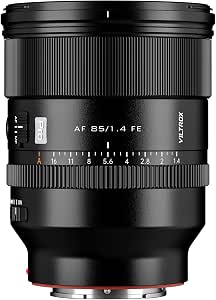 | Best Fast-Aperture Sony Portrait Lens | Focal length: 85mm | Maximum aperture: f/1.4 | Minimum aperture: f/16 | VIEW ON AMAZON | See Our Full Breakdown |
| Canon RF 50mm f/1.8 STM Lens Bundle with UV Filter and Lens Cap Keeper |  | Best Starter Bundle for Canon RF | Focal length: 50mm | Maximum aperture: f/1.8 | Minimum aperture: f/22 | VIEW ON AMAZON | See Our Full Breakdown |
| Canon RF 24-70mm f/2.8 L IS USM Lens |  | Best Versatile Portrait Zoom | Focal length: 24-70mm | Maximum aperture: f/2.8 | Mount: Canon RF | VIEW ON AMAZON | See Our Full Breakdown |
| 85mm f/1.8 Manual Focus Portrait Lens for Canon RF Mount |  | Best Manual-Focus Portrait Pick | Focal length: 85mm | Maximum aperture: f/1.8 | Minimum aperture: f/22 | VIEW ON AMAZON | See Our Full Breakdown |
| Canon RF 70-200mm f/2.8 L IS USM Telephoto Zoom Lens |  | Best for Flexible Telephoto Portraits | Focal length: 70-200mm | Maximum aperture: f/2.8 | Lens type: Telephoto zoom | VIEW ON AMAZON | See Our Full Breakdown |
| Canon RF85mm F2 Macro IS STM Lens |  | Best Versatile 85mm Portrait Lens | Focal length: 85mm | Maximum aperture: f/2 | Minimum aperture: f/29 | VIEW ON AMAZON | See Our Full Breakdown |
| Canon RF 35mm f/1.8 Macro IS STM Lens | 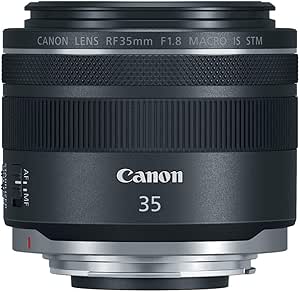 | Best for Environmental Portraits | Focal length: 35mm | Maximum aperture: f/1.8 | Minimum aperture: f/22 | VIEW ON AMAZON | See Our Full Breakdown |
| VILTROX AF 35mm f/1.7 STM Autofocus APS-C Prime Lens for Sony E-Mount |  | Best Lightweight Sony APS-C Portrait Pick | Focal length: 35mm | Maximum aperture: f/1.7 | Minimum aperture: f/16 | VIEW ON AMAZON | See Our Full Breakdown |
| camera lens for portraits for mirrorless | Focal length | Maximum aperture | Mount | Minimum aperture |
|---|---|---|---|---|
| Canon RF 50mm F1.8 STM Lens | 50mm | f/1.8 | Canon RF | — |
| Lightdow 85mm f/1.8 Manual Foc | 85mm | f/1.8 | — | f/22 |
| VILTROX 85mm F1.4 Pro FE Autof | 85mm | f/1.4 | Sony E | f/16 |
| Canon RF 50mm f/1.8 STM Lens B | 50mm | f/1.8 | Canon RF | f/22 |
| Canon RF 24-70mm f/2.8 L IS US | 24-70mm | f/2.8 | Canon RF | — |
| 85mm f/1.8 Manual Focus Portra | 85mm | f/1.8 | Canon RF | f/22 |
| Canon RF 70-200mm f/2.8 L IS U | 70-200mm | f/2.8 | Canon RF | — |
| Canon RF85mm F2 Macro IS STM L | 85mm | f/2 | — | f/29 |
| Canon RF 35mm f/1.8 Macro IS S | 35mm | f/1.8 | Canon RF | f/22 |
| VILTROX AF 35mm f/1.7 STM Auto | 35mm | f/1.7 | — | f/16 |
More Details on Our Top Picks
Canon RF 50mm F1.8 STM Lens
The Canon RF 50mm F1.8 STM is my pick for Canon RF shooters who want a simple, portable lens for portraits without carrying a zoom. Its f/1.8 aperture can soften backgrounds and help in dimmer light, while quiet STM autofocus suits candid portraits and video. Compared with the Lightdow 85mm f/1.8 Manual Focus Portrait Lens, this 50mm is easier to use for moving subjects because it autofocuses, though its wider view gives less background compression. It is also a lighter, simpler alternative to the Canon RF 24-70mm f/2.8 L IS USM, but gives up zoom flexibility and stabilization. The fixed focal length means I have to reframe by moving, and the lens is not water resistant. Its compact build makes it a practical everyday portrait choice, not a specialist headshot lens.
Pros:- Compact, lightweight design is easy to carry on an EOS R body
- f/1.8 aperture supports background blur and low-light portraits
- STM autofocus is quiet for photos and video
- Control ring provides direct setting adjustments
Cons:- Fixed 50mm framing lacks the flexibility of the RF 24-70mm f/2.8 L IS USM
- No water resistance for challenging outdoor conditions
Best for: Canon EOS R owners who want an affordable-to-carry autofocus prime for environmental portraits, family sessions, and everyday photos.
Not ideal for: Photographers who mainly make tight headshots from a distance, need a zoom for fast framing changes, or regularly shoot in wet conditions.
- Focal length:50mm
- Maximum aperture:f/1.8
- Lens type:Prime
- Mount:Canon RF
- Autofocus:Stepping Motor (STM)
- Filter size:43mm
- Diaphragm blades:7
- Angle of view:46 degrees
- Compatible cameras:Canon EOS R series mirrorless cameras
Our verdict“Choose this lens for portable, autofocus portraits on Canon RF when a 50mm view matters more than zoom range or weather protection.”
Lightdow 85mm f/1.8 Manual Focus Portrait Lens for Canon RF
The Lightdow 85mm f/1.8 suits Canon RF photographers who prefer deliberate, manual focusing and want a classic portrait focal length. Its 85mm view frames faces more tightly than the Canon RF 50mm F1.8 STM, while the f/1.8 aperture supports shallow depth of field. That framing can be useful for posed portraits, but it also gives less room in confined interiors. The main tradeoff is substantial: this lens has no electronic contacts, so focus and exposure settings are manual and the camera may need shutter release enabled without a lens. Compared with the autofocus-equipped VILTROX 85mm F1.4 Pro FE, it asks much more of the photographer and is for Canon RF rather than Sony E. Coatings and hybrid aspherical glass are listed to help control glare and aberrations, but they do not make manual focus easier for fast-moving subjects.
Pros:- 85mm focal length provides a tighter portrait view than the Canon RF 50mm F1.8 STM
- f/1.8 maximum aperture supports background separation
- Ultra multi-coating and hybrid aspherical glass are designed to reduce glare and aberrations
- Manual controls suit photographers who prefer direct focus and exposure decisions
Cons:- No autofocus or electronic contacts; focus and exposure must be managed manually
- Some cameras may require shutter release without a lens to be enabled
- Tight 85mm framing can be restrictive in small rooms
Best for: Canon RF portrait photographers who work with posed, relatively still subjects and are comfortable setting focus and exposure manually.
Not ideal for: Beginners, event photographers, or anyone who needs reliable autofocus for children, moving subjects, or quick portrait sessions.
- Focal length:85mm
- Maximum aperture:f/1.8
- Minimum aperture:f/22
- Focus type:Manual
- Lens mount:Canon RF
- Diaphragm blades:6
- Angle of view:28.5 degrees
- Filter size:72mm
- Lens coating:Ultra multi-coating (UMC)
Our verdict“Pick this 85mm only if you want manual control for posed Canon RF portraits and can accept the slower workflow.”
VILTROX 85mm F1.4 Pro FE Autofocus Portrait Lens for Sony E-Mount
For Sony E-mount portrait shooters, the VILTROX 85mm F1.4 Pro FE combines a portrait-friendly focal length with a particularly bright aperture. The f/1.4 maximum aperture gives more light-gathering and shallower depth of field than the f/1.8 Canon RF 50mm and Lightdow 85mm, while autofocus supports compatible cameras’ eye and face detection. That makes it better suited to portraits with moving subjects than the manual Lightdow, though it is limited to Sony E bodies. Its metal construction, function button, and click-switch aperture ring offer useful handling options for stills and video. The fixed 85mm view still demands working distance, and there is no zoom for changing composition quickly. Compared with the Canon RF 24-70mm f/2.8 L IS USM, this is the brighter portrait specialist, not the more flexible framing tool.
Pros:- f/1.4 aperture provides more light and shallower depth of field than the f/1.8 primes here
- Autofocus supports eye and face detection on compatible Sony cameras
- Click-switch aperture ring accommodates tactile or silent adjustment
- Metal body, integrated lens hood, and customizable function button support demanding workflows
Cons:- Sony E-mount compatibility excludes Canon RF cameras
- Fixed 85mm focal length can be limiting indoors and offers no zoom flexibility
- No image stabilization is listed in the supplied specifications
Best for: Sony E-mount portrait photographers who want autofocus eye and face support, an 85mm perspective, and very shallow background blur.
Not ideal for: Canon RF users, photographers working mostly in tight spaces, or anyone who needs one lens to cover multiple focal lengths.
- Focal length:85mm
- Maximum aperture:f/1.4
- Minimum aperture:f/16
- Lens type:Prime telephoto
- Mount:Sony E
- Focus:Autofocus
- Diaphragm blades:11
- Filter size:77mm
- Interface:USB-C
Our verdict“Choose this for Sony E portrait work when f/1.4 and autofocus matter more than zoom range or cross-mount flexibility.”
Canon RF 50mm f/1.8 STM Lens Bundle with UV Filter and Lens Cap Keeper
This bundle pairs the familiar Canon RF 50mm f/1.8 STM with a UV filter and lens cap keeper, making it a convenient entry point for Canon EOS R owners who want a portrait prime and a couple of practical accessories together. The lens itself offers the same 50mm framing, f/1.8 aperture, and quiet STM autofocus as the standalone Canon RF 50mm F1.8 STM, so the portrait advantages and limitations are much the same. Against the manual Lightdow 85mm, it is easier to focus on moving people but gives a wider, less compressed view. The included accessories add convenience, not a different optical capability. There is no image stabilization, and a fixed 50mm view cannot match the framing range of the Canon RF 24-70mm f/2.8 L IS USM. Choose the bundle for its add-ons, not for better portrait performance than the standalone lens.
Pros:- Compact, lightweight 50mm prime is easy to keep on a mirrorless body
- f/1.8 aperture supports low-light portraits and background blur
- Quiet STM autofocus works for photos and video
- Bundle includes a UV filter and lens cap keeper
Cons:- Fixed 50mm framing cannot match the versatility of the RF 24-70mm f/2.8 L IS USM
- No image stabilization is specified
- The bundle does not offer a stated optical advantage over the standalone Canon RF 50mm F1.8 STM
Best for: First-time Canon RF lens buyers who want a compact autofocus portrait prime and value having a UV filter and cap keeper included.
Not ideal for: Photographers who already own compatible accessories, need stabilization, or want an optical upgrade over the standalone Canon RF 50mm F1.8 STM.
- Focal length:50mm
- Maximum aperture:f/1.8
- Minimum aperture:f/22
- Lens type:Prime
- Focus:Auto/manual
- Mount:Canon RF
- Image stabilization:No
- Included accessories:UV filter, lens cap keeper
- Warranty:Limited 1-year warranty
Our verdict“Choose the bundle if you are starting with Canon RF and want the 50mm lens plus included accessories, rather than a different portrait optic.”
Canon RF 24-70mm f/2.8 L IS USM Lens
The Canon RF 24-70mm f/2.8 L IS USM is my most adaptable Canon RF choice for portrait work that shifts between full-length, half-body, and tighter compositions. Its 24-70mm zoom range lets me change framing without moving around a set, while the constant f/2.8 aperture and optical stabilization help in available light. Compared with the Canon RF 50mm F1.8 STM, it is far more flexible and adds up to five stops of shake correction, but its f/2.8 maximum aperture cannot create the same shallow depth of field as the f/1.8 or Sony VILTROX f/1.4 primes. Nano USM autofocus is suited to stills and video, and weather-resistant construction supports outdoor sessions. This is the broadest-use option here, though it is a Canon RF-only zoom rather than a compact specialist prime.
Pros:- 24-70mm range covers environmental portraits through tighter compositions
- Constant f/2.8 aperture supports low-light work across the zoom range
- Optical stabilization provides up to five stops of shake correction
- Fast, quiet Nano USM autofocus and water-resistant construction suit location work
Cons:- f/2.8 gathers less light and gives less background separation than the listed f/1.8 and f/1.4 primes
- Canon RF mount limits use to compatible Canon mirrorless cameras
- A zoom is less compact than the Canon RF 50mm F1.8 STM
Best for: Canon RF portrait photographers who cover varied framing needs, work at events or on location, and want stabilization in a single zoom.
Not ideal for: Buyers seeking a small, lightweight portrait setup or the shallowest depth of field available from the listed f/1.8 and f/1.4 primes.
- Focal length:24-70mm
- Maximum aperture:f/2.8
- Mount:Canon RF
- Focus type:Autofocus
- Image stabilization:Optical, up to 5 stops
- Minimum focusing distance:0.21m (wide); 0.38m (telephoto)
- Diaphragm blades:9
- Coatings:Air Sphere and fluorine
- Water resistance:Water resistant
Our verdict“Pick this zoom for Canon RF portrait work where flexible framing and stabilization matter more than prime-lens portability and maximum blur.”
85mm f/1.8 Manual Focus Portrait Lens for Canon RF Mount
This lens suits Canon RF photographers who want the classic portrait perspective of an 85mm prime and are comfortable focusing by hand. Its f/1.8 maximum aperture can separate a subject from the background, while the 85mm focal length gives portraits a tighter framing than the Canon RF 35mm f/1.8 Macro IS STM. That reach is useful for headshots, but it calls for more working distance and careful focus placement, especially at a wide aperture. Unlike the autofocus Canon RF85mm F2 Macro IS STM, this model has no autofocus, stabilization, or electronic contacts; aperture and exposure settings are manual, and the camera may need its release-without-lens option enabled. I’d choose it for deliberate, still portrait sessions, not fast-moving subjects or a grab-and-shoot workflow.
Pros:- 85mm focal length provides flattering, tighter portrait framing than the RF 35mm options.
- f/1.8 maximum aperture supports background blur and low-light shooting.
- Compatible with a range of Canon EOS R-series RF-mount cameras.
- Manual controls suit photographers who want direct focus and aperture adjustment.
Cons:- Manual focus makes tracking moving portrait subjects slower and more demanding.
- No image stabilization or electronic contacts; exposure and aperture require manual handling.
- Camera release-without-lens setting may need to be enabled.
Best for: Canon EOS R-series portrait photographers who prefer deliberate manual focusing and want an 85mm field of view with a bright aperture.
Not ideal for: Photographers capturing children, events, or other moving subjects, and anyone who depends on autofocus, in-lens stabilization, or electronic camera communication.
- Focal length:85mm
- Maximum aperture:f/1.8
- Minimum aperture:f/22
- Focus type:Manual focus
- Lens design:Prime
- Image stabilization:None
- Mount:Canon RF
- Filter size:55mm
Our verdict“Choose this lens for carefully composed Canon RF portraits if manual focus is part of your preferred workflow.”
Canon RF 70-200mm f/2.8 L IS USM Telephoto Zoom Lens
The RF 70-200mm f/2.8 makes the most sense for portrait photographers who want to change framing without moving the camera or swapping lenses. Across its 70-200mm zoom range, it can handle environmental portraits at the short end and tightly framed headshots at the long end; the constant f/2.8 aperture keeps exposure options consistent as you zoom. Compared with the fixed Canon RF85mm F2 Macro IS STM, this lens offers more framing flexibility and faster autofocus, but it is a larger, more specialized choice than a compact portrait prime. Optical stabilization rated up to 5 stops helps with camera shake, while dual Nano USM supports quiet, responsive focusing. Its weather-resistant construction adds reassurance outdoors, though it remains a Canon RF-only lens and may be more lens than a studio portrait shooter needs.
Pros:- 70-200mm range covers both looser portraits and tightly framed headshots.
- Constant f/2.8 maximum aperture supports subject separation throughout the zoom range.
- Optical stabilization is rated for up to 5 stops of shake correction.
- Dual Nano USM autofocus is designed for fast, quiet focusing, and the construction is dust- and weather-resistant.
Cons:- Telephoto zoom design is more specialized and less compact than a portrait prime.
- Canon RF mount limits use to compatible Canon mirrorless cameras.
- A zoom may be unnecessary bulk for photographers who mostly shoot portraits from one position.
Best for: Canon RF portrait photographers who shoot varied compositions, work at events, or want one telephoto lens for portraits and distant subjects.
Not ideal for: Travel-light portrait shooters who mainly make static headshots and would rather carry a smaller fixed-focal-length prime.
- Focal length:70-200mm
- Maximum aperture:f/2.8
- Lens type:Telephoto zoom
- Mount:Canon RF
- Focus:Autofocus, dual Nano USM
- Image stabilization:Optical, up to 5 stops
- Minimum focusing distance:2.3 ft (0.7 m)
- Construction:Dust- and weather-resistant
Our verdict“Pick this zoom if framing flexibility and fast autofocus matter more than the compactness of a fixed 85mm prime.”
Canon RF85mm F2 Macro IS STM Lens
This is the most balanced fixed 85mm option here for Canon RF photographers who want portraits plus close-up flexibility. Its f/2 aperture gives a bright portrait lens feel, while autofocus and optical stabilization rated up to 5 stops make handheld shooting more forgiving than with the manual-focus 85mm f/1.8 in this roundup. The extra versatility comes from 0.5x macro magnification and a 1.15-foot minimum focusing distance, useful for detail shots between portrait sessions. It does not reach true 1:1 macro magnification, and its aperture is slightly less wide than the manual 85mm’s f/1.8. Compared with the RF 70-200mm f/2.8, it gives up zoom range but is a simpler fixed-focal-length choice. The lack of water resistance also calls for care in wet conditions.
Pros:- 85mm focal length offers a dedicated portrait perspective.
- Autofocus and up to 5 stops of optical stabilization support handheld shooting.
- 0.5x magnification and close focusing expand its use to detail photography.
- Customizable control ring allows direct setting changes.
Cons:- Maximum magnification is 0.5x rather than true 1:1 macro.
- Not water resistant.
- Fixed focal length offers less framing flexibility than the RF 70-200mm zoom.
Best for: Canon RF portrait photographers who want autofocus, stabilization, and close-up detail capability in one 85mm prime.
Not ideal for: Photographers who need a weather-resistant lens, true 1:1 macro magnification, or the framing range of a telephoto zoom.
- Focal length:85mm
- Maximum aperture:f/2
- Minimum aperture:f/29
- Maximum magnification:0.5x
- Minimum focusing distance:1.15 ft
- Lens mount:Canon RF
- Focus type:Autofocus
- Image stabilization:Optical, up to 5 stops
- Filter size:67mm
Our verdict“Choose this 85mm if you want a capable Canon RF portrait prime that can also focus closely and stabilize handheld shots.”
Canon RF 35mm f/1.8 Macro IS STM Lens
The RF 35mm f/1.8 is for portrait makers who want the surroundings to remain part of the story. Its 35mm wide-angle view suits environmental portraits, couples, and casual indoor sessions where an 85mm lens can feel too tight. The f/1.8 aperture helps in dimmer settings, and autofocus with optical stabilization rated up to 5 stops is more accommodating for handheld work than the manual 85mm f/1.8. Close focusing and 0.5x macro magnification add useful detail-shot capability. That versatility comes with a clear portrait tradeoff: at the same camera-to-subject distance, 35mm renders a wider view and less compressed framing than the Canon RF85mm F2 Macro IS STM. It is a compact everyday choice, but not my pick for consistently tight headshots.
Pros:- 35mm field of view includes more setting around portrait subjects.
- f/1.8 maximum aperture supports low-light shooting and background separation.
- 0.5x magnification and 0.56-foot minimum focusing distance enable close detail shots.
- Autofocus, up to 5 stops of optical stabilization, and a customizable control ring add practical flexibility.
Cons:- Wider perspective is less suited to tight headshots than the 85mm lenses in this roundup.
- 0.5x macro magnification does not provide true 1:1 reproduction.
- Canon RF mount limits use to compatible Canon mirrorless cameras.
Best for: Canon RF photographers who make environmental portraits, travel portraits, or close-up detail images and want a compact everyday lens.
Not ideal for: Portrait shooters who primarily want tightly framed headshots, stronger background compression, or a longer working distance.
- Focal length:35mm
- Maximum aperture:f/1.8
- Minimum aperture:f/22
- Magnification ratio:0.5x
- Minimum focusing distance:0.56 ft (0.17 m)
- Mount:Canon RF
- Focus type:Autofocus
- Image stabilization:Optical, up to 5 stops
- Weight:10.88 oz
Our verdict“Pick this lens if your portraits benefit from visible surroundings and you also want a compact close-focusing everyday prime.”
VILTROX AF 35mm f/1.7 STM Autofocus APS-C Prime Lens for Sony E-Mount
Sony APS-C users looking for a light portrait-and-video prime have a distinct alternative here to the Canon RF 35mm f/1.8: the VILTROX is built for Sony E-mount APS-C cameras, not Canon RF bodies or full-frame coverage. Its 35mm focal length gives a moderately wide view, making it better suited to environmental portraits and vlogging than tight headshots. The f/1.7 aperture supports subject separation, while quiet STM autofocus with eye and face tracking helps keep people in focus during stills and video. At 170g, it is an easy travel companion, and its design is aimed at reducing focus breathing for video. The tradeoff is a fixed focal length with no stabilization listed; unlike Canon’s RF 35mm, it also lacks macro capability. Check camera format and mount before choosing it.
Pros:- f/1.7 maximum aperture supports background separation and lower-light portrait shooting.
- Quiet STM autofocus supports eye and face tracking.
- Lightweight 170g body is suited to travel and handheld video.
- Design targets reduced focus breathing for video use.
Cons:- APS-C format is not designed to cover full-frame cameras.
- Fixed 35mm focal length offers no zoom and is better for environmental portraits than tight headshots.
- No image stabilization is listed, and it lacks the macro feature offered by the Canon RF 35mm.
Best for: Sony APS-C camera owners who want a lightweight 35mm prime for environmental portraits, vlogging, and travel video.
Not ideal for: Full-frame Sony users, photographers who need a tight headshot lens, or buyers who want macro capability or listed optical stabilization.
- Focal length:35mm
- Maximum aperture:f/1.7
- Minimum aperture:f/16
- Camera mount:Sony E-mount
- Lens format:APS-C
- Focus type:Autofocus, STM
- Optical construction:11 elements in 9 groups
- Filter thread:52mm
- Weight:170g
Our verdict“Choose this VILTROX for lightweight Sony APS-C environmental portraits and video, not for full-frame coverage or tight headshots.”

How We Picked
I ranked these lenses by how well they fit common mirrorless portrait jobs, not by aperture alone. I weighed portrait-friendly focal length, maximum aperture, autofocus versus manual focus, stabilization where specified, close-focus usefulness, and versatility for sessions that include more than head-and-shoulders framing. I also treated mount and sensor format as practical limits: a lens must match the camera, and an APS-C lens should be chosen with its crop-format field of view in mind.
The order favors lenses that combine strong portrait utility with fewer compromises for their intended users. That puts the RF 85mm F2 high for its balance of framing, stabilization, and close focus, while the VILTROX 85mm f/1.4 earns a distinct place for Sony full-frame users who prioritize a bright aperture and autofocus. Zooms rank lower for buyers seeking the strongest background separation from a prime, but remain compelling for flexibility. Manual-focus lenses and the bundle version of the RF 50mm rank according to their narrower advantages, not because they serve every portrait photographer equally well.
| camera lens for portraits for mirrorless | Maximum aperture | Mount | Minimum aperture | Focus type |
|---|---|---|---|---|
| Canon RF 50mm F1.8 STM Lens | f/1.8 | Canon RF | — | — |
| Lightdow 85mm f/1.8 Manual Foc | f/1.8 | — | f/22 | Manual |
| VILTROX 85mm F1.4 Pro FE Autof | f/1.4 | Sony E | f/16 | — |
| Canon RF 50mm f/1.8 STM Lens B | f/1.8 | Canon RF | f/22 | — |
| Canon RF 24-70mm f/2.8 L IS US | f/2.8 | Canon RF | — | Autofocus |
| 85mm f/1.8 Manual Focus Portra | f/1.8 | Canon RF | f/22 | Manual focus |
| Canon RF 70-200mm f/2.8 L IS U | f/2.8 | Canon RF | — | — |
| Canon RF85mm F2 Macro IS STM L | f/2 | — | f/29 | Autofocus |
| Canon RF 35mm f/1.8 Macro IS S | f/1.8 | Canon RF | f/22 | Autofocus |
| VILTROX AF 35mm f/1.7 STM Auto | f/1.7 | — | f/16 | Autofocus, STM |
Factors to Consider When Choosing Camera Lens For Portraits For Mirrorless
Before choosing by focal length or aperture, I would narrow the field by camera compatibility and the portraits you actually make. These broader checks can prevent a purchase that looks appealing on paper but feels awkward in your usual shooting space.
Match the lens mount and sensor format first
Start with the exact camera body, not the lens name: Canon RF and Sony E are different mounts, and a lens designed for one is not a direct fit for the other. Then check whether your camera is full-frame or APS-C, since sensor size affects the angle of view you get from a given focal length. A 35mm lens on APS-C frames more tightly than a 35mm lens on full-frame, which can make it more useful for portraits than the focal-length label alone suggests. A common mistake is buying based on a familiar full-frame focal length without accounting for crop format. Also verify autofocus support and any adapter requirements for your specific body. This compatibility check can eliminate several options before you compare portrait rendering.
Choose focal length around your working distance
Portrait focal length is partly a question of perspective and partly a question of room to move. An 85mm-style view usually suits headshots and tighter portraits when you have space to step back, while a 35mm or 50mm lens can be easier indoors or when you want more of the setting in the frame. Wider lenses can exaggerate perspective if you move too close, so avoid filling the frame with a face from a short distance. On the other hand, a long lens can make small rooms and group portraits harder to manage. Think about where you photograph most often before prioritizing the most classic portrait focal length. Your available space may matter more than a modest difference in aperture.
Treat aperture as a creative choice, not a quality shortcut
A wider maximum aperture can help separate a subject from a busy background and gives more exposure latitude in dim conditions. It also makes focus placement less forgiving, especially for close portraits where an eye can be sharp while the other falls out of focus. For groups, full-length portraits, or scenes where the environment matters, stopping down may produce more useful depth of field. Do not assume the lens with the widest aperture will automatically make the best portrait for your style. Consider how often you want very shallow focus versus reliable sharpness across more of the subject. The right balance depends on distance, subject movement, and how much background context you want to retain.
Decide how much autofocus and stabilization matter
Autofocus is especially helpful for children, candid sessions, and subjects who shift position between frames. Manual focus can work well for posed portraits, tripod setups, or photographers who prefer to control focus deliberately, but it raises the workload when the subject moves. Stabilization can reduce camera shake in still portraits, particularly when using slower shutter speeds; it does not freeze subject movement. That distinction is easy to miss when comparing stabilized and unstabilized lenses. If you photograph people in motion, prioritize suitable shutter speed and focus tracking rather than relying on stabilization alone. For a mostly posed session, the balance may favor handling and focus precision instead.
Compare primes and zooms by the session, not by the spec sheet
A prime can offer a bright aperture and a focused portrait role, while a zoom lets you change framing without moving or swapping lenses. That flexibility can be useful at events, in changing locations, or when you need both wider environmental portraits and tighter compositions quickly. Zooms may be larger and heavier than a compact prime, so carrying one for a long session can affect comfort. Primes can also encourage a consistent shooting distance, but that is less convenient when space is restricted. Ask whether you tend to control the scene or react to it; that often reveals which design fits better. Do not pay for a broad focal range if you rarely use it.
Account for handling, close focus, and the full kit
Portrait work often lasts longer than a few test frames, so weight, balance on the camera, and easy operation matter alongside optical specifications. Close-focus capability adds room for detail shots, such as hands or accessories, but it is not a replacement for a dedicated macro lens when high magnification is the goal. Stabilization can be useful for handheld still subjects, while a large lens may make a compact body feel front-heavy. Bundled accessories should be judged by whether they meet a real need; they do not change the lens’s optical performance. Check whether the lens fits your usual bag and whether its size will affect how comfortably you direct a subject. A slightly less specialized lens may be the better everyday choice if it gets carried more often.
Frequently Asked Questions
Which of these lenses makes the most sense for a Canon RF beginner?
The Canon RF 50mm F1.8 STM is a straightforward starting point if you want a compact prime and already use a Canon RF camera. Its 50mm framing is more adaptable in smaller spaces than an 85mm portrait lens, though it may not give the same tight headshot framing from the same distance. If you want stabilization and close-focus versatility, the RF 85mm F2 Macro IS STM offers more features but calls for more room to work. I would choose based on your typical shooting distance rather than assuming one focal length is a universal beginner lens. Check whether your most common portraits are indoors, outdoors, or environmental before deciding.
Can I use the Sony VILTROX lenses on a Canon RF camera?
No: the VILTROX lenses listed here are for Sony E-mount, while the Canon models are for Canon RF mount. A lens mount is a physical and electronic system, so do not treat these options as interchangeable based on focal length. The VILTROX 35mm f/1.7 is also specified for APS-C, which matters even on a compatible Sony body. Check your camera’s mount and sensor format before comparing image framing or buying. If you own a Canon RF camera, focus on the Canon RF options in this roundup.
Is a manual-focus 85mm lens a sensible choice for portraits?
It can be a sensible choice for posed, deliberate portraits where the subject can hold still and you have time to confirm focus. It is less suited to children, candid moments, or sessions where the subject moves frequently, because you must adjust focus yourself for each change in distance. The two manual-focus Canon RF 85mm options also overlap in purpose, so compare their listing details carefully rather than assuming they differ in autofocus behavior. A camera’s focus aids can help, but they do not remove the extra attention manual focus requires. If reliable subject tracking matters to you, an autofocus option is the safer fit.
Should I choose the RF 85mm F2 or one of the Canon RF f/2.8 zooms?
Choose the RF 85mm F2 if you mainly make portraits and want stabilization, close-focus flexibility, and a dedicated short-telephoto view. The RF 24-70mm f/2.8 is more adaptable when you need wide-to-short-telephoto framing without changing lenses, while the RF 70-200mm f/2.8 suits situations where you want longer reach and can work at greater distances. Both zooms give up the f/2 prime’s maximum aperture, but their range can simplify changing scenes and compositions. Size, weight, and working distance may be more decisive than the lens type alone. Consider how often you change framing during a session and whether carrying a zoom is comfortable for you.
Does the RF 50mm bundle improve portrait image quality over the standard RF 50mm?
The bundle listing includes a UV filter and lens cap keeper, but those accessories do not change the lens’s core optical design or portrait rendering. Its appeal is convenience if the included items match what you already want to use. Compare the bundle contents and compatibility with your shooting needs, and avoid treating an accessory package as an image-quality upgrade. If you already own a suitable filter or do not need the extras, the standard lens listing may be the cleaner choice. For portrait results, focus on framing, light, focus accuracy, and background distance rather than the bundle label.
Conclusion
For a balanced Canon RF portrait setup, I would choose the Canon RF 85mm F2 Macro IS STM as the best overall pick, thanks to its portrait-friendly view, stabilization, and close-focus range. The Canon RF 50mm F1.8 STM is my best value-style choice for a compact, simple prime, and the standard lens is the more direct pick if you do not need the bundle accessories. For Sony full-frame users who want a brighter portrait prime with autofocus, the VILTROX 85mm f/1.4 Pro FE is the best premium-style option in this lineup. Beginners who use Canon RF can start with the 50mm for a more flexible working distance; for specific needs, choose the RF 24-70mm f/2.8 for framing flexibility, the RF 70-200mm f/2.8 for reach, or the APS-C VILTROX 35mm f/1.7 for compatible Sony bodies and environmental portraits. Confirm mount, sensor format, and your usual shooting space before choosing.
Evergreen bestsellers Picks
bestsellers
As an affiliate, we earn on qualifying purchases.