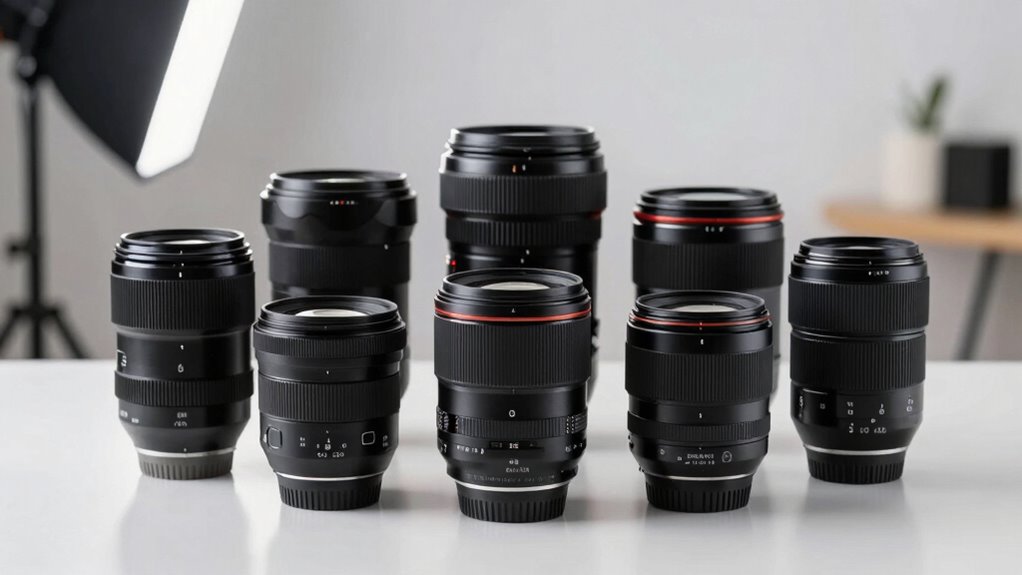

For a camera lens for portraits for beginners, I’d start with the Canon RF 50mm f/1.8 STM as the best overall pick for compatible RF-mount cameras: its autofocus makes portraits easier to capture than the manual-focus 85mm options. The Canon EF 50mm f/1.8 STM is a practical choice for compatible Canon DSLRs, while the Meike 85mm f/1.8 II suits Canon EF users who want a tighter portrait view. The main tradeoffs are camera-mount compatibility, autofocus versus manual focusing, and a 50mm field of view versus the more distant framing of an 85mm lens. Check your camera mount before choosing, since similar-looking lenses may not fit your body. Read on for a full comparison and advice on matching a lens to your camera and portrait style.

Get the latest gadgets delivered free with Prime
- Fast, free delivery on millions of items
- Prime Video, Amazon Music and more included
- Member-only deals all year
Complete the kit



Key Takeaways
- Mount compatibility comes first: the RF 50mm is for Canon RF cameras, the EF 50mm options and listed 85mm EF lenses are for Canon EF/EF-S systems, and the Sony FE 50mm is for compatible Sony E-mount full-frame bodies.
- Autofocus can make learning easier: the Sony FE 50mm, Canon RF 50mm, Canon EF 50mm, and Meike 85mm II provide autofocus, while the three other listed 85mm lenses are manual-focus options.
- Fifty millimeters is the flexible starting point: it is generally easier to use indoors and for half-body portraits than an 85mm lens, which needs more working distance.
- The 85mm manual-focus lenses trade convenience for portrait framing: they can suit deliberate, posed sessions, but focusing on a moving person takes more care.
- The two Canon EF 50mm STM listings fill a similar role: compare the exact listing and camera compatibility rather than assuming the duplicate focal length means a different portrait experience.
| Sony FE 50mm F1.8 Standard Lens (SEL50F18F/2), Black |  | Best for Sony Full-Frame Beginners | Focal length: 50mm | Maximum aperture: f/1.8 | Minimum aperture: f/22 | VIEW ON AMAZON | See Our Full Breakdown |
| JINTU 85mm f/1.8 Manual Focus Portrait Lens for Canon EF/EF-S |  | Best Manual-Focus Learning Lens | Focal length: 85mm | Maximum aperture: f/1.8 | Minimum aperture: f/22 | VIEW ON AMAZON | See Our Full Breakdown |
| Meike 85mm f/1.8 II Portrait Lens for Canon EF |  | Best Autofocus 85mm for Canon DSLRs | Focal length: 85mm | Maximum aperture: f/1.8 | Minimum aperture: f/16 | VIEW ON AMAZON | See Our Full Breakdown |
| Canon RF 50mm f/1.8 STM Lens |  | Best Compact Lens for EOS R Beginners | Focal length: 50mm | Maximum aperture: f/1.8 | Mount: Canon RF | VIEW ON AMAZON | See Our Full Breakdown |
| EF 85mm f/1.8 Manual Focus Portrait Lens for Canon EOS DSLR (EF/EF-S Mount) |  | Best for Deliberate, Posed Portraits | Focal length: 85mm | Maximum aperture: f/1.8 | Mount: Canon EF/EF-S | VIEW ON AMAZON | See Our Full Breakdown |
| 85mm f/1.8 Manual Focus Portrait Lens for Canon EF Mount |  | Best for Manual-Focus Practice | Focal length: 85mm | Maximum aperture: f/1.8 | Lens type: Prime | VIEW ON AMAZON | See Our Full Breakdown |
| Canon EF 50mm f/1.8 STM Lens, Black, Compatible with Canon EOS DSLR Cameras |  | Best Beginner All-Rounder | Focal length: 50mm | Maximum aperture: f/1.8 | Minimum focusing distance: 0.35m (1.15 ft) | VIEW ON AMAZON | See Our Full Breakdown |
| camera lens for portraits for beginner | Focal length | Maximum aperture | Mount | Diaphragm blades |
|---|---|---|---|---|
| Sony FE 50mm F1.8 Standard Len | 50mm | f/1.8 | Sony E | 7 |
| JINTU 85mm f/1.8 Manual Focus | 85mm | f/1.8 | Canon EF/EF-S | 8 |
| Meike 85mm f/1.8 II Portrait L | 85mm | f/1.8 | Canon EF | 9 |
| Canon RF 50mm f/1.8 STM Lens | 50mm | f/1.8 | Canon RF | 7 |
| EF 85mm f/1.8 Manual Focus Por | 85mm | f/1.8 | Canon EF/EF-S | — |
| 85mm f/1.8 Manual Focus Portra | 85mm | f/1.8 | Canon EF and Canon EF-S | 3 |
| Canon EF 50mm f/1.8 STM Lens | 50mm | f/1.8 | — | — |
More Details on Our Top Picks
Sony FE 50mm F1.8 Standard Lens (SEL50F18F/2), Black
The Sony FE 50mm F1.8 is a straightforward first portrait prime for Sony E-mount users who want background blur without carrying a large lens. Its 50mm focal length is more flexible in smaller rooms than the 85mm options here, including the Meike 85mm f/1.8 II, though it gives less working distance and facial compression for tight headshots. The f/1.8 aperture helps separate a subject from the background and lets in more light than a kit lens at many settings. At 6.6 ounces, it is easy to keep on the camera for casual portraits. The tradeoff is a fixed field of view, and no image stabilization means steady technique or a stabilized camera body matters, especially in low light.
Pros:- Bright f/1.8 aperture supports background blur and low-light shooting.
- Light 6.6-ounce design is easy for beginners to carry.
- 50mm view is more practical indoors than the 85mm portrait lenses in this lineup.
- Autofocus simplifies focusing compared with the manual-focus JINTU and Lightdow lenses.
Cons:- No image stabilization is built into the lens.
- Fixed focal length requires moving to change framing.
- Its 50mm perspective offers less portrait compression than the 85mm options.
Best for: Sony E-mount beginners who want a light, affordable-to-carry prime for portraits at home, outdoors, and everyday photography.
Not ideal for: Photographers who mainly make tight headshots and want the longer working distance of an 85mm lens, or who need stabilization in a camera body without it.
- Focal length:50mm
- Maximum aperture:f/1.8
- Minimum aperture:f/22
- Mount:Sony E
- Focus type:Autofocus
- Diaphragm blades:7
- Image stabilization:None
- Weight:6.6 ounces
Our verdict“Choose this Sony prime if you want a compact, autofocus 50mm for general portraits rather than a specialist 85mm headshot lens.”
JINTU 85mm f/1.8 Manual Focus Portrait Lens for Canon EF/EF-S
The JINTU 85mm f/1.8 suits Canon DSLR beginners who want to learn deliberate manual focusing and prefer the classic longer portrait perspective. Its 85mm focal length gives more working distance and a tighter view than the Canon RF 50mm f/1.8 STM, which can help isolate a subject against a busy background. The wide f/1.8 aperture also supports shallow depth of field, but it leaves little room for focus error: a moving subject or a slightly misplaced focus point can soften the eyes. Unlike the autofocus Meike 85mm f/1.8 II, this lens has no electronic contacts, autofocus, or in-camera aperture control, so setup and operation are less beginner-friendly. Its metal body is a plus, but manual operation is a real learning curve.
Pros:- 85mm view provides portrait-friendly framing and working distance.
- f/1.8 aperture can create shallow depth of field and blurred backgrounds.
- Metal body construction.
- Manual focus encourages careful focus placement on posed subjects.
Cons:- Manual focus and aperture control demand more camera setup and practice.
- No electronic contacts may trigger a lens-not-attached message.
- No image stabilization, which can make handheld low-light shooting harder.
Best for: Canon EF or EF-S DSLR owners who want an inexpensive way to practice manual focus on posed portraits and stationary subjects.
Not ideal for: New portrait photographers who need quick autofocus, electronic lens communication, or reliable focus on children and other moving subjects.
- Focal length:85mm
- Maximum aperture:f/1.8
- Minimum aperture:f/22
- Mount:Canon EF/EF-S
- Focus:Manual
- Angle of view:28.3 degrees
- Diaphragm blades:8
- Filter size:72mm
- Construction:Metal body with hybrid aspherical element
Our verdict“Pick the JINTU if learning manual focus matters more than convenience, but choose the Meike 85mm for autofocus assistance.”
Meike 85mm f/1.8 II Portrait Lens for Canon EF
The Meike 85mm f/1.8 II is the more approachable 85mm choice for Canon DSLR owners who want portrait separation without giving up autofocus. Its STM motor is designed for quiet, smooth focus, a practical advantage over the fully manual JINTU and Lightdow 85mm lenses when a beginner is tracking a subject or recording video. The f/1.8 maximum aperture gives similar background-blur potential to those manual alternatives, while nine diaphragm blades shape out-of-focus highlights. It works on EF full-frame and APS-C DSLRs, and on EOS R bodies with an adapter. The cost of that convenience is that it still has no image stabilization; its 85mm framing also needs more room than the Canon RF 50mm, and firmware updates are not supported on Apple devices.
Pros:- STM autofocus offers a more accessible alternative to manual-only 85mm lenses.
- f/1.8 aperture supports low-light portraits and subject separation.
- Nine diaphragm blades shape background highlights.
- Compatible with Canon EF full-frame and APS-C DSLRs.
Cons:- No image stabilization.
- EOS R cameras require an EF-EOS R adapter.
- Firmware updates are not supported on Apple devices.
Best for: Canon EF DSLR beginners who want an 85mm portrait look with autofocus, including EOS R users who already have an EF-EOS R adapter.
Not ideal for: Photographers who need lens-based stabilization, use a Canon RF body without an adapter, or rely on Apple devices for firmware updates.
- Focal length:85mm
- Maximum aperture:f/1.8
- Minimum aperture:f/16
- Mount:Canon EF
- Focus:Autofocus and manual
- Autofocus motor:STM
- Diaphragm blades:9
- Image stabilization:None
- Compatibility:Canon EF full-frame and APS-C DSLRs; EOS R series with EF-EOS R adapter
Our verdict“Choose the Meike if you want an autofocus 85mm for Canon EF cameras and can work without stabilization.”
Canon RF 50mm f/1.8 STM Lens
For a beginner with a Canon EOS R mirrorless camera, the Canon RF 50mm f/1.8 STM makes portrait shooting simple to carry and operate. Its 50mm view is easier to use in tight spaces than the 85mm Meike, JINTU, and Lightdow primes, while the STM autofocus is quieter and more convenient than the manual-only options. The f/1.8 aperture can blur backgrounds and help in dimmer light, making this a useful everyday lens as well as a portrait starter. Canon’s Super Spectra coating is designed to reduce flare and ghosting. Compared with the Sony FE 50mm, this is the native choice for EOS R bodies, but it lacks optical stabilization and weather sealing; its fixed focal length also cannot replace a zoom when framing needs change quickly.
Pros:- Compact, lightweight design is easy to carry on EOS R cameras.
- f/1.8 aperture supports background blur and available-light portraits.
- STM autofocus is quiet and suited to video as well as stills.
- Super Spectra coating helps reduce flare and ghosting.
Cons:- No optical image stabilization.
- Fixed 50mm framing is less adaptable than a zoom.
- Not weather-sealed for harsh conditions.
Best for: New Canon EOS R owners who want one small autofocus prime for casual portraits, indoor use, and everyday photography.
Not ideal for: Photographers who need a longer 85mm headshot perspective, optical stabilization, or a lens suited to harsh weather.
- Focal length:50mm
- Maximum aperture:f/1.8
- Mount:Canon RF
- Diaphragm blades:7
- Angle of view:46 degrees
- Image stabilization:Digital; no optical stabilization
- Filter size:43mm
- Focus motor:STM stepping motor
Our verdict“Choose this lens for a lightweight, native EOS R portrait prime; choose an 85mm option when tighter headshot framing is the priority.”
EF 85mm f/1.8 Manual Focus Portrait Lens for Canon EOS DSLR (EF/EF-S Mount)
The Lightdow EF 85mm f/1.8 is aimed at Canon DSLR owners who prefer to set focus themselves and photograph subjects who can hold still. Its 85mm focal length gives more working distance and a tighter portrait view than the Canon RF 50mm, while the wide aperture supports subject separation. The hybrid aspherical elements and ultra multi-coating are intended to support image clarity, and the internal-focus design avoids extending the lens during focusing. Yet this is a less forgiving first portrait lens than the autofocus Meike 85mm f/1.8 II: there is no autofocus, and the camera may need full manual mode to avoid a no-lens error. Its six rounded blades differ from the JINTU’s eight, but neither manual lens offers stabilization or the ease of autofocus.
Pros:- 85mm focal length provides portrait-friendly framing and working distance.
- f/1.8 aperture supports background blur.
- Internal focusing mechanism operates without extending the lens.
- Hybrid aspherical elements and ultra multi-coating are designed to support image clarity.
Cons:- No autofocus, making moving subjects harder to capture sharply.
- May require full manual camera mode to avoid a no-lens error.
- No image stabilization is listed in the product data.
Best for: Canon EOS DSLR users making posed portraits who want to practice manual focus and have time to check focus carefully.
Not ideal for: Beginners photographing active children, events, or spontaneous moments, where autofocus would make getting sharp portraits easier.
- Focal length:85mm
- Maximum aperture:f/1.8
- Mount:Canon EF/EF-S
- Focus type:Manual focus with internal focusing
- Aperture blades:6 rounded
- Coating:Hybrid aspherical and ultra multi-coating
Our verdict“Choose the Lightdow for slow, posed manual-focus portraits, but the Meike is the more practical 85mm pick for autofocus beginners.”
85mm f/1.8 Manual Focus Portrait Lens for Canon EF Mount
The BENOISON 85mm f/1.8 pairs a portrait-friendly focal length with a bright aperture, so a beginner can separate a subject from the background without stepping up to a more complex lens. Its fully manual focus makes it a deliberate choice for learning careful focusing, but it also raises the difficulty: there is no autofocus or electronic contact, and some camera bodies may not fire the shutter without a setting change. Compared with the Canon EF 50mm f/1.8 STM, this lens gives a tighter portrait view on a full-frame DSLR but loses the Canon’s autofocus convenience and video-friendly motor. The three-blade diaphragm may also render out-of-focus highlights less smoothly. I’d choose it for controlled portraits and manual-focus practice, not fleeting expressions or fast-moving subjects.
Pros:- 85mm focal length gives a tighter perspective suited to head-and-shoulders portraits.
- f/1.8 maximum aperture supports background separation and shooting in lower light.
- Manual operation can help deliberate photographers practice precise focus.
- Compatible with Canon EF and EF-S DSLR mounts.
Cons:- No autofocus or electronic contacts; camera operation may require a shutter-release setting change.
- Three diaphragm blades can produce less rounded out-of-focus highlights.
- No image stabilization to help reduce camera shake.
Best for: Canon EF or EF-S DSLR owners who want an inexpensive-feeling-in-use, hands-on route to posed portraits and are willing to focus manually.
Not ideal for: Beginners photographing children, events, or video who need dependable autofocus, electronic camera communication, or image stabilization.
- Focal length:85mm
- Maximum aperture:f/1.8
- Lens type:Prime
- Focus type:Manual focus
- Mount:Canon EF and Canon EF-S
- Diaphragm blades:3
- Image stabilization:None
- Lens coating:Subwavelength coating
Our verdict“Choose the BENOISON if you want an 85mm portrait view and are ready to focus manually; pick the Canon EF 50mm f/1.8 STM for easier autofocus learning.”
Canon EF 50mm f/1.8 STM Lens, Black, Compatible with Canon EOS DSLR Cameras
The Canon EF 50mm f/1.8 STM is the more forgiving starting point for most Canon DSLR beginners because it combines a bright f/1.8 aperture with smooth, near-silent autofocus. On an APS-C body, its 80mm-equivalent view works well for portraits while remaining practical for everyday subjects; on full frame, 50mm is a looser, more flexible perspective than the BENOISON 85mm f/1.8. That versatility can make framing easier in smaller rooms, though it delivers less of the dedicated, tight portrait look of an 85mm lens. STM also makes this Canon a more natural fit for video than the manual-focus alternatives in this roundup. The tradeoffs are a fixed focal length, no stabilization, and a plastic build that feels less substantial than higher-end options.
Pros:- f/1.8 aperture supports shallow depth of field and low-light shooting.
- STM autofocus is smooth and near-silent for stills and video.
- Compact, lightweight design is easy to carry with a DSLR.
- On APS-C bodies, the 80mm-equivalent view suits portraits.
Cons:- Fixed 50mm focal length offers no zoom flexibility.
- No built-in image stabilization.
- Plastic construction may feel less robust than higher-end lenses.
Best for: New Canon EOS DSLR owners, especially APS-C users, who want one compact lens for portraits, everyday photography, and occasional video.
Not ideal for: Photographers who need zoom flexibility, built-in stabilization, or a tighter 85mm field of view on a full-frame camera.
- Focal length:50mm
- Maximum aperture:f/1.8
- Minimum focusing distance:0.35m (1.15 ft)
- Maximum magnification:0.21x
- Autofocus motor:STM (stepping motor)
- Effective focal length on APS-C:80mm
- Lens construction:6 elements in 5 groups
- Diagonal angle of view:46°
Our verdict“Pick this Canon for an approachable, autofocus-equipped first portrait prime, especially on APS-C; choose an 85mm option when tighter framing matters more than flexibility.”
How We Picked
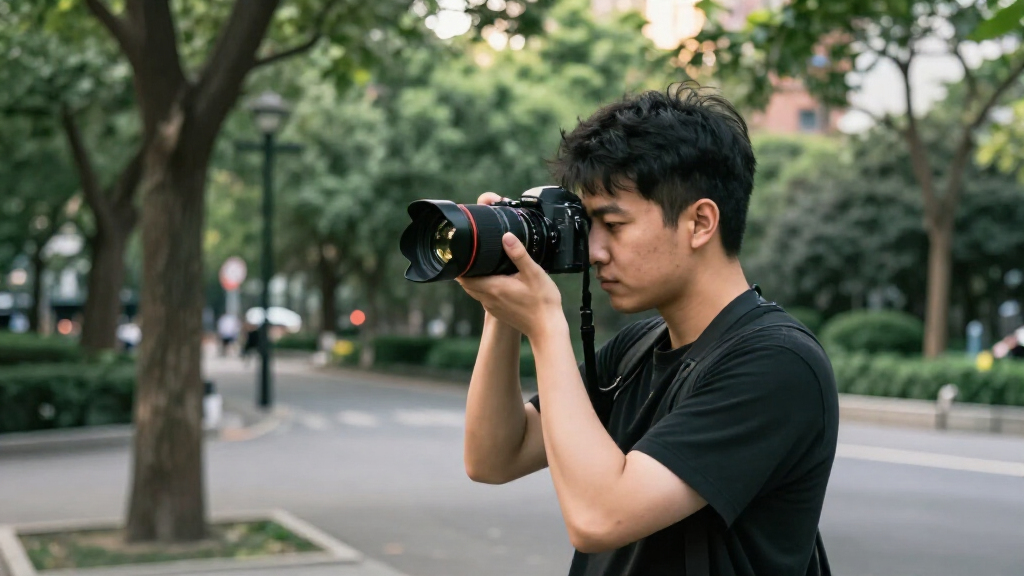
I ranked these lenses around the needs of someone learning portrait photography: mount fit, focusing ease, useful portrait framing, and day-to-day versatility. Autofocus matters because beginners often need to watch expression, pose, and focus at the same time; that gives the Sony and Canon 50mm STM options and Meike 85mm II an ease-of-use advantage over manual-focus lenses. I also weighed focal length against likely shooting space: a 50mm lens is generally more adaptable indoors, while an 85mm lens can give a tighter portrait view but asks for more room.
The order favors lenses that combine beginner-friendly operation with a clearly defined use, not simply the longest focal length or widest aperture. I treated camera compatibility as a gate, not a bonus: an otherwise suitable lens is the wrong choice if its mount does not match the camera. Manual-focus 85mm options remain useful for photographers who prefer controlled, posed work, but their learning curve keeps them below autofocus alternatives for most first-time portrait shooters. Where listings share a similar role, I avoid assuming unverified differences and rank them by the clarity of their fit for a buyer.
| camera lens for portraits for beginner | Mount | Image stabilization |
|---|---|---|
| Sony FE 50mm F1.8 Standard Len | Sony E | None |
| JINTU 85mm f/1.8 Manual Focus | Canon EF/EF-S | — |
| Meike 85mm f/1.8 II Portrait L | Canon EF | None |
| Canon RF 50mm f/1.8 STM Lens | Canon RF | Digital; no optical stabilization |
| EF 85mm f/1.8 Manual Focus Por | Canon EF/EF-S | — |
| 85mm f/1.8 Manual Focus Portra | Canon EF and Canon EF-S | None |
| Canon EF 50mm f/1.8 STM Lens | — | — |
Factors to Consider When Choosing Camera Lens For Portraits For Beginners
Before choosing a portrait lens, I’d work through a few decisions that can matter more than the label on the front. Camera fit, shooting distance, and focusing method shape how easy a lens is to use in real portrait sessions. These checks can also prevent a common beginner mistake: buying a lens for its portrait reputation without checking whether it suits the camera, room, or subject.
Match the lens mount to your camera
Start with the exact camera model and mount, not just the brand name. Canon RF and Canon EF are different systems, and an EF lens is not a direct substitute for an RF lens; an adapter may be needed, with compatibility varying by camera and lens. Sony FE lenses fit Sony E-mount cameras, though FE denotes a full-frame lens and does not mean every camera body uses the same sensor size. Check the manufacturer’s compatibility information and the listing’s mount description before ordering. A mount mismatch can make a lens unusable without additional equipment, so this check should come before comparisons of aperture or focal length.
Choose focal length for your available space
Focal length affects how far you stand from your subject and how much of the scene appears in the frame. A 50mm lens is often more workable in a small room and can cover portraits that include more of the body, while an 85mm lens calls for greater distance and favors tighter framing. Neither automatically makes a better portrait; the right choice depends on the space and the composition you want. Beginners sometimes buy an 85mm lens expecting a dramatic background effect, then find they cannot step back far enough indoors. If you mostly photograph family or friends at home, consider where you can physically stand before choosing a longer lens.
Decide how much you want autofocus to help
Autofocus can reduce the number of moving parts a beginner has to manage, especially when a person shifts between expressions or poses. Manual focus can work well for a still subject and a carefully composed portrait, but it asks you to confirm focus yourself each time. That can be harder at a wide aperture, where the zone of sharp focus is narrow. If you plan to photograph children, candid moments, or people who move naturally, autofocus is usually the more forgiving starting point. Manual focus may suit a patient learner who values deliberate practice and typically directs posed subjects.
Understand what a wide aperture can and cannot do
A wide maximum aperture can help create a softer background and gather more light, but it does not guarantee a successful portrait. At a very wide aperture, small focusing errors can leave an eye soft, and the background still depends on subject distance, background distance, and framing. Beginners can get useful separation by placing the subject well in front of the background, even before relying on the lens’s widest setting. Learn to check focus on the nearer eye and try a few aperture settings rather than leaving the lens wide open for every shot. Paying more for a lens makes sense only if its handling and focus features fit the portraits you actually make.
Think about subject movement and session style
A lens that suits a planned headshot may be less convenient for a casual portrait session. For posed work, you can take time to set focus and position your subject; for candid portraits, quick and reliable focusing can matter more than a tighter focal length. Consider whether your subjects will stay still, whether you can direct them, and how often you expect to recompose. A manual 85mm lens can be a deliberate creative choice, but it may turn spontaneous moments into missed focus opportunities. Choose for the pace of your sessions rather than buying solely for a traditional portrait focal length.
Check the whole setup, not just the lens
A lens changes the balance and handling of a camera, and an adapter can add another part to carry and check. Before buying, confirm that the lens’s mount, camera body, and any required adapter work together as a system. Also consider whether the lens will serve beyond portraits: a 50mm option may be easier to use for everyday scenes, while an 85mm lens has a narrower role for many beginners. If this is your first extra lens, versatility can matter more than specialized framing. Paying for a more dedicated portrait perspective makes sense when you already know you have enough space and a clear use for it.
Frequently Asked Questions
Which of these lenses should I choose if I have not bought a camera yet?
I would choose the camera system first, then select a lens that fits it; these seven options do not all mount on the same cameras. The Sony FE 50mm is for compatible Sony E-mount bodies, while the Canon RF 50mm belongs to the RF system and the Canon EF options are designed for EF/EF-S DSLR use. The listed 85mm lenses also specify Canon EF compatibility, but verify each listing and your camera before ordering. If you are still comparing camera bodies, check which lenses are available for that mount and whether an adapter is part of your plan. Buying a lens before settling the system can limit your options or require extra equipment.
Is a 50mm lens or an 85mm lens easier for portraits at home?
For many home setups, a 50mm lens is easier because you can frame a portrait without standing as far from the subject. An 85mm lens gives a tighter view from farther away, which can be useful when the room has enough space or you want a close head-and-shoulders composition. Room layout matters more than a general claim that one focal length is best for portraits. Try measuring the distance between your usual shooting spot and your subject before choosing. If you cannot step back comfortably, the longer lens may feel restrictive indoors.
Should a beginner avoid the manual-focus 85mm lenses?
Not necessarily, but I would choose one only if the slower focusing process fits your subject and session style. Manual focus can be satisfying for posed portraits, where you have time to check sharpness and ask the subject to hold still. It is less forgiving for children, candid expressions, or any situation where the subject moves between frames. If you are learning exposure and composition at the same time, autofocus can leave you with fewer tasks to manage. A manual lens makes more sense as a deliberate learning choice than as the easiest first portrait lens.
Do I need an adapter to use a Canon EF lens on a Canon RF camera?
An EF lens generally needs a compatible EF-to-RF adapter to mount on a Canon RF camera. Confirm support for the specific camera and lens, and check what functions remain available with the adapter rather than assuming every combination behaves identically. An adapter also adds another component to your kit, though it can let you use EF lenses on an RF body when compatibility is confirmed. The Canon RF 50mm avoids that extra step on an RF camera. If you already own EF lenses, compare the adapter route with buying an RF-native lens for your use.
Are the two Canon EF 50mm STM listings different enough to choose between?
Based on the supplied product names, both listings describe a Canon EF 50mm f/1.8 STM lens for compatible Canon EOS DSLR cameras, so I would not assume a different portrait look or focusing system. Check the exact model details, included accessories, condition, seller information, and return terms before selecting a listing. Also confirm that your camera accepts EF lenses; an EF-S DSLR can generally use EF lenses, but other Canon systems may need an adapter or a different mount. If the specifications match, choose the listing whose details best fit your purchase requirements. Do not infer a performance difference from the wording alone.
Conclusion
For most beginners with a compatible camera, I’d choose the Canon RF 50mm f/1.8 STM as best overall when using a Canon RF body: autofocus and a flexible focal length make it a balanced starting point. My best value-style pick for compatible Canon DSLRs is the Canon EF 50mm f/1.8 STM, while the Sony FE 50mm f/1.8 is the corresponding straightforward option for compatible Sony E-mount users. The best for beginners is an autofocus 50mm that matches the camera they already own, rather than a lens that requires a new system or an adapter. For a more specialized portrait view, the Meike 85mm f/1.8 II suits Canon EF users who want autofocus and have room to step back; the manual-focus 85mm options are better for deliberate, posed work. I would not name a best premium lens from this lineup alone because the listed options do not establish a clear premium tier. Match the mount first, then decide whether your space and subjects favor a versatile 50mm or a tighter 85mm.
Halloween Picks

12.5-Foot Lighted Halloween Inflatable Archway

Jenaai 5.3-Foot Motion-Activated Halloween Animatronic Skeleton

Panefright Halloween Window Projector – Scary Projector for Spooky Decor
As an affiliate, we earn on qualifying purchases.