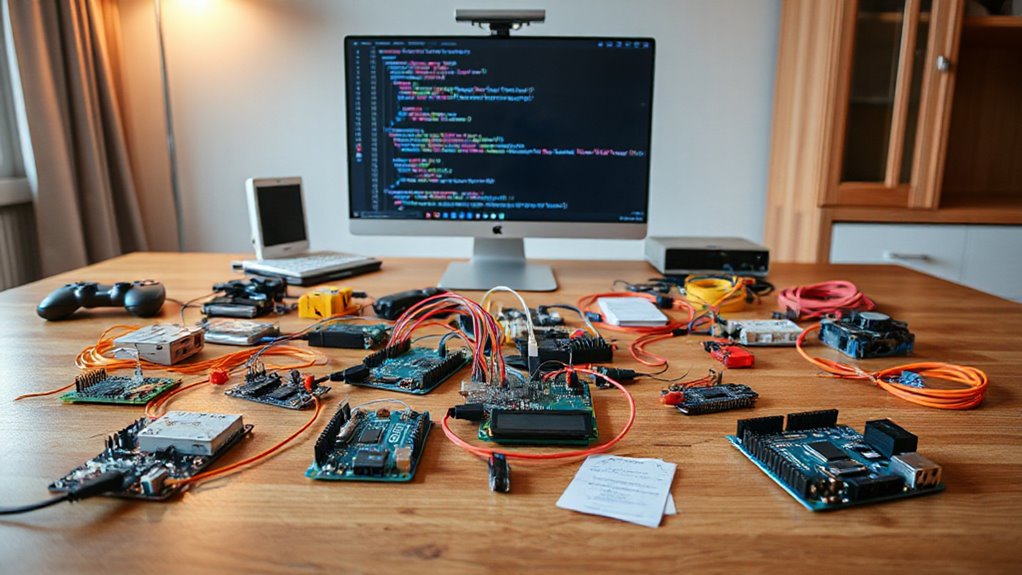

For anyone interested in developing IoT projects with Arduino, choosing the right starter kit can be a game-changer. The Arduino Official Starter Kit Deluxe stands out for its comprehensive tutorials and high-quality components, making it ideal for beginners and hobbyists. The ELEGOO ESP-32 Super Starter Kit offers advanced features and WiFi integration, suited for more experienced users looking for flexibility. Meanwhile, the SunFounder Ultimate Starter Kit balances a vast selection of parts with detailed instructions, fitting those who want variety without complexity. The main challenge lies in balancing ease of use, component selection, and project scope. Continue reading for detailed comparisons to find the best fit for your IoT ambitions.

Get the latest gadgets delivered free with Prime
- Fast, free delivery on millions of items
- Prime Video, Amazon Music and more included
- Member-only deals all year
Complete the kit



Key Takeaways
- The top kits blend comprehensive tutorials with diverse components, reducing setup time for IoT projects.
- Advanced users should prioritize kits with ESP32 or ESP8266 modules for better WiFi capabilities.
- Beginners benefit from kits with clear instructions and fewer components to avoid overwhelm.
- Value is often found in kits that include a large variety of sensors and modules at a reasonable price.
- Build quality and component durability vary, so investing in reputable brands can improve long-term success.
| ELEGOO ESP-32 Super Starter Kit with Tutorial Compatible with Arduino IDE |  | Best IoT-Focused Kit for Versatile Connectivity | Microcontroller: ESP-32 | Modules Included: Over 35 | Connectivity: Wi-Fi and Bluetooth 4.2 | VIEW ON AMAZON | See Our Full Breakdown |
| Arduino Official Starter Kit Deluxe Bundle with Make: Getting Started The Open Source Electronics Prototyping Platform 3rd Edition Book |  | Best for Beginners and Educational Settings | Included Components: Arduino Uno, sensors, LEDs, motors, LCD, project guide | Compatibility: Arduino IDE | Suitable For: Beginners, students, educators | VIEW ON AMAZON | See Our Full Breakdown |
| SunFounder 3-in-1 Super Starter Kit with Arduino Uno R4 Minima, IoT & Smart Car Projects, ESP8266 WiFi, 50+ Tutorials |  | Best for Versatile Projects and Intermediate Users | Microcontroller: Arduino Uno R4 Minima | WiFi Module: ESP8266 | Tutorials: 50+ step-by-step guides | VIEW ON AMAZON | See Our Full Breakdown |
| LAFVIN Basic Starter Kit for ESP32 ESP-32S WiFi IoT Development Board with Tutorial |  | Best for Beginners and Entry-Level IoT Projects | Model: ESP32 ESP-32S | Includes: Tutorial, LEDs, DHT11, OLED | Suitable For: Beginners | VIEW ON AMAZON | See Our Full Breakdown |
| STEM V4 IoT Starter Kit – Compatible with Arduino UNO R4 WiFi, Includes Sensors, Display, Modules, and Breadboard |  | Best for Educational and Hands-On Learning | Compatibility: Arduino UNO R4 WiFi | Components Included: 20+ sensors and modules | Display: LCD I2C 16×2 | VIEW ON AMAZON | See Our Full Breakdown |
| ELEGOO UNO R3 Project Super Starter Kit with PDF Tutorial for Beginners |  | Best for Beginners Seeking Guided Learning | RAM Memory Installed: 2 KB | Processor Model: ARM Cortex A-9 | Processor Speed: 16 MHz | VIEW ON AMAZON | See Our Full Breakdown |
| Arduino PLC Starter Kit [AKX00051] with Arduino Opta for Industrial Automation, Wi-Fi, Bluetooth, I/O Modules & Online Learning | with Arduino Opta for Industrial Automation, Wi-Fi, Bluetooth, I/O Modules & Online Learning” image=”https://m.media-amazon.com/images/I/61eRpzT-YnL._AC_SX300_SY300_QL70_ML2_.jpg” link=”0″] | Best for Industrial Automation Enthusiasts | Model: AKX00051 | Includes: Arduino Opta PLC, sensors, actuators, relays | Connectivity: Wi-Fi, Bluetooth | VIEW ON AMAZON | See Our Full Breakdown |
| SunFounder Ultimate Starter Kit for Arduino UNO – 192 Items, 87 Projects, IoT/Smart Car/Basic Kit with Tutorials |  | Best for Progressive Learning and Extensive Projects | Items Included: 192 | Projects: 87 | Suitable Age: 8+ | VIEW ON AMAZON | See Our Full Breakdown |
| Arduino Sensor Kit – Base [TPX00031] | ” image=”https://m.media-amazon.com/images/I/51Vx+S-VgBL._AC_SY300_SX300_QL70_FMwebp_.jpg” link=”0″] | Best for Sensor-Focused IoT Projects | Number of Sensors: 10+ | Included Sensors: Temperature, light, motion, humidity | Intended Audience: Beginners, educators, hobbyists | VIEW ON AMAZON | See Our Full Breakdown |
| SunFounder Elite Explorer Kit with Arduino Uno R4 WiFi, IoT Components, and Tutorials | 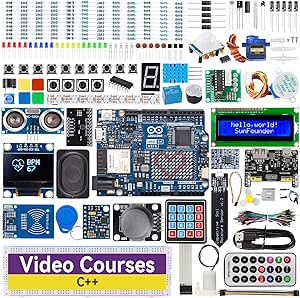 | Best for Advanced Beginners and Explorers | Board: Arduino Uno R4 WiFi | Components: 300+ | Projects: 50 (including IoT) | VIEW ON AMAZON | See Our Full Breakdown |
| KEYESTUDIO IoT ESP32 Smart Home Starter Kit for Arduino and Python |  | Best Versatile Learning Platform for Home Automation | Included Components: ESP32 development board, expansion board, sensors, modules, connection cables, wooden house parts | Programming Languages: Arduino C++, MicroPython | Projects: 13 | VIEW ON AMAZON | See Our Full Breakdown |
| KEYESTUDIO IoT Control Smart Farm Starter Kit for Arduino ESP32 |  | Best for Agricultural IoT and Sensor Integration | Sensor Types: Photoresistor, Soil Moisture Sensor, Water Level Sensor | Controller: ESP32 | Compatibility: Arduino, Scratch | VIEW ON AMAZON | See Our Full Breakdown |
| Arduino OPLA IoT Kit [AKX00026] – All-in-One Internet of Things Learning Platform for Makers, Developers & Hobbyists | – All-in-One Internet of Things Learning Platform for Makers, Developers & Hobbyists” image=”https://m.media-amazon.com/images/I/51m3ssWqClL._AC_SX300_SY300_QL70_ML2_.jpg” link=”0″] | Best for Versatile IoT Prototyping and Cloud Integration | Included Sensors: Temperature, humidity, motion, light, and more | Communication Modules: Wi-Fi, Bluetooth, LoRa | Compatibility: Arduino ecosystem | VIEW ON AMAZON | See Our Full Breakdown |
| ELEGOO UNO R3 Project Starter Kit – Compatible with Arduino |  | Best for Extensive Project Variety and STEM Education | Components: 200+ components across 63 types | Controller: ELEGOO UNO R3 | Power Supply: 9 V, 1 A power supply, USB cable, 9 V battery | VIEW ON AMAZON | See Our Full Breakdown |
| GAR Monster Starter Kit for Arduino – Robotics & IoT Development, 5-Board Set with 25 Sensors and Organizer |  | Best for Robotics and Multi-Board IoT Projects | Main Boards: Uno R3, Mega 2560, Nano V3, ESP32 WiFi+BT, ESP8266 NodeMCU | Sensors: RFID, Ultrasonic, RTC, Accelerometer, LCD, Relay, Servo, Stepper Motor | Components Count: Over 65 | VIEW ON AMAZON | See Our Full Breakdown |
| arduino starter kit for iot | Compatibility |
|---|---|
| ELEGOO ESP-32 Super Starter Ki | Arduino IDE |
| Arduino Official Starter Kit D | Arduino IDE |
| SunFounder 3-in-1 Super Starte | Arduino Uno R3 |
| LAFVIN Basic Starter Kit for E | Arduino IDE |
| STEM V4 IoT Starter Kit | Arduino UNO R4 WiFi |
| ELEGOO UNO R3 Project Super St | — |
| Arduino PLC Starter Kit [AKX00 | — |
| SunFounder Ultimate Starter Ki | Arduino UNO |
| Arduino Sensor Kit | — |
| SunFounder Elite Explorer Kit | Arduino Uno R3, Nano |
| KEYESTUDIO IoT ESP32 Smart Hom | — |
| KEYESTUDIO IoT Control Smart F | Arduino, Scratch |
| Arduino OPLA IoT Kit [AKX00026 | Arduino ecosystem |
| ELEGOO UNO R3 Project Starter | — |
| GAR Monster Starter Kit for Ar | — |
More Details on Our Top Picks
ELEGOO ESP-32 Super Starter Kit with Tutorial Compatible with Arduino IDE
This kit stands out for its powerful ESP-32 microcontroller with integrated Wi-Fi and Bluetooth, making it ideal for IoT projects that require wireless communication. Compared with the SunFounder 3-in-1 Starter Kit, it offers more modules and a broader range of connectivity options, though it can be overwhelming for absolute beginners because of its extensive component list. The included tutorials help bridge the gap, but some foundational electronics knowledge is recommended. The wide variety of modules, including sensors, displays, and motors, supports complex smart device projects, which makes it suitable for learners ready to explore IoT beyond basic setups. However, the sheer number of components can slow beginners down if they prefer a more streamlined experience. This kit makes the most sense for hobbyists and students eager to dive into IoT development with advanced connectivity options.Pros:- Extensive module selection for diverse IoT projects
- Includes detailed tutorials and project guides
- Supports Wi-Fi and Bluetooth for versatile connectivity
- Compatible with Arduino IDE for ease of programming
Cons:- Requires some basic electronics knowledge to get started
- Can be overwhelming due to the large number of components
Best for: Intermediate learners and hobbyists wanting to build connected devices with wireless capabilities
Not ideal for: Absolute beginners with no prior electronics experience or those seeking a simple, plug-and-play starter
- Microcontroller:ESP-32
- Modules Included:Over 35
- Connectivity:Wi-Fi and Bluetooth 4.2
- Compatibility:Arduino IDE
- Tutorials:30+ projects with code and diagrams
Our verdict“This kit is perfect for learners aiming to develop advanced IoT projects with wireless connectivity, provided they are comfortable with a broader electronics setup.”
Arduino Official Starter Kit Deluxe Bundle with Make: Getting Started The Open Source Electronics Prototyping Platform 3rd Edition Book
This official Arduino kit earns its place as the best choice for newcomers due to its comprehensive assortment of components like sensors, LEDs, and motors, along with a detailed project guide that appeals to students and educators. Compared with the SunFounder 3-in-1 Starter Kit, it offers a more structured learning path with the included book, making it ideal for those new to electronics and coding. While its extensive set of parts provides flexibility, the variety can be daunting for absolute beginners who might prefer a more streamlined starter. The step-by-step instructions support systematic learning, though some users may find the projects too basic after initial familiarity. This kit is best suited for beginners, STEM classrooms, or hobbyists who want to learn fundamentals in a guided way.Pros:- Includes a wide array of sensors and modules for diverse projects
- Step-by-step guides and a detailed project book
- Fully compatible with Arduino IDE for straightforward programming
- Ideal for learning fundamentals and STEM education
Cons:- Can be overwhelming due to the large number of components
- Project guides may be too basic for advanced users
Best for: Beginners, students, and educators seeking a structured and comprehensive introduction to Arduino and electronics
Not ideal for: Experienced makers looking for advanced IoT modules or minimalistic setups
- Included Components:Arduino Uno, sensors, LEDs, motors, LCD, project guide
- Compatibility:Arduino IDE
- Suitable For:Beginners, students, educators
- Learning Resources:Detailed step-by-step guides
Our verdict“This kit is a solid choice for beginners and educators who want a guided, all-inclusive Arduino learning experience.”
SunFounder 3-in-1 Super Starter Kit with Arduino Uno R4 Minima, IoT & Smart Car Projects, ESP8266 WiFi, 50+ Tutorials
The SunFounder 3-in-1 kit appeals to those ready to explore more complex projects, with its upgraded Arduino Uno R4 Minima and comprehensive tutorials. It offers higher performance compared to the basic Arduino Uno R3 in the LAFVIN kit, supporting advanced IoT, smart car, and robotics projects. While the tutorials are extensive, the higher complexity might challenge absolute beginners or those unfamiliar with electronics. The included ESP8266 WiFi module expands wireless project options, but the absence of detailed sensor lists can limit immediate project clarity. This kit balances performance and scope, making it better suited for users with some experience who want to expand their IoT and robotics capabilities.Pros:- Upgraded Arduino Uno R4 Minima offers higher processing power
- Supports diverse projects including IoT, smart cars, and robotics
- Over 50 tutorials provide extensive guidance
- Includes Wi-Fi module for wireless connectivity
Cons:- Requires some electronics and programming experience
- Limited details on specific included sensors and modules
Best for: Intermediate hobbyists and students ready to tackle more ambitious IoT and robotics projects
Not ideal for: Complete beginners or those seeking a simple, plug-and-play starter kit
- Microcontroller:Arduino Uno R4 Minima
- WiFi Module:ESP8266
- Tutorials:50+ step-by-step guides
- Compatibility:Arduino Uno R3
- Certifications:RoHS
Our verdict“This kit suits those with some experience seeking to develop more sophisticated IoT and robotics projects with ample tutorials.”
LAFVIN Basic Starter Kit for ESP32 ESP-32S WiFi IoT Development Board with Tutorial
The LAFVIN ESP32 starter kit makes IoT accessible for newcomers with its straightforward components like LEDs, DHT11 sensor, and OLED display, plus tutorials that guide users through basic programming and assembly. Compared with the SunFounder kits, it’s simpler and more focused, which makes it ideal for those just starting out. However, its limited component selection may restrict project scope for more advanced applications, and users may need to supplement it for complex projects. The compatibility with Arduino IDE simplifies coding, but beginners should be prepared to learn some electronics fundamentals first. This kit is best for absolute beginners who want a gentle introduction to IoT development with ESP32.Pros:- Easy to use and suitable for complete beginners
- Includes tutorials and code examples for quick start
- Compatible with Arduino IDE for simple programming
- Focuses on core IoT components like DHT11 and OLED
Cons:- Limited to basic IoT projects, requiring additional parts for complexity
- Basic component set may not support advanced applications
Best for: Beginners and hobbyists new to IoT and ESP32 development
Not ideal for: Experienced developers or those aiming for complex, multi-sensor projects
- Model:ESP32 ESP-32S
- Includes:Tutorial, LEDs, DHT11, OLED
- Suitable For:Beginners
- Compatibility:Arduino IDE
Our verdict“This kit is ideal for absolute beginners looking to get started with ESP32 and basic IoT projects without overwhelming complexity.”
STEM V4 IoT Starter Kit – Compatible with Arduino UNO R4 WiFi, Includes Sensors, Display, Modules, and Breadboard
The STEM V4 kit offers a well-rounded package for students and newcomers eager to learn electronics and IoT through hands-on experimentation. Its inclusion of the DIYables STEM V4 board, along with a variety of sensors, a display, and a motor, makes it highly versatile. The organized storage and online tutorials support structured learning, but the number of components can be intimidating for complete beginners, especially those unfamiliar with electronics. The kit’s broad component set allows for many project types, yet complex projects may require additional parts or prior knowledge. It’s best suited for learners who want a comprehensive, organized approach to IoT and electronics education.Pros:- Includes a variety of sensors and modules for diverse projects
- Organized storage with free online tutorials
- Suitable for educational use and beginner experimentation
- Compatible with Arduino UNO R4 WiFi
Cons:- Potentially overwhelming for absolute beginners
- Limited detailed instructions for complex projects
Best for: Students, educators, and makers seeking a complete, organized learning experience
Not ideal for: Experienced developers or those looking for a minimalistic or advanced IoT setup
- Compatibility:Arduino UNO R4 WiFi
- Components Included:20+ sensors and modules
- Display:LCD I2C 16×2
- Motor:SG90 servo
- Power:USB Type-C, DC jack
- Storage:Reusable plastic box
Our verdict“This kit provides an excellent platform for learners to explore a wide range of IoT projects with organized, beginner-friendly resources.”
ELEGOO UNO R3 Project Super Starter Kit with PDF Tutorial for Beginners
This kit stands out for its comprehensive set of components, making it ideal for those new to IoT and electronics. Compared to the SunFounder Ultimate Starter Kit, it offers more guided tutorials and is less overwhelming due to its solderless setup. However, its technical specs like only 2 KB RAM and limited USB ports might restrict more complex projects. This pick makes the most sense for hobbyists and students starting their IoT journey who value step-by-step instructions over advanced features.Pros:- Includes a wide variety of sensors and modules for diverse projects
- Solderless, easy-to-assemble design simplifies setup for beginners
- Detailed tutorials and example code support effective learning
Cons:- Some specifications, like 2 KB RAM, may limit complex applications
- Limited USB ports can hinder multiple device connections simultaneously
Best for: Beginners and educators seeking structured, hands-on learning with a broad array of sensors
Not ideal for: Advanced hobbyists or developers needing higher processing power or extensive connectivity options
- RAM Memory Installed:2 KB
- Processor Model:ARM Cortex A-9
- Processor Speed:16 MHz
- Connectivity Technology:USB
- Operating System:FreeRTOS
- Item Dimensions:8.3″L x 5.5″W x 1.97″H
Our verdict“Ideal for beginners who want guided, beginner-friendly projects without overwhelming complexity.”
Arduino PLC Starter Kit [AKX00051] with Arduino Opta for Industrial Automation, Wi-Fi, Bluetooth, I/O Modules & Online Learning
with Arduino Opta for Industrial Automation, Wi-Fi, Bluetooth, I/O Modules & Online Learning” image=”https://m.media-amazon.com/images/I/61eRpzT-YnL._AC_SX300_SY300_QL70_ML2_.jpg” link=”0″]Best for Industrial Automation Enthusiasts
View on AmazonThis kit is tailored for those interested in industrial automation, integrating the Arduino Opta PLC for real-time control and cloud connectivity. Unlike the SunFounder Elite Explorer Kit, it emphasizes industrial applications with IoT integration, but its complexity makes it less suitable for absolute beginners without prior electronics experience. The included online courses add value but require learners to commit time to master the system. It’s a strong choice for learners aiming to explore smart manufacturing and automation systems in depth.Pros:- Includes real-time control with Arduino Opta PLC and cloud features
- Extensive online learning content supports practical, hands-on projects
- Supports advanced IoT and industrial automation applications
Cons:- May be too complex for complete beginners without prior experience
- Requires additional components to fully implement projects
Best for: Electronics students or professionals focused on industrial automation and IoT projects
Not ideal for: Hobbyists looking for simple IoT projects or beginners wanting basic Arduino kits
- Model:AKX00051
- Includes:Arduino Opta PLC, sensors, actuators, relays
- Connectivity:Wi-Fi, Bluetooth
- Learning Content:20+ hours of online courses
- Application:Industrial automation, IoT
Our verdict“Designed for learners aiming to specialize in industrial automation and IoT with a focus on real-time control.”
SunFounder Ultimate Starter Kit for Arduino UNO – 192 Items, 87 Projects, IoT/Smart Car/Basic Kit with Tutorials
This kit offers an impressive range of 192 components and supports 87 projects, making it suitable for learners aged 8 and up. Compared to the ELEGOO UNO R3 Starter Kit, it provides more components and project variety, enabling deeper exploration of IoT, robotics, and smart devices. Its extensive tutorials help users progress from simple LEDs to complex IoT systems. However, the sheer volume of parts can be overwhelming for absolute beginners who might prefer a more streamlined starter kit. This makes it ideal for educational environments or dedicated hobbyists ready to scale their skills.Pros:- Huge selection of components supports a wide range of projects
- Includes comprehensive tutorials and online courses for guided learning
- Suitable for learners from age 8 upwards, encouraging progressive mastery
Cons:- Can be overwhelming due to the large number of parts
- Requires some prior interest in electronics or programming to maximize use
Best for: Young learners or hobbyists wanting a broad set of components and projects for gradual skill development
Not ideal for: Complete beginners who prefer a smaller, less intimidating kit or those with limited space
- Items Included:192
- Projects:87
- Suitable Age:8+
- Compatibility:Arduino UNO
Our verdict“Best for those who want an extensive, project-rich experience and are ready for a comprehensive set.”
Arduino Sensor Kit – Base [TPX00031]
” image=”https://m.media-amazon.com/images/I/51Vx+S-VgBL._AC_SY300_SX300_QL70_FMwebp_.jpg” link=”0″]Best for Sensor-Focused IoT Projects
View on AmazonThis sensor kit provides over 10 essential sensors like temperature, light, motion, and humidity, making it perfect for environmental monitoring and basic IoT experiments. Compared with the SunFounder Ultimate Kit, it offers a more targeted sensor selection but fewer total components, which may limit project scope. Its simplicity makes it accessible for beginners, but users will need to supply a microcontroller to get started. This kit offers a solid foundation for learning about sensors and building interactive environments, especially for those interested in environmental or home automation projects.Pros:- Includes a variety of essential sensors for IoT and environmental projects
- Easy-to-follow instructions and resources support beginners
- Expandable for a range of DIY sensor applications
Cons:- Limited to basic sensors, not suitable for complex projects
- Requires additional microcontroller and wiring for full functionality
Best for: Beginners, students, or hobbyists focusing on sensor-based IoT applications
Not ideal for: Advanced users seeking a wide array of components or complex automation projects
- Number of Sensors:10+
- Included Sensors:Temperature, light, motion, humidity
- Intended Audience:Beginners, educators, hobbyists
- Applications:Environmental monitoring, home automation
Our verdict“Ideal for beginners interested in sensor-driven IoT applications and environmental monitoring.”
SunFounder Elite Explorer Kit with Arduino Uno R4 WiFi, IoT Components, and Tutorials
This kit features the latest Arduino Uno R4 WiFi and over 300 components, making it a comprehensive choice for those ready to explore IoT, programming, and electronics in depth. Unlike the simpler ELEGOO UNO R3 Starter Kit, it offers WiFi and Bluetooth capabilities built-in, supporting a broader range of projects. The extensive tutorials and videos guide users through more complex IoT applications, but the large number of parts can be intimidating for absolute newcomers. It’s best suited for learners who want a full-spectrum experience with plenty of room to grow into more advanced projects.Pros:- Includes the latest Arduino Uno R4 WiFi with integrated connectivity
- Over 300 components support a wide variety of projects
- Comprehensive tutorials and videos enhance learning
Cons:- Can be overwhelming for absolute beginners due to component volume
- Requires some prior programming knowledge to fully utilize
Best for: Educational users and hobbyists seeking a complete, high-tech IoT starter experience
Not ideal for: Complete beginners or those with limited space who prefer smaller, simpler kits
- Board:Arduino Uno R4 WiFi
- Components:300+
- Projects:50 (including IoT)
- Compatibility:Arduino Uno R3, Nano
- Includes:Online tutorials, video courses
Our verdict“Best suited for learners looking for a high-capacity, all-in-one IoT starter kit with advanced features.”
KEYESTUDIO IoT ESP32 Smart Home Starter Kit for Arduino and Python
This kit stands out for supporting both Arduino C++ and MicroPython, offering flexible options for learners and educators to explore IoT home automation. Compared with the ELEGOO UNO R3 Starter Kit, it emphasizes WiFi-enabled projects, making it ideal for those interested in actual smart home systems. The inclusion of 13 progressive projects and comprehensive tutorials simplifies the learning curve, yet the unassembled components and absence of batteries can pose challenges for complete beginners. The detailed wiring diagrams and sensors enable real-world experimentation, but the need to purchase batteries separately is a notable drawback. Overall, this kit is best suited for learners wanting a deep dive into WiFi-connected IoT systems with a flexible programming environment.
Pros:- Supports both Arduino C++ and MicroPython for versatile learning
- Includes detailed tutorials and wiring diagrams for step-by-step guidance
- Enables hands-on experience with real WiFi-controlled smart home projects
- Comprehensive set with sensors, modules, and expansion board
Cons:- Batteries are not included, requiring additional purchase
- Unassembled kit could be overwhelming for complete beginners without prior experience
Best for: Beginners and educators focusing on WiFi-enabled IoT home automation projects
Not ideal for: Users seeking a fully pre-assembled, plug-and-play solution or those on a tight budget for batteries
- Included Components:ESP32 development board, expansion board, sensors, modules, connection cables, wooden house parts
- Programming Languages:Arduino C++, MicroPython
- Projects:13
- Requires Batteries:6x AA batteries (not included)
Our verdict“This kit is ideal for learners and educators aiming to build WiFi-enabled smart home projects with flexibility in programming languages.”
KEYESTUDIO IoT Control Smart Farm Starter Kit for Arduino ESP32
This kit excels at teaching farm automation through a variety of sensors and the ESP32 platform, supporting both Arduino and Scratch, which broadens accessibility. Compared to the Arduino OPLA IoT Kit, it offers a more specific focus on sensors like soil moisture and water levels, making it better suited for agricultural applications. The inclusion of detailed online tutorials facilitates learning for beginners and teens, but the kit requires users to assemble and program the components themselves, and batteries are not included, adding to setup complexity. Its sensor suite and focus on farming environments make it ideal for those interested in IoT-driven agriculture projects, though it may be less suitable for general IoT or home automation needs.
Pros:- Includes essential sensors for farm automation like soil moisture and water level sensors
- Supports multiple programming environments including Arduino and Scratch
- Educational focus with online tutorials tailored for beginners and teens
- Unassembled components promote hands-on learning
Cons:- Batteries are not included, requiring additional purchase
- Assembly and coding are required, which may be challenging for absolute beginners
Best for: Students, hobbyists, or educators interested in IoT applications for farming and environmental monitoring
Not ideal for: Users seeking a ready-to-use kit with preloaded code or those focused on smart home systems
- Sensor Types:Photoresistor, Soil Moisture Sensor, Water Level Sensor
- Controller:ESP32
- Compatibility:Arduino, Scratch
- Kit Includes:Sensors, ESP32 module, online tutorials
- Assembly:Unassembled, code not preloaded
- Batteries Included:No
Our verdict“This kit makes the most sense for learners interested in IoT applications for agriculture and environmental management with a hands-on approach.”
Arduino OPLA IoT Kit [AKX00026] – All-in-One Internet of Things Learning Platform for Makers, Developers & Hobbyists
– All-in-One Internet of Things Learning Platform for Makers, Developers & Hobbyists” image=”https://m.media-amazon.com/images/I/51m3ssWqClL._AC_SX300_SY300_QL70_ML2_.jpg” link=”0″]Best for Versatile IoT Prototyping and Cloud Integration
View on AmazonThe Arduino OPLA IoT Kit is designed for users seeking a broad range of sensors, modules, and cloud connectivity options, supporting both beginners and experienced developers. Unlike the simpler, sensor-focused kits like the ELEGOO UNO R3, the OPLA kit emphasizes integration with cloud services such as Blynk, ThingSpeak, and AWS IoT, making it suitable for more advanced projects. Its extensive sensor array and communication modules support diverse applications, but the complexity can be overwhelming for complete novices unfamiliar with the Arduino IDE and IoT protocols. This kit makes sense for those who want a comprehensive platform for creating connected projects that can scale from simple to complex.
Pros:- Wide range of sensors and modules for diverse IoT projects
- Supports multiple communication protocols including Wi-Fi, Bluetooth, and LoRa
- Seamless integration with Arduino ecosystem and extensive community support
- Enables both local and cloud-based data communication
Cons:- May be too complex for complete beginners unfamiliar with Arduino IDE
- Requires knowledge of network protocols and cloud services for full utilization
Best for: Intermediate to advanced hobbyists and developers looking to prototype IoT solutions with cloud support
Not ideal for: Complete beginners seeking an easy, straightforward starter kit without cloud or protocol complexity
- Included Sensors:Temperature, humidity, motion, light, and more
- Communication Modules:Wi-Fi, Bluetooth, LoRa
- Compatibility:Arduino ecosystem
- Connectivity Protocols:MQTT, HTTP
- Supports Cloud Services:Blynk, ThingSpeak, AWS IoT
Our verdict“This kit suits users ready to explore advanced IoT projects with cloud connectivity and multi-protocol support, though it demands prior knowledge or learning effort.”
ELEGOO UNO R3 Project Starter Kit – Compatible with Arduino
Compared to the specialized IoT kits, the ELEGOO UNO R3 Starter Kit offers a broad collection of over 200 components for a wide array of projects, making it an excellent choice for STEM learning and hobbyist experimentation. Its large component variety supports more than 30 projects, but the sheer volume can be intimidating for absolute beginners who might struggle to identify the right parts without guidance. Unlike the Arduino OPLA Kit, which emphasizes IoT and connectivity, this kit is better suited for foundational electronics and coding skills, with some projects involving IoT elements but not as central. It’s a strong pick for those who want a comprehensive, expandable platform for multiple types of projects rather than a focused IoT starter.
Pros:- Includes over 200 components across 63 types for diverse projects
- Pre-soldered modules and organized storage facilitate easy setup
- Supports learning with detailed tutorials and project guides
- Compatible with Arduino IDE for easy programming
Cons:- Overwhelming for complete beginners due to component volume
- Lacks detailed instructions for advanced or IoT-specific projects
Best for: Students and hobbyists seeking extensive variety for STEM projects and electronics exploration
Not ideal for: Beginners seeking a simple, quick-start IoT kit with minimal components or preloaded code
- Components:200+ components across 63 types
- Controller:ELEGOO UNO R3
- Power Supply:9 V, 1 A power supply, USB cable, 9 V battery
- Included:LCD1602, RFID, RTC, PIR sensor, ultrasonic sensor, DHT11, GY-521, MAX7219, keypad, joystick, relay, servo, stepper motor, breadboard, organized storage case
Our verdict“This kit is ideal for learners and hobbyists who want to explore a wide range of electronics and STEM projects with an extensive component set.”
GAR Monster Starter Kit for Arduino – Robotics & IoT Development, 5-Board Set with 25 Sensors and Organizer
This kit distinguishes itself by including five main Arduino-compatible boards, offering maximum versatility for robotics and complex IoT projects. In comparison to the Arduino OPLA Kit, it provides a broader hardware foundation, making it suitable for more ambitious applications such as multi-robot systems or large IoT setups. The over 65 sensors and components, paired with a durable organizer, support extensive experimentation and learning. However, its complexity and the number of boards can be overwhelming for absolute beginners or those looking for a straightforward IoT starter. This kit is best for experienced makers or those planning multi-faceted projects that leverage different microcontrollers and sensors in tandem.
Pros:- Includes five main development boards for versatile applications
- Over 65 sensors and components for extensive project options
- Detailed tutorials and lifetime technical support
- Durable organizer for storage and transport
Cons:- Component variety and multi-board setup may be overwhelming for beginners
- No specific pricing information available, which could affect budget planning
Best for: Intermediate to advanced hobbyists, robotics enthusiasts, and educators developing multi-board IoT systems
Not ideal for: Complete newcomers seeking a simple, all-in-one IoT starter with minimal setup or preloaded projects
- Main Boards:Uno R3, Mega 2560, Nano V3, ESP32 WiFi+BT, ESP8266 NodeMCU
- Sensors:RFID, Ultrasonic, RTC, Accelerometer, LCD, Relay, Servo, Stepper Motor
- Components Count:Over 65
- Organizer Dimensions:16″ x 12″
- Support:Lifetime replacement, USA-based technical support
Our verdict“This kit offers unmatched versatility for advanced projects but may be too complex for users just starting with IoT or Arduino.”
How We Picked
These kits were selected based on a combination of component quality, instructional support, versatility, and user feedback. We prioritized kits that offer a balance between beginner-friendliness and advanced features, especially WiFi and IoT-specific modules like ESP32 or ESP8266. Kits with comprehensive tutorials and clear documentation were rated higher, as they help accelerate learning and project development. Price and value were also considered, ensuring that each recommended kit provides a good mix of components without excessive cost. Our ranking reflects which kits are best suited for different skill levels and project ambitions, making the selection process tailored to diverse buyer needs.Factors to Consider When Choosing Arduino Starter Kit For Iot
When choosing an Arduino starter kit for IoT in 2026, it’s important to consider several factors that affect usability, project scope, and learning curve. The right kit should match your technical skills, project goals, and budget. Avoid kits with overly complex components if you’re just starting out, but also look for options that include WiFi modules if IoT connectivity is your focus. Compatibility with Arduino IDE and the availability of tutorials can significantly speed up your learning process. Keep in mind that some kits offer more sensors and modules, which can be advantageous for experimentation but may be overwhelming for beginners. Carefully weighing these factors will help you select the best kit for your needs.Component Quality and Compatibility
High-quality components ensure durability and reliable performance, especially for IoT projects that may run continuously. Compatibility with Arduino IDE and other programming platforms is crucial, as it affects ease of use and expandability. Kits with certified components or from reputable brands tend to have fewer defective parts and better support. Be cautious of cheap, generic components that may fail prematurely, leading to frustration and additional expenses. Investing in well-reviewed kits with proven component quality pays off in the long run, especially for complex IoT applications.
Included Components and Project Scope
The variety of sensors, modules, and accessories directly impacts what projects you can undertake. Kits with WiFi modules like ESP32 or ESP8266 are essential for IoT connectivity, while others may focus more on sensors or actuators. Consider your current skill level and future ambitions—more components offer flexibility but can increase complexity. For beginners, a smaller, curated set of essential parts helps build confidence. Advanced users should seek kits that provide expandability and integration options, enabling more sophisticated IoT solutions.
Ease of Use and Instructional Support
Clear tutorials, comprehensive documentation, and active community support make a significant difference, especially if you’re new to IoT. Well-designed kits often include step-by-step guides that help you understand wiring, coding, and troubleshooting. Some kits come with online resources or video tutorials, which can accelerate learning. Be wary of kits with sparse instructions or poorly documented components, as they can slow progress and cause frustration. The best kits strike a balance between completeness and clarity, helping you learn effectively while building functional projects.
Price and Value
Price varies widely among Arduino starter kits, but higher cost doesn’t always guarantee better quality or features. Look for kits that offer a good mix of sensors, modules, and accessories relative to their price. Consider whether the kit includes essential items like breadboards, jumper wires, and power supplies, which add value. Cheaper kits may save money upfront but often lack durability or comprehensive tutorials. Conversely, premium kits tend to include more components and better support, making them suitable for serious learners or advanced projects.
Long-term Expandability and Compatibility
IoT projects often evolve, requiring additional sensors, modules, or even different microcontrollers. Choose a kit that is compatible with other Arduino boards or development platforms, ensuring you can expand your system later. Open standards and modular components facilitate easier upgrades and troubleshooting. Avoid kits with proprietary components that lock you into specific ecosystems, limiting future growth. Ensuring your kit supports common communication protocols like WiFi, Bluetooth, and MQTT can also improve your project’s scalability.
Frequently Asked Questions
Can I use an Arduino starter kit for professional IoT projects?
While many Arduino starter kits include essential components for learning and prototyping, they are generally designed for educational purposes rather than commercial deployment. For professional projects, you might need more robust hardware, industrial-grade components, and custom firmware. However, these kits can serve as excellent starting points for initial development, proof of concepts, and skill building. Transitioning from a starter kit to a custom solution involves additional hardware design, security considerations, and scalability planning.
Are kits with ESP32 or ESP8266 better for IoT than Arduino Uno-based kits?
Yes, kits featuring ESP32 or ESP8266 modules typically offer more advanced WiFi and Bluetooth capabilities, making them more suitable for IoT applications that require internet connectivity. These modules often provide richer features, including dual-core processors and more GPIO pins, enabling complex projects. However, they can be slightly more challenging for absolute beginners due to their additional complexity. If IoT connectivity is your main focus, choosing a kit with ESP32 or ESP8266 generally provides better performance and future-proofing.
How important are tutorials and community support in choosing a starter kit?
Tutorials and community support can dramatically influence your learning curve and success with an Arduino IoT kit. Well-documented guides help you understand wiring, coding, and troubleshooting, reducing frustration and downtime. An active community means you can find solutions to common problems, share ideas, and get inspiration for new projects. For beginners especially, a kit that is backed by strong support resources increases confidence and accelerates skill development. Even experienced users benefit from these resources when experimenting with new components or complex projects.
Should I prioritize kits with the most sensors and modules or ones with fewer but essential parts?
For most users, starting with a kit that includes essential sensors and modules aligned with their project goals is best. A kit with too many components can be overwhelming and might lead to under-utilization or confusion. Conversely, a smaller, curated set allows you to focus on core concepts and build confidence before expanding. If your aim is to experiment with various IoT applications, a larger kit makes sense, but ensure it includes quality components and clear instructions. Balance your immediate needs with future plans to select a kit that offers the right mix of simplicity and growth potential.
Is it worth paying extra for a premium Arduino starter kit?
Investing in a premium kit can be worthwhile if you value durability, comprehensive tutorials, and better quality components. Premium kits often include advanced modules, extensive accessories, and longer-lasting parts, which can save money in the long run. They also tend to have better support and community resources, making troubleshooting easier. However, if you are just starting out or working on simple projects, a more affordable kit with core components may suffice. Consider your skill level, project ambitions, and budget before opting for a premium package.
Conclusion
For beginners or casual hobbyists, the Arduino Official Starter Kit Deluxe offers a straightforward, well-supported entry point. Those seeking advanced IoT capabilities should consider kits with ESP32 or ESP8266 modules, like the ELEGOO ESP-32 Super Starter Kit. If budget is a concern but you still want variety, the SunFounder Ultimate Starter Kit provides a broad range of components without overwhelming newcomers. For industrial or professional IoT development, look into kits like the Arduino PLC Starter Kit, which focus on robustness and scalability. Ultimately, your choice depends on your experience level, project scope, and whether IoT connectivity or ease of use takes priority.
As an affiliate, we earn on qualifying purchases.Fall Picks
fall essentials